Michelle Anne Richards
Michelle Anne Richards (b. 12 February 1972) is an environmental scientist and academic whose fierce determination to protect the natural world was forged in the crucible of adolescent tragedy. The daughter of a geologist father and a librarian mother, she grew up exploring the bushland surrounding Broken Hill whilst navigating the turbulence of her parents' disintegrating marriage. When her best friend Violet Dallow was murdered by the Silverton Strangler in September 1988, the sixteen-year-old's grief became the catalyst for a lifetime dedicated to conservation, truth-seeking, and the protection of vulnerable things.
Early Life and Family Background
Michelle Anne Richards entered the world on 12 February 1972 at Broken Hill District Hospital, the second child born to Edward and Linda Richards. Her father, Edward Thomas Richards, was a twenty-eight-year-old geologist whose work mapping mineral deposits across remote Australia had already established him as a rising figure in his field. Her mother, Linda Richards (née Carter), was a twenty-five-year-old librarian whose love of literature and quiet wisdom would profoundly shape both her children's intellectual development.
The Richards household occupied a modest weatherboard home on the outskirts of Broken Hill, where the red dust of the Outback met the town's attempt at suburban order. Edward's geological specimens lined the study shelves alongside Linda's carefully curated collection of books spanning everything from local history to paranormal investigations. This unusual domestic library—where rock samples sat beside volumes on unexplained phenomena—created an environment that nurtured both scientific inquiry and imaginative speculation.
Michelle's older brother, Gordon James Richards, had arrived four years earlier on 12 November 1968. Where Michelle would develop into an athletic, fearless explorer of the physical world, Gordon demonstrated an early fascination with the supernatural and the unknown. His influence on his younger sister proved formative; from the age of seven, Michelle accompanied Gordon on nighttime expeditions to abandoned mining buildings and eerie locations around Broken Hill. These adventures, led by a brother who delighted in spinning tales of ghosts and ancient mysteries, cultivated in Michelle both a love of exploration and an understanding that the world contained secrets worth pursuing.
Linda Richards provided the intellectual foundation that would later support Michelle's academic career. The Broken Hill library became a second home where Michelle spent countless hours after school, initially completing homework but gradually developing her own fascination with unsolved mysteries and natural phenomena. Her mother's quiet encouragement—the carefully selected books left on her bedside table, the gentle questions about what she had learned—planted seeds of curiosity that would eventually blossom into a scientific vocation.
Edward's frequent absences for geological fieldwork created a household dynamic characterised by anticipation and disappointment in equal measure. When home, he brought stories of remote landscapes and mineral discoveries that fired Michelle's imagination; when away, which was increasingly often, the household settled into a rhythm that gradually excluded him. The tension between her parents, barely perceptible in early childhood, grew more apparent as Michelle approached adolescence.
Adolescence and the Bonds of Friendship
Michelle entered Broken Hill High School in 1984, already developing the rebellious streak that would define her teenage years. Her athletic build and natural fearlessness drew her to skateboarding, a pursuit considered unconventional for girls in 1980s Broken Hill. The concrete drainage channels and abandoned industrial sites that dotted the town's periphery became her training grounds, places where she could push physical limits whilst escaping the increasingly strained atmosphere at home.
The friendship that would shape Michelle's life began to crystallise during these high school years. Violet Dallow, born just three months after Michelle in May 1972, became her closest confidante—a kindred spirit whose adventurous nature matched her own. Where Michelle approached the world with physical fearlessness, Violet brought an emotional intensity and intellectual curiosity that created a perfect complement. Together with Rebecca Monk and Mandy Glasson, they formed a quartet of friends bound by shared adventures, late-night conversations, and a collective determination to transcend Broken Hill's small-town limitations.
Michelle's home, despite its underlying tensions, became the group's preferred gathering place. Linda Richards welcomed the girls with freshly baked muffins and genuine interest in their conversations, whilst the warm kitchen with its checkered tablecloth and wind chimes became a sanctuary where teenage dreams could be safely explored. It was in this domestic setting that Michelle's natural leadership emerged—the practical one who asked the hard questions, the loyal friend who would follow her companions into any adventure whilst ensuring someone maintained perspective.
The dissolution of her parents' marriage, which had been slowly unravelling throughout her childhood, reached its crisis point during Michelle's mid-teenage years. Edward's extended absences had created emotional distances that could not be bridged during his brief returns. The divorce, when it finally came, forced Michelle into an impossible position between two people she loved, teaching her lessons about resilience and independence that no curriculum could provide. During one pivotal sleepover, she finally confided in Violet about the pain of her parents' separation—a midnight confession that transformed their friendship into something deeper than typical teenage camaraderie.
Her father's geological career, despite the family rupture it had partly caused, left an indelible mark on Michelle's developing worldview. Edward's passion for understanding the earth's hidden structures, his reverence for landscapes shaped by forces operating across millennia, planted seeds of environmental consciousness that would later define her professional life. The irony was not lost on her: she would eventually become an environmental scientist partly inspired by, and partly in opposition to, a father whose mining explorations sometimes damaged the very landscapes she would dedicate her career to protecting.
The Tragedy at Silverton
September 1988 arrived with an atmosphere of unusual anticipation. The upcoming Girl Guides camping trip to Silverton promised adventure before final examinations consumed the girls' attention, whilst Violet had become increasingly preoccupied with the mysterious disappearance of a local researcher named Sally Harlow. Michelle, initially dismissive of what seemed like her friend's latest obsession, found herself drawn into the investigation despite her practical nature's warnings.
The expedition to an abandoned building on 21 September, where Michelle and Violet discovered Sally Harlow's hidden journal, marked the point of no return. In that dust-laden space, surrounded by faded mining posters and the detritus of forgotten lives, Michelle's childhood adventures with Gordon found unexpected purpose. The journal's cryptic entries, the sense of uncovering secrets that powerful forces wanted buried—all of it resonated with something deep in her character. She was no longer simply accompanying Violet on an adventure; she was committed to discovering the truth.
The camping trip to Silverton War Memorial Youth Camp on 30 September should have been a routine excursion. Michelle packed with characteristic efficiency, her mind already half-focused on the midnight pranks she and her friends had planned. The bus journey's excitement, the arrival at the eucalyptus-scented campground, the warmth of the campfire circle where she sat beside Violet—all of it felt like the culmination of their teenage adventures rather than its tragic end.
That night, Michelle woke Violet for what should have been a harmless rebellion: sneaking out for cigarettes stolen from her father's pack, sharing whispered dreams beneath an infinite Outback sky. The discovery of a distant fire's glow transformed mild transgression into something more dangerous. Michelle's protective instincts warred with her curiosity as the girls ventured toward Penrose Park, drawn by the flickering light like moths to flame.
The encounter with Gordon and his friend Liam Abernathy around the concealed campfire shattered something in Michelle's understanding of her brother. Gordon's cruel prank—the knife appearing from darkness, the girls' screams piercing the night—revealed a capacity for callousness she had not previously recognised. Liam's whispered stories of a murdered backpacker left Violet visibly shaken, and Michelle watched helplessly as her brother's thoughtless games planted seeds of terror in her closest friend's mind. The walk back to camp, with Violet unusually silent beside her, felt like crossing from one world into another.
Morning's discovery that Violet had vanished triggered responses that would define Michelle's character for decades to come. Whilst others panicked, she channelled her fear into action—organising search parties, plastering missing posters across Broken Hill's weathered surfaces, refusing to accept that her friend could simply disappear. The discovery of Violet's body weeks later, posed with the Silverton Strangler's theatrical cruelty, ended childhood as definitively as any transition could.
Departure and Transformation
Graduation from Broken Hill High School in 1989 could not come quickly enough. The town that had nurtured Michelle's adventurous spirit had become suffocating, every street corner holding memories of Violet, every sunset reminding her of the campfire light that had drawn them toward tragedy. The guilt that she had not somehow prevented her friend's death, the unanswered questions about what Violet had discovered in her investigations—all of it demanded escape.
The years immediately following graduation found Michelle adrift, uncertain of her direction whilst knowing only that she could not remain in Broken Hill. She worked odd jobs, travelled along the eastern coast, and struggled to reconcile the fearless teenager she had been with the grief-stricken young woman she had become. Her father's geological influence gradually reasserted itself, not as a call to mining but as an awakening interest in understanding and protecting the natural world that had formed the backdrop of her childhood adventures.
The University of Sydney's Environmental Science programme, which Michelle entered in 1991, provided the structure her wandering years had lacked. The Gothic Revival sandstone halls and rigorous academic demands offered both intellectual challenge and emotional sanctuary. Here, she could channel her restless energy into something productive, transforming her guilt over Violet's death into a determination to protect vulnerable things—ecosystems rather than friends, but the impulse was the same.
Her undergraduate years revealed an aptitude for the intersection of science and advocacy. Michelle excelled in fieldwork, her childhood explorations of Broken Hill's bushland having prepared her for the physical demands of environmental research. The analytical skills she developed for dissecting ecological systems proved equally applicable to understanding the political and economic forces that threatened them. By graduation, she had established herself as a student whose passion matched her competence.
Career in Environmental Science
Michelle began her professional career in 1995 with the Australian Conservation Foundation, working on national conservation projects focused on sustainable land use and biodiversity protection. The role combined her scientific training with her instinct for advocacy, allowing her to develop public education campaigns that translated complex ecological concepts into accessible community understanding. She discovered a talent for engaging with diverse audiences—farmers, schoolchildren, government officials—finding common ground that transcended political divisions.
The collaborative work with government agencies during this period exposed Michelle to the complexities of environmental politics. She learned that scientific evidence alone rarely changed policy, that effective conservation required building coalitions and speaking multiple languages—the technical vocabulary of research, the economic language of development, and the emotional resonance of stories about landscapes and species worth protecting. These lessons, sometimes frustrating for someone of her direct temperament, proved invaluable for her later leadership roles.
A transition to the Department of Environment, Land, Water and Planning in Victoria in 2000 marked Michelle's shift toward policy-driven work. As Senior Environmental Scientist, she conducted research that directly influenced legislation on sustainable development whilst managing large-scale habitat restoration projects across regional Victoria. The position demanded skills beyond laboratory competence: negotiating between competing interests, translating scientific findings into policy recommendations, and maintaining advocacy whilst working within government structures.
Her expertise in ecosystem management led to a prestigious position with the Great Barrier Reef Marine Park Authority in 2006. The role represented both a professional pinnacle and a significant departure from her terrestrial focus. Managing initiatives to protect and restore coral reefs required learning new systems whilst applying familiar principles. Her work with Indigenous communities and fisheries, ensuring sustainable practices were integrated into marine management policies, echoed her childhood experience of navigating between different worlds in Broken Hill.
The return to New South Wales in 2011 as Chief Environmental Scientist for the Environmental Protection Authority placed Michelle at the forefront of Australian environmental policy. Leading major environmental assessments, developing policies for waste management and industrial sustainability, and advocating for stronger environmental protection laws—all of it represented the culmination of skills developed across nearly two decades of professional practice. Her reputation as someone who could bridge scientific rigour and practical implementation made her a respected authority in conservation circles.
Academic Life and Present Day
The transition to academia in 2016, when Michelle accepted a lecturing position in Environmental Science at the University of Melbourne, represented not retirement from advocacy but its transformation. Teaching courses on sustainable practices, conservation biology, and environmental policy allowed her to shape the next generation of environmental scientists whilst continuing her own research and community engagement. The students who passed through her courses encountered someone whose practical experience complemented theoretical knowledge, whose stories of fieldwork failures and policy victories brought textbook concepts to life.
Michelle Richards embodies the paradoxes common to those who have transformed trauma into purpose. She is professionally accomplished yet personally restless, scientifically rigorous yet driven by emotional commitments that transcend data. The awards and recognition that have accumulated over her career—publications in prestigious journals, invitations to speak at international conferences, consulting roles with government agencies—validate a trajectory that began in the grief of a Broken Hill teenager.
Her connection to the Outback remains powerful despite decades of living elsewhere. Regular returns to Broken Hill for research projects and family visits allow reconnection with the landscapes that shaped her, though Silverton itself remains difficult to approach. The red earth, the eucalyptus-scented air, the vast horizons that once promised adventure—all of it now carries the weight of memory alongside its intrinsic beauty.
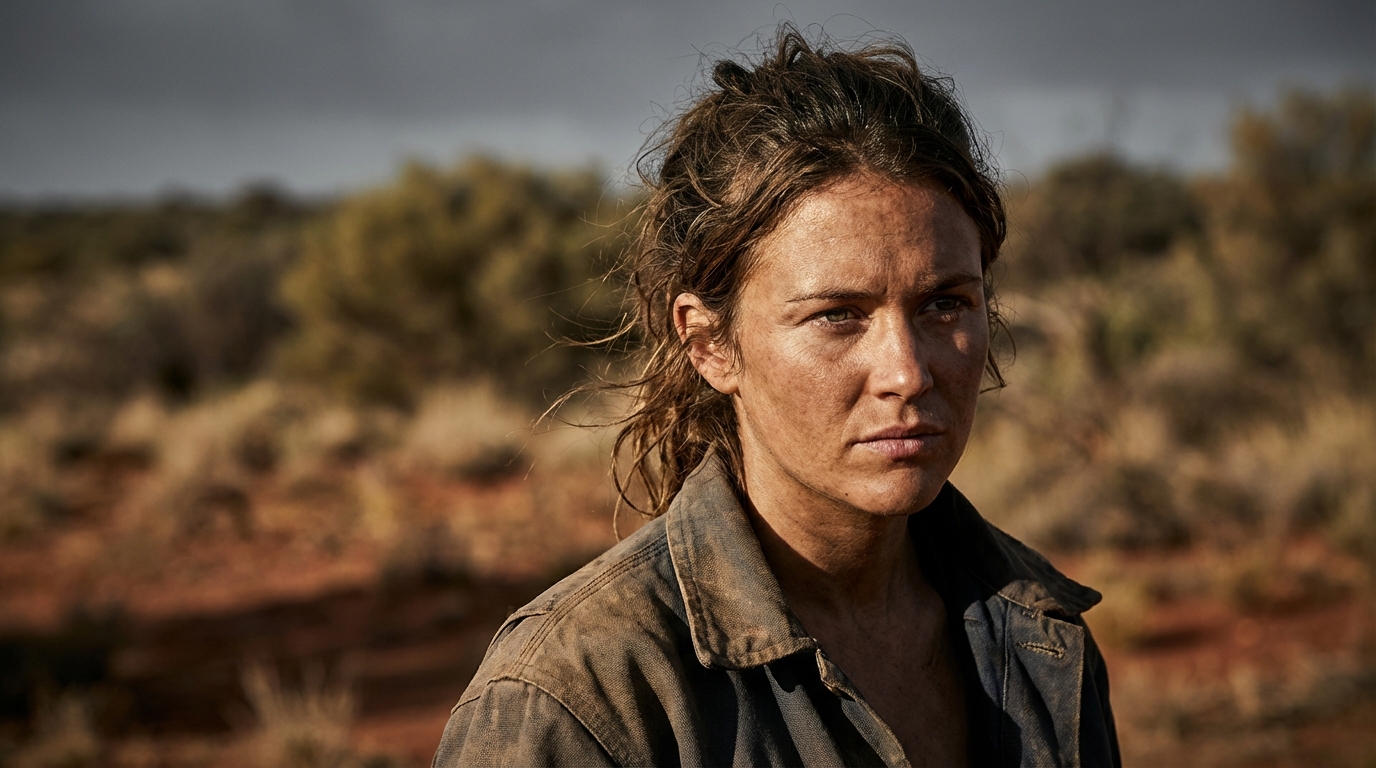
The skateboard that defined her teenage rebellion still appears occasionally, though the drainage channels and industrial sites have given way to Melbourne's skate parks. These moments of physical freedom, rare in a life dominated by meetings and manuscripts, connect the fifty-three-year-old academic to the sixteen-year-old who believed adventure could exist without consequence. The athletic build has softened slightly, the dark tousled hair now shows threads of grey, but the hazel eyes retain their spark of mischief and determination.
Gordon remains a complex presence in her life. The brother whose midnight adventures shaped her curiosity, whose cruel prank may have contributed to Violet's psychological state on that final night, has never fully escaped the shadow of events he did not cause but may have influenced. Their relationship carries the weight of unintended consequences, yet the bond forged in childhood explorations of abandoned buildings persists beneath the complications.
Her mother, Linda, still lives in Broken Hill, still volunteers at the library where she spent her career. Their relationship, strengthened by the divorce that might have fractured it, represents one of Michelle's most stable connections. The quiet wisdom that guided Michelle's childhood reading now manifests in telephone conversations about grandchildren (Gordon's, not hers), town gossip, and the gentle maternal concern that never entirely accepts a daughter's insistence that she is fine.
The question of what happened to Violet—not the physical facts, which the investigation established, but the deeper mystery of why she left the cabin that final night—has never been fully answered. Michelle has made peace with uncertainty whilst never abandoning the possibility of resolution. The cold case review in 2024 triggered responses she had not anticipated: hope and terror in equal measure, the possibility that answers might finally emerge battling the fear that they might prove unbearable.
The environmental scientist who has dedicated her life to protecting vulnerable ecosystems sometimes wonders whether that career represents tribute or displacement—honouring Violet's memory through preservation, or channelling into safe abstractions a protective instinct that failed when it mattered most. The question admits no definitive answer, and Michelle has learned to live with ambiguity. The woman who walks toward the university for morning lectures carries both the fearless teenager who explored Broken Hill's bushland and the grief-stricken friend who plastered missing posters across a town that could not protect its daughters.







