Michael Hamilton Hayes
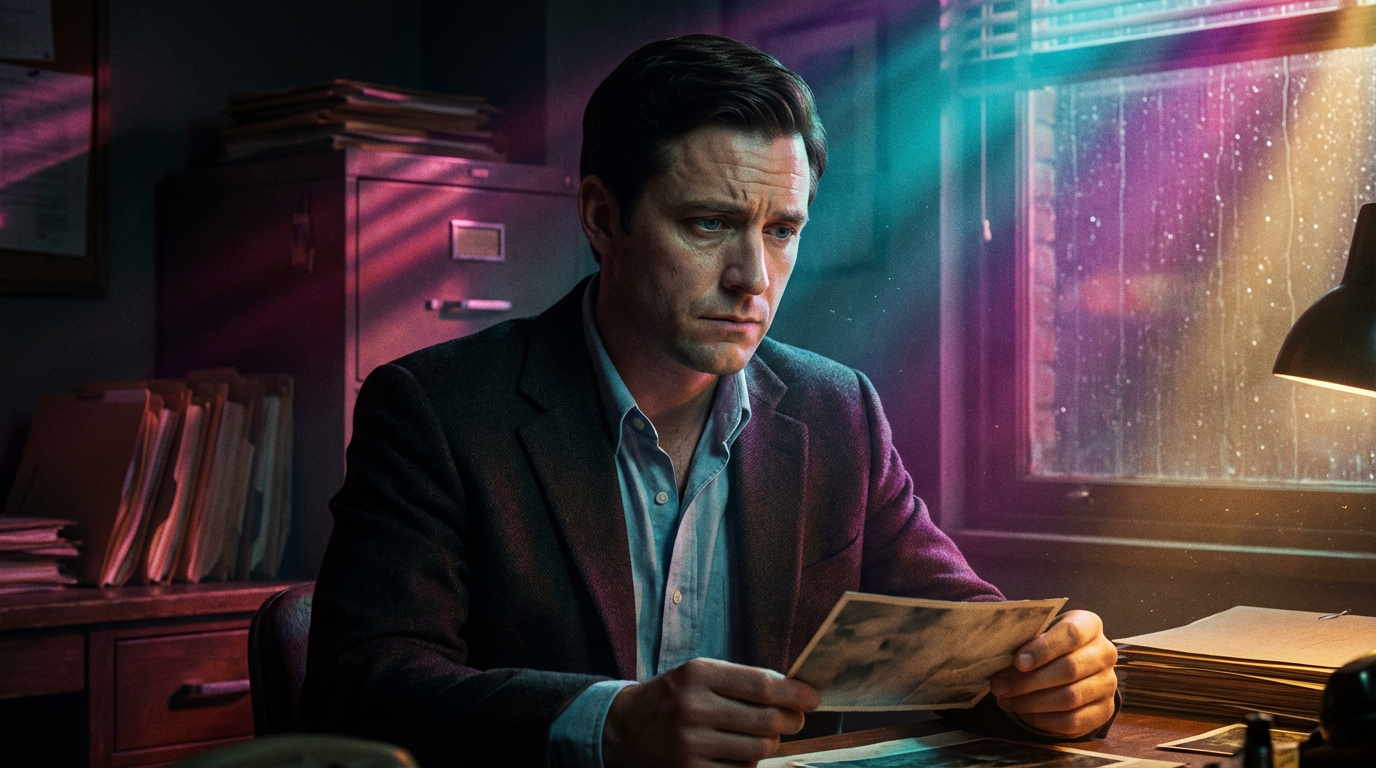
Michael Hamilton Hayes, born 2nd May 1993 in Kingston, Tasmania, was a Detective Constable in the Criminal Investigation Branch at Hobart Police Station whose career had been shaped from the outset by a precise and methodical application of forensic science to investigative work. The son of a marine biologist and a hospital nurse, he grew up in a household defined by careful observation and practical attentiveness, and he carried both qualities into a policing career that moved, by 2023, from the forensic laboratory into the fuller investigative role of the detective. He was present at the Myrtle Forest operation on 8th August 2018 — one of the most significant and most troubling episodes in the recent history of the Southern Division — and carried that experience forward into everything that followed.
Kingston: Origins
Michael Hamilton Hayes was born on 2nd May 1993 at the Royal Hobart Hospital, the second of three children of Robert Allan Hayes and Evelyn Margaret Hayes (née Coates). The family lived in Kingston, on the southern outskirts of Hobart, in a brick veneer house on a quiet residential street not far from the Channel Highway foreshore.
Robert had been born in Kingston on 19th March 1961 and had never substantially left it, which in his case was not a failure of ambition but a considered outcome. He was a marine biologist employed by the CSIRO's Hobart division, working on the coastal ecosystems of southern and south-eastern Tasmania — kelp forests, seagrass beds, the intertidal zones along the D'Entrecasteaux Channel and the Huon estuary. His work took him onto research vessels with some regularity and required, in the field, a quality of sustained, detailed observation that had become his default mode in most other areas of life as well.
Evelyn had been born in Hobart on 4th August 1963, the daughter of a tradesman from Moonah. She trained as a registered nurse and spent most of Michael's childhood working in the medical ward at the Royal Hobart Hospital before moving to the emergency department in the mid-2000s. She was warm and practically minded in roughly equal measure — someone who had learned, through sustained proximity to human difficulty, the value of equanimity and the importance of not adding drama to situations that already contained enough of their own.
Robert and Evelyn had married on 14th February 1987, a date the family returned to every year with a mixture of affection and mild amusement that had settled, over the decades, into a comfortable domestic ritual.
Natalie Claire arrived on 11th September 1989, the eldest. Peter James came on 26th June 1997, the youngest. Michael sat between them in birth order and, to a degree, in temperament: more physically active than Peter, more analytically inclined than Natalie, and possessed of a quality of attentiveness that combined something recognisable from each of his parents without being a simple compound of either.
Kingston High School
Michael attended Kingston Primary School and proceeded to Kingston High School, where his academic record was consistently strong in the sciences and his social life was defined largely by rugby.
He had taken to the game in Year 7 and found in it a structure that suited his way of thinking — the requirement for both individual technical precision and collective tactical awareness, the importance of reading the field rather than merely reacting to it. He played in the backs, where spatial thinking was as important as physical execution, and was a reliable if not exceptional player through the school years.
His science teachers recognised early that he came to class having already thought about the questions the lesson was going to raise, and that his interest tended toward application rather than abstraction. The direction of that interest sharpened across the senior years into something specific: the use of scientific method in investigative contexts, which seemed to him where the discipline was most alive and most consequential.
He completed his Tasmanian Certificate of Education in 2011, with strong results in Biology, Chemistry, and Physical Education. He also completed the Duke of Edinburgh's Gold Award that year, working through the physical, skills, and volunteering components with the systematic thoroughness that the award required and that was, for Michael, simply a natural way of approaching things.
The Gap Year (2012)
Rather than proceeding directly to university, Michael took a structured year out — not from uncertainty but from a specific opportunity that arose through Robert's network at the CSIRO.
He spent eleven months as a volunteer field assistant on a coastal monitoring project based out of Bruny Island, conducting transect surveys of intertidal zones and contributing to seagrass mapping work along the D'Entrecasteaux Channel. The work was physically demanding and procedurally rigorous, conducted in the company of researchers whose documentation standards were exacting.
What Michael took from it was not primarily the ecological content but the working discipline: the gap between methodology and execution, the importance of meticulous recording, and the fundamental habit of observation as a continuous practice rather than something you switched on when circumstances required it. He would not have named it in those terms at the time, but it was the year in which the disposition he had been developing since childhood acquired a professional shape.
University of Tasmania (2013–2017)
Michael enrolled at the University of Tasmania in 2013, pursuing a Bachelor of Science with a specialisation in Forensic Science through the Faculty of Science and Engineering. He moved into a shared house in North Hobart with other students and joined the university's rugby club in his first semester, playing throughout his undergraduate years and serving as backs coordinator in his final year.
The degree combined coursework in chemistry, biology, molecular science, and evidence analysis with practical laboratory components. Michael moved through it with the methodical engagement of someone who had, by this point, a clear sense of what the qualification was for and how each component connected to the work he intended to do.
His fourth-year research project examined the application of soil microbiome analysis to time-of-burial estimation in forensic investigations — a technically demanding topic that his supervisor regarded as among the strongest undergraduate projects the forensic science programme had produced in several years.
He graduated in 2017 with Upper Second Class Honours and applied directly to the Tasmania Police Academy.
Tasmania Police Academy and Early Career (2017–2019)
Michael was accepted into the Tasmania Police Academy in late 2017 and completed his recruit training across the first half of 2018. The standard programme covered law, ethics, procedural police work, driver training, use of force, and the broader range of competencies that the formation of a constable required.
His forensic science background made certain components feel like familiar ground revisited. Others — particularly the interpersonal dimensions of general duties policing, and the management of emotionally charged situations in real time — asked things of him that scientific training had not specifically prepared for. He completed the programme in good standing and was posted to Hobart Police Station on Liverpool Street as a Graduate Trainee in mid-2018.
He had been at the station for only a matter of weeks when the events of late July unfolded. The disappearance of Detective Karl Jenkins on 27th July 2018 moved through the building with the particular intensity of an institution confronting the possibility that the threat was internal. Michael was new enough to be peripheral to the investigative machinery — present for the ambient experience of the station during those days, without being inside the rooms where the significant decisions were being made. He understood something serious was happening. He understood less than the people who had been there longer. That was the appropriate position for someone three weeks out of the Academy.
Myrtle Forest: 8th August 2018
Michael was assigned to a support role for the Myrtle Forest operation on 8th August 2018. His function was forensic evidence management — documentation and preservation of physical evidence recovered at the scene rather than the operational conduct of the operation itself.
He was present when Detective Sarah Lahey's death was confirmed. He processed evidence in the field and continued processing it through the following forty-eight hours, working in the concentrated, procedurally exacting mode that the situation required and that also, he understood later, had been a way of keeping himself functional when no other available mode would have served.
Lahey had been a presence in the building during the weeks he had been stationed there — not someone he knew, but someone he had observed, and whose professional bearing in a period of institutional crisis had been, without his having formed this into a thought, something he had taken note of. The experience of the investigation's outcome did not resolve into anything clean. It remained, as the months and years passed, a layer of understanding about the work — about what it could involve and what it cost when it went badly — rather than something that required or permitted further elaboration.
Constable and Forensic Services (2019–2022)
Michael was confirmed as a Constable in early 2019 and spent the first year in the General Duties Unit, the standard assignment that placed new constables in the responding and patrolling function before specialisation. He did this work competently, developing steadily in the interpersonal dimensions that patrol required in ways the laboratory had not.
By 2020 he had moved to the Forensic Services Department, where his background applied most directly and the work engaged him most fully. The department's function — the analysis of physical evidence, the documentation of crime scenes, the production of forensic material that could withstand the scrutiny of court proceedings — suited the quality of his attention and his tolerance for the kind of sustained, detailed work that others found tedious.
He worked across a wide range of case types: burglaries, assaults, suspicious deaths, forensic support for major investigations. His capacity to move between field and laboratory, to maintain chain of evidence with the rigour that defence counsel probed most aggressively, and to produce documentation that was both technically precise and intelligible to non-specialist readers made him increasingly valuable to the department.
He was awarded the Tasmania Police Meritorious Service Medal in 2021, in recognition of his contribution to a sequence of investigations in which his forensic work had been instrumental. He received the recognition with the characteristic quietness of someone who understood what the work had required and did not need external confirmation to validate it, while also recognising that institutional acknowledgements were part of the life of the organisation and accepting them on those terms.
He was promoted to Senior Constable later that year, taking on a coordinating role within the Forensic Services team and developing new protocols for evidence processing that improved throughput without compromising documentation standards.
Zoe
Michael met Zoe Renata Marchetti in late 2019, through a mutual connection at a South Hobart pub quiz that a colleague had organised with the transparent objective of getting the newer constables out of the building for an evening.
Zoe had been born on 17th October 1994 in the Huon Valley, the daughter of an Italian-Australian family with roots in the orchard country south of Hobart. She was a primary school teacher at a Dynnyrne school — direct, observant, and possessed of a capacity for amusement at the world's various absurdities that Michael found immediately engaging and continued to find so.
They began seeing each other in early 2020, navigating the logistical complications of that year with the patient negotiation of two people who had decided the arrangement was worth managing. They moved into a rented terrace house in South Hobart in 2021, the decision made with the practical confidence of two people who had worked out that it made sense and had no particular reason to delay saying so.
Family in the Mid-2020s
By the time Michael transitioned to the CIB in 2023, the rest of the Hayes family had settled into the shapes their lives had found.
Natalie, who had completed a doctorate in marine ecology at UTAS, was working as an environmental consultant in Hobart, married to Daniel Kerr, a civil engineer from Launceston. Their daughter Isla had been born on 3rd March 2022, and Natalie had returned to part-time consulting work by the end of that year.
Peter had moved to Melbourne in 2017 after completing a music degree, and had built a working life there as a jazz musician and session player with the particular quality of someone who had landed in the right city for what they were doing and was content with the terms of the arrangement.
Robert had retired from the CSIRO in 2021, remaining in the Kingston house with Evelyn, who continued working at the Royal Hobart Hospital in a reduced capacity from 2022. The house still had the quality of a household in which careful observation of the natural world was the ambient mode, and which had produced, across three children, three distinct but recognisable versions of that orientation.
Detective Constable, CIB (2023–present)
Michael transitioned to the Criminal Investigation Branch as a Detective Constable in 2023 — a move that represented both a recognition of his accumulated investigative experience and a deliberate broadening of it.
The shift was from the forensic specialist function into the fuller investigative role that detective work required: the interview technique, the case narrative, the management of informants and sources, the working relationship with the Crown Law office and with prosecutors. He brought to it a forensic rigour that shaped how he approached cases from their earliest stages — the habit of treating physical and documentary evidence as the foundation of any narrative the investigation eventually constructed, rather than as supporting material for conclusions reached through other means.
He worked primarily on property crime and serious assaults in his first year in the branch, developing the detective's habits of mind alongside the forensic ones he had already built. He was thorough, methodical, and not given to the kind of confident overreach that produced fast results at the cost of durable ones.
The questions surrounding the Jenkins disappearance and the Lahey investigation had not resolved with time. He had been too junior in 2018 to have access to the full picture, and too experienced by 2023 to be satisfied with the official account. This was not something he raised in the CIB. It was something he thought about, with the careful, accumulative patience of someone who understood that some questions only answered themselves when you had assembled enough of the surrounding material to see what shape the gap had.







