Michael Benjamin Tan
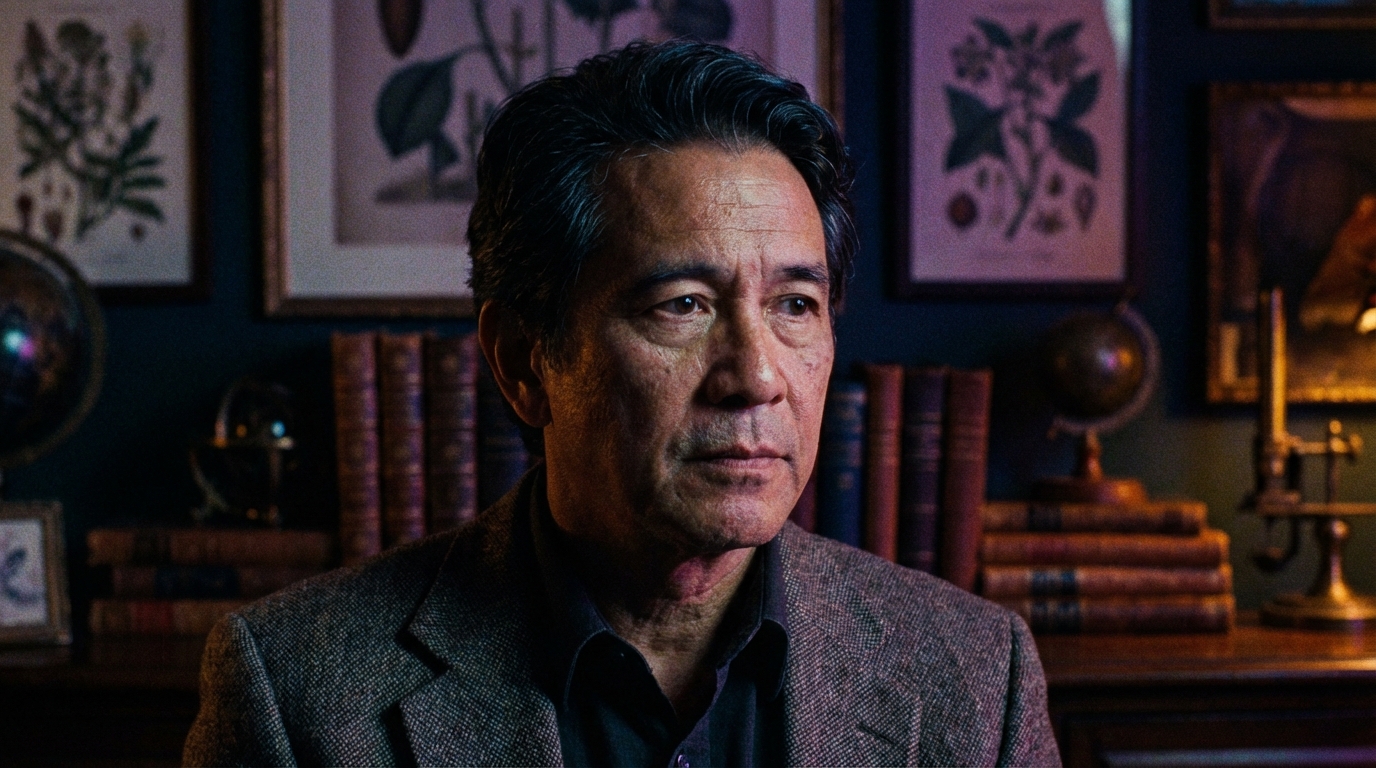
Michael Benjamin Tan was born in Launceston in 1964 to an environmental lawyer and a conservationist, inheriting both his parents' passion for the natural world and their belief that individual action could shape policy and preserve landscapes for future generations. His career in environmental governance culminated in appointment as Secretary of the Department of Primary Industries, Parks, Water and Environment — Tasmania's most senior environmental policy position. What his colleagues and subordinates never suspected was that Michael's commitment to conservation extended beyond Earth itself. Recruited by Thaddeus Wainwright in 2010, he became the first Guardian of Ender's Climb, eventually chairing the TerraNova Conservation Foundation and guiding Project TerraNova's cultivation of expertise destined for another dimension entirely.
Birth and Family Origins
Michael Benjamin Tan was born on 13 February 1964 at Launceston General Hospital, the first child of Benjamin Hao Tan and Margaret Ellen Tan (née Crawford). The circumstances of his birth were unremarkable — a healthy boy arriving in late Tasmanian summer to parents whose professional lives had prepared them, perhaps inevitably, to raise children who would care about the world they inherited.
Benjamin Hao Tan had established himself as one of northern Tasmania's most respected environmental lawyers, his practice focused on the intersection of land use, conservation, and indigenous rights that would become increasingly contested as the century progressed. Born in 1932 to Chinese-Australian parents who had operated a market garden in the Tamar Valley since the 1920s, Benjamin had witnessed firsthand how regulatory frameworks could protect or destroy landscapes and livelihoods. His legal career represented an attempt to bend those frameworks toward protection — work that earned him respect among conservationists and wariness among developers who found his arguments uncomfortably persuasive.
Margaret Ellen Crawford had grown up on a sheep property near Campbell Town, her childhood shaped by drought cycles and the fragile relationship between agricultural practice and environmental sustainability. She trained as a secondary school teacher but found her calling in conservation advocacy after joining the Tasmanian Conservation Trust in 1958. By the time she married Benjamin in 1962, she had become the organisation's northern regional coordinator, a role she would hold for three decades while raising two children and occasionally testifying before parliamentary inquiries with the quiet authority of someone who had watched landscapes change across a lifetime.
The household Michael entered was not wealthy but was rich in purpose. The family home in East Launceston — a modest weatherboard cottage purchased the year before Michael's birth — became a gathering place for conservationists, lawyers, scientists, and activists whose conversations about wilderness protection, sustainable agriculture, and environmental policy formed the background noise of Michael's childhood. He absorbed these discussions the way other children absorbed sports commentary or popular music, developing vocabulary and frameworks that would serve him throughout his career.
Susan Margaret Tan arrived on 8 September 1967, completing the family. The three-and-a-half years separating the siblings created natural asymmetry — Michael the serious elder child who helped with homework and mediated disputes, Susan the more socially confident younger sister who drew her brother out of his tendency toward isolation. Their relationship remained close throughout childhood and into adulthood, though their paths would diverge significantly: Susan toward primary school teaching and eventually a deputy principal position in Hobart, Michael toward the policy machinery that shaped environmental governance across the state.
Childhood and Early Education
Michael's childhood unfolded against landscapes that would later become his professional responsibility. Weekend expeditions with Benjamin and Margaret introduced him to the forests and coastlines of northern Tasmania — the Tamar Valley wetlands, the Douglas-Apsley wilderness, the beaches of the northeast coast. These weren't recreational outings so much as education by immersion, his parents pointing out species, explaining ecological relationships, discussing the regulatory battles that determined which areas would be protected and which would fall to development.
East Launceston Primary School (1970-1975) provided Michael's formal education, though teachers noted that he often knew more about natural sciences than the curriculum required. He was a diligent rather than brilliant student, earning solid marks through thoroughness and effort rather than natural facility. Mathematics came easily; creative writing proved more difficult, his reports technically competent but lacking the imaginative flair that distinguished his sister's work. Teachers described him as mature, serious, and unusually interested in fairness — the child who noticed when rules were applied inconsistently and wasn't afraid to point it out.
His secondary education at Scotch Oakburn College (1976-1981) reinforced these patterns whilst adding new dimensions. The school's emphasis on leadership development and public service aligned naturally with values Michael had absorbed at home. He excelled in biology, chemistry, and what was then called environmental studies, but his most significant achievement was captaining the debating team to state championships in 1980 and 1981. The experience revealed capabilities he hadn't recognised — an ability to construct arguments systematically, to anticipate counterarguments, to persuade through logic rather than emotion. These skills would prove essential in a career built on convincing ministers, stakeholders, and sometimes hostile audiences that conservation served interests broader than sentiment.
The debating success also revealed something about Michael's psychology that would characterise his adult life: he performed best when representing positions rather than himself. Arguing for propositions he'd been assigned freed him from the self-consciousness that made purely personal expression difficult. Throughout his career, Michael would prove far more comfortable advocating for environmental protection than discussing his own feelings, more fluent in policy language than emotional vocabulary.
University and Professional Formation
Michael enrolled at the University of Tasmania in 1982 to pursue a Bachelor of Environmental Science, choosing to remain in Tasmania rather than following some classmates to mainland universities. The decision reflected both practical considerations — his parents' modest finances, his attachment to Tasmanian landscapes — and a sense that the problems he wanted to address were local problems requiring local knowledge. The abstraction of studying environmental science somewhere without intimate connection to the environment being studied seemed somehow dishonest.
His undergraduate years combined academic rigour with the political education that university campuses provided in the early 1980s. The Franklin Dam controversy was reaching its climax as Michael began his studies; he participated in protests, attended rallies, and watched as federal intervention ultimately protected the wilderness his parents' generation had fought to preserve. The experience taught him lessons he would carry throughout his career: that conservation victories required political will as much as scientific evidence, that public pressure could shift seemingly immovable positions, and that defeats were never final as long as people remained willing to fight.
His honours thesis examined the impact of logging practices on Tasmanian forest ecosystems — research that earned high distinction and attracted attention from the Department of Primary Industries and Fisheries, which would later become DPIPWE. The work demonstrated Michael's methodical approach: exhaustive data collection, careful analysis, conclusions that followed evidence rather than predetermined positions. He graduated in 1986 with credentials that could have led toward research careers, but Michael's interests lay in application rather than theory. He wanted to shape the rules that governed how people interacted with landscapes, not merely document the consequences of those interactions.
The Master of Environmental Law at Australian National University (1987-1989) represented strategic career development. Michael recognised that effective environmental governance required understanding legal frameworks as thoroughly as ecological ones. His father's work had demonstrated how regulatory structures could protect or destroy; the postgraduate degree would equip Michael to operate within those structures rather than merely criticising them from outside.
His dissertation examined the effectiveness of environmental legislation in protecting endangered species — work that attracted attention in both academic and policy circles. The research was characteristically thorough, drawing on case studies across Australian jurisdictions to identify which regulatory approaches produced genuine protection and which created mere documentation of ongoing decline. The conclusions were nuanced rather than polemical, acknowledging complexity while identifying specific reforms that could improve outcomes. This capacity for constructive criticism — recognising problems while proposing solutions — would distinguish Michael's subsequent career.
Marriage and Family Life
Michael met Katherine Louise Webb at a conference on marine conservation in Hobart in 1991. She was completing her doctorate in marine biology at the University of Tasmania, researching the impact of ocean acidification on Tasmanian kelp forests — work that would eventually contribute to international understanding of climate change effects on marine ecosystems. The introduction came through mutual colleagues who recognised complementary interests and, perhaps, complementary temperaments.
Their courtship proceeded with the measured pace that characterised both personalities. Neither was inclined toward dramatic gesture or emotional display; their relationship developed through shared interests, intellectual compatibility, and gradual recognition that life might be better navigated together than separately. They married on 14 March 1993 at a small ceremony in the Royal Tasmanian Botanical Gardens, witnessed by family and close colleagues rather than the large gathering their combined professional networks might have produced.
Katherine's career trajectory paralleled Michael's in ambition if not in domain. She completed her doctorate in 1994 and joined the CSIRO Marine Research division, eventually becoming a principal research scientist whose work on Southern Ocean ecosystems earned international recognition. The marriage represented partnership between equals — two serious people pursuing serious work, supporting each other's careers while building a household that reflected their shared values.
Their daughter Emily Katherine Tan arrived on 22 November 1995, followed by their son James Benjamin Tan on 3 August 1998. The children grew up in a household where environmental concern was assumed rather than argued, where dinner table conversations ranged across policy debates and scientific findings, where weekend activities often involved beaches, forests, and the observation of creatures whose welfare their parents' work aimed to protect. Both children would eventually pursue careers reflecting this upbringing — Emily following her mother into marine biology, James pursuing environmental engineering — though neither would learn the full scope of their father's activities until circumstances forced revelation.
Michael proved a devoted if somewhat formal parent. He attended school events, helped with homework, and ensured his children understood the natural systems that surrounded them. But emotional expression remained difficult for him, his affection demonstrated through action rather than articulation. Katherine provided the warmth that balanced Michael's reserve, creating a household that was functional and loving even if its love was sometimes expressed in languages children had to learn to interpret.
Career in Environmental Governance
Michael's professional career began in 1990 with appointment as Policy Advisor at the Department of Primary Industries, Parks, Water and Environment in Hobart. The position represented entry-level work in Tasmania's environmental bureaucracy, but Michael approached it with the thoroughness that would characterise his entire career. He mastered regulatory frameworks, built relationships across divisions, and demonstrated capacity for translating scientific evidence into policy language that ministers and stakeholders could understand.
His contributions to Tasmania's first comprehensive biodiversity conservation strategy — work completed during his initial years at DPIPWE — established his reputation within the department. The strategy reflected Michael's characteristic approach: exhaustive consultation, careful evidence synthesis, recommendations that balanced conservation imperatives with political realities. The document wasn't revolutionary, but it was implementable, and implementation was what Michael understood mattered most.
Promotion to Senior Policy Advisor in 1995 expanded his responsibilities to include team leadership and policy coordination. Michael proved effective at managing others, though his style emphasised competence over charisma. He set clear expectations, provided necessary resources, and evaluated performance against documented standards. Staff respected him without necessarily warming to him — a pattern that would persist throughout his career. Those who worked closely with Michael recognised genuine commitment beneath the formal exterior; those who encountered him only in meetings often found him distant and difficult to read.
The appointment as Director of Environmental Policy in 2000 placed Michael in charge of the department's entire policy division. The role required coordinating state-wide conservation efforts, managing relationships with federal agencies and interstate counterparts, and navigating the political complexities that accompanied any significant environmental initiative. Michael's success in lobbying for increased conservation funding and his role in establishing several new national parks during this period demonstrated that methodical approach could achieve results that more dramatic styles sometimes couldn't.
His tenure as Executive Director of the Tasmanian Environmental Protection Authority (2008-2014) represented the pinnacle of regulatory authority. The EPA controlled the frameworks that determined what development could proceed and under what conditions — power that made the position simultaneously influential and contentious. Michael implemented regulatory innovations that strengthened environmental protection while maintaining relationships with industry stakeholders who might have preferred weaker oversight. The balancing act required skills he had developed across two decades of bureaucratic navigation: knowing when to push and when to accommodate, when to insist on standards and when to accept pragmatic compromise.
The appointment as Secretary of DPIPWE in 2014 made Michael the most senior environmental policy official in Tasmania. The role encompassed strategic direction, ministerial advice, and oversight of divisions responsible for everything from agricultural regulation to parks management to fisheries policy. It was the position his entire career had prepared him for — and the position that would provide cover for activities his official responsibilities could never acknowledge.
The Approach and Transformation
The approach came in early 2010, before Michael's appointment to the EPA but after he had established himself as one of Tasmania's most influential environmental policy voices. Thaddeus Wainwright appeared at a conference on climate change adaptation that Michael was addressing, an elderly Englishman whose questions revealed knowledge that seemed to exceed what any ordinary academic might possess.
The subsequent conversations unfolded across several months, Thaddeus revealing truths gradually rather than overwhelming Michael with information he couldn't process. The existence of Clivilius. The Portal Keys that enabled travel between dimensions. The Guardians who carried these keys and the responsibilities that accompanied them. The Aegis Consortium's two-thousand-year history of operating in shadows to protect both worlds. Each revelation required adjustment, each adjustment created space for further revelation.
Michael's response to these truths reflected his characteristic approach: systematic evaluation rather than emotional reaction. He asked questions, demanded evidence, assessed implications. The existence of another dimension accessible through portal technology challenged everything his scientific training had taught him about physical reality — but the evidence Thaddeus provided proved impossible to dismiss.
The Portal Key Thaddeus presented in late 2010 represented not merely dimensional access but transformation of identity. Michael Benjamin Tan, environmental policy expert, became something additional: a Guardian, carrying responsibilities that his colleagues, his family, even his closest friends could never know. The weight of this secret — maintained across subsequent years while Michael continued rising through Tasmania's bureaucratic hierarchy — shaped everything that followed.
The Foundation and Its Purposes
Michael's role in establishing the TerraNova Conservation Foundation reflected both his professional capabilities and his Guardian responsibilities. The Foundation needed leadership that could navigate regulatory requirements, build legitimate conservation credentials, and maintain the operational security that covert purposes required. Michael's position as Tasmania's most senior environmental official provided credibility that the Foundation's activities required; his Guardian awareness ensured he understood what those activities actually served.
Chairing the Foundation's board from its establishment in January 2015 placed Michael at the centre of Project Terra Nova's Earth-facing operations. He managed the delicate balance between appearances and purposes, ensuring that board meetings produced documentation that would satisfy any audit while advancing objectives the documentation could never describe. Graham Whitley's presence on the board — a competent treasurer who believed entirely in the Foundation's public mission — served as constant reminder that the performance must be flawless. One moment of carelessness, one document that revealed too much, could unravel everything the Foundation had been established to accomplish.
The recruitment of fellow Guardians to the board reflected years of cultivation that preceded the Foundation's formal establishment. Laura Chen, Brad Coleman, Derek Simmons — each had been identified, approached, and brought into Guardian awareness through processes that Thaddeus and Michael had developed together. By the time the incorporation documents were filed, the board comprised individuals who shared not merely professional credentials but dimensional knowledge that bound them together in purposes they could never publicly acknowledge.
The Weight of Dual Existence
Living as both senior government official and covert Guardian required compartmentalisation that exacted psychological costs Michael rarely acknowledged. His days involved meetings, briefings, ministerial advice, the ordinary machinery of environmental governance. His evenings and weekends sometimes involved portal travel, coordination with fellow Guardians, activities whose nature he could never explain to Katherine or his children. The deception wasn't comfortable — Michael valued honesty as a professional principle — but the alternative seemed worse. Revealing Guardian existence would endanger operations that served purposes larger than any individual's comfort with secrecy.
Katherine noticed changes she couldn't explain. Michael had always been reserved, but the reserve deepened after 2010 in ways that created distance even between people who had shared decades of marriage. He was present but somehow absent, engaged with family activities but carrying weight he wouldn't discuss. Katherine attributed this to career pressures — the EPA role, then the Secretary position, brought responsibilities that justified distraction. She didn't suspect that her husband's preoccupation involved dimensions she couldn't imagine.
The children grew into adults who respected their father without fully knowing him. Emily's marine biology career occasionally intersected with Michael's professional responsibilities, creating conversations about policy and research that allowed genuine connection around topics they could openly discuss. James's environmental engineering work sometimes addressed problems that Michael understood from both official and Guardian perspectives, though he could share only the official understanding. Both children sensed that their father carried burdens beyond what his position explained; neither pressed for explanations he wasn't prepared to provide.
The Guardians of Ender's Climb
As the first Guardian recruited by Thaddeus in Tasmania, Michael occupied a particular position within the Guardians of Ender's Climb. He was senior in both age and recruitment, his government position providing resources and access that proved valuable for Guardian operations. The other Guardians — Laura Chen with her academic expertise, Brad Coleman with his consulting networks, Derek Simmons with his technological capabilities, Abbey Stockton with her engineering skills — each contributed essential capabilities, but Michael's contribution was infrastructural in ways that made everything else possible.
His relationship with Thaddeus evolved from recruit and recruiter to something approaching partnership. The Englishman's broader strategic vision complemented Michael's operational capabilities; Thaddeus identified objectives while Michael often determined how to achieve them within Tasmanian contexts. Their conversations, conducted during Michael's visits to Clivilius or Thaddeus's occasional appearances in Tasmania, shaped the Guardian group's direction in ways the other members didn't always perceive.
Derek Simmons's murder in July 2018 struck Michael with force he hadn't anticipated. The Guardians operated knowing that their activities carried risks — but the theoretical awareness of danger differed profoundly from confronting a colleague's death. Michael attended Derek's funeral maintaining the composure his position required while processing grief he couldn't publicly explain. The loss removed technological expertise the group needed, but more than that, it removed someone who had shared understanding that made isolation bearable. The Foundation continued operations; Project Terra Nova proceeded according to plan; but the murder reminded Michael that the balance he maintained could collapse at any moment.
Character and Contradictions
Those who know Michael Tan professionally describe someone whose competence inspires confidence without inspiring warmth. His presentations are clear and well-organised. His advice is thorough and reliable. His decisions reflect careful analysis rather than impulse or ideology. But colleagues struggle to describe him beyond these professional qualities — his interests outside work, his sense of humour, what he does when he isn't being the Secretary of DPIPWE. The question isn't that Michael lacks inner life but that he grants access to it so rarely that even long-term colleagues aren't certain what lies beneath the professional surface.
His interests — bushwalking, birdwatching, photography, reading historical novels — are genuine but also functional, providing activities that don't require the emotional disclosure Michael finds difficult. Walking in wilderness allows appreciation without conversation. Photographing birds requires patience and observation, not self-revelation. Historical novels explore human complexity at safe remove, their characters' struggles examined without demand for reciprocal exposure. Even chess, which Michael plays with methodical competence, involves strategic challenge without emotional risk.
The contradiction at Michael's core is that someone so committed to protection — of landscapes, of species, of regulatory frameworks that serve conservation — struggles to protect the people closest to him from the distance his nature creates. He loves Katherine, Emily, and James in ways he cannot adequately express. He carries responsibility for colleagues and subordinates whose welfare depends partly on his decisions. But the love and responsibility exist behind walls he built so long ago that dismantling them seems impossible without destroying what they were constructed to protect.
The Present and Continuing Purpose
By the mid-2020s, Michael had served more than a decade as DPIPWE Secretary and nearly fifteen years as a Guardian. His official career approached its natural conclusion — retirement beckoned, and younger officials waited for advancement his departure would enable. But his Guardian responsibilities carried no retirement date. The Foundation continued operations. Project TerraNova's network continued expanding. The cultivation of expertise for Clivilius continued requiring the access and credibility his position provided.
His family remained in Tasmania, their lives proceeding along trajectories shaped by values Michael and Katherine had instilled without the children understanding the full scope of their father's commitments. Emily's research on marine ecosystem resilience addressed problems that Michael knew had dimensional implications she couldn't perceive. James's engineering projects sometimes employed technologies that Guardian operations had helped develop. The irony — that his children contributed to purposes they didn't know existed — struck Michael occasionally, though he wasn't certain whether to feel pride or guilt that they served causes whose nature he couldn't reveal.







