Martha Elizabeth Taylor (née Reid)
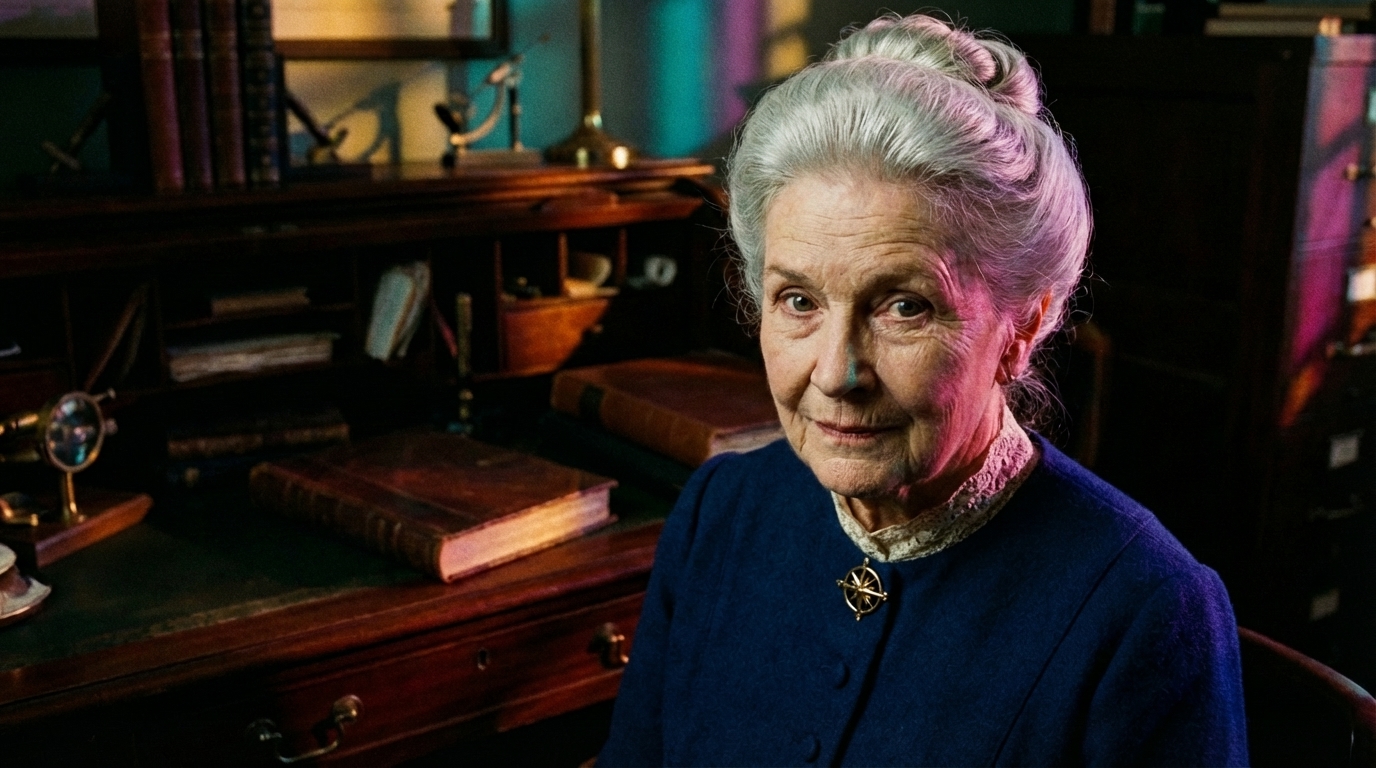
Martha Elizabeth Taylor exemplified the quiet determination of countless women who rebuilt their lives in the colonies after tragedy struck at home. A London clerk's daughter who became a widow at thirty-one, she transformed herself into one of colonial Van Diemen's Land's most capable business administrators, her meticulous bookkeeping and organisational brilliance helping to build the Jeffries Trading Company from a modest venture into a commercial empire.
Early Life in London
Born on 21st June 1778 in Cheapside, Martha Elizabeth Reid entered a world of ledgers and counting houses. Her father, Thomas Reid, worked as a clerk for the East India Company, whilst her mother, Sarah, took in fine needlework to supplement the family's modest income. Martha was the third of six children—preceded by brothers Thomas and James, followed by sisters Anne and Catherine, with youngest brother Robert arriving when she was eight.
The Reid household occupied two rooms above a milliner's shop, where the sounds of commerce filtered through thin floors from dawn to dusk. Martha learned her letters at her mother's knee, but formal education remained limited to what the local parish school could provide. By age twelve, she was helping her mother with the needlework, her nimble fingers and sharp eyes catching mistakes that others missed. This attention to detail would later prove invaluable, though at the time it merely meant a few extra shillings for the family coffers.
Youth and Courtship
At fourteen, Martha's quick mind caught the attention of Mrs Abigail Hartley, who ran a small academy for merchants' daughters near Cornhill. In exchange for helping with the younger pupils, Martha received instruction in arithmetic, proper penmanship, and basic bookkeeping—skills typically reserved for boys of her class. She proved particularly adept with numbers, able to balance complex accounts that befuddled her peers.
It was at St Mary-le-Bow church where Martha first noticed Joseph Taylor in the spring of 1799. A journeyman engineer at the Boulton and Watt manufactory, Joseph cut a handsome figure in his Sunday clothes, though Martha later admitted it was his gentle manner with his widowed mother that truly caught her attention. Their courtship proceeded with appropriate decorum—chaperoned walks along the Thames, tea with both families, stolen moments of conversation after church services.
Joseph's prospects seemed solid. The new century brought unprecedented demand for steam engines, and his position at one of London's premier engineering works promised advancement. When he formally asked Thomas Reid for his daughter's hand in September 1801, the older man readily agreed. The match offered Martha stability without requiring her to abandon her aspirations entirely—Joseph valued her intelligence and encouraged her continued self-education.
Marriage and Brief Happiness
The wedding took place on 15th March 1802 at St Mary-le-Bow, with Martha wearing her mother's altered wedding dress and carrying white roses from her sister Anne's garden. The young couple established themselves in rooms near the Boulton and Watt works in Soho, where Martha quickly proved herself an exemplary household manager. She kept meticulous accounts, stretching Joseph's wages to cover not only necessities but occasional small luxuries—a book of poetry, tickets to a public lecture on natural philosophy, a new bonnet for his mother.
Joseph encouraged Martha's intellectual pursuits in ways unusual for their class. He brought home discarded technical drawings for her to study, explaining the principles of mechanical engineering over their evening meal. She accompanied him to meetings of the Mechanics' Institute, one of few wives who did so, where she took detailed notes on lectures about steam power and industrial processes. Some of Joseph's colleagues found this peculiar, but he took pride in his wife's quick understanding.
Their first year brought the discovery that Martha was with child, though she miscarried at four months—a loss that cast a shadow over the autumn of 1802. A second pregnancy the following year ended similarly, leaving Martha weakened and disheartened. The local physician, Dr Harrison, privately informed Joseph that his wife might never successfully bear children, though this diagnosis was kept from Martha herself. Joseph's response—that he had married her for herself, not merely as a potential mother—deepened their bond even as it highlighted their private sorrow.
The Accident
The morning of 7th November 1809 began like any other. Joseph kissed Martha goodbye at half-past five, promising to bring home fresh bread from the baker's that evening. She spent the day mending his work clothes and updating their household ledger, noting with satisfaction that they had saved nearly twelve pounds towards the small shop they hoped to open one day.
The explosion at the Boulton and Watt works occurred at precisely 2:17 in the afternoon, according to the official inquiry. A faulty valve on a high-pressure testing engine failed catastrophically, sending shrapnel through the testing shed. Joseph, supervising a junior engineer's work, took the full force of the blast. He lived for three hours, long enough for Martha to reach the makeshift infirmary, though he never regained consciousness. She held his hand as he died, her dress stained with his blood, her world collapsing into a silence more deafening than the explosion itself.
Widow's Struggles
The aftermath proved almost as devastating as the loss itself. The company offered a paltry settlement—ten pounds and Joseph's final wages—claiming he had been aware of the risks. Martha's attempts to secure better compensation met with polite but firm refusal. The company's lawyers suggested, none too subtly, that a widow making trouble might find it difficult to secure references for future employment.
Martha retreated to her parents' home, now cramped with her younger siblings still living there. For three months, she barely spoke, spending hours staring at Joseph's engineering books, running her fingers over his pencilled notes in the margins. Her mother worried she might lose her mind to grief, whilst her father grew increasingly frustrated with another mouth to feed on his clerk's salary.
The turning point came when Martha discovered Joseph's private notebook, hidden in the lining of his toolbox. Inside, he had sketched plans for their future shop, complete with her name as proprietor and chief bookkeeper. His faith in her capabilities, preserved in fading ink, sparked something within her. She began applying for positions—governess, shop assistant, secretary—anything that might provide independence.
Decision to Emigrate
By summer 1810, Martha had exhausted most opportunities in London. Her status as a childless widow without substantial means limited her options severely. It was her brother James, now working at the Colonial Office, who mentioned the assisted passage scheme to Van Diemen's Land. The colony desperately needed skilled workers and offered free passage to suitable candidates, including respectable widows who could provide references.
The decision tormented Martha for weeks. Leaving meant abandoning any connection to Joseph's memory, yet staying meant slow suffocation in genteel poverty. Her mother wept at the prospect of never seeing her daughter again, whilst her father saw it as a practical solution to an awkward situation. In the end, it was the promise of genuine opportunity—the chance to use her skills properly—that decided matters.
Martha spent her final months in England preparing meticulously. She studied every available account of colonial life, learned basic medical treatments, and even convinced a sympathetic shipping clerk to teach her the fundamentals of maritime trade documentation. When she boarded the transport ship Neptune in January 1811, her trunk contained not just clothing and personal effects but carefully transcribed copies of Joseph's engineering notes—a portable memorial to carry across the world.
Voyage and Arrival
The five-month voyage tested Martha in ways she had not anticipated. Assigned to assist the ship's purser with passenger records, she proved so efficient that the captain himself commended her work. She also helped nurse several passengers through severe seasickness, earning their gratitude and, more importantly, their connections for her arrival in the colony.
Van Diemen's Land in June 1811 shocked her with its rawness. Hobart Town consisted largely of wooden buildings and muddy streets, with chain gangs of convicts providing a constant reminder of the colony's penal origins. Yet Martha also sensed opportunity in the chaos. Her skills—literacy, numeracy, organisation—were desperately needed in a society still establishing basic commercial structures.
She found employment with Samuel Hartley, a Bristol-born merchant whose trading house on the waterfront dealt in general provisions and ships' stores. Her role was officially housekeeper, but Hartley quickly recognised that her abilities extended far beyond domestic management. Within months she was handling correspondence, maintaining inventory records, and managing accounts alongside her household duties. The position paid modestly but included lodging, and Hartley, for all his flaws, treated her with respect and paid her wages without fail.
The Hartley Years
Over four years, Martha witnessed Samuel Hartley's gradual decline. The merchant had arrived in the colony with modest capital and considerable ambition, but personal tragedies—a wife lost in childbirth during the voyage, an infant son dead of fever within months of arrival—had driven him toward the bottle. What began as evening comfort became daily necessity. His business decisions grew erratic, his debts mounted, and his once-sharp mind clouded with drink.
Martha stayed out of loyalty and practicality, keeping the household functioning and quietly compensating for her employer's increasing incapacity. She intercepted visitors when he was in no condition to receive them, corrected errors in contracts before they could cause damage, and maintained the records that kept creditors at bay. She recognised in Hartley's grief something of her own—the slow suffocation of living after losing the person who had given life meaning.
By 1815, Hartley's Trading House existed more in name than substance. Among those employed during this final period was William Jeffries, a former convict whose intelligence and work ethic stood in stark contrast to the opportunists who circled the failing enterprise. Martha observed him quietly shoring up what he could, refusing the easy corruptions that others embraced. Hartley noticed too, speaking of Jeffries as the only honest man he had encountered in years of colonial commerce.
Hartley's Death
Samuel Hartley died on 27 September 1815. Martha discovered his body that morning—hanging from a beam in his study, a bottle of whiskey smashed on the floor beneath him. The constables ruled it suicide, the inevitable end of a broken man, though questions lingered in Martha's mind: the rope that had not come from the household, the unfamiliar voice she had heard late the previous night, the Sydney speculators who had been asking pointed questions about Hartley's affairs all week.
Before his death, during a period of unusual clarity, Hartley had entrusted Martha with certain legal documents and made her swear to deliver them to William Jeffries before anyone else could intervene. She fulfilled this promise on the evening of his death, finding Jeffries at the Crown and Anchor tavern and placing in his hands the partnership papers that would give him legal claim to the trading house assets.
Joining Jeffries Trading Company
In November 1815, William Jeffries sought Martha out and offered her a position with his newly established company. He had observed her capabilities during his time at Hartley's—the meticulous record-keeping, the quiet competence, the loyalty that had kept a failing household functioning long past its natural end. She accepted, becoming his first employee.
Working for a former convict raised eyebrows amongst the free settler community, particularly at St David's Church where Martha attended services. Several acquaintances stopped acknowledging her, whilst others whispered about the propriety of a widow working so closely with a single man of questionable background. Martha weathered this social censure with quiet dignity, focusing on the work that gave her days purpose and her nights peaceful exhaustion.
The early months at Jeffries Trading Company demanded every skill she possessed. William's ambitious plans far exceeded his administrative capabilities, leaving Martha to create order from chaos. She established filing systems, standardised documentation procedures, and implemented double-entry bookkeeping that revealed previously hidden losses and opportunities. Her transformation of the company's administrative operations proved so successful that William granted her a small percentage share in profits—an unusual arrangement that reflected both his gratitude and growing dependence on her capabilities.
The Government Contract Campaign
The pursuit of the government provisioning contract in 1816 became Martha's finest professional hour. She spent weeks analysing previous successful bids, identifying patterns in pricing and presentation that others had missed. Her insistence on itemising costs down to the penny, which William initially resisted as excessive, ultimately proved decisive. The leather-bound proposal she prepared was a masterpiece of organisation—clear, comprehensive, and impossible to fault on technical grounds.
During the tense weeks awaiting the decision, Martha maintained rigid composure despite understanding exactly what was at stake. A successful bid would establish Jeffries Trading Company as a legitimate enterprise; failure might mean its collapse and her return to subsistence employment. She prepared for both outcomes with characteristic thoroughness, updating her employment references whilst simultaneously planning the administrative expansion success would require.
When Governor Sorrell announced their victory on 10th July 1816, Martha permitted herself exactly one tear of relief before returning to work. The contract's execution demanded immediate attention—suppliers to coordinate, delivery schedules to establish, quality standards to maintain. She worked eighteen-hour days for the first month, sleeping on a cot in the office rather than waste time travelling to her lodgings.
Professional Prime
The years following the contract success saw Martha at the height of her powers. She managed a staff of six clerks with firm fairness, training them in her meticulous methods whilst maintaining strict standards. Her reputation for incorruptible honesty became legendary—suppliers learned that attempting to bribe Mrs Taylor was not merely futile but would result in permanent blacklisting from Jeffries Trading Company contracts.
Yet her position remained precarious in ways that gnawed at her. As a woman in commerce, she could never sign contracts independently, attend certain business meetings, or join the commercial associations that shaped colonial policy. Her suggestions, filtered through William's presentation, often emerged as his ideas. She accepted this as the price of her unusual position, though private journal entries reveal occasional bitterness at the limitations.
Martha also struggled with more personal challenges. Now in her forties, the possibility of remarriage had effectively passed, yet she faced constant speculation about her relationship with William. Despite no impropriety existing between them—their interaction remained scrupulously professional—gossips insisted on inventing romance where none existed. She found this particularly painful given her enduring devotion to Joseph's memory.
The Business Expansion
When Jeffries Trading Company transformed into Jeffries Industries in 1819, Martha's role evolved accordingly. She oversaw the integration of multiple subsidiary operations, creating administrative systems that could manage enterprises ranging from mining to manufacturing. Her innovation of colour-coded ledgers for different divisions, considered eccentric at the time, proved invaluable as the business grew increasingly complex.
The expansion brought new challenges. Male managers in acquired companies often resented taking direction from a woman, particularly one without formal authority. Martha learned to navigate these tensions through a combination of demonstrable competence and strategic deference, allowing men to feel they were in charge whilst ensuring her systems were implemented exactly as designed.
She also faced personal health challenges during this period. The relentless work schedule, combined with the colonial climate and approaching middle age, began taking its toll. Severe headaches plagued her increasingly, sometimes forcing her to work in darkened rooms with curtains drawn against the harsh Australian sun. Dr Pemberton prescribed various tonics, most containing laudanum, which Martha used sparingly, fearing the mental fog that accompanied pain relief.
Later Years and Relationships
The mysterious disappearance of William Jeffries Sr. in August 1821 threw the company into crisis. Martha arrived at the offices to find Madelyn Jeffries, William's wife, surrounded by frantic clerks and demanding creditors. In that moment of chaos, Martha's steady presence proved invaluable. She produced comprehensive documentation of every transaction, every contract, every outstanding obligation—her meticulous record-keeping becoming the foundation upon which Madelyn could assert control over the business empire.
The transition revealed Martha's true importance to the company's operations. Whilst William had been the visionary and dealmaker, Martha's systems had been the skeleton holding everything together. She spent long hours with Madelyn, explaining the intricate web of commercial relationships, the unofficial agreements that mattered as much as contracts, and the careful balance required to maintain cash flow across multiple enterprises.
Working for Madelyn proved different but no less challenging than her years with William. Where he had been impulsive and ambitious, Madelyn was cautious and protective, focused on preserving the estate for her infant son's inheritance. Martha respected this maternal determination whilst gently pushing for necessary innovations to keep the business competitive. The two women developed a professional understanding built on mutual respect and shared uncertainty about William's fate.
As young William Jr. grew through the 1820s and early 1830s, Martha became an unofficial aunt figure, teaching him the fundamentals of bookkeeping during school holidays. The boy showed aptitude for numbers, though he lacked his father's aggressive ambition—perhaps fortunately, given the shadows that still clung to William Sr.'s disappearance. Martha carefully curated what the boy learned about his father's business methods, emphasising the legitimate successes whilst quietly obscuring the more questionable associations.
The Second Generation
When William Jeffries Jr. formally took control of the business in 1839 at age twenty-one, Martha was sixty-one and had been with the company for twenty-four years. The young man wisely retained her services, recognising that her institutional knowledge was irreplaceable. Their working relationship proved harmonious—he provided the family name and legal authority whilst she supplied the expertise and continuity that reassured longtime partners.
Martha watched with quiet satisfaction as William Jr. proved a more ethical businessman than his father. He discontinued several of the more exploitative practices, improved conditions for workers, and maintained transparent dealings that required less creative bookkeeping. When he asked her advice about a particular contract that seemed too advantageous, she felt comfortable enough to warn him that such opportunities often came with hidden costs—a reference to his father's mysterious fate that both understood but never discussed directly.
She also became a mentor to William Jr.'s wife, Elizabeth, when the young woman joined the family in 1842. Elizabeth, daughter of a respectable merchant family, initially struggled with the complex web of businesses she had married into. Martha spent patient hours explaining not just the official structures but the unofficial relationships, the family loyalties, and old grudges that shaped colonial commerce. This knowledge proved invaluable when William Jr. fell seriously ill with typhoid in 1845, and Elizabeth had to manage operations for three months whilst he recovered.
Personal Life and Private Sorrows
Despite professional success, Martha's personal life remained marked by solitude. She maintained her modest cottage near the company offices, keeping it with the same meticulous order that characterised her work. The sitting room held only two personal touches—a small portrait of Joseph she had commissioned from memory and his engineering notebooks displayed in a glass case she had specially made.
Sundays found her at St David's Church, where she sat in the same pew each week, prayer book held in gloved hands. She had outlived most of her contemporaries from the early colonial days, becoming something of a relic herself—one of the few who remembered Hobart Town when it was little more than mud and ambition. Younger congregants regarded her with a mixture of respect and curiosity, this severe woman in perpetual mourning dress who had somehow carved out an impossible position in a man's world.
Letters from England had ceased entirely by the 1840s. Her siblings had died or lost touch, her nieces and nephews were strangers who wouldn't recognise her if they passed in the street. Van Diemen's Land—now increasingly called Tasmania—had become her only world, yet she never quite felt she belonged to it. She was suspended between two lives: the London existence that had ended with Joseph's death and the colonial achievement that could never fully compensate for that loss.
Final Years
By the late 1840s, Martha's health was declining noticeably. The headaches that had plagued her for decades worsened, and her once-sharp eyesight now required spectacles even for distance viewing. She began training her successor, Frederick Barnes, with characteristic thoroughness, creating detailed manuals for every aspect of the company's administration. William Jr., recognising her invaluable service to two generations of his family, offered her a generous pension that would allow comfortable retirement.
The decision to retire in 1850 proved harder than anticipated. Work had been her anchor for forty years, the structure that held her days together and kept grief at manageable distances. Without ledgers to balance and correspondence to manage, Martha found herself confronting the full weight of a life shaped by loss and limited by circumstance. She attempted charitable work but found most colonial charity focused on moral reformation—causes that made her uncomfortable given her own complex relationship with conventional propriety.
Instead, she quietly supported practical education, funding lectures at the Mechanics' Institute on bookkeeping and commercial literacy. She particularly encouraged female attendance, often paying the fees for promising young women who reminded her of herself forty years earlier. Several of these protégées visited her regularly, bringing news of the outside world and receiving advice delivered with characteristic precision.
Death and Afterwards
Martha Elizabeth Taylor died on 12th February 1854, aged seventy-five. Her nurse reported that she had been reviewing old company ledgers the night before, running her fingers across entries from 1816, perhaps remembering that pivotal government contract that had changed everything. She died peacefully in her sleep, Joseph's notebook on the bedside table, its pages yellow with age but still treasured.
Her funeral at St David's drew an unexpected crowd. William Jeffries Jr. served as chief pallbearer, his presence marking the end of an era in the family business. Madelyn Jeffries, now elderly herself, attended despite poor health, recognising the debt her family owed to this remarkable woman. Former employees, business competitors, and numerous women whose careers Martha had quietly fostered filled the church.
Martha left her estate to fund a commercial school for women, though colonial authorities took years to approve this unconventional bequest. William Jr. personally ensured the school was eventually established, naming it the Taylor Institute for Commercial Education. Her grave in Cornelian Bay Cemetery bears a simple headstone reading: "Martha Elizabeth Taylor, née Reid, 1778-1854, Faithful in All Things." For years afterwards, anonymous visitors left white roses—tributes from women whose lives she had transformed through example and quiet mentorship, proving that competence and determination could occasionally overcome convention.







