Margaret Eleanor Barwick (née Pritchard)
Margaret Eleanor Pritchard (1745–1810), the second daughter of Swansea merchant David Pritchard and Catherine Morgan, was transplanted from Wales's thriving maritime trade to the household of Canterbury's most inflexible magistrate through an arranged marriage in 1765. Across forty-five years of quiet resistance, she preserved emotional warmth within Jonathan Samuel Barwick's domestic regime, secretly managed the family's finances, and ensured that five children carried into the Empire something beyond their father's rigid devotion to duty.
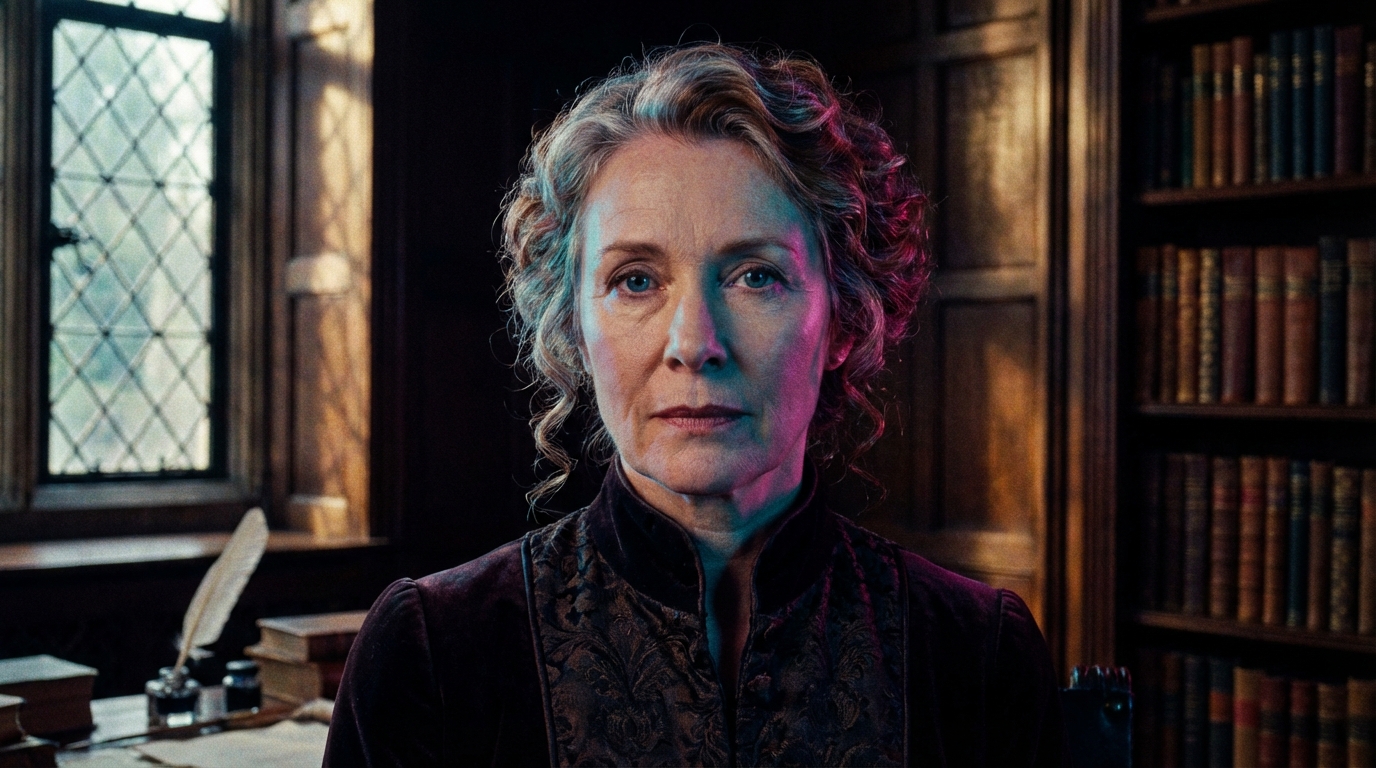
Swansea Origins and Merchant Heritage (1745–1765)
Margaret Eleanor Pritchard was born on 9 May 1745 in Swansea, the third child and second daughter of David Pritchard and Catherine Pritchard née Morgan. The Pritchard household on Wind Street overlooked the harbour where her father's ships loaded copper from the Welsh valleys and returned with Caribbean sugar and Virginia tobacco — a commerce whose rhythms governed the family's daily existence and whose calculations provided Margaret with an education more practical than any schoolroom could have delivered. David Pritchard had built his fortune through meticulous attention to shipping contracts and a talent for identifying the margins within trade regulations that separated adequate profit from genuine prosperity. Unlike the merchant princes of Bristol or Liverpool, he operated on the understanding that wealth accumulated not from spectacular individual ventures but from countless small advantages carefully secured and compounded over time — a lesson that Margaret absorbed whilst helping her mother maintain the household accounts, developing the facility with numbers that would prove indispensable in circumstances her father could not have anticipated.
Her elder brother David Junior was groomed for the business with the assumption that the family's commercial legacy would pass through the male line, whilst her elder sister Catherine was married at sixteen to another Swansea merchant in an arrangement whose swiftness reflected the priorities that governed the marriage of daughters in trading families. Margaret, occupying the position between a brother destined for commerce and a sister dispatched to domesticity, discovered that the space between these expectations contained freedoms that neither her siblings enjoyed. Her father, recognising abilities whose usefulness he appreciated even as he acknowledged their limited application once she married, permitted her unusual access to his business papers. She spent evenings in his study learning to read contracts for hidden obligations, understanding how properly structured agreements could protect against disputes that less careful documentation invited, and absorbing the principle that the control of financial information constituted a form of power whose exercise required neither title nor position.
The Pritchard home reflected Welsh Methodist influence without embracing its full severity. Family prayers occurred daily but briefly, alcohol was absent from the table, and conversation flowed with the freedom that characterised Welsh domestic life and that Margaret would later recognise, through the contrast of its absence, as one of the qualities she had valued without understanding its importance. She learned to speak Welsh, English, and sufficient French for trade correspondence — linguistic flexibility that would serve her in a household where the capacity to communicate in registers that her husband could not monitor would prove essential.
The Arranged Marriage (1765)
Margaret learned of the arrangement on her twentieth birthday, 9 May 1765, when her father announced that she would marry an English magistrate she had never met. The correspondence between David Pritchard and Samuel Barwick, Jonathan's father, had begun in late 1764 regarding a shipping contract dispute — Samuel had sought Welsh testimony for a case involving maritime insurance, and David had provided the necessary documentation. Through these professional exchanges, David had identified an opportunity to establish legal connections that might protect his increasingly complex trading operations, and Jonathan's recent appointment as junior magistrate combined with his evident need for a suitable wife presented the means.
Margaret's initial protests were addressed with commercial logic — the marriage would provide security beyond what Welsh trade could guarantee, particularly as tensions with the American colonies threatened the Atlantic commerce upon which the Pritchard fortune depended. Her mother Catherine counselled acceptance privately, sharing her own experience of an arranged marriage that had evolved into something approaching genuine partnership and offering the consolation that adaptation was a skill Margaret already possessed. The counsel was practical rather than romantic, and Margaret accepted it in the spirit in which it was offered — understanding that the alternatives available to an unmarried Welsh merchant's daughter in 1765 were sufficiently limited to make the best of a constrained situation the most rational course.
Jonathan arrived in Swansea on 15 June 1765, spending exactly three days finalising the marriage contract. Margaret observed him from the parlour window as he walked from his lodgings to their house — punctual to the minute, dressed in black despite the June warmth, carrying a leather portfolio that never left his possession. Their first meeting lasted precisely one hour, during which he enquired about her education, her understanding of household management, and her health. He displayed no interest in her opinions, preferences, or the qualities of temperament that a different kind of man might have considered relevant to the prospect of spending a lifetime in shared quarters. Margaret noted the omissions without surprise and without the resentment that surprise might have generated, understanding already that the marriage would require her to create space for herself within parameters that her husband would establish and that she would need to modify by methods he could not detect.
The wedding on 28 June 1765 at St. Mary's Church in Swansea was modest by merchant standards but precise in its legal requirements — Jonathan had brought witnesses from Canterbury to ensure proper documentation. Margaret noticed his fingers drumming against his leg during the ceremony in a rhythm whose regularity suggested he was counting intervals to verify the proper duration of each component. Her family's attempts at wedding breakfast conversation met with monosyllabic responses and visible discomfort at the informal Welsh hospitality that the Pritchard household considered natural and that Jonathan experienced as procedural disorder.
Early Marriage and Domestic Strategy (1765–1773)
The journey to Canterbury consumed four days, during which Jonathan spoke primarily to inform Margaret of household schedules and expectations. Breakfast at six o'clock precisely, dinner at one, supper at seven. Servants were to be addressed by surname only. Children, when they arrived, would follow structured educational programmes he had already drafted. Margaret listened with an attention that Jonathan interpreted as compliance and that was, in fact, reconnaissance — the careful assessment of a system whose vulnerabilities she would need to identify before she could begin to inhabit it on terms that preserved anything of the person she had been before the arrangement that had placed her within it.
Palace Street proved grander than she had anticipated but cold in ways that exceeded the inadequacy of its heating. The house contained excellent furniture arranged with mathematical precision, windows that admitted light without encouraging warmth, and a study that Jonathan immediately declared forbidden to all but himself. Margaret's early attempts to introduce Welsh wool hangings or flower arrangements were met with explanations of why such modifications would "disrupt established patterns" — objections delivered without malice but with a certainty that precluded the negotiation upon which Margaret's commercial upbringing had taught her all successful relationships depended.
She discovered, however, that whilst Jonathan controlled the household's visible structures, he had no interest in the practical management that sustained them. By presenting domestic accounts in formats that replicated his legal documents — precise, categorised, and supported by documentation — she secured complete authority over financial matters that Jonathan regarded as beneath his attention. She hired Welsh servants whose English was sufficiently limited that Jonathan avoided interacting with them directly, creating within his austere regime a parallel domestic world in which Welsh was spoken, children could occasionally laugh, and the humanity that Jonathan's schedules were designed to eliminate survived in the interstices of his awareness.
Henry's birth on 12 November 1766 provided Margaret's first significant domestic victory. Jonathan had prepared detailed instructions for the midwife, including prescribed intervals for various stages of labour whose progression he evidently assumed would conform to the schedule he had established. When the process declined to cooperate with his documentation, Margaret took command, confining Jonathan to his study whilst she managed the delivery with the midwife and a Welsh servant girl she had quietly engaged for precisely this purpose. The successful delivery of a healthy son gave her a form of authority that Jonathan's legal training could not dispute and that she would deploy, with careful discretion, throughout the decades that followed.
Motherhood and Secret Nurturing (1769–1790)
The births of Edwin on 3 March 1769, Francis Edward on 14 March 1773, Margaret Anne on 7 September 1777, and Samuel William on 22 April 1780 followed patterns that Margaret had established with Henry's arrival — Jonathan preparing elaborate protocols that she disregarded, retreating to his study during labour and emerging only to record the precise time of birth in his sentencing ledger, each child receiving a name he had selected and an educational programme he had drafted whilst their actual development remained almost entirely in their mother's hands.
Margaret's strategies for preserving emotional life within Jonathan's regime were intricate and, necessarily, invisible. She taught the children to move quietly through the house not through fear but as a game, whispering Welsh nursery rhymes that made the enforced silence amusing rather than oppressive. During Jonathan's absences at court, the household transformed — children ran in hallways, played music on instruments Margaret had purchased without Jonathan's knowledge, and listened to stories of Welsh dragons and clever merchants who outwitted rigid English officials through intelligence rather than confrontation. These hours constituted the children's actual education in the qualities that would determine their effectiveness as adults — the capacity for warmth, the understanding that rules served human purposes rather than existing as ends in themselves, and the recognition that authority was most powerful when it earned the respect that it commanded rather than merely enforcing the compliance that it demanded.
She paid particular attention to Francis Edward, recognising in her third son a combination of his father's analytical precision and her own emotional depth that she understood to be both formidable and dangerous. Whilst Jonathan drilled the boy in legal precedents, Margaret taught him to read financial documents with an attention that extended beyond the figures to the patterns they concealed — understanding that corruption operated through numbers more reliably than through testimony, and that the ability to detect what ledgers omitted was as valuable as comprehending what they contained. These lessons were disguised as household accounting exercises, conducted during the hours when Jonathan's court sessions rendered the house temporarily habitable, and they prepared Francis for the investigative career whose particular requirements Margaret seemed to anticipate years before her son understood them himself.
The Welsh letters she exchanged with her family constituted her emotional lifeline — written in Welsh and concealed among household accounts that Jonathan would never condescend to examine, they expressed the frustrations and small triumphs of life within a marriage whose constraints she had learned to navigate without learning to accept. Her brother David visited once, in 1775, staying exactly one day before declaring that he could not endure the household's atmosphere for a second. Her sister Catherine never visited at all, privately admitting that she feared exposure to Jonathan's domestic regime might contaminate the warmth of her own marriage. Margaret received these responses without bitterness, understanding that the life she managed required a tolerance for isolation that she could not reasonably expect others to share.
Managing Jonathan's Decline (1785–1794)
As the children departed — Henry to the East India Company in 1785, Edwin to military service in 1787, Francis to legal training in London in 1790 — Margaret found herself increasingly alone with a husband whose rigidity, no longer diffused across the management of a household containing five distinct temperaments, concentrated itself upon her with an intensity that tested the strategies she had refined over two decades. Jonathan began conducting mock trials at dinner, prosecuting imaginary defendants whilst Margaret and whichever children remained served as a silent jury whose verdicts he neither requested nor would have acknowledged. She learned to provide the appearance of attention at appropriate intervals whilst applying her actual concentration to the household management that sustained the domestic reality Jonathan inhabited without perceiving.
The conclusion of the American Revolution had destabilised Jonathan in ways that Margaret found genuinely alarming. He spent entire nights composing legal refutations of American independence — documents he would burn at dawn before rewriting them with modifications that reflected reconsideration without producing different conclusions. Margaret began intercepting his more extreme compositions, particularly those proposing that colonial rebellion should be punishable across generations, and when he demanded she post certain treatises to London newspapers, she performed compliance whilst consigning the documents to the kitchen fire. The deception troubled her Welsh Methodist conscience, but the alternative — allowing Jonathan to broadcast opinions whose extremity would have destroyed what remained of his professional reputation — troubled her practical intelligence more.
Margaret Anne's marriage to Reverend James Calloway in 1793 revealed the extent of Margaret Eleanor's authority within a marriage that appeared, from every visible angle, to be governed entirely by Jonathan's will. Whilst Jonathan devoted his attention to the contract's legal architecture, Margaret employed her Welsh merchant networks to investigate Calloway's character — his habits, his debts, his treatment of parishioners, and his reputation among those whose assessments she trusted. Her approval, communicated through signals her daughter had spent a lifetime learning to interpret, determined the match's acceptability more decisively than Jonathan's satisfaction with the settlement's legal structure — though Margaret ensured that Jonathan's involvement was acknowledged and her own concealed, understanding that the effectiveness of her influence depended upon its remaining undetected.
Jonathan's stroke on 19 November 1794 found Margaret nearby — she had been reviewing household accounts when she heard him fall and discovered him collapsed over his desk, his pen having traced a line across the page as his hand dropped. Her first action was to check his pulse; her second was to read what he had been writing — another refutation of colonial independence, the argument as relentless in its final iteration as in its first. She burned the document before summoning the physician, a decision made with the pragmatic swiftness that characterised her management of everything Jonathan had produced that served no purpose beyond the satisfaction of his own inflexible convictions.
Widowhood and Quiet Liberation (1794–1810)
Jonathan's death liberated Margaret in ways whose scope she had not permitted herself to anticipate. The will, structured with the precision that governed all his documents, granted her lifetime residence in the Palace Street house and authority over the grandchildren's educational funds — provisions she suspected reflected Jonathan's confidence in her administrative competence rather than any conscious desire to empower her, but that she accepted without concerning herself with the distinction. She immediately instituted changes whose modesty concealed their significance — breakfast could occur between six and eight o'clock, children could speak without being addressed, and Welsh was spoken openly in rooms where it had previously existed only in whispers.
The discovery of Jonathan's unsent letters — dozens of them, hidden in his study, expressing the affection and regret that his temperament had imprisoned throughout their marriage — affected Margaret in ways she did not describe to anyone. The letters confirmed what she had suspected across thirty years of shared domestic life: that the feelings Jonathan could not express had existed throughout, precise and documented and permanently confined behind a nature that could record emotion without communicating it. Whether this knowledge provided consolation or compounded the grief of three decades spent married to a man whose capacity for warmth had been real and permanently inaccessible, Margaret's correspondence did not reveal.
Her exchanges with Francis during the years of his colonial investigations — Jamaica, Sierra Leone, India, the Cape Colony — provided the emotional connection that sustained her widowhood and the practical intelligence that supported his career. She shared observations about financial irregularities she had identified in Jonathan's legal papers, insights whose investigative value Francis recognised immediately and that helped shape the techniques he would deploy across four decades of colonial corruption work. Her letters offered counsel about reading financial documents for the patterns they concealed, about the intelligence that powerful men's wives possessed without understanding its significance, and about the Welsh merchant networks in colonial ports that could provide information through channels that official enquiry would never access. She signed her final letter to him, dated 2 March 1810, with the words: "Your loving mother, who taught you to count in more ways than one."
Margaret Eleanor Pritchard Barwick died on 15 March 1810, thirteen days after writing that letter. She was sixty-four years old and had spent forty-five of those years in Canterbury — longer than she had lived in Wales, though Wales had remained, throughout the decades of English residence, the place from which her identity drew its sustenance and to which her emotional loyalty was ultimately directed. The funeral at Canterbury Cathedral was sparsely attended — her surviving children were scattered across the Empire, and she had cultivated no social connections in Canterbury beyond what the management of Jonathan's household required. The Welsh servants she had employed across four decades wept with a sincerity that the official mourners could not replicate, remembering kindnesses delivered in a language the magistrate had never learned and lullabies sung in rooms where silence had been the official policy.
Her grave marker bore only her name and dates — the restraint characteristic of a woman who had spent a lifetime ensuring that her contributions remained invisible. But in the family Bible, her daughter Margaret Anne later discovered an inscription in her mother's careful hand: "She kept accounts honestly, managed resources wisely, and preserved love secretly in a house built without it." Beneath it, the same words appeared in Welsh — a final insistence that some truths required the language in which they had first been understood, and that the woman who had survived three decades within Canterbury's most rigid household had done so by remaining, in every way that mattered, exactly who she had always been.







