Margaret Blackwood (née Smithson)
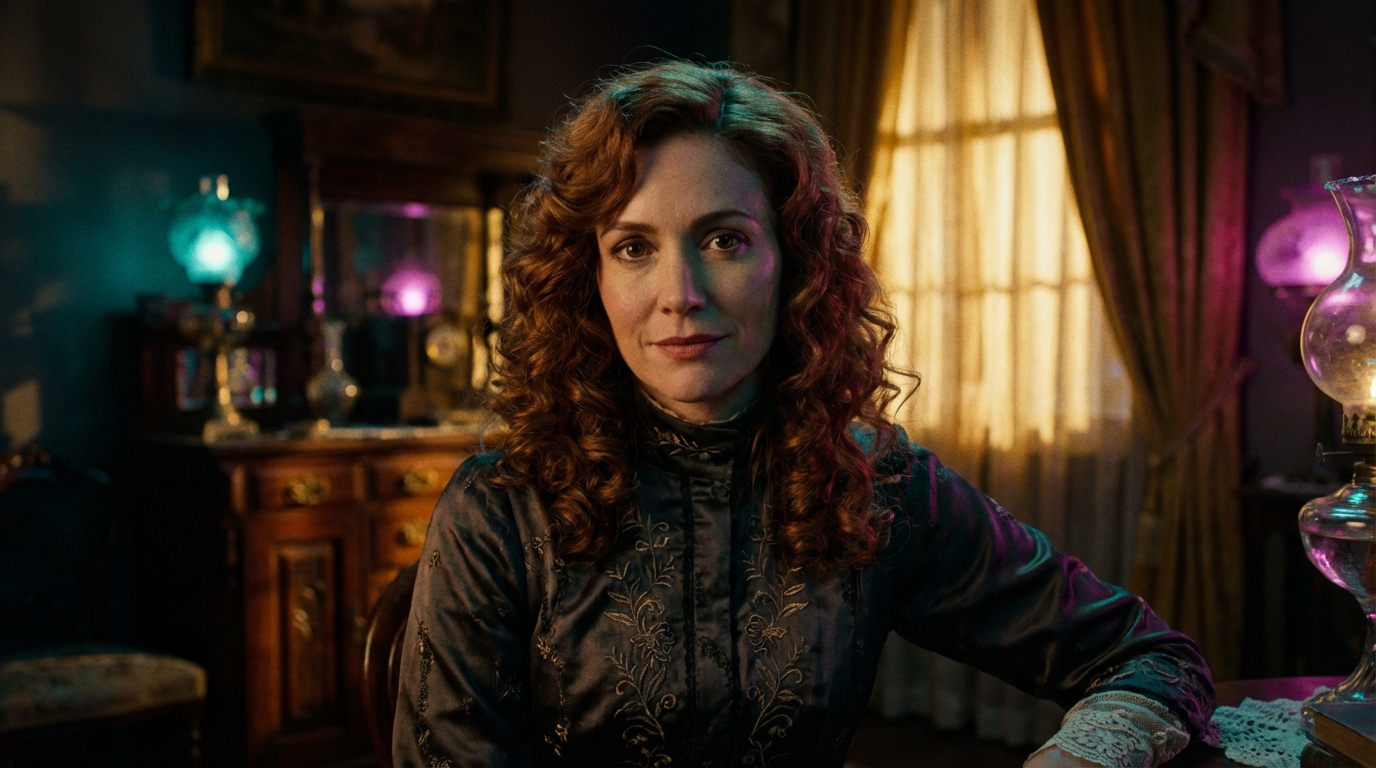
Margaret Blackwood, née Smithson (1784–1854), was the wife of the merchant Erasmus Percival Blackwood and the emotional centre of the family whose colonial enterprises she supported, sustained, and occasionally endured for nearly half a century. Born in Alresford, Hampshire, to a vicar's household, she emigrated to Sydney in 1815, founded the Sydney Ladies' Society for the Arts, raised three children to adulthood, and died after four years of illness whose cause she refused to discuss.
Early Life and Family
Margaret Smithson was born on 12 March 1784 in Alresford, Hampshire, the fifth of seven children born to the Reverend Jonathan Smithson, vicar of St Mary's Church, and his wife Eliza Smithson, née Carrington, a woman whose charitable activities within the parish established a standard of female public service that her youngest daughter would carry to the far side of the world. The vicarage at Alresford occupied a stone house beside the churchyard, its rooms scented with candle wax and old books, its routines shaped by the liturgical calendar and the domestic obligations of a clergyman's household whose income was respectable but whose expenses, with seven children to feed and clothe and educate, left little margin for indulgence.
Margaret's siblings arrived in the rapid succession that characterised clerical families of the period. Her eldest brother, Jonathan Smithson the younger, born in 1773, followed his father into the Church and eventually took a living in Dorset. Her sister Mary, born in 1775, married a naval officer and settled in Plymouth. William, born in 1777, apprenticed to a solicitor in Winchester and practised law there until his death from typhus in 1811. Anne, born in 1779, died of scarlet fever at the age of nine — a loss that Margaret, then five years old, would later identify as her earliest distinct memory. Her brother Edward, born in 1781, entered the army and served in the Peninsular War, returning to Hampshire in 1814 with injuries that confined him to a wheeled chair for the remaining twenty years of his life. Her younger sister, Catherine, born in 1787, remained unmarried and lived at the vicarage until their mother's death, thereafter supporting herself as a governess in the households of Hampshire's landed families.
The vicarage at Alresford was a household in which piety and learning coexisted without either dominating the other. Reverend Smithson was a man of genuine faith and moderate intellect whose sermons were noted more for their reliability than their inspiration. He educated his children himself in their earliest years, teaching Latin, scripture, and elementary mathematics with the methodical patience of a man who regarded instruction as a pastoral duty rather than an intellectual pleasure. Eliza Smithson provided the warmth and practical competence that her husband's temperament lacked — managing the household accounts, organising the parish charitable works, and attending to the emotional needs of seven children with a steady attention that Margaret, in later life, would recognise as the template for her own approach to domestic management.
Margaret was, by her own account and the recollections of her siblings, the quietest of the Smithson children. She was neither the most intellectually gifted — that distinction belonged to William, whose legal career would have flourished had illness not cut it short — nor the most socially engaging. She was observant, patient, and possessed of an emotional steadiness that those around her came to depend upon without always recognising its value. She noticed things: the shifts in her father's mood that preceded his winter melancholies, the tension in her mother's hands when household expenses exceeded the quarter's income, the particular quality of silence that meant Anne's absence was being felt rather than discussed. This capacity for attention — for registering the emotional weather of a room and adjusting her own behaviour to moderate its extremes — would prove her most consequential gift, and the one that exacted the highest personal cost.
Education
Margaret's early education at the vicarage was supplemented, from the age of ten, by lessons with the wife of a neighbouring landowner who taught drawing, French, and the rudiments of music to the daughters of Alresford's professional families. She showed genuine talent for watercolour and a competence at the piano that was sufficient for performance at parish gatherings without being remarkable enough to attract wider attention. Her reading was extensive if unsystematic — she consumed the novels that circulated through Hampshire's lending libraries with an appetite that her father mildly deplored and her mother quietly facilitated, developing a taste for fiction that would persist throughout her life and that provided, during the lonelier periods of her marriage, a form of companionship that the physical world did not reliably supply.
In 1797, at the age of thirteen, Margaret was sent to Miss Haversham's Academy for Young Ladies in Bath, a finishing school situated at Camden Crescent whose progressive headmistress, Miss Judith Haversham, combined traditional accomplishments with a curriculum that extended further into academic territory than most parents of the period considered necessary for their daughters. Margaret spent five years at the academy, returning to Alresford in 1802 with proficiency in French, music, and painting, a broadened awareness of the social reform movements that were reshaping English public discourse, and a confidence in her own capabilities that the vicarage, for all its virtues, had not provided. The academy would later educate Emily Eleanor Harrington, who would marry Margaret's eldest son Thomas — a coincidence of institutional connection that neither woman could have anticipated but that created, across generations, a shared educational foundation whose influence on the Blackwood family's intellectual character should not be underestimated.
Courtship and Marriage
Margaret's return to Alresford coincided with a period of social expansion in Hampshire's country towns, as the mercantile families whose wealth derived from Portsmouth's naval and commercial activity sought connections with the established rural gentry whose social prestige complemented their own financial resources. It was through these networks — the summer balls, the church socials, the dinner parties that connected commercial Portsmouth with agricultural Hampshire — that Margaret encountered Erasmus Percival Blackwood in the summer of 1804.
Erasmus was twenty-four years old, recently returned from Oxford, and already managing significant portions of his father's trading firm. He was ambitious, physically imposing, and possessed of a directness that Margaret found simultaneously attractive and unsettling. She was twenty, the daughter of a vicar whose income could not compete with the Blackwood family's commercial wealth, and aware that the match — should it develop — would require her to enter a world whose rhythms and values differed substantially from those of the vicarage. The courtship was conducted through the conventional channels of the period: chaperoned visits, formal correspondence, and the careful negotiations between families that preceded any commitment. Margaret's parents approved of Erasmus's prospects without entirely approving of his manner, and the reservations they expressed privately — that the young merchant seemed more interested in what he could build than in who he might build it with — proved more perceptive than anyone acknowledged at the time.
Margaret Smithson and Erasmus Percival Blackwood were married on 17 May 1805 at St Mary's Church in Alresford, the same church where Margaret had been baptised and where her father had preached for twenty years. She was twenty-one years old. The ceremony was attended by both families, and Margaret left the vicarage that afternoon for Portsmouth, where she entered the Blackwood household and the commercial world that would define the next forty-five years of her life.
Portsmouth and Winchester
The early years of Margaret's marriage were spent in Portsmouth, where Erasmus's family business was headquartered and where the domestic demands of a merchant household bore little resemblance to the quieter rhythms of Alresford's vicarage. Margaret adapted to her new circumstances with the competence that her temperament made possible and the grace that her upbringing had cultivated, managing the household accounts, entertaining the commercial associates whose goodwill her husband's business required, and navigating the social expectations of Portsmouth's mercantile class with a steady capability that Erasmus relied upon without always remembering to acknowledge.
The first seven years of marriage produced no children, a circumstance that Margaret bore with outward composure and private anguish. Colonial-era medicine offered no explanation and no remedy for the difficulty, and the expectation that a merchant's wife would produce an heir weighed upon Margaret with a pressure that Erasmus's preoccupation with his business ventures prevented him from fully perceiving. Whether the delay reflected a medical condition, the physical consequences of the stress that accompanied her transition to a new and demanding domestic role, or simply the ordinary variability of human fertility, the surviving records do not indicate. The years of waiting ended when Thomas Erasmus Blackwood was born on 1 May 1812 in Winchester, where the family had relocated following the death of Erasmus's mother in March of that year. Margaret was twenty-eight years old, and the relief she experienced at Thomas's safe arrival carried an intensity that shaped her relationship with her firstborn — and with all her subsequent children — in ways that neither she nor they could entirely escape.
Emigration and Colonial Life
In 1815, when Thomas was three years old, Erasmus made the decision to emigrate to New South Wales. Margaret's feelings about the move are not recorded in the surviving correspondence, though the absence of any enthusiastic endorsement in her letters suggests that she accepted the decision as she accepted most of Erasmus's commercial choices — with a pragmatism that trusted his judgement in matters of business whilst reserving her own assessment for domains he considered beneath his attention. She left behind her father, her surviving siblings, and the Hampshire landscape that had formed her, carrying across fifteen thousand miles of ocean the domestic skills, social competence, and emotional resilience that the colony would demand of her in quantities she could not have anticipated.
Sydney in 1815 was a settlement whose roughness tested every aspect of Margaret's upbringing. The convict population, the dust, the heat, the insects, the absence of the cultural amenities that even modest English towns provided — these were conditions that required adaptation rather than mere endurance, and Margaret proved more capable of the former than many women of her background. She established the household that Erasmus's commercial activities required, managed the domestic staff whose reliability varied from adequate to disastrous, and began the process of building the social world that would sustain her through the decades of her husband's frequent absences and her own increasing responsibilities.
Elizabeth Anne Blackwood was born on 23 August 1816, the first of Margaret's children to enter the world on colonial soil. A stillborn boy followed in the winter of 1818, an event that Margaret's correspondence addresses only through its silence — a gap in the letters where a birth should have been announced. Henry Jonathan Blackwood, the last of her children, was born on 10 February 1820. Margaret also suffered at least two early miscarriages during the Sydney years, losses whose cumulative effect on her physical and emotional resilience is difficult to assess but impossible to discount. By the time Henry's safe arrival confirmed that the family was complete, Margaret was thirty-five years old and carried the bodily knowledge of what pregnancy could cost as well as what it could provide.
Motherhood and Its Costs
Margaret's approach to her children was shaped by the losses she had experienced and the anxieties those losses created. She was devoted, attentive, and protective to a degree that her children experienced differently depending on their temperaments and their positions within the family. Thomas, the firstborn whose arrival had ended seven years of waiting, received the particular intensity of attention that a long-desired child attracts — attention that he accepted as his due and that prepared him, inadvertently, for the expectation-heavy relationships he would maintain throughout his adult life. Elizabeth, the daughter whose colonial birth made her a creature of the new world rather than the old, found in her mother a combination of warmth and restriction that her bookish, independent temperament alternately welcomed and resisted. Henry, the youngest, born after the stillbirth that had sharpened Margaret's terror of infant loss, was wrapped in a protectiveness so thorough that it delayed his emotional independence by years and created a dependency that the colonial world's demand for self-reliance would eventually, and not gently, correct.
The domestic world Margaret managed was one in which her husband's presence was intermittent and his attention, when available, was directed toward his children as categories — the heir, the daughter, the youngest — rather than as individuals whose inner lives merited sustained curiosity. Margaret compensated by providing the emotional engagement that Erasmus could not, reading to her children in the evenings, supervising their education with a care that exceeded what the family's financial position strictly required, and creating in the home an atmosphere of stability whose maintenance demanded more effort than anyone outside its walls could perceive. She was the person who noticed when Thomas was struggling with a lesson, when Elizabeth was withdrawing into her books to avoid a social interaction she found frightening, when Henry was clinging more tightly than a boy of his age should. She noticed, she adjusted, she managed. The management was invisible, as domestic management always is, and Margaret bore its invisibility with the patience that was both her greatest strength and the quality that most reliably ensured that her contributions would be taken for granted.
The Sydney Ladies' Society for the Arts
In 1818, Margaret founded the Sydney Ladies' Society for the Arts, an organisation that provided colonial women of the professional and mercantile classes with opportunities for cultural engagement that the settlement's underdeveloped institutional landscape otherwise denied them. The Society arranged exhibitions of painting and needlework, hosted musical evenings, organised lectures on subjects ranging from literature to natural history, and created a social space in which women could exercise intellectual and creative capacities that domestic life alone could not accommodate.
The founding of the Society represented Margaret's most significant independent contribution to colonial life — an achievement that existed outside the framework of her husband's commercial enterprises and that derived from her own assessment of what the colony's women needed rather than from Erasmus's priorities. The organisation was modest in scale and conventional in its activities by the standards of later reforming movements, but it filled a genuine gap in the cultural life of a settlement whose masculine preoccupations — commerce, construction, the administration of a penal population — left little institutional space for the arts that Margaret and women like her considered essential to civilised existence.
Margaret managed the Society with the same quiet competence she brought to her domestic responsibilities — arranging programmes, securing venues, managing the interpersonal dynamics of a membership whose social aspirations sometimes generated rivalries that required diplomatic intervention. She was not a natural public figure; she lacked the rhetorical force of her daughter Elizabeth, the intellectual authority of her future daughter-in-law Emily, and the organisational aggression of her granddaughter Eliza. What she possessed instead was reliability — the capacity to ensure that things happened, that commitments were honoured, that the institutional machinery continued to function regardless of the enthusiasm or indifference of those around her. It was an unglamorous gift, and Margaret knew it.
The Middle Years
The decades between Henry's birth in 1820 and Erasmus's death in 1850 were Margaret's most demanding and her least documented. The family's commercial enterprises expanded, requiring Erasmus's attention with an intensity that left diminishing space for domestic engagement. Thomas was sent to England for schooling in 1826, creating an absence that Margaret felt acutely and that Erasmus regarded as a necessary investment in the boy's future. Elizabeth grew into a young woman whose literary ambitions and forthright temperament sometimes clashed with her mother's preference for discretion and social conformity. Henry remained at home longer than his siblings, his development slowed by the protectiveness that Margaret could not entirely relinquish even as she recognised its costs.
Margaret's relationship with Erasmus during these years was characterised by the pragmatic accommodation that long marriages between dissimilar temperaments eventually achieve. She had understood, within the first years of their union, that her husband's primary attachment was to his commercial projects rather than to his domestic life, and she had adapted to this understanding with the stoicism that her vicarage upbringing and her Anglican faith both endorsed. She did not complain, did not reproach, did not demand from Erasmus the emotional presence that she had learned he could not provide. Whether this silence represented genuine acceptance, the suppression of feelings whose expression would have been futile, or a form of withdrawal so gradual that neither partner recognised it as it occurred, Margaret herself may not have been able to determine. The marriage functioned. It produced children who were loved, a household that was well-managed, and a social infrastructure that supported Erasmus's commercial reputation. What it did not produce, except intermittently and by accident, was the companionship that Margaret had imagined, on the day she left the Alresford vicarage in her wedding dress, that marriage might include.
She found companionship elsewhere — in her friendships with other colonial women, in the Society she had founded, in her correspondence with the Hampshire relatives whose letters arrived months after the events they described and whose English news carried the particular poignancy of a world she would never see again. She read novels, as she had always done, the habit that her father had mildly deplored providing in middle age the same solace it had offered in adolescence. She painted watercolours of the harbour and the bushland, modest works whose technical skill was adequate without being distinguished but whose production gave her pleasure and whose subjects — landscapes rather than portraits, scenery rather than people — suggested a preference for the beauty of the natural world over the complexities of the human one.
Widowhood
Erasmus Percival Blackwood collapsed at his desk on 18 December 1850 and died two days later, on 20 December, at the age of seventy. Margaret was sixty-six years old. The loss removed the figure around whom her adult life had been organised — not the centre of her emotional world, which her children and her friendships occupied more completely than her husband ever had, but the structural framework within which that world existed. Erasmus's death required Margaret to engage with dimensions of the family's affairs — financial, legal, commercial — that his dominance of those spheres had allowed her to avoid, and the adjustment was more difficult than she had anticipated. Thomas, by then established in his own career and preparing to move his professional focus toward Tasmania, provided the guidance and practical support that his mother required, but the relationship between them during this period carried the awkwardness of a son assuming authority over matters that his father's presence had previously settled.
The four years of Margaret's widowhood were marked by a gradual physical decline whose specific character she disclosed to no one except, presumably, her physician. She grew thinner, tired more easily, and reduced her social engagements with an incrementalism that allowed those around her to attribute the changes to age and grief rather than to illness. She maintained her involvement with the Sydney Ladies' Society for the Arts until approximately 1852, when the effort required to attend meetings exceeded what her diminishing energy could sustain. She continued to receive visitors at home, to correspond with her surviving siblings in Hampshire, and to follow the lives of her children and grandchildren with an attention that illness could diminish but not extinguish.
Whether the decline that killed her was cancer, a chronic infection of the lungs, or some other condition that colonial medicine could identify but not treat, Margaret refused to specify and her family did not press the question. The reticence was characteristic. She had spent a lifetime managing other people's awareness of her circumstances, presenting the face that each situation required whilst keeping her own fears, frustrations, and physical sufferings behind the composed exterior that everyone had come to expect. The illness was simply the last thing she managed privately — the final exercise of a discretion so habitual that those who loved her could not distinguish it from secrecy.
Death
Margaret Blackwood died on 15 July 1854 in Sydney, at the age of seventy. She had been confined to her bed for the final three weeks, attended by a nurse and visited daily by Elizabeth, who had assumed the role of primary companion during her mother's illness with a devotion that their sometimes prickly relationship might not have predicted. Thomas was in Sydney during the final days, having travelled from his expanding interests in Hobart when Elizabeth's letters conveyed the urgency that Margaret's own correspondence had carefully concealed. Henry, at thirty-four the youngest and still the most emotionally dependent of the siblings, was present but struggled to reconcile the diminished figure in the bed with the woman whose protectiveness had defined his childhood.
She died in the early evening, as the winter light was fading over the harbour that she had watched from her window for nearly forty years. The room was quiet. The children were present. The novels she had been reading — she had maintained the habit until the final week — lay stacked on the bedside table with a ribbon marking her place in the uppermost volume. She did not finish it.
Margaret Blackwood had been a woman of genuine capability, considerable endurance, and a self-effacement so thoroughgoing that it constituted both her contribution and her limitation. She held the family together through decades of her husband's preoccupation, her children's competing demands, and the particular loneliness of a woman whose emotional labour was essential to everyone around her and visible to none of them. She managed the household, founded an institution, raised three children who each achieved more than she did, and bore the losses — the stillborn son, the miscarriages, the long absences, the marriage that functioned without flourishing — with a composure that those who benefited from it mistook for contentment. She was not content. She was competent, and she was loyal, and she was tired, and she kept going anyway, because the alternative — to stop, to complain, to demand recognition for the work that kept everything from falling apart — was not something that a vicar's daughter from Alresford, raised on patience and duty and the quiet conviction that other people's needs took precedence over her own, could bring herself to do.







