Mandy Elizabeth Glasson
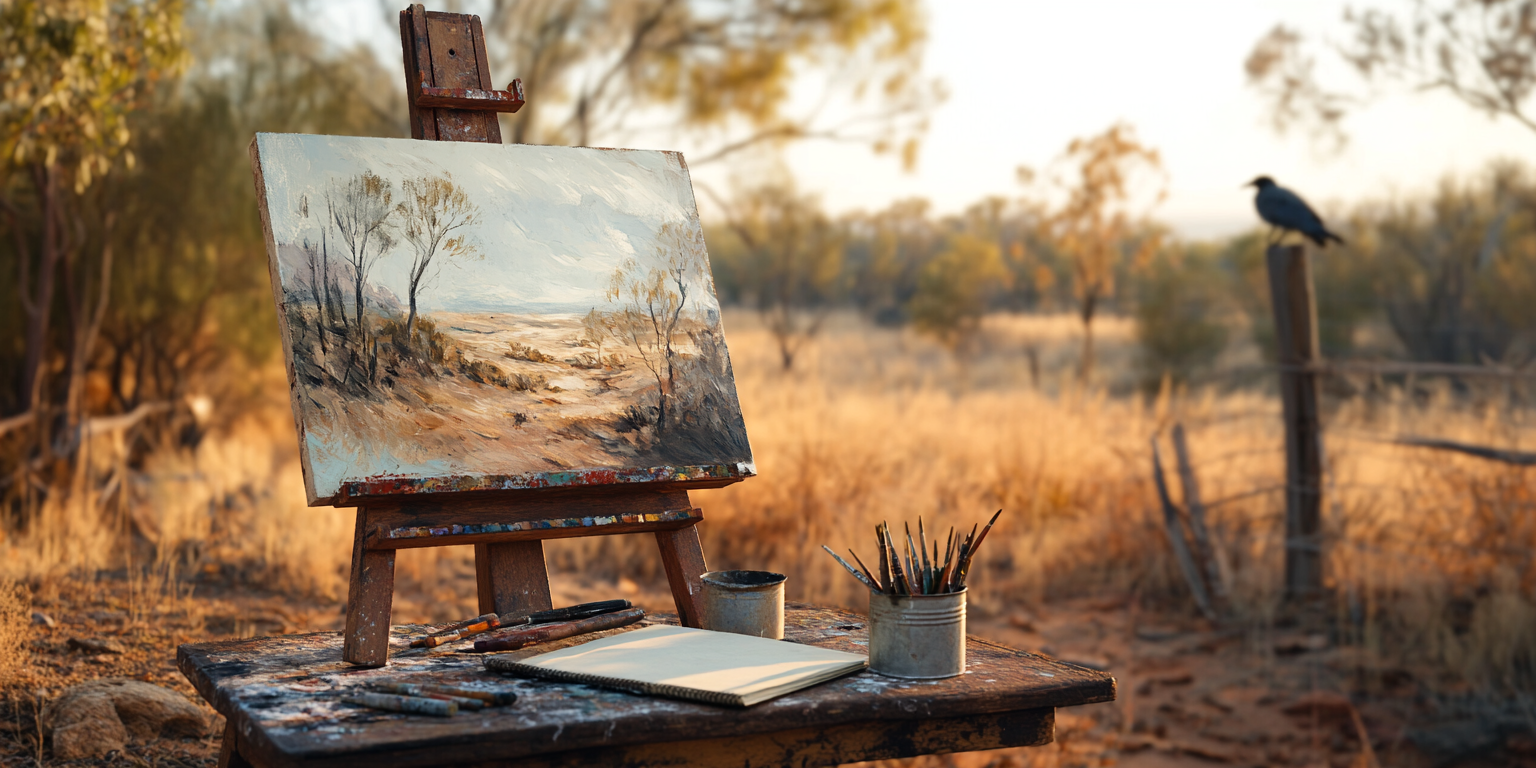
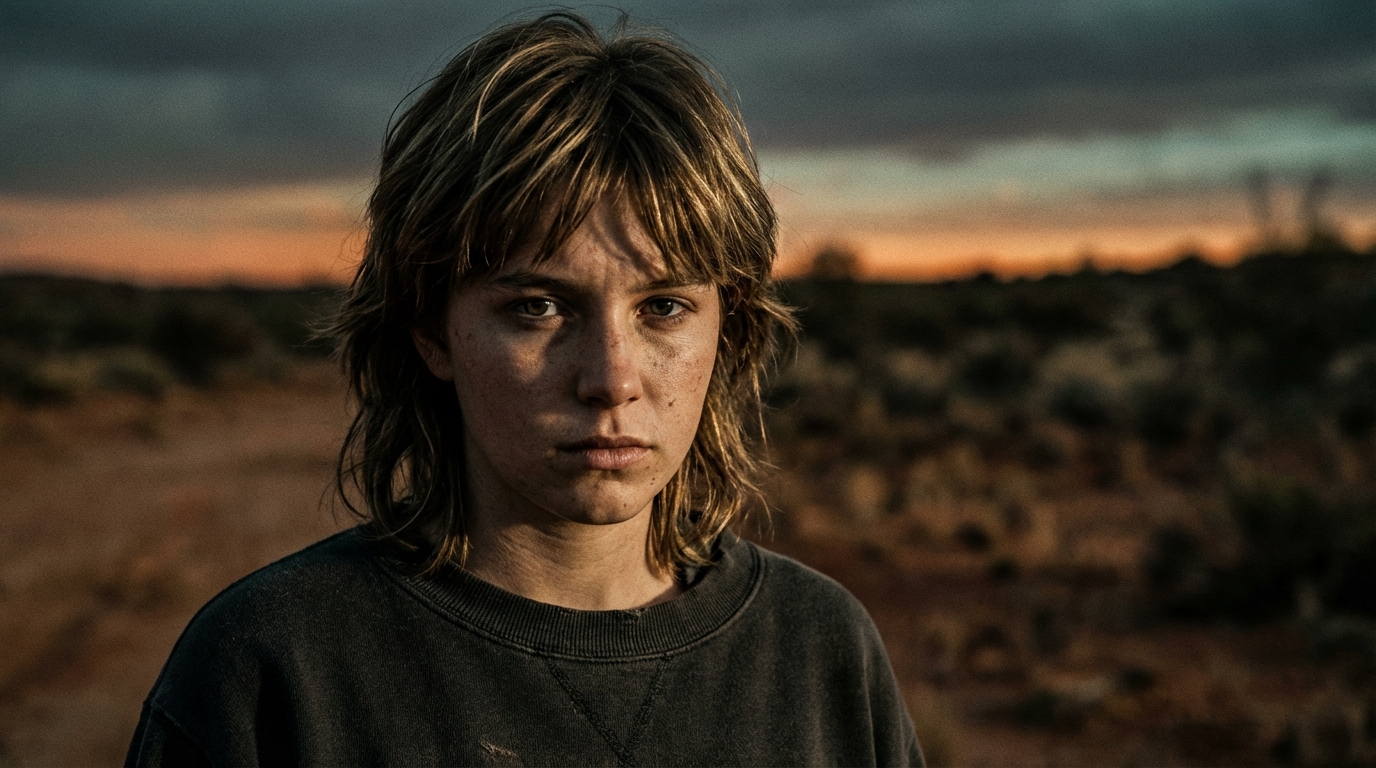
Mandy Elizabeth Glasson (born 5 June 1972) is an artist and truth-seeker from Broken Hill, New South Wales, whose life was irrevocably shaped by the brutal murder of her best friend Violet Dallow in 1988. The only child of a police detective and a schoolteacher, she developed an early fascination with the hidden stories buried in abandoned places and the shadows that lingered at the edges of her mining town. Her art, once vibrant with the raw beauty of the Outback, transformed into darker explorations of loss and memory following Violet's death, ensuring that the forgotten victims of the Silverton Strangler would never fade from public consciousness.
Early Years: Between Order and Chaos
Born at 11:42 a.m. on a crisp winter morning at Broken Hill Base Hospital, Mandy Elizabeth Glasson arrived into the world with what the midwives described as "the most insistent cries they'd heard all year." Her father, Barry Leonard Glasson, a police constable already developing his reputation for methodical investigation, paced the corridors with uncharacteristic nervousness whilst her mother, Margaret Anne (née Wilson), endured fourteen hours of labour with the same quiet determination that would define her approach to motherhood.
The Glasson household at 47 Chloride Street represented a study in contrasts. Barry, promoted to senior constable when Mandy was three, brought home the weight of the Barrier Police District's darkest cases, his study door permanently locked against curious fingers. Margaret, appointed to Broken Hill South Primary School the year before Mandy's birth, filled their modest weatherboard home with books, art supplies, and the gentle chaos of educational experiments. Where Barry insisted on structure—bed by half-past seven, chores completed before play, absolute respect for authority—Margaret encouraged questions, supplied endless sheets of butcher's paper for drawing, and taught her daughter that rules existed to be understood, not blindly followed.
Mandy's earliest memories involved sneaking barefoot down the hallway at night, pressing her ear against her father's study door to catch fragments of telephone conversations about "another one missing near Silverton" or "blood evidence at the Sullivan Creek site." When Barry discovered her eavesdropping in March 1978, his fury was tempered by something else—perhaps recognition of his own investigative instincts reflected in his six-year-old daughter's determination to know what adults wouldn't tell her.
The Education of a Rebel
At Broken Hill South Primary, where her mother taught Year 4, Mandy quickly established herself as brilliant but ungovernable. Her Year 1 teacher, Mrs Patricia Holden, wrote in her June 1978 report: "Mandy possesses exceptional artistic talent and an enquiring mind, but she challenges every instruction and must learn that 'because I said so' is sometimes sufficient explanation."
By Year 3, Mandy had been sent to the headmaster's office seven times—twice for organising expeditions to the abandoned Consolidated Mine during lunch breaks, once for creating "historically accurate" drawings of mining accidents that disturbed other students, and four times for what was diplomatically termed "persistent questioning of curriculum content." Her mother, caught between professional embarrassment and maternal pride, began teaching Mandy at home in the evenings, feeding her daughter's hunger for knowledge whilst attempting to instil some measure of diplomatic restraint.
The old BHP mine sites became Mandy's true classroom. Armed with a sketch pad and her father's former police torch (pilfered from the garage), she spent weekends exploring the derelict buildings surrounding Broken Hill. Her drawings from this period—discovered years later in a biscuit tin beneath the house—reveal an unusual eye for the beauty in decay: rusted machinery transformed into abstract sculptures, collapsed timber frames creating geometric shadows, nature slowly reclaiming human ambition.
Friendships Forged in Adventure
Mandy's transition to Broken Hill High School in February 1985 marked the beginning of the most significant relationships of her life. On her second day, during a particularly tedious geography lesson about mineral deposits, she noticed a dark-haired girl in the adjacent row sketching elaborate patterns in her notebook margins whilst somehow maintaining the appearance of rapt attention. This was Violet Dallow, and their whispered conversation about the teacher's toupée resulted in both girls receiving detention—the first of many they would share.
By April, their duo had expanded. Rebecca Monk joined after Mandy defended her against older students mocking her methodical note-taking. Michelle Richards entered their circle following a spectacular argument with the deputy principal about dress code enforcement, which Mandy had watched with open admiration from the administration office where she was serving yet another detention.
The four girls formed an unlikely alliance: Violet with her obsession for historical mysteries, Mandy with her artistic eye and inherited detective instincts, Rebecca with her careful analysis and voice of reason, Michelle with her fierce protectiveness and refusal to back down from any fight. They spent their afternoons at Michelle's house on Wilson Street, where her mother's chocolate chip biscuits and benign neglect provided the perfect environment for planning increasingly ambitious adventures.
Their explorations took them to the Umberumberka Reservoir remains, where Mandy sketched whilst Violet spun theories about workers who'd vanished during construction. They investigated the abandoned Silverton Tramway workshops, Mandy capturing the play of light through broken windows whilst her friends searched for evidence of the rumoured underground tunnels. These expeditions weren't mere teenage rebellion—they were training grounds for the investigation that would consume them all in 1988.
The Glasson Household Under Strain
As Mandy entered her teenage years, the dynamics within the Glasson home shifted perceptibly. Barry, promoted to detective sergeant in 1986, began working the cases that would define his career—a series of disappearances of young women in the Silverton area that the media hadn't yet connected. His presence at home became increasingly sporadic, and when he was there, he existed behind a wall of exhausted silence or explosive irritability.
Margaret attempted to maintain normalcy, but the strain showed in small ways: forgotten parent-teacher conferences, burned dinners whilst she stared out the kitchen window, the gradual disappearance of her gentle humming whilst marking assignments. Mandy, caught between her parents' diverging worlds, began spending more time in the converted shed that served as her art studio, transforming her observations of family fracture into increasingly sophisticated works.
The dinner table, once a place of lively discussion about school and local events, became a minefield. Barry's attempts to impose curfews and restrictions met with Mandy's pointed questions about why young women weren't safe in their own community. Margaret's peacekeeping efforts only highlighted the growing chasm between father and daughter—one driven to protect through control, the other determined to understand through exploration.
The Shadow Approaches
The year 1988 began with an unusual heatwave that had Broken Hill's residents comparing it to the legendary summer of 1939. Mandy, now sixteen, had developed into a striking young woman with sun-streaked brown hair, her mother's hazel eyes, and her father's sharp jawline. Her art had attracted attention from teachers suggesting she apply for Sydney art schools, but Mandy seemed more interested in documenting Broken Hill's hidden corners than pursuing formal recognition.
The disappearance of Sally Harlow in early September 1988 marked the moment Mandy's childhood truly ended. She overheard her father's telephone conversation on the evening of 18 September—phrases like "another young woman," "fits the pattern," and "Christ, how many more?"—through the study door she'd learned to crack open just enough to catch sound without detection. When she shared this intelligence with her friends the following day, she watched something change in Violet's eyes, a recognition that their amateur investigations had stumbled onto something genuinely dangerous.
Days of Revelation
On 19 September, during Mr Clarke's history lesson about Emily Sullivan's 1890s disappearance near Silverton, Mandy sketched obsessively in her notebook—not her usual architectural studies but fevered drawings of female figures dissolving into landscape, becoming one with the red earth. She recognised in Violet's intense focus during that lesson the same compulsion that drove her father's late-night studying of case files, the dangerous magnetism of unsolved mysteries.
The following days blurred together in a frenzy of clandestine investigation. On 20 September, Mandy accompanied Violet to the police station, ostensibly to bring her father lunch but really to observe, to gather intelligence through artistic observation. She watched her father's haunted exhaustion, noticed how his hands trembled slightly when he thought no one was looking, saw the map on his wall with its cluster of red pins around Silverton.
Their 21 September expedition to the abandoned Silver Queen Mine tested everything Mandy thought she knew about courage. As she traced her fingers across Sally Harlow's hidden map, artistic instinct recognised the desperate artistry in how the missing woman had concealed her findings. The moment when shadow moved outside the building—when they realised they were being watched—remained burned into Mandy's memory, later appearing repeatedly in her paintings as a dark figure at the edge of perception.
Journey to Silverton
The Girl Guides camping trip to Silverton on 30 September represented both an ending and a beginning. As the bus wound through the Outback towards the War Memorial Youth Camp, Mandy sketched her friends in her journal: Michelle laughing at something Rebecca had said, and Violet staring straight ahead with an expression of terrible determination.
The camp itself, with its cluster of weatherboard buildings and distant view of the Mundi Mundi Plains, should have been perfectly safe. Guide Leader Mrs Patterson had chosen it specifically for its proximity to town, its well-maintained facilities, its history of successful camps. But Mandy's artistic eye caught details others missed: fresh tyre tracks leading into the scrub, cigarette butts near the ablution block that weren't weathered enough to be old, the way certain counsellors kept checking their watches and scanning the horizon.
That night, when Violet suggested they sneak out to explore, Mandy felt the weight of premonition she couldn't articulate. The strange glow they witnessed beyond Penrose Park, the encounter with Gordon Richards and his friend near their illegal campfire, the terror of being separated when Mandy entered the derelict toilet block alone—each moment stacked upon the next, building towards catastrophe.
The Disappearance
Mandy woke on the morning of 1 October to find Violet's sleeping bag empty, her friend's absence discovered during the 6 a.m. head count. The next hours passed in a blur of police interviews, search parties, and desperate hope.
Barry arrived at the camp by 8 a.m., his professional composure cracking when he saw his daughter's tear-stained face. The moment when their eyes met—his filled with the terrible knowledge of what "missing" usually meant in these cases, hers pleading for reassurance he couldn't provide—marked the end of whatever innocence their relationship had retained.
Days of Searching & The Discovery
The search for Violet consumed Broken Hill. Mandy, Michelle, and Rebecca created and distributed missing posters, organised volunteer search parties, and appeared on regional radio pleading for information. Mandy's artistic skills proved invaluable—her portraits of Violet captured something essential that photographs missed, a quality of intelligent determination that made viewers feel they truly knew the missing girl.
On 5 October 1988, bushwalkers discovered Violet's body in Silverton, posed like a sculpted artwork. The news reached the Glasson household through Barry's police radio, the official codes doing nothing to soften the brutal reality. Mandy's response—a sound Margaret later described as "like something breaking that could never be repaired"—brought neighbours to their doors.
The funeral, held at St Patrick's Catholic Church, saw Mandy deliver a eulogy that abandoned conventional platitudes. She spoke of Violet's dangerous curiosity, her refusal to accept comfortable lies, her determination to find truth regardless of cost. She also made a promise: that Violet's story wouldn't end with her death, that the questions she'd asked would continue to be asked, that the shadows she'd challenged would never be allowed to rest easy.
Art from Ashes
In the months following Violet's death, Mandy's art transformed completely. Gone were the architectural studies and landscape sketches. In their place emerged works of raw emotional power: mixed media pieces incorporating newspaper clippings about missing women, portraits where faces seemed to flicker between presence and absence, installations using objects recovered from abandoned sites where women had vanished.
Her first exhibition, held at the Broken Hill Regional Art Gallery in September 1989—exactly one year after Violet's disappearance—created controversy and acclaim in equal measure. Titled "Unquiet Earth," it featured twenty-three works, one for each woman who had disappeared in the region over the past century. Barry attended the opening but left after viewing only three pieces, Margaret later finding him sobbing in his car in the gallery car park.
The Investigator's Daughter
Throughout the 1990s, Mandy maintained an uneasy relationship with her father's continued investigation into the Silverton Strangler case. She provided information when asked, shared her memories of that final night countless times, but never fully trusted that Barry was revealing everything he knew.
Her mother became a bridge between them, translating Mandy's accusations into questions Barry could answer, interpreting Barry's defensive silence into explanations Mandy could accept. But the family dinners grew increasingly rare, holiday celebrations became obligatory rather than joyful, and eventually, even Margaret's diplomatic efforts couldn't prevent the relationship from settling into cordial distance.
Creating Memory
By her thirties, Mandy had established herself as one of regional Australia's most distinctive artists. Her work appeared in galleries from Sydney to Perth, always returning to themes of absence, memory, and the violence that lurks beneath Australia's sunburnt surface. She never left Broken Hill, despite numerous offers from metropolitan galleries to relocate.
Her studio, built on land overlooking the old Silverton road, became a repository of memory. The walls were covered with photographs, newspaper clippings, and maps marking locations where women had vanished. She maintained correspondence with families of missing persons across Australia, her art giving voice to their unresolved grief. The Violet Fund, established by Jasmine Dallow, frequently commissioned works from Mandy for their awareness campaigns.
The Unfinished Investigation
Barry's retirement in 2011 brought an unexpected development. He arrived at Mandy's studio carrying boxes of case files—not official documents, but his private investigations conducted over nearly three decades. Together, father and daughter spent months reviewing evidence, connecting patterns, identifying suspects the official investigation had dismissed or overlooked.
This collaboration, painful as it was, provided a kind of reconciliation. Mandy began to understand the weight her father had carried, the choices between justice and family safety he'd been forced to make. Barry, in turn, recognised that his daughter's art had preserved crucial details that formal reports had missed or dismissed.







