Maeve Jane Campbell
Born in Edinburgh on 9 March 2008, Maeve Jane Campbell grew into her role as the Campbell family's emotional heart through creative gifts that transformed observation into art and empathy into understanding. Her mother's death when Maeve was eight years old left conversations unfinished but legacies intact—the storytelling instincts, the eye for beauty in overlooked places, the capacity to feel what others could not articulate.
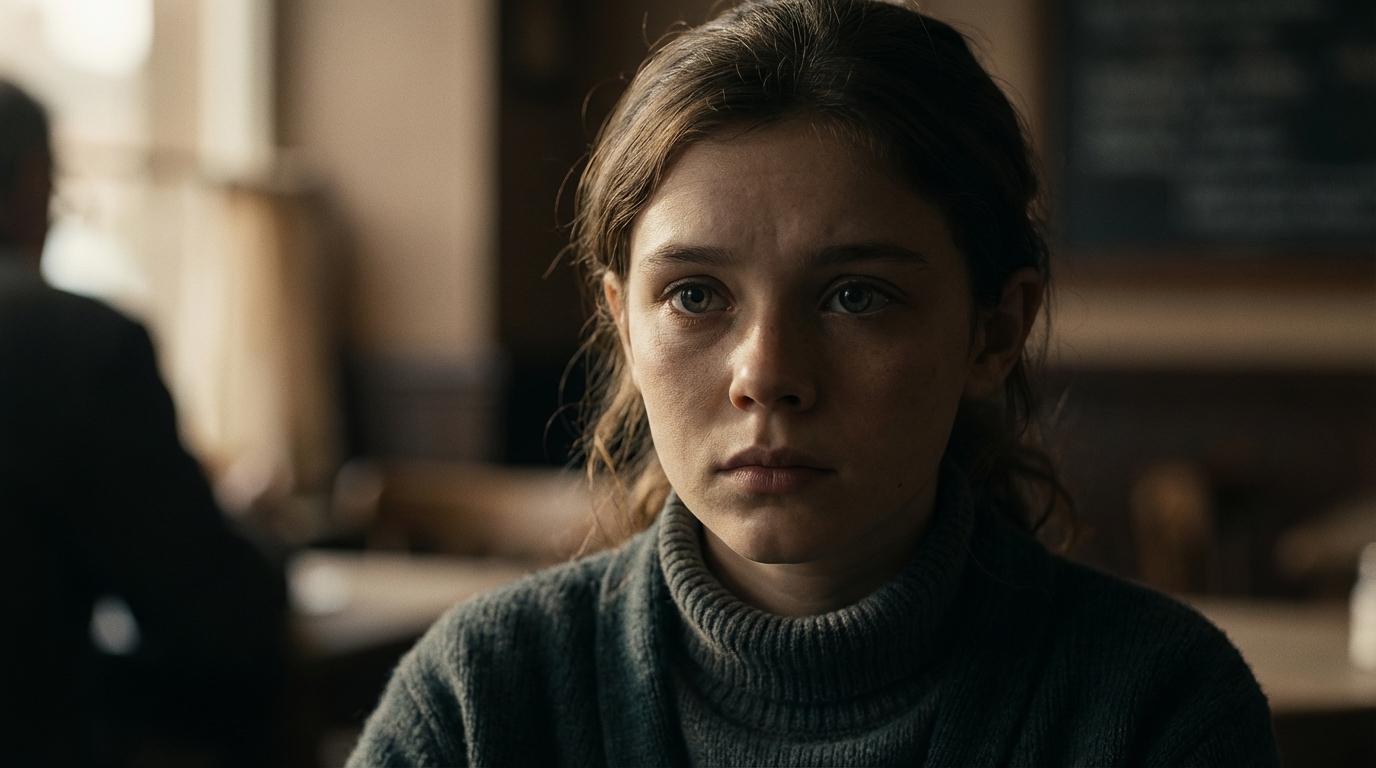
Birth and the Gift of Expression
Maeve Jane Campbell was born on 9 March 2008 at the Royal Infirmary of Edinburgh, the second daughter of Daniel Alistair Campbell and Eloise Margaret Campbell née Turner. She arrived in the transitional weeks between winter and spring, and something of that liminal quality would characterise her nature—she would grow into a girl who inhabited the spaces between things, who noticed what existed in margins and silences, who found stories where others saw only ordinary life.
The name Maeve had been Daniel's choice, drawn from Irish mythology and its associations with queens and poets. Jane honoured Eloise's mother, Catherine Jane Turner, establishing connection to the maternal line that would prove unexpectedly significant as Maeve grew. The combination carried both strength and gentleness, qualities the infant would embody in her own particular balance.
She entered a household already shaped by her elder sister's presence. Isla, fifteen months old when Maeve arrived, had established patterns of watchful analysis that her parents recognised and accommodated. Maeve's temperament announced itself as something entirely different—where Isla observed and processed, Maeve responded and expressed. She was a baby of evident emotion, her face mobile with feeling, her cries and laughter equally communicative of inner states she made no attempt to conceal.
The Morningside flat that housed the growing family filled with the sounds and energies of two distinct children. Daniel and Eloise found themselves navigating different needs, different rhythms, the challenge of ensuring each daughter felt individually recognised whilst building collective family identity. They rose to this challenge with the same careful attention they brought to everything—Daniel's methodical approach complemented by Eloise's editorial instinct for balance and proportion.
Early Childhood and Creative Awakening
Maeve's creative nature emerged before she possessed the skills to express it fully. She drew before she could write, scribbling with whatever implements came to hand, covering paper with marks that gradually resolved into recognisable forms. By three years old, she was producing drawings her parents kept rather than discarded—images of flowers, of family members, of scenes from stories she had heard. The drive to transform interior experience into visible form had already established itself as central to who she was.
Storytelling developed alongside visual art. Maeve narrated constantly—to her toys, to her sister, to anyone who would listen—spinning tales that combined elements from books she had heard with inventions entirely her own. Her mother, whose professional life centred on others' narratives, recognised this gift and nurtured it carefully. Eloise read to Maeve with the same dedication she brought to editorial work, selecting stories that expanded imagination whilst building vocabulary and narrative understanding.
The arrival of Rowan Eloise Campbell on 27 October 2010 gave Maeve her first audience beyond parents and elder sister. She was two and a half years old, and she took to the role of storytelling older sister with evident pleasure. Before Rowan could understand language, Maeve was narrating to her—describing the world, explaining events, wrapping ordinary experience in verbal embellishment that made everything more interesting. The youngest Campbell sister would grow up surrounded by Maeve's stories, her understanding of the world shaped partly by her sister's creative interpretation of it.
The three sisters formed a configuration that would prove durable. Isla led through analysis and quiet competence; Maeve mediated through empathy and creative connection; Rowan would develop her own practical strengths in time. Maeve occupied the middle position in multiple senses—between elder and younger, between analytical and practical, serving as bridge and translator and emotional interpreter for the family system that surrounded her.
The Café and the Corner Table
The Leaf and Bean Café became Maeve's second classroom, a place where her observational gifts found endless material. She spent hours there during weekends and school holidays, stationed at a corner table with sketchpad and pencils, drawing everything she saw. The café's patrons became her subjects—regulars captured in quick portraits, strangers rendered in studies of posture and expression, the endless variety of human presence transformed into visual record.
Her father watched these artistic sessions with pleasure that contained an edge of recognition. Daniel saw in Maeve's concentration something of his own focus when working with coffee blends or greenhouse specimens, the same capacity for sustained attention applied to different purposes. He encouraged her without directing, providing materials and opportunity whilst letting her artistic instincts develop according to their own logic.
The plants that appeared in her drawings intrigued him more than he initially acknowledged. Maeve sketched the café's ordinary greenery readily enough, but she also drew forms that had no obvious source—intricate vines with unusual leaf patterns, flowers whose structures suggested nothing in the café's visible decoration. When asked about these images, she would shrug and say she had imagined them, or seen them somewhere, or dreamed them. Daniel noted these drawings without comment, filing away questions he was not yet ready to ask.
Her mother's editorial work provided different inspiration. Maeve observed Eloise reading manuscripts, making careful marks with her red pen, transforming rough drafts into polished texts. The process fascinated her—the attention to detail, the patience required, the satisfaction of improvement achieved through sustained effort. She absorbed lessons about craft and revision that would later inform her own artistic development, understanding from early childhood that creative work required discipline as well as inspiration.
Primary School and Emerging Sensitivities
Maeve attended primary school in Marchmont, following the path Isla had established. Her experience there differed markedly from her elder sister's more measured engagement. Where Isla had been capable and composed, Maeve proved creative and emotionally volatile—brilliant in subjects that engaged her imagination, struggling with those that demanded the systematic precision Isla found natural.
Art became her domain of unquestioned excellence. Her teachers recognised genuine talent emerging through the drawings she produced with such evident pleasure. She won classroom competitions, had work displayed in corridors, received praise that reinforced her sense of creative identity. The recognition mattered to her in ways it might not have mattered to Isla—Maeve needed external validation to balance the internal uncertainty that accompanied her gifts.
Literature engaged her nearly as fully. She consumed stories voraciously, progressing through reading levels faster than her teachers expected, driven by genuine hunger for narrative rather than academic ambition. Mythology appealed particularly—Scottish folklore, Irish legends, Greek myths, any tradition that populated the world with transformed beings and magical possibility. These stories fed her imagination whilst connecting her to the cultural heritage her grandfather Alasdair represented through his historical work.
Yet Maeve's sensitivity, the quality that made her artistic and empathetic, also made her vulnerable. She felt others' emotions with an intensity that could overwhelm her own equilibrium. Playground conflicts that Isla would have analysed and navigated left Maeve distressed for hours. Criticism that her elder sister absorbed and processed sent Maeve into spirals of self-doubt. She was learning, slowly and sometimes painfully, that her emotional permeability was both gift and burden—the same openness that enabled her art also exposed her to wounds others' defences would have deflected.
The Loss and Its Aftermath
Eloise Margaret Campbell died on 19 November 2016, when Maeve was eight years old. The illness that claimed her mother had progressed through autumn weeks that Maeve experienced as gradual darkening—her mother growing weaker, conversations becoming shorter, the household's rhythms disrupted by hospital visits and adult conversations conducted in lowered voices. She understood that something terrible was happening without fully grasping what that something would ultimately mean.
The loss, when it came, exceeded anything Maeve's eight years had prepared her to bear. Her emotional nature, so attuned to others' feelings, now turned inward on grief too large for her capacity to contain. She wept openly at the funeral whilst Isla maintained composed vigilance and Rowan watched with six-year-old confusion. She cried for weeks afterwards, her tears arriving in waves that no comfort could fully stem. The storytelling that had been her constant companion fell silent; the drawings she produced turned dark and sparse.
The funeral at Greyfriars Kirk imprinted itself on Maeve's memory with particular intensity. She remembered her grandfather Geoffrey reading from authors her mother had loved, the words washing over her without fully registering their meaning but carrying emotional weight that sank deep. She remembered the coffin's procession down the aisle, her father's hand gripping hers, the grey November light through the Kirk's windows. These images would surface in her art for years afterwards—fragments of that day transformed into visual expression of loss she could not otherwise articulate.
The move to Campbell Estate in early 2017 offered both refuge and rupture. Maeve left behind the Morningside flat where her mother's presence lingered in every room, exchanging familiar grief for unfamiliar surroundings. The estate provided space her emotions needed—gardens where she could wander alone, her grandmother's patient presence, her grandfather's stories that connected present loss to longer histories of endurance. Gradually, very gradually, the capacity for creation returned, her sketchpad filling again with images that now included grief alongside beauty.
Finding Her Way at Campbell Estate
The years following the move established patterns that would characterise Maeve's adolescence. She occupied a particular position within the multigenerational household—old enough to understand what the family had lost, young enough to remain partly shielded from adult responsibilities, emotionally attuned enough to sense currents of feeling that others might have missed. Her creative gifts became the family's unofficial chronicler, her drawings and stories capturing moments that photographs alone could not preserve.
Her relationship with her grandmother Moira deepened through shared appreciation for growing things. Maeve accompanied Moira in the estate's visible gardens, learning to recognise plants, to understand seasonal rhythms, to see the beauty her grandmother cultivated through decades of patient work. The greenhouse sections that remained off-limits intrigued rather than frustrated her—she accepted that some knowledge required preparation, that her grandmother's boundaries reflected care rather than exclusion.
Her grandfather Alasdair fed her hunger for stories with historical narratives that connected their family to Scotland's longer past. He spoke of Campbell ancestors who had preserved knowledge through difficult centuries, of traditions maintained against pressures that would have destroyed less determined lineages. These stories became part of Maeve's imaginative foundation, their themes of preservation and legacy informing the artwork she produced with increasing sophistication.
The cottage that Alasdair and Moira occupied following its construction in 2018–2019 became Maeve's frequent refuge. She visited her grandparents there when the main house felt too crowded with her own emotions, finding in their company a steadiness that balanced her more volatile nature. They accepted her fluctuating moods without judgement, providing presence that required nothing except her willingness to be present in return.
Boroughmuir and Artistic Development
Maeve's transition to Boroughmuir High School marked a new chapter in her creative development. The school's strong arts programme provided resources and instruction that her primary education had only gestured toward. She found herself among students who took creative work seriously, whose ambitions matched or exceeded her own, whose talent pushed her to develop beyond what solitary practice might have achieved.
Art remained her strongest subject and her deepest commitment. She experimented with media beyond the pencils and charcoals of childhood—watercolours, acrylics, mixed media that combined drawing with collage and found materials. Her teachers recognised both natural ability and genuine artistic vision, encouraging her to develop a distinctive style rather than merely mastering techniques. The work she produced gained complexity and emotional depth, reflecting both her own maturation and her increasing command of visual language.
Literature provided complementary development. She excelled in English classes that encouraged creative interpretation, producing essays that surprised teachers with their insight and originality. Her understanding of narrative structure, absorbed through years of reading and storytelling, now found academic expression that connected her mother's professional legacy to her own emerging capabilities. When she analysed texts, she brought an artist's eye to their construction, seeing patterns that more conventionally trained readers might have overlooked.
Her struggles with systematic subjects continued. Mathematics remained opaque to her creative intelligence; science, despite her grandmother's botanical influence, demanded precision that conflicted with her more intuitive approach. She passed these subjects without excelling, accepting that her gifts lay elsewhere whilst recognising that rounded education required engagement with material that did not naturally interest her.
The Emotional Heart of Three Sisters
As adolescence progressed, Maeve's role within the sisterly configuration became increasingly defined. Isla had always led through competence and quiet direction; now approaching adulthood, her leadership took on new dimensions as she prepared for university and considered her place within Campbell stewardship. Rowan had developed her own practical strengths, her engineering instincts and resourcefulness establishing her as the sister who built and fixed and solved. Maeve occupied the space between them—not leader, not builder, but connector and interpreter, the emotional intelligence that helped her sisters understand themselves and each other.
Her relationship with Isla carried complexity that both sisters recognised without always naming. Maeve admired her elder sister's capability, her analytical precision, her steady leadership during their mother's illness and its aftermath. Yet she also felt the weight of comparison—Isla's achievements casting shadows that Maeve's different gifts could not entirely escape. She measured herself against standards her sister set, finding herself sometimes wanting, sometimes resentful, always aware of the gap between analytical excellence and creative expression.
With Rowan, Maeve discovered partnership that drew on complementary strengths. Her artistic visions found practical realisation through Rowan's engineering capabilities—props for stories became tangible objects, illustrated plans transformed into built structures, imagination grounded through collaboration. They worked together on projects that neither could have completed alone, Maeve providing creative direction whilst Rowan contributed technical execution. The four-year age gap that might have created distance instead generated productive asymmetry.
As mediator, Maeve navigated conflicts her sisters' different temperaments inevitably produced. She understood Isla's need for control and Rowan's frustration with constraints, translating between perspectives that might otherwise have remained mutually incomprehensible. Her emotional attunement, the quality that made her vulnerable, also made her valuable—she could feel what her sisters felt, articulating needs they might not have recognised in themselves, finding paths through disagreements that preserved relationship whilst acknowledging difference.
The Festival and Its Disruption
The events of early April 2025 drew Maeve into active participation in family operations she had previously observed only peripherally. The local festival required all hands—booth construction, drink preparation, customer service that demanded her empathetic skills alongside her sisters' different contributions. She worked the counter serving specialty drinks whose ingredients she now understood, watching customers' responses to flavours that connected ordinary experience to extraordinary possibility.
Her artistic eye proved valuable during the festival days. She noticed watchers whose attention seemed too focused, strangers whose behaviour patterns suggested purposes beyond casual attendance. Her sensitivity to emotional atmosphere detected currents of threat that her father's analytical monitoring also registered. The family's carefully maintained privacy was under pressure from sources Maeve could sense without fully identifying.
When catastrophe came, it consumed everything her childhood had known. The fire that destroyed Campbell Estate on 7 April 2025 reduced the greenhouses, the archives, the main house where she had grown from grieving child into artistic young woman, to ash and memory. She stood with her family watching flames claim their legacy, her emotional nature fully exposed to loss that echoed and exceeded what she had experienced at eight years old.
Inheritance Beyond Destruction
The estate's destruction marked ending but not conclusion. Maeve discovered that the inheritance she was meant to receive had survived the fire's consumption—not in buildings or archives but in herself, in the artistic channels through which family knowledge had been flowing since childhood. The drawings she had produced contained documentation that physical records no longer provided; her intuitive attunement to the hybrid plants persisted beyond their material destruction.
The Portal Keys of the Stewart Sisters, passing to the Campbell daughters in the fire's aftermath, established new dimensions of inheritance that Maeve was only beginning to understand. She and her sisters were marked as Guardians of New Edinburgh, their futures linked to a realm she had sensed without knowing its name. The imaginative capacities that had always set her apart now revealed purposes beyond artistic expression—she had been preparing, unconsciously, for responsibilities that her creative gifts uniquely equipped her to fulfil.







