
Lyell McEwin Hospital, South Australia
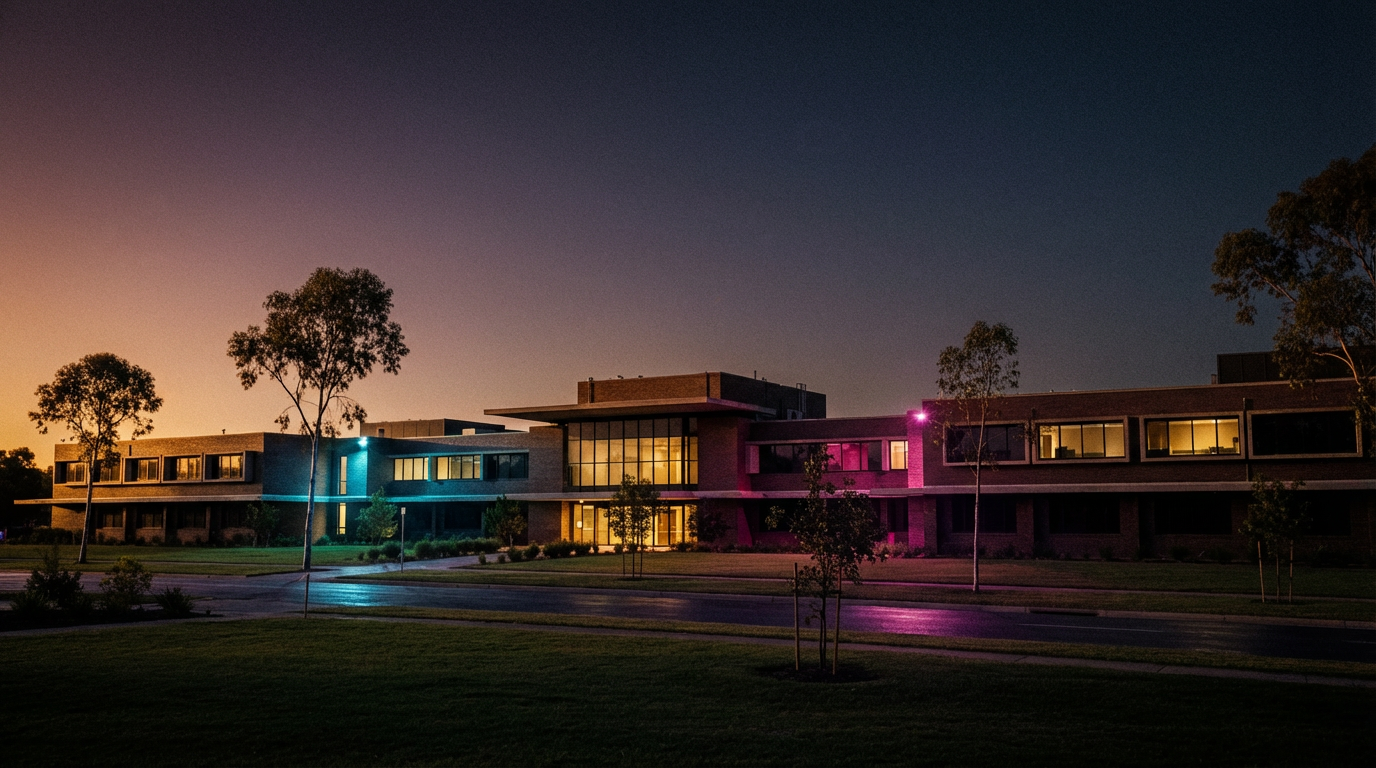
Lyell McEwin Hospital stands in Elizabeth, South Australia, as a community cornerstone established in 1959 to serve the post-war planned city and its migrant families. Rising from optimistic beginnings alongside the region's industrial expansion, the hospital has weathered economic decline and social transformation whilst maintaining its fundamental mission. Within its walls unfold countless human dramas—births celebrated, lives saved, traumas witnessed—making it simultaneously a place of healing and a keeper of secrets that shape destinies across generations.
Origins and Post-War Vision
The story of Lyell McEwin Hospital begins not with blueprints and construction tenders but with a broader social vision—the creation of Elizabeth itself. When South Australian authorities conceived this planned city in the early 1950s, they understood that industrial ambition required more than factories and housing estates. Communities needed infrastructure that acknowledged their fundamental humanity: schools for children, shops for daily necessities, and medical facilities to mark life's most vulnerable transitions.
The hospital opened its doors in 1959, named after Lyell Raymond McEwin, a prominent South Australian politician and member of the Legislative Council who championed rural and regional healthcare access throughout his career. The choice of name was deliberate, linking the new facility to a tradition of public service and community advocacy. The hospital would serve not Adelaide's established inner suburbs but the working families streaming northward to Elizabeth—British migrants arriving as Ten Pound Poms, seeking fresh starts in a country that promised opportunity without quite delivering paradise.
The building itself reflected mid-century institutional design: functional rather than beautiful, prioritising efficiency and capacity over aesthetic refinement. Corridors stretched in practical geometry. Wards were organised for maximum supervision. The maternity wing, which would become central to countless family histories, occupied a strategic location that balanced accessibility with the quiet necessary for new mothers recovering from birth's intensity.
From the beginning, Lyell McEwin existed in tension between aspiration and reality. It represented governmental commitment to decentralised healthcare, acknowledgement that communities beyond the city centre deserved comprehensive medical services. Yet it also bore the limitations of regional facilities—staff shortages relative to metropolitan hospitals, equipment that arrived later and aged faster, budgets that stretched to cover growing populations with resources that never quite matched need.
The hospital's early years coincided with Elizabeth's optimistic expansion. The Holden automotive plant opened in 1963, transforming the northern suburbs into South Australia's industrial engine. Families who'd arrived hoping for prosperity found it, at least temporarily. The hospital's maternity ward buzzed with activity as couples who'd crossed oceans together now started families on antipodean soil. The emergency department treated factory injuries, childhood mishaps, the ordinary calamities of working-class life. Lyell McEwin became, in those first decades, exactly what its architects intended: the beating heart of a thriving community.
Institutional Character and Community Role
Unlike the grand teaching hospitals of Adelaide's inner suburbs, with their attached universities and research prestige, Lyell McEwin developed a different institutional identity. It was fundamentally a community hospital—serving local populations, treating everyday ailments and emergencies, functioning as the medical anchor for suburbs that lacked other healthcare infrastructure.
The staff who worked there developed deep roots in Elizabeth and surrounding areas. Nurses often lived locally, shopping at the same supermarkets as their patients, attending the same churches and schools. Doctors built long-term practices treating multiple generations of the same families. This proximity created both strengths and complications. Medical professionals possessed intimate knowledge of their patients' circumstances—economic pressures, family dynamics, the social networks that sustained or failed them. Yet this familiarity also meant witnessing tragedy amongst neighbours, maintaining professional boundaries with people encountered socially, carrying community burdens that metropolitan colleagues could leave behind at day's end.
The maternity ward embodied these tensions most acutely. Birth represents humanity's most fundamental transition, the moment when abstract possibility manifests as screaming, blood-slicked reality. For families, it meant vulnerability, trust placed in institutional competence during circumstances beyond individual control. For staff, it meant managing the unpredictable—the births that went smoothly and the ones that didn't, the joyous arrivals and the grief-stricken losses, the moments when split-second decisions determined whether celebration or catastrophe followed.
Throughout the 1960s and 1970s, as Elizabeth prospered on Holden's industrial strength, Lyell McEwin expanded steadily. New wings added capacity. Equipment upgraded. Specialisations developed. The hospital became capable of handling increasingly complex cases, reducing the need to transfer patients to Adelaide's larger facilities. This growth reflected not merely population increase but deepening institutional competence—the accumulation of expertise that transforms a basic facility into a comprehensive medical centre.
The emergency department particularly reflected Elizabeth's character. It treated the injuries inherent to industrial labour—factory accidents, automotive mishaps, the physical toll of manual work. It also encountered the social problems that shadowed working-class communities: domestic violence that sent women seeking treatment with suspicious injuries, alcohol-related incidents that spiked on weekend nights, mental health crises that lacked adequate community support systems. Lyell McEwin's staff learned to navigate the complex terrain where medical intervention intersected with social dysfunction, where healing bodies couldn't be separated from addressing the circumstances that damaged them.
Economic Decline and Institutional Resilience
The 1980s marked a watershed for both Elizabeth and its hospital. The automotive industry that had sustained the region's prosperity began its long decline. Holden downsized, shedding workers. Supporting industries collapsed. Unemployment rose sharply. Families who'd built lives around industrial employment found themselves adrift, economic security replaced by precarity that eroded more than just bank balances.
For Lyell McEwin, this transformation manifested in shifting patient demographics and presenting complaints. The emergency department saw increased mental health presentations—depression and anxiety accompanying job loss, suicide attempts rising amongst men whose identities had been constructed around breadwinner roles they could no longer fulfil. Domestic violence cases intensified as economic pressure strained already fragile relationships. Substance abuse problems escalated as some sought chemical escape from circumstances they couldn't otherwise control.
The hospital's funding failed to match these expanding needs. State governments facing fiscal constraints looked to regional facilities as places where cuts might occur with less political consequence than metropolitan hospital reductions. Staff positions went unfilled. Equipment purchases delayed. The gap between need and capacity widened, placing immense pressure on professionals who understood acutely what their limitations meant for patients.
Yet institutional memory preserves stories of remarkable resilience during these difficult decades. Nurses worked extra shifts without complaint, compensating for understaffing through personal sacrifice. Doctors developed creative solutions to resource limitations, maximising outcomes despite inadequate tools. Administrative staff fought bureaucratic battles to secure every available dollar, every possible concession from authorities inclined to write Elizabeth off as a problem too expensive to properly address.
The maternity ward maintained its central community role even as other aspects of Elizabeth life deteriorated. Babies arrived regardless of economic circumstances, oblivious to parents' employment status or bank balances. For many families experiencing hardship elsewhere, the birth of a child remained an occasion of genuine joy—a moment when institutional competence and compassionate care transformed vulnerability into celebration. Lyell McEwin's staff understood the profound responsibility this represented, the trust placed in them during circumstances that transcended ordinary medical transactions.
Witness to Private Traumas
Hospitals accumulate secrets. Their corridors echo with confidences shared during vulnerability, truths revealed in extremity, realities too terrible or tender for public consumption. Lyell McEwin harbours countless such secrets, locked within medical records and professional memories, protected by institutional protocols that recognise the sanctity of the doctor-patient relationship.
Some secrets emerge from medical crisis—unexpected complications that transform routine procedures into emergencies, diagnoses that shatter assumptions about health and future, treatments that expose the limits of healing arts. Other secrets reflect social dysfunction—injuries explained by transparent lies, symptoms suggesting abuse that victims refuse to acknowledge, circumstances requiring intervention despite patients' expressed wishes.
The hospital's maternity ward witnessed particularly profound secrets. Not every pregnancy arrived joyously. Not every birth proceeded smoothly. Not every baby emerged into families prepared for the reality of parenthood. The ward's staff navigated these complexities with protocols that balanced medical necessity, patient autonomy, legal obligation, and ethical responsibility—a navigation that sometimes required difficult judgements about when to honour confidentiality and when circumstances demanded breach.
On 19 July 1984, a winter morning otherwise unremarkable in Adelaide's medical calendar, Lyell McEwin's maternity ward became stage for an event that would exemplify these tensions. Within a small room whose walls bore the accumulated scuff marks of countless previous occupancies, Heather Smith—young, pregnant, psychologically fragile—enacted a desperate violence that transformed routine admission into medical emergency.
The details remain sealed within medical records protected by patient confidentiality, known fully only to those present that morning. What can be stated is that circumstances required emergency caesarean section, that a child designated Luke Nathaniel Smith entered existence through surgical intervention rather than natural process, that both mother and infant survived circumstances that might easily have proved fatal.
The hospital's response demonstrated competence forged through decades of managing the unpredictable. Surgical staff mobilised swiftly. Emergency protocols activated without hesitation. The infrastructure built to handle medical crisis functioned precisely as designed. Within the chaos inherent to any emergency delivery, especially one precipitated by trauma, the institution's systems held steady, creating space for individual human skill to operate effectively.
Yet the aftermath presented challenges beyond purely medical ones. The circumstances of Luke's birth raised questions about causation, about maternal mental health, about whether the family required interventions extending beyond healing physical wounds. Conversations occurred between medical professionals and family members—conversations whose content remains appropriately confidential, conversations that nevertheless shaped subsequent trajectories in ways participants couldn't fully anticipate.
A decision emerged from these consultations: the child would not learn the truth about his birth. This choice, made by adults operating within their understanding of Luke's best interests, transformed the hospital from mere witness to active participant in constructing a particular version of family history. Lyell McEwin became keeper of a secret whose weight would extend across decades, influencing a life begun within its walls through violence concealed beneath silence.
The Ethics of Institutional Memory
Hospitals exist simultaneously in multiple temporal frames. They function in immediate present, responding to patients requiring urgent attention. They maintain institutional memory extending backwards through accumulated records, preserved documentation, professional recollection spanning decades. They also project forward, recognising that treatments provided today create consequences unfolding across years or lifetimes.
For Lyell McEwin, the decision to participate in concealing Luke's birth circumstances reflected this temporal complexity. Medical professionals present that July morning acted within ethical frameworks that prioritised protecting a child from knowledge deemed potentially damaging. They operated from compassion, from desire to spare Luke psychological burden, from belief that some truths cause more harm than their concealment.
Yet this choice also carried risks. Secrets create vulnerabilities. Hidden truths generate anxieties that express themselves indirectly. Children sense what families won't acknowledge, develop intuitions about gaps in official narratives, construct explanations for feelings they can't quite articulate. The conspiracy of silence surrounding Luke's birth—however well-intentioned—established foundations for complications that would manifest across his subsequent development.
The hospital itself remained neutral ground in these dynamics. Its walls held the truth without judging it, preserved records without interpreting them, existed as repository of fact whilst families constructed comfortable fictions. This institutional neutrality represented both strength and limitation—strength in maintaining objective documentation regardless of social pressure, limitation in lacking capacity to ensure that truth, once recorded, would ever be appropriately shared.
Decades of Service and Transformation
Beyond the dramatic incidents that punctuate institutional history, Lyell McEwin continued its fundamental work across subsequent decades. The hospital treated countless patients whose names appear nowhere in narrative accounts but whose lives were nevertheless shaped by its existence. It delivered babies whose births proceeded smoothly, treated injuries that healed without complication, managed illnesses that responded to standard interventions.
The 1990s brought continued challenges as Elizabeth's economic decline persisted. The hospital's emergency department became increasingly burdened, treating patients whose problems reflected systemic social dysfunction as much as individual medical conditions. Mental health presentations continued rising. Substance abuse cases multiplied. The gap between community need and available resources widened further, placing staff under pressure that occasionally exceeded human capacity to manage sustainably.
Yet even during these difficult years, institutional commitment never wavered. Lyell McEwin remained open, remained staffed, remained functional despite constraints that would have justified reduced service. This reflected both political reality—closing a major hospital would generate backlash no government welcomed—and genuine dedication amongst professionals who refused to abandon communities they served.
The early 2000s marked a turning point. Significant state investment flowed toward upgrading the facility. New emergency department infrastructure improved capacity and efficiency. The maternity ward underwent modernisation, replacing outdated equipment and expanding services. Additional specialist services located at Lyell McEwin, reducing the need for patients to travel into Adelaide for treatments previously unavailable locally.
These improvements reflected changed governmental attitudes toward Elizabeth and its northern suburbs. Rather than writing the area off as irredeemable, authorities recognised that strategic investment might reverse decades of decline. The hospital became a centrepiece of this renewed commitment—a visible demonstration that the region mattered, that its residents deserved healthcare quality matching metropolitan standards.
Contemporary Role and Ongoing Mission
In the twenty-first century's opening decades, Lyell McEwin has evolved into a comprehensive teaching hospital with university affiliations and research capacity. It delivers approximately four thousand babies annually, maintains one of South Australia's busiest emergency departments, provides specialist services across multiple disciplines. The institution that began as basic community facility has matured into a regional medical centre whose capabilities rival much larger metropolitan hospitals.
This transformation reflects both Elizabeth's gradual recovery and broader changes in healthcare delivery models. Modern medicine emphasises distributed services rather than concentrating everything in city centres. Technology enables sophisticated treatments in regional settings previously requiring metropolitan facilities. Lyell McEwin benefited from these trends, receiving investment and capability enhancements that positioned it as a genuine healthcare leader rather than merely adequate community service.
Yet despite modernisation and expansion, the hospital maintains its fundamental character. It remains primarily a community institution, serving local populations with deep connections to the areas it covers. Its staff still live amongst their patients, still shop at the same stores and attend the same events, still carry the privileges and burdens of that proximity. The hospital's identity remains rooted in Elizabeth's working-class history even as both institution and community evolve beyond their original forms.
The maternity ward continues operating at the institution's heart, delivering new generations whose parents and grandparents may themselves have been born within the same walls. This continuity creates layered histories—families whose relationship with Lyell McEwin extends across multiple generations, who mark life's crucial transitions within its corridors, who carry memories connecting them to an institution that has witnessed their most vulnerable moments.







