Luke Nathaniel Smith
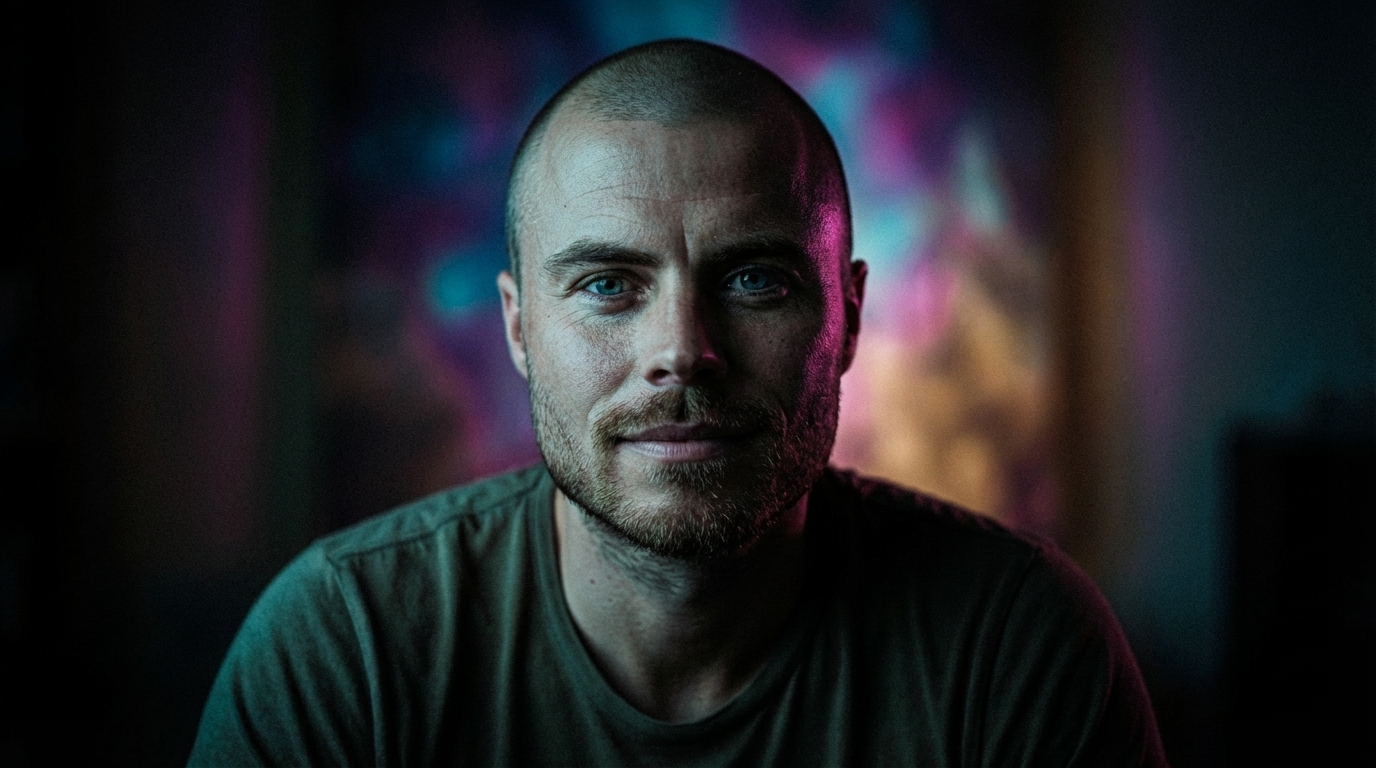
Luke Nathaniel Smith, born on 19 July 1984 in Adelaide, Australia, is a vivid dreamer whose life has been shaped by the ethereal voice of Clivilius since childhood. Raised in a devout Mormon family that relocated to Broken Hill, Luke's formative years were marked by inexplicable dreams and a persistent mystical presence that would ultimately define his destiny. After completing a traditional missionary journey and settling in Tasmania with his partner Jamie Greyson, Luke discovered the Portal Key in July 2018—a transformative artefact that bridged his dream experiences with reality and thrust him into the role of inter-dimensional guide, forever altering the lives of those he drew into Clivilius.
Early Life and Troubled Foundations
Luke Nathaniel Smith entered the world on 19 July 1984 at an Adelaide hospital under circumstances that would remain hidden from him for decades. The second of two children born to Noah James Smith and Heather Smith, Luke's arrival was marked by violence his family deemed too terrible for a child to bear. His mother's desperate act during labour created a foundational trauma that the family sealed away through collective silence, believing such knowledge would damage Luke irreparably.
Luke's early childhood in Adelaide was brief and turbulent. His parents' marriage, already strained before his birth, fractured irreparably in the years that followed. Noah and Heather divorced when Luke was still young, a rupture that would reshape the family's constellation entirely. Noah subsequently married Greta Anne Morrison, a gifted artist and dedicated community member who brought her own warmth and creativity to the reconstituted family.
The expanded Smith household—now including Luke, Paul, and their four younger half-siblings Lisa, Eli, Jerome, and Charles born to Noah and Greta—relocated to Broken Hill following Noah's remarriage. The remote mining town in New South Wales, with its ochre-toned landscape and stark horizons, provided the backdrop for Luke's formative years. The family's devout Mormon faith remained central to daily life, forging strong bonds amongst the siblings despite the complexities of their blended family structure. Greta nurtured a home rich in creativity, nature, and learning, balancing Noah's more traditional religious leadership with her artistic sensibilities.
For Luke and Paul, the divorce and remarriage created a particular kind of displacement. They carried memories of life with Heather that their younger siblings didn't share, secrets and traumas that couldn't be spoken aloud in the new family configuration. Yet Greta's genuine affection and Noah's commitment to his sons helped bridge some of these gaps, creating a family unit that functioned despite its fractured origins.
From his earliest memories, Luke demonstrated an unusual capacity for vivid and lucid dreaming. These were not the fleeting fragments most people experienced upon waking but complete, coherent experiences that felt indistinguishable from waking reality. Within these dreams moved a constant presence—a voice, a consciousness, something Luke would come to know as Clivilius. This mystical entity simultaneously haunted and inspired him, whispering possibilities that existed beyond the physical realm his family inhabited.
Family Tree
Education and Missionary Service
Luke completed his schooling at Broken Hill High School, yet his true education occurred in the dream realm, where Clivilius continued its patient instruction, building Luke's capacity to navigate between worlds even before he possessed the means to do so consciously.
In keeping with Mormon tradition, Luke undertook a missionary journey after completing his education—a rite of passage that brought him into contact with distant cultures and communities far removed from Broken Hill's insularity. This period of service broadened Luke's perspective considerably, exposing him to diverse approaches to spirituality and meaning-making that existed outside the Church of Jesus Christ of Latter-day Saints' theological framework. He witnessed genuine faith expressed through different vocabularies, suffering that transcended denominational boundaries, and human resilience that had nothing to do with doctrinal correctness.
The missionary experience also intensified Luke's internal conflict. Whilst he could articulate Mormon theology with competence and even occasional eloquence, the dreams and visions that defined his inner life bore little relationship to the neat salvific narrative he was meant to be sharing. Clivilius whispered truths that contradicted or transcended conventional religious explanations, creating a cognitive dissonance Luke managed through compartmentalisation but never fully resolved.
Upon returning to Adelaide after his mission, Luke found himself at a personal and spiritual crossroads. The combined influence of his missionary experiences and the persistent guidance of Clivilius compelled him to seek a new path, one that might integrate rather than fragment the various dimensions of his existence.
Tasmania and the Discovery of Love
Driven by an intuition he couldn't quite explain but had learnt to trust, Luke relocated to Tasmania, settling initially in Hobart. The island state's natural beauty—its wild coastlines, ancient forests, and the looming presence of kunanyi/Mount Wellington—resonated with something deep in Luke's psyche. Tasmania felt liminal in ways that suited his divided existence, a place where the boundary between the mundane and the mystical seemed thinner than elsewhere.
It was in this tranquil, mist-shrouded setting that Luke reunited with his childhood friend Jamie Greyson. Their meeting was ostensibly chance, though Luke would later wonder whether Clivilius had guided him towards this particular person at this particular moment. Jamie brought qualities into Luke's life that had been conspicuously absent—grounding stability, practical competence, and a straightforward engagement with the material world that complemented Luke's mystical inclinations.
Their relationship developed swiftly, moving from initial attraction through the stages of courtship and eventually into cohabitation. Together they established a home in Berriedale, a suburb north of Hobart, where they adopted two Shih Tzu dogs—Henri and Duke—who became their surrogate children and constant companions. The house they shared represented Luke's first real attempt to build something permanent, to create a life that existed in this world rather than perpetually yearning towards another.
Jamie worked in aged care, a profession that demanded both physical endurance and emotional resilience. His practical nature and capacity to manage life's mundane necessities provided Luke with the stability necessary to continue his increasingly complex dream explorations. Yet their relationship, whilst built on genuine affection and shared domestic rhythms, contained unspoken tensions from its inception. Luke's dreams, his periods of abstraction, the sense of being perpetually elsewhere even when physically present—these created distances Jamie felt but couldn't articulate, gaps that would eventually prove consequential.
The Portal Key Discovery
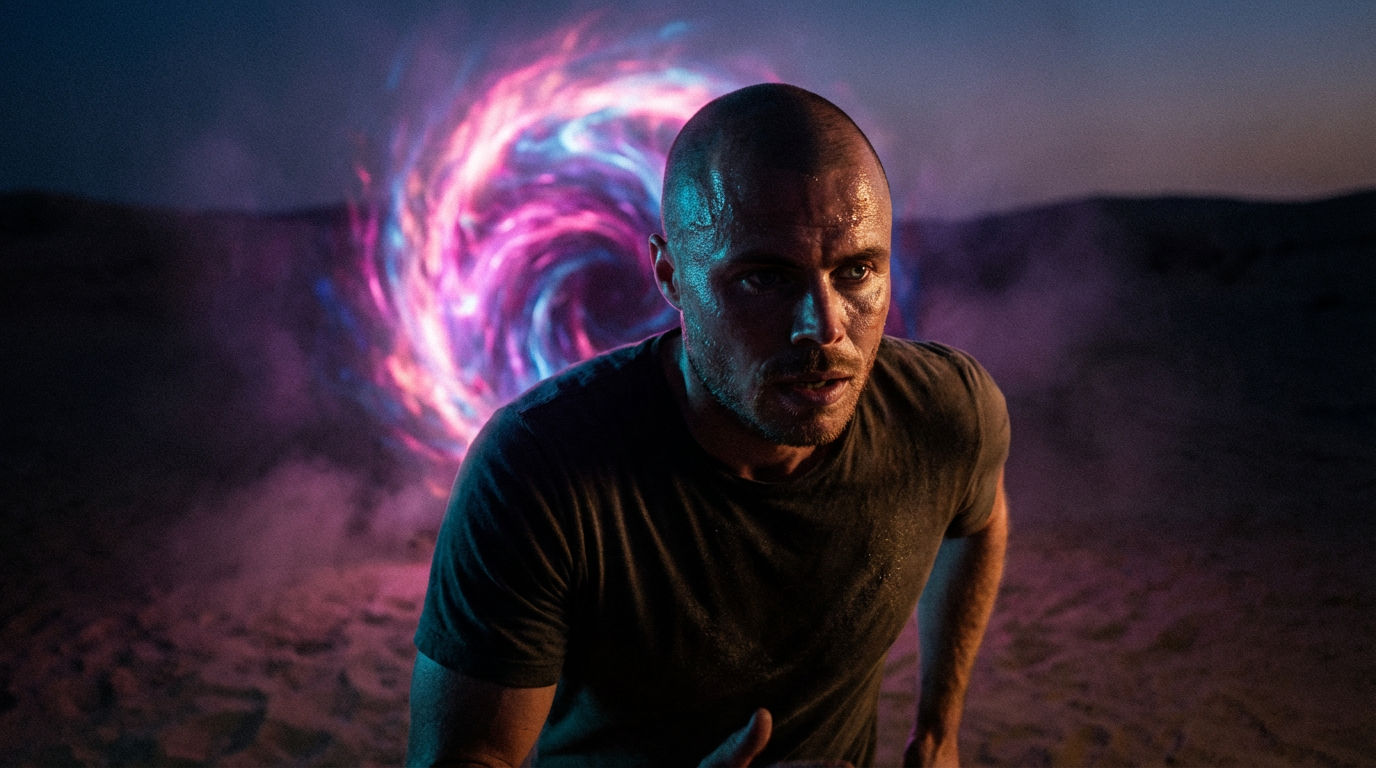
In July 2018, precisely thirty-four years after his violent birth, Luke's life reached a transformative threshold. The discovery of the Portal Key—a mystical artefact that possessed the power to traverse dimensional boundaries—marked the moment when decades of dream preparation crystallised into tangible capability. The device appeared in his Berriedale home's study, materialising through means Luke never fully explained even to those he subsequently brought through its gateway.
The Portal Key itself defied conventional physical description. Witnesses would later describe it as simultaneously technological and organic, a device that seemed to respond to intention as much as manipulation, that created apertures in reality through which one could step into Clivilius itself. For Luke, the Portal Key's appearance represented vindication—proof that the voice he'd heard since childhood, the visions he'd experienced, the sense of purpose that had shaped his entire existence, were grounded in something real and tangible rather than delusion or neurological aberration.
On 23 July 2018, Luke made his first conscious journey through the Portal. The experience was overwhelming in its immediacy—stepping from his familiar study into the starless expanse of Clivilius. The desert landscape that greeted him was simultaneously beautiful and terrifying, vast and silent in ways that made Earth's wildernesses seem crowded by comparison. Luke left a book behind on his first crossing, a marker of passage, proof upon his return that the journey had been real rather than another elaborate dream.
The voice of Clivilius, which had guided him for three decades, spoke more clearly now, welcoming him whilst simultaneously presenting choice. Luke understood in that moment that he stood at the precipice of something vast—not merely personal destiny but a role that would affect others, reshape lives, create consequences that extended far beyond his own experience. The responsibility was intoxicating and terrifying in equal measure.
Building Bridges Between Worlds
Luke's initial crossings were tentative, exploratory. He moved between Berriedale and Clivilius with increasing confidence, each journey revealing new aspects of the world whilst raising new questions. He discovered a crystalline river whose waters seemed to possess consciousness, purchased an absurdly oversized tent through an online retailer with reckless abandon, began accumulating supplies and equipment without fully understanding what he was preparing for.
Simultaneously, his relationship with Jamie deteriorated markedly. Jamie sensed Luke's growing abstraction, his physical presence unaccompanied by genuine emotional availability. On 23 July, the same day Luke first consciously crossed into Clivilius, Jamie engaged in a workplace encounter with a colleague—infidelity borne partly from loneliness, partly from frustration with a relationship that felt increasingly hollow despite its domestic comforts. Neither man possessed the vocabulary to articulate what was fracturing between them, instead allowing resentments to accumulate unspoken.
Luke made his first fateful decision on 24 July 2018, when he revealed the Portal's existence to Jamie and his elder brother Paul. He deceived Jamie and Paul both, orchestrating circumstances that led them through the Portal together without fully informed consent. It was Luke's first major ethical breach, justified in his own mind by the conviction that Clivilius required people, that building something sustainable in this other world superseded conventional moral boundaries around honesty and autonomy. Paul and Jamie stepped through the shimmering aperture expecting temporary exploration, unaware that Clivilius had already decided they would be staying far longer than they imagined.
The Deception and Bixbus
Luke's methods for bringing others into Clivilius evolved from that initial calculated deception into something approaching systematic recruitment, though he would have rejected such characterisation. In the days following Paul and Jamie's crossing, Luke began ferrying supplies through the Portal—tents, tools, food, equipment purchased using credit cards belonging to himself, Paul, and eventually others whose financial resources he leveraged without explicit permission. His Berriedale home became a staging area, boxes accumulating in rooms whilst Henri and Duke watched with canine incomprehension.
The practical challenges were immense. Luke had no training in wilderness survival, construction, or community organisation, yet found himself attempting all three simultaneously. He relied heavily on those with relevant expertise—Nial Triffett's construction knowledge became essential for establishing basic infrastructure, other arrivals brought their own specialised skills—but the fundamental responsibility rested on Luke's shoulders. He had opened the gateway; he bore the weight of what followed.
Luke's relationship with truth became increasingly complicated. He justified his deceptions through a framework that positioned Clivilius as salvation rather than exile, convinced himself that bringing people through the Portal was rescue rather than kidnapping, maintained elaborate fictions with those back on Earth to prevent premature discovery of what he was orchestrating. Each lie required supporting fabrications, each omission created vulnerabilities that threatened to expose the entire structure.
The Settlement and Its Discontents
What began as a handful of confused arrivals gradually evolved into Bixbus. The settlement's early days were marked by chaos and confusion. Arrivals experienced shock, grief, and rage upon recognising they'd been deceived about the nature of their journey. Jamie's resentment towards Luke intensified through daily proximity in circumstances neither had chosen. Paul struggled to reconcile his loyalty to his brother with the recognition that Luke had fundamentally betrayed his trust. Others who arrived subsequently brought their own traumas, expectations, and capacities for adaptation.
Luke found himself navigating emotional complexities for which his isolated upbringing and mystical focus had left him unprepared. He lacked the vocabulary for genuine apology, the emotional intelligence for effective conflict resolution, the humility to acknowledge when his decisions had caused harm. Instead, he retreated into the conviction that Clivilius's voice validated his choices, that any suffering inflicted was justified by some greater purpose still being revealed.
Yet despite everything—the deceptions, the resentments, the practical hardships—Bixbus survived and gradually began to function. Food supplies arrived through Luke's continued Earth raids. Shelter evolved from tents to more permanent structures. The settlement developed rhythms and routines that made daily life possible if not comfortable. Luke's role shifted from sole architect to one participant among many in an ongoing experiment in inter-dimensional community building.
Legacy and Unresolved Tensions
Luke Smith's life by late 2018 represented a study in profound contradictions. He was simultaneously saviour and deceiver, guide and kidnapper, mystic prophet and practical logistician. The dreams that had shaped his existence from childhood had materialised into tangible reality, yet that materialisation brought consequences he'd never fully anticipated. He'd built a bridge between worlds but couldn't resolve the human costs of those who'd crossed it involuntarily.
The families back on Earth experienced Luke's actions as inexplicable disappearances requiring investigation and explanation. Police became involved, missing persons reports were filed, suspicions accumulated. Luke maintained elaborate cover stories through carefully timed phone calls and manufactured evidence, but the structure grew increasingly unstable under its own weight.
Within Bixbus itself, Luke's legacy remained contested and evolving. Some arrivals viewed him with genuine gratitude, recognising that whatever his methods, he had created possibility and purpose in an otherwise desperate situation. Others saw him as the architect of their exile, a man whose mystical convictions had overridden their autonomy and fractured their lives irrevocably. Most occupied complex middle ground, acknowledging both harm and help in actions they struggled to categorise simply.
Luke himself seemed perpetually suspended between worlds in more than merely physical terms. He belonged fully to neither Earth nor Clivilius. The Portal Key had bridged dimensions but couldn't reconcile the divisions within Luke's own existence—the gap between the isolated dreamer seeking meaning and the practical orchestrator of other people's fates, between the boy who'd heard Clivilius's voice as comfort and the man who wielded it as justification for extraordinary choices.