Linda Margaret Longey (née Lahey)
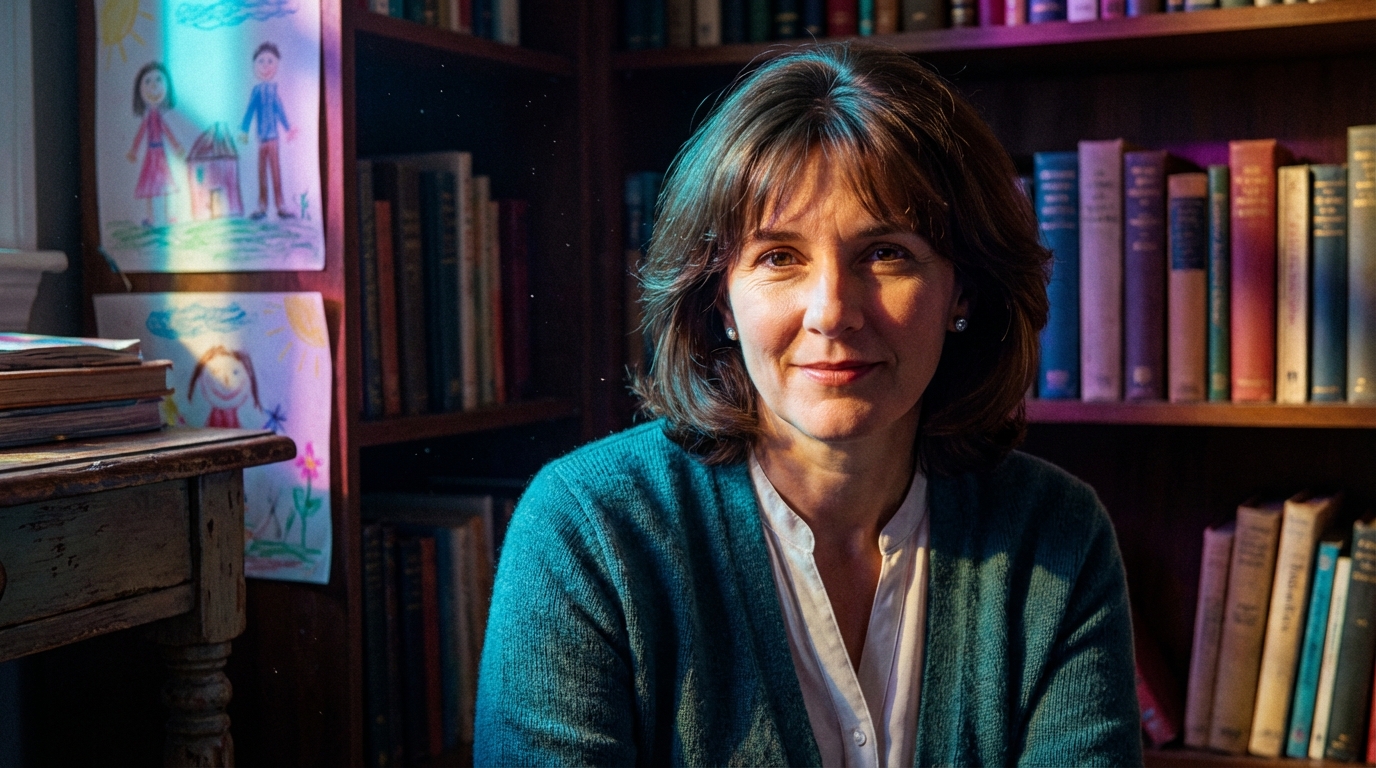
Linda Margaret Longey (née Lahey), born 8 November 1961 in New Norfolk, Tasmania, embodies the steadfast dedication of generations of educators who shaped Tasmania's children whilst anchoring their own families. Daughter of Thomas and Margaret Lahey, Linda built a life bridging rural traditions with suburban progress. Her marriage to Detective Richard Longey united two paths of public service, whilst her nurturing of three children—including James's technical brilliance—demonstrates how maternal wisdom shapes exceptional minds through patient encouragement.
Early Life and the Derwent Valley Roots
Linda Margaret Lahey entered the world on 8 November 1961 at New Norfolk District Hospital, completing the substantial family of Thomas and Margaret Lahey as their eighth and final child. Her arrival into an already bustling household meant joining siblings Peter (born 1949), Catherine (born 1951), Robert (born 1952), Jennifer (born 1954), Greg (born June 1955), Michael (born 1957), and Anne (born 1959). The twelve-year spread between oldest and youngest meant Linda experienced life as both part of a crowd and, as the baby, someone who held a particular place in everyone's affections.
The modest weatherboard cottage on Boyer Road had grown haphazardly with the family through a series of additions—a sleepout here, an extended kitchen there, a second bathroom that Thomas built himself when it became clear that eight people couldn't manage with one. By the time Linda arrived, the house resembled a rabbit warren of rooms, with boys sharing one large room, older girls in another, and the younger girls—Anne and eventually Linda—in what had once been a sewing room.
Thomas Lahey operated a small but successful grocery store on New Norfolk's main street, a business that absorbed the entire family's labour at various times. The older children had established roles—Peter already working full-time in the store after leaving school at sixteen, Catherine managing the books, Robert and Jennifer taking delivery runs. Greg, Michael, and Anne helped with simpler tasks like shelf-stacking and sorting, while baby Linda's contribution mainly consisted of charming customers from her playpen behind the counter.
Sibling Bonds and Family Dynamics
Within the complex dynamics of eight children, Linda found varying relationships with each sibling. The eldest ones—Peter, Catherine, and Robert—existed almost as auxiliary parents, their adolescent and young adult concerns far removed from a baby sister's world. Jennifer, at seven years older, occasionally played little mother but more often found Linda's presence annoying when friends visited.
It was with the cluster of younger siblings—Greg, Michael, and Anne—that Linda found her true companions. Greg, at six years older, occupied the perfect position as protective older brother without the responsibility the eldest children carried. Michael, four years her senior, included her in adventures when feeling generous and ignored her when not. But it was Anne, just two years older, who became Linda's constant companion, the two youngest girls forming a natural alliance in a household dominated by older siblings' needs and dramas.
The relationship with Greg, however, held special significance. Perhaps because he was old enough to be genuinely helpful but young enough to remember childhood's magic, Greg became Linda's particular protector and guide. He taught her to ride the bicycle he'd outgrown, helped her with homework when the older siblings were too busy, and defended her against Michael's occasional teasing. Their bond, strengthened by shared position as younger children in a large family, would endure throughout their lives and extend to their own children—Sarah and James—who would grow up more like siblings than cousins.
Education and the Teaching Calling
Linda's formal education began at New Norfolk Primary School in 1967, where she quickly distinguished herself through natural teaching ability. Teachers noted her patience with struggling classmates, her ability to explain concepts in multiple ways, and her genuine joy when others succeeded. Mrs Dorothy Campbell, her Year 3 teacher, wrote in a report that "Linda teaches as naturally as she breathes—other children gravitate to her for help, and she never refuses."
The transition to New Norfolk High School in 1974 coincided with significant changes in Tasmania's educational landscape. The federal government's investment in state schools brought new resources, expanded curricula, and university pathways previously unavailable to rural students. Linda embraced these opportunities, excelling particularly in English, History, and Biology—subjects that required both analytical thinking and human understanding.
During these years, Linda developed her distinctive teaching philosophy through practical experience. She tutored younger students for pocket money, discovering that success came not from simply knowing material but from understanding how different minds processed information. Some students needed visual representations, others required hands-on manipulation, still others learned through narrative. This early recognition of diverse learning styles would later define her classroom approach.
Her decision to pursue teaching at Hobart Teachers' College surprised no one. The two-year programme, beginning in 1980, required daily bus commutes from New Norfolk—ninety minutes each way that Linda used for study, observation, and increasingly, conversation with a certain police cadet named Richard Longey who caught the same early bus from Glenorchy.
Romance and the Meeting of Minds
The meeting between Linda Lahey and Richard Longey at the August 1978 church social dance in New Norfolk represented more than romantic beginning—it united two visions of public service. Richard, then working in insurance but clearly destined for law enforcement, found in Linda someone who understood that serving community meant more than collecting a paycheque. Linda discovered in Richard a quiet strength that complemented her nurturing warmth, a methodical mind that balanced her intuitive understanding.
Their courtship unfolded across the geography of southern Tasmania. Weekend picnics at Mount Field revealed Richard's unexpected knowledge of native plants, acquired through boyhood expeditions with his father. Drives through the Derwent Valley introduced Richard to the extended Lahey clan—aunts, uncles, and cousins who'd settled throughout the region, maintaining family bonds across generational farms and emerging suburbs.
The integration of Richard into the Lahey family proved remarkably smooth. Thomas appreciated Richard's work ethic and practical intelligence, recognising a kindred spirit despite their different backgrounds. Margaret saw how her daughter glowed in Richard's presence, how his steady nature grounded Linda's sometimes excessive empathy. Greg, protective of his sister, initially maintained reserve but soon accepted Richard after observing his genuine respect for Linda's ambitions.
Their engagement in December 1981, announced at the Lahey family Christmas gathering, surprised no one. The wedding, planned for February 1983, would coincide with Linda's completion of her teaching degree and Richard's establishment in Tasmania Police. The timing reflected both practical consideration and symbolic alignment—two careers in public service beginning alongside a marriage built on shared values.
Early Marriage and Professional Foundation
The wedding on 12 February 1983 at St Andrew's Church united the Laheys of New Norfolk with the Longeys of Glenorchy, bridging Tasmania's rural-urban divide through personal connection. Linda wore her mother's wedding dress, carefully altered and updated, whilst Richard's police colleagues formed an honour guard that impressed the rural relatives whilst slightly overwhelming the urban contingent.
Their first home, the rented cottage in Moonah, required significant creativity to transform into liveable space. Linda applied the same resourcefulness she'd learned from Margaret—sewing curtains from sale fabric, refinishing op-shop furniture, creating gardens from seeds saved and cuttings shared. The house gradually became a home, its modest rooms filled with books, Richard's case notes carefully locked away, and Linda's teaching materials spreading across any available surface.
Linda's first teaching position at Moonah Primary School proved both challenging and rewarding. The school served a diverse community—established working-class families, recent immigrants, and troubled children from difficult circumstances. Linda's classroom became known as a safe space where struggling students found patience, where behavioural problems met understanding rather than punishment, where academic achievement was celebrated regardless of starting point.
The early years of marriage required careful negotiation of two demanding careers. Richard's shift work meant irregular hours, missed dinners, and cancelled plans. Linda's teaching brought work home in the form of marking, preparation, and emotional weight of children whose problems exceeded educational challenges. They developed strategies for protecting their relationship—Sunday dinners that couldn't be interrupted, morning walks when schedules aligned, deliberate creation of space for connection despite external demands.
Motherhood and the Balancing Act
The arrival of James William on 24 October 1991 came after years of trying, multiple miscarriages, and medical interventions that tested both partnership and individual resilience. Linda was thirty, established in her career, emotionally prepared for motherhood yet unprepared for its intensity. The maternity leave that followed became a period of profound adjustment—from managing thirty children to focusing on one, from public service to private devotion.
James proved an alert, curious infant who seemed to observe his world with unusual intensity. Linda recognised early that her son processed information differently—not better or worse than other children, but through patterns and systems that required particular nurturing. She adapted her teaching knowledge to motherhood, creating environments that stimulated without overwhelming, providing structures that supported exploration within safe boundaries.
The decision to return to teaching after twelve months proved more difficult than anticipated. Financial necessity competed with maternal instinct, professional identity with personal priority. The compromise—part-time teaching at Lenah Valley Primary School—allowed Linda to maintain career continuity whilst prioritising James's early development. The three days per week in classroom provided adult interaction and professional satisfaction, whilst four days of motherhood offered time for play groups, library visits, and the patient observation that revealed James's emerging fascination with how things worked.
Thomas Edward's arrival on 7 September 1994 and Emily Jane's on 15 April 1997 transformed Linda from mother to family orchestra conductor. Three children under six, each with distinct personalities and needs, required constant calibration of attention, affection, and authority. James's technical inclination, Thomas's athletic energy, and Emily's artistic sensitivity demanded different approaches, different encouragements, different boundaries.
The Teaching Evolution
Linda's return to full-time teaching in 2003, when Emily started school, marked a new phase of professional development. The educational landscape had transformed during her years of part-time work—technology entering classrooms, standardised testing reshaping curricula, and increasing recognition of diverse learning needs requiring differentiated instruction. Linda embraced these changes whilst maintaining core beliefs about education's purpose: developing capable, confident, compassionate citizens.
Her classroom at Lenah Valley Primary became known for innovative approaches that predated formal educational trends. She implemented project-based learning before it had a name, created collaborative spaces when individual desks were still standard, and integrated technology as a tool rather than subject. Parents requested her class specifically, knowing their children would emerge not just academically prepared but emotionally supported.
The influence of James's technological interests shaped Linda's teaching evolution. She recognised that traditional methods wouldn't engage students raised with computers and internet access. Rather than resisting technological change, she enlisted James as informal consultant, learning from her teenage son how digital natives processed information. This reversal of traditional parent-child knowledge flow demonstrated Linda's humility and adaptability—qualities that made her exceptional both as mother and educator.
Family Tragedy and Resilient Response
The news of Greg and Pip's death in the Swiss helicopter crash on 21 October 1998 struck the Longey household with devastating force. Linda collapsed upon receiving the phone call, her grief compounded by survivor's guilt—why had fate taken her brother whilst sparing her? The practical implications quickly followed emotional shock: Greg and Pip's children, Sarah and Oscar, needed immediate care whilst longer-term arrangements were determined.
Linda threw herself into supporting her orphaned niece and nephew, even as her own grief threatened to overwhelm. She coordinated with Pip's parents, Patrick and Jane Lahey, who would become the children's guardians, ensuring continuity of family connection despite tragic disruption. The Longey household became a second home for Sarah and Oscar, Sunday dinners expanding to include cousins whose lives had been irrevocably altered.
The tragedy's impact rippled through Linda's teaching as well. She developed new sensitivity to children experiencing loss, recognising signs of grief that might manifest as behavioural problems or academic withdrawal. Her classroom explicitly welcomed emotions alongside equations, understanding that children couldn't learn effectively whilst carrying unprocessed pain. Several students later credited "Mrs Longey" with providing stability during their own family crises.
Nurturing James's Gift
As James progressed through adolescence, Linda recognised her eldest son possessed exceptional abilities that required careful cultivation. His fascination with technology exceeded typical teenage computer interest—he understood systems at fundamental levels, seeing patterns and possibilities that escaped others. Linda's response balanced encouragement with grounding, ensuring James developed emotional intelligence alongside technical brilliance.
She insisted on family activities that pulled James from screens—bushwalks where technology couldn't follow, board game nights that required human interaction, cooking sessions that taught patience and process beyond programming. These interventions weren't anti-technology but rather pro-balance, ensuring James developed as a complete person rather than mere technical savant.
When James expressed interest in joining Tasmania Police's technical team after university, Linda felt mixed emotions. Pride in his choice of service competed with concern about law enforcement's psychological toll—she'd witnessed Richard's gradual accumulation of darkness despite his careful compartmentalisation. Yet she recognised that James brought capabilities essential to modern policing, that his technical skills could serve justice in ways previous generations couldn't imagine.
The Extended Family Web
Linda's role as family connector intensified after Greg's death. She became the hub through which Lahey family information flowed—coordinating holiday gatherings, maintaining phone connections with elderly relatives, ensuring family stories passed to the next generation. This wasn't mere social obligation but deliberate preservation of identity and belonging, understanding that family bonds required active maintenance.
The relationship with Sarah proved particularly complex. Linda saw in her niece echoes of Greg's determination but also concerning intensity that reminded her of the Lahey tendency towards obsession. She provided maternal presence without overstepping Jane Lahey's grandparental authority, offering sanctuary when Sarah needed escape from her own driven nature. The Sunday dinners where Sarah and James would discuss cases—carefully, within classification limits—became precious moments of family connection bridging personal and professional spheres.
The 2018 Crisis and Family Devastation
The events of August 2018 tested Linda's resilience in ways that exceeded even her brother's death twenty years earlier. Sarah's involvement in the mysterious Greyson-Jeffries disappearances, her increasingly erratic behaviour, and the Internal Affairs investigation that Richard couldn't discuss created mounting tension. Linda watched her husband struggle with conflicting loyalties, her son navigate impossible requests for technical assistance, and her niece spiral towards something terrible.
Sarah's death on 8 August 2018 broke something fundamental in Linda. The loss of her brother's daughter—the cousin who'd been like an elder sister to her own children, the young woman who'd carried Greg's determination into noble but dangerous service—felt like losing Greg again. The classified nature of Sarah's death, the inability to properly grieve or even understand what had happened, created wounds that wouldn't heal cleanly.
The memorial service, with its provisional honours and unspoken questions, required Linda to perform strength she didn't feel. She supported Jane Lahey, now ninety-two and burying her granddaughter after already losing her son. She steadied James, whose technical analysis had revealed impossibilities he couldn't discuss. She anchored Richard, whose professional composure barely contained personal devastation. And through it all, she carried her own grief—for Sarah, for Greg, for the Lahey family's accumulating losses.
Teaching Through Trauma
Linda's return to classroom after Sarah's death demonstrated remarkable courage. She could have taken extended leave, retreated into grief, allowed trauma to define her remaining years. Instead, she chose to honour Sarah's memory through continued service, understanding that children needed stable adult presence regardless of that adult's personal pain.
Her teaching evolved to incorporate hard-won wisdom about life's fragility and meaning. Without burdening students with her own grief, she created space for discussions about loss, resilience, and finding purpose through serving others. Several parents noted their children came home with unexpected philosophical insights, not knowing these emerged from Linda's processing of profound loss.
The final years before retirement in 2023 became Linda's professional culmination. She mentored younger teachers, sharing decades of accumulated wisdom about reaching struggling students, managing diverse classrooms, and maintaining personal boundaries whilst remaining emotionally available. Her methods, developed through intuition and experience rather than formal training, influenced a generation of educators who carried her approaches into their own classrooms.
Retirement and Reflection
Linda's retirement at sixty-two coincided with Richard's final years of service, allowing them to face transition together. The adjustment from daily classroom responsibility to unstructured time proved challenging initially. Linda found herself automatically preparing lessons, checking non-existent marking, wondering how "her" students were managing with a new teacher. The identity shift from "Mrs Longey the teacher" to simply Linda required deliberate reconstruction.
She channelled educational instincts into new directions—volunteering with adult literacy programmes, creating reading corners at community centres, tutoring immigrant families navigating Australian educational systems. These activities maintained purpose whilst allowing flexibility impossible during formal teaching years. The ability to say "not today" when grief resurged, to prioritise personal needs without failing thirty dependent children, brought unexpected freedom.







