4338.206 · July 25, 2018 AD
Leave It in the Rearview
With blood still drying on her jeans and the weight of complicity in the cab, Beatrix takes the wheel—literally and metaphorically—as she and Gladys try to navigate the most ordinary delivery route of their lives. But a broken mirror, a U-turn, and a moral freefall prove that the road ahead isn’t just paved with consequences—it’s watching.
“You don’t know how far you’ve gone until something breaks, and you realise you didn’t even flinch.”
"Oh, just keep moving, would you!" The words burst from my mouth sharper than I’d meant, slicing through the tension like a thrown shard of glass. I nudged Gladys towards the truck with a firm hand, impatience flaring beneath my skin like heat rash.
"I am moving!" she snapped back, her voice matching mine in pitch and friction. A mirror held up at the worst possible angle. Her indignation scratched at my nerves, only confirming what I already knew—we were both on edge, and only one of us had the self-awareness to admit it.
The front door of the truck groaned in protest as I yanked it open, the squeak reverberating like a warning bell. It felt almost theatrical, that creaking hinge—like the world itself was tired of our nonsense.
I hauled myself into the seat, muscles tight with tension. Once inside, I adjusted the mirror. Then the seat. Then the wheel. Each movement deliberate, careful. Not because they needed doing, but because I needed something—anything—I could control.
A small ritual of order, played out in the cab of a truck that smelled faintly of old takeaway and regret.
Then came the slam. The passenger door crashed shut with a violence that made me flinch, shattering my thin bubble of collectedness. I turned sharply, glare already loaded and ready to fire.
Gladys sat beside me, wide-eyed, as if surprised by the impact of her own arrival. Her carelessness grated. It wasn’t just the noise—it was what it meant. The absence of care, the lack of foresight. The same pattern, over and over.
"Sorry," she said, but the word was paper-thin. A placeholder. Something to fill the space where remorse might’ve lived in someone else.
I rolled my eyes and turned back to the windscreen, letting the silence swell between us like a bruise.
"No, you’re not," I muttered under my breath, just loud enough for me to hear it. It wasn’t even anger anymore—it was routine. The choreography of our lives: irritation, accusation, apology, repeat. A dance we knew by heart, each step as pointless as the last.
I twisted the key in the ignition. The engine choked, then caught, coughing itself to life with a low, metallic rattle that vibrated through my spine. There it was—the sound of inevitability. Of motion. Of decisions made and roads that couldn’t be untravelled.
The truck was awake.
And so were we—hurtling towards a future none of us had signed up for.
"Do you really think we should?" Gladys’s voice sliced through the thick silence that had grown between us, sharp and uncertain. I didn’t look at her—I didn’t need to. The tremble in her words gave her away. It was fear, plain and raw, slipping through the cracks in her usually infuriating bravado.
It echoed something in me. Something I wasn’t ready to admit out loud.
I swallowed hard, the motion dry and uncomfortable. A physical acceptance of the hell we were walking into. There was no sugar-coating it. No clever line that could make this feel better.
What choice do we have?
The question looped in my head, over and over, with the quiet finality of a closing cell door.
Luke was right. We're already involved.
And not in the abstract, theoretical sense. Not what-if-they-find-out involved. No. We were up to our necks in it—blood, lies, all of it. Each moment that passed only deepened the trench we were digging.
The knowledge settled over me like wet wool, scratchy and suffocating. If we didn’t cover this up, prison was inevitable. Maybe not today, maybe not next week—but eventually. There wasn’t a jury in the world that would buy our innocence. Even if we managed to convince the police that we hadn’t killed Joel, there was no universe in which our delay in reporting his death wouldn’t raise every red flag imaginable.
We were guilty by inaction. Complicit by fear.
And it didn’t matter what I believed. The facts were stacking against us, one by one.
“We have to,” I told Gladys, turning just enough to meet her eyes. My voice came out even, but inside I felt like I was walking a tightrope in a gale. The three words weren’t an argument—they were a verdict. A quiet sentencing we’d handed ourselves.
Her expression flickered, caught somewhere between horror and reluctant agreement.
It was done now. We’d said it out loud.
And from here on out, we were no longer spectators in this tragedy.
We were part of the bloody script.
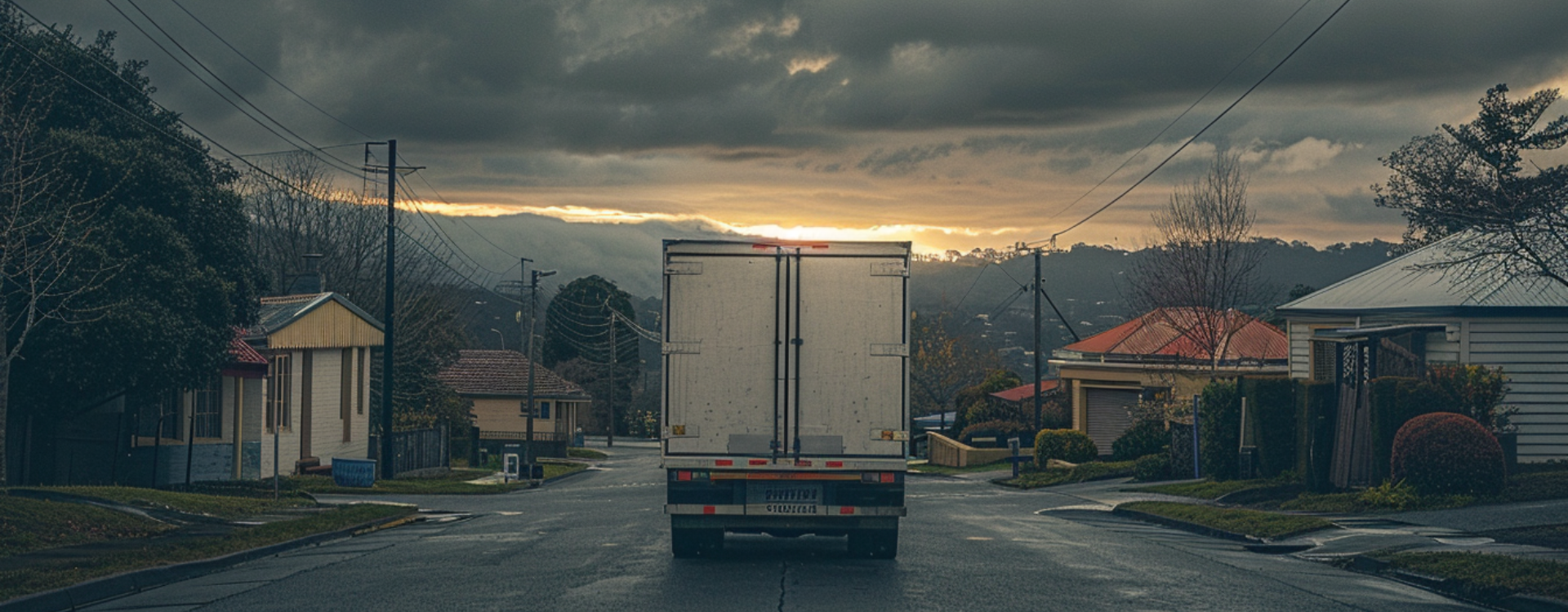
The small truck rolled out of the driveway with an ease that felt almost mocking—too smooth, too serene, as if the universe had missed the memo about the corpse cooling behind us and the moral free-fall we’d just committed to. Concrete gave way to tarmac, and each gentle turn of the wheels pulled us further from whatever remnants of normality we’d left behind. We weren’t just leaving a crime scene. We were leaving ourselves behind too—versions of us that hadn’t yet been forced to make impossible choices.
At the first T-junction, I pulled sharply to the right. No indicator. No warning. Just a crisp, defiant jerk of the wheel.
A minor act of rebellion. But it felt bigger than it was—like flicking the bird at an entire system of rules I no longer had the luxury of obeying.
"Beatrix!" Gladys screeched, the name slicing through the quiet hum of the engine like an alarm bell.
"Where are you going? You're going the wrong way," she snapped, practically climbing over her seatbelt with the urgency of her protest. I could feel her eyes on me, round and wild, like I’d just taken an abrupt turn into an active volcano.
"Huh?" I said, letting my shoulders rise in a half-hearted shrug. I didn’t even bother with subtlety. "Wasn’t Claremont on the list?" I asked, aiming for nonchalance and missing by a mile. My voice had a burr of something else beneath it—something tired, raw, and maybe just a touch bitter.
"Yeah, but we should be going to New Norfolk first," she said, brandishing the manifest as if it were a sacred scroll and she the appointed prophet.
I didn’t need to look at it. I knew New Norfolk was on the list. I’d seen it. Stared at it. Ignored it deliberately.
But the idea of heading back there—of breathing in the stale, dusty air of what once was my life—tightened something in my chest. Since losing the antique shop, the whole town had become one giant ache. The kind that didn’t throb so much as thud—quiet, constant, and unbearably familiar.
"But Claremont is closer," I said, voice clipped. Defensive. The kind of stubborn deflection a teenager might use when caught skipping school. I knew it was a weak argument, but I clung to it like a child clutching a broken toy. Familiarity breeds delusion, apparently.
Gladys shifted in her seat, her features rearranging themselves into a look of stern logic. I tried not to laugh. She always tried to go all “serious adult” when she thought we were about to veer off course, morally or geographically. But on her, it came off more like a goldfish trying to look menacing.
Still, I gave her credit—she powered through it.
"Technically, yes," she said, slipping into her lecture voice, the one she probably used when she was trying to win over disinterested shopkeepers or fob off complaints. "But if we go the back way to New Norfolk first, we can loop around along the river, do Claremont, and then continue down for the Moonah delivery."
The smug lift of her eyebrows was the cherry on top. She knew it made sense. And I hated her for being right.
I huffed. Loudly. Then steered us into the next roundabout and circled all the way around like some tragic metaphor on wheels. One full revolution, and we were back the way we’d come—looping ourselves into obedience.
The sigh that escaped me was heavy. Not just with frustration, but with a reluctant sort of admiration. For all her messiness and misplaced priorities, Gladys had a knack for charting courses—geographic and emotional alike.
We might have been hurtling toward chaos, but at least she had a bloody map.
"Hey, look!" yelled Gladys. Her sudden outburst jolted me, my fingers tightening instinctively around the steering wheel.
"The truck is gone. Luke must have taken it through the Portal already."
Her words pulled my gaze like a magnet. Without thinking, I leaned forward, eyes drawn towards the patch of bitumen that disguised Luke’s driveway. Sure enough, the larger truck had vanished. No oil stain, no tyre track—just absence, and the heavy implication of where it had gone.
A sharp flutter of dread rose in my chest. The Portal. Just the word was enough to summon a host of memories and questions I wasn’t remotely ready to unpack. That invisible tear in reality, humming with power and peril, now held the corpse of Jamie’s son. The sheer weight of it was absurd. Myth and murder crammed into a suburban block in Hobart.
And yet—here we were. Just two women in a truck. Pretending we were still making deliveries, pretending that any of this could be unspooled.
As my eyes lingered on the house, so too did the truck. It drifted lazily left, as if mimicking my mental detour.
"Beatrix!" screeched Gladys, her voice pitched somewhere between panic and outrage.
The jolt hit my chest before the steering wheel did. I yanked the wheel right, heart thudding, but the truck had already kissed the parked car on the shoulder. A quiet, decisive crunch marked the end of its side mirror, now airborne and tumbling like a dead moth into the grass.
"Shit," I muttered. Not loud. Not angry. Just... inevitable.
I flicked my eyes to the rearview mirror in time to see the broken glass bounce, land, and settle like a guilty conscience in a roadside ditch.
My foot moved to the brake. Pure reflex. Stop, assess, apologise—basic human decency 101. But Gladys’s voice, tight and urgent, stopped me cold.
"No. Don’t stop," she hissed. Her hands gripped the dashboard as if she could physically anchor us to the lie we were living. "I don’t think anybody saw us."
She was scanning windows, driveways, the sky, probably. As if someone might appear from behind a hedge with a clipboard and a warrant.
"I really think—" I started, the internal war of conscience briefly winning out. The right thing still tried to exist in my brain, bless it.
"Beatrix, you have blood on your clothes. We can't stop!"
That one landed. Not metaphorically. Literally. I looked down. My jeans, smeared faintly but unmistakably with the memory of Joel. Dark patches. Dried at the edges now, but far from forgettable.
Right. We weren’t just hit-and-runners. We were stained.
“Okay,” I whispered, barely a sound. Just an agreement with gravity.
Because in that moment, it wasn’t just a mirror we’d left behind.
It was the last sliver of plausible deniability.
“Watch the road!” yelled Gladys, her voice cutting through the rising fog in my brain like a whip crack.
My hands jerked instinctively on the wheel, the truck lurching as its tyres clawed at the bitumen, trying to make sense of my sudden correction. My heart thudded in my chest, a grim metronome marking each passing second of our unravelled calm. The vehicle swayed beneath us, heavy and unforgiving, every gear shift a jolt of memory—blood, bodies, mirrors snapping off like brittle truths we couldn’t put back.
"Gee, you're such a terrible driver," mumbled Gladys, arms folded across her chest now, as if that would offer her any defence against the chaos she’d so keenly contributed to.
"Me! A terrible driver?" I shot back, the words raw, brittle. It wasn’t really about driving, of course. Nothing ever was. It was about the pressure—tightening, relentless. The way the air between us crackled with every unspoken fear, every misstep magnified by what we were running from.
"I'm not the one who knocked down a dozen motorcycles," I added, my voice catching somewhere between accusation and attempted humour. It was a jab, half-hearted but instinctive, like a boxer swinging from muscle memory even when too tired to land a proper blow.
"I did that once," Gladys snapped back, defensive now. "And that was a long time ago."
"Hmph," I huffed, letting my disbelief linger. "It was last year."
That shut her up.
The silence that followed wasn’t peaceful. It was taut, thrumming with tension that no amount of sarcasm could soothe. Even the road seemed to press in around us—narrower, darker, every shadow stretching out like a question mark.
"Just keep going," she said eventually, her voice flat now, the edge replaced with something colder. More resigned.
I bit down on my lower lip. Hard. If I opened my mouth again, I'd either start screaming or spill everything I was trying not to feel. Neither would be productive.
They wouldn't have helped our plight, I reminded myself. Not now.
"Okay," I said at last, sighing the word out like a final breath before a dive.
"We'll keep going."
It was more than a route decision. It was a compact—silent, ugly, and necessary. Because at this point, what was a busted wing mirror compared to the rest of it? We'd already traded conscience for survival. What was one more kilometre?






