Leaf & Bean Café, Morningside
Tucked into a quiet stretch of Morningside Road, the Leaf & Bean Café has, over the past two decades, become one of Edinburgh’s most understated yet significant meeting spaces. More than just a coffee shop, it has evolved into a modern sanctuary—part retreat, part public square—where residents converge over shared routines, quiet confidences, and understated warmth. Beneath its calm, wood-panelled surface lies a history of careful stewardship, familial resilience, and subtle reinvention. Its story, though seemingly ordinary, carries the accumulated weight of habit, loss, trust, and quiet observation.
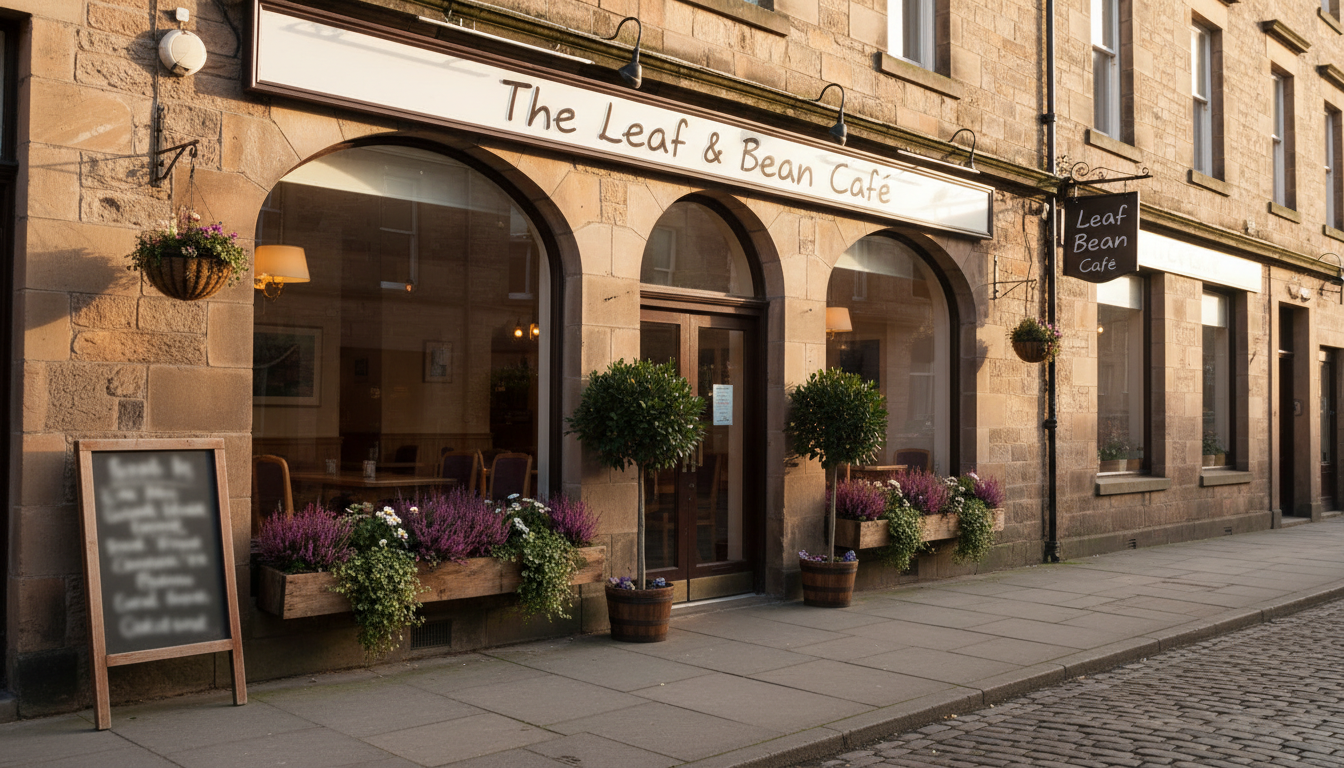
Location and Streetscape
The Leaf & Bean Café occupies a modest ground-floor premises along Morningside Road, positioned where Edinburgh's southern residential suburbs transition towards the city's more commercial corridors. The location sits within comfortable walking distance of several key landmarks—the Braid Hills to the south, the Hermitage of Braid to the west, and the broader Morningside district's Victorian and Edwardian terraces that define this area's architectural character.
The café benefits from foot traffic generated by local residents, students from nearby educational institutions, and professionals commuting between southern suburbs and Edinburgh's city centre. The building housing Leaf & Bean dates from the late Victorian period, part of a continuous terrace exhibiting typical characteristics of Edinburgh's 1890s commercial-residential construction. The ground floor, originally designed for retail or service businesses with residential accommodation above, maintains many original features despite subsequent adaptations to serve changing commercial purposes.
The sandstone façade, weathered to varying shades of grey and cream, blends seamlessly with neighbouring properties, creating the kind of understated presence that characterises Morningside's commercial streetscape—visible without being conspicuous, accessible without demanding attention. The café's frontage extends approximately twenty feet along Morningside Road, with large windows occupying most of this width.
These windows, installed during renovations in the early 2000s, replaced smaller Victorian shopfront glazing, creating visual transparency between interior and street that transformed the café's relationship with passing pedestrians. The increased natural light and visibility serves practical purposes—making the interior appear welcoming and creating the sense of openness that contemporary café culture privileges—whilst simultaneously establishing the Leaf & Bean as observable and participatory within the streetscape rather than withdrawn or exclusive.
The entrance, positioned slightly off-centre within the frontage, features a solid timber door with brass fixtures that suggest quality without ostentation. The door's weight and smooth operation create the kind of tactile experience that regular customers come to recognise—the particular resistance and click of the latch, the way the door swings on well-maintained hinges, the threshold's slight elevation requiring a small step up from street level. These physical details, trivial individually, accumulate into the embodied knowledge that transforms casual visitors into regulars who navigate the space without conscious thought.
Morningside Road's character at this location strikes a balance between residential quiet and commercial vitality. Traffic remains steady but not overwhelming, with buses providing regular public transport along the route whilst private vehicles move at speeds appropriate to the suburban context. The pavements accommodate pedestrian movement comfortably, with sufficient width that people can pause to read posted menus or peer through windows without obstructing others.
Trees planted along the street soften the urban environment whilst requiring maintenance that occasionally involves temporary inconvenience—pruning operations, leaf clearance, root management—that marks seasonal rhythms as reliably as weather patterns.
Interior Architecture and Organisation
The café's interior occupies approximately 800 square feet of ground-floor space, organised to maximise both functionality and atmosphere within the constraints imposed by the building's Victorian bones. The layout reflects evolution rather than singular design vision, incorporating adaptations made across two decades as the business responded to changing customer expectations, equipment requirements, and the practical lessons learned through daily operation.
Entering from Morningside Road, customers find themselves in a space that extends deeper than its street frontage might suggest. The room's proportions—roughly twenty feet wide by forty feet deep—create a sense of enclosure that nevertheless feels comfortable rather than cramped, achieved through careful attention to lighting, colour palette, and the strategic placement of elements that break up what could otherwise feel like an oppressive tunnel.
The colour scheme throughout employs warm neutrals that provide backdrop without demanding attention. Walls painted in shades of cream and pale grey create visual calm, whilst dark-stained timber elements—wainscoting extending approximately three feet up the walls, exposed ceiling beams, and the substantial timber counter—introduce contrast and warmth without overwhelming the space. The floor, laid with wide timber planks that show wear patterns reflecting two decades of foot traffic, contributes to the overall sense of materiality and authenticity that distinguishes the Leaf & Bean from more generic coffee shop environments.
Natural light enters primarily through the large front windows, creating zones of illumination that vary throughout the day as the sun's angle changes. Morning light floods the forward third of the space, making the window-side tables particularly attractive for customers seeking brightness and street-watching opportunities. As afternoon progresses, the light shifts and softens, creating more intimate atmosphere in areas the morning sun never directly reaches.
Artificial lighting supplements natural illumination through a combination of ceiling-mounted fixtures and task lighting at specific locations, creating layered illumination that can be adjusted to maintain appropriate ambience regardless of external conditions or time of day.
The service counter, positioned along the left wall approximately midway through the space, functions as both operational hub and visual anchor. Constructed from dark-stained timber with a working surface approximately eight feet long and three feet deep, the counter houses the café's primary equipment—an espresso machine occupying pride of place, grinders, water filtration systems, and the various tools and accessories required for beverage preparation.
The equipment represents significant investment, professional-grade machinery chosen for reliability and performance rather than merely aesthetic appeal, though the gleaming chrome and careful maintenance create their own visual impact. Behind the counter, shelving displays retail products—whole beans in sealed bags, coffee-making equipment available for purchase, and occasionally specialty items that reflect the café's character and the proprietor's interests.
This retail element, whilst secondary to the café's beverage service, contributes to revenue whilst also serving educational purposes, creating opportunities for staff to discuss coffee varieties, brewing methods, and the broader coffee culture that enthusiasts appreciate.
The seating arrangement accommodates approximately thirty customers across various configurations. Window-side tables seat two comfortably, arranged in a row that maximises natural light exposure whilst creating semi-private spaces defined by the table placement and the sight-lines towards the street. The central area contains larger tables seating four, suitable for casual business meetings, study groups, or friends gathering for extended conversations.
Along the right wall, a banquette provides continuous seating with small round tables that can be claimed by individuals seeking solitude or pairs wanting intimate conversation without the formality of designated two-tops. The furniture itself demonstrates the kind of considered eclecticism that characterises successful independent cafés—pieces selected for comfort and durability rather than strict adherence to particular aesthetic.
Bentwood chairs with cane seats provide classic café seating that references European coffee house traditions whilst remaining practical for daily use. The tables, constructed from dark-stained timber matching the counter and trim work, show the patina acquired through years of service—minor scratches, water rings, and worn areas that speak to genuine use rather than artificially distressed surfaces mimicking authenticity.
Storage and operational space occupies the rear third of the premises, screened from customer view by a partial wall that maintains visual flow whilst creating necessary separation between public and working areas. This back-of-house zone contains dry storage for coffee beans, retail stock, and supplies; a small preparation area for food items; staff facilities including a basic kitchen setup and toilet; and the storeroom where various equipment, cleaning supplies, and overflow stock are kept organised in ways that evolve according to operational needs.
The storeroom, measuring approximately ten by twelve feet, deserves particular attention for its role in the café's daily rhythms. Shelving lines three walls, with space in the centre for movement and temporary placement of deliveries requiring processing. Ventilation grilles positioned near the ceiling provide necessary air circulation whilst their positioning requires attention when rearranging storage—a practical consideration that becomes significant when routine movements reveal irregularities suggesting unauthorised access.
Atmosphere and Sensory Character
The Leaf & Bean's atmosphere results from the accumulation and interaction of multiple sensory elements that create an environment distinct from other cafés whilst remaining recognisably part of the broader coffee house tradition. The space communicates through sound, scent, visual texture, and the less definable quality of social climate that either welcomes or repels potential customers.
Sound provides the café's fundamental texture—the acoustic environment within which all other activity occurs. The espresso machine contributes mechanical rhythms: the hiss of steam wands frothing milk, the pressurised water forcing through compacted grounds, the periodic gurgling of the boiler maintaining temperature. These sounds, constant throughout operating hours, create auditory backdrop that regular customers find comforting in its familiarity whilst newcomers may initially find slightly intrusive until their ears adjust and filter the mechanical noise into acceptable background.
Conversation provides the other major acoustic element, its character varying throughout the day according to who occupies the space and for what purposes. Morning hours tend towards quieter interaction—commuters grabbing takeaway beverages exchange brief pleasantries but rarely settle for extended conversation, whilst early-arriving regulars claim favoured tables and establish social territories through presence rather than volume.
Midday brings increased energy as lunch customers and afternoon breakers create more animated atmosphere, conversations overlapping and occasional laughter punctuating the general murmur. Late afternoon transitions towards either studious quiet as students claim tables for revision work or the more relaxed tones of friends meeting after work obligations conclude.
Music plays through speakers positioned to provide even coverage without overwhelming conversation. The selection reflects management decisions about the café's character—typically jazz, acoustic folk, or carefully curated playlists that avoid both aggressive contemporary pop and soporific background music that might render the space forgettable. The volume remains calibrated to be audible without demanding attention, creating sonic texture that fills potential awkwardness of silence whilst never interfering with conversation occurring across a table.
Scent defines the café's identity as immediately as visual appearance, perhaps more so. Coffee dominates—the aroma of beans being ground, the rich complexity of brewing espresso, the slightly different character of filter coffee if batch brewing is underway. These scents communicate quality and purpose, establishing the Leaf & Bean's credibility within the competitive Edinburgh café scene where customers have developed sophisticated expectations about what good coffee should smell like.
Food preparation contributes secondary scents that vary according to what's being offered—toasting bread, warming pastries, occasional soup or other hot food items if the menu extends beyond standard café fare. These scents create associations with comfort and sustenance whilst remaining supporting elements rather than competing with coffee's aromatic primacy. Cleaning products provide the third scent category, more noticeable during quiet periods or early morning before customer traffic intensifies.
The café maintains standards that require regular wiping of surfaces, mopping of floors, and the various hygiene practices essential to food service operations. The chemical scents involved are kept as unobtrusive as possible through product selection and timing—heavy cleaning occurring outside operating hours when possible, spot cleaning during service using products chosen for effectiveness without overwhelming fragrance.
Visual texture throughout the space rewards extended observation, revealing layers of detail that casual glances might miss. The walls display rotating artwork from local artists, creating visual interest whilst also functioning as informal gallery space that benefits artists whilst giving the café cultural credibility beyond mere commercial operation. Notices, posters, and community information appear on a designated board near the entrance, creating resource for customers whilst establishing the Leaf & Bean as connected to broader Morningside community life.
Books occupy shelves in various locations—a lending library of sorts where customers can browse and take volumes, leaving others in exchange according to informal honour system. The selection reflects accumulated donations rather than curated collection, creating somewhat chaotic arrangement that nevertheless serves its purpose of providing reading material for customers who arrive without their own whilst contributing to the café's atmosphere as place for contemplation and learning rather than merely consumption.
The espresso machine, positioned prominently behind the counter, functions as both practical equipment and visual statement. The gleaming chrome, the precisely calibrated pressure gauges, the careful arrangement of tools and accessories communicate seriousness about coffee craft whilst also providing theatre—customers watching beverage preparation participate vicariously in the skill required to produce quality results, transforming what could be purely transactional service into performance worthy of attention and appreciation.
Daily Rhythms and Patterns
The Leaf & Bean operates according to rhythms that structure not merely its own activities but also the daily patterns of regular customers who integrate café visits into their routines with such consistency that absence becomes more notable than presence.
Opening occurs at 7:00 AM on weekdays, earlier than many independent cafés but responding to demand from commuters and early risers who have established morning rituals centred on the Leaf & Bean's particular offerings. The pre-opening period, typically beginning around 6:30, involves the sequence of preparation tasks required to transform the closed space into operational café—unlocking, lights on, equipment warming to operating temperature, initial supply checks, and the various small adjustments that daily use necessitates.
The morning rush, extending roughly from 7:00 to 9:00 AM, brings the café's most intense transactional period. Customers arrive seeking takeaway beverages to fuel commutes or office arrivals, their interactions with staff characterised by efficiency and familiarity rather than extended conversation. The regularity of these morning customers creates recognition relationships where orders are often anticipated based on arrival time and established preference, creating smooth operational flow that minimises queue times whilst making customers feel known and valued.
The mid-morning period, from 9:00 until roughly 11:30, sees a different customer profile. Parents returning from school drop-offs, retirees enjoying leisurely mornings, remote workers seeking environments more stimulating than home offices—these customers tend to occupy tables rather than taking beverages away, their presence transforming the café from efficient service operation into social space where lingering is not merely tolerated but implicitly encouraged through furniture selection, table spacing, and staff interactions that suggest no pressure to vacate.
Lunch brings another surge, though typically less intense than the morning rush and characterised by different dynamics. Customers might combine beverage with light food, claim tables for working lunches with colleagues, or simply seek break from whatever activities structure their days. The turnover during lunch hours remains higher than mid-morning, with most customers staying thirty to forty-five minutes rather than settling for extended periods.
Afternoon, from roughly 2:00 to 5:00 PM, creates the café's most varied atmosphere. Students arrive seeking study spaces, their laptops and textbooks claiming tables for hours whilst they nurse single beverages with the kind of economy that independent cafés must either accept or risk alienating an important customer demographic. Others stop for afternoon coffee as social activity rather than purely functional caffeine intake, their presence creating the kind of ambient social density that makes the café feel vibrant without being crowded.
Evening service, which continues until 6:00 PM on weekdays (8:00 PM on Fridays and Saturdays), attracts customers seeking transition between work and home, using the café as decompression space where the day's tensions can dissipate before returning to domestic responsibilities. The atmosphere during these hours tends towards quieter, more introspective mood—fewer conversations, more solo customers reading or simply sitting with their thoughts, the café functioning as urban sanctuary providing respite from both workplace intensity and domestic demands.
Weekend rhythms differ substantially from weekday patterns, reflecting different customer needs and time structures. Saturday opening at 8:00 AM acknowledges that without weekday commuting pressure, customers arrive later but stay longer. The day unfolds more gradually, with morning extending well into what weekdays would consider midday territory. Families appear more frequently, couples meeting for weekend coffee dates, groups of friends claiming larger tables for extended conversations that weekday schedules rarely permit.
Sundays maintain an even more relaxed tempo, the café opening at 9:00 AM and operating more as neighbourhood living room than efficient service operation. The slower pace suits both staff and customers, creating atmosphere where rushing seems inappropriate and where the café's role in community life becomes most apparent through the extended interactions and deepening relationships that time pressure elsewhere prevents.
The Café as Meeting Place
Beyond its primary function serving beverages and food, the Leaf & Bean operates as what sociologists might term a "third place"—a location distinct from home (first place) and workplace (second place) that provides neutral ground for social interaction, community formation, and the kind of casual encounters that urban life increasingly struggles to accommodate.
The café's physical characteristics facilitate this social function through multiple mechanisms. The varied seating arrangements permit different modes of occupation—solo customers can claim small tables without feeling conspicuous, pairs have options for varying degrees of privacy, and larger groups can commandeer configurations suitable for meetings or celebrations. The sightlines throughout the space allow awareness of other occupants without forcing interaction, creating the kind of peopled solitude that many customers seek—being alone but amongst others, solitary but not isolated.
Regular customers develop territorial behaviours, claiming preferred tables or positions within the café that become "their" spaces through repeated occupation rather than formal reservation. This territoriality, generally respected by both staff and other regulars, creates social organisation through habit and recognition rather than explicit rules. The corner table near the window becomes associated with the elderly gentleman who arrives at 10:00 AM every Tuesday and Thursday, his presence so reliable that his absence prompts quiet concern. The counter seats attract solo customers who appreciate proximity to staff and the subtle social connection that provides without requiring substantial conversation.
The café also functions as an information hub, with conversations overheard (intentionally or otherwise) providing news about neighbourhood developments, local politics, cultural events, and the personal dramas that constitute community life. Staff members, through their position as constant presence whilst customers flow through, accumulate knowledge about connections between regulars, developing understanding of the social networks that intersect within the café's walls.
This knowledge allows subtle facilitation—introducing customers who might benefit from connection, passing along information to someone who expressed interest in a topic another customer mentioned during earlier conversation, creating the kind of social cohesion that transforms a collection of individuals into something approaching genuine community.
The Leaf & Bean serves various subpopulations with differing needs and expectations. For students, it provides study space with ambient activity that makes concentration easier than library silence whilst avoiding home's domestic distractions. For remote workers, it offers a professional environment without corporate atmosphere, the café's wifi and power outlets facilitating productivity whilst the presence of others creates a sense of being part of the working world despite physical separation from traditional office.
For retirees and others with flexible schedules, it becomes a daily destination providing structure, social contact, and the small pleasures that accumulate into satisfying routine.
Business meetings occur frequently, with the café's neutral territory and public setting making it preferable to office formality or domestic intimacy for certain types of professional interaction. Freelancers meeting clients, job interviews, networking conversations, collaborative planning sessions—these activities transform empty tables into temporary offices, the café's ambient activity and beverage service creating conditions conducive to productive exchange whilst the time limits implicit in café occupation prevent meetings from extending beyond useful duration.
Personal conversations requiring privacy paradoxically benefit from the café's public nature. The ambient noise provides acoustic screening that makes nearby tables' conversations difficult to overhear, creating bubbles of relative privacy within the shared space. People discussing sensitive matters, having difficult conversations, or simply wanting to talk without domestic interruption often choose the café precisely because its public nature creates boundaries that private settings lack—conversations must remain civil, emotions moderated, with the presence of others imposing social constraints that can be productive when navigating challenging topics.
Commercial Operation and Business Model
The Leaf & Bean operates according to a business model typical of successful independent cafés—modest margins requiring careful cost management, revenue derived primarily from beverage sales supplemented by food and retail, and economic viability dependent on maintaining steady customer flow rather than maximising transaction value per visit.
Beverage sales constitute approximately 75% of revenue, with coffee in its various forms dominating. Espresso-based drinks—lattes, cappuccinos, flat whites, and other milk-coffee combinations—represent the majority of orders, their higher prices reflecting both ingredient costs and the skill required for preparation. Black coffee, whether espresso-based or filter-brewed, attracts customers who prioritise taste over presentation and coffee enthusiasts seeking to evaluate the beans themselves without milk's mellowing influence.
Tea sales, whilst significant, represent a smaller proportion of overall beverage revenue, serving customers for whom coffee is unappealing or inappropriate whilst also providing variety that prevents the menu from seeming unnecessarily restrictive.
Food sales, contributing approximately 20% of revenue, focus on items compatible with café operation's equipment limitations and staff capabilities. Pastries and baked goods sourced from local suppliers require no on-site preparation beyond possible warming, maintaining quality whilst avoiding kitchen facilities beyond what the modest back-of-house space permits. Toasted sandwiches and similar items prepared to order provide more substantial options for customers seeking lunch or afternoon sustenance, their preparation simple enough to not overwhelm staff during busy periods whilst generating margins that make the effort worthwhile.
Retail sales of whole coffee beans, brewing equipment, and occasional specialty items contribute the remaining 5% of revenue whilst also serving marketing and educational functions. Customers purchasing beans for home brewing develop deeper engagement with the café's offerings, often returning to report on their experiments and seek advice on improving technique. The retail element also establishes the Leaf & Bean's credibility as a serious coffee establishment rather than merely a beverage vendor, the visible bags of beans and equipment implicitly communicating expertise and quality standards that inform customers' perceptions of all offerings.
Operational costs follow patterns typical for food service businesses. Labour represents the largest expense, with staffing levels calibrated to match anticipated customer flow whilst maintaining service quality during peak periods and avoiding excess capacity during slower hours. Ingredient costs, particularly for quality coffee beans, consume a substantial portion of revenue, the café's positioning as a quality-focused operation requiring sourcing decisions that prioritise taste over price.
Rent, utilities, equipment maintenance, insurance, and the various regulatory compliance costs that food service operations incur complete the major expense categories. Profitability depends on achieving sufficient transaction volume to cover fixed costs whilst maintaining margins on individual sales that accumulate into viable income.
The Leaf & Bean's two decades of operation suggest successful navigation of these economic challenges, though the business likely generates comfortable rather than exceptional returns—sufficient to sustain operations, compensate ownership adequately, and make necessary reinvestments in equipment and facilities whilst not creating the kind of wealth that property ownership or capital-intensive businesses might generate.
Changes and Continuity
Over two decades of operation, the Leaf & Bean has evolved in ways both obvious and subtle, responding to changing customer expectations, competitive pressures, and the natural ageing and wear that any physical space experiences through constant use.
Equipment upgrades represent the most visible changes, with the current espresso machine being at least the third to occupy the space behind the counter. Each replacement brought improved technology and capabilities, reflecting the specialty coffee movement's technical advances and customer expectations for beverage quality that have steadily increased across the industry. The decision to invest in professional-grade equipment rather than cheaper alternatives demonstrates a commitment to quality that customers recognise even if they lack technical knowledge to appreciate specific differences.
Menu evolution reflects broader coffee culture trends whilst maintaining core offerings that regular customers depend upon. The early years probably featured a simpler menu—basic coffee drinks, standard tea selection, minimal food—that expanded gradually as customer sophistication and expectations evolved. The addition of specific coffee varieties, rotating single-origin offerings, and more elaborate beverage preparations occurred incrementally rather than through dramatic menu overhaul, each addition tested and evaluated before becoming a permanent fixture.
The physical space shows marks of time and use despite regular maintenance. Floor boards bear wear patterns reflecting traffic flow, their finish requiring periodic renewal. The counter's timber surface carries scratches and stains that refinishing can diminish but never entirely erase. Furniture pieces have been replaced as they wore beyond acceptable standards, though with attention to maintaining visual consistency rather than introducing jarring aesthetic changes.
These accumulated alterations mean the current space differs from its early-2000s configuration whilst still feeling continuous with its origins—evolution rather than revolution, adaptation rather than reinvention.
Staff turnover creates another dimension of change, with the café's employment history extending across dozens of individuals who contributed to its operation for periods ranging from months to years. Some staff members departed for career advancement, others for life changes requiring relocation or schedule flexibility the café couldn't accommodate, still others simply moving on as employment preferences shifted.
Yet certain patterns persist—Daniel Campbell's consistent ownership providing continuity that franchise operations or frequently-sold independent businesses lack, whilst long-term staff members create institutional memory and maintenance of service standards that transcend individual personnel changes.
Customer demographics shift in response to neighbourhood evolution and broader Edinburgh developments. The Morningside of 2005 differs from 2025 in ways both subtle and significant—property values, demographic composition, the presence or absence of particular institutions and businesses that generate foot traffic. The café adapts to these changes whilst maintaining an identity strong enough that neither neighbourhood evolution nor customer turnover fundamentally alters its character. New customers arrive constantly, yet regular patronage from established clientele creates stability that prevents the kind of dramatic shifts that would transform the Leaf & Bean into something unrecognisable from its origins.
The Space After Hours
When the Leaf & Bean closes for the day, the space transforms from active social environment into static, empty commercial premises. The post-closing period involves shutdown procedures that reverse the morning's opening preparations—equipment cleaned and powered down, tables wiped, floors swept and mopped, cash reconciled, and the various end-of-day tasks that food service requires before premises can be secured for the night.
The empty café possesses a different character than its occupied state. Chairs placed upside-down on tables for floor cleaning create a forest of legs and rungs that transforms the familiar layout into something slightly alien. The lighting, reduced to minimal overnight security levels, creates zones of shadow that daylight hours never permit. The silence, broken only by ambient building sounds and occasional street noise filtering through windows, emphasises the acoustic vitality that customer presence normally provides.
The smells shift—cleaning products becoming more noticeable without coffee's domination, the slightly stale quality that enclosed spaces develop when human activity and its associated ventilation needs cease.
For staff conducting closing procedures, this quiet period provides an opportunity for reflection absent during service hours' constant demands. The physical labour of cleaning creates space for thoughts to wander, conversations between closing staff taking on a different character than interactions occurring under customer observation. The café becomes genuinely theirs during these hours—not serving others' needs but maintaining the space for tomorrow's renewal of cycles that structure both business operations and participants' lives.
The locked, unoccupied café rests through night hours, its thick stone walls and solid door providing security that allows equipment and modest cash reserves to remain safely on premises. The building's Victorian construction, designed for durability rather than the planned obsolescence characterising much contemporary development, means the space weathers years of use with dignity, requiring maintenance but not constant emergency repair. The café sleeps, if commercial space can be said to sleep, waiting for dawn and the renewal of patterns that have repeated with variations for two decades.







