Launceston Police Station, Tasmania
The Charles Street station in central Launceston has served as Tasmania Police Northern Division's headquarters since the 1917 reorganisation, a solid brick building whose successive modifications trace the evolution of regional policing from telegraph-and-horseback to digital forensics and highway patrol. The station houses Northern Division's command, its detective branch, custody facilities, and the administrative machinery that coordinates policing across 20,000 square kilometres of northern Tasmania. The building lacks the architectural ambition of Hobart's purpose-built headquarters at Liverpool Street — it was not designed for the purpose it serves, has never been adequate for the demands placed upon it, and has persisted through more than a century of incremental adaptation because replacing it would require capital expenditure that successive governments have found easier to defer than to fund.
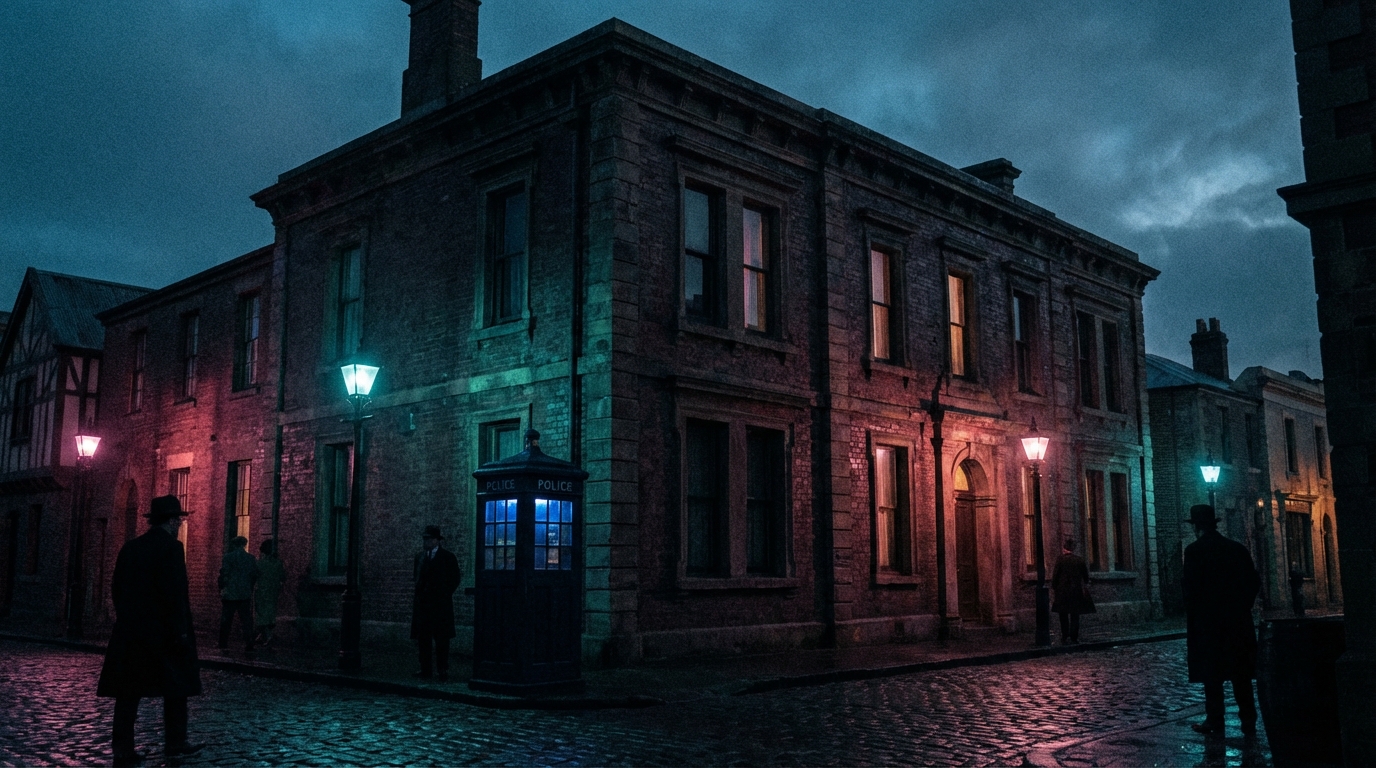
The Building on Charles Street
The Launceston Police Station occupies a corner site on Charles Street near the centre of Tasmania's second city, a two-storey brick building with a rear annexe that has been extended, modified, and partially rebuilt so many times across its history that no single architectural description adequately captures its current form. The original structure — erected in the 1880s as a combined police office and magistrate's court — was built in the solid Victorian institutional style that characterised public buildings throughout colonial Tasmania: load-bearing brick walls, timber-framed windows, slate roofing, and an interior layout designed for a constabulary whose entire Launceston complement numbered fewer than twenty men.
The magistrate's court relocated to a purpose-built facility on St John Street in 1923, freeing the ground floor's eastern wing for police use and providing the first of many expansions that would transform the building's interior without substantially altering its exterior presentation. The sandstone façade that faces Charles Street retains much of its original Victorian character — arched windows on the upper floor, a recessed entrance with a heavy timber door that was replaced with glass and aluminium in 1987 but whose original proportions remain visible in the stonework, and a parapet bearing the date 1884 in carved numerals that passing pedestrians rarely notice.
Behind this façade, the building's interior tells a different story — one of continuous adaptation, where every decade has left its mark in the form of partition walls that don't quite reach the ceiling, electrical conduit bolted to surfaces never designed to carry it, and corridors that change width mid-passage where extensions meet original construction. Officers who have served at Charles Street for any length of time develop an instinctive understanding of the building's idiosyncrasies — which doors stick in humid weather, which radiators produce heat and which produce only noise, where mobile phone signal drops out in the interior rooms, and which sections of the first floor carry sound so efficiently that conversations in one office can be heard clearly in the next.
The building sits approximately 200 metres from the Tamar River, close enough that the 2016 floods — the worst in Launceston's modern history — sent water into the basement storage area and destroyed several filing cabinets of archived records that had survived every previous threat to their existence. The flood damage prompted a review of evidence storage practices that resulted in the relocation of all critical materials to the upper floor, a sensible precaution that further compressed the already insufficient workspace available to Northern Division's detectives and administrative staff.
Ground Floor: Public Interface and Operational Core
The public enters through the Charles Street frontage into a reception area that serves as Launceston's primary point of contact with police services. The space is functional rather than welcoming — a counter separating the public from the duty officer, a waiting area with eight plastic chairs bolted to the floor, a noticeboard displaying crime prevention leaflets and community liaison information that is updated with varying regularity, and a CCTV camera positioned above the entrance whose recording quality has been the subject of repeated complaints from officers who have attempted to use its footage for evidential purposes.
The reception operates during business hours with a civilian staff member managing public inquiries, after which the duty constable assumes responsibility for anyone presenting at the front counter. The volume of daily traffic is substantially lower than Hobart's Liverpool Street station — Launceston generates fewer walk-in reports, fewer urgent presentations, and fewer of the unpredictable public interactions that characterise a state capital's primary police station. What the reception lacks in volume it compensates in familiarity: regular visitors are known by name, the duty officer recognises faces that recur across years of community interaction, and the relationship between the station and the city it serves carries an intimacy that Hobart's larger, more anonymous operation cannot replicate.
The custody suite occupies the ground floor's rear section — four cells of reinforced construction dating from the 1882 original, whose iron doors have been supplemented with modern locking mechanisms but never replaced. The cells are small by contemporary standards, designed for an era when detention was expected to be brief and uncomfortable, and their continued use reflects the same budgetary constraints that govern every aspect of the building's operation. A custody sergeant monitors the cells from a desk positioned at the corridor's end, maintaining visual contact with all four cell doors simultaneously — a design feature of the original building that subsequent modifications have preserved because it works.
Two interview rooms occupy converted offices near the custody suite. The rooms are equipped with audio recording systems installed in the early 2000s and video recording added in 2012. Room 1 serves general interview purposes. Room 2 has been adapted with softer furnishing and indirect lighting for interviews involving vulnerable witnesses and victims — a modification that the station's officers initiated using discretionary funds after a 2014 review identified the standard interview environment as inappropriate for trauma-affected individuals.
The ground floor also houses the station's communications room — a modest space containing radio equipment, telephone lines, and a computer terminal linked to the state-wide dispatch system. The room is staffed during peak hours and monitored remotely during overnight periods when Launceston's operational tempo subsides. Communication with rural stations across Northern Division flows through this room, though the practical reality is that many outlying stations communicate directly with Launceston by telephone during business hours and rely on the state dispatch system outside those hours.
A rear corridor connects the main building to the annexe — a single-storey brick extension added in the 1950s that houses the station's vehicle garage, a small workshop, and storage facilities. The garage accommodates eight vehicles, including four marked patrol cars, two unmarked detective vehicles, and two four-wheel-drive vehicles allocated for rural operations. The space is insufficient for the division's full operational fleet, and additional vehicles are parked in a secured yard behind the annexe where exposure to Launceston's weather — milder than the west coast but reliably wet through winter — accelerates the deterioration that the maintenance budget struggles to address.
First Floor: Detectives, Command, and Compressed Space
The staircase to the first floor is narrow and turns sharply at a landing where a window overlooks the rear yard. The window's sill has accumulated decades of informal use as a message drop, a coffee rest, and a vantage point from which officers observe the car park for arriving colleagues or departing suspects. The staircase opens onto a corridor that runs the building's full length, with offices and workspaces arranged on both sides in configurations that have changed with every reorganisation of the division's internal structure.
The Detective Branch workspace occupies the first floor's western section — an open-plan area containing twelve desks arranged in pods of four, each equipped with a computer terminal, telephone, and the accumulated personal effects that distinguish an occupied workspace from an empty one. The space is cramped by any standard and claustrophobic by comparison with Hobart's purpose-built detective floor. Detectives working complex cases learn to manage their physical environment with the same discipline they apply to evidence — documents filed vertically rather than spread horizontally, reference materials stored in desk drawers rather than on surfaces, conversations conducted at volumes calibrated to prevent neighbouring desks from overhearing sensitive case details in a room where neighbouring desks are less than two metres away.
The twelve desks serve Northern Division's CIB complement of approximately twenty-five detectives, a ratio that works only because not all detectives occupy the office simultaneously — some are in the field, some are conducting interviews, some are attending court, and the hot-desking arrangement that this necessitates is tolerated rather than embraced. Officers maintain personal storage in lockable drawers assigned to individuals regardless of which desk they occupy on any given day, and the system functions through the informal cooperation that characterises a team small enough for everyone to know everyone else's habits and preferences.
The Superintendent's office occupies the first floor's north-east corner — the building's only space that could reasonably be described as an office rather than a partitioned section of a larger room. The corner position provides windows on two walls, natural light that the interior offices lack entirely, and a door that closes — a feature whose significance is appreciated only by officers who have attempted to conduct confidential conversations in the building's open-plan areas. The office is modest by the standards of equivalent command positions: a desk, two visitor chairs, a filing cabinet, and a bookshelf containing operational manuals, legal references, and a collection of divisional annual reports dating back to the 1960s that successive superintendents have maintained without any of them being entirely certain why.
Adjacent to the superintendent's office, a small administrative area houses the division's chief clerk and administrative support staff. The area contains three desks, a photocopier that functions reliably approximately four days out of five, and a filing system whose organisation reflects the accumulated logic of every chief clerk who has occupied the position since records were relocated from the ground floor following the 2016 floods. The current arrangement is comprehensible to those who work within it and opaque to everyone else — a characteristic it shares with most institutional filing systems that have evolved organically over decades.
A single meeting room serves the entire station — a converted space at the corridor's eastern end that accommodates twelve people in conditions that become uncomfortable at ten and impossible at fourteen. The room hosts detective briefings, divisional planning meetings, and the occasional community liaison session when external visitors are involved. Its dual function as meeting room and overflow interview space creates scheduling conflicts that are managed through a wall-mounted booking calendar that officers respect in principle and ignore in practice when operational necessity demands the room regardless of prior claims.
The Basement: Storage and the Weight of Water
The basement — accessible via a steep staircase behind the custody suite — was not part of the original 1884 construction but was excavated during the 1950s extension to provide additional storage capacity. The space is low-ceilinged, poorly ventilated, and susceptible to moisture infiltration from the water table that sits uncomfortably close to the surface throughout central Launceston. Dehumidifiers operate continuously, their electrical consumption representing a line item in the station's utilities budget that facilities managers have repeatedly flagged as disproportionate to the value of the space they protect.
Before the 2016 floods, the basement housed archived case files, old equipment, and the accumulated material detritus of decades of police operations. The floodwater that entered the space — approximately forty centimetres at its deepest — destroyed several filing cabinets of historical records and damaged others to varying degrees. The salvage operation recovered what could be recovered, and the subsequent review relocated all remaining archival materials to the first floor or to off-site storage at the divisional warehouse on Invermay Road.
The basement now serves primarily as storage for equipment, supplies, and materials whose loss to water damage would be inconvenient rather than catastrophic — traffic cones, barrier tape, spare uniforms, cleaning supplies, and the various operational consumables that police work generates demand for in quantities that storage space above ground cannot accommodate. The space also houses the building's electrical switchboard, which was elevated onto a raised platform following the 2016 floods — a precaution that should have been taken decades earlier and whose implementation required the kind of crisis that transforms sensible proposals from deferred maintenance items into urgent priorities.
The Rear Yard and the Annexe
Behind the main building, a paved yard enclosed by a two-metre brick wall provides secured parking, a loading area for prisoner transport vehicles, and the outdoor space that officers use for the brief respites from indoor work that the building's interior cannot provide. The yard's dimensions are sufficient for vehicle manoeuvring but not generous — reversing a divisional van through the yard's gate requires the kind of spatial judgement that new officers develop through practice and the occasional minor collision with the gateposts whose scarring records the learning curve.
The annexe — the single-storey 1950s extension accessible from the rear corridor — houses the vehicle garage, a workshop equipped for basic maintenance tasks, and a secure storage room used for evidence requiring controlled conditions that the main building's interior cannot reliably provide. The garage's roller door faces the rear yard, and vehicles entering or departing announce their movements through a metallic clatter that officers on the first floor have learned to interpret — the particular sound of a patrol car departing at speed carries a different character from the routine departure of a detective's unmarked vehicle, and experienced officers register the distinction without conscious effort.
The workshop contains tools and equipment sufficient for basic vehicle maintenance — tyre changes, fluid top-ups, minor electrical repairs — that would otherwise require trips to external service providers whose turnaround times the division's operational tempo cannot always accommodate. A senior constable with mechanical aptitude has traditionally assumed informal responsibility for the workshop's management, a role that carries no official recognition or additional compensation but persists because the alternative — a workshop that nobody maintains — would impose costs on the division that everyone prefers to avoid.
The Building's Character and Its Institutional Memory
The Charles Street station operates under constraints that purpose-built facilities do not face and that no amount of incremental modification can fully resolve. The building was designed for a different era of policing, adapted for each subsequent era through modifications that addressed immediate needs without resolving fundamental limitations, and maintained through the pragmatic acceptance that replacement requires funding that governments have consistently directed elsewhere.
Officers who serve at Charles Street develop a relationship with the building that combines affection with exasperation — affection for the institutional character that a century of continuous use has embedded in its walls, exasperation for the daily inconveniences that outdated infrastructure imposes on contemporary operations. The narrow staircase, the cramped detective workspace, the meeting room that cannot accommodate a full team briefing, the basement that floods, the car park that cannot hold the fleet — these are the conditions of service at Charles Street, accepted because they must be accepted, complained about because complaining is the legitimate response to conditions that should have been improved decades ago.
The building's persistence is, in its own way, a reflection of the division it houses. Northern Division has never attracted the institutional investment that Southern Division commands or the crisis-driven attention that Western Division periodically receives. It operates in the space between political visibility and operational necessity, performing essential work from facilities that are adequate in the sense that they have not yet failed catastrophically, and maintained through the accumulated ingenuity of officers and staff who have learned to work within constraints rather than waiting for constraints to be removed.
The Charles Street station will eventually be replaced. Every facilities review conducted since 1998 has recommended replacement or major refurbishment, and every subsequent budget allocation has deferred the recommendation to a future cycle. The building persists because persistence is what it does — absorbing each year's modifications, accommodating each generation's requirements, containing the accumulated weight of every case investigated, every statement taken, every shift begun and ended within its walls, and carrying forward an institutional memory that no new building, however well designed, could replicate.







