Lachlan James Green
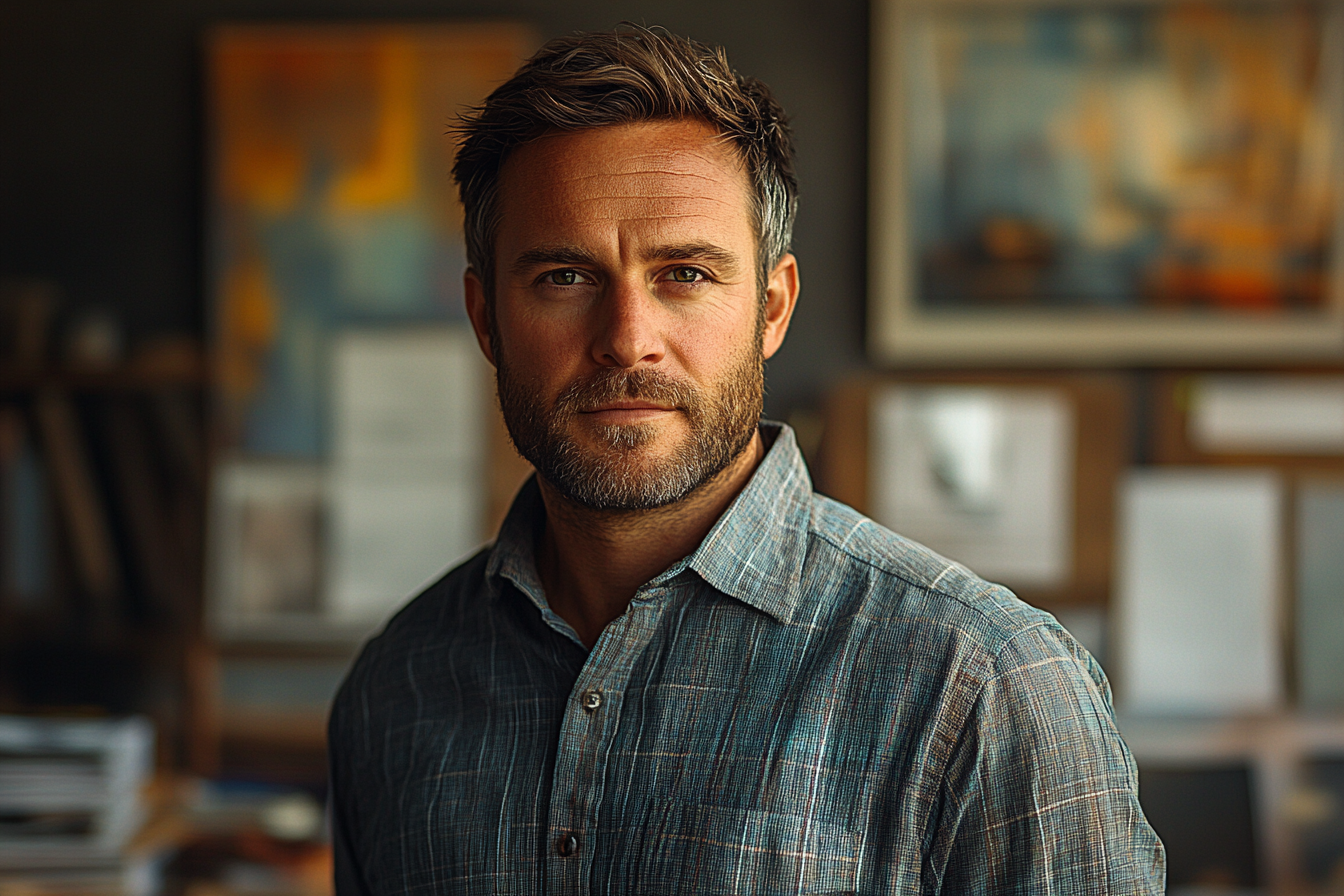
Born in Hobart on 12 October 1981, Lachlan James Green transformed childhood dinner table debates about justice into a career that has reshaped Tasmania's media landscape. The founder and Editor-in-Chief of the Tassie Independent, Green has spent two decades pursuing stories that mainstream outlets deemed too dangerous or difficult. His investigations into corporate corruption, environmental degradation, and the mysterious disappearances that gripped Tasmania in 2018 have earned both accolades and enemies, establishing him as the island state's most fearless and consequential journalist.
Birth and Early Childhood
Lachlan James Green arrived at the Royal Hobart Hospital on the evening of 12 October 1981, the first child of Ian and Moira Green. The timing seemed appropriate for a future journalist—a spring evening when the city below Mount Wellington was shaking off winter's grip, preparing for the season of growth and renewal. Ian, then a thirty-two-year-old English and history teacher at New Town High School, had spent the anxious hours of his wife's labour pacing the hospital corridors with a dog-eared copy of George Orwell's essays tucked under his arm. He would later tell Lachlan that he'd been reading "Politics and the English Language" when the nurse summoned him to meet his son, an origin story that became family legend.
Moira Green, née Davies, was twenty-nine when Lachlan was born. Her work as a social worker with the Department for Community Welfare had exposed her to the consequences of institutional failure and individual cruelty—experiences that shaped her worldview and, through her, her children's understanding of society's obligations to its most vulnerable members. The job demanded emotional resilience, and Moira had developed it in abundance, becoming an advocate whose clients trusted her to fight for them within a system designed to exhaust such fighters.
The Green family home on Goulburn Street in West Hobart was a modest weatherboard cottage that Ian had purchased in 1978 with savings accumulated through years of frugality. The house sat on a sloping block with views across the city to the Derwent River, though these views were partially obscured by the overgrown garden that Moira cultivated with more enthusiasm than systematic skill. Inside, books dominated every available surface—histories and novels, political analyses and poetry collections, stacked on shelves, piled on tables, tucked into corners. The television occupied a secondary position in family life, switched on for news broadcasts and special events but otherwise silent whilst conversation filled the rooms.
The Green Household and Its Values
The dinner table at Goulburn Street became Lachlan's first classroom in critical thinking. Ian brought home current events like assignments, presenting newspaper articles for discussion and demanding that his children—Lachlan, then Fiona, born in 1984, and Emily, born in 1987—articulate and defend positions on issues they might have preferred to ignore. The conversations could be intense, with Ian pushing back against sloppy reasoning whilst Moira ensured that emotional and moral dimensions received equal consideration.
Ian's approach to parenting combined intellectual rigour with genuine warmth. He read to Lachlan nightly until the boy could read for himself, then continued by discussing what Lachlan was reading—adventure stories and mysteries initially, then histories and biographies as his interests matured. The teacher's patience with student questions translated naturally to fatherhood; no query was dismissed as silly, no confusion left unaddressed. Ian believed that curiosity deserved cultivation, not correction.
Moira's influence operated differently but no less powerfully. Her work meant that the realities of poverty, abuse, and abandonment were not abstractions in the Green household. Without violating client confidentiality, she spoke about systemic failures that allowed children to fall through cracks, about policies that punished the vulnerable for their vulnerability, about the distance between official rhetoric and lived experience. Lachlan absorbed these lessons, developing an early awareness that society contained hidden suffering that those in comfortable circumstances rarely glimpsed.
The arrival of sisters Fiona and Emily transformed Lachlan's position within the family. As the eldest by three and then six years respectively, he assumed responsibilities that shaped his character—mediating disputes, helping with homework, modelling behaviour that the younger girls would emulate. The age gaps meant that Lachlan experienced something like three distinct childhoods: as an only child, then as an older brother to one sister, then as the senior sibling in a household of three children with very different temperaments and needs.
Education at Hutchins School
Lachlan's enrolment at Hutchins School in 1987 introduced him to an institution whose history stretched back to 1846, making it one of Australia's oldest schools. The sandstone buildings on Macquarie Street carried the weight of tradition in their architecture and their atmosphere—chapel services, house competitions, expectations of academic achievement and personal conduct that connected current students to generations of predecessors. For a boy from a modest West Hobart home, the environment presented both opportunity and challenge.
The academic programme suited Lachlan's temperament. He excelled in English and history, subjects that rewarded the reading habits his parents had cultivated and the analytical skills those dinner table debates had honed. His essays demonstrated unusual sophistication for a schoolboy—not brilliant insights but methodical arguments supported by evidence, conclusions that followed from premises, awareness of counterarguments that strengthened rather than undermined his positions. Teachers noted his seriousness, his willingness to revise and improve, his evident pleasure in getting things right.
The school newspaper became Lachlan's first journalistic outlet. He joined the staff in Year 9, initially writing brief reports on sporting events and school functions. By Year 11, he had risen to editor, transforming a publication that had largely consisted of announcements and photographs into something resembling actual journalism. His investigative piece on conditions in the school's boarding houses—documenting overcrowding, inadequate heating, and bullying that staff had ignored—generated controversy amongst administration but earned respect from students and several progressive-minded teachers.
The debating team provided another arena for developing skills that would prove professionally valuable. Lachlan competed throughout his secondary years, eventually captaining the school's senior team. The discipline of constructing arguments under time pressure, of anticipating opponents' objections, of presenting complex positions clearly and persuasively—these capabilities transferred directly to journalistic practice. He learned that conviction without evidence was mere assertion, that rhetoric without substance was manipulation, that the strongest arguments acknowledged their own limitations.
University and the Discovery of Purpose
The Bachelor of Arts in Journalism at the University of Tasmania, commenced in 1999, confirmed Lachlan's sense of vocation. The programme combined theoretical foundations with practical skills, exposing students to media law, ethics, research methodology, and writing across multiple formats. Lecturers included former practitioners whose war stories illuminated the gap between classroom discussions and newsroom realities, preparing students for an industry that valued adaptability and resilience alongside technical competence.
Lachlan's approach to university study replicated patterns established at Hutchins. He attended lectures conscientiously, completed readings thoroughly, submitted assignments on time and above requirement. His grades placed him consistently in the top tier without quite achieving the exceptional marks that distinguished a handful of classmates. What set Lachlan apart was not academic brilliance but something harder to measure—a quality of purposefulness that colleagues recognised and respected.
The internship at the Hobart Gazette during his second year provided formative professional experience. The newspaper, a weekly serving Hobart's inner suburbs, operated with minimal staff and tight deadlines. Lachlan was assigned to cover local politics, attending council meetings that stretched past midnight, interviewing aldermen who viewed student journalists with bemused condescension, transforming procedural tedium into stories that readers might actually want to finish. The editor, a chain-smoking veteran named Graham Whitehead, offered feedback that was blunt, occasionally brutal, and invaluable.
A student-led investigation during Lachlan's final year demonstrated capabilities that would define his career. He and three classmates examined urban development approvals in Hobart's northern suburbs, documenting relationships between councillors and developers that appeared to influence planning decisions. The series earned faculty commendation and generated modest media attention, but its greater significance lay in what Lachlan learned about investigative process—the patience required to assemble evidence, the skill needed to navigate public records systems, the ethical considerations involved in exposing individuals' misconduct.
The Freelance Years
Graduation in 2002 launched Lachlan into a journalism market that offered limited opportunities for idealistic newcomers. Tasmania's media landscape was dominated by a handful of outlets whose staff positions were scarce and whose editorial priorities often conflicted with the kind of work Lachlan wanted to pursue. The Tasmanian Observer, owned by the National News Network, employed most of the state's professional journalists, but its corporate ownership imposed constraints that Lachlan found philosophically objectionable even before he had experienced them personally.
Freelance journalism became the path of necessity and, eventually, of choice. Lachlan pitched stories to publications across Australia, developing expertise in areas that intersected his interests with market demand. Environmental journalism proved particularly fruitful—Tasmania's ongoing conflicts over forestry, mining, and development generated stories that mainland editors found compelling. His 2004 series on illegal logging in old-growth forests attracted national attention, demonstrating that rigorous investigation could produce consequences: regulatory changes, prosecutions, and public awareness that shaped political discourse.
The freelance existence demanded qualities beyond journalistic skill. Lachlan learned to manage irregular income, to cultivate relationships with editors whose publication schedules and payment practices varied wildly, to balance multiple assignments at different stages of completion, to market himself without the institutional backing that staff positions provided. He developed a network of sources across government agencies, activist organisations, and industry groups—people who would tip him to stories and provide access that less persistent journalists couldn't obtain.
Social justice reporting complemented environmental work. Lachlan documented educational inequities between urban and rural schools, revealing that students in remote communities received demonstrably inferior instruction despite official claims of equitable funding. He investigated housing policies that perpetuated homelessness whilst administrators celebrated bureaucratic metrics. He profiled individuals whose experiences illuminated systemic failures that aggregate statistics concealed—the kind of journalism Moira's work had prepared him to pursue.
Jessica Clarke and Partnership
The relationship that would become Lachlan's marriage began during a journalism conference in Melbourne in early 2005. Jessica Clarke, then twenty-six, worked as a features writer for a Victorian regional newspaper, having completed her journalism degree at RMIT two years earlier. The conference panel on investigative methodology drew them both, and the conversation that began during question time continued through the evening reception and into the small hours at a Carlton wine bar.
Jessica's background differed markedly from Lachlan's. She had grown up in Bendigo, the daughter of a real estate agent and a nurse, in a household where intellectual debate was less prominent than practical problem-solving. Her journalism had developed from different foundations—a gift for interviewing, an ability to establish rapport with sources across social boundaries, a narrative instinct that transformed factual accounts into compelling stories. Where Lachlan built arguments, Jessica crafted characters; where he accumulated evidence, she captured moments.
The relationship developed across geographical distance. Melbourne and Hobart were close enough for weekend visits but far enough to impose logistical challenges on a partnership between two people whose careers demanded flexibility. They managed through frequent phone calls, shared projects when opportunities arose, and a mutual understanding that professional commitments might sometimes take precedence over personal convenience. The arrangement required trust that both proved willing to extend.
Marriage came in November 2006, a small ceremony at the Royal Tasmanian Botanical Gardens attended by family and close friends. Jessica had relocated to Tasmania three months earlier, having secured a position at the Tasmanian Observer that offered stability whilst she explored freelance opportunities. The couple settled in a rented cottage in North Hobart, close enough to the city for Jessica's commute but distant enough from Lachlan's childhood home to establish their own household identity.
The professional partnership that developed alongside the marriage enhanced both careers. Jessica's interviewing skills complemented Lachlan's research capabilities; her ability to humanise abstract issues strengthened pieces that might otherwise have remained dry policy analyses. They collaborated formally on several major projects and informally on countless others, each serving as the other's first reader, most trusted critic, and most reliable supporter.
Parenthood and Shifting Priorities
Oliver Ian Green was born on 3 August 2008 at the Royal Hobart Hospital, the same institution where Lachlan had arrived twenty-seven years earlier. The pregnancy had been planned, though its timing—Jessica was seven months along when the global financial crisis began reshaping media economics—introduced anxieties that no amount of preparation could fully address. Freelance journalism, never financially secure, became more precarious as publications cut budgets and reduced commissions.
Fatherhood transformed Lachlan's relationship with time. The endless hours that investigative work demanded competed with responsibilities that could not be delegated or deferred. Nappy changes and night feeds, paediatrician appointments and playground visits—these ordinary parental duties required presence that journalism had never before demanded. Lachlan discovered that he could research stories during Oliver's naps, conduct phone interviews whilst walking the pram, write at his kitchen table whilst his son played nearby. The adaptations were imperfect but necessary.
Sophie Moira Green arrived on 14 February 2011, her Valentine's Day birthday becoming a family joke that her romantic temperament would later embrace. The second child proved easier in some respects—experienced parents knew what to expect—and more challenging in others, as two children demanded attention that one parent alone could rarely provide. Jessica reduced her Observer commitments to part-time, supplementing household income with freelance work that allowed greater scheduling flexibility.
The children inherited their parents' intellectual environment. Books surrounded them from infancy, conversations included them even before they could fully participate, questions received serious attention regardless of how naive they might seem. Lachlan read to Oliver and Sophie nightly, continuing the tradition Ian had established, choosing stories that entertained whilst also stimulating thought about fairness, courage, and the difference between right and wrong.
Founding the Tassie Independent
The frustrations that would birth the Tassie Independent had accumulated over years of freelance work. Lachlan watched stories he had pitched rejected by editors whose concerns about advertiser relationships outweighed their interest in public service journalism. He saw investigations he had completed buried or softened to avoid offending powerful interests. He recognised patterns of underreporting on issues that mattered to Tasmanians—environmental degradation, Indigenous rights, governmental failures—whilst trivial controversies received extensive coverage.
The conversation that crystallised these frustrations into action took place at the Saint John Craft Bar in Launceston on a Friday evening in March 2011. Lachlan had gathered four colleagues whose dissatisfaction matched his own: Sarah Flint, a veteran editor whose fifteen years in regional journalism had demonstrated both the profession's value and its compromises; Marcus Reid, a photojournalist whose visual storytelling skills deserved a platform that would use them fully; Emily Hart, a features writer whose profiles gave voice to people mainstream media ignored; and Oliver Chen, a web developer whose technical capabilities could build the digital infrastructure an independent outlet required.
The planning that followed consumed months of meetings, research, and difficult conversations about money, risk, and commitment. Each founder contributed personal savings that they could not afford to lose. Each accepted that the venture might fail, that the sacrifices it demanded might prove futile. Yet each believed that Tasmania needed what they proposed to create—a publication that would prioritise truth over access, investigation over convenience, public interest over institutional relationships.
The Tassie Independent launched on 1 September 2011 from a cramped office above The Bean Counter café in central Launceston. The workspace, which the founders dubbed "The Loft," featured mismatched furniture salvaged from office clearances, an internet connection shared with the café below, and winter draughts that a single bar heater could not defeat. The launch event drew perhaps forty supporters who crowded into the space to hear Lachlan declare that Tasmania needed "a voice that is fearless, independent, and unrelenting in the pursuit of truth."
The first edition went live that evening with an investigation into illegal logging in the Tarkine rainforest—a story Lachlan had developed for months, documenting how timber contractors had circumvented environmental protections through falsified permits and compliant bureaucrats. The piece named names, published documents, and attracted both readership and legal threats. It established the Independent's identity: this would be a publication that pursued difficult truths regardless of consequences.
Building an Institution
The years following the Independent's founding tested every assumption the founders had made about sustainable journalism. Revenue remained precarious despite subscription growth, with legal costs and operational expenses consuming funds that might otherwise have supported editorial expansion. Lachlan worked without salary for eighteen months, supporting his family through continuing freelance assignments that divided attention he wanted to devote entirely to the Independent.
Editorial leadership demanded capabilities beyond investigative skill. Lachlan learned to manage staff whose personalities and working styles differed from his own, to mediate disputes that threatened team cohesion, to make difficult decisions about resource allocation when every choice meant abandoning stories that deserved telling. The role required administrative attention that he found tedious but recognised as essential—budgets and schedules, contracts and compliance, the unglamorous infrastructure that allowed journalism to function.
The Independent's coverage developed distinctive strengths that differentiated it from competitors. Environmental journalism remained central, with investigations examining forestry practices, coastal development, mining proposals, and climate change impacts that other outlets covered sporadically if at all. Indigenous affairs received sustained attention, with Emily Hart's features on land rights, stolen generations trauma, and governmental failures earning awards and generating consequences. Political accountability reporting exposed campaign finance irregularities, conflicts of interest, and the revolving door between government service and corporate lobbying.
Recognition accompanied accomplishment. Lachlan received the Tasmanian Journalist of the Year award in 2015, with judges praising his "unwavering commitment to public interest journalism and his courage in pursuing stories that others deemed too difficult or dangerous." The Environmental Reporting Excellence Award followed in 2018, acknowledging sustained coverage that had contributed to regulatory reforms and public awareness. These honours validated the Independent's approach whilst attracting new subscribers and contributors.
The Disappearances Investigation
The investigation that would define Lachlan's reputation began with patterns he noticed in late 2017 whilst reviewing police reports and court documents for an unrelated story. Several missing persons cases across Tasmania shared characteristics that, examined individually, appeared unremarkable—people with troubled histories, transient lifestyles, limited social connections—but when mapped chronologically and geographically revealed clustering that seemed improbable as coincidence.
The investigation expanded over months, consuming resources and attention that strained the publication's capacity. Lachlan partnered with Adam Panchak, a young investigative journalist who had joined the Independent in 2017 after establishing himself at regional newspapers. Their approaches proved complementary: Lachlan's systematic documentation and pattern recognition alongside Panchak's talent for cultivating sources and extracting information from reluctant witnesses. Together, they interviewed family members, reviewed court records, submitted freedom of information requests, and gradually assembled a picture of institutional failure.
The resulting series, published across multiple instalments beginning in early 2018, documented how disappearances had been inadequately investigated, how evidence had been mishandled or ignored, and how connections between cases had gone unrecognised by authorities focused on clearing individual files. The investigation stopped short of identifying perpetrators—the evidence supported suspicion rather than proof—but demonstrated systemic failures demanding accountability.
The response proved extraordinary. State parliament established an inquiry. Tasmania Police announced internal reviews. Officials whose inadequacies the investigation exposed resigned or were reassigned. The Independent's website crashed repeatedly under traffic exceeding anything its infrastructure could handle. Subscription applications flooded faster than staff could process them. The story had broken through—not just to journalists and policy-makers but to ordinary Tasmanians who recognised that something had gone terribly wrong.
Personal Life and Balance
The demands of investigative journalism and institutional leadership created tensions with family life that Lachlan managed imperfectly. Oliver and Sophie grew up with a father whose attention they shared with stories he could not discuss and deadlines he could not ignore. Jessica, whose own journalism continued alongside household responsibilities, understood the compromises but sometimes wished for a partner whose work allowed clearer boundaries.
The family developed routines that preserved connection despite professional pressures. Weekend bushwalks in Tasmania's wilderness became sacred time—Lachlan, Jessica, and the children exploring trails that distance from mobile coverage made genuinely restorative. These excursions combined recreation with the environmental consciousness that Lachlan's journalism promoted, demonstrating to Oliver and Sophie the landscapes their father worked to protect.
Lachlan's mentorship of young journalists extended beyond professional development to something approaching parental investment. He lectured at universities, conducted workshops for aspiring reporters, and provided guidance to newcomers navigating an industry whose economics had grown increasingly hostile. These activities consumed time he might have devoted to his own investigations, but he believed that independent journalism's survival required cultivating practitioners who shared its values.
The physical toll of investigative work accumulated through years of long hours, irregular meals, and stress that no amount of bushwalking could fully discharge. Lachlan developed habits—excessive coffee consumption, insufficient sleep, exercise deferred until deadlines passed—that colleagues recognised and occasionally confronted. His body at forty-four bore the evidence of decades spent prioritising work over wellness, though he remained energetic enough to pursue stories that demanded physical stamina alongside intellectual persistence.







