4338.209 · July 28, 2018 AD
Knock, Knock
Jenny has rung the police and been asked, gently, whether there is any reason to think her husband might not want to be found. She is standing at the window waiting for them when a car comes up the street — and it is her mother, straight from a concert platform, in her good coat, unannounced. Rowena has been reading performances for sixty years, and there has never been one of Jenny's that worked on her.
"My mother has spent sixty years making rooms full of strangers believe something. There has never been a performance of mine that worked on her."
They asked me whether he had done it before.
That was the first question. Not what does he look like, and not what was he wearing, and not when did you last see him — all of that came afterwards, in a flat kind voice, with a keyboard going somewhere behind it. The first thing the constable asked me, once I had got the words my husband has not come home out of my mouth and down a telephone line, was whether he had ever done anything like this before.
And I stood in my own hallway with my back against the wall and said no.
Then she asked me whether there was any reason to think that my husband might not want to be found. And she was gentle about it. She was so gentle about it that I wanted to put my fist through the plaster.
I did not answer that one for a while.
She waited. She was very good at waiting, and I understood, standing there with the phone against my ear and the hall going dark around me, that she had asked that question a great many times before, and that she already knew exactly what a silence on the end of it meant.
I said no. I said it twice, which was once too many, and she heard that as well.
Then she took my address and my telephone number and Nial's date of birth and the registration of the ute, and she told me that somebody would come out this evening if they could — she said the word if without putting any weight on it at all — and she told me that in the meantime I should try not to worry.
Try not to worry.
I put the phone down on the hall table and stood there and looked at it for a long time.
By six o'clock the dark had come right in and shut the world off outside the living-room window, and I stood at it with my fingertips on the glass and the cold coming off it into my hands, watching the road.
There was one streetlight at the bottom of our street and it had been going for the better part of a year and nobody had ever come to fix it. It threw a small pool of light down onto the wet bitumen, and everything past it was nothing at all — no fence, no gums, no mountain, and no ute coming up the hill with its headlights on. Behind me in the glass my own face hung in the dark of the room like something floating in a jar, and I did not look at it.
Sammy was at the dining table with the play-dough. He had asked for it and I had given it to him, because I would have given that boy absolutely anything he asked for that evening, and he had been perfectly happy for an hour — and every four minutes, without once deciding to, I put my head round the door to be certain he was still in the chair.
And then, out on the road, tyres on wet gravel.
The whole of me went up at once. I had my hands off that glass and my heart in my throat and I was moving before I had thought a single thing, and what I thought when it came was so small and so stupid and so full of hope that I have never been able to forgive myself for the size of it.
"That was quick," I said, out loud, to nobody.
Because I had spent the last hour telling myself the opposite. The whole city was in the middle of it — the flu had been going through Hobart since June like something out of the Old Testament, and the Royal had been on the news three nights running with the ambulances stacked nose to tail outside the doors and paramedics standing in a corridor for four hours holding a clipboard, and there was not a person in Tasmania who did not know that no police car was coming out on a wet Saturday night for a man who had been late home since lunchtime. I had told myself all of that. I had told myself all of it very calmly and very reasonably, standing at a window in the dark with my arms round myself.
And the second I heard a car on my own street I forgot every word of it.
I went down the hall and caught myself in the mirror by the coat hooks and stopped dead.
The woman in that glass had my jumper on. There was sand down the front of it. There was no colour in her face at all, none, and her hair was doing something that no woman of thirty-two had any business permitting, and the skin underneath her eyes had gone the colour of a bruise coming up. I looked at her for a second and a half. Then I put my shoulders back and lifted my chin and let the breath go all the way down, because whatever was standing on the other side of that door was going to have to deal with somebody, and it was not going to be her.
I opened it.
And there was a silver Volvo parked across the end of my driveway at an angle that no police officer in Australia would ever have parked at, and my mother was getting out of it.
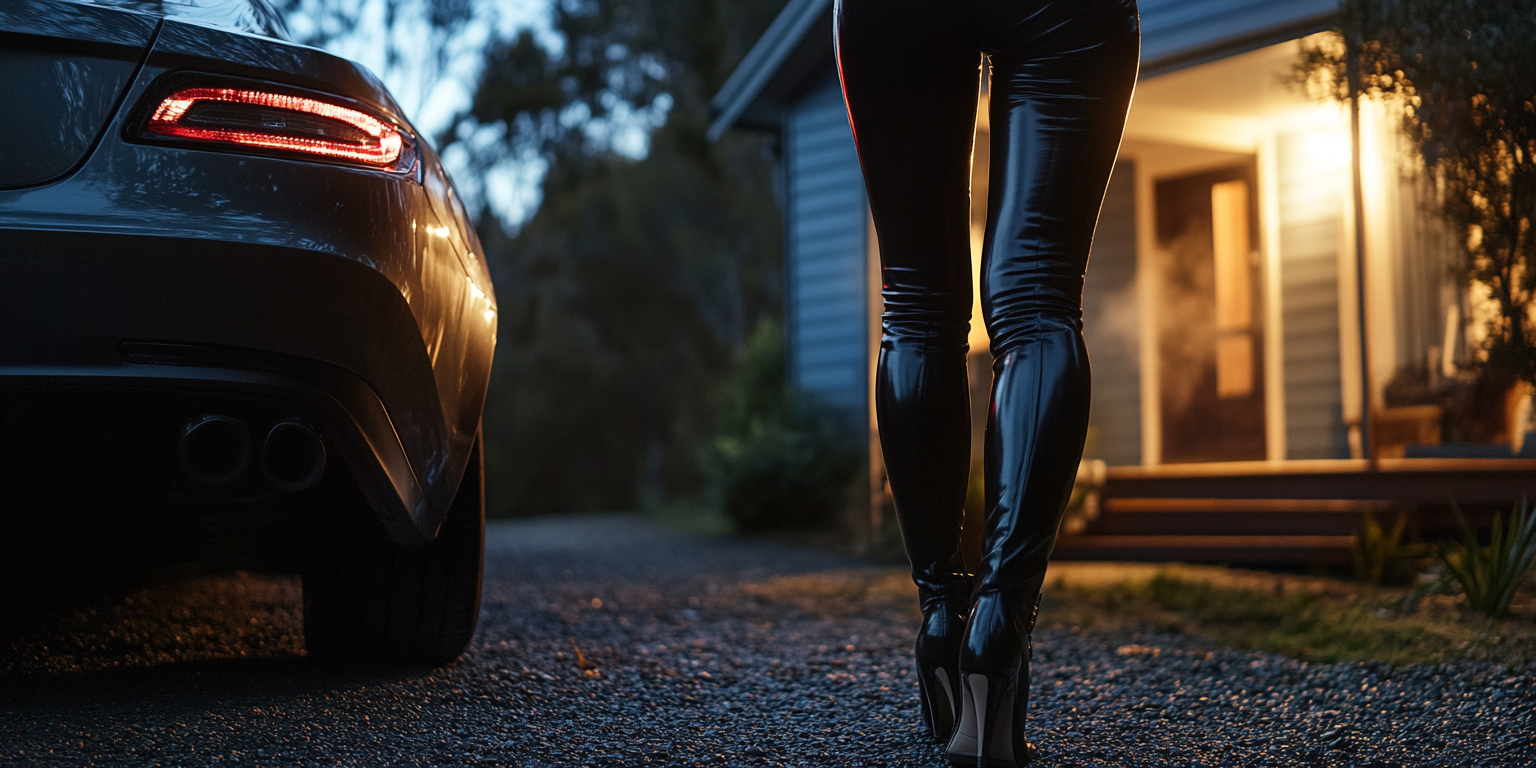
The shoe came first. Black, a court shoe, a good heel on it, coming down out of the dark of the car onto that gravel — and the gravel went out from under it, and I heard her take a short hard breath, and her hand came out and got the top of the door.
"Shit," she said.
My mother is sixty-two years old. She has played the late Beethoven sonatas in the Hobart Town Hall and she has recorded them, and the recording is still in print. She had never, to my knowledge, used that word in front of me in her life.
The car door went shut behind her with a bang that went the whole way down the street, and I flinched and looked left and right along the black windows of my neighbours' houses. Not one curtain moved. Nobody came out. The road stayed empty from one end to the other, and I stood on my own verandah and understood that nobody in Fern Tree had seen a single thing all day, and that nobody in Fern Tree was going to.
"Jenny. Darling."
She came up that driveway the way she came onto a platform.
And she had come straight from something — I could see that before she was halfway to me. The good black coat, and the scarf, and the hair done, and her face on properly. The full face. The one she put on for a hall. There had been an audience within the last two hours and she had not taken one piece of it off before she got in the car and drove up a mountain.
"Hey, Mum," I said.
And I heard it come out of my mouth and I could have put my fist straight through the wall.
I did not call her Mum. I had not called her Mum since I was about nineteen years old. It was Rowena, and it had been Rowena for so long that I could no longer remember how it had started, and she had never once had to correct it, and she had never once had to ask. My mother had been arranging rooms since before I was born and she had never had to insist on a single thing in any of them.
Her eyes went over me. Down, and up. Four seconds, perhaps five.
And my mother was not a cruel woman, and she was never once cruel to me on purpose, and that has never been the trouble with her. What she was, was a musician who had spent sixty years listening to people hand her something and knowing, inside two bars, precisely what was wrong with it — and she could not stop doing it, and she had never been able to stop doing it. She did it to waiters. She had done it to my father for thirty-three years, across a dinner table, with love. And she stood on my driveway in the dark and looked at her daughter and heard every wrong note in me, and her face did not move by a millimetre, and she filed the lot.
"You really must do something about that driveway," she said. "I nearly broke my ankle just now. Honestly, Jenny, it's like you're inviting the postman to sue."
"It's on Nial's to-do list."
It came out with an edge on it that I had not put there. And then his name was in the air between the two of us, and my chest closed up, and I had to look away at the letterbox for a moment until I could get it open again.
"Well, he ought to prioritise it," she said, coming up the steps. "A proper driveway is the hallmark of a respectable home."
Her heels went across my verandah and her eyes went across my house — the paint that had been going since the winter before last, the length of railing that Nial had been meaning to get to, all of it, one after another after another after another. And she did not say one word about any of it, and she did not have to, because I was standing right there beside her doing it for her.
"It's a lovely little house, darling," she said. "But it could be so much more with a little effort. You've always had a tendency to let things slide, haven't you?"
I put my nails into my palm and held on.
"We've been busy, Rowena." My voice had gone thin and tight and I could hear it going and there was nothing I could do about it. "Nial's been working nonstop, and Sammy's been... unwell."
And something moved in her face. Not much. A softening, right at the edges of it.
"Yes, I heard about poor Sammy," she said. "It must be exhausting for you, juggling everything. You've always taken on so much, Jenny."
That was the trick, and in thirty-two years I had never once found my way round it. She said a kind thing — and it was a kind thing, and she meant every word of it, and there was a hook set in the middle of it that took a piece out of me on the way past. You've always taken on so much. Meaning: nobody asked you to. Meaning: you chose this. Meaning: there was a Conservatorium, and there was a career, and there was a whole life sitting there waiting for you, and you went and did drama instead — and here you are, in a peeling house on the wrong side of a mountain, with a sick child and a husband who cannot fix a driveway.
"I'm managing," I said.
She put her hand up and touched my cheek with the backs of her fingers.
Her hands were extraordinary. They always had been — long and dry and cool and unbelievably strong, and she had been playing the Chopin nocturnes to paying audiences when she was younger than I was standing there on that verandah — and she touched my face with them the way she might have touched a piece of furniture she was thinking about buying.
"Well," she said. "It's a good thing I'm here. You always did need a bit of guidance."
I did not roll my eyes. It very nearly killed me, and I did not do it.
And then she stopped.
Her hand was still up beside my face, and she went completely still — the way she went still at a keyboard in the half-second before she started — and everything went out of her expression except the looking.
"Why is your lower lip trembling?"
I opened my mouth, and there was nothing in it.
Where was I supposed to begin? How was I supposed to stand on a verandah in the freezing dark and hand my mother a telephone call at four o'clock in the morning, and a list of struck-out names, and a bare blotter, and a dog gone off a rug in a locked house, and a small boy in a sandpit talking about a man with rainbows coming out of his hands?
"Tell me. Is it Sammy? Is he hurt?"
And her voice had changed completely. Everything else went out of it — the driveway, the paint, the whole apparatus of her — and what was left underneath was so raw and so immediate that it took my legs out from under me. Because whatever else was true of my mother, and a great deal was true of my mother, she loved that boy without one single reservation, and she had never once looked at him and heard a wrong note.
And a tear came out of me before I could get to it.
"I saw that," she said, and she was past me and into my house.
"Sammy! Sammy, my child. Where are you?"
Her voice went on ahead of her down my hallway and filled it the way it filled a hall, and I stood on my own verandah in the cold with my hand still on the open door and put my fingers up into my hairline and pressed.
"Why now," I said.
I had told her Sunday week. I had told her on the telephone eleven days earlier that we would come to her, that we would bring Sammy, that we would come for lunch — and she had said lovely, darling. And here she was on a Saturday night in July, unannounced, with her face on, in her good coat, forty minutes up a mountain in the dark.
I went in after her, and the heels went on ahead of me, and I followed the sound of them down my own hall and into an ambush that I had built myself and furnished myself and hung the pictures in.
"Sammy's fine, Rowena," I called. "He's playing with his play-dough in the dining room."
Her head came round the dining-room doorway with her whole face shining.
"I know," she said. "I found him."
She said it the way she might have said it if she had turned up a lost Vermeer.
I came in behind her. Sammy was exactly where I had left him, up on his knees on the dining chair with both elbows on my table, working a lump of green play-dough with his thumbs, entirely absorbed and entirely content — and he did not look up, because he had already had his grandmother and her handbag and her cold hands on both of his cheeks, and as far as he was concerned that had been dealt with and he had moved on.
And Rowena turned round to me.
She had a particular way of turning round. She had been coming off a piano stool to face six hundred people for forty years, and there was a stillness in the way she did it that I could not have taught and had never once been able to learn.
"So," she said. "What is your problem, dear?"
And I stood in my own dining room and could not get one single word up out of my chest — because there was one audience in the whole of this world that I had never been able to play, and she was standing in front of my sideboard with her coat still on.
"Nial has gone missing," I said.
And the second it was out of me it was real. Up until that moment it had been a shape in my own head that I could pick up and turn over and put down again and refuse to look at — and I said six words out loud in my own dining room, and it stood up on its feet in the corner of the room and turned around and looked back at me.
"Missing?" Her eyebrows went up. "What on earth do you mean, 'missing'?"
"He went to work this morning, and I haven't heard from him since. His phone goes straight to voicemail."
He went to work.
He did not go to work. He went out to get the details on a new potential job, and he said it to me through a fogged shower screen, and he said he would not be more than a few hours — and I stood in my dining room and handed my mother the tidy version of it without even noticing that I was doing it.
Eleven hours, and I was still editing.
"Well, that's hardly unusual, is it?" She had already turned away and was going for the kitchen. "He's a busy man with clients to manage. You've always said he gets caught up in his work."
And it went through me like a hand across the face — because it was reasonable. That was the appalling part of it. It was the single most reasonable sentence anybody had said to me all day, and it was exactly what I had been telling myself at ten o'clock that morning, and it was wrong, and I could not prove one word of why.
"This time feels different," I said, and my voice came up and cracked in the middle of it and I got it back down. "There are... other things. There are things missing from his office. Buffy is gone. Sammy said—"
And I stopped.
I stopped with my mouth still open and my son four feet away from me making a green snake, and I looked at my mother, and I did not say the next word.
I could have said it. She was standing right there in front of me with her coat on. She was the only other adult on this earth who loved that boy, and I had the whole of her attention for the first time in about a decade, and all I had to do was open my mouth and tell her that Sammy said a man with colours coming out of his hands had made a circle like a door and taken our dog through it.
And I did not, because I knew — the way I knew when a girl was going to cry before the interval — exactly what would happen to my mother's face.
"Different?" she said. Her voice had gone very low and very level. "How, Jenny? You're not making any sense."
"I—I don't know how to explain it. It's just... a feeling. Something's wrong."
"Feelings."
And she stood in the doorway of my kitchen and gave me back my own line — "Umm, I don't know. Something's wrong" — in a wavering, breathy, helpless little voice that was not mine, and was near enough to mine to go straight in under the ribs, and she rolled her eyes at my ceiling while she did it.
"Jenny, if you want me to take this seriously, you're going to have to do better than that."
And something went in me.
"I'm telling you, Rowena, something isn't right!"
It came out at full volume, from the diaphragm, the whole instrument, and I saw Sammy's shoulders jump at the table and I did not stop.
"He's taken things from his office, and Buffy is missing."
He's taken things.
I heard myself say it. Out of my own mouth, in my own voice, standing in my own dining room. I had not decided it. I did not believe it. I had spent that entire afternoon knowing in my bones that somebody else had been in that room and had lifted a sheet of paper off a blotter that I had squared with my own hand — and there it was, out in the open air of my house. He's taken things. The words simply walked in, and stood up, and put on his coat.
And she had it before it hit the floor.
"I knew it!" Her finger went straight up into the air and her whole face had lit. "I always knew that man was no good for you!"
"Rowena, stop it!"
I had both hands up. I was shaking.
"You love Nial," I said, and my voice went right down and came apart on it. "Remember?"
And she did. I watched it go through her.
She had loved that man from the first afternoon he walked into her house and shook her hand and asked her, with no fear in him at all, what she was working on — and she had put him down in a chair and made him sit through the whole of a second movement, and he had sat through the whole of a second movement, and he had asked her a question about it afterwards that she repeated to me for a year.
It went across her face, and it went away again, and her jaw came up.
"Even people you love can do terrible things," she said.
And I did not ask her.
I stood in my own dining room with my entire life coming down around my ears, and my mother said that to me in a voice I had never once heard out of her before — a voice that came up out of some room in her own history that I was never shown the door to — and I did not ask her what she meant. I did not ask her who. I looked at her and she looked at me and the moment went by us both, and it never came back.
"Enough of this," she said, and the whole thing shut like a lid. "I'll make us a pot of tea."
And she took her coat off in my kitchen and hung it over the back of my chair and started opening my cupboards.
I let her. I stood in the doorway and let my mother make tea in my house, because there was nothing left in me to fight her with, and because Rowena in a kitchen had always been a force of nature, and because — God help me — I wanted somebody in that house to be doing something ordinary.
I went and stood at the dining-room window while the kettle went on.
The garden was gone. Everything past that glass was black. The light from the room laid itself out across the wet grass in a long yellow rectangle and stopped dead about ten feet from the house, and past that there was nothing at all.
And down at the far end, where I could not see, where I could not possibly have seen anything, something went between two trunks.
Or did not.
What if he is out there somewhere in this. What if he has been trying to get to us all day. What if he is not coming back. What if he left. What if he left us, and I am standing at a window in the dark being frightened for a man who is sitting in a warm car somewhere at this exact moment without us.
The kettle went up into a scream.
"Do sit down, would you," Rowena said.
A saucer went down onto the bench with a small hard chime, and I turned round and watched her going about my kitchen with the coat off and the sleeves pushed back, moving through my cupboards and finding everything at once. She had never in her life needed to be shown where anything was in anybody's kitchen.
And I stood there and watched my mother's hands and thought about the year after my father died.
She did not play. That was the thing nobody outside the family ever knew, and she would have died before she let it out. For eleven months after we buried him she did not touch that piano, and the Conservatorium put out something about her taking a period of rest, and I drove down every Tuesday after school and sat in her kitchen and watched her make tea in exactly the way she was making it now — the sleeves, the good cups, the hands — and neither of us ever once said his name.
Not one time. Not in eleven months. She would ask me about work, and I would ask her about the garden, and we would sit at her table for two hours doing it. And then I would drive back up the mountain and cry in the car at the roundabout at the bottom of Davey Street, where she could not see me.
And she was standing in my kitchen now.
My husband had not come home, and my mother had buried her own five years before, and she knew — she was the only person in my whole life who actually knew — and neither of us was going to go anywhere near it. She had come forty minutes up a mountain in the dark on a Saturday night, unannounced, with her face on, and she was making me tea, and she was not going to say one word about it.
Because that is what we do. That is what has always been done, in her house and in mine.
I looked down at the phone in my hand. Blank. Nothing on it. No calls and no messages and my own thumbprints all over the screen.
Am I being paranoid?
I put it face down on the table and sat.
She brought the cup across and set it in front of me, and it was the good porcelain, out of the back of the top cupboard, which I had not used since Christmas and which she had found in under a minute.
"Thank you," I said.
She sat down opposite me with her own and put a little milk into it and stirred, and she did not look up while she did it.
"You know," she said, "you could have told me if things weren't going well between you and Nial."
My head came up.
"We are doing fine," I said.
And it came out fast. Far too fast, and much too loud, and about a third of a second early — and both of us heard every last bit of that, and she went on stirring her tea.
She let it sit there. She had always known exactly how long to leave a thing.
Then she put the spoon down on the saucer and looked up at me.
"Then why is he gone?"
"I… uhh…"
And there was nothing. Nothing at all. I sat at my own dining table in front of a cup of tea I had not asked for, with my son making a green snake at my elbow and my mother across the table from me, and she asked me the only question in the world that mattered — and I had a fortnight of it, and a bare blotter, and a boy with sand in his hair, and I could not get one single piece of it into a sentence that would survive her.
And then somebody knocked at my front door.
Three times. Hard, and even, and completely unhurried.
I was out of that chair before the third one had finished, and the legs of it went over backwards onto the floorboards behind me.
"I'll get it," I said.
And I went down that hallway in the dark with my heart going like a fist on a door, and I did not put the light on, and I put my hand on the latch.
