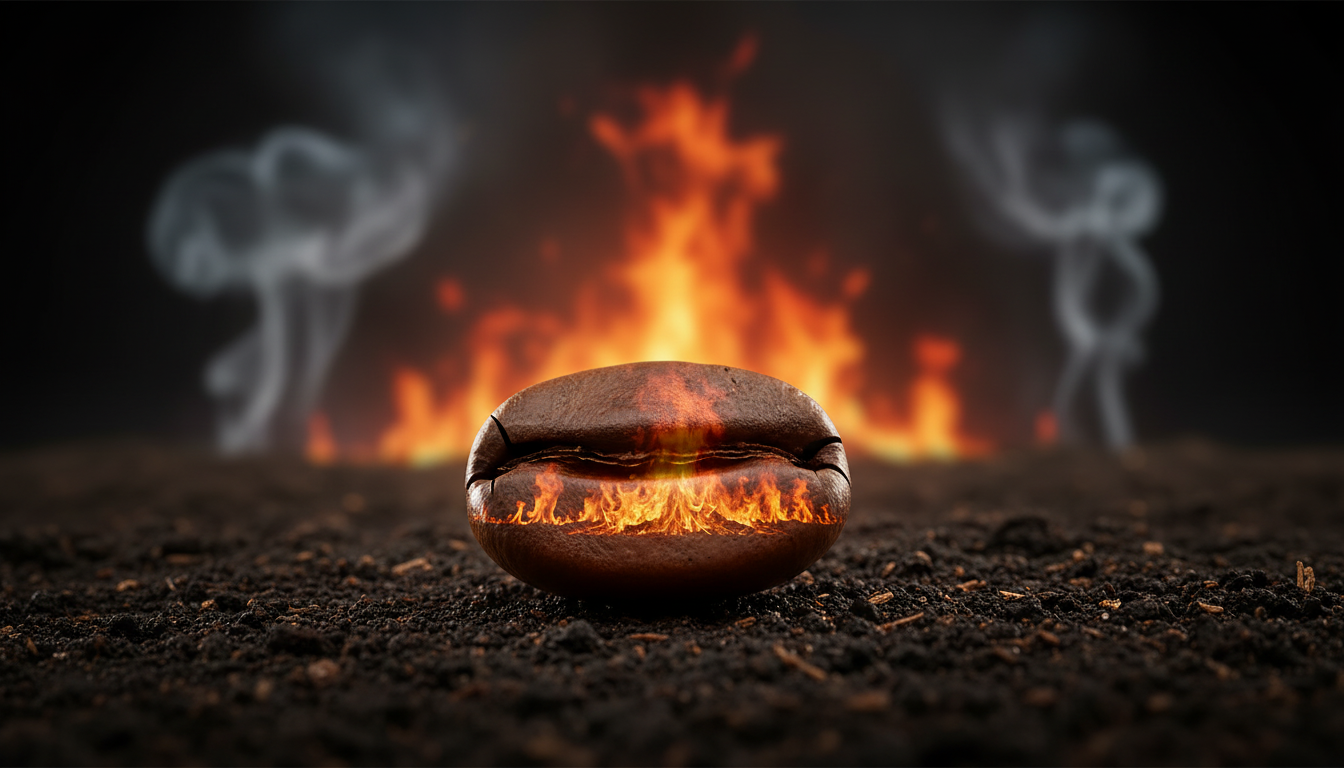
Kindling For Catastrophe
As Daniel and his daughters converge in the glowing sanctuary of the greenhouse, crates of precious plants and memories are hastily packed for survival. But outside, the estate erupts into chaos—flames consuming their home, shadows closing in, and choices narrowing with every heartbeat. Faced with devastation, the Campbells are forced to follow a hidden path that could save them—or bind them to secrets buried long before their time.
“Fire doesn’t just destroy—it remembers what it was meant to erase.” — Nathan Cowdrey
As they approached, the greenhouse's faint glow served as a reassuring beacon amidst the darkened estate, its glass panels catching moonlight like shards of starlight scattered across the Scottish landscape. Condensation trickled down the glass panes in rivulets that glinted silver under the night sky, the controlled climate within creating this boundary between the cool spring night and the warm sanctuary that had nurtured generations of Campbell plants.
Nathan glanced over his shoulder every few steps, ensuring the girls were keeping pace, his concern for their safety evident in the tightness around his eyes. His gaze swept the perimeter of the estate, taking in every shadow and movement, calculating how much time remained between them and the oncoming threat.
"We're almost there," he said softly, his tone firm but calm, designed to steady nerves rather than heighten fear.
Isla matched his pace, her breath coming in controlled measures despite their hurried advance. The duffel bag thumped against her hip with each step, its weight a constant reminder of the gravity of their situation. She’d weathered countless crises—her mother’s illness, the weight of responsibility, the delicate balance between school and the café—but nothing prepared her for the sight of her childhood home, silhouetted against a night sky thick with approaching danger.
Behind her, Maeve moved with the unconscious grace of someone more accustomed to observing the world than rushing through it. Even now, with fear pulsing through her veins, her artist’s mind absorbed the details—the way the dappled moonlight painted long shadows across the estate gardens, dramatic contrasts worthy of a charcoal study; the warm light spilling from the greenhouse against the cool darkness beyond, a study in complementary colours; the shifting expressions on her family’s faces, each a variation on courage, rendered in fleeting expression.
Rowan brought up the rear, her slight frame bent forward as if leaning into a strong wind, though the night air was mostly still. She felt both too young and too old for this moment—too young to fully grasp the danger, too old to believe someone else would make it all alright. Her fingers whitened around the backpack strap where Mr. Whiskers was nestled—technology and childhood comfort carried together into an uncertain future.
Just ahead, the greenhouse pulsed with warm light, condensation glowing like breath against its panes. From within came the faintest thud of movement—methodical, precise. Daniel was rapidly at work.
Inside, he moved with the focused intensity of a man who understood exactly how much was at stake. The family's private collection of unique coffee plants, the varieties that gave their small Edinburgh café its distinct character and loyal following, now had to be preserved from those who sought to take what wasn't theirs. His movements were quick and deliberate as he sealed a large wooden crate with strips of heavy tape, checking and double-checking that it was secure. Several smaller containers were lined up neatly beside him like soldiers awaiting orders, each filled with precious cargo—specially cultivated coffee plant cuttings, soil samples from their most successful growing beds, and carefully handwritten notebooks containing generations of Campbell family cultivation methods.
The greenhouse hummed with the quiet operation of environmental controls—fans circulating warm air, irrigation systems maintaining precise moisture levels, and grow lights compensating for Scotland's often grudging sunlight. These systems, improved upon by Daniel over the years, had created the perfect environment for their unique coffee varieties. The plants thriving under these conditions represented more than just café ingredients; they were the physical embodiment of family tradition, passed down from grandfather to father to son, a legacy of flavour and care cultivated in private.
"Dad," Isla called as she entered, her voice steady but tinged with the urgency of their situation.
Warm, humid air enveloped them, carrying the rich scent of soil and growing things—smells that had defined their home for as long as any of them could remember. The contrast between the chill outside and the controlled environment within created a momentary sense of safety, a final breath before plunging deeper into uncertainty. Droplets of condensation formed immediately on their cold skin, tiny beads of moisture that reflected the greenhouse lights like miniature constellations, nature's own adornment.
Daniel turned, relief flickering across his features as he saw his daughters safe before him. The lines etched around his eyes and mouth—carved by years of pre-dawn rising to prepare the café, of laughter shared over family dinners, of grief endured together—deepened momentarily, his focus giving way to fatherly concern before responsibility reasserted itself.
"Good, you're here. Is everyone packed?" His eyes scanned each of their faces, a father's concern warring with the practical needs of the moment.
In the artificial daylight of the growing lamps, the family resemblance between father and daughters was striking—Isla with his determined jawline and analytical gaze, Maeve with his expressive hands and thoughtful expression, Rowan with his quick mind reflected in her sharp eyes. The years since Eloise's death had changed them all, turning them inward toward each other, creating a tight-knit unit that functioned as one, each member essential to the whole.
"Backpacks only," Isla replied, shifting the weight of her duffel bag. "Essentials." Her clipped speech mirrored her father's, stress stripping away everything but necessary communication.
Maeve held her portfolio, the familiar object clutched against her chest as if it could protect her from whatever lay ahead. The gesture earned a brief, tender smile from her father—a flash of normality in circumstances far removed from their ordinary lives of café shifts and school routines. In that moment, Daniel saw not just his middle daughter but echoes of his late wife, who had approached the world with the same artistic sensitivity, the same desire to capture beauty even in difficult moments.
Even Rowan's stuffed bear, peeking out from her hastily packed bag, brought a moment of levity to the tense atmosphere. The worn toy, a relic from a childhood that seemed increasingly distant with each passing minute, represented a touchstone of comfort in a world rapidly spinning out of control. Daniel's expression softened momentarily at the sight, memories of bedtime stories and monster checks flickering through his mind, a reminder of what truly mattered.
But Daniel's focus quickly returned to the task at hand, his expression hardening as he remembered the danger bearing down on them. The father gave way to the protector, the man who had maintained the family's private cultivation traditions even while hoping the day would never come when those traditions might attract unwanted attention. Years of quiet caution condensed into these few precious minutes of action.
Nathan stepped forward, "We need to leave now. They're already here." His words carried a weight that seemed to press the air from the greenhouse, turning the warm humidity oppressive rather than comforting.
Outside, the sounds of vehicles grew more distinct—tyres crunching on the estate's gravel drive, doors opening and closing with purposeful precision, voices murmuring in the darkness. The noises filtered through the greenhouse glass, distorted but unmistakable in their intent.
Daniel nodded sharply, grabbing the nearest crate and motioning to Isla.
"Take this," he said, passing it to his eldest daughter. The wooden container, roughly the size of a shoe box, felt surprisingly heavy in her hands, its weight belying its modest dimensions. "It's light enough to carry. Rowan, grab the smaller container over there."
Maeve hesitated, her artist's eye sweeping the greenhouse that had featured in so many of her sketches. The coffee plants stood in neat rows, their leaves glossy under the growing lights, the small white flowers that would eventually yield coffee berries adding delicate contrast to the predominantly green palette. Droplets glistened on their surfaces, tiny diamonds catching and refracting the artificial daylight. These plants had been as much a part of her childhood as bedtime stories and school uniforms—subjects of countless drawings, quiet companions during homework sessions in the greenhouse, living testaments to her father's dedication to the family tradition.
"What about the other plants? We can't just leave them." Her voice caught slightly, emotion bleeding through her usual quiet demeanour. The thought of abandoning these living things, these products of years of careful cultivation, felt like desertion.
"We don't have time," Nathan interjected, his tone firm but not unkind. He understood the pain of leaving behind something precious, but safety had to take precedence. His gaze darted to the greenhouse windows, tracking shadows that moved with purposeful intent at the edges of the property. "We take what we can carry and go."
Maeve bit her lip, reluctant but unwilling to argue in the face of such urgency. She moved to help Rowan with her container, but not before her fingers brushed over the delicate edges of a coffee plant's leaves—a silent goodbye to the living things that had been part of their family's legacy for generations. The leaf felt velvety beneath her fingertips, warm with life and possibility. In that brief touch, she memorised its texture, its shape, storing the sensation away like a photograph to be revisited when this night was just a memory.
Rowan struggled slightly with her assigned container, her adolescent frame not yet grown into its full strength. The box, seemingly filled with soil samples and smaller seedlings, wobbled precariously in her arms until Maeve steadied it. The sisters exchanged glances—Maeve's reassuring, Rowan's grateful—their wordless communication perfected through years of shared experiences.
"I've got it," Rowan said, her voice steadier than she felt. Pride competed with practicality as she adjusted her grip, determined to carry her share of the burden despite her age. The youngest Campbell had spent her life striving to keep pace with her older sisters, and this moment would be no different.
They exited the greenhouse in a tight group, the night air hitting them like a physical force—colder and heavier than before, carrying new threats on the wind that seemed to whisper danger into their very bones. After the warmth of the greenhouse, the Edinburgh spring night felt particularly biting, its chill seeping through clothing and raising goosebumps on exposed skin, the temperature drop a shocking jolt to their already overwhelmed senses.
A sharp, acrid scent drifted toward them, foreign and chemical against the natural smells of soil and early blooming flowers that typically characterised the estate grounds—the unmistakable harbinger of destruction.
The distant wail of sirens sliced through the quiet, bouncing off stone buildings and amplified by the region’s unique topography, rising and falling in that distinctly European pitch that always signalled emergency. Edinburgh's emergency services, likely responding to reports of disturbances at the estate's perimeter, added another layer of complication to their already precarious situation, blue lights flickering in the distance like cold stars against the night sky.
Nathan froze for a moment, his body tensing as his eyes scanned the horizon. Toward the main house, a flickering orange glow had begun to dance against the dark sky, painting the clouds above with an unholy light that turned the underbellies of passing clouds into molten copper. The fire moved with unnatural speed, leaping from window to window, devouring curtains and furniture, spreading across the roof with hungry determination that suggested an accelerant rather than accidental origin. This was no electrical fault or kitchen mishap—this was deliberate destruction, calculated and merciless.
"Fire," Isla murmured, her voice edged with disbelief that cracked into horror on the single syllable. Their home—the place where they had grown up, where family photos lined the walls and height marks notched the kitchen doorframe—was being systematically erased before their eyes, reduced to fuel for flames.
The orange glow reflected in her wide eyes, twin infernos that matched the genuine blaze consuming everything she had ever known. Her normally composed features crumpled momentarily, the practical façade giving way to raw grief that aged and juvenated her simultaneously—she looked both older than her years and achingly young, a child losing her foundations and an adult facing irrevocable loss.
Maeve clutched her portfolio tighter against her chest, her knuckles white against the black case, her wide eyes reflecting the faint, deadly light in the distance. Within those pages were drawings of the house in different seasons, studies of light falling through the stained-glass panels in the front door that had been installed by their great-grandfather, quick sketches of family moments in the kitchen where they had celebrated birthdays and comforted each other through grief. Soon, those drawings might be all that remained of their childhood home, art transmuted from representation to memorial in a single night of fire.
"What's happening?" The question escaped her lips in a whisper that trembled like the heated air above the distant flames, her artist's vocabulary—usually so precise when describing colour and light—failing entirely in the face of such wanton destruction. The fire's reflection painted her face in grotesque chiaroscuro, highlighting her horror in amber and shadow.
Across the estate, a window shattered from heat, the sound carrying clearly through the night air—a musical, terrible tinkling that signalled another piece of their world collapsing. The fire's roar grew louder with each passing moment, a hungry beast devouring wood and memory with equal voracity. From their position, they could see flames leaping through the kitchen windows, devouring the space where they had shared breakfast just that morning—toast crumbs and homework pages and half-finished cups of coffee now kindling for catastrophe.
Nathan didn't answer immediately, his silence more telling than any words could be, the momentary hesitation an admission of knowledge he wasn't ready to share. He knew exactly what was happening—a coordinated attack designed to acquire the Campbell plants while eliminating evidence of the intrusion. His hesitation was brief but noticeable, another small betrayal in a night full of them, though his genuine horror at the scene matched their own, his face illuminated by the distant conflagration.
A sudden, muffled boom shattered the stillness, the sound rolling across the estate like distant thunder, resonating in their ribcages like a physical blow. The percussion wave hit them seconds later, a subtle pressure change that made their ears pop painfully. Windows shattered in the distance, the tinkling of broken glass barely audible over the growing roar of the fire. The east wing of the house—where the girls' bedrooms were located—seemed to exhale, the windows blowing outward in a shower of glittering shards as flames rushed to fill the oxygen-rich space.
Rowan screamed, the sound torn from her throat involuntarily, primal and unrestrained. Her bedroom—with its carefully arranged technology, the posters on the walls, the childhood toys still tucked in corners despite her pretence of outgrowing them—was gone, vaporised in an instant of destructive chemistry. She instinctively clutched Isla's arm, her fingers digging into her sister's sleeve with bruising force, her body trembling with shock. The container wobbled precariously in her grip, and Maeve steadied it quickly, preventing its precious contents from spilling onto the damp ground, her own horror momentarily suspended by the need to protect what little remained.
For a moment, Rowan looked every bit her fourteen years—eyes wide with uncomplicated fear, body tensed for flight, seeking the protection of her older sister as she had done since childhood.
"My room," she choked out, the words catching in her throat. "Everything's gone." The realisation seemed to hit her in waves, each one stronger than the last, her technological mind calculating losses with brutal efficiency—her custom-built computer, her robotics projects, the digital world she had created, all consumed by flame.
"An explosion," Nathan said, his voice grim with certainty, though the girls were barely listening, transfixed by the systematic destruction of their lives. "They're trying to cover their actions." The words tasted bitter in his mouth—he knew exactly who 'they' were, but this wasn't the time for full disclosure. The truth was a luxury they couldn't afford, not when survival hung by such a tenuous thread.
Another explosion rocked the house, smaller than the first but no less devastating. The dining room windows blew outward, and through the new opening, they could see flames dancing across the antique table where they had gathered for countless meals, where Isla had completed her university applications, where Maeve had spread out her art supplies on rainy afternoons, where Rowan had assembled her first circuit board under her father's watchful eye.
Daniel's jaw tightened, a muscle jumping visibly beneath the skin as he clenched his teeth against a cry of rage and grief. Years of careful cultivation crystallising into this moment of crisis—not just plants but a home, a legacy, a life built through dedication and love. His parents had always warned that this day might come—and he had taken precautions with his most prized plants, established contingencies for the café—but the reality of watching his family home burn was still a shock, momentarily robbing him of breath.
"And it's working," he finally managed, forcing the words past the tightness in his throat. "Let's move."
He turned away from the burning house with visible effort, every line of his body radiating reluctance and loss. The home where he had raised his daughters, where he had loved his wife, where he had continued his family's traditions of cultivation, was being systematically erased—and they could do nothing but flee.
The tightness around his eyes spoke of calculations being made, priorities shifting in real-time as the situation evolved. The home could be rebuilt, possessions replaced—but his daughters and the most precious of his plants represented irreplaceable treasures that had to be protected at all costs. Still, the pain of this loss would leave scars that no insurance payout could heal, cutting deeper than mere property damage.
Nathan led them toward the far corner of the property, his strides long and deliberate, forcing the others to maintain a quick pace despite their shock and grief. The group moved through familiar gardens rendered alien by darkness and circumstance—past the oak tree where a childhood swing still hung, its ropes moving slightly in the heated air currents from the fire; around the stone bench where Eloise had read stories on summer evenings, the girls gathered at her feet as her voice brought worlds to life; through the herb garden where culinary and medicinal plants released their scents as the group brushed past, crushed leaves offering a final fragrant goodbye.
These landmarks of their lives passed by without acknowledgement, necessity driving them forward without time for sentiment. Yet each sister registered them in passing—mental snapshots of places that had shaped their childhood, now threatened with permanent erasure. Isla's eyes lingered on the rose bushes her grandmother had planted, now illuminated by the house fire, their early spring buds glowing amber in the unnatural light. Maeve noticed how the flames reflected in the small garden pond, fire seemingly burning on water in an impossible contradiction that her artist's eye compulsively recorded. Rowan's gaze caught on her favourite climbing tree, its familiar silhouette now transformed into something sinister by flickering shadows.
Through the darkness, the faint outline of a weathered stone slab gradually came into view, its existence masked by years of forgotten neglect. Ivy crawled across its surface, tendrils finding purchase in ancient grooves and crevices, nature slowly reclaiming what humans had crafted centuries ago. A layer of dirt and debris helped conceal its true nature from casual observation, making it appear as nothing more than one of many decorative elements scattered throughout the historic estate grounds.
Behind them, the sounds of the White Rose Society grew steadily louder—muffled voices carried on the wind, the rhythmic crunch of boots on gravel, and the sharp bark of orders that spoke of military participation. Torchlight bobbed through the darkness, moving with purpose rather than panic, the coordinated advance of people who knew exactly what they sought. The orange glow from the fire cast long shadows across the grounds, transforming familiar shapes into looming threats. Trees became sentinels, garden sculptures morphed into waiting figures, and the play of light created the illusion of movement where none existed.
The air grew thicker with smoke, the distinct smell of burning timber and melting plastics creating an acrid fog that stung their eyes and scratched at their throats. Ash began to fall around them like grey snow, delicate flakes of their former life drifting on thermal currents. Maeve noticed with artist's detachment how the ash settled on her dark sleeve—physical fragments of paintings left on walls, of books read and treasured, of a piano that would never again fill the house with music. Each grey flake represented something irretrievably lost, the material remnants of memory converted to carbon by chemical reaction.
As they moved further from the house, Isla risked one last glance back.
The fire had fully taken hold, flames punching through the roof in a terrible crown of destruction. The home where she had grown from child to adult—where she’d learned to bake bread at her grandmother’s side, balanced books at her father’s elbow, cried and laughed and dreamed—was disappearing into the night sky, nothing left but smoke and ember. Her practical mind noted the fire would likely spread to the gardens if the brigade didn’t arrive soon; the rest of her just tried to memorise it, one last image to hold alongside the better ones.
"Hurry," Nathan snapped, dropping to a crouch by the slab. His voice cracked the silence like a gunshot, slicing through their stunned grief. His fingers moved fast, brushing away years of moss and debris to reveal a worn iron handle embedded in the stone. Weathered nearly to invisibility, it still held fast beneath its mask of rust and earth. The metal bit into his skin with cold insistence, grounding him in the present as he unearthed a secret buried by generations.
Daniel knelt beside him, his earlier uncertainty temporarily set aside in the face of immediate danger. Their shoulders touched briefly as they worked in tandem, an unspoken truce established by circumstance. Together, they gripped the handle and heaved, muscles straining against centuries of disuse. The slab shifted with a low groan of protest, the sound of stone grinding against stone reverberating through the ground beneath their feet, ancient mechanisms reluctantly obeying modern commands.
A dark staircase yawned beneath them, narrow and steep, worn stone steps descending into the earth like the throat of some sleeping beast. The air that drifted up was damp and cool, carrying the scent of moss, mould, and forgotten history. It smelled like old tunnels beneath the city—like secrets.
The sisters stared at the opening, frozen for a breath that stretched too long.
Isla stood steady, but her knuckles had gone white around the handle of her crate—the only outward sign of the storm she was holding back. Her mind raced: How long had this been here? Had Dad always known? But there was no time for answers. Survival first. Everything else could wait.
Maeve’s eyes widened, her thoughts splintering into pictures. She’d seen drawings like this in old history books—hidden vaults beneath the Royal Mile, secret Catholic chapels, escape tunnels used in times of war. The image before her looked exactly like those etchings: the dark mouth of the staircase, fire raging behind them, family clustered at a threshold where past met present. Her fingers itched for charcoal, for canvas, to capture the moment before it passed. But there was no time to draw. Only to remember.
Rowan hesitated at the edge, torn between fear and something else—something like awe. Her chest tightened, heart hammering against the logic she usually relied on. She stared into the darkness, trying to make sense of it, trying to calculate how far it went, what lay beneath. But the numbers didn’t matter here. Her phone was useless. Her cleverness wasn’t enough. This was old-world problem-solving. No code. No control-Z. Just stone and secrets, passed down like hidden instructions in the family DNA. Her hand clutched her backpack tighter. Mr Whiskers, her code companion, her comfort, bumped against her side. For once, he had no answers either.
Behind them, the home that had held generations of Campbells crackled and roared, its collapse a siren call to those hunting them. Before them, the earth opened like a held breath, offering a way forward—carved not by chance, but by hands that had lived through other dangers, other storms. This passage wasn’t just an escape. It was a message from the past: We survived. So can you.







