Kain Thomas Jeffries
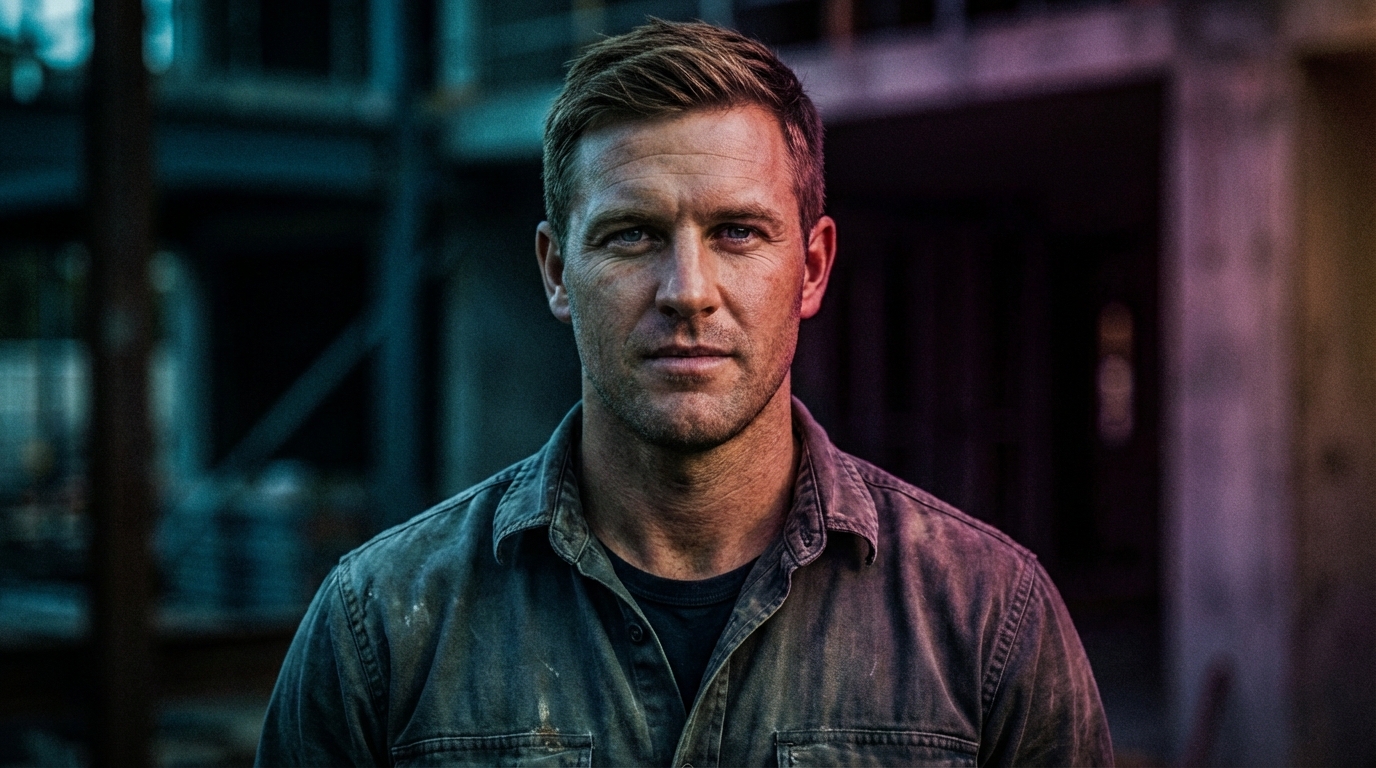
Kain Thomas Jeffries was a twenty-three-year-old construction apprentice and the only son of Thomas and Louise Jeffries, born into Tasmania's most enigmatic dynasty on 8 April 1995. Known for his athletic prowess, adventurous spirit, and dedication to his pregnant fiancée Brianne Sitch, Kain's promising future was cut short when he vanished on 26 July 2018 whilst checking on his uncle Jamie Greyson, becoming another victim of the mysteries surrounding both the Jeffries family and the dimensional threshold to Clivilius.
A Jeffries Born, A Son Defined
Kain Thomas Jeffries arrived on 8 April 1995 at Royal Hobart Hospital, the third child and first son of Thomas and Louise Jeffries. His birth occurred in a period of transition for the family—his parents had married just months earlier in a ceremony that legitimised what had already become obvious to everyone who knew them: they had built a family together, whether or not the paperwork acknowledged it. His elder sisters, Rebecca (then nearly five) and Emily (three), had been born before their parents' wedding, a detail that marked the Jeffries household as unconventional by the standards of Tasmania's old families, yet Louise and Thomas had never apologised for following their own path.
The circumstances of Kain's arrival placed him in a unique position within the family structure. He was the first child born into a legally recognised marriage, arriving just as his mother completed her university degree whilst managing two young daughters and beginning her professional career. Louise, characteristically determined, had returned to work at Hobart Accounting Associates shortly before Kain's birth, establishing the pattern of fierce organisational skill and unwavering commitment that would define their household. That she managed motherhood, marriage, and career simultaneously impressed even those who had doubted her choices.
The arrival of his younger sister Katie in 1996 would complete the family, but during that first year of his life, Kain occupied the position of baby of the family—doted upon by elder sisters who treated him as a living doll, fussed over by a mother who had finally mastered the art of balancing infant care with professional obligations, and observed by a father who perhaps saw in his son the weight of dynastic expectations that came with being the only male heir of his generation.
From his earliest days, Kain grew up in the shadow of Jeffries Manor, though the family didn't move there permanently until 2008. The grand sandstone building, with its two centuries of accumulated history and whispered mysteries, provided the backdrop for family gatherings, holiday visits, and the gradual absorption of what it meant to carry the Jeffries name. Unlike his sisters, who could choose their own paths with relative freedom, Kain would always be viewed—by extended family, by society, by his father's business associates—as the heir to whatever remained of the Jeffries legacy after generations of scandal and disappearance had tarnished the family reputation.
Childhood in Privilege and Mystery
Kain's early years unfolded in comfortable privilege, though his parents worked deliberately to ensure their children understood that wealth brought responsibility rather than entitlement. Louise, who had grown up in the professional middle class before marrying into the Jeffries dynasty, maintained values inherited from her own parents—her father Peter's emphasis on integrity and hard work, her mother Nola's commitment to community service. She applied these principles rigorously to her children's upbringing, insisting they understand the value of money, the importance of treating all people with respect regardless of social class, and the responsibility that came with advantage.
The Jeffries Manor estate, whilst not yet their permanent home, became the playground for Kain and his sisters during visits to see their great-grandparents James III and Thelma Rose. The sprawling grounds offered endless opportunities for adventure—dense gardens with hidden paths, outbuildings that seemed to hold secrets, rooms filled with furniture covered in dust sheets that spoke of histories no one quite explained. Kain, naturally curious and physically fearless even as a young child, led expeditions through the property with his younger sister Katie as his most devoted companion. Rebecca and Emily, being older, often had their own interests, but Katie—just a year younger—became Kain's closest ally in childhood adventures.
The mysteries surrounding Jeffries Manor weren't merely architectural. The family history carried weight that even children could sense without fully understanding. Great-grandfather James III, born in 1915, represented living connection to the manor's most turbulent periods—he had witnessed the disappearances, the scandals, the whispered rumours that followed the Jeffries name through generations. By the time Kain was old enough to form memories, James III was in his eighties, a figure of aged dignity who watched his great-grandchildren with expressions that suggested he saw echoes of previous generations in their faces.
Kain's father Thomas carried his own complicated relationship with the family legacy. Having lost his own father Charles to mysterious disappearance in 2008, Thomas navigated the weight of inherited responsibility with visible discomfort. He had never wanted to run Jeffries Industries, had never sought the role of family patriarch, yet circumstances had forced both upon him. Kain, observing his father's struggles during his formative years, absorbed lessons about duty, sacrifice, and the ways family history could trap even those trying to forge their own paths.
Louise worked to counterbalance the Jeffries mystique with practical grounding. Her position at First Point Credit Union provided stability and a connection to ordinary professional life that kept the family anchored. She involved the children in community service, took them to volunteer activities, ensured they understood that life existed beyond the manor's walls. For Kain, this meant growing up with dual consciousness—awareness of his family's prominence and wealth, but also understanding that such things didn't define a person's worth or character.
Education and Athletic Excellence
Kain's enrolment at Hutchins School, one of Tasmania's most prestigious educational institutions, seemed inevitable given family tradition, yet he proved himself worthy of the position through his own merit rather than merely his surname. Founded in 1846, Hutchins had educated generations of Tasmania's elite, and the Jeffries family had long associations with the institution. What distinguished Kain, however, wasn't his family connections but his natural athletic ability and easy charisma that made him popular among peers and teachers alike.
From his first years at Hutchins, Kain demonstrated the kind of physical coordination and competitive spirit that marked natural athletes. He excelled particularly at Australian Rules football, where his quick reflexes, strategic thinking, and leadership qualities made him a standout player on the school's teams. By his senior years, he had become a star player—the kind of student-athlete who could single-handedly shift the momentum of important matches through combination of skill and determination.
His football coaches praised not just his technical abilities but his character on the field. Unlike some talented athletes who relied solely on individual brilliance, Kain understood the game as team effort. He read plays with sophistication beyond his years, positioned himself strategically, and demonstrated the kind of tactical awareness that suggested he might have coaching potential even as he played. His physical presence—standing approximately five foot eleven with broad shoulders and defined build from years of training—gave him natural advantage, but his teammates and coaches consistently emphasised that his greatest strength was his ability to elevate those around him.
Off the field, Kain's academic performance was solid if not exceptional. He wasn't a natural scholar like his sister Emily, whose brilliance in biochemistry had already marked her for academic distinction, nor did he possess Rebecca's sharp analytical mind and passion for advocacy work. His grades were respectable—strong enough to keep him in good standing, sufficient to prove he wasn't coasting on athletic ability or family name, but clearly not his primary focus. Teachers noted that Kain applied himself adequately to coursework, completed assignments on time, and participated in class discussions, but his real engagement came through physical activities and social connections rather than intellectual pursuits.
His easy-going nature and genuine warmth made him genuinely popular amongst his peers. Unlike some children of wealthy families who struggled with authentic friendships—never quite certain whether people liked them for themselves or for their connections—Kain seemed to navigate social situations with natural confidence. He had the gift of making others feel comfortable, of bridging social groups that might not otherwise interact, of defusing tensions with humour or straightforward honesty. These qualities, combined with his athletic success and Jeffries name recognition, made him one of Hutchins' most visible students during his final years.
The friendships Kain formed during his school years would prove amongst the most enduring of his life. His close mates from the football team remained his primary social circle even after graduation, young men who shared his love of outdoor activities, his casual approach to life, and his loyalty to those he considered friends. These relationships, forged through shared competition and adolescent camaraderie, provided Kain with a sense of belonging that existed separate from his family identity—a space where he was simply Kain, not Kain Jeffries, heir to a complicated legacy.
Gap Year and Discovery of Purpose
Following his graduation from Hutchins School in 2014, Kain made a decision that surprised some who expected him to immediately pursue tertiary education or join the family business: he chose to take a gap year. For Louise and Thomas, the decision required careful consideration—they recognised their son's need to discover his own path, yet worried about him drifting without clear direction. Thomas particularly hoped Kain might eventually join Jeffries Industries, continuing the family business into another generation, but Louise counselled patience, remembering her own unconventional journey and the value of allowing young people to make their own choices.
Kain's gap year began with several months backpacking through Europe, an experience that profoundly shaped his emerging adult identity. Armed with a modest budget (Louise insisted he learn to manage money rather than simply rely on family wealth), a backpack, and enthusiasm for adventure, he set off to explore the continent his ancestors had left generations earlier. The experience exposed him to perspectives and possibilities that Tasmania, for all its beauty, couldn't provide.
Moving through youth hostels and budget accommodations across multiple countries, Kain encountered people from every imaginable background—fellow backpackers seeking adventure, locals sharing their cities' hidden treasures, expats building lives far from their origins. He worked casual labour jobs to supplement his funds, picking fruit in southern France, washing dishes in a Barcelona restaurant, helping with construction repairs in Berlin. These experiences, whilst temporary and often physically demanding, gave him appreciation for the dignity of manual labour and exposure to the kinds of people he might never have met within Tasmania's relatively insular society.
The architecture of Europe particularly captivated him. Walking through ancient cities where buildings had stood for centuries, observing the way modern structures integrated with historical foundations, noting how public spaces shaped community life—Kain began developing genuine fascination with the built environment. He photographed buildings obsessively, collected postcards of architectural landmarks, filled notebooks with sketches and observations about design elements that caught his attention. What began as casual tourist interest gradually deepened into something more serious: recognition that he might have found a calling.
It was particularly the construction sites he encountered that sparked his imagination. Watching crews transform raw materials into functional structures, observing the combination of planning and physical skill required, seeing how individual tradespeople contributed their expertise to collective projects—Kain recognised work that combined intellectual challenge with physical engagement, individual skill with collaborative effort. The more he observed, the more construction appealed to him as potential career path. It wasn't what anyone expected from a Jeffries, which perhaps made it more attractive. It represented his own choice, his own path, separate from family expectations.
By the time Kain returned to Tasmania in mid-2015, he had made his decision. Rather than pursuing university or joining the family business, he would enter a construction apprenticeship. For Thomas, the choice brought mixed feelings—pride in his son's independence and work ethic, disappointment that another generation might not continue managing Jeffries Industries, concern about whether Kain truly understood the physical demands and relatively modest financial rewards of trade work. Louise, characteristically practical, supported Kain's decision whilst ensuring he understood the commitment required. An apprenticeship wasn't casual employment—it was multi-year training requiring dedication, discipline, and willingness to start at the bottom.
Construction Apprentice and Growing Confidence
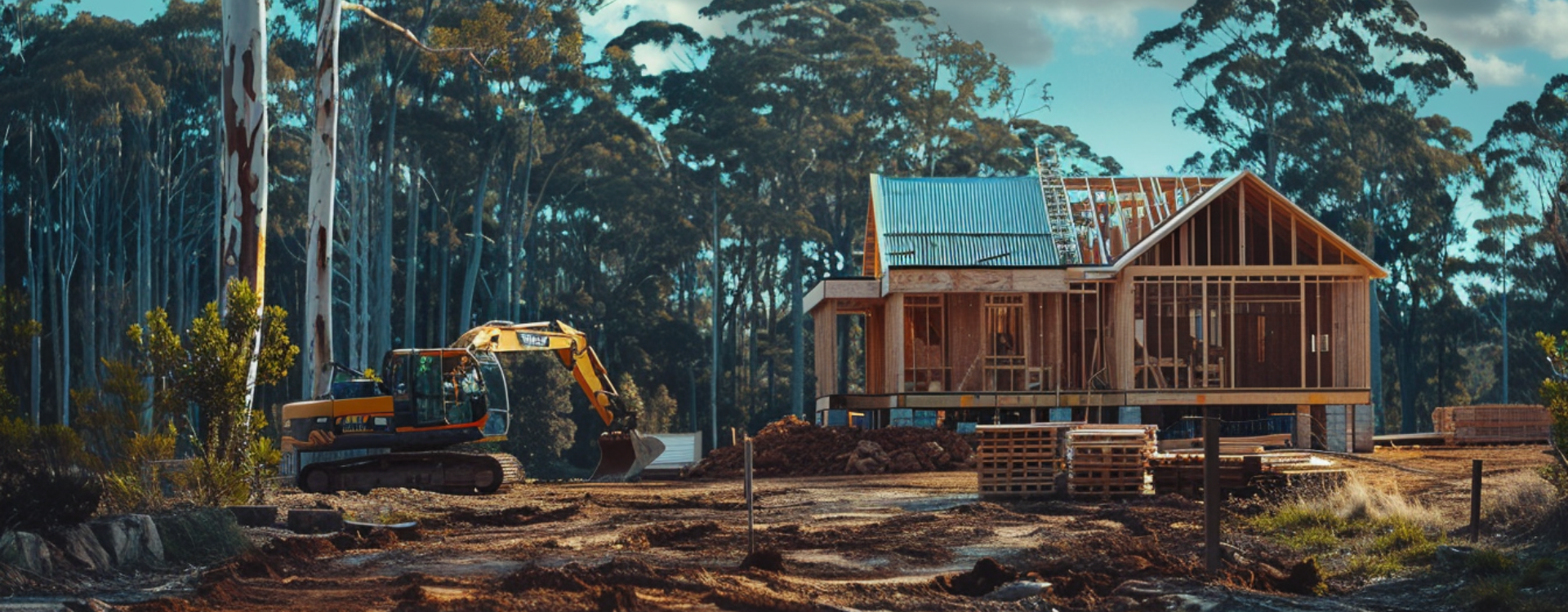
Kain's entry into his construction apprenticeship in late 2015 marked the beginning of his transition from promising young man to capable adult. The programme, organised through one of Hobart's established construction firms that had occasional business connections with Jeffries Industries, placed him under supervision of experienced tradespeople who had no particular interest in treating him with special consideration. In the construction industry, reputation came through demonstrated skill and reliable work ethic, not family name. Kain would have to prove himself the same way every apprentice did—through sweat, mistakes, learning, and gradual accumulation of competence.
The physical demands of construction work tested him immediately. Despite his athletic conditioning from years of football, the sustained physical labour of construction sites—lifting, carrying, digging, climbing, working in extreme weather—required different kind of endurance. His first weeks left him exhausted, muscles aching in ways he hadn't experienced even during intensive football training. His hands, accustomed to catching footballs, had to develop the calluses and resilience required for handling tools and materials daily. The early morning starts—arriving at sites by 6:30 or 7:00 AM—disrupted sleep patterns he'd developed as a student athlete who trained in afternoons.
Yet Kain adapted with determination that impressed his supervisors. Rather than complaining about conditions or attempting to leverage family connections for preferential treatment, he absorbed criticism, asked questions, and worked to improve his skills. The senior tradespeople on his sites, initially skeptical about whether the Jeffries boy would last more than a few weeks, gradually acknowledged his genuine commitment. He listened when instructed, didn't repeat mistakes unnecessarily, and demonstrated the kind of practical intelligence that marked good tradespeople—ability to visualise how pieces fit together, to anticipate potential problems, to understand why certain approaches worked better than others.
His natural leadership qualities, honed through years of team sports, translated effectively to construction environments. As he gained experience and confidence, Kain began taking initiative—organising materials efficiently, suggesting workflow improvements, helping newer apprentices navigate the learning curve he'd recently completed himself. His supervisors noted his ability to read situations, to understand when to speak up and when to simply execute instructions, to balance confidence with appropriate humility. These qualities, combined with his developing technical skills, marked him as someone with potential for advancement beyond basic trade work.
The construction industry also provided Kain with a social environment distinct from his school experiences. His workmates came from diverse backgrounds—men (the industry remained heavily male-dominated) from working-class families who'd entered trades straight from school, older workers who'd spent decades in construction, immigrants bringing skills and perspectives from other countries. The casual profanity, the rough humour, the straightforward hierarchies based on competence rather than credentials—all of it represented a world quite different from Hutchins School or Jeffries Manor. Kain navigated these environments successfully, earning respect through work performance whilst maintaining the essential friendliness and good humour that had always characterised his interactions with others.
By 2017, approximately two years into his apprenticeship, Kain had developed genuine proficiency. He could read architectural plans, understood building codes and safety regulations, possessed competent skills across multiple aspects of construction work. His employers began giving him responsibilities beyond typical apprentice duties—supervising small aspects of projects, liaising with clients about specific details, troubleshooting problems that arose during construction. These expanded responsibilities reflected growing trust in his capabilities and suggested potential career trajectory beyond hands-on trade work, perhaps eventually into project management or even running his own construction business.
Love, Partnership, and Impending Fatherhood
Kain's meeting with Brianne Elise Sitch occurred in 2016 at a local gallery opening—one of those seemingly chance encounters that retrospectively appear inevitable. Brianne, a talented artist with distinctive style and passionate nature, had recently graduated from the University of Tasmania with her Bachelor of Fine Arts degree and was beginning to establish herself in Hobart's modest but supportive arts community. Kain, attending the opening with friends who had dragged him along with promises of free wine and interesting company, found himself genuinely captivated by Brianne's artwork—paintings that explored emotional complexity and human relationships with striking honesty.
Their initial conversation revealed unexpected common ground. Both valued authenticity over pretension, both possessed creative spirits (Kain through his developing eye for architectural design, Brianne through her visual art), and both came from families that had encouraged them to pursue their own paths rather than simply fulfil predetermined expectations. Brianne's parents, Michael and Sarah Sitch, had nurtured their daughter's artistic talents from childhood, providing support and encouragement that paralleled Louise and Thomas's approach to raising their children. This shared experience of family support combined with personal independence created immediate connection.
The relationship developed with speed that surprised both of them. Within months, they had become inseparable—Brianne attending Kain's amateur football matches on weekends, Kain spending evenings in her studio watching her work and offering thoughts on composition and colour, both exploring Tasmania's landscape through hiking and camping trips that combined Kain's love of physical activity with Brianne's need for natural inspiration for her art. Friends and family recognised genuine compatibility—two people who enhanced each other's lives without requiring the other to fundamentally change.
By early 2017, Kain and Brianne had moved in together at Jeffries Manor, an arrangement that reflected both practical considerations and emotional commitment. The manor offered more space than either could afford independently in Hobart's challenging rental market, and Louise welcomed Brianne warmly, recognising in the young artist someone who made her son genuinely happy. Brianne established a studio in one of the manor's many unused rooms, filling the space with her paintings and the controlled chaos that seemed essential to her creative process. For Kain, having Brianne present transformed the manor from family obligation into actual home—a place where he wanted to be rather than simply a building where he happened to live.
The discovery of Brianne's pregnancy in early 2018 brought mixture of emotions. At twenty-three, Kain hadn't planned to become a father quite so soon—he had visions of establishing his career more firmly, perhaps saving enough money to purchase their own home, creating more stable foundation before taking on parenting responsibilities. Yet the initial shock quickly transformed into excitement and determination. His mother Louise had managed three children whilst completing university and launching her career; his father Thomas had learned to be a father at barely twenty-one. If they had navigated early parenthood successfully, surely he and Brianne could do the same.
The months following Brianne's pregnancy confirmation saw Kain's maturity accelerate noticeably. He took on additional shifts when available, worked to save money with new urgency, began seriously discussing plans for their future as a family. He attended prenatal appointments with Brianne, read books about fatherhood and infant care, started preparing one of the manor's rooms as a nursery. Louise watched her son's transformation with mixture of pride and recognition—she saw echoes of the young man Thomas had been when Rebecca arrived, that sudden shift from casual young adult to someone accepting responsibility for another human life.
By July 2018, with Brianne approximately six months pregnant, Kain had settled into patterns that suggested readiness for the changes ahead. His construction work continued steadily, his relationship with Brianne remained strong despite the stresses pregnancy inevitably brought, and his plans for their future had crystallised into concrete goals. He spoke of completing his apprenticeship, potentially pursuing additional qualifications in construction management, eventually building their own home—designing it himself, overseeing construction, creating something permanent and meaningful. It was the kind of future that combined his practical skills with his creative impulses, his need for independence with his commitment to family.
The Final Days and Vanishing
The events of 26 July 2018 began ordinarily enough. Kain and Brianne had settled into comfortable domestic routines at Jeffries Manor, balancing their respective work—his construction shifts, her studio time—with preparations for the baby. The morning had unfolded with typical patterns until Louise approached Kain with a request that seemed simple on its surface but carried undertones of maternal anxiety that Kain couldn't quite dismiss.
His mother wanted him to check on Uncle Jamie.
Jamie Greyson, Louise's younger brother, lived with his partner Luke Smith in a house in Berriedale. Louise's concerns about Jamie had intensified in recent days—phone calls went unanswered, text messages received no replies, and the silence felt ominous in ways she struggled to articulate. Her unease about Luke, whilst never explicitly detailed to Kain, had been a persistent undercurrent since Jamie and Luke had reunited a decade earlier. She explained to Kain that she simply wanted someone to physically verify Jamie was alright, to understand why he'd gone quiet.
Kain agreed to the errand, though it meant interrupting an intimate moment with Brianne. Her frustration at Louise's timing was obvious, but Kain smoothed the situation as best he could, promising to return quickly. He dressed, grabbed his keys, and headed out, expecting the visit to take perhaps an hour at most.
The drive to Berriedale took approximately twenty minutes. When Kain arrived at the cream brick house and knocked on the door, it was Luke who answered—not Jamie—looking bleary and claiming Jamie had "just popped out." The excuse seemed thin, particularly given Jamie's car sat in the driveway. Luke's explanation that someone named Gladys had picked Jamie up did little to ease Kain's growing suspicion that something wasn't right. The house felt wrong—too quiet, with Jamie's normally exuberant Shih Tzus Duke and Henri conspicuously absent.
Luke invited Kain to wait inside for Jamie's return, an offer Kain reluctantly accepted. The atmosphere grew increasingly unsettling—the unusual silence, Luke's nervous behaviour, a spilled container of coffee beans that suggested distraction or agitation. When Luke asked for help moving a television cabinet downstairs, Kain agreed, more to hasten his departure than from any genuine desire to assist.
As Luke slid open the door leading to the stairs, everything changed in an instant. A sharp jab struck Kain's back. Before he could react, he stumbled forward towards a swirling, technicolour vortex that had materialised on the wall before him. A haunting voice—not audible but resonating through his consciousness—declared: "Clive sees you, Kain Jeffries." His grip on the doorframe faltered, a nudge behind his knee sent him tumbling forward, and he fell headlong into the impossible colours.
Bright daylight. Warm breeze. An alien landscape materialising around him. The voice returned, its words heavy with foreboding: "Welcome to Clivilius, Kain Jeffries."
In mere seconds, Kain had been deliberately pushed through a dimensional threshold by the man his uncle trusted, torn from everything he knew and thrust into a world that shouldn't exist. By the time Louise realised Kain hadn't returned and began making frantic phone calls, he had already vanished from Earth entirely. Her missing persons report, filed with Detective Karl Jenkins on 28 July 2018, captured a mother's desperate terror and her conviction that Luke Smith held answers about both her son's and her brother's disappearances. But by then, Kain was already confronting the impossible reality of Clivilius—confused, betrayed, and facing survival in a landscape governed by rules no one from Earth could have prepared him for.



