Jonathan Edward Bates
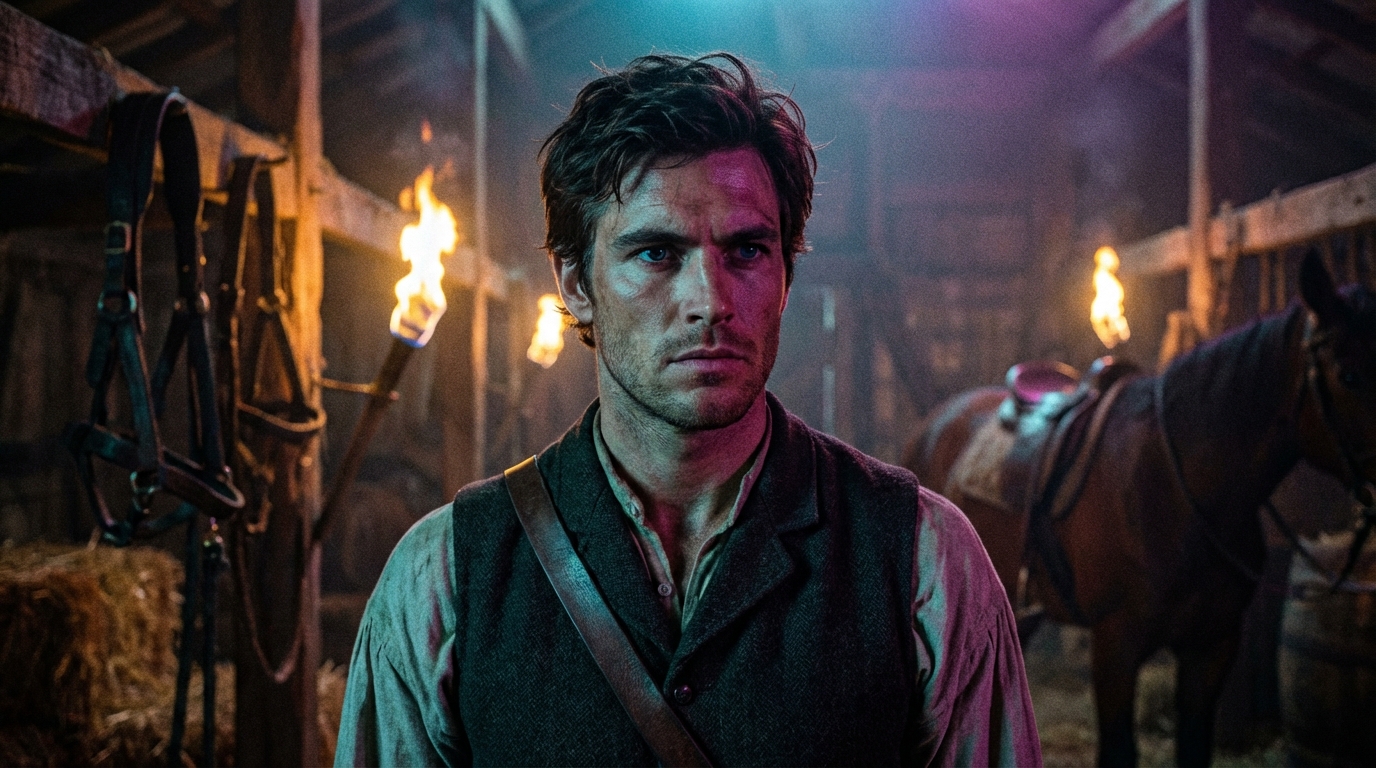
Jonathan Edward Bates, born in Hobart in 1805, embodied the quiet integrity of colonial Tasmania's working class. The skilled horseman's life became forever entwined with mystery when he witnessed his master William Jeffries Sr.'s midnight departure in August 1821. Through nearly fifty years of devoted service at Jeffries Manor, Jonathan transformed from suspected witness to respected patriarch, his unwavering loyalty and honest character defining a life shadowed by secrets he could neither fully explain nor escape.
Colonial Hobart Beginnings
Jonathan Edward Bates entered the world on 14 May 1805 in Hobart Town, Van Diemen's Land, at a moment when the settlement was transforming from raw penal outpost into something approaching civilised society. His birth occurred in one of the modest dwellings on the town's outskirts where working families made their homes—structures that announced their occupants' status through studied simplicity rather than pretentious display. The residence belonged to his parents, William and Mary Bates, who had arrived in the colony several years earlier seeking opportunities that England's rigid hierarchies would never permit.
William Bates, Jonathan's father, practised the carpenter's trade with skills developed through apprenticeship in England and refined through colonial necessity. In Van Diemen's Land, where every building required construction and every structure eventually needed repair, a competent carpenter could secure steady work if not spectacular prosperity. William's hands bore the marks of his profession—calluses from constant tool use, scars from inevitable accidents, fingers that had developed particular strength from years of gripping chisels and planes. He approached his work with methodical dedication, understanding that reputation mattered more than quick completion, that structures properly built the first time required less future maintenance.
Mary Bates née Fletcher brought seamstress skills to the household economy, taking in mending and creating garments for families who could afford custom work but not the prices that Hobart's more established dressmakers charged. Her corner of their dwelling served as workspace where she sat by the window's light, needle flashing as she transformed fabric into clothing that would last colonial families through seasons of hard wear. The constant presence of cloth scraps, thread spools, and patterns drawn on brown paper created domestic environment where productivity was visible and children understood from earliest awareness that survival required constant labour.
As the third of seven children, Jonathan occupied that peculiar middle position in large families—beyond the intense parental anxiety focussed on firstborns, yet not receiving the indulgence sometimes afforded to youngest children. His older siblings had already begun contributing to family welfare through various forms of work appropriate to their ages and capabilities. His younger siblings would require care and supervision that often fell to older children when parents were occupied with labour that generated income. Jonathan thus grew up understanding both obligation towards those younger and deference towards those older, lessons that would shape his later interactions within household hierarchies.
The Bates family's modest dwelling stood amidst similar structures housing other working families—carpenters, labourers, small tradesmen, and their families, all navigating the precarious economics of colonial existence. The neighbourhood possessed its own social structures and support networks. Families exchanged labour, shared resources during difficult times, celebrated together during rare moments of leisure, and collectively managed the challenges of raising children in conditions that combined opportunity with uncertainty. For young Jonathan, this community provided education in practical cooperation and mutual reliance that no formal schooling could match.
Formal education remained limited for children of Jonathan's class. The family could ill afford to spare children's labour for extended schooling, and Hobart possessed few institutions offering free education to working families. Yet William and Mary ensured their children received basic literacy and numeracy instruction at the local Anglican church's Sunday school. Jonathan learned to read sufficiently to manage written instructions, to write clearly enough to record transactions or communicate when necessary, and to cipher basic mathematics adequate for managing accounts or calculating measurements. These skills, whilst modest by genteel standards, exceeded what many working-class children acquired and would prove valuable throughout his life.
The Gift with Horses
From his earliest years, Jonathan displayed remarkable affinity for horses that seemed almost instinctive. Where other children might fear the large animals or approach them with casual indifference, young Jonathan showed genuine fascination combined with intuitive understanding of equine temperament and behaviour. He would spend hours watching horses at work in Hobart's streets, observing how they responded to different handlers, noting which techniques proved effective and which created resistance or confusion.
The nearby stables became Jonathan's classroom and sanctuary. The proprietors, recognising the boy's genuine interest and natural aptitude, tolerated his presence when they might have chased away other children as nuisances. Jonathan absorbed everything—how to approach a horse without startling it, how to read mood through ear position and body language, how to move around horses safely, how to handle basic grooming tasks that older stable hands performed. He asked questions constantly, his curiosity apparently inexhaustible, his attention to answers suggesting intelligence that formal schooling had barely tapped.
By his early teens, Jonathan had developed skills that older hands recognised as genuinely exceptional. He could calm skittish horses through combination of voice, touch, and patient presence. He understood the nuances of equip ment fit, recognising when saddles or bridles caused discomfort that might not be immediately obvious to less observant handlers. He possessed what horsemen call "good hands"—the ability to communicate through reins with sensitivity rather than force, to guide rather than compel, to work with horse's nature rather than against it.
This affinity served the family well. William Bates frequently needed to transport materials or completed work, and Jonathan's ability to manage the cart horse efficiently made him valuable assistant. Local stables occasionally hired Jonathan for odd jobs, providing small sums that supplemented family income. And Jonathan himself found in horses something that resonated deeply—perhaps the straightforward honesty of creatures whose responses reflected clear cause and effect, whose trust once earned remained dependable, whose companionship demanded nothing but fair treatment and competent care.
The Kempton Interlude
In 1820, when Jonathan reached fifteen years of age, William Bates secured a significant opportunity that would reshape family circumstances. He was offered position as carpenter in Kempton, a growing settlement in the Southern Midlands where new construction created steady demand for skilled tradesmen. The position promised more regular work than Hobart provided, along with chance to establish himself as valued contributor to developing community. The family relocated with mixture of anticipation and trepidation—leaving Hobart meant abandoning known circumstances for uncertain prospects, yet remaining promised only continuation of marginal existence.
Kempton in 1820 existed at that transitional moment between raw settlement and established town. The community possessed sufficient population to require various trades and services, yet remained small enough that newcomers could quickly establish themselves if they possessed needed skills. William Bates found immediate employment in construction projects that included St James' Anglican Church, work that provided both steady income and enhanced reputation as carpenter whose skills could be trusted with important civic structures.
For Jonathan, Kempton offered unexpected opportunity. A local horse breeder, recognising the young man's exceptional way with horses, took him on as informal apprentice. This arrangement lacked the formal indenture that governed traditional apprenticeships, yet it provided Jonathan with systematic instruction in horse care, training, and management that went well beyond the casual knowledge he had accumulated in Hobart. The breeder taught him to assess horse conformation, to identify soundness problems, to understand breeding principles, and to develop training techniques appropriate for different temperaments and intended purposes.
The work was physically demanding and occasionally dangerous—horses could injure even experienced handlers through kicks, bites, or simple accidents. Yet Jonathan thrived in this environment, discovering that he possessed not merely natural affinity but genuine talent that, properly developed, might provide path to respectable livelihood. The breeder paid modest wages supplemented by invaluable education, and Jonathan's reputation as reliable and skilled horseman began spreading beyond Kempton's immediate vicinity.
It was during this Kempton period that Jonathan encountered opportunity that would define his entire adult life. Word reached the breeder that William Jeffries Sr., wealthy proprietor of the newly constructed manor near Granton, sought skilled stable hand to manage his growing collection of horses. The position offered regular wages, accommodation, and chance to work with quality animals at estate that represented colonial aspiration towards gentility. The breeder, recognising exceptional opportunity for his protégé, recommended Jonathan enthusiastically, describing his skills and character in terms that caught William Jeffries' attention.
Jeffries Manor and Early Service
In early 1821, at age sixteen, Jonathan Edward Bates arrived at Jeffries Manor to assume position as stable hand. The estate's grandeur initially overwhelmed him—the Georgian sandstone building announced wealth and social pretension far exceeding anything Jonathan had previously encountered. The grounds sprawled across acres that seemed impossibly vast after the cramped properties he had known. The stables themselves, whilst still under final construction, were designed with care that suggested horses here would be housed better than many colonial families.
William Jeffries Sr. conducted the initial interview with Jonathan, assessing the young man's capabilities and character with shrewd attention. He questioned Jonathan about his experience, watched him handle several horses to evaluate practical skills, and discussed expectations with directness that left no ambiguity about standards. William Sr. struck Jonathan as formidable figure—obviously successful, clearly intelligent, yet possessing quality of contained intensity that suggested depths Jonathan couldn't quite fathom. The master's convict origins remained unknown to Jonathan at this point, and William Sr.'s bearing conveyed authority that discouraged questions about his past.
Jonathan's responsibilities encompassed complete care of the manor's horses. This meant rising before dawn to feed and water the animals, mucking out stalls with thorough efficiency, grooming horses until their coats gleamed, maintaining all tack in proper condition, exercising horses regularly to keep them fit, and being constantly available should William Sr. require a horse saddled for riding. The work demanded physical stamina, meticulous attention to detail, and genuine commitment to animal welfare that went beyond merely performing required tasks.
The stable quarters became Jonathan's home—a small room above the stables that was austere yet adequate. The space contained bed, simple furniture, and storage for his limited possessions. The proximity to horses suited Jonathan perfectly; he could hear them moving during the night, could respond immediately to any disturbance, and found comfort in their presence that partially compensated for isolation from his family. The accommodation, whilst modest, represented significant improvement over the crowded family dwelling in Kempton.
His relationships with other household staff developed gradually and with notable complexity. Mrs Agnes Billinghurst, the formidable housekeeper, governed below-stairs operations with disciplinary rigour that intimidated most servants. Jonathan, working primarily in stables rather than house, interacted with her less frequently than other staff, yet he learned quickly to show appropriate deference and to execute any requests she made with prompt efficiency. The various maids, footmen, and other servants regarded Jonathan with mixture of curiosity and distance—he was clearly working class like themselves, yet his specialised skills and relative independence marked him as somewhat apart from house servant hierarchy.
His most significant staff relationship developed with Mabel Hawthorne, the young scullery maid who had arrived at Jeffries Manor around the same time. Both occupied relatively low positions in household hierarchy, both were newcomers navigating the estate's established social structures, and both possessed intelligence that suggested they deserved better circumstances than their current situations provided. They formed tentative alliance based on mutual recognition as outsiders, occasionally sharing observations about manor life during rare moments when their paths crossed.
The Fateful Night
The night of 9 August 1821 began unremarkably for Jonathan. He had completed his evening duties—horses fed and settled, stables secured, equipment properly stored—and retired to his quarters above the stables. The winter cold penetrated the thin walls, and Jonathan buried himself under blankets, seeking warmth and the sleep necessary to face another predawn rising. He drifted into that heavy slumber that comes from physical exhaustion, consciousness releasing its hold as his body demanded rest.
The sound that woke him came from below—movement in the stables, the distinctive sounds of a horse being disturbed. Jonathan surfaced from sleep with confusion, disoriented by the darkness and the unexpected activity. For a moment he wondered if he had overslept, if dawn had somehow arrived without his awareness, but the profound darkness suggested middle of night rather than early morning. He rose from bed, threw clothes over his nightshirt, and descended the ladder to investigate.
What he discovered defied his understanding of proper stable management. William Jeffries Sr. stood in the stable aisle, partially dressed, moving with urgent purpose as he prepared Midnight, his finest stallion, for riding. The master worked with surprising competence for gentleman—clearly he had saddled horses before despite having staff to perform such tasks. But everything about the situation struck Jonathan as wrong: the late hour, the master's dishevelled appearance, the barely contained energy radiating from both man and horse, the complete absence of explanation for this midnight preparation.
Jonathan stammered some question—he could never afterwards recall precisely what he said, only that confusion and concern overwhelmed his usual careful deference towards his employer. William Sr. barely acknowledged Jonathan's presence, responding with curt dismissal that this was urgent business requiring immediate departure, that Jonathan should return to bed and forget he had witnessed anything. The master's tone brooked no argument, yet his manner suggested barely controlled panic rather than calm authority.
Jonathan watched, frozen in uncertainty about whether to assist or retreat, as William Sr. finished saddling Midnight, checked equipment with practised hands, and led the horse towards the stable door. The stallion sensed its rider's agitation, snorting and dancing with high-strung energy that required William Sr.'s full attention to manage. Master and horse paused briefly at the doorway—Jonathan saw William Sr. pull a dark cloak around his shoulders, fastening it against the winter cold, transforming himself from recognisable employer into anonymous shadow.
Then they were gone, hoofbeats echoing across the stable yard before fading into the night. Jonathan stood alone in the stable, lamplight casting shadows that seemed to mock his confusion. What had he witnessed? Should he report this to someone? But to whom, and what exactly would he report? That his master had ridden out late at night on urgent business? William Sr.'s affairs were his own, and stable hands who questioned their employer's actions typically found themselves seeking new positions.
Jonathan returned to bed but sleep eluded him. He lay awake replaying the scene, trying to understand what had felt so deeply wrong about the encounter. It was more than merely the late hour or William Sr.'s unusual decision to saddle his own horse. Something about the master's demeanour—the barely contained urgency, the refusal to meet Jonathan's eyes, the transformation from commanding presence to desperate figure fleeing into darkness—all suggested crisis rather than ordinary business, however urgent.
The Aftermath and Investigation
Morning brought discovery that transformed Jonathan's midnight witness from mere oddity into evidence in colonial Tasmania's most compelling mystery. William Jeffries Sr. had not returned. His bed had not been slept in. The breakfast he typically consumed with punctual regularity remained uneaten. Madelyn Jeffries' initial concern escalated into alarm as hours passed without explanation, and by late morning the household had erupted into barely controlled panic.
When Constable Broadmoor arrived to investigate the report of missing master, Jonathan found himself thrust into role he had never sought—key witness to William Sr.'s final known movements. The constable's questions proved relentless and detailed: What time had Jonathan been awakened? What exactly had William Sr. said? How had the master appeared—calm or agitated? Had Jonathan assisted with saddling the horse? Which direction had rider and horse departed? Could Jonathan identify any distinguishing features that might help track William Sr.'s movements?
Jonathan answered with scrupulous honesty, describing the scene as accurately as his confused memory permitted. Yet even his straightforward testimony raised more questions than it answered. Why had William Sr. departed so urgently in middle of night? Why had he saddled his own horse rather than rousing Jonathan to perform the task? Where had he been going with such desperate haste? Jonathan possessed no answers to these questions—he had been merely awakened witness, not confidant privy to his master's purposes or destinations.
The investigation quickly focussed on Jonathan with intensity that evolved from mere information-gathering into something closer to interrogation. His position as last person to see William Sr. alive made him simultaneously crucial witness and potential suspect. Had he assisted William Sr.'s departure—or caused it? Had he witnessed a master fleeing some crisis—or helped create circumstances that necessitated flight? The questions grew more pointed, the suspicion more palpable, and Jonathan discovered that honesty provided insufficient defence against implications that his very presence at the scene somehow marked him as complicit in whatever had occurred.
Detective Inspector Lockhart's arrival several days later brought renewed scrutiny. Lockhart, more experienced and considerably more sceptical than Constable Broadmoor, examined Jonathan's testimony with prosecutorial precision. He probed for inconsistencies, challenged Jonathan's claims about the timing and details, and suggested alternative interpretations that cast the stable hand as accomplice rather than mere witness. Could Jonathan really not know why his master had departed? Surely William Sr. must have said something more than curt dismissal? And wasn't it convenient that Jonathan happened to wake at precisely the moment his master was leaving?
Jonathan endured this interrogation with growing distress. He had done nothing wrong, had witnessed what he witnessed, had answered every question with complete honesty. Yet Lockhart's insinuations suggested that innocence itself might be performance, that straightforward testimony might conceal calculated deception, that loyal service might mask darker motives. The investigation transformed Jonathan from valued employee into suspected criminal, his character questioned, his integrity challenged, his entire future suddenly precarious.
The scrutiny extended beyond official interrogations to encompass whispers amongst household staff and speculation within broader community. Fellow servants viewed Jonathan differently after William Sr.'s disappearance—some with sympathy for his difficult position, others with suspicion that perhaps he knew more than he admitted, still others with resentment that his testimony had brought uncomfortable official attention to the household's operations. In Granton and surrounding areas, Jonathan's name became associated with the mystery, his role as witness making him simultaneously person of interest and subject of gossip that ranged from sympathetic to condemning.
Vindication and Continued Service
Gradually, as investigation proceeded without uncovering evidence connecting Jonathan to William Sr.'s disappearance, official suspicion eased. Lockhart's inquiries into Jonathan's character revealed universal testimony to his honesty, his competence, and his lack of motive for harming his employer. The timeline of events, once thoroughly examined, provided no opportunity for Jonathan to have been accomplice to whatever had occurred. And ultimately, the investigation's failure to determine what had actually happened to William Sr. meant that no one—including Jonathan—could be definitively charged with any crime.
Yet vindication, when it finally came, felt hollow. Jonathan had been officially cleared, but suspicion's taint proved impossible to fully remove. Some would always wonder whether the investigation had simply failed to uncover his involvement, whether his honest demeanour concealed guilt, whether his continued employment at Jeffries Manor represented Madelyn Jeffries' charity towards unfortunate witness or her unspoken acknowledgement of his complicity. The mystery itself remained unsolved, and Jonathan's position as final witness ensured his name would forever be linked to unanswered questions.
Madelyn Jeffries, however, demonstrated faith in Jonathan that proved crucial to his survival of this crisis. She retained him in his position despite easily justifiable reasons for dismissal—employing someone connected, however innocently, to scandal could damage the household's reputation. She even increased his responsibilities, trusting him to manage expanded stables as the estate's operations continued under her capable leadership. This public vote of confidence helped rehabilitate Jonathan's reputation, signalling to colonial society that someone intimately involved with the situation believed in his innocence and valued his service.
Jonathan responded to this trust with redoubled dedication. He managed the manor's horses with meticulous care, maintained facilities to exemplary standards, and proved himself invaluable to the estate's operations. His work became refuge from continuing whispers and speculation—with horses, his competence was undeniable, his value clear, his character demonstrated through actions rather than words. The stables represented domain where Jonathan's integrity was manifest in every properly groomed horse, every piece of well-maintained equipment, every task executed with careful attention.
Marriage and Family
On 23 April 1826, Jonathan married Sarah Lewis in ceremony at St James' Anglican Church in Kempton. Sarah, daughter of a local shopkeeper, had known Jonathan since the Bates family's relocation to Kempton years earlier. Their courtship had proceeded with patient steadiness through the difficult years following William Sr.'s disappearance, Sarah demonstrating faith in Jonathan's character when others questioned it. Her willingness to marry him despite his association with scandal represented profound trust that Jonathan never forgot.
The marriage brought Jonathan happiness that partially compensated for the difficulties that had marked his early years at Jeffries Manor. Sarah possessed practical capabilities that made her ideal partner for man whose income, whilst steady, would never provide more than modest comfort. She managed their household economy with efficiency that stretched Jonathan's wages further than seemed possible. She created warm domestic environment in the cottage Madelyn Jeffries provided as part of Jonathan's employment. And she bore five children who became the centre of Jonathan's existence beyond his stable duties.
The children arrived at intervals across twelve years: William in 1827, Mary in 1829, Thomas in 1832, Elizabeth in 1835, and John in 1838. Each birth brought Jonathan joy mixed with increased sense of responsibility—more mouths to feed, more bodies to clothe, more futures to secure through his continued stable employment. He raised them with patient affection, teaching them practical skills as they grew, encouraging their development whilst maintaining realistic expectations about their likely futures in colonial society's working class.
The cottage on Jeffries Manor grounds where the Bates family lived occupied peculiar social position. They were simultaneously manor employees living on estate property and independent family unit managing their own domestic affairs. Jonathan's children grew up amidst grandeur they would never personally possess, witnessing genteel life's rituals whilst understanding such experiences would remain forever beyond their reach. This proximity to wealth without participation in it might have bred resentment, yet Jonathan and Sarah worked deliberately to instil appreciation for their own circumstances rather than envy of others' advantages.
Jonathan proved devoted father who balanced firm discipline with genuine affection. He understood that his children's futures would depend upon developing useful skills and solid character rather than inherited advantages. He taught his sons practical capabilities—William and Thomas learned stable management from their father, whilst John displayed aptitude for carpentry that suggested he might follow in his grandfather's trade. The daughters learned from Sarah the domestic skills that would make them valuable additions to their eventual households, whether as wives or as domestic servants.
The Mature Years and Legacy
As decades accumulated, Jonathan Edward Bates became fixture at Jeffries Manor—so long-serving that younger staff knew him only as the patient head groom whose knowledge of horses seemed encyclopaedic, whose dedication to the estate appeared unwavering, whose character exemplified working-class virtue. The scandal that had marked his early years receded into history known primarily through whispered stories rather than living memory. Jonathan transformed from suspected witness into respected employee, his loyalty to the Jeffries family never wavering despite the difficult circumstances of his initiation into their service.
He watched the manor evolve through successive generations. William Jeffries Jr., son of the vanished master, grew from infant to man under Jonathan's indirect observation. Ellen Jeffries brought vitality and progressive values that transformed the estate's social role. The manor's horses—Jonathan's primary responsibility and deepest professional pride—reflected the family's evolution, from William Sr.'s original collection through subsequent acquisitions that demonstrated each generation's particular interests and resources.
Jonathan never forgot that midnight witness, though time's passage transformed his understanding of it. In quiet moments, particularly as he grew older and more reflective, he sometimes pondered what he had really seen that August night. Had his master been fleeing some danger—or rushing towards some desperate appointment? Had William Sr.'s disappearance been voluntary departure—or darker fate? Jonathan possessed no answers, only the memory of man and horse departing into winter darkness, never to return. The mystery remained unsolved, yet Jonathan had learned to live with uncertainty, accepting that some questions resist all efforts at resolution.
His involvement with the Kempton Volunteer Fire Brigade, established in 1838, provided community engagement beyond the manor's boundaries. The volunteer work demonstrated Jonathan's commitment to the broader settlement, his willingness to contribute to collective welfare rather than focussing solely on personal circumstances. It also provided escape from the manor's confines, allowing Jonathan to interact with other working men as equal rather than as employee of grand estate.
Final Chapter
Jonathan Edward Bates passed away peacefully on 17 November 1866, aged sixty-one years. Death came in his sleep, in the cottage where he had raised his family, surrounded by familiar sounds of the stables he had managed for forty-five years. Sarah discovered him in the early morning—he appeared to be merely sleeping, his expression peaceful, his passage from life apparently gentle. The doctor, summoned to confirm what Sarah already knew, could identify no specific cause beyond the accumulated toll of six decades of hard physical labour in colonial conditions.
The funeral drew attendance that testified to the respect Jonathan had earned through decades of honest service. Jeffries family members attended, honouring the man who had served them so loyally across multiple generations. Fellow workers from the manor and surrounding estates paid respects to colleague whose competence and character had set standards they admired. Kempton community members who remembered Jonathan from his youth or knew him through the fire brigade came to acknowledge a life lived with quiet integrity.
He was laid to rest in Kempton's churchyard, the modest grave marker recording essential facts: his name, his dates, his role as devoted husband and father. The inscription captured what mattered most—not the dramatic mystery that had briefly made him subject of colonial speculation, but rather the steady decency that had characterised his actual life. Jonathan Edward Bates, stable hand at Jeffries Manor, faithful husband, loving father—simple truths that honoured a man who had never sought complexity or notoriety.
His children carried forward the lessons he had taught through example rather than lecture. William and Thomas continued in stable work, their competence with horses reflecting their father's training. John's carpentry recalled his grandfather's trade, connecting generations through practical skill. The daughters made respectable marriages that ensured their security, their domestic capabilities preparing them to manage households with the efficiency their mother had modelled.







