Johnny Alfred Ryman
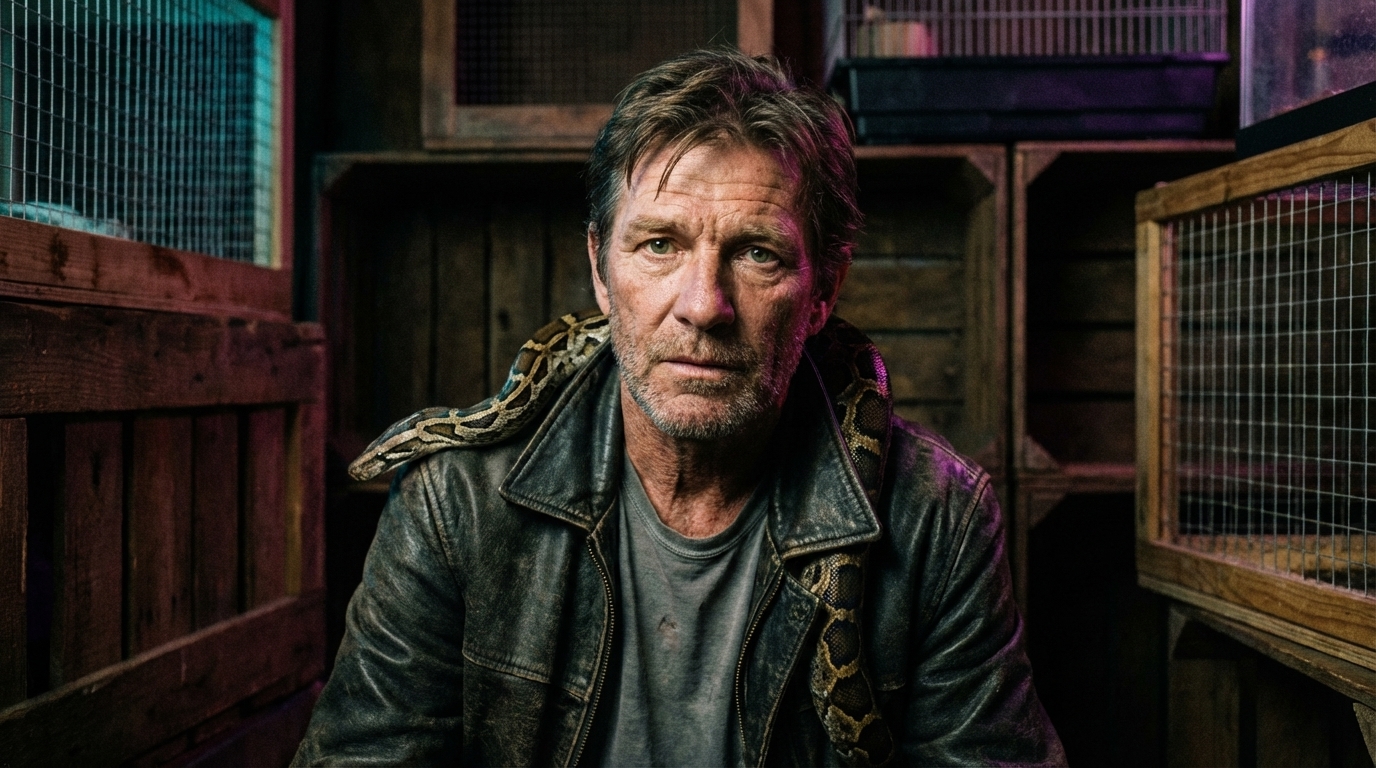
Johnny Alfred Ryman, born 11 June 1965 in New Norfolk, Tasmania, is the proprietor of The Whispering Menagerie pet shop and architect of Ryman's Exotic Trading Company. The youngest child of carpenter George and farmer's daughter Ivy, Johnny's childhood fascination with Derwent River wildlife evolved into a career navigating Tasmania's underground exotic animal trade. Since 2018, his operations have transformed into ecological stewardship, supplying species for Clivilius's Bixbus Wildlife Sanctuary.
Birth and Family Origins
Johnny Alfred Ryman was born on 11 June 1965 in New Norfolk, Tasmania, the youngest child of George and Ivy Ryman. His arrival came during a period when New Norfolk maintained its character as a working-class community in the Derwent Valley, its economy sustained by hop farming, timber, and the various trades that supported agricultural life. The town, established in 1807 when displaced Norfolk Island settlers arrived in the valley, had developed a distinctive culture shaped by isolation, resilience, and the quiet determination that survival in rural Tasmania demanded.
His father, George Ryman, worked as a carpenter, his trade representing several generations of Derwent Valley craftsmen whose skills had been passed down since the early nineteenth century. George's family had worked the land and timber along the riverbanks for as long as anyone could remember, their expertise in woodworking providing steady if modest income across generations. The values George embodied—practical competence, independence, and willingness to work with one's hands—would prove formative for his youngest son, even as Johnny's interests diverged dramatically from conventional carpentry.
Johnny's mother, Ivy Ryman née Goodwin, came from a farming family near Lachlan, bringing to the marriage the quiet strength and practical resilience that agricultural life cultivated in women of her generation. She managed the household with unflappable steadiness, providing the stability that allowed George to focus on his trade and their three children to develop according to their individual inclinations. Her influence on Johnny manifested less in specific skills than in temperament—the patience required for animal husbandry, the acceptance of unconventional paths, the understanding that worth was measured by character rather than conformity.
Johnny was the youngest of three children, following older siblings Thomas and Alice. Both pursued conventional paths that stood in marked contrast to their brother's eventual trajectory. Thomas became a mechanic, his mechanical aptitude channelling the family tradition of skilled trades into a different medium. Alice took up teaching, her patience and dedication to education representing another respectable avenue for working-class advancement. Against these traditional choices, Johnny's fascination with wildlife and eventual career in exotic animal trading would seem almost deliberately unconventional.
Childhood Along the Derwent
Growing up in New Norfolk during the late 1960s and 1970s meant inhabiting a world where the natural environment remained immediately accessible. The Derwent River flowed past the town's boundaries, its banks providing habitat for the wildlife that would captivate Johnny from his earliest years. Unlike many children who developed temporary interests in animals before moving on to more conventional pursuits, Johnny's fascination deepened with each year, becoming the defining characteristic by which his community would eventually know him.
From early childhood, Johnny displayed an affinity for creatures that others might overlook or actively avoid. He brought home injured or stray animals he found on the fringes of New Norfolk—possums that had fallen from trees, birds with damaged wings, reptiles that had wandered into human spaces. The Ryman household gradually accommodated an informal menagerie of recuperating wildlife, George and Ivy tolerating their youngest son's collections with bemused acceptance. By his teenage years, Johnny had earned the nickname "wildlife boy," a designation that captured both his passion and his increasing expertise in caring for animals that most people encountered only accidentally.
School proved less engaging than the natural world beyond its walls. Johnny attended New Norfolk Primary School from 1970 to 1977, where his curiosity about local wildlife conflicted with traditional academics. His teachers noted a capable student whose attention wandered whenever lessons failed to connect with his interests. He performed adequately in subjects that permitted practical engagement but struggled with abstract learning that seemed disconnected from the tangible world he preferred to explore.
Secondary education at New Norfolk High School from 1978 to 1981 followed similar patterns. Johnny's interests in history and hands-on learning never quite translated into academic achievement. He was comfortable solving practical problems, working with physical materials, and engaging with the natural world in ways that examination-based education failed to assess or reward. By sixteen, he had concluded that formal education offered little that he valued, and he left school after completing Year 10 to pursue whatever opportunities his practical skills might secure.
Early Career and Restless Years
The years following Johnny's departure from school saw him moving through various odd jobs that characterised working-class life in small Tasmanian towns. From 1981 to 1985, he worked in New Norfolk's shops and pubs, his easy manner and willingness to undertake any task securing employment even when his unconventional interests raised eyebrows. He tended bar at The Derwent Inn, where his ability to listen and his growing repertoire of wildlife stories made him popular with patrons. He assisted in a local hardware shop, learning practical skills that would later prove useful when establishing his own business. He performed occasional labour work, his physical capability and reliability earning respect from employers who valued dependability over formal credentials.
These positions provided income and experience but failed to satisfy the restlessness that had always characterised Johnny's temperament. His fascination with animals never waned during this period; if anything, the tedium of conventional employment intensified his longing for work that aligned with his passions. He continued caring for wildlife in his spare time, his informal expertise growing through hands-on experience that no formal training could replicate. Local residents began approaching him when they encountered injured animals or needed advice about wildlife management, his reputation as the person who understood creatures extending throughout the New Norfolk community.
Throughout these years, Johnny's disdain for routine work grew alongside his appreciation for the natural world. He recognised that conventional employment would never provide the satisfaction he sought, yet the path from wildlife enthusiasm to sustainable livelihood remained unclear. The combination of restlessness and expertise would eventually drive him toward ventures that straddled legitimacy and shadow—but first, he needed to accumulate the capital and connections that independent enterprise required.
Establishing The Whispering Menagerie
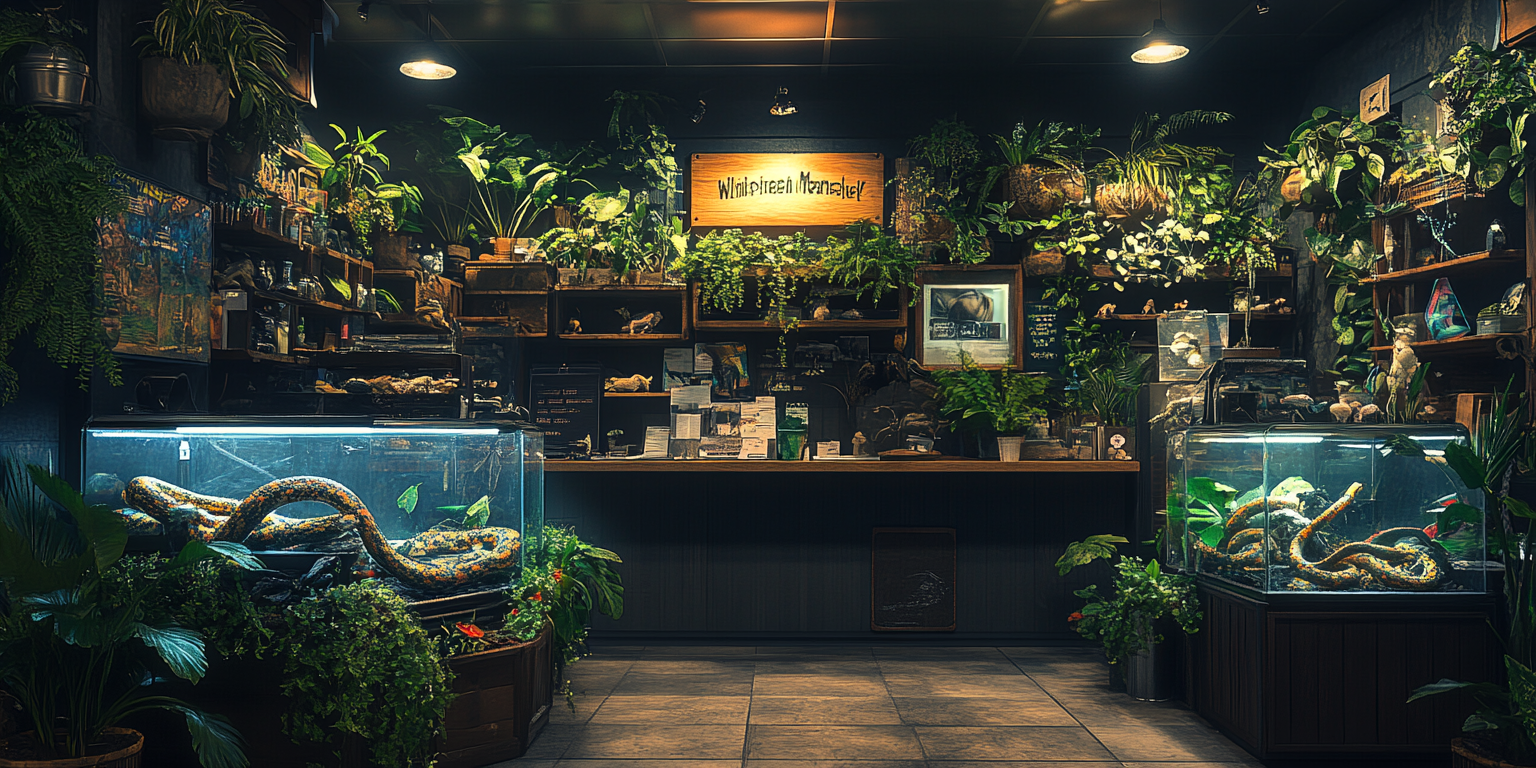
In 1998, after years of accumulating savings from odd jobs and preliminary exotic trading conducted informally since the mid-1990s, Johnny opened The Whispering Menagerie. The modest pet shop occupied a single-storey weatherboard building on a quiet side street in New Norfolk, just two blocks from the Derwent River's banks. The location, whilst appearing unremarkable, possessed strategic advantages that Johnny's developing business instincts recognised immediately—minimal foot traffic reducing casual observation, rear access to a laneway providing discreet loading facilities, and connections to colonial-era drainage culverts and riverbank pathways that had served smugglers for generations.
The shop's initial capital came from multiple sources: savings accumulated through years of labour, a modest loan from his father George who believed Johnny was simply opening a conventional pet shop, and proceeds from preliminary exotic trading that Johnny had conducted before formalising his operations. He spent the winter months of 1997-98 renovating the premises, installing ventilation for reptile enclosures, reinforcing floorboards to support aquarium weight, and crucially excavating and stabilising the basement that would eventually serve purposes far beyond simple storage.
The Menagerie's early months focused on establishing legitimacy. Johnny stocked standard inventory—budgerigars, guinea pigs, goldfish, and the routine supplies that any Tasmanian pet shop might offer. He cultivated relationships with local families seeking pets for children, integrating himself into New Norfolk's small business community through Chamber of Commerce membership, youth football sponsorship, and regular presence at the Saturday market. This community embedding served dual purposes: it normalised the Menagerie's presence whilst creating networks of goodwill that might prove protective should questions arise about less conventional operations.
A blue-tongued lizard named Trevor became the shop's unofficial mascot, his docile temperament making him perfect for children's visits and deflecting attention from more unusual inventory. The three aquariums along the left wall housed common tropical fish, whilst wire cages accommodated rabbits and guinea pigs. An aviary of budgerigars provided constant chirping that masked conversations Johnny preferred to keep private. Everything about the front-of-house operation suggested unremarkable small-town commerce—precisely the impression Johnny intended to cultivate.
Ryman's Exotic Trading Company
By late 1998, Johnny began carefully expanding into exotic species, and in 1999 he formalised these dealings as Ryman's Exotic Trading Company. The company operated as a separate entity from the Menagerie, maintaining legitimate import permits for certain species whilst facilitating transactions that conventional commerce could not accommodate. What began as profit-driven enterprise would eventually evolve into something more complex—a conduit between worlds that reflected Johnny's own transformation from smuggler to ecological steward.
The company's network expanded through the 2000s, with Johnny cultivating contacts among traders from mainland Australia, Asia, and as far afield as South America. His relationships included suppliers in Indonesia, Thailand, and the Philippines—regions where biodiversity and limited regulatory enforcement created opportunities for acquiring species unobtainable through legitimate channels. He developed connections with shipping facilitators who understood how to move live cargo without attracting customs scrutiny, veterinarians willing to provide health certificates for animals whose origins would not withstand close examination, and clients whose discretion was guaranteed by their own investment in maintaining opacity.
The basement beneath the Menagerie represented the operation's true heart. Johnny had expanded the original cellar into a climate-controlled facility measuring approximately twelve metres by eight, with custom-built terrariums lining three walls. Arid zones accommodated inland taipans and desert pythons; humid tropical environments housed green tree pythons and water monitors; temperature-controlled sections maintained precise thermal regulation for species requiring exact conditions. Sophisticated filtration systems maintained air quality despite the density of reptilian inhabitants. Separate enclosures accommodated mammals—sugar gliders, quolls, and occasionally specimens of threatened species acquired through networks operating in moral and legal grey zones.
The Southern Protection Front
The Southern Protection Front emerged as a persistent complication in Johnny's operations. This organisation presented publicly as a conservation group dedicated to protecting Tasmania's endemic species, whilst operating privately as participants in the same exotic animal trade they ostensibly opposed. They viewed Johnny's independent operation with hostility, demanding tribute—a percentage of profits, priority access to certain species, information about his supplier networks.
The Front's leverage came from capacity to cause trouble. Anonymous tips to authorities could trigger investigations. Vandalism of shipments created financial losses. Harassment of Johnny's contacts threatened the relationships upon which his business depended. Their methods were calculated to demonstrate power without escalating to confrontations that might attract unwanted attention to their own operations.
Johnny resisted these demands with characteristic stubbornness, paying enough to avoid immediate confrontation whilst maintaining operational independence. This balancing act required constant vigilance and willingness to absorb occasional losses when the Front made examples of shipments they sabotaged. The relationship evolved into wary détente—Johnny valuable as a reliable source of tribute, the Front content with extracting payment rather than eliminating competition.
The 2006 raid on the Menagerie represented the Front's most serious attempt to destroy Johnny's operations. Triggered by Front-aligned informants, the investigation threatened to expose the full scope of his exotic trading. Only advance warning from a sympathetic customs officer—whom Johnny had cultivated carefully over years—allowed him to relocate incriminating inventory before authorities arrived. The raid found nothing actionable, preserving both reputation and business, but the incident reinforced Johnny's understanding that his operations existed on sufferance, vulnerable to collapse should circumstances shift unfavourably.
Character and Temperament
Those who know Johnny Ryman speak of a man whose streetwise personality masks genuine expertise and unexpected depth. His manner suggests someone comfortable operating in shadows—watchful, pragmatic, and perpetually calculating risk and advantage. Yet beneath this surface lies the childhood fascination with wildlife that launched his entire trajectory, a love for animals that commercial success never entirely corrupted.
His resilience represents perhaps his most defining characteristic. Decades of navigating Tasmania's underground exotic trade, managing threats from the Southern Protection Front, and maintaining operations through regulatory scrutiny and market fluctuations required capacities that many would find exhausting. Johnny absorbed these pressures with apparent equanimity, treating setbacks as problems requiring solutions rather than disasters demanding despair. This resilience reflected both temperament and accumulated experience—he had survived enough challenges to trust his ability to survive the next.
His independence, cultivated since childhood and reinforced through years of resisting the Front's demands, remained non-negotiable. Johnny maintained operational autonomy even when accommodation might have reduced risk, his stubbornness on this point reflecting values that transcended commercial calculation. He had built something his own way, and surrendering control to organisations whose methods he despised seemed worse than the dangers independence entailed.
Despite his unconventional life, Johnny's personal attachments remained few. He never married nor had children, citing his business's nature as incompatible with family life. The observation carried practical truth—the risks and unpredictability of exotic trading created poor foundations for domestic stability—but also reflected Johnny's fundamental orientation toward solitude. His main companion was a large carpet python named Maximus, whose silent presence in the Menagerie's basement provided the companionship Johnny seemed to prefer over human intimacy.
The Clivilius Connection
The major turning point in Johnny's life arrived in mid-2018 with the approach of Beatrix Cramer. Unlike his usual clientele, Beatrix came with a proposition involving another world altogether—Clivilius, a dimension accessible only to Guardians through Portal Keys. The basement meeting where she revealed these impossibilities, rainbow light bursting against concrete walls as she demonstrated her Key, represented a threshold moment that would transform everything Johnny had built.
The proposition aligned with inclinations Johnny had suppressed for years. Rather than sourcing animals for private collectors whose motivations ranged from scientific curiosity to ego gratification, he could supply species to the Bixbus Wildlife Sanctuary—an ecological project aimed at establishing Earth-equivalent biodiversity in an alternate dimension's developing ecosystem. The work would involve greater complexity and risk than conventional exotic trading, but it offered purpose beyond profit: genuine conservation rather than commerce disguised with environmental rhetoric.
Johnny's decision to commit required remarkably little deliberation. The Southern Protection Front's persistent harassment had soured him on profit-focused trading. His growing unease about supplying collectors who treated rare species as status symbols clashed with the love of wildlife that had drawn him to this work initially. The Bixbus proposal offered transformation: his skills and networks serving conservation rather than commerce, his risk-taking channelled toward creation rather than accumulation.
Though Johnny remained Earth-bound—not becoming a Guardian himself—his connection to Clivilius grew stronger through collaboration. His role involved selecting and preparing animals for inter-dimensional transfer, coordinating with Jarod James who had become a Guardian and Beatrix's partner in the Bixbus enterprise. The work transformed his relationship with the Menagerie, shifting it from mere smuggling front to hub of quiet ecological impact.
The 2020s and Continued Operations
By the mid-2020s, Johnny Alfred Ryman had reached his sixties whilst maintaining The Whispering Menagerie's dual identity—legitimate pet retail providing cover for operations that authorities would find difficult to comprehend, let alone prosecute. The front-of-house commerce continued as it had for decades: local families purchasing guinea pigs and goldfish, farmers buying working dog supplies, occasional school groups visiting Trevor the blue-tongued lizard.
The basement operations evolved significantly following the 2018 Clivilius connection. Johnny's sourcing criteria shifted to prioritise breeding potential, genetic diversity, and ecological functionality over rarity or visual appeal. His network contacts received requests that must have seemed peculiar—less emphasis on spectacular morphs and more interest in robust, adaptable individuals capable of establishing wild populations. The holding periods lengthened as animals underwent preparation for conditions they would encounter in Bixbus's developing ecosystem.
The Southern Protection Front's scrutiny intensified as Johnny's operational shift became apparent through changed trading patterns. Their late 2019 investigation, conducted by an inspector aligned with the organisation, threatened to expose the Bixbus connection. Johnny's relationships with Guardians enabled him to deflect this threat, constructing elaborate explanations that the Front accepted—though the equilibrium remained perpetually unstable, requiring constant vigilance and willingness to adapt.
Throughout this period, Johnny found respite in the tranquillity of the Derwent River, fishing in the same waters where his childhood fascination with wildlife began. These quiet hours provided counterbalance to the complexities of his double life, connecting his operations to the genuine love of nature that had motivated his entire trajectory. Maximus the python remained his primary companion, their silent relationship continuing in the basement where worlds intersected.
Family connections persisted despite the gulf between Johnny's path and his siblings' conventional trajectories. Thomas occasionally helped with repairs to the shop, his mechanical skills serving the Menagerie's legitimate maintenance needs. Alice, though sceptical of her brother's "wildlife shop," maintained the closeness that childhood bonds had established. George and Ivy remained proud of Johnny's business, unaware of its underground aspects, representing continuity with the working-class values that had shaped his character even as his career diverged dramatically from anything they might have anticipated.







