Jessica Anne Turner (née Jenkins)
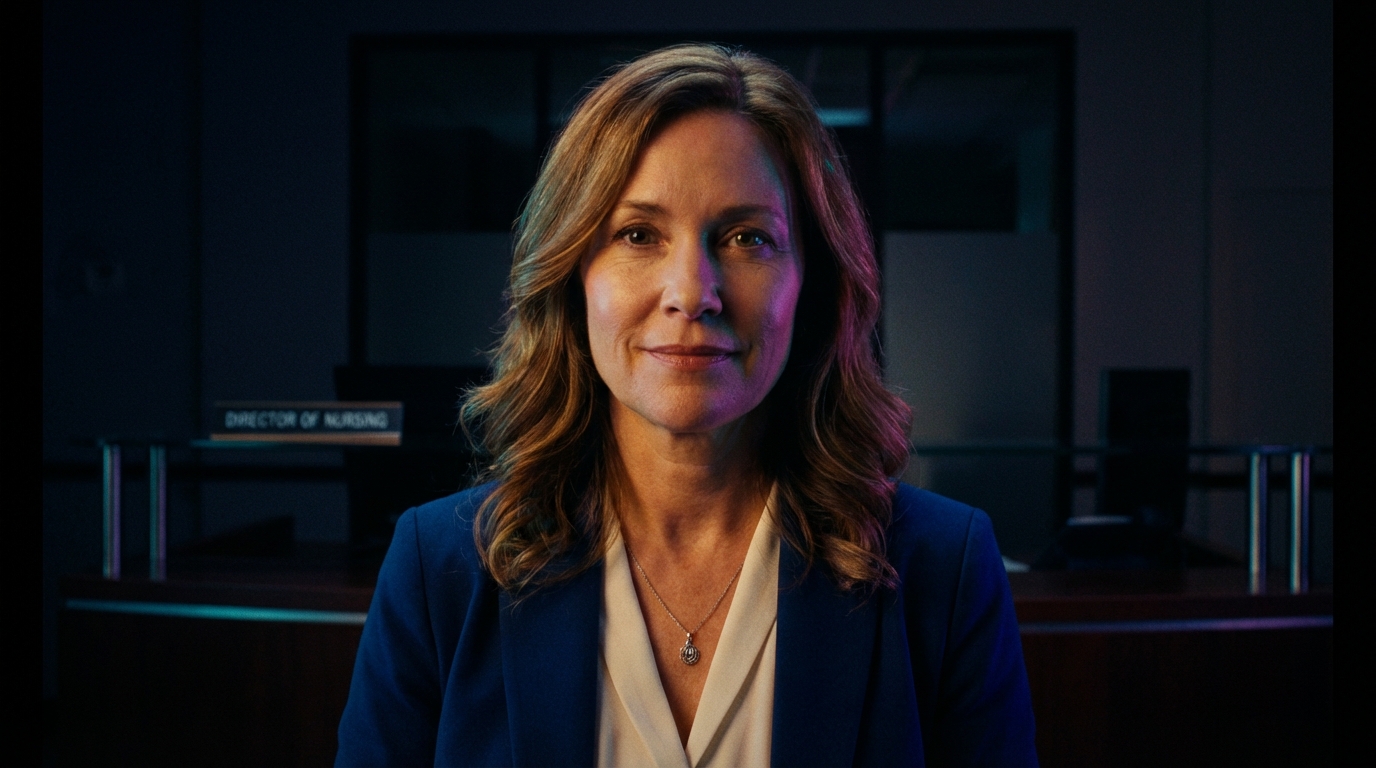
Jessica Anne Turner (née Jenkins) has built a distinguished nursing career at the Royal Adelaide Hospital, rising from graduate nurse to Director of Nursing through a combination of clinical competence, quiet leadership, and genuine care for both patients and staff. Yet her professional achievements exist alongside deep personal challenges: the strain of balancing demanding hospital shifts with family life, and the unresolved grief of her brother Karl's disappearance in 2018.
Early Life and Family
Jessica Anne Jenkins was born on 3 September 1978 at Queen Victoria Hospital in Adelaide, the second of three children in a household where discipline and ambition intertwined with genuine warmth. Her father, Thomas Michael Jenkins, worked as a mechanic at Adelaide Motors, a man whose calloused hands and methodical approach to solving problems left an indelible mark on his children. Her mother, Elizabeth Anne Jenkins née Thompson, was an educator who would rise to become Principal of Blackwood Primary School, embodying the value of service that would later define Jessica's own career.
The Jenkins children occupied distinct positions within the family constellation. Karl, born in November 1975, was the intense eldest son whose quiet intelligence and sense of duty would draw him toward police work. Jessica arrived nearly three years later, and from early childhood she seemed to instinctively understand the emotional currents flowing through her household. When Daniel was born in February 1982, completing the family, Jessica's position as the middle child and the only daughter solidified into something more defined: she became the family's emotional centre, the one who noticed when someone was struggling and knew how to bridge the gaps that sometimes opened between her parents and brothers.
This was not always a comfortable role. Growing up in the Panorama household meant absorbing both her father's exacting standards and her mother's high expectations, whilst also navigating the different temperaments of her siblings. Karl's emotional reserve could feel like rejection to their more expressive mother, whilst Daniel's creative wandering sometimes frustrated their practical father. Jessica learned early that keeping the peace required energy and attention that left less for herself.
Education
Jessica's schooling began at Blackwood Primary in 1983, where she experienced the peculiar duality of attending school whilst her mother served as principal. This arrangement brought both advantages and complications. Teachers treated her with careful neutrality that sometimes felt like distance, whilst classmates occasionally struggled to separate Jessica-the-student from Jessica-the-principal's-daughter. She learned to navigate these dynamics with the same diplomatic instincts she deployed at home, developing a capacity for reading social situations that would later prove invaluable in hospital settings.
She transferred to Unley High School in 1991, where distance from her mother's professional sphere allowed her to establish an identity more fully her own. Here she discovered an aptitude for human biology and a genuine interest in how bodies worked and sometimes failed. Her involvement in student leadership—peer mentoring, wellness committee representation—reflected not ambition so much as a natural gravitational pull toward situations where people needed support.
A Year 11 vocational programme that placed her alongside nurses at a local hospital crystallised something that had been forming for years. The combination of technical skill and human connection, the opportunity to help people during their most vulnerable moments, the tangible nature of the work—all of it resonated with her in ways that academic subjects alone never had.
University and Clinical Training
In January 1996, Jessica commenced her Bachelor of Nursing at the University of South Australia's City East Campus. The programme's location within Adelaide's health precinct offered immediate exposure to the hospital environment that would consume the next decades of her life.
She was a capable student rather than a brilliant one, earning strong marks through diligence and genuine engagement rather than effortless talent. What distinguished her from some of her peers was not academic performance but something harder to measure: an ability to remain present with patients who were frightened or in pain, a steadiness under pressure that supervisors noted during her clinical placements.
Her aged care rotation at Ashford Aged Care Facility in 1997 marked her first sustained encounter with mortality and decline. Working with elderly patients requiring chronic and palliative care, she learned that nursing meant more than clinical interventions—it meant bearing witness to experiences she could not fix, holding space for grief and fear alongside the practical tasks of wound care and medication administration.
The general medical placement at Modbury Hospital in 1998 introduced her to acute care's faster pace: cardiac complications, post-operative recoveries, the controlled urgency of deteriorating patients. Here she discovered that she could remain calm when others around her were not, that crisis brought focus rather than panic.
Throughout 1998 and 1999, she volunteered two afternoons weekly at Goodwood Community Health Centre, assisting with wound dressing clinics and immunisation sessions. This unpaid work—beyond her required placements—revealed something about her relationship with nursing that transcended career advancement. She simply wanted to help, and the helping itself was reward enough.
Her community health rotation through the Central Adelaide Local Health Network in 1999 exposed her to nursing outside institutional walls. Accompanying community nurses on home visits across Adelaide's diverse suburbs, she encountered the social determinants of health in ways that hospital settings often obscured: poverty, isolation, cultural barriers, the complexity of managing illness within the constraints of real lives.
Jessica graduated with distinction in November 2000, her academic record solid but not spectacular, her clinical evaluations consistently positive.
Early Career at Royal Adelaide Hospital
The Graduate Nurse Transition Programme at the Royal Adelaide Hospital began in early 2001, rotating Jessica through general medical, orthopaedics, and surgical recovery. These first years held the particular intensity of new nurses everywhere: the gap between classroom knowledge and ward reality, the exhaustion of shift work, the gradual accumulation of competence through repetition and occasional failure.
She made mistakes—every new nurse does. A medication error in her first year, caught before reaching the patient but sobering nonetheless. A failure to recognise early deterioration signs in a post-operative patient who required unexpected intensive care transfer. Each incident taught her something about the limits of her knowledge and the importance of asking for help, though the lessons came with sleepless nights and persistent self-doubt.
By 2002 she had secured a permanent position as a Registered Nurse in the Medical-Surgical Unit. The work was demanding—rotating shifts that disrupted sleep patterns and social connections, the physical toll of hours on her feet, the emotional weight of patients who suffered and sometimes died despite her best efforts. She developed coping mechanisms that were not always healthy: skipped meals during busy shifts, caffeine dependence, a tendency to prioritise work over her own needs.
Yet she also found genuine satisfaction in the work itself. The relationships with colleagues who understood the particular pressures of nursing, the moments of connection with patients and families, the tangible evidence that her presence made a difference—all of this sustained her through the harder days.
Marriage and Motherhood
Jessica met Michael Turner in 2005 at a mutual friend's wedding. He was a forensic accountant, a profession that seemed initially removed from her own but shared certain qualities: attention to detail, the pursuit of truth obscured by complexity, work that required both analytical rigour and human understanding. Their courtship proceeded with the measured pace of two people in their late twenties who had learned caution from watching others rush.
They married on 14 October 2006 in a garden ceremony in Stirling, attended by family and colleagues from both their professional worlds. The day was not without tension—Thomas Jenkins's discomfort with formal occasions, some friction between the extended families, the logistical challenges of coordinating 120 guests—but the ceremony itself felt genuine, a public commitment to partnership that would be tested in the years ahead.
The decision to have children involved difficult conversations about timing and careers. Jessica had just been promoted to Clinical Nurse in 2005, and the prospect of stepping back from work she loved carried real cost. Yet she also wanted children, had always imagined herself as a mother, and the biological realities of her late twenties pressed against professional ambitions.
Sophie Turner arrived on 20 May 2008, her birth coinciding with Jessica's transition into the Nurse Educator role. The timing was not coincidental—Jessica had strategically sought a position with more predictable hours, recognising that bedside nursing's rotating shifts would be difficult to reconcile with caring for an infant.
Liam followed on 14 January 2010, his arrival marking the beginning of years that blurred together in a haze of exhaustion and joy. Jessica returned to work after each maternity leave feeling torn in ways she had not anticipated: guilty when work kept her from her children, frustrated when childcare demands limited her professional engagement, aware that she was not fully present in either domain.
The logistics alone were punishing. Coordinating shift schedules with Michael's work hours, managing childcare arrangements that sometimes fell through, the endless negotiation of who would leave work when a child was sick. Jessica often worked nights and weekends to preserve daytime hours with Sophie and Liam, a strategy that maintained her physical presence but cost her sleep and contributed to a chronic low-grade exhaustion she learned to ignore.
Career Advancement
Her 2010 promotion to Nurse Unit Manager of the Medical-Surgical Unit brought new challenges. Managing forty-eight staff members required skills distinct from clinical nursing: navigating interpersonal conflicts, conducting performance reviews, mediating between physicians and nurses whose priorities sometimes clashed. She introduced quality improvement initiatives—a daily huddle protocol, a patient satisfaction tracker—that reflected her belief that better systems could reduce the chaos that burned out good nurses.
The 2013 appointment as Assistant Director of Nursing expanded her responsibilities further, involving her in hospital-wide policy development and putting her in regular contact with senior leadership. She found that she could hold her own in these settings, that the diplomatic instincts honed in childhood translated into professional effectiveness.
Her 2016 appointment as Director of Nursing placed her in charge of over 700 nursing staff, a position of genuine influence within South Australia's healthcare system. The role demanded strategic thinking about workforce planning, budget oversight, and crisis management—responsibilities that would be tested severely when the COVID-19 pandemic arrived in 2020.
The pandemic years stretched her in ways nothing previously had. Implementing PPE distribution protocols, managing staff wellbeing during unprecedented strain, coordinating digital triage workflows whilst her own family weathered lockdowns and school closures. She lost colleagues to burnout if not to the virus itself, and the accumulated losses—of staff, of normalcy, of the belief that things would simply continue as they had—left marks that did not heal when restrictions lifted.
The Disappearance
The phone call came on 7 August 2018, five days after Karl had vanished whilst pursuing a suspect in Tasmania. Detective Sergeant Alexander Stout, leading the investigation, wanted to speak with family members about Karl's recent activities and state of mind.
Jessica's interview revealed both her closeness to Karl and the distance that his work had created. Their last contact had been a brief text exchange—Karl sharing a photo from a hiking trip, inquiring about their parents' health. Nothing that suggested distress. Nothing that hinted at what was coming.
The weeks that followed were unlike anything Jessica had experienced. The uncertainty was worst—not knowing whether Karl was dead or alive, whether to grieve or to hope. She threw herself into supporting her parents, whose devastation expressed itself in different ways: her father's withdrawal into silence, her mother's desperate need to talk through every possible explanation. Daniel flew in from Melbourne, and the siblings who had drifted apart in adulthood found themselves bound together again by crisis.
The investigation produced no answers. Karl and another man—Luke Smith, the suspect he had been pursuing—had simply vanished from a shed on a property called Jeffries Manor. No bodies, no evidence, no explanation that made sense.
The weeks became months, and the not-knowing settled into something Jessica carried with her like a second weight alongside the demands of work and family. She resisted suggestions from her parents that a memorial service might offer closure, unable to accept Karl's death when no body had been found. The ambiguity was painful, but grieving someone who might still be alive felt like betrayal.
Her role as family mediator—always demanding—grew more complicated in the wake of Karl's disappearance. She fielded calls from her mother when Elizabeth's grief overwhelmed her, supported her father through moments of anger that had nowhere to go, and tried to maintain connection with Daniel, who had retreated further into his Melbourne life and visited Adelaide less and less frequently.







