Jeremiah Samuel Blaylock
Jeremiah Samuel Blaylock, born in York in 1780, became the architect whose vision transformed William Jeffries Sr.'s colonial ambitions into Tasmania's grandest estate. From Yorkshire carpenter's apprentice to master builder in Van Diemen's Land, his steady hands crafted Jeffries Manor whilst his loyalty sustained the dynasty through mysterious disappearance and uncertain succession. The manor stood as testament to his skill, yet its secrets remained forever beyond his rational understanding.
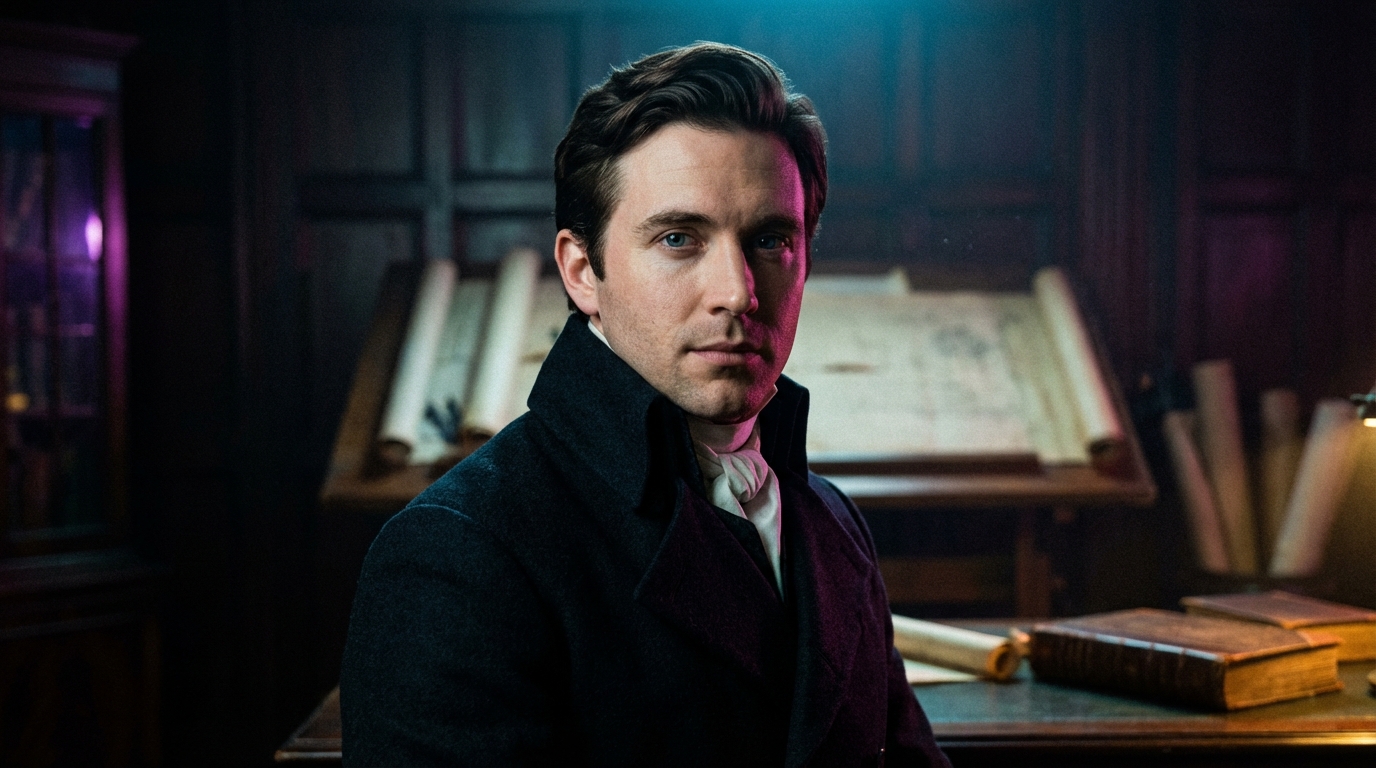
York Foundations
Jeremiah Samuel Blaylock drew his first breath on 15 March 1780 in York, a city where Roman walls still stood as testament to enduring craftsmanship and where the medieval Minster's towers dominated skylines with their declaration that humans could build structures worthy of eternity. The city's architectural heritage—its guildhalls, its ancient churches, its timber-framed buildings that had sheltered generations—created an environment where craftsmanship wasn't merely occupation but cultural identity passed from father to son through centuries of accumulated wisdom.
His father, Robert Blaylock, worked as a master carpenter whose reputation for precision and integrity extended throughout Yorkshire. Robert's workshop, located in a narrow street near the Shambles, served as both economic enterprise and educational institution where the art of transforming raw timber into structures of beauty and function was practised with almost religious dedication. Robert had learned his trade from his own father, who had learned from his father before that, creating a lineage of craftsmanship that stretched back through Yorkshire's history like an unbroken chain connecting present to past.
Eliza Blaylock née Fletcher, Jeremiah's mother, worked as a seamstress whose needlework graced the garments of York's more prosperous families. She possessed an eye for detail that complemented Robert's spatial understanding, and together they created a household where excellence wasn't aspirational ideal but daily expectation. Their home, a modest but well-maintained structure whose very construction bore Robert's signature attention to proper joinery and sound structure, accommodated themselves and their three children—Samuel, the eldest, Hannah, the middle child, and Jeremiah, the youngest.
Jeremiah's childhood unfolded in the rhythms of craftsman family life. He attended the local parish school until the age of twelve, learning sufficient reading, writing, and arithmetic to manage accounts and understand the mathematical principles underlying architectural design. Yet his real education occurred in Robert's workshop, where he absorbed knowledge that no school could provide—how wood behaved differently depending on grain and species, how joints could be fashioned to distribute weight whilst allowing for seasonal expansion and contraction, how structures could be designed to stand for generations rather than merely years.
Robert's approach to teaching combined demonstration with explanation, hands-on practice with theoretical understanding. He insisted that Jeremiah learn not merely how to execute specific techniques but why those techniques worked, what principles governed structural integrity, how the laws of physics and the properties of materials interacted to create buildings that served both practical needs and aesthetic aspirations. The apprenticeship that began at twelve and continued through Jeremiah's teen years transformed a boy with quick hands into a young man who understood that building was both art and science requiring mastery of both domains.
By 1800, at twenty years of age, Jeremiah had not merely mastered carpentry but had developed passionate interest in architecture itself—the broader discipline of designing entire structures rather than simply executing someone else's plans. He spent evenings sketching buildings he imagined, studying the architectural principles that made York's finest structures both beautiful and enduring, teaching himself through observation and reading what formal architectural education might have provided had such opportunities existed for craftsman's sons. His notebooks filled with drawings of imagined buildings, annotations about structural principles, calculations determining load-bearing requirements and material specifications.
York's architectural richness provided unparalleled education for someone hungry to learn. Jeremiah studied the Minster's Gothic vaulting, understanding how stone ribs distributed the massive weight of the roof whilst creating spaces of transcendent beauty. He examined the medieval guildhalls, noting how timber framing could create large open spaces without internal supporting walls. He observed how York's finest Georgian townhouses achieved elegant proportions through mathematical relationships between height, width, and depth. Every building became text to be read, problem to be solved, lesson to be absorbed.
The Colonial Gamble
In 1815, at thirty-five years of age, Jeremiah made a decision that would fundamentally redirect his life's trajectory. Stories of Van Diemen's Land—the distant colony where enterprising men might forge opportunities unavailable in England's rigid social hierarchies—had filtered into York through newspapers, returning sailors' accounts, and the general buzz of conversation surrounding Britain's expanding colonial empire. The colony required builders, architects, craftsmen capable of transforming wilderness into civilised settlement, and Jeremiah recognised that his skills would be valued there in ways that England's established architectural profession might never acknowledge a carpenter's son.
The decision required courage that his Yorkshire upbringing had instilled. Craftsmen understood risk—every major project carried possibility of failure, every structural design gambled reputation against the laws of physics. Jeremiah possessed confidence born from years of successful work, belief that his capabilities would create opportunities regardless of geography, and perhaps restlessness suggesting that York, for all its architectural splendour, offered limited scope for someone whose ambitions exceeded the constraints his birth imposed.
The voyage to Van Diemen's Land tested every assumption Jeremiah held about his own resilience. Months confined to cramped quarters, constant seasickness, storms that made even experienced sailors pray, the relentless tedium of days that blurred into weeks that accumulated into months of enforced idleness. He endured through stubborn determination, understanding he had committed to this course and that retreat was impossible even had he desired it. The ship arrived in Hobart Town in late 1815, depositing Jeremiah into a settlement suspended between frontier rawness and aspirational civilisation.
Hobart Town in 1815 presented curious mixture of sophistication and improvisation. Government buildings of surprising grandeur stood alongside structures barely qualifying as architecture. The settlement possessed social hierarchies modelled on English precedents yet remained fluid enough that capability could overcome birth in ways impossible in Yorkshire. And crucially for Jeremiah, the colony desperately needed skilled architects and builders capable of transforming colonial ambitions into physical reality.
His credentials—apprenticeship under a respected Yorkshire master carpenter, demonstrated architectural design capabilities, physical strength for overseeing construction—opened doors immediately. Within weeks of arrival, Jeremiah received multiple employment offers from established colonists seeking to build structures worthy of their growing wealth and social position. He accepted commission to design and construct a substantial merchant's townhouse in Hobart, a project that would establish his colonial reputation whilst teaching him how Tasmanian materials and conditions differed from Yorkshire's familiar parameters.
The Hobart project succeeded magnificently. Jeremiah designed a Georgian structure that honoured architectural principles he had absorbed in York whilst adapting to local sandstone's particular properties and Tasmania's climate. The construction, completed within projected timeline and budget, demonstrated his ability to manage convict labour, procure materials through uncertain supply chains, and maintain quality standards despite colonial limitations. Word of his capabilities spread through Hobart's surprisingly efficient social networks.
The Jeffries Commission
In early 1817, Jeremiah encountered William Jeffries Sr. under circumstances that would define the remainder of his professional life. William, recently returned from England with a new bride and ambitious plans to establish a grand estate near New Norfolk, sought an architect capable of translating his vision into reality. The meeting occurred at a social gathering hosted by one of Hobart's prominent families, where Jeremiah's recently completed townhouse was discussed with admiration.
William approached Jeremiah directly, bypassing the usual protocols that governed relationships between wealthy patrons and craftsmen. The directness appealed to Jeremiah—here was someone who valued capability over social niceties, who understood that great projects required partnerships built on mutual respect rather than merely hierarchical authority. Their conversation revealed immediate compatibility of vision. William described the estate he imagined—grand, elegant, substantial enough to announce his prominence in colonial society yet designed with restraint suggesting confidence rather than ostentation.
Jeremiah responded not with promises but with questions that demonstrated he understood the complexities such a project would entail. What architectural style did William envision? What specific functional requirements must the manor accommodate? What budget limitations would govern material selections and structural scope? How quickly did William need the project completed? The questions impressed William, suggesting he had found someone who approached architecture as problem-solving discipline requiring both creativity and pragmatism.
The commission William offered exceeded anything Jeremiah had previously undertaken. The Granton Estate, William's recently acquired property near New Norfolk, would host a substantial Georgian manor designed to serve as both family residence and symbol of the Jeffries family's rising prominence. The project would require managing convict labour, procuring materials from multiple sources, overseeing construction across many months, and maintaining quality standards whilst working within necessarily constrained colonial circumstances. The challenge excited Jeremiah—here was opportunity to create something genuinely significant, a structure that would endure for generations as testament to his architectural vision.
In March 1817, Jeremiah accompanied William to the Granton Estate for the site inspection that would begin their extraordinary partnership. The property's rolling hills, established gardens, and commanding views of the surrounding landscape provided ideal canvas for architectural ambitions. Jeremiah walked the land with surveyor's eye, noting drainage patterns, assessing soil stability, identifying the optimal location for the manor where natural features would complement architectural design. His sketches captured not merely topography but possibility—how a structure positioned just so could command views whilst sheltering from prevailing winds, how gardens could be integrated with architecture to create unified aesthetic experience.
Building the Dream
The groundbreaking occurred on 9 November 1817, a crisp spring morning when Jeremiah guided the first foundation stones into place with the same reverence his father had shown when beginning significant projects. Every foundation stone carried weight beyond its physical mass—together they would support not merely a building but William's ambitions, the Jeffries family's future, and Jeremiah's own professional legacy. The precision required in this foundational work set the standard for everything that would follow, establishing literal and metaphorical foundations upon which the entire structure would rise.
The construction phase tested Jeremiah's capabilities in ways York apprenticeship hadn't fully prepared him for. Managing convict labour required different skills than supervising free craftsmen—these men worked under compulsion rather than professional pride, required constant supervision to maintain quality standards, and brought to the project resentments that could manifest as sabotage or simple indifference. Yet Jeremiah developed approaches that balanced firmness with fairness, demanding excellence whilst acknowledging the human dignity that even convict status couldn't entirely erase.
William's departure for England in February 1818, necessitated by business requiring his personal attention, placed the entire project squarely on Jeremiah's shoulders. The trust implicit in this transfer of responsibility—William leaving his architectural dream in Jeremiah's hands—deepened their partnership beyond typical patron-craftsman relationships. Jeremiah worked with renewed dedication during William's absence, understanding that his loyalt
y was being tested and that the manor's successful completion would cement reputations for both men.
The months of William's absence saw the manor rise from foundations to substantial structure. Jeremiah's days began before dawn and extended past sunset, supervising every aspect of construction whilst maintaining the detailed records that would allow William to understand exactly how the project had progressed during his absence. The work consumed him entirely—there was no separation between professional and personal life when one was creating something of such significance. His own home near the site became merely place to sleep briefly between days spent at the construction site.
When William returned in September 1818 with Madelyn, his new bride, the manor stood nearly complete—elegant sandstone structure whose proportions announced both confidence and restraint, whose details revealed the care Jeremiah had invested in every element. The moment when William and Madelyn first saw their new home, when William's expression revealed profound satisfaction and Madelyn's eyes widened at the grandeur Jeremiah had created, provided compensation beyond monetary payment. He had transformed vision into reality, had honoured the trust William placed in him, had created something genuinely worthy of the ambitions that had brought them together.
The completion ceremony on 5 October 1818 marked both ending and beginning—the construction project was finished, yet Jeremiah's relationship with Jeffries Manor had only begun. William insisted that Jeremiah continue as the estate's foreman and manager, overseeing maintenance, managing staff, ensuring that the standards established during construction would be sustained indefinitely. The role provided Jeremiah with security, purpose, and ongoing connection to his masterwork, yet it also bound his fate inextricably to the Jeffries family and whatever mysteries would later envelope them.
The Faithful Steward
Through 1818, 1819, and 1820, Jeremiah managed Jeffries Manor's operations with the same dedication he had brought to its construction. He oversaw repairs and maintenance, managed the convict labour force assigned to the estate, coordinated with household staff to ensure smooth operations, and maintained the detailed records that allowed William to understand every aspect of the property's management. The work suited Jeremiah's temperament—systematic, demanding attention to detail, requiring both practical skills and administrative capabilities.
His relationship with William evolved through these years from formal patron-craftsman arrangement into something approaching genuine partnership. William valued Jeremiah's counsel on matters extending beyond mere property management, respecting the older man's judgment and integrity. Jeremiah, for his part, developed protective loyalty towards William and the family, viewing the manor not merely as his professional responsibility but as extension of himself—the structure he had created now housing people he genuinely cared about.
Yet shadows accumulated around William through 1821 in ways that troubled Jeremiah's orderly mind. Strange visitors arriving at odd hours, mysterious deliveries, William's increasingly erratic behaviour—all suggested problems Jeremiah couldn't identify yet couldn't ignore. His position gave him unusual insight into the estate's operations, yet also imposed discretion that prevented him from voicing concerns that might overstep appropriate boundaries between employee and employer.
The confrontation on 9 August 1821 shattered the equilibrium Jeremiah had maintained. William, furious about a missing shipment for Jeffries Industries, summoned Jeremiah to his study and accused him of negligence with unprecedented venom. Jeremiah, shocked by the unjust accusations and William's barely controlled rage, defended himself with measured composure whilst understanding that something fundamental had broken. The confrontation ended with William dismissing him, an outcome that devastated Jeremiah more than mere loss of employment could explain—it represented betrayal of the partnership he had believed transcended normal employer-employee relationships.
The Disappearance and Its Aftermath
When William vanished just days after their confrontation, Jeremiah found himself thrust into investigation that would define colonial Van Diemen's Land's most enduring mystery. As William's right-hand man and the person most intimately familiar with the manor's operations, Jeremiah became crucial witness whose testimony might illuminate what had occurred. Constable Broadmoor questioned him extensively about the missing shipment, the heated confrontation, William's behaviour in preceding weeks, and any observations that might explain the disappearance.
Jeremiah provided detailed accounts of everything he knew whilst struggling with guilt that the confrontation might somehow have precipitated whatever befell William. Had his defence against unjust accusations triggered something in William's fragile state? Had their argument been final stress that pushed William towards some desperate action? The questions haunted Jeremiah even as he recognised rationally that he bore no responsibility for William's choices.
Detective Inspector Lockhart, arriving to conduct more thorough investigation, recognised in Jeremiah a witness whose integrity and observational skills made his testimony particularly valuable. The detailed records Jeremiah had maintained provided Lockhart with documentary evidence of the estate's operations, financial transactions, and timeline of events that other witnesses couldn't match. Yet for all the information Jeremiah could provide, the central mystery remained impenetrable—where William had gone and why remained questions without answers.
In the chaos following William's disappearance, Jeremiah became unexpected pillar supporting the grieving household. Madelyn, suddenly thrust into managing both estate and business empire whilst caring for a toddler son, relied heavily on Jeremiah's steady presence and intimate knowledge of the property's operations. The ascension of young William Jr. as heir, with Madelyn serving as regent until his majority, created situation requiring Jeremiah's continued stewardship to maintain stability.
The Weight of Years
Through the 1830s and into the 1840s, Jeremiah continued his stewardship of Jeffries Manor whilst time etched its inevitable marks upon him. The physical demands of managing a substantial estate—inspecting buildings for necessary repairs, overseeing maintenance work, walking the extensive grounds—became progressively more taxing on a body that had endured decades of labour. His hands, which had guided every stone of the manor's construction, developed the arthritis common to men who had spent lifetimes working with tools and timber. Yet he refused to diminish his standards or delegate responsibilities he considered fundamentally his own.
Young William Jr., growing into manhood and gradually assuming control of the family enterprises, developed profound respect for the man who had served three generations of Jeffries with unwavering loyalty. The relationship between them evolved beyond employer and employee into something approaching the affection between grandfather and grandson. William Jr. often sought Jeremiah's counsel on matters extending beyond estate management, valuing the older man's wisdom born from decades of experience navigating colonial Tasmania's complexities.
Jeremiah witnessed the colony's transformation through these years from rough frontier settlement into established society with increasingly sophisticated infrastructure and institutions. The architectural profession he had helped establish in Van Diemen's Land now included younger men trained through more formal education than his own Yorkshire apprenticeship had provided. Yet his work remained the standard against which others were measured—Jeffries Manor stood as proof that craftsmanship and vision could create structures transcending mere functionality to achieve genuine architectural significance.
His family life provided solace as professional demands gradually eased. Robert, his son, had followed him into building trades, though with focus on carpentry rather than architecture, creating satisfying continuity with the family traditions Jeremiah had inherited from his own father. Eliza had married a prosperous merchant and presented Jeremiah with grandchildren who delighted in the elderly craftsman's patient attention and the wooden toys he carved with hands that remembered skills learned in York workshops half a century earlier.
Mary, his wife of more than three decades, remained his steady companion through the accumulated joys and sorrows their lives had contained. She understood better than anyone the complex feelings Jeremiah harboured about William Sr.'s disappearance—the guilt he still carried despite rational knowledge of his innocence, the frustration of questions without answers, the pride in his creation shadowed by mysteries it had witnessed. Their quiet evenings together, sitting before their modest hearth whilst Jeremiah sketched or carved and Mary sewed, provided refuge from uncertainties that never fully resolved.
The Gathering Twilight
By the early 1850s, Jeremiah had reached his seventieth year, an age few working men of his generation achieved. The arthritis that had plagued his hands for years had spread to other joints, making even simple movements painful. His eyesight, strained by decades of close work examining construction details and maintaining meticulous records, had deteriorated to the point where reading required strong light and considerable effort. Yet his mind remained sharp, his memory for details undiminished, his commitment to the manor's proper maintenance unwavering despite physical limitations.
William Jr., now fully mature and commanding both the estate and the broader Jeffries Industries with confidence, gently suggested that Jeremiah might consider retirement. The suggestion came with assurances that Jeremiah and Mary would be provided for generously, that their home would remain theirs for life, that Jeremiah's decades of service entitled him to rest with dignity and security. Yet Jeremiah resisted, understanding intellectually that his body could no longer sustain the work yet unable emotionally to sever the connection to the manor that had defined his adult life.
The compromise they reached allowed Jeremiah to remain nominally as estate manager whilst increasingly delegating actual duties to younger men he had trained in the standards he demanded. He made daily visits to the manor when weather and health permitted, walking slowly through spaces he had designed and built, running weathered hands along stonework he had positioned, noting with satisfaction that the structure he had created forty years earlier remained sound. These visits became pilgrimages to his own monument, acknowledgements that whatever else his life had contained, he had created something enduring.
In the spring of 1853, Jeremiah suffered the first of several episodes that his physician identified as heart strain. The attacks came without warning—sudden crushing pain in his chest, difficulty breathing, weakness that left him barely able to stand. He recovered from each episode, yet the pattern was clear to everyone except perhaps Jeremiah himself. His body, pushed hard through seven decades of labour, was finally surrendering despite his will's continued strength.
Mary watched her husband's decline with the helpless sorrow of someone who understood the inevitable yet wished desperately for more time. Their children visited frequently, bringing grandchildren whose energy and innocence provided Jeremiah with moments of joy amidst increasing physical distress. William Jr. came regularly, sitting with the old architect to discuss estate matters yet mostly simply to keep him company, acknowledging the debt the entire Jeffries family owed to this Yorkshire craftsman whose loyalty had sustained them through crisis and transformation.
The Final Threshold
On the morning of 23 November 1853, Jeremiah insisted despite Mary's protests on making his daily visit to Jeffries Manor. The autumn day had dawned clear and mild, and something in him seemed to recognise that opportunities for such journeys were rapidly diminishing. He walked slowly from his home towards the manor, stopping frequently to rest, greeting people who knew him and respected the elderly gentleman who had built so much of what made their community prosperous.
He reached the manor near mid-morning and stood for long moments simply gazing at the structure he had created. The honey-coloured sandstone glowed in the autumn sunlight, the elegant proportions he had designed remained as satisfying as when he had first sketched them, and the gardens that surrounded the building had matured into the landscape integration he had envisioned. Whatever mysteries the manor contained, whatever questions remained unanswered about William Sr.'s fate, Jeremiah had created something beautiful and enduring—that truth remained incontestable.
William Jr., alerted to Jeremiah's presence, came out to greet him. They stood together, patron and craftsman, regarding the building that represented their families' intertwined histories. Their conversation ranged across decades of shared experience—the construction years, the challenges overcome, the standards maintained, the pride they both felt in what had been preserved. It was farewell though neither explicitly acknowledged it as such, a final communion between men who had shaped each other's lives in ways extending beyond mere employment.
Jeremiah walked home slowly that afternoon as shadows lengthened across the Tasmanian landscape. He told Mary about his visit, about the satisfaction of seeing the manor standing as sound as the day its construction had completed, about his conversation with William Jr. She listened with the understanding that comes from sharing someone's life for decades, knowing without words that her husband had made his peace with whatever came next.
That evening, sitting in his favourite chair with the notebook containing decades of architectural sketches on his lap, Jeremiah suffered a massive heart attack. Mary, hearing his sudden gasp, rushed to him, but the end came quickly—one moment conscious, the next slipping beyond reach despite her desperate calls. The physician who arrived within the hour could only confirm what Mary already knew. Jeremiah Samuel Blaylock, aged seventy-three, had died peacefully, his final day spent doing what had always brought him deepest satisfaction—visiting the masterwork his hands had created.
The Legacy Endures
The funeral drew remarkable attendance for someone who had never held official position beyond estate manager. William Jr. and his family came, of course, but so did dozens of others whose lives Jeremiah had touched through his decades in Tasmania. Fellow craftsmen honoured one of their profession's finest exemplars. People who lived in buildings Jeremiah had designed came to acknowledge the man whose vision had shaped their daily lives. Former convicts he had supervised during the manor's construction travelled from across the colony to pay respects to someone who had treated them with firm fairness when others had shown only cruelty.
William Jr. delivered the eulogy in the small church near the estate, his words capturing what Jeremiah had meant not merely to the Jeffries family but to Van Diemen's Land itself. He spoke of integrity and loyalty, of craftsmanship and dedication, of the immigrant who had gambled everything on colonial opportunities and had succeeded through capability and character rather than mere fortune. He announced that Jeremiah would be buried in the small family cemetery on the Jeffries Manor grounds—an unprecedented honour for someone who had been, technically, an employee, yet entirely appropriate for someone who had been, practically, family.
The headstone William Jr. commissioned bore simple inscription that captured essential truths: "Jeremiah Samuel Blaylock, 1780-1853, Architect of Jeffries Manor, Builder of Dreams, Guardian of Legacy." The words acknowledged both his professional achievement and his personal character, honouring the Yorkshire craftsman who had created something enduring in Tasmania's colonial landscape.
His death removed from the world the last person who had known William Jeffries Sr. intimately, who had witnessed the patron's transformation from ambitious entrepreneur to troubled soul plagued by mysteries Jeremiah never fully comprehended. Whatever secrets William had harboured, whatever had truly happened that August night in 1821, remained locked away beyond even Jeremiah's considerable knowledge. The faithful steward had kept his counsel whilst living and carried those partial truths into death, leaving behind only his masterwork as testament to what he had achieved and what he had preserved.
Mary survived her husband by seven years, living in the home near the manor that had been theirs for decades, supported generously by the Jeffries family's gratitude. She maintained Jeremiah's architectural sketches and the detailed journals he had kept documenting the manor's construction and subsequent operations, understanding that these records held historical value extending beyond personal memory. When she died in 1860, these documents passed to Robert, who eventually donated them to colonial archives where they remain invaluable resources for understanding Van Diemen's Land's architectural development.







