Jasper William Hawkins
Born in Glenorchy on 12 March 1992, Jasper William Hawkins built a policing career on the foundation of athletic achievement, community connection, and an almost instinctive desire to protect others. His return to his hometown as a constable in 2016 represented the fulfilment of childhood aspiration—yet the events of 2 August 2018 would test that identity to its limits. The fatal shooting of Kate Gibbons during a chaotic response to a break-in left psychological scars that no commendation could heal, forcing Hawkins to reconcile the officer he had trained to become with the man who had taken a life.
Early Life and the Weight of the Middle
Jasper William Hawkins was born on 12 March 1992 at the Royal Hobart Hospital, the second child and first son of William Robert Hawkins and Eleanor May Hawkins (née Thornton). The family resided in Glenorchy, where William operated a modest but respected automotive repair business on Main Road, his reputation for honest work and fair pricing making him a fixture of the local commercial community. Eleanor taught Year 3 at Glenorchy Primary School, her gentle manner and patience with struggling readers earning the quiet gratitude of generations of families.
The Hawkins household occupied a weatherboard cottage on a quiet street backing onto bushland—a location that would shape Jasper's childhood in ways both visible and subtle. His older sister Lydia, born in 1989, was the academic achiever, her bookish intensity and sharp intellect marking her early as university-bound. His younger brother Oliver, arriving in 1995, would eventually inherit their father's mechanical aptitude and join the family business. Jasper, positioned between these more clearly defined siblings, spent his formative years searching for his own identity within the family constellation.
Middle children often develop particular sensitivities to fairness and conflict resolution—skills honed through the constant negotiation of sibling dynamics. Jasper was no exception. He became the peacemaker, the one who smoothed tensions between Lydia's intellectual condescension and Oliver's demands for attention, the child who noticed when someone felt excluded and worked to remedy it. These instincts, valuable as they were, also masked a deeper uncertainty about his own place and purpose that would persist into adulthood.
The bushland behind the family home became Jasper's domain. He organised elaborate games among neighbourhood children, invariably casting himself as the protector—the sheriff, the rescue worker, the hero who arrived when others were in danger. Adults who observed these games noted his natural authority and his genuine concern when playmates were hurt or upset. William Hawkins, watching his son coordinate rescue missions for imaginary victims, remarked to Eleanor that Jasper seemed to need to save people in ways that went beyond ordinary childhood play.
Yet childhood was not without its shadows. William's business, though respected, operated on thin margins that left the family perpetually one bad month from genuine hardship. Eleanor's teaching salary provided stability, but the anxiety of financial precariousness permeated the household in ways children absorb without fully understanding. Jasper learned early that security was something to be earned and maintained through constant effort—a lesson that would drive his work ethic but also fuel an underlying fear of failure that success never fully quieted.
Secondary Education and Athletic Identity
Glenorchy High School, where Jasper enrolled in 2004, provided the arena for his emerging identity as an athlete and leader. The school's strong rugby programme offered exactly the combination of physical challenge and team dynamics that suited his temperament. By Year 8, he had secured a place on the first XV; by Year 10, he wore the captain's armband, his ability to motivate teammates and remain composed under pressure distinguishing him from players of equal or greater physical talent.
Rugby became more than sport—it became the framework through which Jasper understood himself and his value to others. The game rewarded precisely the qualities he possessed: physical courage, tactical awareness, loyalty to teammates, and the willingness to absorb punishment for collective benefit. His performances on the field earned the recognition that academic achievement provided for Lydia, giving him a domain where his worth was unambiguous.
Yet this athletic identity carried hidden costs. Jasper pushed through injuries that should have received rest, played matches when his body screamed for recovery, and defined his self-worth through outcomes he could not always control. A shoulder injury in Year 11, aggravated by his refusal to sit out crucial games, would trouble him into adulthood—a physical reminder of the price extracted by his need to prove himself indispensable.
The debate club, which he joined at a teacher's suggestion, revealed capabilities beyond the physical. His arguments were not the most sophisticated, but his delivery—calm, measured, confident—proved remarkably effective. He learned to think on his feet, to respond to challenges without becoming defensive, to maintain composure when opponents pressed. These skills, developed in the relatively low-stakes environment of interschool competition, would prove essential when the stakes became life and death.
Academically, Jasper performed adequately without distinction. He was not unintelligent, but his interests lay elsewhere, and the structured demands of classroom learning failed to engage him as fully as physical and interpersonal challenges did. Teachers noted a student who worked hard, participated constructively, and achieved results commensurate with his effort—but who seemed to be waiting for life to truly begin rather than fully inhabiting his school years.
His relationship with Phoebe Roberts, which commenced in Year 11, provided emotional grounding during these formative years. Phoebe, whose own ambitions centred on nursing, understood the drive toward service that animated Jasper's emerging career aspirations. Their connection, built on shared values and genuine affection, would endure the separations of different educational pathways and the demands of professional training.
Vocational Training and the Path to Policing
The decision to pursue police studies at TasTAFE rather than university reflected both practical consideration and self-knowledge. Jasper understood that his strengths lay in applied rather than abstract domains, that he learned best through doing rather than studying. The Certificate III in Police Studies, commencing in 2008, offered the hands-on preparation that suited his learning style whilst providing a clear pathway toward his chosen profession.
The TasTAFE programme introduced Jasper to the theoretical foundations of law enforcement—criminal justice principles, community engagement strategies, conflict resolution techniques—whilst providing practical exercises that tested application of these concepts. His instructors consistently noted his natural aptitude for the interpersonal dimensions of police work: he built rapport easily, de-escalated tensions through calm presence, and demonstrated genuine concern for the wellbeing of "victims" in training scenarios.
Yet the programme also revealed limitations that honest assessment required acknowledging. Jasper's written work, whilst adequate, lacked the analytical depth that some peers demonstrated. His approach to complex scenarios sometimes favoured action over reflection, decisiveness over deliberation. These tendencies, manageable in training environments, would require ongoing attention throughout his career.
His completion of the programme in 2010 positioned him for entry to the Tasmania Police Academy—the final gateway between aspiration and service.
Tasmania Police Academy: Excellence and Its Shadows
The Diploma of Policing programme at the Rokeby academy represented the most demanding period of Jasper's young life. The comprehensive curriculum tested physical endurance, intellectual capacity, ethical reasoning, and psychological resilience in ways that revealed each recruit's true character. For Jasper, the academy was both validation and crucible—confirmation that he belonged in this profession, yet also exposure to dimensions of police work that childhood games of cops and robbers had never anticipated.
He excelled in the physical components, his rugby-conditioned body adapting readily to the demands of tactical training, pursuit exercises, and defensive techniques. The firing range revealed natural marksmanship that instructors attributed to the same hand-eye coordination that had made him an effective rugby player. His performance in simulated scenarios demonstrated the calm under pressure that academy assessments specifically sought to identify.
The tactical response training that earned him particular commendation involved scenarios designed to test split-second decision-making when lives hung in the balance. Jasper performed well—perhaps too well, in retrospect. The confidence he developed in his ability to make correct choices under pressure would be tested in ways no simulation could replicate.
His graduation with distinction in 2012 represented genuine achievement, yet the ceremony's celebratory atmosphere obscured questions that would only emerge later. The academy had taught him when to use force, how to use it effectively, and the legal frameworks governing its application. What it could not fully prepare him for was the psychological aftermath of actually taking a life—the weight that no training scenario could simulate because training scenarios, by definition, reset when they conclude.
Probationary Service and Early Career
The twelve-month probationary period at Hobart Police Station, commencing in 2012, introduced Jasper to the realities of operational policing. The Southern Division's central facility handled the full spectrum of urban incidents: traffic management around the waterfront and CBD, property crimes across inner suburbs, domestic disputes that revealed the private sufferings behind respectable facades, and the mental health crises that increasingly dominated police callouts.
His supervisors praised his quick adaptation to operational demands, his composure during high-stress incidents, and his genuine rapport with community members. The exemplary conduct noted in his performance reviews reflected a young officer determined to meet the standards his training had established. His promotion to Constable in 2014 confirmed that initial promise had translated into sustained performance.
The anti-drug campaign that occupied much of his work during 2014 and 2015 demonstrated capabilities beyond routine patrol duties. Working alongside community organisations, schools, and health services, Jasper helped develop awareness programmes that addressed substance abuse through education rather than enforcement alone. This work revealed an officer who understood that effective policing extended beyond responding to incidents to preventing them through community connection.
Yet the Hobart years also exposed Jasper to aspects of police work that troubled him in ways he rarely articulated. The domestic violence calls that recurred at the same addresses, the mental health crises that police were ill-equipped to address, the grinding poverty that underlay so much criminal behaviour—these realities challenged the simpler narratives of his childhood imagination. He learned that "protecting people" often meant bearing witness to suffering that no intervention could fully remedy.
Return to Glenorchy
The 2016 transfer to Glenorchy Police Station brought Jasper back to his hometown—a return freighted with both promise and complication. He would patrol streets where he had once played, respond to calls from neighbourhoods where family friends still lived, and represent his profession to a community that had known him since childhood. This local knowledge was an asset, but it also meant that failures would be witnessed by people whose opinions mattered to him personally.
The station's institutional character suited his temperament. Glenorchy's blend of residential, commercial, and industrial areas generated diverse operational demands that prevented the monotony some officers experienced in more homogeneous postings. The community engagement programmes he joined allowed expression of his genuine belief in relationship-building as foundational to effective policing. The colleagues he worked alongside—Sergeant David Mitchell's experienced steadiness, Senior Constable Emma Thompson's warmth, the newer officers like Matilda Ferguson whose enthusiasm reminded him of his own early years—created a professional environment where he felt valued.
His marriage to Phoebe in 2015 and the birth of their daughter Amelia in 2017 added dimensions of personal fulfilment that his professional life, however satisfying, could not provide. The modest home they purchased in Glenorchy's suburbs represented stability and continuity—a life built in the community where he had grown up, surrounded by extended family and longtime friends.
Yet the demands of police work strained even strong marriages in ways that outsiders rarely witnessed. Shift work disrupted family routines, cancelled plans, and created absences during moments that could not be recreated. The emotional residue of difficult calls—the domestic violence he witnessed, the deaths he attended, the human suffering that accumulated shift by shift—was difficult to leave at the station door. Phoebe, whose own nursing work exposed her to trauma, understood these pressures better than most partners could, but understanding did not eliminate their impact.
Physical Presence and Personal Character
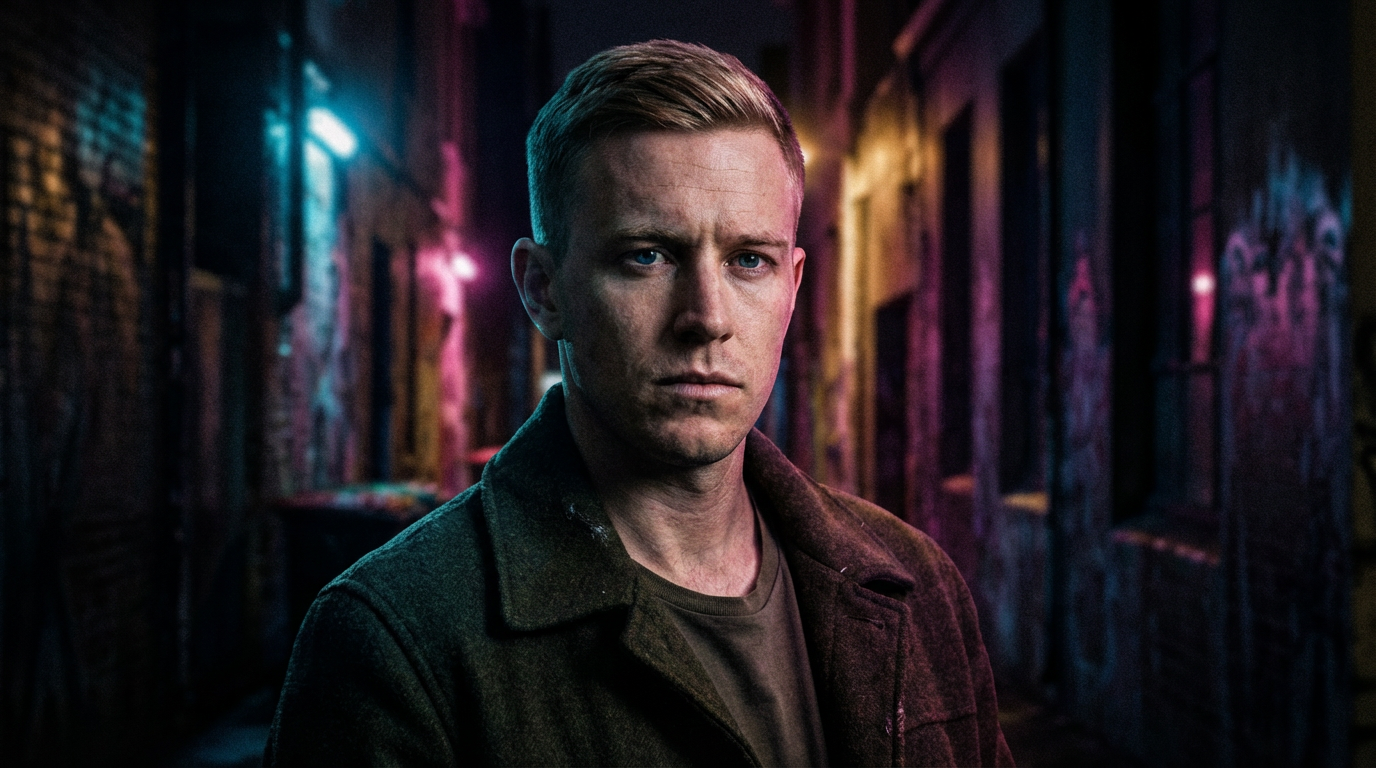
At six feet tall with a muscular build maintained through regular training and the physical demands of operational policing, Jasper Hawkins projected the authority his role required. His sandy blonde hair, kept short in the practical style that police work demanded, framed features that could shift rapidly between approachable warmth and stern command. Green eyes that colleagues described as kind could harden when circumstances required, though those who knew him well recognised the effort this transformation required.
His square jaw and broad shoulders—the physique of the rugby player he had been—gave him a commanding presence that proved useful in confrontational situations. Yet those who observed him closely noted that his preferred approach was de-escalation rather than dominance, connection rather than control. The warm smile that made him popular with community members was genuine rather than tactical, reflecting actual pleasure in positive interactions rather than mere professional technique.
Beneath this capable exterior, however, lay complexities that Jasper rarely revealed. The middle-child uncertainty about his worth persisted despite professional success, manifesting as a need for affirmation that could shade into excessive concern with others' opinions. His identification with the protector role, whilst genuine, sometimes prevented him from acknowledging his own vulnerabilities or seeking support when he needed it. The shoulder that still ached on cold mornings served as physical reminder of his tendency to push through pain rather than address it.
His interests outside work—the guitar playing that provided creative outlet, the historical fiction that offered escape into other times and places, the junior rugby coaching that allowed him to mentor the next generation—represented attempts to maintain identity beyond his professional role. The camping trips with Phoebe and, later, with Amelia provided respite from the urban environments where his professional duties concentrated, the Tasmanian wilderness offering perspectives that suburban policing could not provide.
The Evening of 2 August 2018
The call that came through on the evening of 2 August 2018 carried no indication of the horror it would reveal. A break-in at a residence on Main Road, Berriedale—routine property crime requiring standard response. Jasper and his patrol partner, Constable Matilda Ferguson, acknowledged the dispatch and proceeded to the location, their approach governed by protocols they had rehearsed countless times.
Kate Gibbons, parked outside the residence, had reported seeing two women force entry. She remained on the line with emergency services as the officers arrived, her voice taut with anxiety that seemed excessive for a witness to property crime. The women she had observed—Jenny Triffett and Sharon Pafistis, though their identities would only emerge later—had already fled the scene by the time police reached the house.
What awaited inside defied any preparation. The stench of decomposition announced death before visual confirmation arrived. Blood smeared across walls and floors spoke of violence that had occurred within these rooms. A wounded man lay amid the chaos, barely conscious. And concealed within the property were the remains of Cody Jennings—a man who had disappeared more than two decades earlier.
The discovery transformed a property crime response into something unprecedented in Jasper's experience. Training kicked in—secure the scene, call for backup, preserve evidence—but training could not process the sensory assault of what confronted them. The acrid smell of rotting flesh, the sight of blood in quantities that indicated violence beyond ordinary comprehension, the wounded man's incoherent mutterings—these overwhelmed the structured responses that academy scenarios had instilled.
The Fatal Shot
The situation escalated with devastating speed when Kate Gibbons entered the residence. Driven by maternal desperation—she was searching for her son Joel, whom she believed connected to the property—she had abandoned her vehicle against the emergency operator's instructions. The phone she left on the kitchen counter continued recording as she explored the house, finding a knife for protection against dangers she could not have anticipated.
Kate appeared at the top of the stairs, a blood-smeared knife clutched in her trembling hand, her face contorted by terror and hysteria. She had discovered the decomposed remains, the blood-soaked rooms, and her mind had fractured under the weight of what she witnessed.
The officers' commands—drop the weapon, show your hands, get on the ground—went unheard or unprocessed. Kate advanced toward them, the knife still raised, her eyes unfocused, her movements erratic. She was not attacking; she was fleeing, seeking escape from the nightmare behind her. But in the dim light, with blood already decorating the scene and an armed figure approaching, the distinction was impossible to make.
The decision that followed would define Jasper Hawkins for the rest of his life. In the fraction of a second that separated perception from action, he made the choice his training had prepared him to make. The gunshot—deafening in the enclosed space—ended Kate Gibbons' life. She collapsed, the knife falling from fingers that would never grip anything again.
Aftermath and Its Weight
The immediate aftermath unfolded according to procedure: secure the scene, summon medical assistance, preserve evidence, await investigative oversight. The protocols existed precisely for moments like this, providing structure when shock threatened to overwhelm function. Jasper performed these duties with the mechanical competence that training had instilled, his body continuing to operate whilst his mind struggled to process what had occurred.
The investigation that followed cleared him of wrongdoing. Kate Gibbons had been armed, had advanced toward officers despite commands to stop, and had created a situation where the use of lethal force fell within departmental guidelines. The shooting was ruled justified, the protocols had been followed, and officially, Constable Jasper Hawkins had done his job correctly.
But official clearance addressed only the legal dimension of what had occurred. The psychological reality was far more complex. Jasper had taken a human life—a mother searching for her son, a woman whose only crime was entering a horror scene that had shattered her capacity for rational response. The fact that he could not have known her intentions, that his decision was reasonable given available information, that any trained officer might have made the same choice—none of this erased the fundamental truth that Kate Gibbons was dead because he had pulled the trigger.
The mandatory counselling that followed the incident provided professional support, but Jasper found it difficult to articulate the dimensions of his struggle. How could he explain that the shooting haunted him not because he believed it wrong but because he understood it was right? That the protocols he had followed, the training he had absorbed, the decision he had made—all had functioned exactly as designed, and a woman was nonetheless dead? The system had worked perfectly, and the outcome was still catastrophic.
The Changed Man
The Jasper Hawkins who emerged from the Berriedale incident was not the same officer who had responded to the initial call. Outwardly, he continued to perform his duties with the professionalism his supervisors expected. He attended shifts, responded to calls, engaged with community programmes, and maintained the warm demeanour that had always characterised his public interactions. The commendations he received for his handling of the incident acknowledged his adherence to protocol under extreme pressure.
Inwardly, however, something had shifted. The confident certainty that had marked his earlier career—the belief that correct training and good intentions would produce good outcomes—had fractured against the reality of Kate Gibbons' death. He found himself second-guessing decisions that previously would have seemed straightforward, hesitating in moments that required immediate action, and lying awake at night replaying scenarios that ended differently only in imagination.
His relationship with Phoebe absorbed some of this strain. She recognised the changes in her husband—the distance that had entered his gaze, the nightmares that interrupted his sleep, the way he held Amelia with an intensity that seemed to border on desperation. Her nursing background gave her vocabulary for what he was experiencing, but vocabulary did not provide solutions. They navigated this difficult period together, though "together" sometimes meant simply being present for each other's struggles rather than resolving them.
The birth of their son Henry in 2020 brought moments of genuine joy that temporarily pierced the shadows. Jasper threw himself into fatherhood with characteristic dedication, coaching junior rugby, attending school events, creating the stable family environment he wanted his children to experience. These efforts were genuine rather than performative—he loved his family deeply and wanted to be present for them. But presence was sometimes performance in itself, the effort required to appear whole when he felt fractured.
The Officer Who Remains
Jasper Hawkins continues to serve with Glenorchy Police Station, his career trajectory outwardly successful despite the internal struggles that persist. The 2019 Community Service Award recognised his contributions to local safety initiatives—acknowledgment that his professional value remained undiminished even as his personal equilibrium had been disrupted. His work mentoring new recruits draws on both his operational experience and his understanding of the psychological demands that police work imposes.
Colleagues who work alongside him observe an officer who remains effective, committed, and genuinely concerned with community wellbeing. His handling of routine incidents demonstrates the skills that academy training developed and operational experience refined. The warm smile that made him popular with residents still appears regularly, the approachable demeanour that facilitated community connection still characterises his public interactions.
Yet those who know him well—Phoebe, his closest colleagues, perhaps his sister Lydia, who has always possessed insight into her brother's hidden depths—recognise the weight he carries. The guitar he once played at community gatherings now mostly sits in its case. The camping trips that provided respite have become less frequent as the demands of family and the exhaustion of emotional management consume available energy. The historical fiction that offered escape sometimes lies unread on his bedside table whilst he stares at the ceiling in the small hours.
The question that haunts Jasper Hawkins is not whether he made the right decision on 2 August 2018—the protocols, the training, the investigation all confirm that he did. The question is how to continue being the person he believed himself to be when the right decision resulted in an outcome he can never undo. The boy who played cops and robbers in Glenorchy's bushland, always casting himself as the hero who saved people, must now reconcile that childhood identity with the man who killed Kate Gibbons in the line of duty.
It is a reconciliation that remains incomplete, perhaps permanently so. Jasper Hawkins serves his community, loves his family, and performs his duties with professionalism that earns respect from supervisors and colleagues. But somewhere within the capable officer and devoted father, a question persists that no commendation can answer and no protocol can resolve: how does a protector live with having taken a life he was trying to protect?







