
Jasmine Anne Collins (née Dallow)
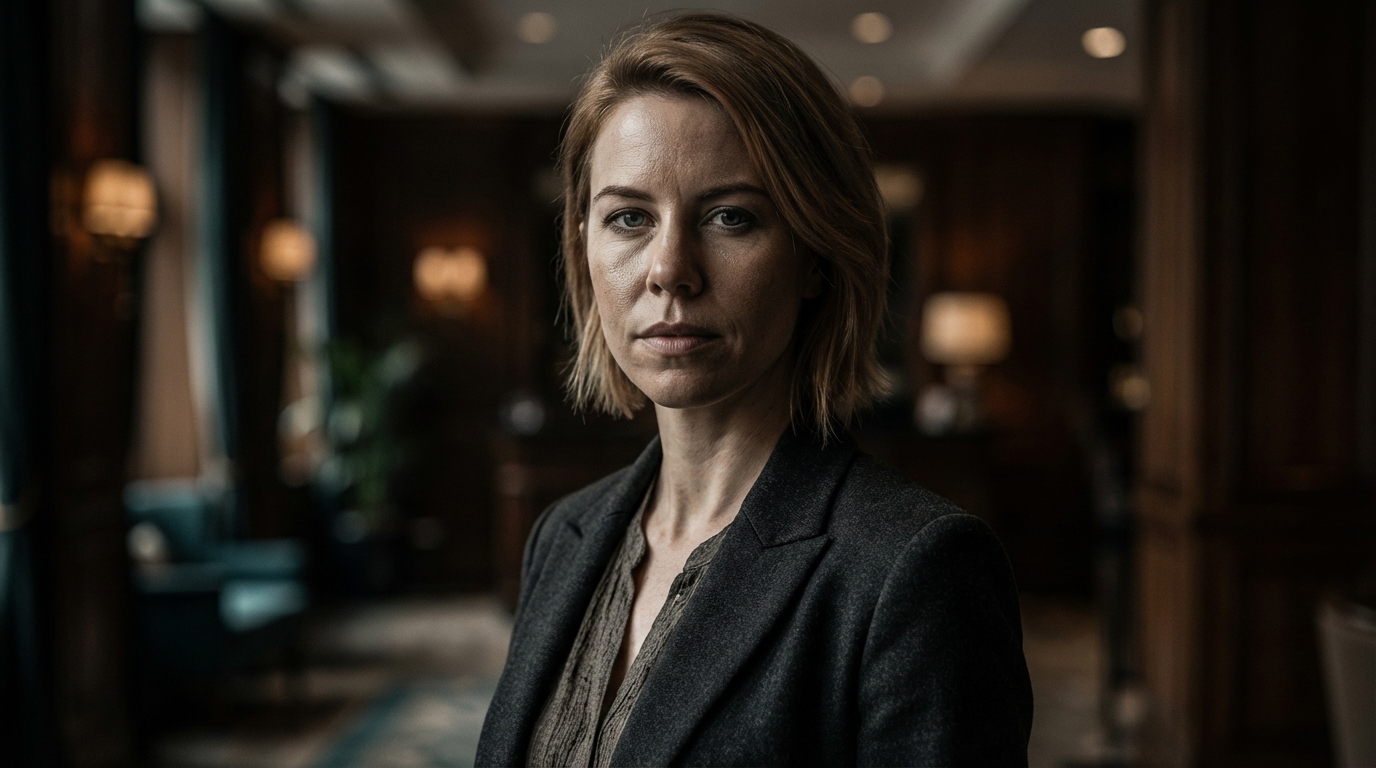
Jasmine Anne Collins (née Dallow), born on 27 August 1974 in Broken Hill, New South Wales, transformed personal tragedy into entrepreneurial triumph. After her sister Violet's 1988 murder shattered her childhood, Jasmine channelled grief into academic excellence and business vision, co-founding Collins Boutique Hotels with her husband Bradley. Through the Violet Fund and her hospitality empire, she honours memory with purpose, building sanctuaries for others whilst quietly pursuing justice for her sister.
Birth and the Mining Town Foundation
Jasmine Anne Dallow was born on 27 August 1974 at Broken Hill District Hospital in New South Wales, arriving into a working-class family defined by resilience and quiet strength. Her father Robert Thomas Dallow worked as a miner in the underground operations that defined the town's economy, whilst her mother Evelyn Margaret Dallow (née Ashcroft) ran a successful home-based sewing business, transforming fabric into beauty through skilled hands. Two years earlier, the Dallows had welcomed their first daughter Violet, whose spirited personality would shape Jasmine's childhood in ways both wonderful and ultimately devastating.
The Broken Hill into which Jasmine was born existed as an island of industry in the vast red expanse of the Outback. The town's economy depended entirely on mineral extraction, its social fabric woven from the shared experiences of mining families who understood both prosperity and danger as inevitable companions. The landscape surrounding the town stretched endlessly—red earth meeting blue sky, mullock heaps marking where men descended into darkness, and eucalyptus trees twisted by wind into shapes that suggested endurance rather than submission.
The Dallow Residence, a weatherboard house on the town's outskirts, became Jasmine's first world. Unlike her adventurous sister Violet, whose energy seemed to demand constant motion, Jasmine observed quietly, absorbing the rhythms of family life with contemplative attention. She watched her mother's sewing machine hum through afternoon hours, learned her father's schedule by the dust on his clothes and the exhaustion in his movements, and followed Violet through childhood with a mixture of admiration and caution that would characterise their relationship.
Childhood in Violet's Shadow
Growing up as the younger sister to Violet meant existing in the orbit of a force of nature. Violet, two years older, possessed the kind of fierce independence and adventurous spirit that made her simultaneously magnetic and overwhelming. She filled their modest home with stories, imagination, and an infectious curiosity about the world beyond Broken Hill's red dust. For young Jasmine, Violet was mentor, protector, confidante, and the lens through which she first understood possibility.
Their childhood unfolded in the particular way that mining town children experienced the world. Mornings began with breakfast conversations where Violet's grand dreams collided with Jasmine's more grounded observations, their mother Evelyn mediating with gentle wisdom whilst preparing meals. School days at Broken Hill Primary School saw Jasmine excel in creative writing and art, though always aware of Violet's reputation preceding her. Afternoons involved exploring the Outback landscapes that surrounded their home, with Violet leading expeditions whilst Jasmine followed, observing the environment with an artist's eye for detail.
The sisters shared a particular bond built on complementary temperaments. Where Violet challenged boundaries, Jasmine studied them. Where Violet acted on impulse, Jasmine calculated consequences. Yet this difference created harmony rather than conflict—Violet needed someone to witness and remember her adventures, whilst Jasmine needed someone to pull her beyond comfort into experience. Their mother's sewing room became a sanctuary where both girls absorbed lessons about patience, creativity, and the satisfaction of transforming raw materials into something beautiful.
The Shattering: Violet's Murder
On 30 September 1988, fourteen-year-old Jasmine's world ended when Violet disappeared during a Girl Guides camping trip near Silverton. The initial confusion—surely Violet had just wandered off exploring, she would return any moment—gave way to mounting dread as hours stretched into days. Jasmine watched her parents transform before her eyes, her father's steady competence fracturing into desperate searching, her mother's creative warmth freezing into paralysed grief.
The weeks of Violet's absence created a suspended reality where normal life ceased whilst the family existed in a liminal space between hope and horror. Jasmine attended school mechanically, unable to focus on lessons when every moment brought the possibility of news. She slept in Violet's room, surrounded by her sister's belongings, trying to maintain connection with someone who might already be beyond reach. The town whispered and watched, their small community united in shared anguish yet unable to provide the only thing that mattered—Violet's safe return.
When Violet's body was discovered in late October, strangled and abandoned, the confirmation of murder transformed suspended grief into permanent wound. For Jasmine, the loss was incomprehensible. The sister who had filled her life with stories and adventures, who had shared secrets and dreams, who had fastened a locket around Jasmine's neck that final morning as a promise of return—that sister was gone, stolen by violence that made no sense and offered no resolution.
The investigation linked Violet's death to the Silverton Strangler, a serial killer whose identity remained unknown. This failure of justice compounded the family's devastation. There would be no trial, no accountability, no sense that the world had responded appropriately to the theft of Violet's future. Jasmine learned at fourteen that life could be unutterably unfair, that some losses could never be recovered, and that carrying on despite unbearable pain was not optional but necessary.
Exile to Adelaide: St. Catherine's School
In January 1989, Jasmine's grief-stricken parents made the painful decision to send her to St. Catherine's School for Girls, a private boarding school in Adelaide. The choice was motivated by desperate love—a need to remove their surviving daughter from the constant media attention, the whispers, and the geographical proximity to trauma. For Jasmine, the relocation felt like multiple losses compounding: not only had she lost Violet, but now she was losing Broken Hill, her parents' daily presence, and the familiar landscapes that held every memory of her sister.
St. Catherine's represented a complete disruption of identity. The girl who had grown up in working-class mining country, whose childhood involved Outback exploration and community potlucks, now found herself amongst Adelaide's more privileged students in an environment of structured refinement. Yet this very displacement created opportunity for reinvention. At St. Catherine's, Jasmine was not primarily "Violet's surviving sister" or "the girl whose family suffered that tragedy." She could define herself through achievement rather than loss.
She approached her studies with intensity that bordered on desperation, channelling grief into academic excellence. English Literature became a refuge where others' stories provided temporary escape from her own. Business Studies offered frameworks for understanding how to build something meaningful from ground zero. She excelled in both, earning high marks that reflected not merely intelligence but the kind of focused determination that comes from needing achievement to validate continued existence.
By her final year, Jasmine had transformed from the traumatised fourteen-year-old who arrived in 1989 into a confident young woman serving as prefect, respected by peers and teachers alike. In October 1990, she won St. Catherine's Creative Writing Competition with "The Outback Odyssey," a piece that wove Broken Hill's landscape and her complex relationship with home into prose that earned recognition whilst serving as private memorial to Violet. Her graduation in December 1992, which included a university scholarship, marked not merely academic success but survival itself—proof that she could endure the unendurable and emerge capable of building a future.
University and the Birth of Entrepreneurial Vision
In February 1993, Jasmine commenced Bachelor of Commerce studies at the University of Adelaide, majoring in Business Development and Entrepreneurship. The university environment provided intellectual stimulation and social connection that boarding school, with its more regimented structure, could not entirely offer. For the first time since Violet's death, Jasmine found herself in a context where she could explore interests and relationships without grief as the defining framework.
Her natural charisma and strategic thinking made her a standout in the University Entrepreneurs Society, which she joined in April 1993. The society provided more than networking opportunities—it offered a community of ambitious young people who understood that business could be both profitable and purposeful. Jasmine organised events, pitched startup ideas, and absorbed lessons about transforming vision into reality. Her fellow members recognised in her a particular combination of practical skill and emotional intelligence that suggested future leadership.
The 1994 summer internship at Adelaide Luxury Hotels proved transformative. Working in the Business Development department, Jasmine discovered her natural affinity for hospitality. She understood intuitively that hotels were not merely about providing accommodation but about creating experiences, offering sanctuary, and attending to guests' spoken and unspoken needs. Senior management noticed her performance, giving her increasing responsibility in market research and strategic planning. The internship planted seeds of what would become her life's work—the understanding that hospitality, done well, could provide both business success and emotional refuge.
Her graduation in December 1995 at Bonython Hall represented the culmination of personal transformation. Receiving First Class Honours and the University Medal, Jasmine walked across the stage with her parents watching—Robert and Evelyn, who had somehow endured their own devastation whilst supporting their surviving daughter's journey from trauma to triumph. The achievement was hers, but it was also theirs, and Violet's too—a testament that their family's story would not end with murder but would continue through determination and love.
Founding Dallow Hotels and Building an Empire
In 1998, twenty-four-year-old Jasmine made a bold move that would define her professional life. Using her university prize money and carefully accumulated savings, she purchased and renovated a heritage-listed guest house in Adelaide. The property required vision to see beyond its tired condition to the potential beneath—exactly the kind of transformation that had become Jasmine's specialty, having rebuilt her own life from devastation.
Jasmine's first boutique hotel opened with a business philosophy that reflected her personal journey. Each room received meticulous attention to detail, with personally sourced furnishings and locally made amenities that created the sense of sanctuary she had once sought for herself. The property offered more than accommodation—it provided the kind of personalised care that recognised guests as individuals with their own stories and needs. This approach, revolutionary in Adelaide's hospitality market of the late 1990s, earned immediate acclaim and steady bookings.
By 2000, success allowed expansion to additional properties, and Jasmine formally established Dallow Hotels Group. She developed a reputation for sustainable design principles that honoured heritage architecture whilst incorporating environmental consciousness. Her business model emphasised efficiency without sacrificing guest experience—understanding that true luxury meant thoughtful service rather than mere ostentation. The company grew steadily, each property reflecting Jasmine's evolving vision of what hospitality could accomplish.
In 2003, Jasmine received the South Australian Young Entrepreneur of the Year Award, recognition that validated years of tireless work. Yet even as she celebrated professional achievement, the shadow of Violet's absence never entirely lifted. The success felt bittersweet—she had built something remarkable, but the sister who should have shared in the triumph existed only in memory. This tension between achievement and loss would continue to define Jasmine's relationship with success throughout her career.
Bradley Collins: Love and Partnership
In June 2005, Jasmine attended an antique furniture auction in London, seeking pieces for her Adelaide properties. Across the auction room, she noticed another bidder competing for the same Georgian sideboard. When Bradley Collins won the piece, he approached to commiserate, sparking conversation that revealed shared passions for architecture, heritage preservation, and the art of creating meaningful spaces. By evening's end, they had dinner plans and the beginning of something neither had anticipated.
Bradley, a British hospitality executive with his own portfolio of heritage properties, understood Jasmine's vision in ways few others could. Their early relationship unfolded through shared explorations of Bath's Georgian architecture, a romantic Scottish Highlands getaway, and countless conversations that ranged from business strategy to personal philosophy. Bradley saw in Jasmine not merely a successful entrepreneur but someone whose business reflected deeper values about preservation, community, and the possibility of creating beauty from loss.
The proposal came on Valentine's Day 2006, when Bradley arranged for Tower Bridge to be temporarily closed for a private moment high above the Thames. Jasmine, who had spent years building defensive walls around her carefully reconstructed heart, found herself finally ready to risk vulnerability again. Their engagement represented more than romantic commitment—it was the merger of two professional visions and two souls who understood that meaningful work and meaningful relationships could be mutually reinforcing rather than competing priorities.
The wedding, held on 9 September 2006 at Sudeley Castle in Gloucestershire, brought together their families and professional circles in celebration that managed to honour both joy and remembrance. Evelyn had accompanied Jasmine dress shopping in London that July, their time together providing precious moments of maternal connection that Violet's absence made even more valuable. The ceremony itself, conducted in a space saturated with history, reflected the couple's shared reverence for preservation and continuity alongside their commitment to building something new together.
Collins Boutique Hotels and the Violet Fund
Following their marriage, Jasmine and Bradley merged their hotel interests to form Collins Boutique Hotels, a rapidly growing group with properties across Australia and the United Kingdom. The business model combined Jasmine's intuitive understanding of guest experience with Bradley's expertise in heritage restoration, creating a brand distinguished by eco-luxury principles, locally immersive design, and uncompromising attention to detail. Flagship properties including The Willow House in Adelaide and Collins House in London earned industry acclaim whilst maintaining the personalised service that had defined Jasmine's original vision.
Yet the most meaningful aspect of the company was established on 30 September 2004—the sixteenth anniversary of Violet's disappearance. On that date, Jasmine launched the Violet Fund, a not-for-profit organisation dedicated to supporting missing persons investigations, providing counselling services to affected families, and funding victim support programmes. The initiative transformed Jasmine's private grief into public purpose, offering resources to others facing the particular nightmare her family had endured.
The Violet Suite, a specially dedicated room at the Adelaide flagship property, offers free lodging to families involved in active missing persons cases or long-term unsolved investigations. For Jasmine, this room represents the most direct expression of her business philosophy—that hospitality, at its essence, means providing sanctuary to those who desperately need it. The suite has hosted dozens of families over the years, offering them refuge during the worst moments of their lives whilst Jasmine's organisation works behind the scenes to support investigation efforts.
Continued Search and Living Legacy
Despite professional success and personal happiness with Bradley, Jasmine has never abandoned the search for answers about Violet's murder. She quietly pursues updates on the unsolved case, reviewing police records, speaking with journalists, and funding private investigations. In recent years, new leads have surfaced suggesting previously obscured connections between Violet's case and other regional disappearances, renewing hope that resolution might yet be possible.
This ongoing investigation represents more than a desire for closure—it reflects Jasmine's fundamental belief that Violet's life and death deserve continued attention, that justice delayed need not mean justice denied, and that some responsibilities transcend professional obligations or personal happiness. Her work with forensic consultants and legal advisers demonstrates the same strategic thinking that built her hotel empire, now applied to the more important task of honouring her sister's memory through pursuit of truth.
Today, Jasmine Anne Collins stands as one of Australia's most successful hospitality entrepreneurs, recognised by The Caterer magazine in 2015 as one of the "Top 50 Women in Hospitality." Yet those who know her best understand that the hotels, the awards, and the business success represent means rather than ends. Collins Boutique Hotels exists as a vehicle for creating beauty and providing sanctuary, the Violet Fund channels grief into actionable support for other families, and the ongoing investigation into Violet's murder embodies Jasmine's refusal to accept that some questions remain forever unanswered.
Her life represents a kind of alchemy—the transformation of devastating loss into purposeful creation. In every hotel room designed with meticulous care, in every family offered refuge through the Violet Suite, in every investigative lead pursued with determined hope, Violet's presence remains. Jasmine has not merely survived her sister's murder; she has built a life and a legacy that ensure Violet's story continues not as tragedy alone but as inspiration for the remarkable woman who refused to let darkness have the final word.







