Jared Nathan Marshall
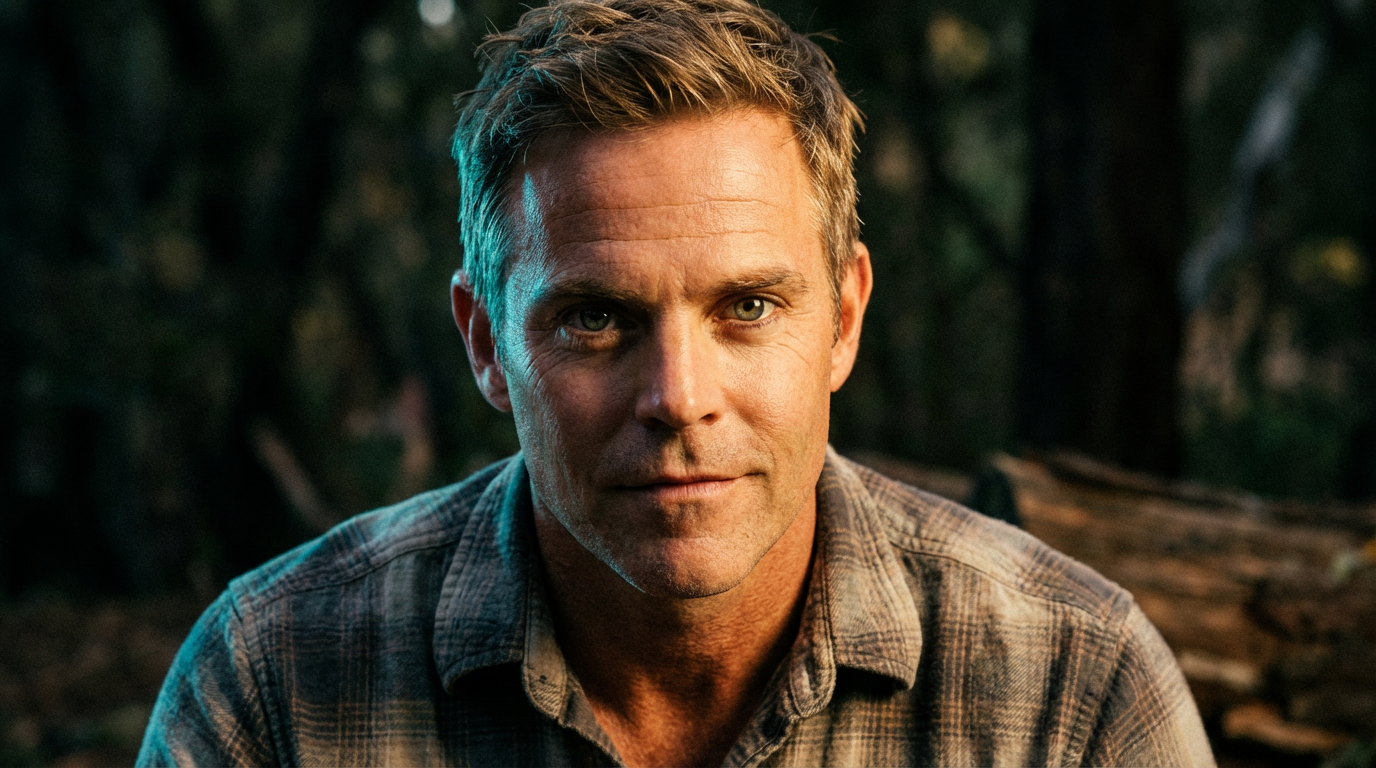
Jared Nathan Marshall was born on 15th May 1995 in Salt Lake City, Utah, the youngest of six children of insurance adjuster Gregory Marshall and schoolteacher Margaret Jensen. The only Marshall sibling not to serve a Latter-day Saint mission, he pursued seasonal outdoor work, carpentry, and conservation across the western United States, including a formative stint at Zion National Park. After his brother William's wife departed through a dimensional portal to Clivilius in 2018, Jared became Will's closest companion, anchoring both their lives through presence rather than prescription.
The Noise at the End of the Table
Jared Nathan Marshall was born on 15th May 1995 at LDS Hospital in Salt Lake City, Utah, the sixth and final child of Gregory Alan Marshall and Margaret Louise Marshall (née Jensen). His arrival completed a household that had been expanding for thirteen years, and if Gregory harboured any quiet hope that his last child might be the calm one, the temperamental one, the son who would sit still during sacrament meeting without being told twice, the delivery room put paid to that ambition within the first hour. Jared arrived loudly, and he never really stopped.
The Marshall home in the Avenues neighbourhood was, by 1995, a small civilisation unto itself. Gregory, born on 2nd April 1955, had spent his twenties as a lifeguard and swim instructor before settling into steadier work as an insurance adjuster, though he retained the bearing of a man more comfortable giving orders from a poolside than processing claims behind a desk. Margaret, born on 19th August 1958, had taught third grade at Wasatch Elementary for the better part of three decades, her classroom patience extending seamlessly into a home that required industrial quantities of it. Between them they had produced David Alan, born on 11th January 1982, already studying pre-law by the time Jared could walk; Michael James, born on 22nd June 1984, whose easy laugh and grease-stained hands marked him as the family's most approachable presence; Rachel Ann, born on 5th March 1986, who ran the household's emotional logistics with the precision of an air traffic controller; William Jacob, born on 12th September 1989, the swimmer, quiet and disciplined and always slightly damp; and Eric Daniel, born on 9th November 1992, who at three years old regarded his new baby brother with the wary scepticism of a man whose chess game has just been interrupted.
Jared's position as the youngest shaped everything. By the time he was forming memories, David was leaving for his mission in Chile. By the time he started school, Michael was halfway through aviation maintenance training. The house emptied in stages, each departure widening the gap between Jared and his siblings until he sometimes felt less like a brother and more like a nephew — loved, indulged, and slightly out of step with the family's collective rhythm. Margaret, who had raised five children through the exhausting gauntlet of school mornings and church callings and teenage negotiations, approached her sixth with a tenderness that was also, perhaps, a kind of fatigue. She had less energy for enforcement and more for affection. Gregory noticed this. He did not approve.
The household operated according to the architecture of the Church of Jesus Christ of Latter-day Saints — scripture study before breakfast, Family Home Evening on Mondays, seminary for the older children, church consuming the better part of Sunday. Jared participated with the specific reluctance of a child who has not yet learned to object on principle but whose body objected on instinct. He fidgeted. He drew on the margins of his scripture journal. He asked questions during family prayer that were technically theological but functionally disruptive, and Gregory's jaw would tighten in the particular way that meant the conversation was over.
Chalk Dust and Trails
Jared attended Wasatch Elementary from 2001, where his mother had been teaching third grade since before he was born. The arrangement was both comfort and complication. Margaret's classroom was thirty metres from his own, a proximity that meant every teacher in the building knew exactly whose child he was and adjusted their expectations accordingly. He was bright — his reading scores were excellent, his grasp of science intuitive and occasionally startling — but he was also restless in a way that no amount of structured activity could fully contain. He finished assignments quickly and then found other things to do with his hands, not all of them sanctioned.
At Bryant Middle School, which he entered in 2007, the restlessness found a more productive outlet. The school's outdoor education programme — hiking trips into the Wasatch foothills, environmental science projects in local canyons — offered Jared something the classroom never had: a reason to pay attention that didn't feel like obligation. He was a different person on trail. Alert, focused, patient with the landscape in a way he couldn't manage with a textbook. His science teacher, recognising something in the boy that standard assessment missed, recommended him for a summer conservation volunteer programme in his final year. Jared completed it with distinction. He never mentioned it at home.
West High School, which he attended from 2009 to 2013, consolidated the pattern. Jared performed adequately in core subjects — enough to avoid concern, not enough to attract praise — while excelling in anything that involved his hands or his legs. He joined the school's hiking and mountaineering club, volunteered with conservation efforts in the foothills, and spent elective hours in the woodworking shop, where the lathe and the chisel offered the same satisfaction that swimming gave Will: a physical practice with measurable results. His academic record was the kind that prompted the word "potential" in parent-teacher conferences, delivered with the particular intonation that means "disappointment."
Gregory and Margaret attended these conferences together, presenting the united front they had maintained across six children's worth of school reports. But their responses to Jared's diverged. Gregory saw a boy who lacked discipline — who could achieve if he chose to, and whose failure to choose was therefore a moral failing. Margaret saw a boy whose intelligence expressed itself differently from his siblings', and who might need a longer runway before he found his direction. They were both right, which made the disagreement worse.
The question of a mission hung over Jared's final year of high school like weather. David had served in Chile, Michael in Canada, Rachel had completed her own service, Will was preparing for the Philippines, and Eric would later serve in Argentina. Every Marshall child had gone. It was not a question of whether but when. Except that for Jared, increasingly, it was a question of whether. He attended seminary with diminishing conviction and sat through mission preparation classes with the hollow attentiveness of someone who has already made a decision but lacks the courage to announce it.
He told his parents in the spring of 2013, two weeks before graduation. He would not be submitting mission papers. The conversation lasted forty minutes and covered ground that had been accumulating for years — Gregory's bewilderment hardening into anger, Margaret's concern fracturing into something closer to grief, Jared's own inarticulate certainty that he could not spend two years teaching a faith he wasn't sure he possessed. Gregory asked whether Jared understood what he was saying. Jared said he did. Margaret asked whether he had prayed about it. Jared said he had, which was true, and that the answer had been silence, which was also true but hurt more to say aloud. The family absorbed the news the way families absorb any wound — unevenly, with varying degrees of scar tissue. Rachel called twice in the following week. David sent a letter. Eric said nothing, which from Eric could mean anything. Will, who was serving in the Philippines at the time, heard about it secondhand and felt something he wouldn't identify for years: recognition.
Sawdust, Grease, and Open Road
Without a mission and without university — he had applied nowhere, a fact that Margaret discovered only when no acceptance letters arrived — Jared entered adulthood with a high school diploma and a talent for being outdoors. The first year was rough. He worked at a hardware store on Seventh East through the summer of 2013, stacking lumber and mixing paint with the grim efficiency of someone marking time. Gregory, who had expected the mission refusal to be a phase, watched his youngest son come home each evening smelling of sawdust and turpentine and said very little, which was worse than argument.
The apprenticeship saved him. In early 2014, Jared began working under a furniture maker in the Granary District — a laconic craftsman named Dale Emerson who built custom pieces for restaurants and private clients and who communicated primarily through the quality of his joints. Dale didn't care about Jared's spiritual résumé or his family's expectations. He cared whether the boy could hold a plane steady and whether he'd show up on time. Jared could, and he did. Over eighteen months he learned mortise and tenon, dovetail and dado, the particular patience required to shape walnut without splitting the grain. The work suited him in a way nothing had before. It was physical without being mindless, creative without being abstract, and when a piece was finished you could run your hand along it and know whether you'd done well.
He built his first commission — a dining table for a café in Sugar House — in the autumn of 2015, and the satisfaction of seeing strangers eat breakfast on something he'd made with his hands was unlike anything school had ever offered. But the restlessness hadn't gone. Dale's workshop was a single room, and Jared's world kept pressing against its walls.
Michael's influence nudged him sideways. His older brother, by then well established in aviation maintenance, had always been the sibling Jared found easiest to talk to — relaxed where David was formal, warm where Eric was reserved, unconcerned with the spiritual anxieties that made conversations with Rachel feel like gentle interrogations. When Michael suggested Jared try mechanical work, Jared took a job as a mechanic's assistant at a repair shop near the university. He learned engines, diagnostics, bodywork — practical knowledge that would prove useful in ways he couldn't yet foresee. But the shop's fluorescent monotony wore on him within months. He wanted sky.
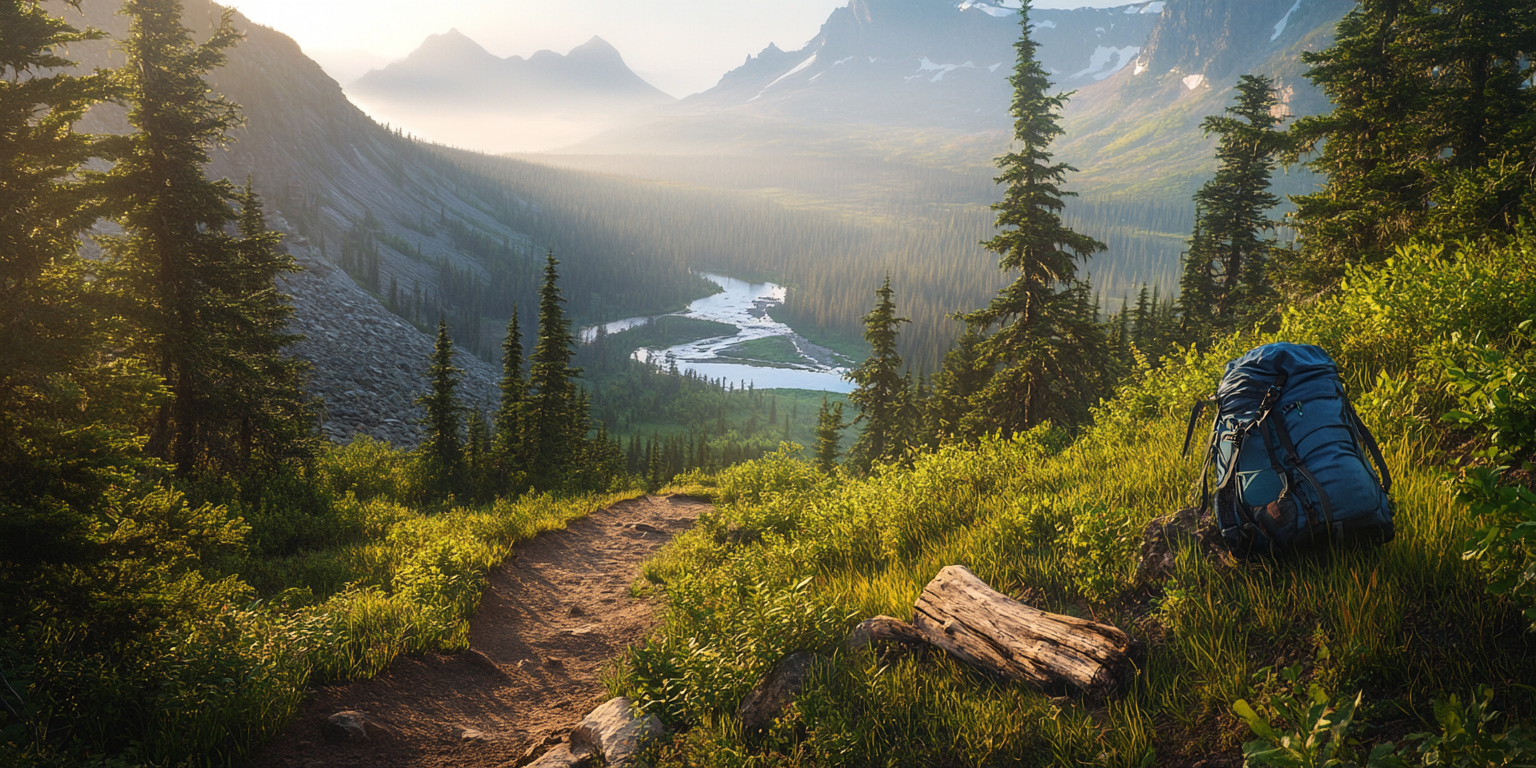
What followed was a period of deliberate transience. From 2016 through 2018, Jared moved through seasonal and contract work across the western states with an appetite that looked, from the outside, like aimlessness and felt, from the inside, like the first honest thing he'd ever done. He worked on a sustainable farm in Northern California, learning irrigation and soil management. He framed houses and laid roofing tile in Colorado. He led hiking workshops in Montana, teaching fire-building and backcountry navigation to weekend enthusiasts who paid good money to be briefly uncomfortable. Between jobs he hiked — sections of the Pacific Crest Trail, long weekends in the Wind River Range, solo trips into canyon country that lasted until his food ran out or his boots gave way.
The life had costs. Financial stability was a concept he understood in theory and experienced rarely in practice. His bank account operated in a narrow band between sufficiency and anxiety, and there were months when he slept in his truck because rent was a commitment his income couldn't support. His relationships with women followed a similar pattern — intense, warmly begun, and ultimately defeated by the fact that Jared would always, at some point, need to leave. He was not unkind about it. He simply hadn't learned to stay.
Red Rock and Running Water
Zion National Park entered Jared's life in the spring of 2018, when he secured a seasonal position as a ranger assistant through the park's conservation volunteer programme. He had worked in parks before — trail maintenance in Yosemite, wildlife monitoring in Yellowstone — but Zion was different. The scale of the canyon walls, the play of light on Navajo sandstone at dawn, the silence of the backcountry after the shuttle buses stopped running — it reached something in him that the other landscapes had only brushed against.
His duties were varied and physical. He led visitor tours along the Angels Landing trail, managing the particular combination of excitement and terror that the chain section inspired in day-trippers. He worked restoration shifts on the Hidden Canyon trail, hauling chain and resetting stone steps in summer heat that turned the canyon floor into a kiln. When a flash flood tore through the Narrows in July, Jared was part of the response team that evacuated hikers and assessed trail damage, working thigh-deep in brown water with the focused calm of someone who had finally found the emergency he was built for. A wildlife encounter on the West Rim — a stand-off with a mountain lion that lasted seven motionless minutes before the animal turned and vanished into scrub oak — became the story he told most often in later years, not for the drama but for what it taught him about stillness.
He was at Zion when the world changed, though he didn't know it yet. In early August 2018, Will and Lisa arrived at the park with Lisa's brother Eli for a hiking trip. Jared wasn't part of their group — he was working — but he crossed paths with them at the visitor centre on their first day. Will twisted his ankle badly and limped back to the trailhead, while Lisa and Eli continued into the backcountry. Jared heard about it secondhand, the way park staff hear about everything: through the radio, through gossip, through the particular frequency of concern that travels faster than official communication.
He didn't learn the full truth until weeks later. The phone calls, the impossible explanation — Lisa's family crossing into another dimension, a place called Clivilius, a portal that defied everything the physical world was supposed to allow. And then Lisa's departure in September, the end of Will's marriage, the slow collapse of a life that had seemed, from the outside, completely stable. Jared processed the information with less resistance than most of his siblings. He had spent years accepting that the world was stranger and less controllable than anyone pretended. A dimensional portal was improbable, but improbability had never particularly troubled him.
What troubled him was Will.
Saturday Mornings
The brother Jared had known least — Will was six years older, had been away on his mission during Jared's early teens, had married and settled into a life of software and woodworking and quiet routine — became, after Lisa's departure, the brother he knew best. It happened without plan or announcement. Jared simply started showing up.
He appeared at Will's house in the Avenues on a Saturday morning in October 2018, carrying two coffees from a shop on Second Avenue. The coffee was a small act of transgression — technically against the Word of Wisdom that both brothers had been raised to observe — and Will accepted it without comment, which told Jared everything he needed to know about where his brother's faith stood. They sat on the porch and said very little. Ruby, Will's Golden Retriever, pressed her nose into Jared's knee and stayed there. It became a routine.
Saturday mornings. Coffee. Sometimes a hike if the weather cooperated and Will's mood allowed. Jared didn't push. He had no therapeutic framework, no script for helping a man whose wife had left for another dimension. He had only proximity and patience, two qualities he'd never known he possessed in sufficient quantity until they were required. Will, who had spent his life being the steady one, the reliable one, the brother who never caused problems, discovered in Jared's uncomplicated presence something he hadn't found in Rachel's earnest concern or David's long-distance phone calls: permission to be unhappy without having to explain why.
Their trips together began modestly — day hikes in the Wasatch, an overnight in the Uintas — and expanded as Will's grief loosened its grip. In the summer of 2020, Jared convinced his brother to join him on a road trip through the Pacific Northwest, two weeks of coastal highways and old-growth forests and diners where nobody knew either of them. Will drove. Jared navigated, badly, with a paper map he'd bought at a petrol station in Portland because he refused to use GPS on principle. They argued about route choices with the comfortable intensity of brothers who have rediscovered each other. The following year they spent a week in Costa Rica, hiking through cloud forest and swimming in water so warm it felt like a moral failing, and Will laughed — properly, helplessly — for the first time in longer than either of them could remember.
Jared's own life stabilised, in its fashion, during these years. He settled into outdoor recreation work in the Salt Lake area — guiding, conservation consulting, seasonal trail crew leadership for the Forest Service — work that kept him close enough to Will and his parents while still allowing the movement his temperament demanded. He rented a small apartment in the Marmalade district, the first fixed address he'd maintained for longer than a season, and filled it with furniture he'd built himself: a bookshelf of reclaimed pine, a coffee table with legs shaped from a single piece of ash, a bed frame whose joints were tight enough that Dale Emerson, if he'd seen them, might have offered a nod of approval.
His relationship with Gregory had mellowed into something that resembled, if not understanding, at least truce. Gregory was seventy now, retired, his strict convictions softened not by agreement but by the arithmetic of age — too many years, too many children, too many outcomes he hadn't predicted. He no longer asked Jared about church. Jared no longer avoided the subject with conspicuous care. They found common ground in the workshop — Gregory's own woodworking a late-life hobby that gave them, for the first time, a shared language. Margaret, whose thirty-one years at Wasatch Elementary had ended in a retirement that left her both relieved and adrift, welcomed Jared's visits with the particular warmth she reserved for the child she had worried about most and understood least.
At thirty, Jared Nathan Marshall occupied a life that none of the Marshalls would have predicted for him and that he himself could not have designed. He had no degree, no mission service, no marriage, no children, no career in the conventional sense. By every metric his family had been raised to value, he had underperformed. But he had built things — furniture, trails, a relationship with a grieving brother that neither of them could have managed alone. He had stood in a canyon while a mountain lion decided he wasn't worth the trouble. He had learned to stay, which was harder than leaving, and to be present, which was harder than both. The coffee on Saturday mornings was still against the Word of Wisdom, and Will still accepted it without comment, and the porch still faced east toward the mountains where the light came first.







