Jamie Nigel Greyson
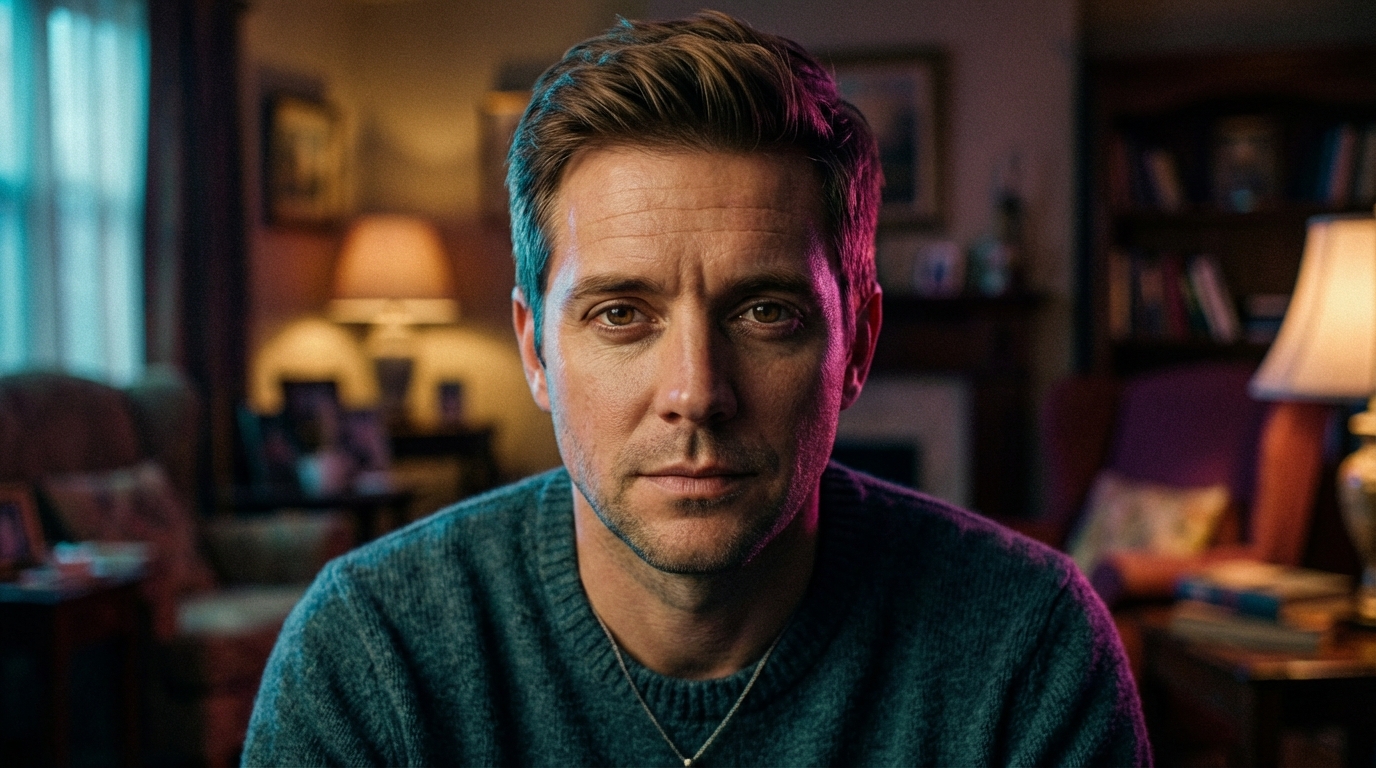
Jamie Nigel Greyson was born into displacement, spending his formative years navigating constant relocation and family dysfunction that left him perpetually searching for stability he never quite found. The youngest surviving child of lawyer Peter Greyson and nurse Nola Greyson, he grew up in the shadow of his accomplished older sister Louise and the grief surrounding his younger sister Sarah's death, developing a gentle, caretaking nature that led him into aged care nursing whilst masking deep emotional fragility that would leave him vulnerable to manipulation and loss.
Born Into Transition
Jamie Nigel Greyson arrived on 18 December 1983 at Royal Hobart Hospital, entering a family already marked by complexity and distance. His birth came twelve years after his sister Louise, when his mother Nola was forty years old and his father Peter was thirty-six—both old enough to have expected their parenting years to be winding down rather than beginning again. The significant age gap meant Jamie occupied an unusual space in the family hierarchy, too young to be Louise's peer but too separated in age to experience typical sibling dynamics.
His earliest years in the Granton house were marked by his father's emotional distance and his mother's divided attention between managing household responsibilities and maintaining the community volunteer work that had become central to her identity. Louise, already a teenager when Jamie was born, occupied a space between sibling and surrogate parent, helping with his care in ways that created a bond that would persist despite the geographic distances that would later separate them.
Jamie was a sensitive child from the start, attuned to emotional undercurrents in ways that made him simultaneously perceptive and vulnerable. He noticed when his mother was stressed, when his father was particularly distant, when Louise was unhappy about something she wouldn't discuss. This emotional intelligence, which would later serve him well in his aged care work, made his early childhood more complicated—he absorbed family tensions without having the developmental capacity to process or understand them.
Sarah's Arrival and the First Relocation
The birth of his sister Sarah in May 1986, when Jamie was two and a half, shifted family dynamics in ways he was too young to fully comprehend but old enough to sense. Suddenly the already limited parental attention he received diminished further as Sarah's fragile health consumed Nola's time and energy. Jamie learned early that his needs came second to Sarah's medical crises, that his mother's attention was conditional on nothing more urgent demanding it, that he needed to be "the good one" who didn't create additional problems for parents already overwhelmed.
By late 1988, Sarah's recurring respiratory issues had become severe enough that medical professionals recommended relocation to a warmer, drier climate. The decision to move to Elizabeth, South Australia in early 1989 was presented to Jamie, now five years old, as an adventure, a chance for a new start. He was too young to understand what he was leaving—Tasmania was home only in the vaguest sense, more a collection of memories and sensations than a place he could articulate missing.
The move itself proved traumatic in ways no one anticipated or acknowledged. Louise stayed behind with their grandmother Mavis to finish her final year at St. Mary's College, and Jamie struggled to understand why his big sister suddenly wasn't there anymore, why she existed only in phone calls and occasional visits. His parents, absorbed in managing the logistics of relocation and Sarah's ongoing medical needs, didn't notice or address Jamie's confusion and grief about losing daily contact with the one family member who had consistently attended to his emotional needs.
Family Tree Chart
The Elizabeth Years
Starting primary school in Elizabeth, South Australia in 1989 at age five represented both challenge and opportunity for Jamie. He was shy, sensitive, easily overwhelmed by the noise and chaos of playground dynamics. The other children seemed to know how to navigate social hierarchies instinctively, whilst Jamie felt perpetually uncertain about unwritten rules he didn't understand.
The friendship with Luke Smith, a boy in his class born seven months earlier in July 1984, developed with the intensity and completeness that characterises childhood bonds formed in absence of other connections. In Jamie's perception, Luke was confident where Jamie was uncertain, bold where Jamie was cautious, seemingly untroubled by the social dynamics that confused and frightened Jamie. Luke, for his part, likely saw Jamie as the grounded, practical one, providing stability that Luke's dream-filled, spiritually complex inner world lacked. Perhaps both boys were actually quite similar—sensitive, uncertain, seeking connection—but each perceived in the other the qualities they felt they themselves lacked, creating complementary illusions that made the friendship feel complete.
They were inseparable from ages five through eight—playing together at school, spending afternoons and weekends at each other's houses, creating the kind of complete friendship where each became essential to the other's daily experience. For Jamie, Luke represented safety, someone who made the confusing social world navigable, who protected him from bullying, who made him feel valued and important in ways his family never quite managed. For Luke, Jamie provided grounding in the material world, a counterbalance to the mystical visions and voices that already shaped his inner experience in ways he couldn't share with anyone.
At home, Jamie remained peripheral—Sarah's health issues continued to demand most of Nola's attention, Peter worked long hours at his Adelaide law firm and remained emotionally distant when present, Louise visited during university holidays but was absorbed in her own life in Tasmania and managing her new motherhood with Rebecca born in 1990. Jamie's world contracted to school and Luke, the friendship becoming not just important but essential, the one relationship where he felt genuinely seen and valued.
He spoke about Luke constantly during these years—Luke said this, Luke did that, Luke thinks we should do this activity. Nola, overwhelmed with Sarah's care and the demands of managing a household in a city where she'd never quite established meaningful connections, was grateful Jamie had found a friend and didn't look too closely at the intensity of the bond or what it might signify about her son's emotional needs going unmet elsewhere.
The Brisbane Relocation
The announcement in early 1992 that the family would be relocating to Brisbane devastated eight-year-old Jamie in ways his parents didn't fully comprehend or perhaps didn't want to acknowledge. Peter had received another career advancement opportunity, and the decision was presented as already made rather than something open to family discussion. Jamie's protests—that he didn't want to leave Luke, that he'd finally found a place he fit, that moving would mean losing the one person who made him feel safe—were dismissed as childish resistance to change, normal adjustment difficulties that he'd overcome once settled in Queensland.
The final weeks in Elizabeth felt like a kind of prolonged grief. Jamie and Luke spent every possible moment together, making promises about staying in touch, writing letters, somehow maintaining the friendship across distance. But both boys understood, in ways they couldn't quite articulate, that something essential was ending, that distance would inevitably transform the relationship into something different from the complete, daily friendship they'd shared.
The actual move to Brisbane in mid-1992 and the first weeks in their new house marked the lowest point of Jamie's childhood to that point. He was in a new city, starting yet another new school where he knew no one, separated from the one person who had made him feel valued and understood. Luke's family, dealing with their own upheavals—his parents' divorce was approaching or had recently occurred—couldn't facilitate visits or connection. Jamie's parents, absorbed in their own adjustment challenges and Sarah's ongoing health management, didn't recognise the depth of Jamie's grief or provide the emotional support he desperately needed.
Jamie withdrew into himself during the early Brisbane years, becoming quiet and compliant in ways that his parents mistook for successful adjustment rather than recognising as depression and withdrawal. At his new school, he didn't try to make friends the way he had with Luke—the risk of connection, of investing emotionally only to have it torn away by another relocation, felt unbearable. He retreated to the library during lunch breaks, found solace in books the way his sister Sarah did, accepted isolation as the natural state of things.
Sarah's Death and Becoming the Surviving Child
Sarah's death in March 1995, when Jamie was eleven years old, fundamentally altered his position in the family and his understanding of his place in the world. He had never been particularly close to Sarah—the age gap and her constant health issues meant their relationship was more about coexistence than genuine connection—but her death brought home the fragility of family bonds in ways that terrified him.
He couldn't bring himself to enter Sarah's hospital room in those final moments, sitting instead in the corridor whilst his mother and Louise held Sarah's hands as she died. The guilt about this absence would linger for years—the sense that he had failed some essential test of family loyalty, that his inability to face Sarah's death revealed fundamental weakness in his character.
The aftermath of Sarah's death transformed the Brisbane house into a space heavy with unspoken grief and dysfunction. Peter withdrew even further, working longer hours and speaking less when home. Nola functioned mechanically, managing practical necessities whilst seeming emotionally absent. Jamie, now the only child still living at home, found himself simultaneously hypervisible—the surviving child who needed to somehow compensate for the one who had died—and invisible, his grief and confusion going unacknowledged whilst his parents processed their own loss.
Louise, heavily pregnant with Kain and managing her own household in Tasmania, couldn't provide the support Jamie needed beyond brief phone calls and her presence at the funeral. Jamie found himself profoundly alone during a period when he desperately needed connection and guidance, learning to manage grief through silence and withdrawal rather than processing or expressing it in healthy ways.
He completed his remaining school years in Brisbane carrying this accumulated weight—the loss of Luke, the death of Sarah, the emotional absence of his parents, the distance from Louise. He developed a carefully constructed persona of quiet competence, being "the good kid" who didn't cause problems, who achieved adequately in school, who gave his parents no reason for concern. Behind this facade, he struggled with depression and anxiety he had no language to name or address, finding coping mechanisms that worked well enough to function but never actually resolving the underlying pain.
Choosing Care Work
Jamie's decision to pursue aged care nursing after completing school represented both calling and continuation of patterns established throughout his childhood. The work appealed to something fundamental in his nature—his ability to notice others' needs, his patience with vulnerability, his capacity to provide the kind of attentive, compassionate care he'd never quite received himself. He completed his Certificate III in Individual Support (Aged Care) through a Brisbane TAFE in the early 2000s, then began working in various aged care facilities throughout the city.
He proved naturally gifted at the work in ways that surprised his supervisors and colleagues. Residents who were difficult with other staff responded to Jamie's gentle patience. Families appreciated his ability to communicate clearly about their loved ones' needs whilst maintaining appropriate emotional boundaries. He could manage the physical demands of the work—the lifting, the personal care, the long shifts—whilst also providing the emotional presence that made residents feel genuinely cared for rather than merely managed.
But the work also reinforced patterns Jamie had developed throughout childhood—prioritising others' needs over his own, finding identity through caretaking, avoiding his own emotional processing by focusing on others' pain. He became known amongst colleagues as someone who would always take the difficult shifts, who never complained, who could be relied upon absolutely—traits that earned respect but also masked the ways he was depleting himself through constant service without adequate self-care or emotional support.
During his twenties working in Brisbane's aged care sector, Jamie lived quietly and competently, maintaining minimal social life beyond work relationships. He rented a small flat, managed his finances responsibly, kept in regular contact with Louise through phone calls, visited his parents occasionally though the interactions felt strained and superficial. He dated occasionally but never seriously, finding himself unable to form the kind of deep emotional connections he'd known with Luke in childhood, perhaps unconsciously comparing all potential relationships to that early, complete friendship and finding them lacking.
The Return to Tasmania
By his mid-twenties, Jamie had established a stable if somewhat isolated existence in Brisbane, but several factors began pulling him toward Tasmania. His parents' marriage had dissolved into divorce, and both Peter and Nola had returned to Tasmania separately in the early 2000s, settling into their own small flats in the Hobart area. They were aging, their health declining, and Jamie felt the pull of filial duty despite the emotional distance that had always characterised their relationships.
More significantly, Jamie felt a deep, inchoate longing for something he couldn't quite name—some sense of home or belonging that Brisbane had never provided despite spending his teenage and early adult years there. Tasmania represented something more than just geography—it was where he'd been born, where Louise still lived with her growing family at Jeffries Manor, where some part of him imagined he might finally find the stability and connection that had eluded him throughout his peripatetic childhood.
The decision to relocate to Tasmania in 2008, at age twenty-four, was both practical—aged care positions were available in Hobart, his qualifications transferred easily—and deeply emotional. He was returning to a place he barely remembered consciously but that felt somehow essential to understanding who he was and what he needed. Louise, thrilled to have her brother finally nearby after years of distance, helped him find accommodation and adjust to the Hobart area, inviting him to Jeffries Manor for dinners and family occasions, trying to provide the support and connection she'd never been able to offer across geographic distance.
Jamie secured a position at Vaucluse, an aged care facility in Tasmania, where his competence and compassionate approach quickly earned respect from colleagues and residents alike. The work provided structure and purpose whilst he navigated his return to Tasmania and reconnection with family members who had become almost strangers through years of distance.
Reuniting with Luke
The reunion with Luke Smith occurred within weeks of Jamie's return to Tasmania, so unexpectedly that it felt almost fated. Jamie encountered Luke at a Hobart café, recognised him immediately despite the sixteen years since they'd last seen each other, and experienced a rush of feeling—relief, joy, completion—that confirmed something he'd suspected throughout the intervening years: Luke Smith remained the most significant emotional connection of his life.
Luke seemed equally affected by the reunion, equally invested in reconnecting and exploring what their childhood friendship might become in adulthood. They exchanged contact information, began meeting regularly for coffee or walks, rebuilding connection with an intensity that suggested both were filling needs that had gone unmet throughout the years of separation.
The friendship-to-romance transition happened gradually over the following months, though looking back Jamie couldn't identify specific moments when the relationship shifted from reconnected childhood friends to something explicitly romantic and sexual. Luke was affectionate, attentive, seemingly as invested in the relationship as Jamie, and the connection satisfied something deep in Jamie—the sense of finally being chosen, valued, essential to someone the way he'd been during those Elizabeth years.
They became partners in 2008, initially sharing a unit in Glenorchy before eventually moving to a house in Berriedale, a suburb north of Hobart. Together they adopted two Shih Tzu dogs—Henri and Duke—who became their surrogate children and constant companions. The Berriedale house represented the first space that truly felt like home to Jamie since childhood, a place he'd chosen rather than been moved to, shared with someone who knew him and had chosen him specifically.
For the first time since childhood, Jamie felt he had stability—a home, a partner, work that provided purpose and income, proximity to Louise and her family, even reconciliation of sorts with his aging parents. The life he'd built in Tasmania seemed to validate the choice to return, to provide the foundation he'd been seeking throughout his adult life.
But beneath the surface, complications existed that Jamie either didn't notice or chose not to acknowledge. Luke maintained emotional distance even whilst being physically affectionate, had areas of his life he kept carefully separate from their relationship, sometimes disappeared for hours with explanations that felt vague and insufficient. His dream life, which Jamie knew had been significant since childhood, seemed to intensify in ways that made Luke increasingly abstracted, present physically but absent mentally and emotionally.
Louise, meeting Luke multiple times during family gatherings at Jeffries Manor and observing the relationship dynamics when Jamie visited with or without Luke, felt immediate unease she couldn't quite articulate—something about Luke troubled her, some quality beneath his superficial charm that activated her protective instincts toward her younger brother. She tried raising concerns carefully, suggesting that Jamie deserved someone more consistently present, questioning whether Luke was as invested in the relationship as Jamie clearly was.
Jamie dismissed Louise's concerns, interpreting her worry as overprotectiveness or perhaps discomfort with his sexuality—explanations that felt easier than acknowledging what her concerns might suggest about his judgment or the relationship he'd invested so heavily in emotionally. He wanted to believe Luke loved him, that they were building something lasting, that the childhood connection had matured into genuine adult partnership. Acknowledging the relationship's deficiencies would have meant confronting the possibility that he'd once again chosen someone who couldn't fully meet his emotional needs, and that recognition felt unbearable.
The Decade Together
The years from 2008 to 2018 passed with Jamie maintaining his relationship with Luke whilst working at Vaucluse and building a life that felt stable if not entirely fulfilling. He advanced professionally within the aged care sector, earning additional qualifications and taking on supervisory responsibilities. He maintained regular contact with Louise, becoming more integrated into her family life, developing relationships with his nieces and nephews that provided some of the family connection he'd always craved. His relationships with his parents remained distant but functional—occasional visits, phone calls on birthdays and holidays, the kind of minimal contact that satisfied neither but which none of them knew how to deepen.
The relationship with Luke remained Jamie's emotional centre, the relationship he organised his life around even as certain patterns became increasingly difficult to ignore. Luke was often unavailable when Jamie needed support, had friendships and activities he kept separate from their relationship, sometimes treated Jamie with casual dismissiveness that felt inconsistent with genuine partnership. His mystical inclinations, which Jamie had initially found intriguing, began creating practical problems—Luke would disappear into extended periods of meditation or dream exploration, emerging hours later disoriented and unable to engage with mundane necessities.
By 2018, cracks in the relationship had become impossible to ignore. Luke's abstraction intensified dramatically through July, his physical presence unaccompanied by genuine emotional availability. He spent increasing time in his study, emerged looking exhausted and exhilarated simultaneously, offered vague explanations about "important work" that he couldn't or wouldn't specify. Jamie, working long shifts at Vaucluse and coming home to a partner who felt increasingly like a stranger, experienced loneliness that felt cruelly ironic—he'd finally returned to Tasmania, reconnected with his childhood best friend, built what should have been a stable life, yet felt more isolated than he had living alone in Brisbane.
On 23 July 2018, Jamie made a choice that would haunt him in the days that followed. During a shift at Vaucluse Jamie engaged in a brief sexual encounter with a colleague—infidelity borne partly from loneliness, partly from frustration with a relationship that felt increasingly hollow despite its domestic comforts, partly from a desperate attempt to feel desired and valued by someone actually present. The encounter provided no real satisfaction, only guilt and confirmation that his relationship with Luke had deteriorated beyond what either of them seemed willing to acknowledge directly.
The Portal and Disappearance
The events of late July 2018 remain, from Jamie's perspective, a blur of confusion, revelation, and transformation that fundamentally altered the trajectory of his existence. On 24 July, the day after Jamie's workplace indiscretion, Luke finally revealed the Portal Key, an artefact that defied conventional physical explanation, that created apertures between dimensions, that connected their Berriedale home to a world Luke called Clivilius.
Luke's brother Paul was present for this revelation, and Luke orchestrated circumstances that led both Jamie and Paul through the Portal.
What waited on the other side was Clivilius—a vast, starless desert landscape that felt simultaneously ancient and newborn, beautiful and terrifying, a world that operated according to rules fundamentally different from Earth's physics and social contracts. The immediate shock of finding himself in an impossible place was compounded by the immediate recognition that return to Earth would not be possible, that he'd been brought to Clivilius as part of Luke's larger vision for building something in this other world.
The dogs Henri and Duke arrived in Clivilius not long after Jamie and Paul, brought through by Luke in one of his subsequent crossings. Their presence provided comfort and continuity, a connection to the life Jamie had known before everything changed. Duke's death in Clivilius—circumstances Jamie still struggled to process or accept—represented another loss in a series of losses that had defined his life, another reminder that nothing he loved remained stable or safe.
Rebuilding and Reckoning
By the present day, Jamie remains in Clivilius, part of the Bixbus community that continues to function and evolve despite its fraught origins. His relationship with Luke exists in complicated proximity—they are no longer partners in any romantic sense, the betrayals and deceptions having destroyed whatever foundation the relationship once possessed. Yet they remain connected through shared history, shared responsibility for the community they helped build, and the simple fact of being bound together by circumstance in a world neither fully understands.
Jamie's work in Clivilius has evolved from immediate survival necessities to something approaching his Earth career—he provides care and support to community members, helps new arrivals adapt to impossible circumstances, maintains the practical routines and emotional structures that make life in another dimension feel slightly less alien. His aged care training proves endlessly relevant, though the specific challenges differ dramatically from anything he encountered at Vaucluse or in Brisbane facilities.
Jamie thinks often about Louise—grief mixed with guilt, love complicated by the knowledge that his choices contributed to her son's disappearance. He doesn't know the full circumstances of what happened on Earth after Kain failed to return, doesn't know about the Jeffries Manor Massacre or Louise's death or the mysteries that swallowed so many members of his family. This not-knowing carries its own kind of torture, the inability to grieve properly when the full extent of loss remains unknown.



