James Robert Mitchell
James Robert Mitchell was born on 22nd September 1978 at Broken Hill Base Hospital, the second son of Robert William Mitchell, a shift supervisor at the North Mine, and Margaret Anne Mitchell née O'Brien, who taught at Burke Ward Primary School. His career with the New South Wales Police Force, spent entirely at the Broken Hill station where he began as a probationary constable in 1998, has been defined by the methodical attention to evidentiary procedure that made him the station's indispensable custodian of physical evidence in complex investigations. His role in the Naomi Simmons murder investigation — couriering sensitive materials from Melbourne under continuous police custody — exemplified the quiet professionalism upon which successful prosecutions depend and which media coverage rarely acknowledges.
The Mitchell Family
James Robert Mitchell was born on 22nd September 1978 at Broken Hill Base Hospital, the second son of Robert William Mitchell and Margaret Anne Mitchell née O'Brien. His father worked as a shift supervisor at the North Mine, a position whose authority derived from twenty years of underground experience and whose domestic expression took the form of expectations about preparation, punctuality, and the proper maintenance of equipment — principles Robert applied to his sons' upbringing with the same conviction he brought to the management of extraction operations whose safety depended upon the attention paid to procedures that less rigorous men treated as optional. His mother taught Year 3 at Burke Ward Primary School, where her reputation for orderly classrooms and thorough documentation established standards that her colleagues respected and her students absorbed, though few of them would have connected the competence of Mrs Mitchell's filing systems with the particular intelligence that administrative precision requires.
The Mitchells occupied a weatherboard house on Oxide Street whose modesty reflected honest wages rather than inadequate ambition. Robert's income from the mine and Margaret's teaching salary sustained a household that was comfortable without being prosperous — the mortgage was manageable, the children were fed and clothed, and the small luxuries that made working-class life bearable were available when circumstances permitted, though never in quantities that suggested the family had forgotten what circumstances could also withdraw. The house sat within walking distance of the station where James would eventually serve, a proximity whose significance neither parent could have anticipated when they chose the property for its price and its access to schools.
James's older brother, Peter Robert Mitchell, born in 1975, had inherited their father's physical presence and practical orientation. Peter moved through childhood with the confidence of a firstborn whose position in the household was secure and whose aptitudes aligned with his father's expectations. He was good with his hands, comfortable underground, and possessed the spatial intelligence that mining engineering demanded. His trajectory — Broken Hill High School, a cadetship with Perilya Mining, eventual qualification as a mining engineer — fulfilled Robert's understanding of what a Mitchell son should become and established the standard against which James's different ambitions would be assessed.
The three-year gap between brothers created a dynamic in which Peter's path was always visible ahead of James, its direction clear and its approval assured. James absorbed the comparison without resentment but with the awareness that his own temperament — quieter, more systematic, less physically imposing — did not correspond to the version of competence his father's experience had defined. Where Peter dismantled and reassembled machinery with intuitive understanding, James catalogued and organised the tools Peter left scattered. Where Peter commanded attention through size and certainty, James observed from positions whose unobtrusiveness he had learned to value before he understood it as a skill.
Margaret recognised in her second son qualities whose usefulness was less immediately apparent but no less genuine. His methodical completion of homework, his careful organisation of his bedroom, the precision with which he recorded the results of school science experiments — these habits reflected an intelligence that expressed itself through the management of information rather than the manipulation of physical objects. She encouraged without insisting, providing library books and quiet approval whilst allowing Robert's more vocal expectations to occupy the household's attention. The arrangement suited James, who preferred to develop his capabilities without the scrutiny that Peter's more visible talents attracted.
Childhood and Education (1984–1996)
Growing up in Broken Hill during the 1980s meant understanding isolation as a condition of life rather than a circumstance to be overcome. Adelaide lay five hundred kilometres to the southeast across country that could kill the unprepared, and the distance imposed upon the town's children a self-reliance whose development was not optional. James absorbed this education through camping trips to the Menindee Lakes, where Robert taught navigation and first aid with the seriousness of a man whose professional experience had demonstrated what happened when preparation was inadequate. These excursions provided the Mitchell brothers with shared memories whose warmth persisted into adulthood — Peter leading the way through scrubland, James recording their route with the careful notation that Robert approved without connecting to the career it would eventually serve.
Primary school at Broken Hill Public, where James enrolled in 1984, confirmed the pattern his home life had established. He completed every assignment with thoroughness that his teachers noted and that his classmates found unremarkable. He was neither the brightest student nor the most popular, occupying the middle ground that his temperament preferred — present in every activity, prominent in none, his contributions reliable without being memorable. The ordinariness of his academic record concealed the particular quality of attention he brought to tasks whose completion others treated as obligation rather than opportunity.
His transition to Broken Hill High School proceeded without the disruption that some children experienced. James played second-row forward for the rugby team with commitment that compensated for talent he did not possess, his willingness to absorb punishment and maintain position earning the respect that consistent effort generated in a sport whose demands exceeded what natural ability alone could satisfy. His grades reflected capability applied with uniform diligence rather than selective brilliance — adequate across all subjects, exceptional in none, his report cards repeating the assessment that he was methodical rather than inspired.
The Year 10 work experience placement at Broken Hill Police Station, arranged through Margaret's friendship with Sergeant Patricia Webb, proved pivotal in ways that neither woman anticipated. The fortnight James spent observing station operations revealed a professional environment whose organising principles corresponded precisely to the qualities his temperament had been developing since childhood. Procedure mattered more than inspiration. Documentation determined outcomes. The careful recording of evidence, the precise notation of witness statements, the exact language of official reports — these practices constituted a system whose purpose James understood immediately and whose mastery he recognised as the application of capabilities he already possessed to work whose significance exceeded any employment he had previously imagined.
His announcement that he intended to pursue policing met the mixed reception that departures from expected trajectories generate in families whose plans have been constructed around different assumptions. Robert, who had anticipated that both sons would find their futures in mining — the industry that had sustained three generations of Broken Hill families and whose wages exceeded what most alternative employments could match — expressed the disappointment that fathers feel when their understanding of their children proves incomplete. Margaret worried about the dangers that newspaper coverage of Sydney policing had made vivid. Peter, by then already working underground, offered the practical observation that police work paid less than mining but involved fewer explosives, a comparison whose humour disguised the genuine respect he maintained for his younger brother's independence. James, in characteristic fashion, had prepared for the conversation by researching recruitment requirements, training programmes, and career progression paths. His presentation of facts rather than emotions addressed his parents' concerns without requiring the persuasive skills he did not possess, and his father's eventual support arrived through the recognition that thoroughness of preparation, regardless of the field to which it was applied, was the quality Robert had always valued most.
Academy and Early Service (1998–2005)
James entered the New South Wales Police Academy at Goulburn in February 1998 as part of Class 298, whose thirty-two recruits arrived from circumstances whose diversity initially overwhelmed someone whose experience of the world had been bounded by Broken Hill's horizons. City recruits possessed familiarity with technology and social environments that highlighted the regional disadvantage James had not previously recognised as disadvantage, and the first weeks required adaptation whose difficulty he managed through the discipline his upbringing had instilled rather than the confidence his temperament did not provide.
The academy's emphasis on procedure suited him perfectly. Physical training tested without breaking a body that rugby had conditioned for controlled exertion. Academic components covering law, evidence management, and investigative procedure became his strength, the systematic requirements corresponding to capabilities whose development his education had prepared without his teachers having known what they were preparing him for. His instructor, Sergeant Dennis Ng, noted in evaluations that James demonstrated exceptional attention to detail and a natural understanding of evidentiary requirements — an assessment that identified the quality around which his entire career would organise itself.
His first posting, in August 1998, returned him to Broken Hill station. The homecoming created the identity confusion that regional officers who serve their own communities must navigate — the transition from Bobby Mitchell's younger son to Constable Mitchell required the town's gradual acceptance of authority exercised by someone whose childhood they remembered and whose family they knew. The dual identity took years to reconcile, and the reconciliation was never complete; it was merely managed, the professional self and the local self coexisting within the same uniform through accommodations whose maintenance constituted a permanent, low-level expenditure of energy.
Early career incidents taught the lessons that regional policing's particular demands impose. Domestic violence calls where James knew both parties from school required professional detachment whose achievement was complicated by personal history. Fatal road accidents on isolated highways demonstrated how distance compounded the consequences of decisions that closer proximity to assistance might have rendered survivable. The Aboriginal community's relationship with police required sensitivity that Senior Constable Wayne Johnson, a Barkindji man who had joined the force to bridge cultural divides, taught through example rather than instruction — demonstrating how to see beyond immediate infractions to the social conditions that produced them, how historical grievances influenced present interactions, and how cultural knowledge could accomplish what legal authority alone could not.
His methodical approach to evidence gained recognition during a 2001 investigation into copper theft from abandoned mines. While other officers focused on known suspects, James systematically documented tyre tracks, tool marks, and paint transfers, creating evidence files whose organisation provided prosecutors with everything required for conviction. The investigation was minor in scale but significant in establishing the reputation that would define his subsequent career: James Mitchell was the officer whose evidence preparation could withstand any scrutiny a defence lawyer might apply.
Marriage, Family, and Expertise (2005–2022)
Promotion to Senior Constable in 2005 recognised accumulated competence rather than pursued ambition. James had shown little interest in advancement for its own sake, content with operational responsibilities whose scope his temperament could manage without the administrative burdens that higher rank imposed. His new duties included evidence management, court preparation, and the training of probationary constables — responsibilities that formalised the role he had already been performing and that provided the institutional authority his natural diffidence required in order to insist upon standards that others might have found excessive.
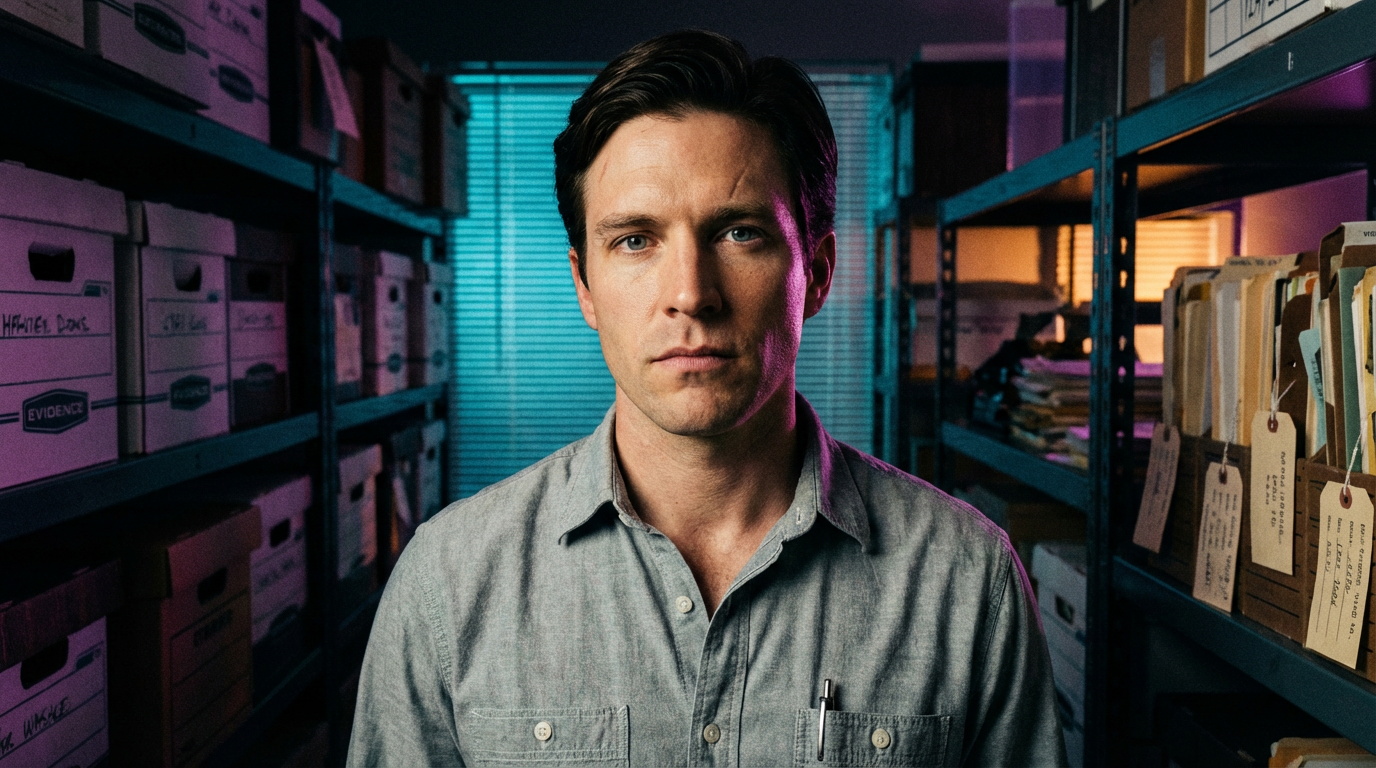
The evidence room became his particular domain. Previous custodians had maintained adequate standards; James transformed the space into a model of organisation that visiting inspectors praised as exceeding metropolitan benchmarks. He created detailed databases, implemented climate control for sensitive materials, and established verification procedures that eliminated any possibility of contamination or tampering. The work was invisible to everyone except the prosecutors whose cases it supported and the defence lawyers whose challenges it defeated, and James understood that this invisibility was not a limitation of the role but its essential characteristic — evidence management succeeded precisely to the extent that it attracted no attention.
His marriage to Sarah Elena Romano in 2007 introduced complexity that his professional life's orderliness had not prepared him for. Sarah, a pharmacist who had relocated to Broken Hill through a rural incentive programme, came from a Sydney Italian-Australian family whose warmth and volume initially overwhelmed someone whose family's emotional register operated within a narrower range. Her parents, Vittorio and Lucia Romano, expressed the scepticism that city families direct toward outback suitors whose professional prestige does not compensate for their geographical disadvantage, and Sarah's decision to remain in Broken Hill after the incentive period expired confirmed a commitment to James that her family accepted with the particular grace of people whose daughter's happiness mattered more than their preferences about where she achieved it.
The wedding at St Patrick's Catholic Church — Italian ceremony followed by Australian reception at the Musicians' Club — reflected the cultural negotiation that their marriage would continue to perform. Sarah's social energy drew James into community engagements he would never have pursued independently; his stability provided grounding for a temperament more volatile than his own. The partnership worked because each recognised in the other qualities they lacked, and because Sarah understood, earlier than James could have explained, that his reserve was not indifference but the particular expression of attention that his temperament permitted.
Their son, Daniel James Mitchell, arrived in 2009, and their daughter, Emma Sarah Mitchell, followed in 2011. The children grounded James further in Broken Hill's community fabric. School functions, birthday parties, and sporting events created networks beyond professional associations. He coached under-8s rugby, teaching the discipline and preparation his father had taught him, whilst carefully ensuring that Daniel received neither preferential treatment nor compensatory severity. These community connections enhanced his policing effectiveness in ways that official training could not replicate — the informal intelligence networks and cooperative relationships that small-town familiarity generates when the officer involved has earned the trust that proximity alone cannot provide.
Professional development continued through the distance education that regional officers relied upon. A Graduate Certificate in Criminal Investigation through Charles Sturt University, completed across three years of part-time study, supplemented experiential knowledge with theoretical frameworks. Specialist courses in evidence preservation, digital forensics, and interstate jurisdiction procedures positioned James as the station's technical authority on complex investigations. The 2012 Broken Hill earthquake, whilst causing minimal structural damage, tested emergency procedures that James coordinated — photographing, cataloguing, and securing property from damaged buildings with the systematic thoroughness that produced template protocols later adopted statewide.
By 2015, complex cases requiring meticulous documentation fell to him as a matter of course. The 2016 Johnson murder case demonstrated the value of his particular attention: he recognised paint flakes that crime scene technicians had overlooked as automotive primer used during specific manufacturing years, narrowing the suspect vehicle pool from hundreds to twelve and accelerating the investigation toward prosecution. His evidence preparation was so thorough that prosecutors developed the habit of reviewing his files not merely for the cases they concerned but as models of the standard they wished other officers would achieve.
The Silverton Case (January 2023)
The assignment came during routine Monday morning briefing on 16th January 2023. Detective Inspector Jeremy Harding required an officer to courier sensitive evidence from Melbourne — materials seized during the investigation into Naomi Simmons's murder in Silverton, whose connection to Melbourne's art world through the suspect Julia Novak demanded interstate evidence transfer under conditions that standard courier services could not guarantee. Harding's selection of James reflected both the investigation's seriousness and the complete confidence that the station's evidence custodian would maintain procedures whose integrity no subsequent legal challenge could compromise.
Preparation consumed the following day. Flight bookings through police travel services, liaison with Victorian counterparts, Federal Police notification for interstate transport. James assembled an evidence collection kit whose contents reflected decades of experience: multiple locking cases, chain-of-custody documentation, photographic equipment, environmental monitoring devices. Sarah recognised the focused preparation that preceded significant assignments and ensured that Daniel and Emma's routines would proceed uninterrupted during his absence.
He departed Broken Hill at 5:45 AM on 18th January, connecting through Adelaide with barely thirty minutes between services. At Victoria Police headquarters, Inspector Maggie Tran personally supervised his receipt of seventeen sealed evidence containers, each requiring individual signature and photographic documentation. The most sensitive items — Julia Novak's journals documenting her obsession with the Finnish sculptor Teppo Jaskelain's work, her laptop containing potentially encrypted material, and annotated gallery floor plans — were placed in hardened cases with GPS tracking that would record their precise journey.
The return journey — Jetstar flight JQ519 to Adelaide, the handcuffed cases on his lap throughout, the transit through Adelaide Airport escorted by Senior Constable Melanie Thornton of South Australia Police, the final Rex Airlines leg to Broken Hill with the evidence cases occupying the purchased adjacent seat — generated a custody log running thirty-seven pages. Every person who had visual or physical contact with the evidence was documented. Each location where it rested, however briefly, was recorded. Environmental conditions were tracked throughout. The comprehensive documentation would prove impervious to any defence challenge regarding admissibility.
His arrival at Broken Hill at 6:47 PM completed the formal transfer. Detective Inspector Harding and technical crime officers waited in the station's evidence processing room, where the ceremonial breaking of custody seals was photographed and witnessed according to protocols whose strictness James had himself established. His final signatures transferred custody from courier to investigating team, and the materials that might determine whether someone spent decades in prison or walked free passed from his responsibility into the investigation's broader machinery.
The psychological weight persisted beyond the procedural completion. Through evidence bags, he had seen Julia Novak's handwriting evolving from controlled cursive to increasingly erratic script — the documentary evidence of a mind's descent from passionate appreciation into obsessive fixation. The journals contained plans for acquiring Jaskelain's missing sculpture "Mirage," surveillance records of gallery movements, and entries from the night of Naomi's murder that investigators had not yet fully processed. James understood that evidence represented human tragedy whose dimensions exceeded the legal proceedings it would support, and the understanding added gravity to the professional obligation he had discharged.
The Officer at Forty-Six
The Silverton case marked a watershed. Recognition for his evidence handling generated consultation requests from other regional stations facing complex investigations. He developed training materials that the Police Academy incorporated into its curriculum. Speaking engagements at professional conferences — accepted reluctantly, delivered competently — shared practical knowledge accumulated through decades of practice whose refinement had occurred in obscurity.
His relationship with the investigation continued through subsequent evidence transfers as the case developed. Additional trips to Melbourne followed the procedures his first journey had refined, each building upon lessons whose application improved with repetition. He became a familiar presence at interstate airports, the officer who always arrived early, whose documentation was always complete, who never complained about delays or complications whose management was simply part of the work.
The case's unresolved dimensions frustrated him. Despite pristine evidence preservation, investigative breakthroughs remained elusive. The "Mirage" sculpture was never recovered. Critical witnesses provided conflicting accounts. Suspicion focused on several individuals without producing proof beyond reasonable doubt. His evidence lockers contained materials that should have resolved the investigation but somehow had not, and the gap between procedural perfection and investigative outcome reminded him that his contribution, however essential, occupied only one position within a process whose success depended upon factors his competence could not control.
Peter visited Broken Hill occasionally, his mining career having taken him to operations across Western Australia and Queensland before a supervisory position at a lithium extraction project near Broken Hill brought him within proximity again. The brothers' relationship, attenuated by distance and divergent careers, had mellowed into the mutual respect of men who understood that their different paths through life had originated in the same household and had been shaped by the same parents' different expectations. Robert's retirement from the mine in 2010 and Margaret's from Burke Ward Primary in 2014 had converted the Oxide Street house from the place where the Mitchell brothers had been raised into the place where their parents grew old — a transformation James observed with the particular attentiveness of someone whose proximity permitted the daily monitoring that Peter's distance precluded.
Daniel's selection for regional rugby representatives required weekend travel that James prioritised despite professional demands. Emma's developing interest in forensic science — clearly influenced by dinner table conversations whose content Sarah monitored for age-appropriateness — produced mentoring sessions in which James taught evidence collection principles through household experiments whose pedagogical value exceeded what either of them acknowledged. Sarah's pharmaceutical knowledge occasionally contributed unexpected investigative insights, their professional conversations enriching both careers in the manner of marriages whose partners' expertise overlaps sufficiently for collaboration but not so completely as to produce competition.
James Mitchell continues serving at Broken Hill Police Station with the distinction that avoids recognition. His evidence management has contributed to hundreds of successful prosecutions, though his name rarely appears in the coverage those prosecutions generate. He has trained dozens of junior officers who have advanced to ranks he has declined to pursue, his preference for operational competence over administrative authority reflecting not the absence of ambition but the presence of a different understanding of what professional satisfaction requires. He remains Senior Constable by choice, the rank's responsibilities corresponding to the work he does best, and the evidence room he maintains — its climate-controlled shelves preserving materials whose integrity his procedures guarantee — stands as the expression of a career whose value is measured not by the attention it attracts but by the convictions it sustains.







