James Jeffries III
James Jeffries III was born at Jeffries Manor on 17th November 1925, the second son and fifth child of William Jeffries IV and Grace Matilda Woolley. An artist by temperament thrust into industrial leadership by his father's controversial decision to disinherit the elder brother, he spent six decades managing the Jeffries empire whilst pursuing the creative life he had been denied. He married Thelma Rose in 1947 and fathered one son, Charles. He died at Jeffries Manor on 8th August 2010, aged eighty-four.
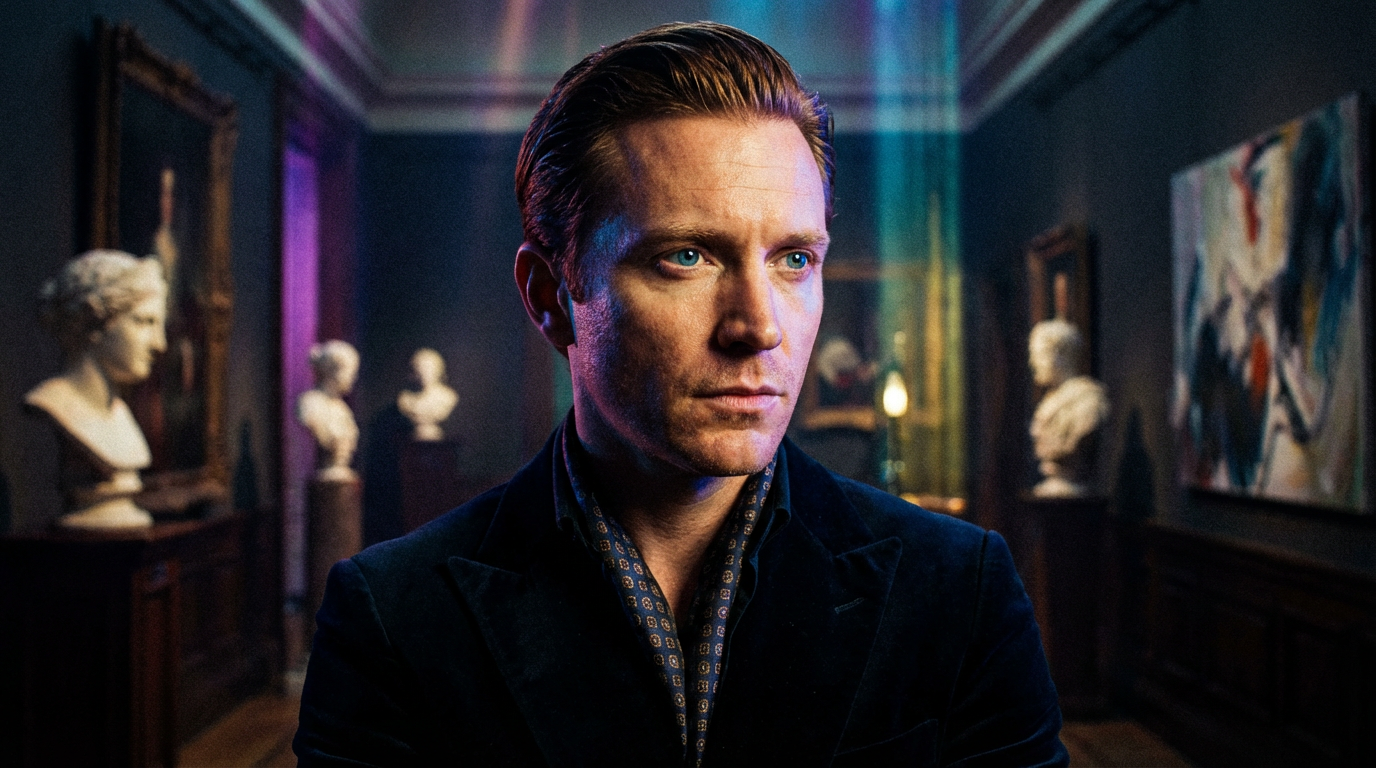
The Second Son (1925–1939)
James Jeffries III arrived on 17th November 1925 at Jeffries Manor in Granton, Tasmania, the fifth of six children and second son of William Jeffries IV and Grace Matilda Jeffries, née Woolley. His birth was uncomplicated — a mercy, given that his mother's pregnancy had been fraught with the physical danger that her earlier delivery of William V in 1923 had established as the price of producing Jeffries heirs. Grace, thirty-five and aware that her body was reaching the limits of what it could safely sustain, regarded her second son with a tenderness sharpened by the understanding that he represented completion rather than continuation. The dynasty already had its heir in William V. James existed in the space beyond that requirement — free, in theory, from the expectations that had crushed or corrupted every firstborn Jeffries male for five generations.
William IV received the news of another son with the satisfaction of a man who understood redundancy as a form of insurance. Two male heirs where one had been desperately sought represented security against the misfortunes that had haunted the family since its convict founder's mysterious disappearance over a century earlier. But his attention, already consumed by the combination of business empire and mental deterioration that would define his final decades, settled on James only intermittently and without the scrutiny he directed at William V. This comparative neglect proved, paradoxically, to be the most generous gift William IV ever bestowed upon any of his children.
James grew up in a household whose emotional temperature was governed by his father's increasingly erratic moods and his mother's extraordinary capacity to manage them. Grace served as interpreter between the children and a patriarch whose behaviour oscillated between cold commercial calculation and paranoid obsession with ancestral mysteries. She recognised in James a temperament that reminded her, with private satisfaction, of aspects of herself — the observational sensitivity, the inclination toward beauty rather than utility, the capacity to find meaning in things that could not be measured on a balance sheet. She also recognised, with considerably less satisfaction, qualities that echoed William IV's mother Jane — the same gentle perceptiveness that the Jeffries inheritance had spent four generations attempting to extinguish.
His four elder sisters — Eleanor, Amelia, Charlotte, and the later-arriving Florence — provided a feminine counterbalance to the manor's prevailing atmosphere of masculine ambition and dysfunction. Eleanor, fourteen years his senior, served as a second mother during the periods when Grace was occupied managing William IV's worst episodes. The sisters understood, before James did, that their father's visible preference for his sons over his daughters was not a reflection of their worth but a symptom of his obsession with dynastic continuity — an understanding they communicated to James through the particular kindness reserved for a younger brother who had not yet learned to see them as his father saw them.
William V, two years James's senior, was already displaying the cold pragmatism that would make him a natural successor to the Jeffries commercial tradition. The brothers' contrasting temperaments established a dynamic that would define both their lives: William V calculating, strategic, emotionally contained in ways that their father recognised and approved; James intuitive, artistically inclined, emotionally present in ways that made William IV simultaneously uncomfortable and wistful. Their childhood rivalry never descended into the open hostility that had characterised earlier Jeffries fraternal relationships, but beneath the surface courtesies that Grace enforced lay an incompatibility of worldview that would prove, when tested, irreparable.
Education and War (1939–1946)
Private tutors at Jeffries Manor provided James's early education, followed by The Hutchins School in Hobart, where he developed a reputation as a charismatic but unconventional student whose academic performance was adequate in subjects that interested him and indifferent in everything else. His artistic inclinations emerged fully during these years — painting and sculpture absorbed his attention with an intensity that his academic studies never provoked. His teachers regarded him with the particular frustration reserved for students whose intelligence is obvious and whose application of it is selective.
After completing his secondary education in 1943, James enrolled at the University of Melbourne to study fine arts, defying the family expectation that he would enter the business alongside William V. The decision was possible only because he was the second son — William V's presence in the succession removed the obligation that would otherwise have made artistic study an unacceptable indulgence. His time at university, though abbreviated by the war, confirmed what his childhood had suggested: that his capacity for aesthetic perception and emotional engagement exceeded his aptitude for, or interest in, the commercial world that the Jeffries name demanded.
The war interrupted these pursuits with the particular brutality that global conflicts visit upon young men whose plans presuppose a functioning civilisation. Both Jeffries sons enlisted, but their service took paths that reflected their characters with uncomfortable precision. William V leveraged family connections to secure intelligence positions in Melbourne, avoiding combat whilst advancing his career with the strategic efficiency that defined his approach to everything. James volunteered for reconnaissance missions in New Guinea — dangerous work in hostile terrain, undertaken with a recklessness that those who knew him attributed to bravery but which Grace, reading between the lines of his infrequent letters, suspected was motivated by something closer to a desire to test whether he wanted to survive the world his family had constructed for him.
He survived. The decorations he received for actions in New Guinea were genuine honours for genuine courage, though the courage itself was of the complicated variety that arises not from an absence of fear but from an ambivalence about outcomes. He returned to Tasmania physically intact and psychologically altered in ways he never fully described — carrying the particular silence of men who have witnessed things that peacetime language cannot accommodate.
The Inheritance (1946–1950)
It was during a visit home from Melbourne that James first met Thelma Rose, a young woman from New Norfolk who was a close friend of his then-girlfriend, Jane Lahey. The details of the transition from one relationship to the other remained, in James's telling, characteristically vague — he acknowledged that he had fallen in love with Thelma despite circumstances that required the end of his relationship with Jane, and that the ending, though painful for everyone involved, was handled with sufficient grace that Jane remained a friend to both James and Thelma for the rest of their lives. Thelma herself, born on 14th January 1927, possessed a combination of warmth, pragmatism, and resilience that Grace immediately recognised as the qualities necessary for survival within the Jeffries household. The two women understood each other with the instinctive clarity of people who have arrived at the same conclusion about what matters from entirely different starting points.
James and Thelma married in a small ceremony in Melbourne on 5th April 1947, returning to Tasmania shortly afterward to take up residence in a cottage on the Jeffries Manor grounds. The modesty of the arrangement reflected both James's preference for simplicity and the knowledge, not yet public, that his father's plans for the succession were about to detonate the family.
William IV's decision to name James as his heir — formalised in a will signed in 1946 and announced at a family dinner in March 1947 — represented the most dramatic rupture with Jeffries tradition in the dynasty's history. Primogeniture had governed succession for four generations. William IV's choice to bypass his eldest son violated family custom, contemporary expectation, and the assumptions upon which William V had constructed his entire identity. James attempted to refuse, arguing for joint succession — a proposal that honoured both his brother's capabilities and his own reluctance to assume a role he had never sought. William IV threatened to leave everything to charity if the decision was challenged, and the argument ended not in resolution but in the exhaustion that follows confrontations between positions that admit no compromise.
William V listened to the announcement in silence, then departed Jeffries Manor without speaking. He did not return during his father's lifetime.
William IV's stroke on 15th June 1948 left him incapacitated for thirteen days, during which James and Grace maintained a vigil whose intimacy was sharpened by the knowledge that the man dying in the study — the same room where his father had died pursuing the same ancestral mystery — was bequeathing not just property and business but the accumulated dysfunction of five generations. William IV died at 3:15 in the morning on 28th June 1948, his final words — "The pattern breaks with James" — expressing a hope that his son could not reject and could not be certain he deserved. William V was deliberately absent.
The legal battle that followed consumed two years. William V contested the will with the methodical ferocity he brought to all commercial operations. Grace attempted mediation, proposing compromises that both sons rejected. The court ultimately upheld James's inheritance, but the victory was pyrrhic — it confirmed his legal authority over the Jeffries estate whilst destroying permanently his relationship with his brother. The title deed transferring Jeffries Manor to James and Thelma was executed in November 1948, recording in legal language the family fracture that no subsequent document would repair.
The Reluctant Patriarch (1950–1970)
Charles William Jeffries, born on 12th June 1950 at the Royal Hobart Hospital, was James and Thelma's only child. Grace, now sixty and still resident at the manor, threw herself into grandmother duties with an enthusiasm that surprised everyone — perhaps attempting to correct the mistakes of her own motherhood, perhaps simply relieved to love a child whose worth was not being measured against a dynastic ledger. Her presence in Charles's early life provided stability during the years when James was learning to manage an industrial empire he had never wanted and for which his artistic training had not prepared him.
The transformation from reluctant heir to functioning patriarch required James to develop capabilities that his temperament did not naturally provide. He possessed his mother's intelligence and his father's determination, but he lacked the cold pragmatism that had driven four generations of Jeffries men to accumulate wealth regardless of its human cost. His approach to Jeffries Industries was consequently different: he modernised operations not through ruthlessness but through innovation, diversifying into new industries and embracing technologies that his father's generation had viewed with suspicion. The hostile takeover of Thompson & Sons in August 1955 — a 150-year-old agricultural firm whose acquisition shocked the Tasmanian business community — demonstrated that James could be aggressive when commercial logic demanded it, though he conducted the operation with a visible discomfort that his competitors interpreted as weakness and that was, in fact, conscience.
Grace's death on 18th September 1962 removed the person who had understood James most completely and whose counsel he had relied upon since childhood. Her final words, spoken to Thelma rather than to James — a deliberate choice that ensured he would not have to watch her die — revealed the depth of the bond between the two women who had married into the Jeffries family from modest origins and had sustained it through the particular demands that wealth and dysfunction imposed. William V did not attend the funeral, sending instead a wreath inscribed "For Mrs Woolley" — a calculated insult that reduced Grace to the shopkeeper's daughter society had once dismissed, and that James received with a grief compounded by fury he could not express without dignifying his brother's contempt with a response.
James's patronage of Tasmanian arts during the 1960s and 1970s reflected the creative impulses that his patriarchal responsibilities had diverted rather than extinguished. He funded galleries, supported local artists, and used the Jeffries name and resources to establish cultural institutions that Tasmania's small population could not otherwise have sustained. His own painting and sculpture continued privately — works that grew increasingly haunting as the decades accumulated, their subjects circling the themes of inheritance, obligation, and the particular loneliness of occupying a position one has not chosen.
Father and Son (1970–2000)
Charles's relationship with James followed a trajectory that the Jeffries family history might have predicted but that James had hoped his different approach to fatherhood could avert. The boy grew into a brilliant but volatile young man whose resentment of his father's expectations intensified as he matured. James's desire to raise Charles differently from the way William IV had raised his own sons — with warmth rather than cold calculation, with encouragement rather than demands — was undermined by the inescapable reality that Charles was the only heir to an empire whose continuation depended upon his willingness to assume responsibilities he had not been consulted about.
The tensions surfaced publicly during Charles's twenties and thirties, as his capacity for business — which was genuine and considerable — competed with a restlessness that no amount of commercial success could satisfy. His marriage produced a son, Tom, in whom James invested the particular hope of a grandfather who sees in a grandchild the possibility of getting right what he got wrong with the intervening generation. Charles perceived this investment as favouritism — the same charge that had poisoned the relationship between William IV and his daughters — and the perception widened the distance between father and son into a gulf that neither possessed the emotional vocabulary to bridge.
Charles's abrupt departure from Tasmania in the late 1990s, severing contact with his family without explanation, inflicted upon James the specific wound that the Jeffries inheritance seemed designed to produce in every generation: the loss of a son not to death but to a rejection so complete that it functioned as a kind of death, leaving the father to wonder which of his failures had been decisive and whether the pattern his own father had tried to break was in fact unbreakable.
The Recluse (2000–2010)
James's final decade was spent largely within Jeffries Manor, the estate that had been both his inheritance and his prison. He painted, sculpted, and walked the grounds with Thelma, who managed the practical demands of their diminished household with the same quiet competence she had brought to their marriage sixty years earlier. His grandson Tom's presence — the young man having inherited the manor and assumed the family's responsibilities with a determination to understand the mysteries that had consumed previous generations — provided consolation without resolution.
The obsession with family history that had consumed his father and grandfather settled upon James in his final years with the inevitability of a condition that is inherited rather than chosen. He spent hours in the manor's library, reviewing documents and correspondence that previous generations had accumulated and that Grace had partially curated and partially destroyed. The works he produced during this period — paintings of rooms within the manor, rendered in colours that suggested memory rather than observation — reflected a mind circling the same questions that had driven William IV to madness and William III before him: what had happened to William Jeffries Senior in August 1821, and what had the family been concealing ever since.
Death and Legacy
James Jeffries III died peacefully in his sleep on 8th August 2010, at Jeffries Manor, aged eighty-four. He had held the Jeffries estate for sixty-two years — longer than any patriarch since the founder — and had transformed the family business from a Tasmanian industrial concern into a diversified modern enterprise. But the legacy he valued most, and the one that eluded him most completely, was the hope expressed in his father's dying words: that the pattern of obsession, estrangement, and loss that had defined the Jeffries family for five generations might end with him.
The funeral at St David's Cathedral in Hobart drew Tasmania's political, business, and cultural communities in numbers that reflected the breadth of James's influence. Thelma, eighty-three and still possessed of the composure that had sustained her through six decades of Jeffries life, received mourners with the warmth her husband had always admired and that the manor's atmosphere had never entirely accommodated. Charles was absent — his whereabouts unknown, his relationship with his father unrepaired. Tom, the grandson upon whom the family's future now rested, stood where five generations of Jeffries heirs had stood before him, carrying into the twenty-first century the accumulated weight of a dynasty whose mysteries remained unsolved and whose patterns, despite his grandfather's best efforts, remained unbroken.







