Jack William Ridley
Jack William Ridley, born on 18 March 1994 at the Modbury Hospital in Adelaide, was the youngest of three sons born to Craig Noel Ridley, a plumbing supplies representative, and dental receptionist Denise Anne Ridley (née Pascoe). He joined the South Australia Police in 2014 and built a career in community policing across the north-eastern suburbs. Married at twenty-one and divorced at twenty-five, he shared custody of his daughter Ruby Grace Ridley while serving as a Senior Constable in the Community Safety Section.
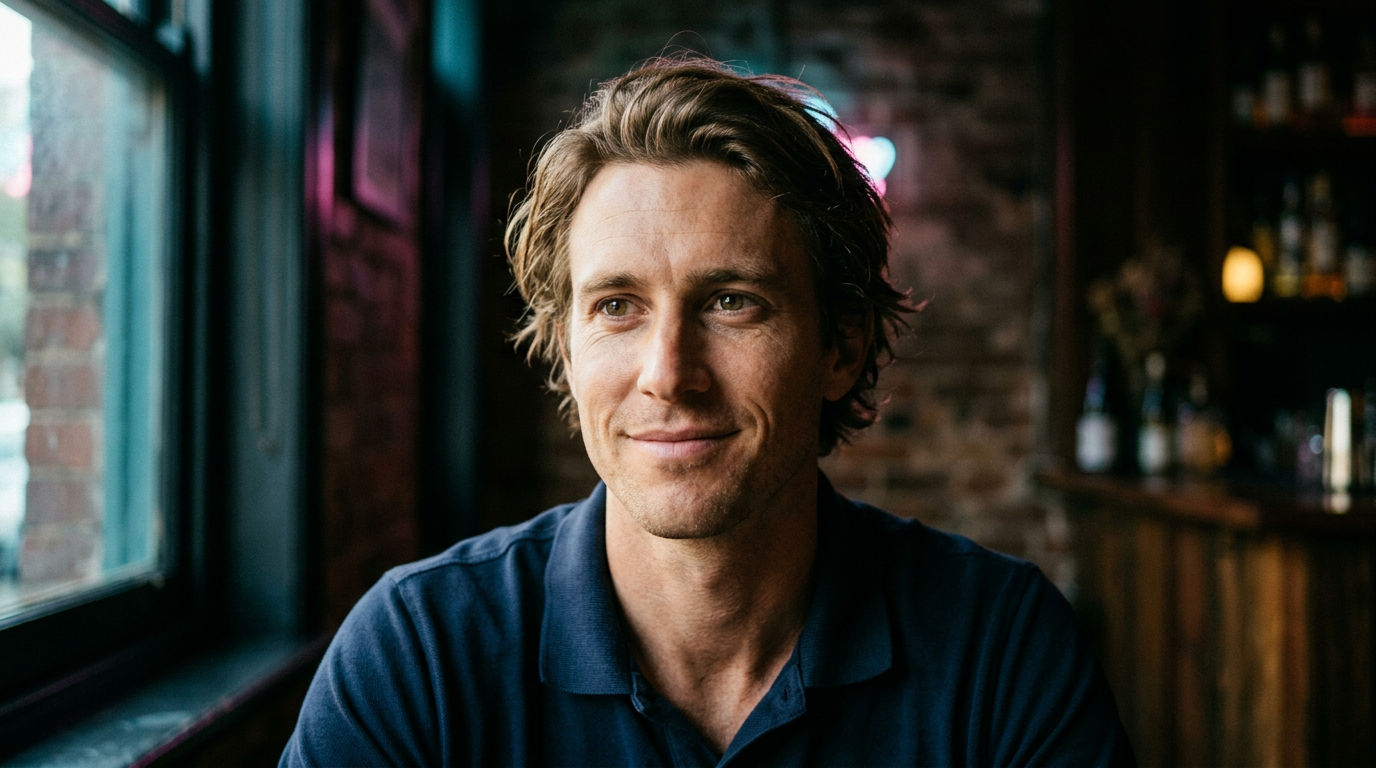
The Youngest Ridley
Jack William Ridley was born on 18 March 1994 at the Modbury Hospital in the north-eastern suburbs of Adelaide, the third son of Craig Noel Ridley and Denise Anne Ridley (née Pascoe). Craig worked in wholesale plumbing supplies — technically a sales representative, though the job was mostly driving a company van between trade suppliers and building sites across the metropolitan area. Denise was a dental receptionist at a practice in Tea Tree Gully, a job she had held since before her marriage and would hold, with only brief interruptions for maternity leave, for another twenty-two years.
The Ridley household on Doreen Street in Modbury Heights was louder than it was unhappy, though the two overlapped often enough that Jack learned early not to distinguish between them. Craig drank. Not catastrophically, not in the way that made for crisis interventions or hospital visits, but steadily, nightly, in the recliner with a six-pack of West End Draught and the television on. He was not violent. He was simply absent while physically present — a man who filled a chair in the lounge room and contributed little beyond the income that kept the mortgage paid. Denise compensated with energy and organisation, running the household with a brisk competence that left no room for self-pity and very little for tenderness.
Jack's older brothers, Scott Andrew Ridley, born on 7 January 1989, and Mitchell Craig Ridley, born on 22 June 1991, had both inherited their father's build — stocky, broad-shouldered, physically capable — and something of his inwardness, though in their case it manifested as sullenness rather than passivity. Scott was the angriest of the three boys and the first to leave home, enlisting in the Army at seventeen. Mitchell was quieter, more like Craig, and drifted into an apprenticeship as an electrician after finishing Year 11. Neither brother was close to Jack in the way siblings sometimes are when the age gap is narrow. The gap was narrow, but the temperament gap was wide.
Jack was different from the start. Where his brothers were closed and physical, Jack was verbal, social, and instinctively aware of how to make people like him. He learned charm as a survival skill in a household where tension simmered and nobody talked about it — if you could make your mother laugh, if you could deflect your father's irritability with a joke, if you could read the mood of a room and adjust yourself accordingly, you could keep the peace. It was a useful talent. It was also, in ways that would take years to become apparent, a kind of evasion.
The Talker
Jack attended the Modbury Heights Primary School from 2000 to 2006, where he was popular, sociable, and academically middling. His reports followed a consistent pattern: "Jack is a pleasure to have in the classroom" paired with "Jack could achieve more if he applied himself consistently." He was not lazy. He was simply more interested in people than in curriculum, and his attention went where the social energy was. He played basketball at the local recreation centre, was competent enough to make representative teams without being good enough to take it seriously, and made friends with an ease that his brothers found baffling and faintly suspicious.
At the Modbury High School from 2007 to 2012, the pattern intensified. He was the boy who knew everyone — not in the popular-kid way that involved hierarchy and exclusion, but in the way of someone who could sit down with any group and be welcomed. He talked to the sporty kids and the quiet kids and the ones who ate lunch alone. Teachers noticed this quality and occasionally tried to channel it into formal leadership roles, but Jack resisted structure. He did not want to be school captain. He wanted to be the person who made the school captain feel less nervous.
His SACE results in 2012 were adequate. He had no university ambitions and no particular career plan. Scott was by then stationed at the Robertson Barracks in Darwin, a world away. Mitchell was working for an electrical contractor in Salisbury and renting a flat in Parafield Gardens. Craig had been made redundant from the plumbing supplier in 2010 and had not found steady work since, a development that accelerated his drinking and contracted his already narrow world. Denise continued at the dental practice, continued running the house, continued not discussing it.
Jack stayed home for a year after school, working casually — stacking shelves at Coles, doing labouring shifts for a mate's landscaping business, bartending at a pub in Golden Grove. He was good at bartending. He was good at anything that involved talking to strangers, reading their moods, keeping things light. But the work went nowhere, and by mid-2013 the feeling of drift had hardened into something closer to alarm. He was nineteen and living in his childhood bedroom, and the walls of his father's house were starting to feel like a prediction.
Blue Shirt
The decision to apply for the South Australia Police was less a calling than an escape route with structure. Jack did not have Aaron Hughs's conviction about justice, nor Kelly Muscat's ambition for a career in investigation. What he had was a skill set — reading people, defusing tension, making himself useful in unpredictable situations — and a visceral desire to become someone other than his father. Policing offered a uniform, a wage, a purpose, and a reason to leave Doreen Street.
He entered the South Australia Police Academy in early 2014 and graduated in November of the same year. His instructors noted his interpersonal skills and his natural aptitude for community engagement, though they also flagged a tendency toward impulsiveness — Jack acted on instinct, which was usually good instinct, but he did not always slow down enough to verify that it was. He was assigned to general duties at the Tea Tree Gully station, covering the north-eastern suburbs where he had grown up.
The posting suited him. Community policing in the outer north-east was a different texture from the harder edges of Elizabeth and Salisbury, where officers like Hughs absorbed the daily weight of entrenched disadvantage. Tea Tree Gully had its share of domestic callouts, its break-and-enters, its late-night alcohol-fuelled incidents outside the Golden Grove Tavern. But it was also a suburb of school zones and walking trails and families whose problems, when they surfaced, were often amenable to the kind of intervention Jack was built for — a conversation, a referral, a presence that reassured rather than confronted.
He was good at the job. Genuinely good, not merely competent. Residents remembered his name, which was unusual for a uniformed constable. Shop owners on The Golden Way asked after him if they hadn't seen his patrol car in a while. He ran informal basketball sessions with teenagers at the Modbury recreation centre, not as an organised programme but because he turned up on Tuesday evenings and played, and word spread. His supervisors valued the community relationships he built. They also noted, in more candid moments, that his paperwork was inconsistent and his time management unreliable — Jack was the officer who spent forty minutes talking to a distressed neighbour and filed the report three days late.
Rachel
Jack met Rachel Marie Baxter at a friend's twenty-first birthday party in Mawson Lakes in February 2015, three months after graduating from the Academy. Rachel was twenty, a second-year student in early childhood education at the University of South Australia, and she came from the kind of household Jack's had never been — two parents who still held hands, a brother and a sister who rang each other on weekends, a weatherboard cottage in Prospect with a vegetable garden and a dog named after a fictional character. The stability of Rachel's world attracted Jack with an intensity he mistook for love, or perhaps it was love, made sharper by the fact that he had never seen a functional family at close range before.
They moved in together within six months, renting a two-bedroom unit in Dernancourt. The relationship was warm, physical, full of the easy affection that comes naturally when two people are young and not yet burdened by the weight of their own patterns. Rachel was patient and organised where Jack was scattered, and the complementarity felt like balance rather than what it would later reveal itself to be: a dynamic in which one person held everything together and the other let her.
Their daughter, Ruby Grace Ridley, was born on 4 October 2016. Jack was twenty-two. He had been a police officer for less than two years.
Fatherhood arrived with the force of something he had not prepared for because he had not known how to prepare for it. He loved Ruby immediately and completely, in a way that surprised him. But love and competence were not the same thing, and the gap between wanting to be a good father and knowing how to be one — having never watched it done properly — consumed him in ways he could not articulate to Rachel and did not try. He held the baby and felt joy. He also felt a fear so specific it had a physical texture: the fear of becoming Craig, of filling a chair in the lounge room while the life of the house happened around him.
The fear made him overcompensate at work and underprepare at home. He volunteered for extra shifts. He threw himself into community engagement initiatives, spent evenings at the recreation centre, said yes to every school visit and neighbourhood watch meeting. Rachel, who was finishing her degree while caring for an infant, began to notice that Jack's capacity for being present with strangers was not matched by any equivalent capacity for being present with her. He came home drained of the very thing she needed from him — attention, patience, the willingness to sit in the unremarkable difficulty of domestic life without needing an audience to perform for.
The Craigmore Callout
In mid-2018, Jack was temporarily attached to a task force operating out of the Elizabeth station, a redeployment that reflected both his community policing skills and the force's need for additional officers in the northern suburbs. The attachment brought him into the orbit of Constable Aaron Hughs, whose temperament was so different from Jack's own that the two should not, by any obvious logic, have become friends. Aaron was quiet where Jack was loud, methodical where Jack was instinctive, contained where Jack was expansive. But the contrast worked. Aaron did not need Jack to perform, and Jack, in Aaron's company, found he could be still in a way he could not manage elsewhere.
On 1 August 2018, both were part of the four-officer team dispatched to the Smith family property in Craigmore under Detective Kelly Muscat. Jack's assignment was external — knocking on neighbouring doors, gathering any reports of Luke Smith's movements. He worked the street methodically, though none of the neighbours had information of value. When Aaron Hughs chased two men over the back fence and lost them in an impossible alley behind the Craigmore Shopping Centre, it was Jack who drove to the far end of the shopping centre carpark and searched the perimeter while Aaron searched the alley itself. Between them, they covered every possible exit. There were none.
The incident did not trouble Jack the way it troubled Aaron. Jack's mind did not work in the same sustained, obsessive loops. He filed the strangeness of the alley alongside the many other strange things he had encountered in policing — the calls that didn't add up, the explanations that satisfied the report but not the officer who wrote it — and moved on. What stayed with him from Craigmore was not the alley but the friendship with Aaron, which continued after the attachment ended and both men returned to their regular stations.
Splitting
The marriage ended in April 2019. Not with a single argument or a dramatic revelation, but with the quiet accumulation of absences that Rachel had been tallying for three years. She told Jack she was moving back to her parents' house in Prospect and taking Ruby. She did not shout. She did not cry, at least not in front of him. She said she had spent two years asking him to be more present and he had responded each time by being more present somewhere else, and she could not keep asking.
Jack did not fight the separation because he could not honestly say she was wrong. He knew the shape of what had happened even if he could not have explained its mechanics — that the thing he was best at in the world, connecting with people, was the thing he did worst at home. With strangers and colleagues he was generous, attentive, fully engaged. With Rachel he was a man who left his best self at the station door and brought home the leftovers. He had seen his father do the same thing, only Craig's version had involved West End Draught and a recliner. Jack's involved a patrol car and a community basketball programme. The vehicle was different. The absence was the same.
The divorce was finalised in early 2020. Custody of Ruby was shared, with Rachel as the primary carer and Jack having every second weekend and one evening during the week. He moved into a flat in Modbury, ten minutes from Denise's house, and settled into the particular rhythm of a non-custodial father: the empty fridge on the weeks Ruby wasn't there, the frantic tidying before she arrived, the afternoons in playgrounds that felt both precious and insufficient.
The Flat in Modbury
The years after the divorce were the making of Jack Ridley in ways the marriage had not been. He was forced, for the first time, to sit with himself without an audience, and what he found was not the charming, adaptable, endlessly social person the world saw. It was a man who did not know how to be alone, who filled silence with noise, who had spent his entire life reading other people's emotions because he had never learned to sit with his own.
He began seeing a psychologist in late 2020 — not through the police welfare programme, which he mistrusted, but through a private referral from Rachel's mother, a retired social worker named Beverley Baxter who had seen through Jack's charm from the beginning and who, despite the divorce, remained one of the few people in his life willing to tell him things he did not want to hear. The sessions were uncomfortable. Jack's instinct was to perform even for the therapist — to be the insightful, self-aware client who already understood his problems. It took months before he could stop narrating his difficulties and start feeling them.
His relationship with Ruby deepened as his relationship with performance loosened. He became, in his late twenties, the kind of father he had been too frightened to be at twenty-two — not the entertaining dad, the fun dad, the dad who took you somewhere exciting, but the dad who sat on the floor and played with whatever you wanted to play with and didn't check his phone. Ruby, who had turned three the year her parents separated and could not remember them living together, knew her father as the man who picked her up on Friday evenings and made terrible pancakes on Saturday mornings and let her choose the television programme even when she chose the same one four times in a row. It was not a lot. Jack understood that it was everything.
At work, he continued to excel in community engagement. He was promoted to Senior Constable in 2022, a recognition of consistent service and the community relationships he had built across the north-eastern suburbs. He had been approached about transferring to the Community Safety Section, a specialist unit focused on crime prevention and neighbourhood engagement, and in early 2024 he accepted the posting. The work formalised what he had always done informally — building trust between police and communities, designing intervention programmes, working with schools and neighbourhood groups to address the conditions that produced crime rather than merely responding to its consequences.
By thirty-one, Jack William Ridley lived in a two-bedroom flat in Modbury that he had furnished with the determined cheerfulness of a man trying to make a home out of a place that was only a home half the time. Ruby's bedroom had butterfly decals on the walls and a bookshelf he had built badly from a kit. His own bedroom contained a bed, a wardrobe, and a framed photograph of Ruby at the beach that Rachel had taken and printed for him without being asked.
He saw Aaron Hughs most weeks — they hiked in the Adelaide Hills on their days off, a friendship built on the understanding that neither man needed the other to be anything other than what he was. He had dinner with Denise on Wednesdays, drove Ruby to basketball on Saturdays, and called Scott in Darwin once a month in conversations that lasted exactly eight minutes because neither brother knew how to make them last longer.
He had not dated seriously since the divorce. Rachel had moved on — she was in a relationship with a physiotherapist named Tom, a quiet and reliable man who was good with Ruby in the way Jack wished he had been good with Ruby at that age. Jack liked Tom, which was painful in a specific way: the recognition that the stability Rachel had needed was not exotic or difficult, just steady, and he had been incapable of providing it at twenty-two. Whether he was capable of it at thirty-one remained an open question. He was not sure he wanted to test it yet.
Craig Ridley had died in September 2023, at sixty-one, of liver disease that surprised nobody and was mourned in the complicated, unfinished way that difficult fathers are mourned by sons who never resolved anything with them. Jack delivered the eulogy because Scott could not get compassionate leave in time and Mitchell said he had nothing to say. Jack stood in the Centennial Park chapel and spoke warmly about a man he had spent his entire life trying not to become, and the gap between what he said and what he felt was the widest it had ever been. Denise sat in the front row and did not cry. She had done her crying decades ago.
Jack Ridley was his father's youngest son, a policeman by necessity and a community worker by temperament, a divorced man learning slowly that the skills which made him good with strangers were not the same skills required by the people closest to him. At thirty-one, he was a better father than he had been at twenty-two, a more honest man than he had been at twenty-five, and he lived in a flat with butterfly decals in one bedroom and almost nothing in the other. He was still learning to sit with the quiet. He was getting better at it.







