Isla Margaret Campbell
Born in Edinburgh on 17 December 2006, Isla Margaret Campbell grew into her role as eldest daughter through circumstances no child should have to navigate. Her mother's death when Isla was nine years old transformed natural leadership instincts into protective responsibility, her analytical mind becoming anchor for two younger sisters adrift in grief. Raised between her father's café and the Campbell Estate greenhouses, she developed a scientist's precision alongside a guardian's vigilance. When powerful factions turned their attention toward her family's botanical secrets in 2025, Isla discovered that the legacy she had observed from childhood now demanded her direct participation.
Birth and Early Childhood
Isla Margaret Campbell was born on 17 December 2006 at the Royal Infirmary of Edinburgh, the first child of Daniel Alistair Campbell and Eloise Margaret Campbell née Turner. She arrived in the final weeks of the year, a winter baby whose serious temperament would prove well-suited to the Scottish climate into which she emerged. Her parents had been married four years, their partnership built on shared reverence for history and careful attention to detail—qualities their daughter would inherit in full measure.
The name Isla had been Eloise's choice, drawn from the Scottish island whose spare beauty she had loved since a childhood holiday. Margaret honoured Daniel's mother Moira's middle name whilst echoing Eloise's own, creating connection across generations. The combination suited the infant who bore it—possessed of an island's self-contained quality from her earliest months, watchful and complete in ways that seemed to require little external validation.
The family occupied a flat in Morningside, Edinburgh, close to the Leaf and Bean Café that Daniel managed and near enough to Campbell Estate for regular visits. Isla's first years unfolded in domestic rhythm shaped by her parents' complementary vocations—her father's early mornings at the café, her mother's concentrated editorial work conducted whilst the baby napped, weekends at the estate where grandparents Alasdair and Moira welcomed their first grandchild with undisguised delight.
From infancy, Isla displayed the observational intensity that would define her character. She watched before she acted, processed before she responded, her gaze tracking movement and change with focus unusual in one so young. Her parents recognised this quality without fully understanding its implications—Daniel seeing his own analytical tendencies reflected, Eloise noting similarities to her editorial instinct for identifying what mattered within larger contexts.
A Sister, Then Another
Maeve Jane Campbell's arrival on 9 March 2008 introduced Isla, at fifteen months, to the complexities of siblinghood. The sisters' temperaments announced their differences immediately—where Isla had been watchful and contained, Maeve emerged expressive and responsive, her emotional range evident from birth. Isla regarded this new presence with the serious attention she brought to everything, accepting without apparent difficulty that she must now share the parental focus she had previously commanded alone.
The dynamic between the sisters established itself early and would persist through childhood. Isla assumed natural authority not through assertion but through competence; Maeve deferred to her elder sister's judgement whilst contributing emotional intelligence Isla sometimes lacked. They complemented rather than competed, each occupying distinct territory within the family constellation.
Rowan Eloise Campbell completed the sisterhood on 27 October 2010, her middle name honouring the mother whose practical wisdom she would come to embody. Isla, nearly four years old, greeted her youngest sister with protective instinct already fully formed. She helped where she could—fetching nappies, entertaining Maeve whilst parents attended to the newborn, accepting the responsibilities that eldest children absorb without being explicitly assigned them.
The three sisters grew into distinct personalities unified by shared experience. Isla led through example and quiet direction; Maeve mediated and imagined; Rowan solved and built. Their parents observed this emerging configuration with satisfaction, recognising that whatever challenges lay ahead, the girls would face them together, their different strengths creating collective capability exceeding what any might achieve alone.
The Morningside Years
Isla began her formal education at a primary school in Marchmont, the daily walk from the Morningside flat establishing routines that would structure her early childhood. She proved a capable student from the start, her teachers noting both her academic ability and her unusual maturity. She completed assigned work with quiet efficiency, asked thoughtful questions when clarification was needed, and navigated playground social dynamics with the same observational approach she brought to classroom learning.
Her interests crystallised around science and history—her father's domains, absorbed through years of proximity to his work and conversation. She found particular satisfaction in subjects with definitive answers, problems that yielded to systematic analysis, questions whose solutions could be verified through evidence rather than interpretation. Biology engaged her most fully, the living world offering complexity that rewarded careful attention whilst remaining ultimately comprehensible through patient study.
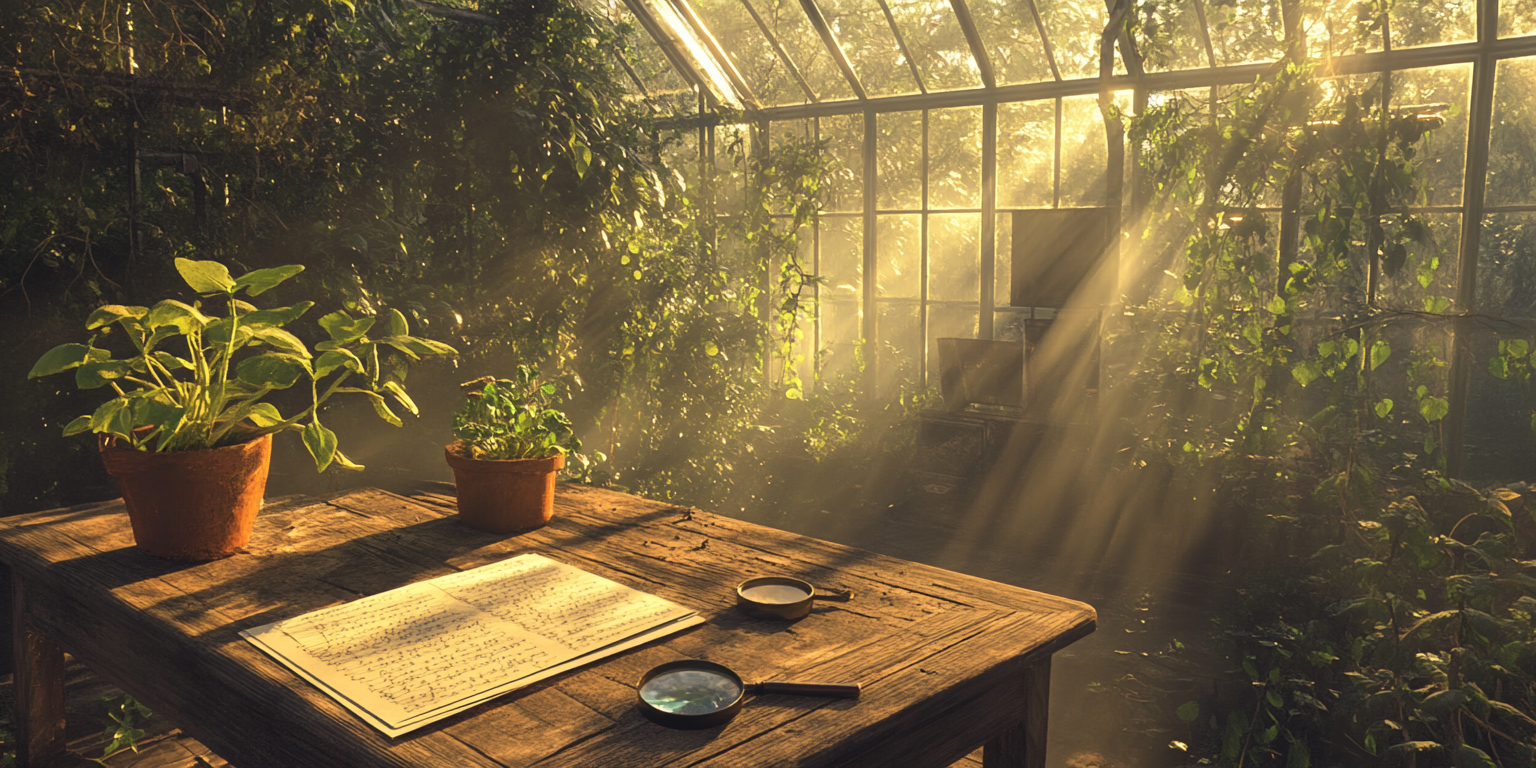
Yet Isla's education extended well beyond school walls. Weekends at Campbell Estate introduced her to the greenhouses where her grandmother Moira cultivated specimens whose significance Isla sensed without fully understanding. She watched her father tend plants with care that exceeded ordinary horticultural interest, noted the locked sections she was not permitted to enter, absorbed the unspoken understanding that certain aspects of family life operated according to rules that would be explained when she was ready to receive them.
She developed habits of documentation that reflected both parents' influence—her mother's editorial precision expressed through her own emerging practice of photography and journaling. Isla photographed the estate's gardens methodically, creating personal archives that tracked seasonal changes and growth cycles. Her journals recorded observations in language increasingly technical as her understanding developed. These practices, begun as childhood hobby, would later prove unexpectedly valuable when circumstances demanded detailed knowledge of what the Campbell greenhouses contained.
The Leaf and Bean Café provided different education. Isla spent hours there during school holidays and weekends, watching her father manage staff and customers, absorbing the rhythms of hospitality work. She learned to recognise regulars, to anticipate busy periods, to understand how small businesses functioned within their communities. The café taught her that competence had social dimensions—that being good at something meant nothing if you could not work effectively with others.
The Loss
Eloise Margaret Campbell died on 19 November 2016, five weeks before Isla's tenth birthday. The illness that claimed her mother had progressed with terrifying speed, transforming ordinary autumn into catastrophe within weeks. Isla watched her mother weaken, visited hospital rooms that smelled of disinfectant and desperation, tried to understand what the adults' careful faces were attempting to conceal. She was nine years old, and the world was ending.
The funeral, held at Greyfriars Kirk on 24 November, required Isla to perform composure she did not feel. She sat in the front pew holding Rowan's hand whilst Maeve wept against their grandmother's shoulder, her own tears held behind the same analytical focus she brought to everything. She listened to her grandfather Alasdair speak when her father could not, watched the coffin proceed down the aisle, stood at the graveside in Morningside Cemetery as earth scattered across polished wood. She remembered everything—the sounds, the smells, the quality of November light, her father's absolute stillness beside her. She would carry these memories with perfect clarity for the rest of her life.
The months following Eloise's death reshaped Isla's understanding of herself and her place within the family. Her father struggled to maintain function; her sisters required care and reassurance he was not always capable of providing; the household threatened to collapse under the weight of grief it was suddenly required to bear. Isla responded by assuming responsibilities that should not yet have been hers, her natural leadership accelerating into necessity.
She ensured Maeve completed homework, supervised Rowan's bedtime routines, mediated conflicts her father lacked energy to address. She became the steady presence her sisters needed, the reliable element in a domestic situation characterised by unreliability. Adults who observed her during this period recognised both the value of what she provided and the cost it extracted—a nine-year-old should not have to hold her family together, however capably she performed the task.
Return to Campbell Estate
The decision to leave Morningside for Campbell Estate came in early 2017, when it became clear that Daniel could not maintain household, café, and his own precarious stability simultaneously. Alasdair and Moira offered what generations of Campbell parents had provided—the family home as refuge, grandparental support during crisis, the structure that grief had disrupted restored through expanded household.
For Isla, the move meant leaving the flat where her mother's presence lingered in every room, exchanging urban proximity for the estate's six acres along Braid Hills Drive. The transition required adjustment—new routines, different rhythms, the integration of grandparents into daily life rather than weekend visits. Yet Isla adapted with characteristic efficiency, recognising that the change served everyone's needs even if it meant surrendering the familiar.
The estate provided space her grief required. She could walk the grounds alone when solitude was necessary, retreat to her bedroom in the main house when company overwhelmed, visit her mother's grave at Morningside Cemetery when connection to the lost demanded physical expression. The greenhouses offered different solace—living things requiring care regardless of human emotional states, the plants' indifference to her sorrow somehow comforting in its constancy.
Her relationship with her grandparents deepened through proximity. Alasdair shared historical knowledge accumulated across decades of archival work, treating Isla as worthy intellectual companion rather than merely grandchild requiring entertainment. Moira introduced her more fully to botanical practice, explaining cultivation techniques and plant biology with increasing sophistication as Isla's understanding developed. The estate became classroom as much as home, her education continuing through direct engagement with the Campbell legacy.
The cottage built for Alasdair and Moira in 2018–2019 established the arrangement that would characterise the following years—three generations sharing estate grounds whilst maintaining appropriate domestic independence. Isla helped where she could during construction, her practical instincts finding satisfaction in the tangible progress of walls rising and spaces taking shape. The cottage's completion marked transition from crisis management to sustainable configuration, the family finding new equilibrium around the absence that had disrupted its previous form.
Boroughmuir and Academic Development
Isla's transition to Boroughmuir High School coincided with the family's stabilisation at Campbell Estate. The school, with its strong academic reputation and diverse student body, provided environment suited to her developing abilities. She excelled in sciences—biology, chemistry, physics—whilst maintaining strong performance across the curriculum. Her teachers described her as mature beyond her years, possessed of quiet confidence that set her apart from peers still navigating adolescent uncertainty.
Biology emerged as her particular passion, the study of living systems engaging her analytical temperament whilst connecting to the botanical knowledge she was absorbing at home. She found satisfaction in understanding how organisms functioned, how ecosystems maintained balance, how genetic information transmitted across generations. The hybrid plants in her grandmother's greenhouses gained new significance as her scientific education provided frameworks for comprehending what made them unusual.
Her interest in environmental science developed alongside her botanical focus, concern for ecological systems extending beyond academic requirement into genuine commitment. She understood that the plants her family cultivated existed within larger contexts—that preservation meant nothing if the world those plants inhabited was destroyed through human carelessness. This perspective would later inform her approach to the family legacy, her scientific training shaping how she understood both what the Campbells guarded and why it mattered.
Photography and journaling continued as practices connecting her to her mother's memory whilst serving her own purposes. She documented the estate's specimens with increasing sophistication, her images capturing details that supported botanical understanding rather than merely aesthetic appreciation. Her journals evolved from childhood observations into systematic records, her entries reflecting the scientific precision she was developing through formal education.
By her final years of secondary school, Isla had identified her academic trajectory—botany or environmental science at university, formal credentials supporting the informal education she had received since childhood. The path seemed clear: she would study what her family had cultivated for generations, bring scientific rigour to traditional knowledge, carry forward Campbell stewardship through contemporary means. She applied to appropriate programmes, received conditional offers, anticipated beginning university study in autumn 2025.
Leadership Among Sisters
The years at Campbell Estate solidified Isla's role as eldest sister into something more complex than birth order alone would have created. She had assumed protective responsibility during the crisis following their mother's death; that responsibility persisted as the sisters grew, its expression evolving alongside their development.
With Maeve, Isla maintained the complementary dynamic established in childhood—her analytical approach balancing her sister's emotional intelligence, her practical focus grounding Maeve's creative flights. They collaborated on projects that drew on both their strengths: Maeve's artistic vision combined with Isla's organisational capability, imagination anchored by implementation. Their bond deepened through shared loss and shared adaptation, the sisters understanding each other's grief without requiring explicit discussion.
With Rowan, Isla's relationship took different form. The nearly four-year age gap meant she had always been more guardian than peer to her youngest sister, and Rowan's practical temperament created partnership rather than the complementarity she shared with Maeve. They worked together on tangible tasks—Isla's scientific understanding informing Rowan's engineering instincts, botanical knowledge combining with mechanical skill to address problems neither could solve alone.
The three sisters formed configuration their parents had recognised years earlier—different strengths creating collective capability, each contributing what the others lacked. Isla led through competence and quiet direction; Maeve connected through empathy and creative vision; Rowan built and fixed and solved. Together, they constituted something more resilient than any individual, their unity both comfort and resource as they grew toward adulthood.
The Greenhouse and Growing Knowledge
Isla's relationship with the Campbell Estate greenhouses evolved across her adolescent years from childhood curiosity into genuine understanding. Her grandmother Moira had always maintained boundaries around the most sensitive specimens, the rear sections remaining off-limits until Isla demonstrated readiness to receive what they contained. That readiness emerged gradually, Moira's judgement calibrated to Isla's developing maturity and scientific sophistication.
The knowledge Isla acquired differed fundamentally from what her formal education provided. University-bound botany students learned about plant biology through textbooks and laboratory exercises; Isla learned about specimens that defied the frameworks those textbooks described. She came to understand that the soil sustaining certain plants had been transported from elsewhere—from Clivilius, a word she encountered first in whispered conversation and gradual explanation. She learned that the hybrid plants' properties exceeded what terrestrial biology could account for, that their cultivation required techniques passed through generations of Campbell stewardship.
Her scientific training both helped and complicated this learning. The analytical frameworks she had developed provided tools for organising information about the unusual specimens, but those same frameworks highlighted how thoroughly the plants exceeded normal parameters. Isla found herself occupying uncomfortable territory between conventional understanding and family knowledge that challenged everything conventional understanding assumed.
She responded characteristically—documenting what she observed, seeking patterns in the anomalous data, trying to reconcile scientific method with phenomena that resisted scientific explanation. Her photographs captured details her grandmother pointed out; her journals recorded observations that might prove significant. She approached the family legacy as she approached everything: systematically, thoroughly, with attention to evidence rather than assumption.
The Festival and Escalating Pressure
The events of early April 2025 thrust Isla into circumstances her preparation had anticipated only abstractly. The family's participation in local festival activities—the Leaf and Bean's booth, the specialty drinks incorporating carefully selected ingredients—placed their botanical work in public context where it had previously remained private. Isla found herself managing logistics, coordinating her sisters' contributions, maintaining the operational efficiency that successful festival participation required.
Yet beneath the surface activity, pressure was building that Isla sensed without fully comprehending. She noticed strangers whose attention seemed too focused, observed her father's increasing tension, recognised that the careful boundaries her family had maintained were somehow under threat. Her analytical instincts identified patterns suggesting surveillance; her protective instincts heightened accordingly.
The escalation, when it came, exceeded anything she had imagined. The fire that consumed Campbell Estate on 7 April 2025 destroyed not merely buildings but the physical foundation of everything her family had maintained for generations. The greenhouses, the archives, the main house where she had grown from grieving child into capable young woman—all reduced to ash and rubble within hours. The cottage survived, preserving her grandparents' immediate shelter, but the estate as functioning entity ceased to exist.
What Inheritance Requires
In the aftermath of destruction, Isla discovered that the legacy she had observed from childhood now demanded her direct participation. The Portal Keys of the Stewart Sisters—artefacts whose significance she had understood only theoretically—passed to her and her sisters, marking them as new Guardians of New Edinburgh in Clivilius. The inheritance she had anticipated receiving gradually, through years of continued preparation, arrived instead through catastrophe that permitted no gradual adjustment.
The university plans she had made became irrelevant. The trajectory she had envisioned—formal education leading to scientific career, credentials supporting traditional stewardship—dissolved in the face of circumstances that required immediate rather than eventual contribution. Isla found herself confronting responsibilities she had not chosen but could not refuse, her natural leadership now operating in contexts that exceeded anything her eighteen years had prepared her for.
She approached these new demands as she had approached everything since childhood—with analytical attention, protective instinct, and the quiet competence that had sustained her family through previous crises. Her mother had died when Isla was nine; she had held her sisters together through that loss and its aftermath. Campbell Estate had burned; she would help her family navigate what came next. The pattern was familiar even if the circumstances were not: observe, understand, act, protect.







