Isabella Jane Taylor
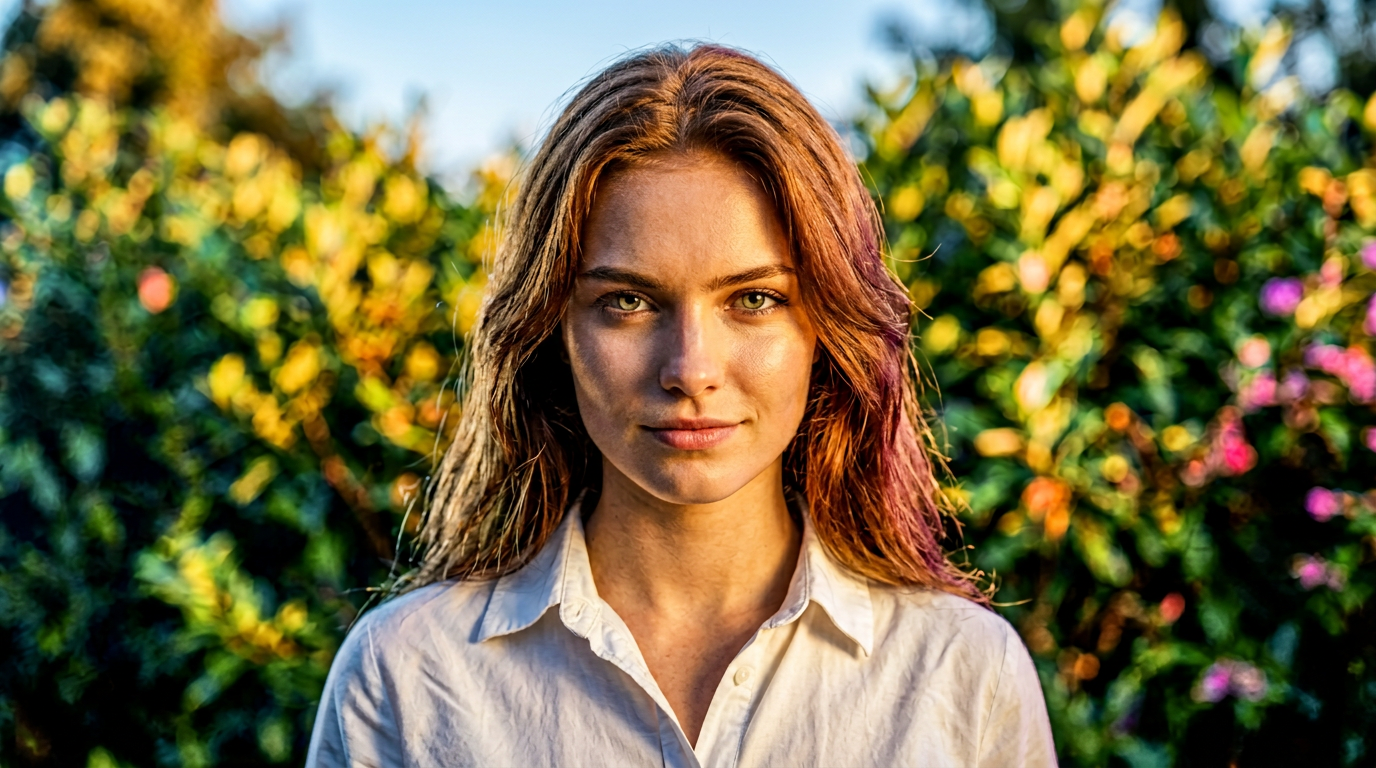
Isabella Jane Taylor, born on 14 February 2008 in Brisbane, was the middle child of Richard Taylor, a software engineer, and Fiona Taylor, an environmental scientist. She grew up in The Gap with her brother Thomas and sister Sophie. After the Brisbane school bus passed through a Portal into Clivilius on 5 August 2018, Isabella channelled her ecological training into building habitats from scratch at the Bixbus Wildlife Sanctuary, becoming one of the settlement's earliest ecological engineers.
The Middle Taylor
Isabella Jane Taylor was born on 14 February 2008 at the Mater Mothers' Hospital in South Brisbane, the second child and elder daughter of Richard Alan Taylor, a software engineer, and Fiona Louise Taylor (née Spencer), an environmental scientist. The family lived in a Queenslander on a sloping block in The Gap, in Brisbane's north-western suburbs, where the backyard dropped away into a gully choked with lantana and native figs and the possums that ran across the roof at night were a source of fascination to the children and resigned tolerance from Richard, who repaired the damage they caused without complaint.
Isabella arrived two years after her brother, Thomas Richard Taylor, born on 9 August 2006, and three years before her sister, Sophie Claire Taylor, born on 22 November 2010. She was the middle child, and the position defined her more than she would have acknowledged — sandwiched between Thomas's steady, self-contained competence and Sophie's bright, insistent need to be noticed, Isabella occupied the particular middle ground of a child who was neither the eldest's prototype nor the youngest's novelty but something of her own making.
Richard had grown up in Ipswich, the son of Alan Taylor, a diesel mechanic at the Swanbank Power Station, and Judith Taylor (née Connolly), a library assistant. He was the younger of two — his brother, Peter, five years older, worked as a plumber in Bundaberg. Richard had studied computer science at the Queensland University of Technology and worked for a software consultancy in the city, building database systems for mining companies and government departments with the quiet reliability of a man whose pleasure came from making things work correctly.
He did not talk about his work at home. He talked about his garden, which he tended on weekends with a methodical attention that Fiona described as his actual vocation.
Fiona was from the Sunshine Coast, the daughter of James Spencer, a builder, and Rosemary Spencer (née Walsh), a nurse. She was the eldest of three — a brother, Michael, who ran a landscaping business in Caloundra, and a sister, Elizabeth, who taught high school mathematics in Nambour. Fiona had studied environmental science at Griffith University, completed an honours year on riparian vegetation management, and worked for the Queensland Department of Environment, where her job involved assessing the ecological condition of waterways in the south-east corner. The work took her into creeks and rivers with waders and sample jars, and she came home smelling of mud and photosynthesis, and Isabella followed her around the kitchen asking questions about what she had found.
The questions began before Isabella could read. What was that in the jar? Why was the water that colour? Did the bugs have names? Fiona answered with the patient specificity of a scientist who believed that children deserved accurate information and that simplification was not the same as condescension. By the time Isabella was five, she could name a dozen species of freshwater macroinvertebrate by sight and explain, in terms that were crude but not wrong, why their presence or absence indicated the health of a waterway. She could not ride a bicycle without wobbling. She could tell you what a mayfly larva ate.
Thomas tolerated his sister's enthusiasms with the weary patience of an older brother who had learned that arguing was futile. Sophie, three years younger, absorbed them — trailing after Isabella in the garden, mimicking her collection methods, presenting her parents with specimens that were invariably dead leaves and claiming, with the unshakeable confidence of a five-year-old, that they were rare. The household dynamic was particular: Richard providing quiet infrastructure, Fiona providing intellectual fuel, Thomas providing the ballast of normalcy, Sophie providing noise, and Isabella occupying the centre, pulling threads from every direction and weaving them into projects that nobody had asked for and that the family had learned not to resist.
The Girl with the Journal
Isabella entered Brisbane Grammar School in Year 3 in 2016. The fees were managed through Richard's salary and a careful budget that Fiona maintained on a spreadsheet she updated weekly, a habit Richard teased her about and then quietly adopted for his own expenses. Thomas was in Year 5 when Isabella arrived, and his presence provided her with the social scaffolding that younger siblings at large schools rely on — he pointed her to the right classrooms, warned her which teachers were strict, and then, with the efficiency of a boy who had his own concerns, left her to it.
Her academic work was strong across the board. Her reading was advanced, her writing structured and detailed in a way that reflected Fiona's influence — Isabella's Year 3 teacher noted that the child wrote about nature with the precision of a field researcher and about everything else with the reluctant competence of someone fulfilling a contract. Her numeracy was good. Her science was exceptional, with a particular depth in ecology and environmental systems that the curriculum barely touched at that level.
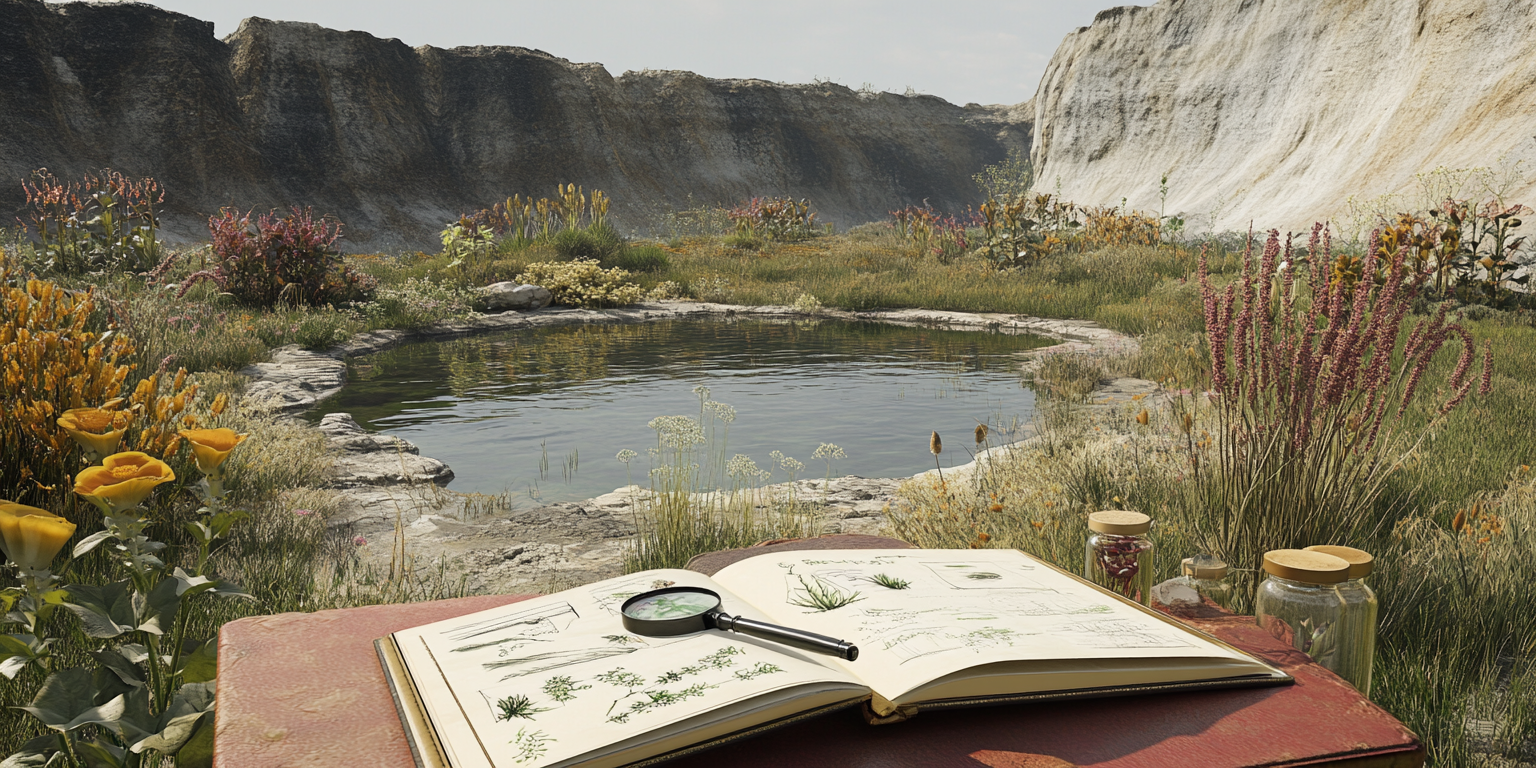
She kept a field journal. The habit had begun at home, encouraged by Fiona, who had given Isabella a hardback notebook and told her to write down what she saw, when she saw it, and what she thought it meant. Isabella took the instruction with a literalness that exceeded the intention. The journal accompanied her everywhere — to school, to parks, to family barbecues where she sat in corners drawing the ants that had found the dropped sausages. By Year 5, the journal was on its fourth volume, the entries increasingly organised, the observations increasingly specific, the drawings increasingly competent. She was not an artist. She was a recorder, and the recording was the point.
She was well-liked at school, though the liking was not universal. She had the particular social quality of a child who was confident in her interests and did not adjust them for approval, which produced admiration from some classmates and mild irritation from others. She organised a litter clean-up in Year 4 that nobody had asked for and that the groundskeeper found condescending. She corrected a Year 6 student who had called a blue-tongued lizard a blue-tongued skink, which was taxonomically correct but socially unwise.
She formed a friendship with Noah Jones over a shared interest in the natural world, though their approaches were different enough that the conversations were as much argument as agreement — Noah talked about deep time and rock formations, Isabella talked about the living systems that sat on top of them, and neither conceded that the other's subject was more important.
Samples and Scattered Glass
The field trip to D'Aguilar National Park was announced in July 2018 for the weekend of 4–5 August. Isabella, in Year 5, prepared for it with a thoroughness that Fiona recognised as her own. The field journal was packed. Sample jars were cleaned and labelled. A magnifying glass, a pair of forceps, and a small plastic tray for sorting specimens were arranged in a canvas bag that Isabella had organised with the efficiency of someone who expected to do serious work.
At D'Aguilar, Isabella was precisely the student Susan Clarke hoped to see on a nature excursion — engaged, questioning, and observant in ways that went beyond what the guided walk required. She asked about the canopy composition, the undergrowth species, the absence of certain birds from areas where she expected to find them. She collected leaf litter samples and examined them with the magnifying glass, noting the invertebrate species she could identify and sketching the ones she could not. She spent the campfire evening discussing the day's findings with Noah, the two of them bent over her journal with the absorbed intensity of children who had found the one person in their cohort who spoke their language.
The bus departed D'Aguilar on the morning of 5 August. Isabella had her journal open, writing up the previous day's observations in the neat, systematic format Fiona had taught her.
The bus passed through a Portal that opened across a road in the Brisbane suburbs and collided with vehicles on the far side, in the landscape of Clivilius. The impact threw Isabella sideways across the seat. Her right knee struck the metal bracket that secured the seat ahead, splitting the skin and producing a deep bruise that spread, over the following hours, into a swelling that made the joint stiff and painful to bend. The sample jars shattered — glass and water and preserved specimens scattering across the floor beneath the seats. Her journal flew from her hands and landed three rows ahead, its spine cracked, its pages bent.
She retrieved the journal before she allowed anyone to look at her knee. The action was not bravery. It was priority — the journal contained two years of observations and she could not replace them and the knee, whatever was wrong with it, was still attached. She held the damaged journal against her chest and sat on the floor of the bus, her back against the seat, her right leg extended in front of her because bending it had become impossible, and she watched the landscape outside the cracked window with the same systematic attention she had applied to the leaf litter at D'Aguilar, except that what she was looking at now was not something she could name.
The Land Without a Textbook
The knee healed slowly. The bruise turned from purple to green to yellow over three weeks, and the stiffness persisted for two months, a grinding reluctance in the joint that made walking on uneven ground painful and running impossible. The journal survived — cracked spine, bent pages, but legible, and Isabella treated its preservation as evidence that the things that mattered could endure damage if you held onto them tightly enough.
In the first weeks at the Bixbus settlement, Isabella was angry in a way that the other children were not. Some of them were frightened. Some were withdrawn. Some were numb. Isabella was furious — at the situation, at the adults who could not fix it, at the landscape that was barren and wrong and offered nothing she could recognise. The fury was not productive and she knew it, which made it worse, because knowing that anger was useless did not make it stop. She directed it inward, into the journal, where she began documenting the Clivilius environment with the meticulous rage of a scientist confronting a dataset that refused to behave.
She entered the Learning Grove in September 2018 and Jenny Triffett placed her in an ability group near the top of her age cohort. Her reading was advanced. Her writing was exceptional — clear, organised, structured in a way that most ten-year-olds could not achieve. Her numeracy was strong. Her science was the best in the school, and Triffett said so, which Isabella accepted without visible response because she had already known it.
The afternoon practical sessions did not produce the immediate alignment that some children experienced. Emily Martin had found her niche in a cross-site rotation between the Verdant Nursery, the Orchard of Abundance, and the Haven of Wilds, observing the interconnected systems between them. Isabella tried the same sites and found them insufficient — not because they lacked interest but because observation alone was not enough. Emily watched and recorded. Isabella wanted to change things. She wanted to build.
The distinction emerged slowly. At the Verdant Nursery, Isabella did not just observe which plants grew and which failed — she designed experiments, crude but systematic, testing soil amendments and watering schedules and light exposure variations. At the Haven of Wilds, she did not just watch the animals — she assessed the enclosure environments, identified deficiencies in habitat design, and presented the supervisors with suggestions that were detailed enough to be useful and confident enough to be annoying. She was ten years old, and she was redesigning habitats, and some of the adults found the combination of competence and presumption difficult to manage.
The Bixbus Wildlife Sanctuary became her anchor. As the settlement's conservation efforts formalised into a dedicated facility, Isabella was drawn to the work of building something from nothing — taking a barren landscape and creating, through deliberate intervention, an environment where Earth species and Clivilius-native organisms could coexist. The work was ecological engineering before she had a name for it. She designed planting schemes. She tested soil-building techniques. She monitored water quality and drainage and the slow, painstaking process of establishing vegetation in ground that had never supported it. The sanctuary supervisors gave her increasing responsibility, not because she was a child prodigy but because she did the work, consistently and well, and the work needed doing.
Building What Wasn't There
The transition to Bixbus School in late 2019 gave Isabella a permanent base for her academic work and a formal structure for her afternoons at the Wildlife Sanctuary. Her mornings were spent in classrooms where she was the strongest science student in her cohort and where her other subjects were strong enough that the teachers had little to say about them except that the work was done and done well. Her afternoons were spent at the sanctuary, where her role had evolved from enthusiastic volunteer to something closer to junior researcher.
By thirteen, she was running her own experimental plots — small sections of the sanctuary where she tested different approaches to habitat establishment, comparing soil amendment strategies, measuring vegetation growth rates, documenting which species combinations produced stable micro-ecosystems and which failed. The experiments were not always successful. Some of her planting schemes collapsed. Some of her soil amendments produced results she had not predicted. She recorded the failures with the same precision she applied to the successes, because Fiona had taught her that a well-documented failure was more valuable than an unexplained success, and the lesson had lodged in Isabella with the permanence of something she believed because she had tested it herself.
Her social world was shaped by her work. She and Noah Jones maintained a friendship that had deepened from the bus-seat conversations of their childhood into a genuine intellectual partnership — his geological understanding of the land beneath the surface complemented her ecological understanding of what could grow on top of it, and the two of them produced joint analyses that the city's planners consulted when expanding green infrastructure. She had other friends — students at the school, peers at the sanctuary — but the friendships were filtered through her intensity, which some people found energising and others found exhausting.
She was not easy to live with, and she knew it. The anger that had characterised her first months in Clivilius had softened into something more permanent and more useful — a stubborn, driving dissatisfaction with the way things were that fuelled her work but sometimes spilled into her relationships. She argued with sanctuary supervisors about methodology. She argued with peers about environmental priorities. She argued with herself, in the journal, about whether the work she was doing mattered enough to justify the compromises it required.
She missed her family with a specificity that matured as she did. At ten, she had missed them as presences — Thomas's solidity, Sophie's noise, her mother's creek-water smell, her father's quiet gardens. At fifteen, she missed them as people she could no longer know — Thomas would be seventeen, nearly a man, and she did not know what kind of man. Sophie would be twelve, and the little girl who had collected dead leaves and called them specimens existed now only in Isabella's memory. The journal she kept contained, in its back pages, letters she wrote to her family that she could not send, recording the things she had learned and done, addressed to people who could not read them.
Bixbus grew around her. The settlement became a city. The Wildlife Sanctuary, which had begun as an ambitious experiment in a barren landscape, became an established institution, its ecosystems maturing, its research programme expanding, its contribution to the city's environmental health increasingly recognised. Isabella had been part of it from the beginning, and the work had shaped her as much as she had shaped the sanctuary.
The Science of What Comes Next
Isabella enrolled at the Clivilius National University in 2026, at eighteen, in the Bachelor of Environmental Science and Ecological Engineering programme. The decision was obvious to everyone who knew her and had been obvious to Isabella for years — the programme formalised the work she had been doing at the sanctuary since she was ten, providing the theoretical frameworks and research methodologies that her practical experience had not given her. She walked into the Faculty of Environmental Sciences with eight years of field data in her journals and the particular confidence of a student who had already done the work and was enrolling to learn why it had worked.
The university's campus along the south-eastern banks of the Bixbus River was, to Isabella, evidence of the same transformation she had watched in the Wildlife Sanctuary — a deliberate act of creation in a landscape that had offered nothing. The lecture halls and laboratories and planted courtyards were not natural. They had been built, designed, willed into existence by people who had refused to accept the barrenness of the world they had been given. Isabella understood the impulse at a level that was not intellectual but personal, because she had spent her adolescence doing the same thing at a smaller scale.







