Henry James Killerton
Henry James Killerton (17 May 1825 – 12 November 1922) was a Boston-born archaeologist whose career spanned more than half a century of excavation, publication, and academic mentorship. Younger son of merchant George William Killerton and Elizabeth Anne née Harding, he studied classical archaeology at Harvard University from 1842 to 1846 and spent the greater part of his professional life pursuing the interconnections of ancient Mediterranean and Mesopotamian civilisations. His most celebrated work was conducted in partnership with Dr. Victor Armitage, culminating in the 1873 Uruk expedition that yielded discoveries of lasting scholarly significance. He married the English archaeologist Eleanor Rose March on 12 September 1869, and died at the age of ninety-seven, having outlived his parents, his brother Charles, his sister-in-law Mary Louise, and very nearly his nephew Francis.
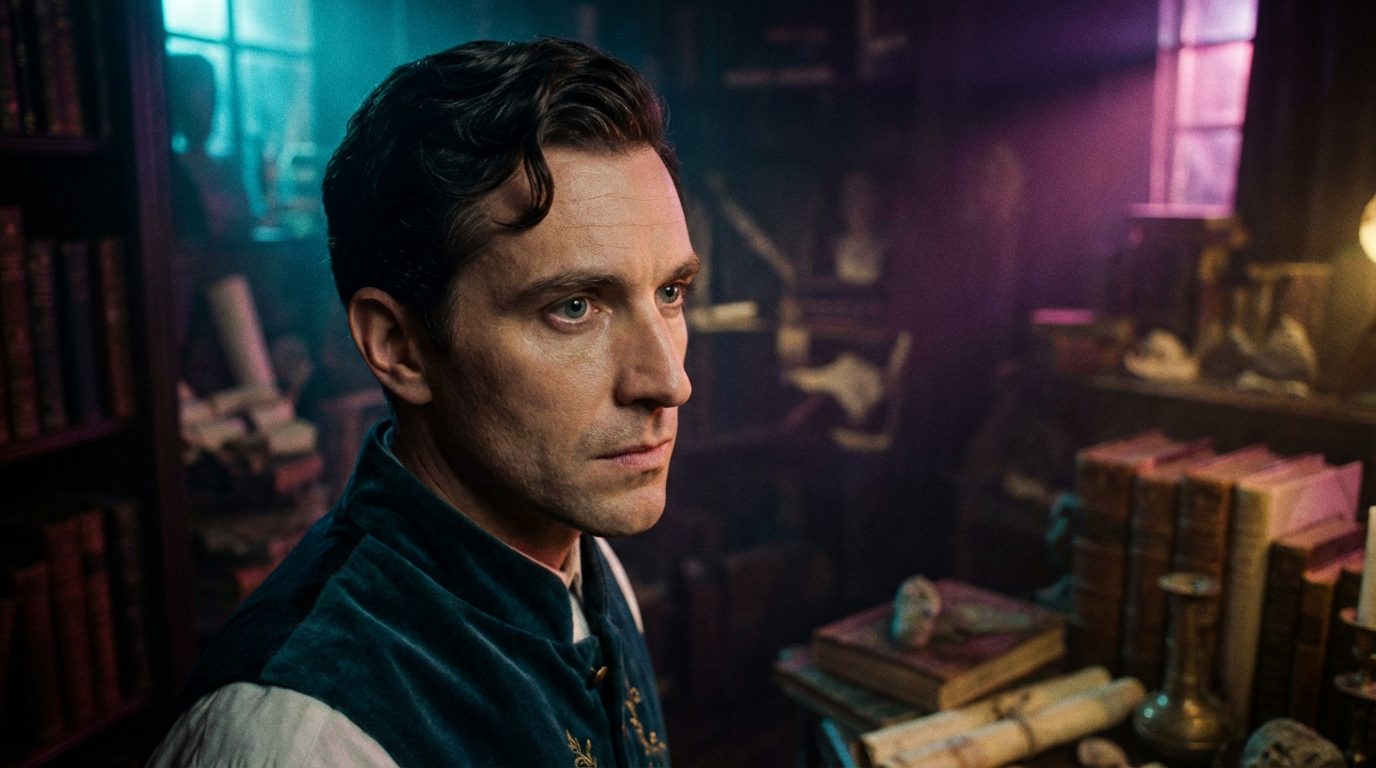
The Younger Son: Beacon Hill and the Pinckney Street Household
Henry James Killerton was born on 17 May 1825, in the family home on Pinckney Street, Beacon Hill, Boston, the second son of George William Killerton and Elizabeth Anne Killerton, née Harding. By the time Henry arrived, the Killerton household was already a formed and purposeful thing — his father's trading company was established and growing, the Pinckney Street house represented a deliberate statement about where the family had arrived from George's North End origins, and his elder brother Charles Edward, five years his senior, was already displaying the methodical, spatially minded seriousness that would eventually carry him to MIT and architecture.
Henry was, from the beginning, something different. Where Charles was contained, Henry was expansive. Where Charles preferred questions with determinate answers, Henry was drawn equally to the questions that had none. He had his mother Elizabeth's social ease and something of her warmth — a quality of genuine, unhurried interest in whoever happened to be in the room with him that made him easy company and a natural conduit between people who might not otherwise have found their way to one another. George Killerton, whose own temperament ran to the spare and the practical, watched this second son with the mild bafflement of a man who recognised a fundamental difference in kind without knowing quite what to do with it. Elizabeth understood it rather better, and the particular quality of her encouragement of Henry's intellectual curiosity — finding him volumes of classical history, arranging the encounters that fed his early obsession with the ancient world — was one of the more consequential forms of parental support in the Killerton family's history.
The household on Pinckney Street in the late 1820s and 1830s was not short of books. George maintained a library adequate to a successful Boston merchant, and Elizabeth had supplemented it with volumes from her own formation in Salem, including a set of Gibbon's Decline and Fall and a popular account of the Greek and Roman antiquities that Henry encountered before he was ten and read with a fixity of attention that stood out against his usual difficulty with sustained sitting. It was not the stories of battles and emperors that held him — though these were not without interest — but something more fundamental: the strangeness of it, the sense that the ground beneath the present world concealed entire other worlds, entire other systems of thought and practice and value, waiting to be understood. He was a child who had come to the right idea too early to be able to articulate it, and for several years it operated as a disposition rather than a programme.
Boston Latin School and the Formation of an Archaeologist
Henry enrolled at Boston Latin School in 1832, a year when Charles was already twelve and well advanced through the school's demanding classical curriculum. The two brothers walked to School Street together through the 1830s in the manner of siblings who are genuinely different from one another but not, on balance, at odds — Charles absorbed in whatever structural problem he was currently turning over in his mind, Henry talking with the fluency that already distinguished him about whatever he had read most recently, which was usually history.
Boston Latin School's curriculum in the 1830s was grounded in the classical languages — Latin from the first year, Greek introduced later — and in the history and literature of the ancient world, which meant that what might elsewhere have been an eccentric private interest in antiquity was at Boston Latin simply the content of one's schooling. Henry excelled in the classical languages with a facility that his teachers attributed to genuine aptitude and that was, in truth, partly aptitude and partly the fact that the stories the languages unlocked were ones he was already invested in reading. He was less reliably attentive in arithmetic and the sciences, areas where Charles had been strong, and the difference between the two brothers in this respect was a running feature of their time at the school that Charles noted without unkindness and Henry acknowledged without apology.
He remained at Boston Latin through 1842, completing the full course of study at the age of seventeen. By the time he left, his particular interest had resolved itself sufficiently to have a name: it was archaeology rather than classical history as a purely textual discipline, fieldwork rather than the library, the object in the ground rather than the description of the object in the document. How this resolution had arrived was not entirely clear even to Henry himself — partly the influence of a junior master at the school named Mr. Elias Curtiss who had excavated briefly in Greece in his youth and spoke of it in terms that made the activity feel like philosophy conducted with a trowel, and partly the private logic of a temperament that required direct contact with its subjects to feel that understanding had actually occurred.
Harvard: 1842–1846
Henry's enrolment at Harvard University in 1842 was the result of his mother's advocacy and his father's grudging practicality. George Killerton's preference, not unreasonably expressed, was that a younger son who was not going into the family business would be better served by law or medicine than by an academic discipline whose vocational application he could not immediately identify. Elizabeth's counter-argument — that Henry's talent was specifically suited to classical archaeology, that Harvard was the natural place to develop it, and that George had not been so certain of Charles's architectural prospects either — was the argument that prevailed, which was not unusual in the Killerton household when Elizabeth had decided on a position.
Harvard's programme in classical archaeology in the early 1840s was not the institutionalised, well-resourced department it would later become; it was a collection of scholars pursuing related interests under the broad umbrella of classical studies, with more emphasis on the textual and theoretical traditions of European scholarship than on the emerging practice of systematic excavation. Henry absorbed what the programme offered and found it insufficient in a specific way: the reading was excellent, the theoretical framework increasingly compelling, but the distance between the library and the ground remained, at Harvard in 1842, very wide. What the programme gave him that he could not have given himself was the network — the connections with European scholars, particularly those working in the developing traditions of German and French classical archaeology, whose work was beginning to establish the methodological standards that would eventually define the discipline.
He graduated in 1846 with distinction, having produced a thesis on the trade networks of the ancient Mediterranean that drew on the available material and textual evidence for commercial exchange between Mesopotamian, Egyptian, and Greek civilisations. It was a work that his examining committee praised for its synthetic ambition and noted for certain gaps in its evidential base — gaps that Henry acknowledged with unusual clarity for a graduating student, as he understood them as the reason he needed to go to the places where the evidence was, rather than as limitations of his own analytical capacity.
His father attended the graduation ceremony with an expression that those who knew George Killerton well recognised as satisfaction communicated through the medium of composure.
The 1850s: Early Career and the Development of a Method
The decade between Harvard and Henry's meeting with Victor Armitage was one of steady, relatively unheralded professional development. Henry spent the early 1850s associated with Harvard's classical studies department in a junior capacity — lecturing occasionally, assisting with the cataloguing and analysis of materials held in the university's collections, and travelling, in 1852 and again in 1854, to sites in Italy and Greece as part of smaller expeditions organised through European scholarly connections he had developed during his degree.
These early expeditions were formative in a way that the better-known later work can obscure. It was in the excavations of a minor Roman site near Naples in the summer of 1852 that Henry developed what his later students and collaborators would come to call his method — not a formal procedure, exactly, but a set of working principles about the relationship between observation, documentation, and interpretation that distinguished his practice from the more cavalier approach to physical evidence that still characterised some of the field. He was meticulous without being slow, precise without losing the larger interpretive questions that gave precision its purpose. He documented in detail and then stepped back from the detail regularly enough to ask what it meant, which was a combination that proved rarer in practice than in principle.
He was thirty when his father founded the Boston Technical School for Tradesmen in 1840 — old enough to appreciate what George was doing and why, though his own relationship with trade as a subject was entirely historical. The Panic of 1857, which affected the Killerton household as it affected many Boston merchant families, touched Henry less directly than Charles — Henry's income from the university, modest as it was, did not depend on the commercial credit markets that George's business navigated — but he was aware of the strain in the household and visited Pinckney Street more regularly through 1857 and 1858 than his usual pattern required, which was its own form of familial solidarity.
Charles married Mary Louise Greenfield in 1845, and Henry's relationship with his sister-in-law was characterised from the beginning by a mutual recognition between two people who shared a quality of attentiveness. Mary Louise's directness appealed to Henry, whose own manner had no investment in social performance, and Henry's warmth and ease — so unlike Charles's more guarded expressiveness — provided Mary Louise with a brother-in-law whose company she found genuinely enjoyable rather than merely tolerable. Henry attended the christening of Francis Charles Killerton on 9 October 1850 as a man of twenty-five who had not yet married and who received his nephew's arrival with the uncomplicated delight of someone for whom the addition of new people to the world was inherently interesting.
Meeting Dr. Victor Armitage: 10 April 1861
On 10 April 1861 — the same week, as it happened, that the first shots were fired at Fort Sumter, South Carolina, that would begin the American Civil War — Henry attended a lecture series on Mesopotamian civilisations delivered by Dr. Victor Armitage at Harvard's Sanders Theatre. Henry was thirty-five years old, a recognised figure in the university's classical studies community though not yet at the full height of his scholarly reputation, and he had come to the lecture with an interest that was partly professional and partly the specific curiosity of someone who had been working on the theoretical frameworks of ancient cultural exchange for fifteen years and had not yet found a collaborator whose questions matched the scale of his own.
Francis, who was ten years old and had been brought by his uncle to Cambridge for the day in the manner of an educational expedition rather than a formal introduction, sat beside Henry in the lecture hall and understood perhaps a quarter of what Dr. Armitage said and the entirety of the atmosphere — the particular electric quality that the room acquired when someone was saying something that those listening recognised as important and unfamiliar at once.
Henry introduced himself to Armitage after the lecture in the anteroom of Sanders Theatre, a conversation that lasted considerably longer than either man had planned and that continued, after Francis had been returned to Pinckney Street and deposited with his parents, over supper at a tavern on Massachusetts Avenue. Armitage was, at that point in his career, a scholar of genuine brilliance whose methodological approach to Mesopotamian archaeology was several years ahead of the prevailing consensus in the field — he had developed a framework for reading the material evidence of ancient trade that complemented Henry's own theoretical work on Mediterranean interconnectivity in ways that were not immediately obvious and became clearer the longer they talked.
Henry was not a man given to instant enthusiasms; his warmth was real but it was not shallow, and the people he found genuinely interesting were not numerous. Armitage was genuinely interesting — intellectually precise, audaciously theoretical, possessed of a capacity for sustained argument that matched Henry's own. The friendship that formed over the following months was grounded in intellectual equality and mutual recognition, and it carried the particular intensity of two scholars who have found, later than usual, the conversation partner they had been looking for without quite knowing it.
What Henry observed in Armitage in 1861, and what he would continue to observe through the years of their collaboration, was a formidable and largely admirable mind. That this assessment would require revision — that the inscriptions deciphered at Uruk in May 1873 would set Armitage on a path that eventually led somewhere Henry could not have predicted and would not have endorsed — was a knowledge that came to Henry gradually, over years, and was one of the more painful recognitions of a very long life.
The Vindolanda Expedition: Summer 1864
In the spring of 1864, Henry and Armitage secured funding and institutional support for a joint excavation at Vindolanda, the Roman fort on Hadrian's Wall in Northumberland, England. The site had been known to antiquarians since the eighteenth century, but systematic excavation of the kind Henry and Armitage proposed — methodical, fully documented, attentive to the stratigraphic evidence as well as to the individual artefact — had not yet been undertaken with the rigour they intended to bring to it.
Henry took Francis with him. Francis was thirteen years old and had been demonstrating, in the drawing exercises he undertook at his mother Mary Louise's table and in the conversations he had with Henry during his uncle's visits to Pinckney Street, an increasingly specific intelligence about the relationship between built structures and the forces that time, weather, and use exerted upon them. Henry's decision to bring his nephew to Vindolanda was not entirely altruistic — Francis was capable and observant and could be genuinely useful — but it was also an act of deliberate mentorship, a recognition that the boy had something worth developing and that Vindolanda would develop it.
The expedition departed Boston in late May 1864 and arrived at Vindolanda in the third week of June. The site in summer was a landscape of rough moorland and low cloud, the remains of the fort visible as earthworks and foundation lines beneath the turf, the Wall itself stretching east and west across the ridge with the blunt permanence of Roman construction. Henry established the team's working protocol in the first days — the grid system for the excavation area, the procedures for recording finds in situ before their removal, the documentation requirements for every element of the stratigraphy — and set to work with the methodical patience that his students at Harvard found both admirable and occasionally daunting.
The most significant find of the Vindolanda season was a cache of writing tablets — thin wooden leaves inscribed with ink, remarkably well preserved in the waterlogged deposits of the fort's rubbish heap — that contained personal correspondence, supply requests, and operational records from Roman soldiers stationed at the fort in the late first and early second centuries. Henry's excitement at these tablets was of a particular quality: not the excitement of acquisition, which was Armitage's more visible response, but the excitement of contact — the sense that the distance between the present and the Roman garrison at Vindolanda had collapsed to the width of a sheet of wood and the trace of an ink stylus. He held a tablet containing a soldier's request for additional socks in the Northumberland autumn and felt, as he later wrote to his mother, that archaeology was justified by this one object.
Francis, who spent his days on the site learning to read the ground under Henry's intermittent instruction and Armitage's more impatient direction, returned to Boston at the end of the summer with an experience that had done something to the way he understood built things and the traces they left — an experience whose influence on his later engineering career was real even if it was not direct.
"Interconnectivity of Ancient Civilizations": 8 July 1867
The paper that Henry and Armitage co-authored and presented at Harvard on 8 July 1867 was the formal scholarly crystallisation of what had begun in the Sanders Theatre anteroom six years earlier. Titled "Interconnectivity of Ancient Civilizations: Trade and Cultural Exchange in the Mediterranean," it drew on the material evidence from Vindolanda and from Henry's earlier Italian and Greek fieldwork, combined with Armitage's theoretical framework for understanding Mesopotamian commercial networks, to argue that the ancient civilisations of the Mediterranean basin and the Near East were connected by patterns of exchange — in goods, in technologies, in ideas — that were more systematic and more consequential than the prevailing scholarly consensus had acknowledged.
The argument was not universally accepted. Several senior members of Harvard's classical studies faculty found its synthetic ambition excessive and its evidential base uneven — criticisms that were not entirely unfair, as both Henry and Armitage would acknowledge in private whilst defending the work publicly with the commitment of scholars who believe they are right. European reception was more favourable, particularly in Germany, where the developing tradition of scientific archaeology had produced a readier audience for the kind of methodologically explicit, cross-civilisational argument the paper advanced.
Francis, now sixteen and a year from enrolling at Boston Latin School himself, was present at the Harvard presentation — brought by Henry with the same deliberate intention that had motivated the Vindolanda invitation three years earlier. He sat in the second row and understood the argument well enough to discuss it with Henry afterwards, which was all Henry required of him at that stage.
The paper's publication in the Journal of Archaeological Studies in 1868 brought Henry and Armitage to the attention of a wider scholarly audience and established their partnership as one of the more productive in American classical archaeology. It also marked, in retrospect, the high point of the collaboration in terms of its straightforward intellectual character — the work done together in the years immediately following would be shaped, in ways that became visible only gradually, by the particular preoccupations that Armitage was developing and that the Uruk expedition would eventually bring to the surface.
Marriage to Eleanor Rose March: 12 September 1869
Eleanor Rose March had been born on 23 April 1831 in Cambridge, England, the daughter of an academic family whose connections to the university there had shaped her education and her intellectual formation. She had come to Boston in the late 1860s to pursue work connected with the classical collections at Harvard, and she was in the orbit of the university's archaeological community when she encountered Henry in 1867 or early 1868 — the precise occasion of their first meeting is not recorded with the clarity of some other Killerton encounters, which may reflect the private character both of them maintained about anything they considered genuinely important.
Eleanor was a scholar of real distinction in her own right, working primarily on the material culture of the ancient Near East with a particular interest in textile production and its relationship to trade networks — an area that had natural points of intersection with Henry's broader work on Mediterranean interconnectivity. She was also, by every account that survives in correspondence and in Henry's own later recollections, a woman of considerable intellectual confidence, accustomed to operating in academic environments that did not always welcome her with unqualified enthusiasm and having formed, through the experience, a settled sense of her own capacity that required neither external validation nor much patience with those who withheld it.
Henry, who had spent thirty-five years being the warmest person in most rooms he occupied, found Eleanor interesting and a little challenging, which was the correct response. She found him, after some initial uncertainty about whether his social ease was the same thing as his intelligence — it was not, they were separate qualities that happened to coexist — a man whose thinking was worth serious engagement. They were married on 12 September 1869 at the Park Street Church on Tremont Street, Boston, in a ceremony attended by the Killerton family — George William, now seventy-nine and four years from death, attended with Elizabeth and was photographed sitting beside Eleanor at the wedding breakfast with the expression of a man who has lived long enough to be pleased by things he did not originally understand. Charles and Mary Louise were present; Francis, nineteen, was a groomsman.
Their son George Henry Killerton was born on 8 August 1870, less than two months before Elizabeth Anne Killerton died on 2 November 1870. Henry was with his mother at Pinckney Street when she died, having brought Eleanor and the infant George Henry to Boston in October when it became clear that Elizabeth was failing. The proximity of the birth of his son and the death of his mother in the same autumn was an experience Henry rarely spoke of directly but which those who knew him well could detect as a permanent colouring in how he spoke about both of them. Their daughter Elizabeth Anne Killerton — named, without requiring explanation, for her grandmother — was born on 14 February 1873, in the final weeks of preparation for the Uruk expedition.
The Uruk Expedition: 1872–1873
The proposition of an expedition to Uruk — one of the oldest cities in human history, located in southern Mesopotamia — had been present in Henry and Armitage's conversations since at least 1868, when the "Interconnectivity" paper's reception had confirmed both the scholarly interest in ancient Near Eastern material culture and the need for new physical evidence to test and extend the theoretical frameworks they had developed. The practical obstacles were considerable: the logistical complexity of mounting an expedition to Ottoman-controlled southern Iraq in the 1870s, the funding required, the institutional support needed to give the expedition scholarly legitimacy, and the political arrangements necessary to secure permission to excavate and export finds.
Henry led the fundraising effort at Harvard, presenting the proposal on 14 March 1872 to a committee of potential benefactors assembled in the university's main hall. The presentation was, by the accounts of those present, a skilled performance — Henry's natural social confidence combined with genuine scholarly authority to make the case for an expedition that was ambitious enough to be exciting and structured enough to be credible. The funding was secured partly from Harvard and partly from private sources whose interest in antiquity was a combination of genuine scholarly curiosity and the Victorian gentleman's appetite for significant discovery. Francis, now twenty-one and finishing his final year at MIT, attended the presentation and was listed among the party being recruited for the expedition — in a logistical support capacity, though Henry's invitation had been extended with the understanding that his nephew would not be merely a porter.
Final preparations were completed in Boston through early March 1873. Eleanor, who had given birth to Elizabeth Anne only weeks earlier, remained in Cambridge with both children whilst Henry, Armitage, Francis, and the expedition's full team of scholars, assistants, and local liaison personnel departed Boston on 15 March 1873, boarding the SS Endeavour bound for the Mediterranean and the Gulf. They reached Basra after a crossing that included rough Atlantic weather and the long Mediterranean passage, travelled overland through the extraordinary sensory landscape of the Ottoman province to Baghdad, and arrived at the site of ancient Uruk in the second week of April.
The excavation ran from 15 April to early June 1873. What they found in those weeks exceeded the expedition's most optimistic projections, and Henry's detailed excavation journals — preserved at Harvard and referenced in the scholarly literature for decades afterward — record the sequence of discoveries with the precision that was his professional signature: the Scroll of Awareness on 19 April, uncovered in a sealed chamber beneath a partially collapsed ziggurat; the Amulet of Connection on 22 April, found in a stone box beneath the floor of a residential dwelling in the city's domestic quarter; the Chalice of Freedom on 24 April, in a temple alcove concealed behind a main altar; the Tree of Gratification statue on 25 April, in a communal courtyard; the Infinite Scroll of Knowledge on 30 April, behind a false wall in what appeared to have been a library or archive; and the Shielded Tree of Survival on 3 May, from beneath the foundations of a defensive structure at the city's perimeter.
Each of these objects required methodical excavation, in situ documentation, and careful removal — work that Henry supervised with the exacting attention that Vindolanda had sharpened and that Armitage sometimes chafed at when the pace of interpretation lagged behind the pace of discovery. Francis managed the logistical coordination of the camp with a competence that Henry acknowledged privately in his journals as more than merely adequate — the boy had an organisational intelligence, combined with a physical confidence on the site itself, that Henry had not fully anticipated.
On 10 May 1873, the expedition's finds were presented to Armitage and a team of linguists for the deciphering of inscriptions found on several of the artefacts. The session produced results that exceeded the documentary value Henry had anticipated: the inscriptions connected the artefacts to a tradition of knowledge and practice — associated in the texts with an entity referred to as the Guardian Order — that Armitage found immediately and intensely absorbing. Henry's own response to the inscriptions was scholarly interest; Armitage's, he noted in his journal without then understanding its significance, was something more personal. It was a distinction Henry would revisit, with increasing clarity, over the years that followed.
The expedition departed Mesopotamia on 15 June 1873 and returned to Boston in the late summer. Henry presented the expedition's findings at Harvard in October 1873 to considerable scholarly and public attention, and the subsequent publication of the excavation report — co-authored by Henry and Armitage, with Francis credited for logistical organisation and several specific finds attributions — was received as one of the significant contributions to Mesopotamian archaeology of the decade.
Harvard, Mentorship, and the Divergence from Armitage
In the years following the Uruk expedition, Henry's professional life took on a somewhat different character. He continued his research, publishing a series of papers through the 1870s and 1880s on Mesopotamian trade routes and social structures — work that appeared in the Journal of Archaeological Studies and that built systematically on the evidential foundations the Uruk excavation had provided. He taught with increasing seriousness, establishing through Harvard's archaeology department in 1875 a mentorship programme for younger scholars that was explicitly designed to do for them something of what Vindolanda and Uruk had done for Francis: to put them in the ground, to give them the experience of working a site with full methodological rigour, and to help them develop the interpretive frameworks that would make that rigour productive rather than merely precise.
His relationship with Armitage through the later 1870s and into the 1880s became gradually more complicated in ways that Henry found difficult to name with certainty and impossible to address directly. The intellectual partnership did not end abruptly — they continued to correspond, to appear at the same conferences, to cite one another's work. But the quality of Armitage's subsequent interests had shifted in ways that Henry found increasingly difficult to follow: a growing preoccupation with the more arcane implications of the Guardian Order inscriptions, an interest in certain uses of ancient knowledge that seemed to Henry to have moved some distance from archaeology into something else, a gradual withdrawal from the collaborative transparency that had characterised their best work. By the early 1880s, Henry had arrived at a position that might be described as watchful distance — he did not understand what Armitage was doing, but he understood that it had become something other than what they had set out to do together, and that he could not endorse it without knowing what it was.
The eventual knowledge — which came to Henry in fragments, through the 1890s and into the twentieth century, as the consequences of what Armitage was building began to become visible to those who were looking — was one of the more difficult reckonings of a professional life that had, in most other respects, accumulated only the satisfactions of genuine work well done. That his own excavations, his own careful documentation, his own trusted collaboration had contributed to the founding of the Consortium of Shadows was an irony too sharp for Henry to approach without considerable care, and he did not, in his published work or in any record that survived him, address it directly. What those who knew him well observed, in the 1890s and beyond, was a quality of particular seriousness when the subject of the Uruk inscriptions was raised — a pause before speaking, a precision in the choice of words, that differed from his usual ease and that those who understood its provenance respected as something that deserved to be left alone.
Charles's Death, Family Life, and the Long Middle Years
Charles Edward Killerton died on 5 June 1890 at the Pinckney Street house, at the age of seventy. Henry had been a visitor to that house throughout his adult life — more regularly than his expeditions and his Cambridge rooms allowed for, less regularly than he might have wished — and the death of his brother was a genuine and personal loss rather than an abstractly familial one. He arrived at Pinckney Street from Cambridge the morning after Charles's death and stayed in Boston for a week, lodging at a hotel on Tremont Street and calling at the house daily to sit with Mary Louise and Francis and, in the particular manner that Henry had always had with bereavement, to ensure that the people around him understood that the loss was recognised rather than merely managed.
His conversations with Francis in the days following Charles's death were among the more extended and direct that the two had had for some years. Francis was now thirty-nine, and Killerton Enterprises was already the nationally recognised firm that Francis's energy and vision had made it; he had been living in San Francisco since 1874 and the distance between them had reduced the frequency of their contact without diminishing its quality. Henry told Francis, on the last evening of his visit, that Charles's difficulties with direct expression of feeling had never reduced what he felt — that the stiffness was a manner, not a limitation, and that Francis should understand that his father had been proud of him in a way that George Killerton's son was simply not constituted to say plainly. Francis, who had known this without being told, was nonetheless glad to be told.
The 1890s brought Henry's children into their adult years — George Henry, born in 1870, who pursued the management of his parents' academic affairs with competence rather than scholarly ambition; and Elizabeth Anne, born in February 1873, who took to anthropology with the focused intellectual energy that her parents recognised as the family disposition in its most recent iteration. Eleanor's health was strong through the decade, and the household they had established in Cambridge — a house on Garden Street, close enough to Harvard to be convenient and far enough to have the quiet that sustained work required — was the most settled and purposeful that Henry had known since Pinckney Street.
He attended Mary Louise Killerton's funeral on 22 October 1900, twenty years after Elizabeth Anne's death had brought him to Boston in similar circumstances. He stayed again on Tremont Street, called at Pinckney Street, and this time sat with Francis alone, as Charles and Mary Louise were both gone and it was now the two of them negotiating what remained. Henry was seventy-five years old in 1900 and Francis was fifty, and the conversation they had in the Pinckney Street parlour beneath Mary Louise's portrait — the one she had painted of Elizabeth Anne in 1858, which had survived every reorganisation of the house — was one that both men carried for the rest of their lives without needing to describe it to anyone else.
The Harvard lecture Henry delivered in 1901, in which he spoke without naming his mother of the education that had mattered most to him and where it had been received, was attended by Eleanor and by Elizabeth Anne and by a crowded hall of students who understood that they were hearing something that had been a long time in the preparation and that would not be repeated.
The Final Decades: 1900–1922
Henry James Killerton lived into an era that bore almost no relationship to the Boston of his childhood. He was eighty-nine years old when the First World War began in August 1914, ninety-three when it ended in November 1918. He had known men who remembered the Napoleonic Wars; he lived to see the aftermath of a conflict that had remade the entire map of the world that his Uruk expedition had crossed in 1873. The Ottoman province through which he had travelled to Mesopotamia had ceased to exist. The scholarly networks of European archaeology that had been his professional environment since the 1840s had been fractured and in many cases destroyed by four years of industrialised warfare. He observed all of this from Cambridge with the particular quality of attention of someone who has outlived the world they were formed in and is watching a new one take shape around them with more interest than distress.
Eleanor died in 1909, in the Garden Street house, after a relatively brief illness that declared itself in the spring and concluded in the autumn. Henry was eighty-four. Their son and daughter were both present, and Henry managed the death of his wife with the composed practicality that he had developed across a lifetime of sitting with loss. He did not leave Cambridge; the Garden Street house was his home, and Eleanor's absence from it was real and permanent and had to be inhabited as a fact rather than circumvented by changing the surroundings. He continued to work — slower, more selective about what he could sustain, but still reading, still corresponding with former students, still attending the occasional Harvard seminar where the younger generation of archaeologists was working through problems that Henry recognised as descendants of the ones he and Armitage had first formulated in the anteroom of Sanders Theatre in April 1861.
Francis visited Cambridge in the spring of 1915 and again in 1919, on his way to and from San Francisco and the rebuilding work that had consumed the later decades of his career. Henry at ninety was an extraordinary presence — still clear-minded, still possessed of the social ease and warmth that had distinguished him throughout his life, but carrying also the weight of having outlived almost everyone he had ever known. He asked Francis about Eleanor Stanton Killerton, Francis's wife, who had died in February 1922 — the same year Henry himself would die in November — and Francis told him what could be told to someone who understood loss from the inside rather than the outside.
Francis's grandsons George Randolph and Edward Samuel, Henry's great-nephews, visited Cambridge in the early 1920s as young men of their own ambitions, and Henry, then in his nineties, received them with the interest he had always extended to the next generation — asking questions, listening to the answers, finding in their particular energies and preoccupations the evidence that the family's fundamental disposition toward the world — curious, purposeful, not easily discouraged — had survived the transmission from Pinckney Street to Pacific Heights and was continuing onward.
Death
Henry James Killerton died on 12 November 1922, at the Garden Street house, Cambridge, Massachusetts, at the age of ninety-seven. He had been in declining health since the spring of that year, and the end came in the second week of November with both his children at his bedside and a small number of former students and colleagues who had been part of his later years in Cambridge.
He was buried beside Eleanor at Mount Auburn Cemetery in Cambridge, in a plot separate from the Killerton family plot at which his parents and his brother lay. This was not estrangement but geography — he had lived his adult life in Cambridge, and Cambridge was where he remained.
Francis Charles Killerton, his nephew, died on 27 January 1925, two years and two months after Henry's own death. Henry had lived long enough to know that Francis was still alive and still himself; he had not lived to see Francis go, which was perhaps, in the arithmetic of a ninety-seven-year life, the correct order of things.
The mentorship programme Henry had established at Harvard's archaeology department in 1875 continued to operate under successive names and iterations through the twentieth century, training generations of scholars in the methodological principles he had developed at Naples, refined at Vindolanda, and proved at Uruk. His papers, deposited with the Harvard archive, were consulted and cited with increasing frequency as Mesopotamian archaeology developed into a discipline of greater institutional prominence in the decades following his death. What those papers did not contain — the account of what he had understood about Armitage, and when he had understood it, and what he had chosen to do and not to do with that understanding — was a silence that those who looked for it found complete.







