Henry Bradshaw
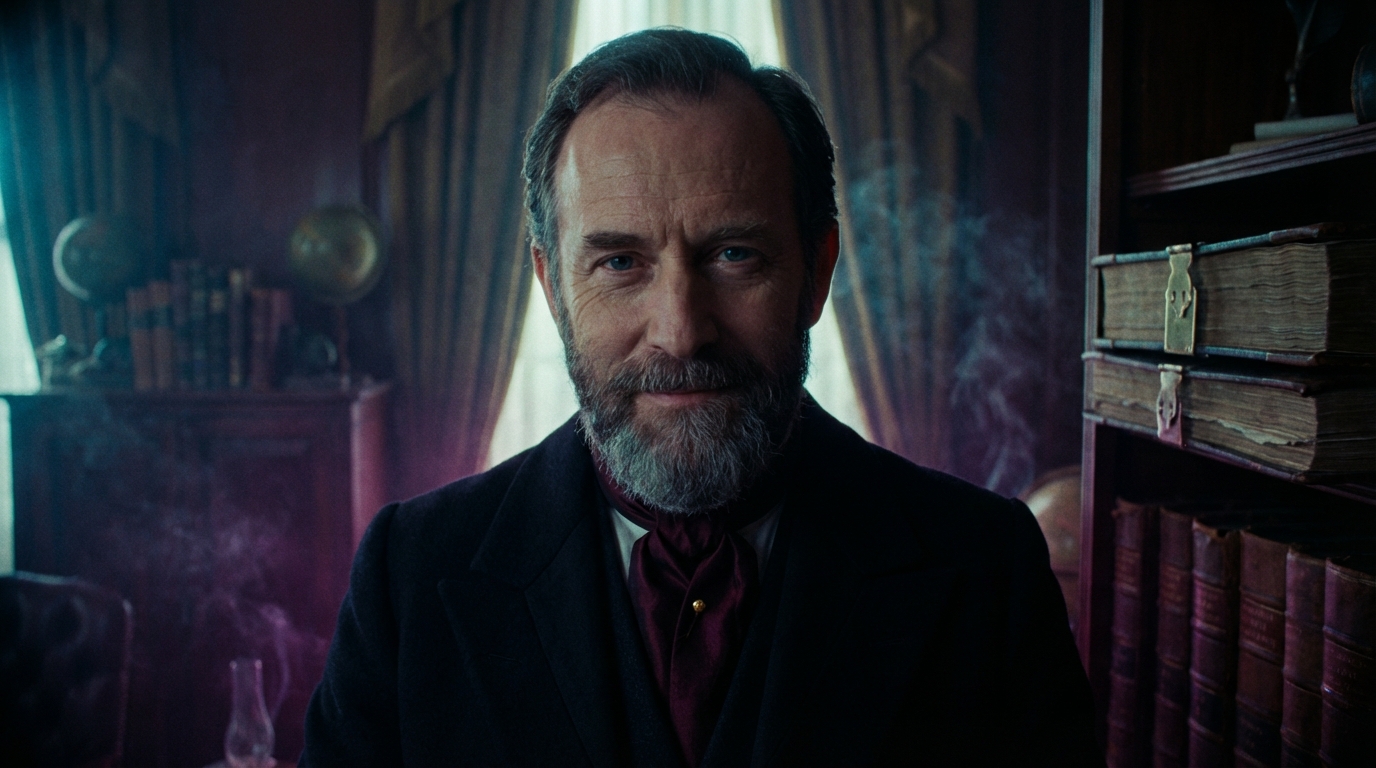
Henry Bradshaw was a Liverpool merchant who understood early in his career that the most valuable commodity in commerce was not goods but access. By the time he arrived in Van Diemen's Land in early 1815, he had spent thirty years building a network of relationships that spanned merchants, officials, and men of influence across the trading world. His position in colonial society was not that of the wealthiest merchant or the most visible, but something perhaps more valuable: he was connected. His relationships with the colonial administration, his friendships with men who made decisions, his ability to smooth paths and open doors—these were the currencies in which he traded, and they were worth more than any cargo of wool or timber. At the Harding dinner in September 1815, he tested William Jeffries with his characteristic directness, probing for weaknesses, and found a man who pushed back rather than crumbling. Four years later, he would facilitate Jeffries Industries' first major government contract, cementing both the company's place in the colonial economy and his own role as the architect of other men's success.
Early Life in Liverpool
Henry Bradshaw was born on 22nd November 1765 in Liverpool, Lancashire, the eldest of four children in a household that occupied the uncertain territory between respectability and poverty. His father, Thomas Bradshaw, worked as a shipwright in Liverpool's growing dockyards—a skilled trade that provided steady employment but never quite enough income for the family to escape the constant calculations of how much could be spent and how much must be saved. His mother, Mary Bradshaw (née Roberts), supplemented the household income with herbal remedies she prepared and sold to neighbours, a practice that earned her a reputation for practical wisdom among the women of their district.
Liverpool in the 1760s and 1770s was a city in transformation, its docks expanding to accommodate the triangular trade that would make it one of the wealthiest ports in the Empire. The young Henry absorbed the rhythms of maritime commerce from his earliest years—the arrival and departure of ships, the movement of cargo through warehouses, the negotiations between captains and merchants that determined who would profit and who would not. He accompanied his father to the shipyards whenever permitted, learning the construction of vessels from keel to mast, and spent countless hours watching the loading and unloading of goods that flowed through Liverpool's busy port.
His education was practical rather than classical. He attended a charity school where he learned reading, writing, and arithmetic—the tools necessary for commerce—but his real education came from observation. He noticed which men succeeded and which failed, and more importantly, he noticed why. The merchants who prospered were not always those with the most capital or the best goods; they were often those who knew the right people, who could secure favourable terms through relationships rather than negotiation, who understood that commerce operated on two levels—the visible exchange of goods and money, and the invisible exchange of favours and obligations.
By sixteen, Henry had secured an apprenticeship with a prominent Liverpool merchant named Richard Whitfield, a man whose success derived less from the quality of his goods than from his ability to navigate the complex web of relationships that governed trade. Whitfield dealt in textiles, spices, and whatever else offered profit, but his real trade was in access—knowing which officials could expedite customs clearance, which captains could be trusted with valuable cargo, which merchants in distant ports would honour their commitments. Under Whitfield's tutelage, Henry learned that information was currency, that relationships were investments, and that the man who controlled access to opportunity was more powerful than the man who merely possessed goods to sell.
Rise in Liverpool Commerce
Henry completed his apprenticeship at twenty-three and spent the following years building his own position in Liverpool's merchant community. He lacked the capital to establish a trading house of his own, but he had something that proved equally valuable: an instinct for connection. He remembered names and faces, recalled details of conversations years after they occurred, and possessed the rare ability to make men feel that he understood their concerns and could help address them.
His early career consisted largely of facilitating other men's business—introducing merchants who needed goods to suppliers who had them, smoothing difficulties with customs officials, identifying opportunities and connecting them with capital. He took modest fees for these services, but more importantly, he accumulated obligations. Men who benefited from his assistance owed him favours, and Henry was careful to collect these debts in ways that increased his influence rather than depleted it.
His marriage to Eleanor White in 1792 represented a strategic alliance as much as a romantic attachment. Eleanor was the daughter of a respected Liverpool merchant, and her father's connections opened doors that Henry's own efforts had not yet reached. The marriage proved genuinely happy—Eleanor possessed intelligence and practicality that complemented Henry's ambitions—but it was also an investment in social capital that paid dividends throughout his career.
Their children arrived in steady succession: Thomas in 1793, Harriet in 1795, and Samuel in 1797. Henry proved an attentive father, though his attention was often divided between family and commerce. He wanted his children to understand the world as he understood it—as a network of relationships to be cultivated, opportunities to be identified, and connections to be maintained. Whether this education served them well or ill would remain a question he contemplated in his later years.
By the turn of the century, Henry Bradshaw had established himself as one of Liverpool's most valuable middlemen. He was not wealthy by the standards of the great merchants, but he was essential to many of their operations. His network extended across the trading ports of the Atlantic, into the offices of government officials, and through the counting houses of merchants who had learned that Henry's assistance was worth whatever fee he charged.
Time at Sea
Henry's understanding of maritime commerce deepened considerably during the years between 1800 and 1810, when he spent significant periods aboard trading vessels. This was not the romantic seafaring of naval officers or the desperate labour of common sailors, but the practical education of a merchant who wanted to understand every link in the chains of trade he helped to forge.
He sailed to the West Indies twice, to the ports of the American eastern seaboard three times, and to various European destinations more often than he could later recall. Each voyage taught him something—the challenges of preserving cargo across long distances, the complexities of dealing with foreign customs officials, the particular skills required to negotiate in ports where English was not spoken and English law did not apply. The experience weathered him, leaving lines around his eyes and a roughness in his voice that never quite smoothed away, but it also gave him credibility with men who might otherwise have dismissed him as a mere facilitator of other men's business.
The time at sea also separated him from Eleanor and the children for extended periods. He wrote letters when he could, sent money home regularly, and returned from each voyage with gifts and stories. But the separations accumulated into a distance that his later years in the colony would not entirely bridge. His children grew up knowing their father as a figure who arrived and departed, who was generous and attentive when present but often absent when needed. Eleanor managed the household with capable competence, never complaining of her husband's travels but never quite forgiving them either.
By 1810, Henry's seafaring days had largely ended. His body had accumulated enough aches and strains to make long voyages uncomfortable, and his position in Liverpool commerce no longer required him to personally oversee distant operations. But the experience had marked him—in his weathered appearance, in his rough working voice, in his ability to assess men with the quick judgment of someone who had learned to read character in circumstances where misjudgment could prove costly.
Decision to Emigrate
The decision to leave Liverpool for Van Diemen's Land crystallised gradually between 1812 and 1814. Henry was approaching fifty, his children were grown or nearly so, and the opportunities that had sustained him for three decades were beginning to narrow. Liverpool's merchant community had grown more competitive, dominated increasingly by larger firms with capital that individual facilitators like Henry could not match. The relationships that had been his currency were aging along with the men who owed him favours; a younger generation was rising that did not remember what Henry had done for their fathers.
Van Diemen's Land offered what Liverpool increasingly did not: virgin territory for the kind of relationship-building at which Henry excelled. The colony was barely a decade old, its institutions still forming, its hierarchies not yet calcified into the rigid structures that characterised English society. A man who arrived early enough, who built the right connections with the right people, could establish a position that would be impossible to replicate once the colony matured.
The reports reaching Liverpool painted a picture of opportunity mixed with hardship. The colony needed merchants, needed men who could connect its producers with distant markets, needed the commercial infrastructure that Henry had spent his life helping to build. The convict population provided labour; the pastoral potential was reportedly immense; and the colonial administration was hungry for capable men who could help transform a prison settlement into something approaching civilisation.
Eleanor received the proposal with the same practical assessment she brought to all of Henry's schemes. The voyage would be difficult—she was not young, and the journey to the other side of the world was notorious for claiming lives. The colony itself was rough, primitive by any English standard, and far from the comforts and connections she had built over decades in Liverpool. But she had followed Henry's judgment before and generally found it sound. If he believed Van Diemen's Land offered opportunities worth seizing, she would trust that assessment.
The family sailed in late 1814, arriving in Hobart Town in early 1815. Thomas, at twenty-two, came with his own ambitions and would eventually establish himself in the colonial merchant community. Harriet, twenty, accompanied her parents with hopes of finding a suitable match in a colony reportedly short of respectable women. Samuel, eighteen, showed aptitude for the shipbuilding trade his grandfather had practised and would eventually continue that tradition in colonial waters.
Establishment in Hobart Town
The colony that greeted the Bradshaws bore little resemblance to the Liverpool they had left. Hobart Town in 1815 was a frontier settlement of perhaps three thousand souls, its wooden buildings clustered along the waterfront beneath the looming presence of Mount Wellington. The streets were unpaved, the society rough, and the distinctions between free settlers and emancipated convicts often unclear to newcomers accustomed to English hierarchies.
Henry assessed the situation with the experienced eye of a man who had spent forty years studying commercial environments. The colony was small enough that relationships mattered intensely—everyone knew everyone, or knew someone who did—but large enough that opportunity existed for those who could identify it. The colonial administration was hungry for capable assistance; the merchant community was fractured and competitive; and the connections between producers in the interior and markets abroad remained poorly developed.
Within weeks of arrival, Henry had begun building the network that would define his colonial years. He presented himself to the colonial officials, offering his experience and connections to whatever purposes might benefit the settlement. He introduced himself to the established merchants, positioning himself not as competition but as potential partner—a man who could help them access markets and relationships they could not reach alone. He attended every gathering where men of influence collected, learning names and faces and circumstances with the same patient attention that had served him in Liverpool.
His reputation consolidated around a particular role: the man who knew things and knew people. When merchants needed introductions to officials, they consulted Henry. When officials needed commercial expertise, they sought Henry's advice. When anyone needed to understand the complex web of relationships and obligations that governed colonial commerce, Henry was the man who could explain it—for a consideration, of course, though the consideration was often left implicit, a favour owed rather than a payment rendered.
The Harding Dinner
The dinner at Sir William Harding's residence on 3rd September 1815 offered Henry an opportunity to assess the latest arrivals seeking position in colonial society. Among the guests were Silas Croft, a Bristol merchant whose commercial acumen Henry had already noted, and William Jeffries, a former convict whose ambitions had begun to attract attention.
Henry observed Jeffries throughout the evening before engineering a conversation at the sideboard. The young man interested him—not because of his origins, which Henry considered largely irrelevant to commercial potential, but because of what he represented: hungry ambition combined with evident capability, seeking entry into a world that would demand compromises Jeffries had not yet been required to make.
The conversation that followed was characteristic of Henry's approach. He probed, testing Jeffries with directness that most young men would have found unsettling. He accused Jeffries of hiding things, not because he knew what those things were, but because he wanted to see how the young man responded to pressure. A man who crumbled under questioning would crumble under the pressures of colonial commerce; a man who pushed back might be worth cultivating.
Jeffries pushed back. "Every man hides something, Mr Bradshaw. The question is whether what he hides matters more than what he shows."
The response pleased Henry more than he allowed his expression to reveal. This was not a man who would fold at the first challenge, not someone who would embarrass those who chose to support him. He offered Jeffries information about Samuel Hartley's impending collapse—not from generosity, but as an investment. If Jeffries and Croft succeeded in building what they were planning, they would remember who had helped them. If they failed, the information cost Henry nothing.
He also directed Jeffries toward Douglas Fitzpatrick, the pastoral magnate whose land and connections could prove valuable to an ambitious young merchant. This too was investment—building relationships between men whose success might eventually benefit Henry himself. The colony was small enough that every connection mattered, every alliance strengthened the web of relationships that was Henry's true stock in trade.
Later that evening, after the women had withdrawn and the men settled into the masculine space of port and cigars, Henry continued his quiet work of observation and connection. He spoke with Silas Croft about Hartley's creditors, passing along intelligence that the move against the failing merchant would come within the fortnight. The information was accurate—Henry's sources rarely failed him—and its delivery served multiple purposes: it obligated Croft to remember the assistance, it positioned Jeffries and Croft to act on the opportunity Hartley's collapse would create, and it demonstrated Henry's value as a source of intelligence that others could not obtain.
Facilitating Jeffries Industries
The years following the Harding dinner saw Henry's investment in William Jeffries begin to pay returns. Jeffries and Croft succeeded in acquiring Hartley's failing operation, transforming it into Jeffries Industries with a combination of capital, capability, and connections that exceeded anything Hartley had managed. The enterprise grew rapidly, expanding from its origins in general merchandise into wool trading, shipping, and eventually mining.
Henry watched this growth with the satisfaction of a man who had identified potential before others recognised it. He had not created Jeffries Industries—that was entirely the work of Jeffries and Croft—but he had helped create the conditions in which it could flourish. His introductions, his information, his quiet support in conversations with officials and merchants had smoothed paths that might otherwise have remained blocked.
In April 1819, Henry facilitated what would prove to be Jeffries Industries' most significant early success: a contract with Governor William Sorell to supply the colonial government with essential goods. The contract itself was straightforward—textiles, tools, and other necessities that the government required—but securing it required navigation of the colonial bureaucracy that few merchants could manage alone. Henry's relationships with the relevant officials, his understanding of what considerations might influence their decisions, and his ability to present Jeffries Industries as the reliable choice all contributed to the contract's approval.
The fee Henry received for this facilitation was modest compared to the contract's value, but the fee was never the primary consideration. What mattered was the obligation created, the relationship strengthened, the position consolidated. Jeffries Industries would remember who had helped them secure this foundation; future opportunities would flow through channels Henry had helped to dig.
The Disappearance of William Jeffries
The disappearance of William Jeffries in August 1821 presented Henry with a situation that defied his usual methods of analysis.
He learned of the disappearance through the colonial gossip network that was among his most valuable sources of information. A man had vanished from his bed, leaving behind a wife, a young son, and an industrial empire that represented years of careful building. No body was found, no clear evidence of foul play discovered, no explanation offered for why a man at the height of his success would simply cease to exist.
Henry observed the aftermath with the careful attention he brought to everything. He noted how Madelyn Jeffries managed the situation—not with the panic or collapse that many would have expected, but with a controlled efficiency that suggested resources and capabilities beyond what her public role as grieving wife would indicate. He noted how Martha Taylor moved from loyal servant to trusted advisor, filling positions of responsibility that the household's reduced circumstances required. He noted how certain men—Silas Croft among them—were politely but firmly discouraged from involving themselves too closely in Jeffries family affairs.
These observations accumulated in Henry's mind without resolving into any clear picture of what had actually happened. He had theories, as everyone in the colony had theories, but theories were not knowledge, and Henry was careful never to confuse the two. What he knew for certain was that William Jeffries had vanished, that Madelyn Jeffries had assumed control of the empire he had built, and that the enterprise continued to function—even to grow—under her management.
The mystery disturbed him in ways he did not fully acknowledge. Henry had built his career on understanding people, on reading their motivations and predicting their actions. William Jeffries had been someone he thought he understood—ambitious, capable, willing to make necessary compromises but fundamentally comprehensible. The disappearance defied that understanding, suggested depths and complexities that Henry had not perceived.
He never pursued the matter beyond his usual observation. Some mysteries were better left unexamined, some questions better left unasked. Whatever had happened to William Jeffries, the man was gone, and the living had to continue with their own concerns.
Later Years
The decades following Jeffries' disappearance saw Henry transition from active facilitator to respected elder. His network remained valuable—relationships with officials, knowledge of colonial commerce, understanding of how things worked—but his role shifted from building connections to maintaining them, from seeking new opportunities to advising those who sought his guidance.
Eleanor's death in 1828 marked the end of the partnership that had sustained him through thirty-six years of marriage. She had never fully adapted to colonial life, never quite forgiven the separation from Liverpool's familiar comforts, but she had remained his anchor through everything—the woman who managed their household while he pursued commercial opportunities, who raised their children while he sailed to distant ports, who followed him to the other side of the world when his ambitions demanded it. Her illness was swift, a fever that swept through the colony taking many lives, and her death left a vacancy that Henry never attempted to fill.
He became more involved in community affairs after Eleanor's passing, perhaps seeking to fill the hours that her presence had once occupied. He mentored young merchants, offering guidance that few others could provide. He supported local initiatives—schools, churches, charitable efforts—with the same practical assessment he brought to commercial investments. If these contributions served to balance whatever moral debts he had accumulated during his years of facilitation, he did not acknowledge the calculation.
His children established themselves in colonial society. Thomas became a successful merchant in his own right, building on the connections his father had cultivated. Harriet married well and became a respected figure in colonial education. Samuel continued the maritime tradition, establishing a shipbuilding operation that would serve the colony for generations. They were, in their various ways, testament to what Henry had built—not just commercial success, but a family positioned to continue thriving after he was gone.
Death and Legacy
Henry Bradshaw died on 14th March 1845, aged seventy-nine, at his residence in Hobart Town. The illness that claimed him was gradual, a slow diminishment that he faced with the same practical assessment he had brought to everything else. He had time to arrange his affairs, to ensure his children understood the relationships and obligations that constituted the true inheritance he was leaving them, to say whatever farewells seemed necessary.
His funeral was attended by many of the colony's leading citizens—men who had benefited from his assistance over three decades, who had consulted him on difficult matters, who had learned to trust his judgment even when they did not fully understand his methods. Few of them knew the full extent of what Henry had done throughout his career, the web of connections he had woven, the information he had gathered and deployed. That was as he would have wished it. The best facilitators were invisible, their influence felt but not seen, their contributions acknowledged but not examined too closely.
The estate he left was comfortable rather than grand—Henry had never pursued wealth for its own sake, preferring influence to money and relationships to property. His children inherited what there was, along with the less tangible legacy of connections and obligations that had been Henry's true stock in trade. Whether they could maintain what he had built, whether the relationships he had cultivated would continue to bear fruit in the next generation, remained to be seen.
What Henry Bradshaw had understood better than most was that commerce was not merely the exchange of goods and money. It was the exchange of favours and obligations, of information and access, of trust carefully built and strategically deployed. He had spent his life facilitating these exchanges, positioning himself at the intersections where value was created, and extracting his share without ever appearing to take more than he gave.
His grave in St David's churchyard bears a simple inscription marking his name, dates, and the designation "Merchant." It says nothing of the networks he built, the connections he facilitated, the opportunities he created for others while always ensuring that some benefit flowed back to himself. Some legacies are not meant for gravestones. They live instead in the continuing commerce of men who remember, dimly, that someone once helped them when help was needed, and who pass that help along to others in turn.







