Halil Rauf Erdem
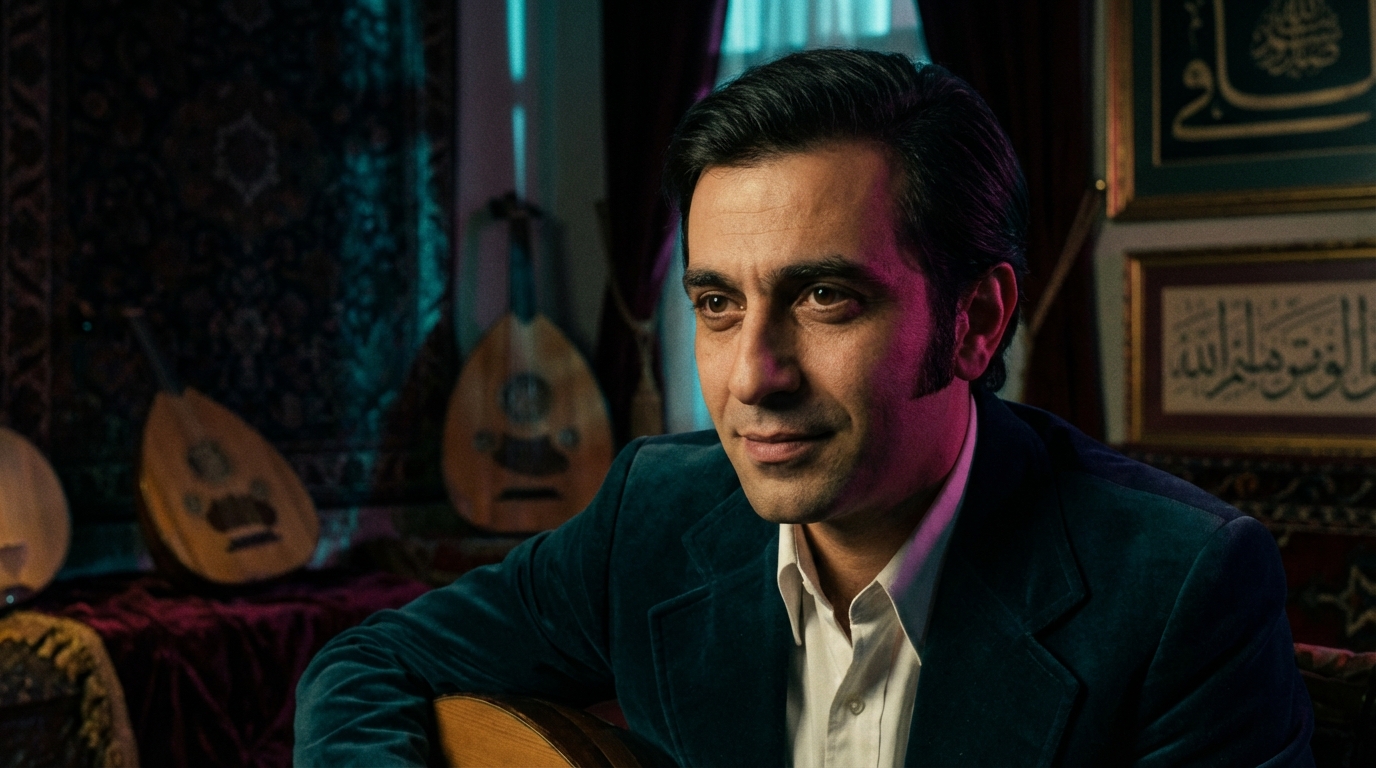
Halil Rauf Erdem (born 17 June 1942) is a retired ney musician and pedagogue who taught at the Istanbul Municipal Conservatory for forty-three years, from 1961 until his retirement in 2004. A specialist in the Ottoman classical makam tradition, he lives alone on the third floor of a late Ottoman apartment building in Cihangir, Istanbul, where the music of Münir Nurettin Selçuk fills the silence that his wife's death created.
Early Life and Family (1942–1961)
Halil Rauf Erdem was born on 17 June 1942 in Üsküdar, Istanbul, the third of four children born to Rauf Necdet Erdem, a clerk at the Istanbul Maritime Administration, and Mediha Erdem (née Tunalı), a woman whose formal education had ended at primary school but whose knowledge of Ottoman classical music exceeded what most conservatory graduates possessed. The household occupied a wooden house in Üsküdar's residential hillside above the ferry terminal, close enough to the Bosphorus that the morning mist off the strait settled into the rooms on autumn mornings and close enough to the Çinili Mosque that the call to prayer arrived before any other sound each day.
Rauf Necdet's maritime administration salary sustained the family without providing anything beyond sustenance — a condition he managed with the resigned competence of a man whose ambitions had been practical rather than elevated and whose disappointments were proportionate to those ambitions. The household's intellectual life derived not from Rauf but from Mediha, who had learned the Ottoman classical repertoire from her own mother — a woman who had sung at private gatherings in late Ottoman Istanbul and who carried in her memory hundreds of compositions in dozens of makams that the Republic's cultural reforms had not entirely succeeded in displacing from domestic life even as they reshaped the institutional frameworks through which music was transmitted.
Mediha sang whilst she cooked, whilst she cleaned, whilst she mended the children's clothing at the kitchen table in the evenings. The melodies were not performance but environment — the Hicaz makam accompanying bread-making, Nihavend accompanying evening prayers, Rast accompanying the particular contentment of a household that was poor in means and rich in the specific currency that Ottoman domestic culture valued most: the sound of a human voice navigating modes whose emotional architecture had been refined across centuries. Halil absorbed these sounds the way children absorbed language — not through instruction but through immersion, the melodic vocabulary settling into his consciousness before he possessed the technical knowledge to name what he was hearing.
His elder siblings — an elder brother, Necdet, born 1937, and a sister, Aysel, born 1939 — followed conventional trajectories that Rauf Necdet's expectations prescribed: Necdet into the maritime administration like his father, Aysel into marriage at nineteen. A younger brother, Hüseyin, born 1945, would eventually work as an electrician in Kadıköy, a trade whose practical reliability satisfied Rauf's belief that security mattered more than distinction. Halil was the exception — the child whose temperament aligned with neither his father's pragmatism nor his siblings' compliance, but with the sound that his mother carried through the household and that he began, at some point in early childhood, to recognise as the thing he was meant to do with his life.
The recognition arrived through the ney. A neighbour in Üsküdar — an elderly man named Şerif Amca, retired from a career whose details Halil never learned, who sat on his balcony on summer evenings and played the reed flute with a sound that carried down the hillside and across the rooftops — became the first teacher, though "teacher" implied a formality that the arrangement did not possess. Halil, at nine or ten, began appearing on Şerif Amca's balcony in the evenings, listening. The old man gave him a ney — a simple, student-grade instrument, its reed harvested from the banks of the Golden Horn — and showed him how to hold it, how to shape the embouchure, how to direct the breath across the mouthpiece so that sound emerged rather than silence. The first months produced little beyond frustration. The ney was unforgiving — an instrument that required years to master and that rewarded impatience with nothing at all. But Halil persisted with the particular stubbornness of a child who had found the thing and who would not be dissuaded from it by the instrument's refusal to cooperate on his timeline.
By fourteen he was playing competently. By sixteen he was performing at private gatherings in Üsküdar — meyhane evenings, family celebrations, the informal social occasions where live music was expected and where the ney's breathy, human-adjacent sound provided the emotional texture that other instruments could not replicate. Rauf Necdet tolerated this development without encouraging it, his silence communicating the particular Turkish fatherly position that acknowledged talent without admitting that talent constituted a career plan.
The Istanbul Municipal Conservatory (1961–2004)
In September 1961, at nineteen, Halil was admitted to the Istanbul Belediye Konservatuvarı — the Istanbul Municipal Conservatory, the institution that the Republic had established to formalise and preserve the Ottoman classical music tradition that the early Kemalist reforms had attempted to marginalise in favour of Western polyphonic composition. The Conservatory occupied an ambiguous position within Turkish cultural politics — it existed because the tradition was too significant to abandon, but it operated under institutional constraints that reflected the state's uneasy relationship with a musical heritage that was simultaneously national treasure and Ottoman remnant.
The training formalised what Şerif Amca's balcony lessons had begun. Theory of the makam system — the modal structures whose mathematical relationships between notes produced emotional and spiritual effects that Western tonal harmony could not replicate. Repertoire — the compositions of Dede Efendi, Itri, Hacı Arif Bey, the canonical works whose performance demanded not just technical proficiency but the particular quality of emotional understanding that Turkish musicians called hissiyat and that could not be taught through notation alone. Performance practice — the breath control, the embouchure refinement, the taksim (improvisation within makam) that distinguished competent ney players from those who could make the instrument sing in the way that the Sufi mystics who first played it had intended: as the closest human-made approximation of the divine breath.
Halil was not a prodigy. The distinction mattered, because the Conservatory contained students whose natural facility with their instruments outstripped what practice alone could produce, and Halil was not among them. What he possessed instead was persistence, a deep familiarity with the repertoire that his mother's domestic singing had installed before his formal training began, and the particular quality of emotional sincerity that audiences responded to even when they could not articulate what they were responding to. His ney playing was not technically flawless. It was honest. The distinction carried him further than perfection would have, because perfection without honesty was merely impressive, whilst honesty without perfection was moving, and audiences came to music to be moved.
By 1963, two years into his studies, the Conservatory offered him a junior teaching position alongside his continuing studies — a dual role that acknowledged his pedagogical aptitude as much as his performance ability. He would remain in the institution for forty-three years. The career was not one of dramatic ascent or public celebrity. Halil never became a recording artist, never performed internationally beyond a handful of cultural exchange events that the Turkish government organised for diplomatic purposes, never achieved the name recognition that a few of his contemporaries — performers who combined technical brilliance with the appetite for public attention that fame required — managed. What he became was a teacher: the person to whom successive generations of ney students came, who transmitted the repertoire and the hissiyat through the direct teacher-student relationship that the tradition demanded, who served as one link in a chain of transmission that stretched back through centuries of Ottoman court music to the Mevlevi lodges where Rumi's poetry and the ney's sound had been understood as different expressions of the same longing.
The teaching consumed four decades. Students arrived each September — some talented, some adequate, a few exceptional, many who would pursue other careers and carry with them the particular discipline that conservatory training instilled regardless of whether they performed professionally. Halil taught them all with the same standard of attention, the same insistence on breath control and emotional engagement, the same refusal to accept technical competence without the hissiyat that made it meaningful. The refusal was not always welcome. Students who wanted praise for their precision found instead a teacher who listened with his eyes closed and then asked them what the music meant, and who was not satisfied with answers that described technique rather than feeling.
The career outside the classroom was modest. Occasional performances at cultural events — makam concerts at the Cemal Reşit Rey concert hall, Sufi music evenings at restored tekke buildings, the formal occasions where the Conservatory's faculty demonstrated the tradition they taught. A few recordings made for institutional purposes rather than commercial release, their copies held in the Conservatory's archive and in Halil's own collection alongside the records of the masters whose work he taught. The professional satisfactions were cumulative rather than dramatic: the student who returned years later to say that something he'd said in a lesson had changed their understanding; the evening when the taksim flowed without effort and the sound that emerged from the reed was, for a few minutes, precisely the sound he'd been pursuing for decades.
Marriage and Domestic Life
On 12 October 1968, at twenty-six, Halil married Sevim Nur Çelik, a music theorist and composer who taught at the same Conservatory and whose professional life occupied the adjacent territory of makam-based composition — writing new works within traditional modal frameworks, a practice that combined scholarly understanding of the system's mathematical structures with the creative ambition to produce something that the tradition had not previously contained. They had met in the Conservatory's faculty common room, where the coffee was consistently terrible and the arguments about tonal versus modal aesthetics were consistently passionate, and had discovered that their disagreements about specific compositional choices produced better conversations than their agreements about general principles.
Sevim brought to the marriage an intellectual rigour that complemented Halil's emotional directness. Where he played from feeling, she composed from structure. Where he improvised within the makam's possibilities, she analysed those possibilities and found combinations that improvisation alone would not have discovered. The marriage operated on the same principle as a well-constructed duet — two distinct voices whose differences produced something richer than either could generate independently.
They settled in a flat on the third floor of a late Ottoman apartment building in Cihangir — a neighbourhood whose bohemian character suited musicians whose schedules defied conventional patterns and whose living room served as rehearsal space, composition studio, and the venue for evening gatherings where colleagues argued about makam theory over çay and Sevim's börek. The flat filled with the particular objects that musical households accumulated: instruments, sheet music, recordings in every available format, the heavy wooden-cased amplifier and speakers that Halil purchased in 1971 and that Sevim positioned with the care of someone who understood that speaker placement affected the makam's spatial quality in ways that casual listeners might not perceive but that trained ears could not ignore.
Children did not arrive. Whether by choice, by circumstance, or by the particular combination of professional absorption and biological timing that academic couples of their generation sometimes experienced, the marriage remained a partnership of two rather than a family of more. Halil did not discuss the subject in later years and nobody who knew him well enough to notice the absence presumed to ask. The marriage was complete in its own terms — the flat, the music, the evenings listening to Münir Nurettin Selçuk's recordings with the volume calibrated for two pairs of ears, the trip to Cairo in 1977 where they visited the ney collection at the Egyptian Museum and Sevim spent an afternoon sketching the instruments' proportions in a notebook that Halil kept in the sideboard drawer for decades afterwards.
Retirement and Widowhood (2004–Present)
Halil retired from the Istanbul Municipal Conservatory in 2004, at sixty-two, after forty-three years of continuous service. The retirement was institutional rather than voluntary — mandatory age limits applied, and the Conservatory's administration did not extend the exceptions that were technically available for faculty whose expertise justified continued employment. The omission stung more than Halil acknowledged, the quiet exclusion carrying the particular hurt of an institution that had benefited from four decades of his labour deciding that the labour's continuation was no longer required. Former students organised an informal farewell concert that the Conservatory's official programme did not include, and the evening — held in a restored meyhane in Beyoğlu, the ney played by three generations of Halil's students — provided the closure that institutional gratitude had not.
The retirement settled into the rhythms that the Cihangir flat and Sevim's continued compositional work provided. Mornings with çay and the newspaper. Afternoons when Halil practised — not for performance but for the maintenance of a relationship with the instrument that forty-three years of professional obligation had sometimes made feel like duty rather than devotion. Evenings listening to recordings, the repertoire revisited not as curriculum but as company, the voices of musicians who had died before Halil was born filling the flat with the particular quality of presence that recorded music provided to those who had spent their lives in conversation with the tradition it represented.
Sevim Nur Erdem died on 8 April 2019, at seventy-six, following a stroke that occurred at the kitchen table where she had been working on a composition — the pen still in her hand when Halil found her, the sheet music marked with the last notes she would write. The loss restructured Halil's existence around an absence whose dimensions he had not anticipated and whose management consumed the years that followed. The flat — unchanged, the furniture kept because replacing it would mean admitting the life it had been chosen for had ended — became a museum of a marriage whose surviving member moved through its rooms with the careful deliberation of someone navigating a space whose purposes had altered without its contents changing.
The jasmine plant at the base of the staircase was Sevim's. She had placed it there years earlier, insisting that a building's entrance should contain something alive, and Halil maintained it with the daily devotion of a man whose relationship with the plant had less to do with horticulture than with the continuation of a gesture his wife had begun. The plant was dying — had been dying, gradually, for years, the lack of sunlight in the entrance hall defeating whatever Halil's watering could provide — but its survival, however diminished, constituted a form of continuity that mattered more than its condition warranted.
The music grew louder after Sevim's death. Not immediately — the first months were silent, the turntable untouched, the flat absorbing the particular quiet of a space from which a second heartbeat had been subtracted. But gradually, as the silence became less a presence and more an enemy, Halil began playing the records again. Münir Nurettin Selçuk. Kani Karaca. The recordings he and Sevim had listened to together each evening, the Nihavend makamı that had been their particular favourite, the ney weaving through the vocal line in the way that their two lives had woven through each other for fifty years.
The volume crept upward. Partly because his hearing had diminished — the gradual erosion that age inflicted on ears that had spent a lifetime in proximity to music. Partly because lower volumes produced a sound that felt thin, insufficient, unable to fill the space that Sevim's absence had created. At sufficient volume, the music occupied the flat the way a second person would — present in every room, audible from every corner, filling the silence with the particular warmth that a human voice, even a recorded one, provided to someone whose evenings had become solitary.
The neighbours tolerated it. The building's residents — a rotating population of young professionals, students, the particular Cihangir demographic that valued character over convenience — understood that the old man on the third floor played his music loud because his wife had died and his ears were going and the alternative was a silence that he had told his downstairs neighbour, on an evening in February 2024 when she came to ask him to lower the volume, frightened him.
Halil Rauf Erdem continued living in the Cihangir flat into his eighty-second year, the jasmine plant still watered each morning, the turntable still turning each evening, the pressed shirts still worn for no audience but the particular standard of self-presentation that he had maintained since his Conservatory years and that he saw no reason to abandon simply because the person who would have noticed had gone. The ceramic evil eye that Sevim had hung on the door's peephole remained where she had placed it. The photographs remained on the walls. The amplifier and speakers remained in their positions, calibrated for two listeners, serving one, filling the third-floor flat with music that carried down through the building's century-old joists and plaster and into the rooms below, where the sounds of a tradition stretching back to the Mevlevi lodges seeped through the ceiling like warmth from a radiator — not as intrusion but as presence, the particular company of a man who had spent his life in service to an instrument designed to sound like breath and who now used recorded breath to hold the silence at bay.







