Guardians of Saint Phillis
The Guardians of Saint Phillis emerged in January 2018 when Nathan Cowdrey activated a Portal Key bequeathed to him by Seth Holder, becoming the first of five individuals bound to a barren coastal territory in Clivilius. Unlike other Guardian Groups whose formation followed mystical communion or institutional design, the Saint Phillis fellowship arose from friendship, professional trust, and shared willingness to step into the impossible. Nathan assembled his brother Josh, colleague Verity Sloane, and partners Saul Carter and Amber Styles into a group that transformed desolate cliffs into functioning settlement through complementary expertise rather than hierarchical command. The London operation of April 2019 shattered this unity—Amber's death scattering the survivors into isolated trajectories from which they have never fully regathered. The Guardians of Saint Phillis persist as network rather than fellowship, connected by encrypted channels and shared history rather than daily collaboration.
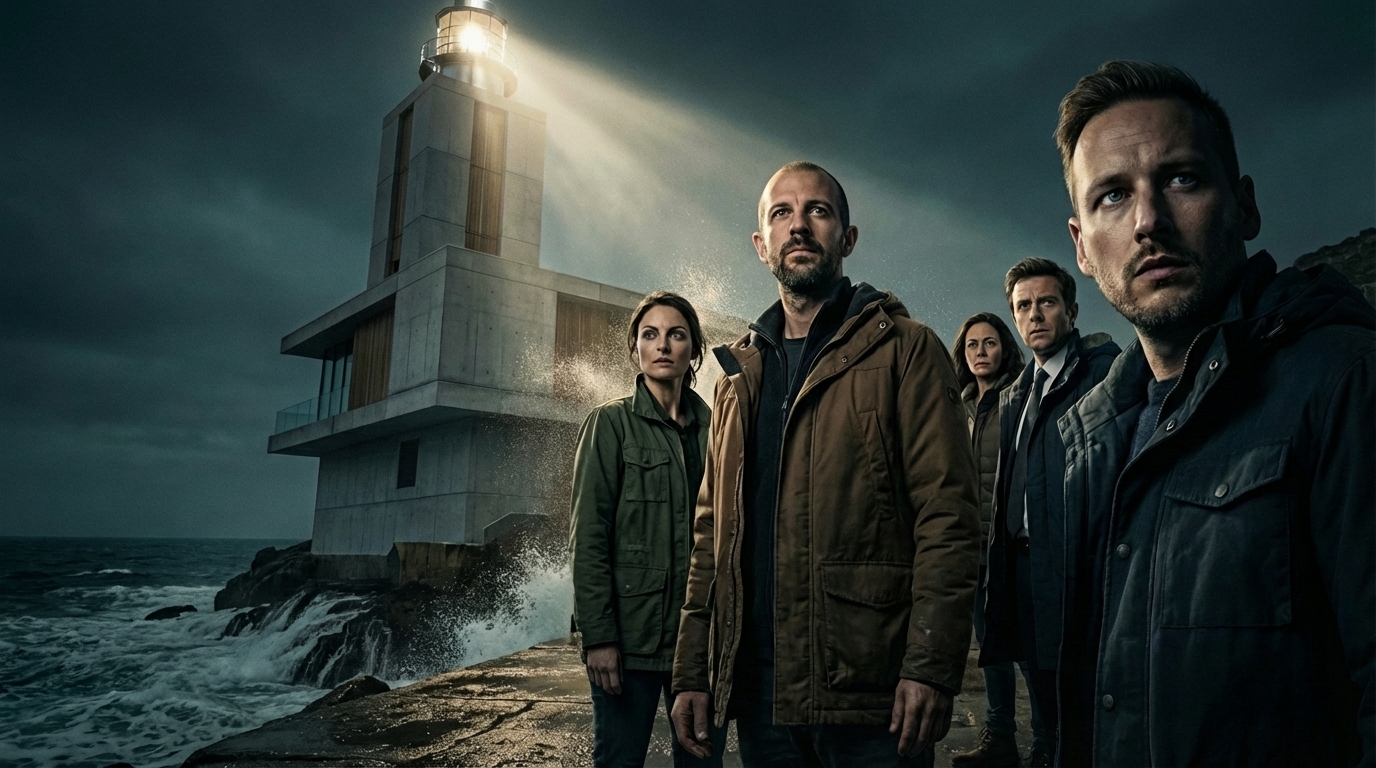
Origins and Formation
The Guardians of Saint Phillis trace their genesis not to mystical revelation or institutional recruitment but to an envelope passed between friends. In January 2018, Seth Holder—a data analyst whose investigations had led him into territories few could comprehend—entrusted Nathan Cowdrey with five Portal Keys and a letter describing their function. Seth understood he could not continue the work himself; the knowledge he had accumulated made him a target, and his time was running short. What he could do was pass the responsibility to someone he trusted, someone whose particular combination of curiosity and determination might prove equal to circumstances that defied ordinary understanding.
Nathan activated his Portal Key on 10 January 2018, alone in a meeting room on the fourth floor of his Hobart government office. The blood-bound ritual that established his connection to Clivilius transported him to a coastal expanse of red dust and incomprehensible silence—territory that CLIVE designated as Saint Phillis, bound now to Nathan and whoever else he chose to bring through. The experience should have been overwhelming. Instead, Nathan felt something closer to recognition, as though the restlessness that had defined his adult life had finally found its proper context.
The formation of the full Guardian Group followed over subsequent weeks, each recruitment reflecting Nathan's particular approach to leadership—personal connection rather than institutional authority, trust earned through relationship rather than imposed through hierarchy.
Joshua Cowdrey received his Portal Key through the post, a decision Nathan would later acknowledge as reckless. The brothers met at a McDonald's in Elizabeth, a suburb of Adelaide, where Nathan intended to explain the impossible before Josh activated his key. Instead, he discovered Josh had already crossed the threshold—and had brought someone through with him. The crisis that followed, managing a person now trapped in Clivilius without Guardian status, shaped the group's earliest days and taught them that even careful plans could not anticipate every consequence.
Verity Sloane came next, recruited from the same Tasmanian Government office where she and Nathan had spent years as colleagues. Her forensic accountant's precision and unshakeable calm made her an obvious choice, though convincing her required more than Nathan's conviction—it required evidence she could verify through her own methodologies. When she finally activated her Portal Key, it was with the calculated acceptance of someone who understood exactly what she was choosing.
Saul Carter and Amber Styles joined as a pair, their partnership already established through years of collaboration and romance. Their recruitment came through intermediaries who recognised complementary expertise—Saul's strategic architecture and financial systems knowledge, Amber's environmental science and terraforming capabilities. The couple brought not just individual skills but a working relationship that demonstrated how trust could operate between people who saw the world differently yet valued each other's perspectives.
By April 2018, the five Guardians of Saint Phillis had assembled: a visionary leader, a methodical systems architect, a forensic analyst, a strategic planner, and an environmental scientist. Their backgrounds spanned government administration, information technology, financial investigation, blockchain development, and ecological research. None had been selected for Guardian duty through conventional channels; all had been chosen because Nathan trusted them, and because they proved willing to trust him in return.
The Five Guardians
The Guardians of Saint Phillis operated not through hierarchical command but through complementary function, each member contributing expertise the others lacked while respecting capabilities they couldn't replicate.
Nathan Luke Cowdrey served as the group's founding leader and primary visionary. Born in Adelaide in 1984, Nathan had spent his twenties drifting through careers that never quite fit before settling into government business analysis work in Hobart. His selection as first Guardian reflected not obvious qualification but Seth Holder's recognition that Nathan possessed qualities the role required: curiosity that couldn't be satisfied by conventional answers, willingness to act on conviction despite uncertainty, and the particular kind of courage that steps through doors without knowing what lies beyond. Within the group, Nathan provided direction and inspiration, the one who reminded them why they had chosen this path when the challenges seemed insurmountable. His weaknesses—impulsiveness, occasional blindness to risks, tendency to prioritise vision over logistics—were balanced by colleagues who saw what he missed.
Joshua Paul Cowdrey brought methodical competence to a group that might otherwise have collapsed under the weight of its own ambitions. Born in Adelaide in 1983, fourteen months before Nathan, Josh had carved out a life defined by technical precision—systems architecture, infrastructure design, the careful work of building things that functioned reliably. His presence in the Guardian Group reflected Nathan's recognition that visionary leadership required practical foundation; dreams meant nothing if the systems supporting them failed. Josh provided that foundation, designing the settlement's technical infrastructure with attention to redundancy and sustainability. His relationship with Nathan combined sibling complexity with professional respect—different enough to frustrate each other, aligned enough to accomplish what neither could achieve alone.
Verity Elizabeth Sloane contributed forensic precision and logistical oversight. Born in Hobart in 1990, Verity had developed through childhood trauma and professional training into someone who trusted evidence over assertion, who watched for the gap between what people said and what they meant. Her recruitment into the Guardians tested every sceptical instinct she possessed—yet the evidence proved irrefutable, and Verity was not someone who rejected conclusions simply because they were uncomfortable. Within the group, she managed practical operations, tracked resources, and provided the blunt honesty that visionaries sometimes needed to hear. Her pragmatism balanced Nathan's idealism; her attention to detail caught problems before they became crises.
Saul Morgan Carter served as the group's strategic architect, the one who translated ambitious goals into operational frameworks. Born in Harlech, Wales, in 1986, Saul had learned early to distrust optimism that wasn't grounded in practical planning—a childhood watching his father's idealistic bookshop slowly fail had taught him that vision without strategy led to ruin. He brought this lesson to Saint Phillis, designing financial systems, developing communication protocols, and creating the infrastructure that connected Guardian operations across two worlds. His public work in blockchain and cryptocurrency provided cover for activities that required sophisticated deception; his private capabilities in navigating CLIVE's information architecture exceeded what anyone else in the group could manage. The relationship with Amber anchored him emotionally in ways his calculated exterior rarely revealed.
Amber Louise Styles brought environmental expertise and intuitive connection that bound the group into something resembling family. Born in Bath in 1987, Amber had emerged from a brief disastrous marriage with sharpened instincts for danger and fierce protectiveness toward those who earned her trust. Her scientific knowledge proved essential in understanding Clivilius's ecological systems, developing the agricultural frameworks that allowed Saint Phillis to sustain itself rather than depending entirely on Earth-sourced supplies. But her contribution exceeded technical capability—Amber read situations before they crystallised, sensed tensions that hadn't yet erupted, and provided the warmth that transformed professional collaboration into genuine community. Her death in April 2019 would shatter something in the group that methodical planning and strategic architecture could not repair.
Settlement Development
The transformation of Saint Phillis from barren territory to functioning settlement demanded every capability the Guardians possessed, applied under circumstances that conventional expertise had never anticipated.
The territory CLIVE designated as Saint Phillis comprised coastal cliffs overlooking a vast sea, its red dust and harsh winds offering little obvious promise for human habitation. Where Bixbus to the north developed into a metropolitan centre with formal infrastructure and growing population, Saint Phillis remained more modest in ambition—a settlement designed for sustainability rather than expansion, for resilience rather than grandeur.
Early development focused on fundamental survival: shelter construction using materials transported through Portals, water systems that captured and recycled precious resources, power generation through solar arrays positioned along cliff edges where wind and light proved most reliable. Verity managed logistics, tracking every resource allocation and identifying inefficiencies before they compounded. Josh designed systems architecture that prioritised redundancy, ensuring no single failure could compromise settlement viability. Saul established communication protocols and financial frameworks that enabled resource acquisition from Earth without attracting attention that would compromise operations.
Amber's agricultural work proved essential for long-term sustainability. Her understanding of environmental engineering allowed her to work with Clivilius's soil systems rather than against them, developing cultivation methods that gradually expanded the settlement's capacity to feed itself. The first successful crops—vegetables adapted to alien soil chemistry, grains that tolerated the particular mineral composition of Saint Phillis's landscape—represented not just food security but proof that the settlement could survive beyond what Portals could transport.
Nathan provided vision that held the enterprise together when practical challenges seemed overwhelming. His conviction that Saint Phillis could become something meaningful—not just a survival camp but a genuine community—inspired continued effort through setbacks that might otherwise have broken collective resolve. The balance between his optimism and his colleagues' pragmatism proved essential; neither extreme alone would have succeeded.
By early 2019, Saint Phillis had evolved from desperate encampment to functioning settlement. Permanent structures had replaced temporary shelters. Agricultural systems produced increasing yields. Infrastructure operated reliably. The five Guardians had proven that their complementary expertise could accomplish what none could have achieved alone.
Then London happened.
The Fracture
The London operation of April 2019 represented the Guardians' most ambitious coordinated action—intelligence gathering on threats to everything they had built, conducted from a penthouse that served as temporary headquarters for Earth-side activities. The specific objectives and targets of this operation remain partially classified, known only to those who participated. What can be documented is the outcome.
Amber identified danger before the others recognised it. Her reconnaissance work in the days preceding the incident had uncovered patterns that demanded immediate response—threats converging on Guardian operations with precision that suggested betrayal or surveillance they had failed to detect. She was thorough, as she had always been thorough, but thoroughness required time that circumstances did not provide.
She arrived at the penthouse with blood spreading across her chest, found each Guardian in turn, and spoke a single word with every remaining ounce of strength: "Run!"
The command scattered them through their Portal Keys according to protocols they had established for precisely such emergencies. Verity hesitated for a frozen second before activating her key, a paralysis she would carry as guilt long afterward. Josh and Nathan fled to separate coordinates, protocol demanding they not congregate in ways that would make the group vulnerable to single-point elimination. Saul remained with Amber until her final breath, then crossed to Clivilius with hands still stained by her blood.
The penthouse was compromised. Amber was dead. The Guardians of Saint Phillis, who had built their fellowship on trust and complementary function, found themselves scattered across two worlds with encrypted communication as their only remaining connection.
The Scattered Years
The period following London transformed the Guardians from unified fellowship into something more like a network—connected by shared history and mutual obligation but no longer operating as daily collaborators.
Nathan became a shadow. His years following the fracture involved movement between unknown locations, assignments that required his particular capabilities, and gradual development of skills that had no application in the settlement he had once led. His mastery of the Nathan Protocol emerged during this period, a capability he developed in isolation and shared with no one. By 2024, he had surfaced in Edinburgh, operating undercover at a café whose owners possessed secrets connected to Clivilius in ways even they did not fully understand.
Josh buried his grief beneath iron strategy. Whatever form his post-London work took, it channelled trauma into operational focus—the methodical approach that had always defined him now applied to contexts that demanded more than technical infrastructure. His connection to Nathan persisted through encrypted channels, the brothers communicating across distances that measured more than geography.
Verity became a ghost in the information grid. Her forensic capabilities, honed through years of tracking financial discrepancies, found application in territories that government audit work had never approached. She maintained minimal contact with the surviving Guardians—enough to confirm continued existence, insufficient to rebuild the intimacy that London had shattered.
Saul found refuge in economic systems. His public career as blockchain expert and cryptocurrency consultant continued to develop, providing cover for Guardian operations while generating resources that supported work conducted outside conventional structures. The chess set in his Saint Phillis quarters, frozen in a position from a game he and Amber never finished, marked the only visible acknowledgment of what he had lost.
Saint Phillis itself continued to function, its infrastructure maintaining the settlement that five Guardians had built together. But leadership had become distributed, decisions made through consultation rather than daily collaboration, presence maintained through rotation rather than collective habitation. The community they had created survived; the fellowship that created it had transformed into something less intimate and more resilient—a network rather than a family, bound by purpose rather than proximity.
Legacy and Continuation
The Guardians of Saint Phillis occupy a particular position within the broader landscape of Guardian Groups. They were neither the first—other settlements preceded them—nor the largest, as Bixbus and other territories developed more extensive populations and infrastructure. What distinguished them was the nature of their formation and the trajectory of their evolution.
They came together through personal trust rather than institutional recruitment or mystical compulsion. Each Guardian chose this path with some understanding of what they were accepting, recruited by someone they knew rather than selected by processes they couldn't comprehend. This foundation of voluntary commitment created a particular quality of loyalty that survived even the fracture of London—they remained connected to each other because they had chosen each other, not because external forces had bound them together.
They demonstrated that Guardian Groups could operate through complementary function rather than hierarchical command. Nathan led, but his leadership derived from the consent of colleagues who could have refused to follow. Decisions emerged through consultation among people who respected each other's expertise; disagreements resolved through argument rather than authority. This collaborative model proved both strength and vulnerability—more resilient to the loss of any single member, more difficult to coordinate when circumstances prevented the communication that collaboration required.
They proved that loss could be survived without being overcome. Amber's death removed capabilities the group could not replace and inflicted grief that no strategic architecture could process. Yet the remaining Guardians continued, adapting their operations to absence, carrying her memory in ways that shaped their subsequent choices. The settlement she helped create still grows food using methods she developed. The people she protected still live because her warning gave them time to flee.
The Guardians of Saint Phillis persist—diminished, scattered, transformed by trauma they did not anticipate and loss they cannot undo. They maintain their territory, support their settlement, and conduct operations that advance purposes they still believe worth pursuing. Whether they will regather into the fellowship they once were, or continue as a network maintained across distance, depends on circumstances none can fully predict.
What can be said is that they endure. The visionary and his methodical brother, the forensic analyst and the strategic architect, the ghost of a woman who loved them enough to die saving them—these remain the Guardians of Saint Phillis, bound by Portal Keys and shared history and the conviction that what they are building matters enough to justify what it has cost.
They carry Amber with them. They carry each other. And they continue.







