Gregory Thomas Lahey
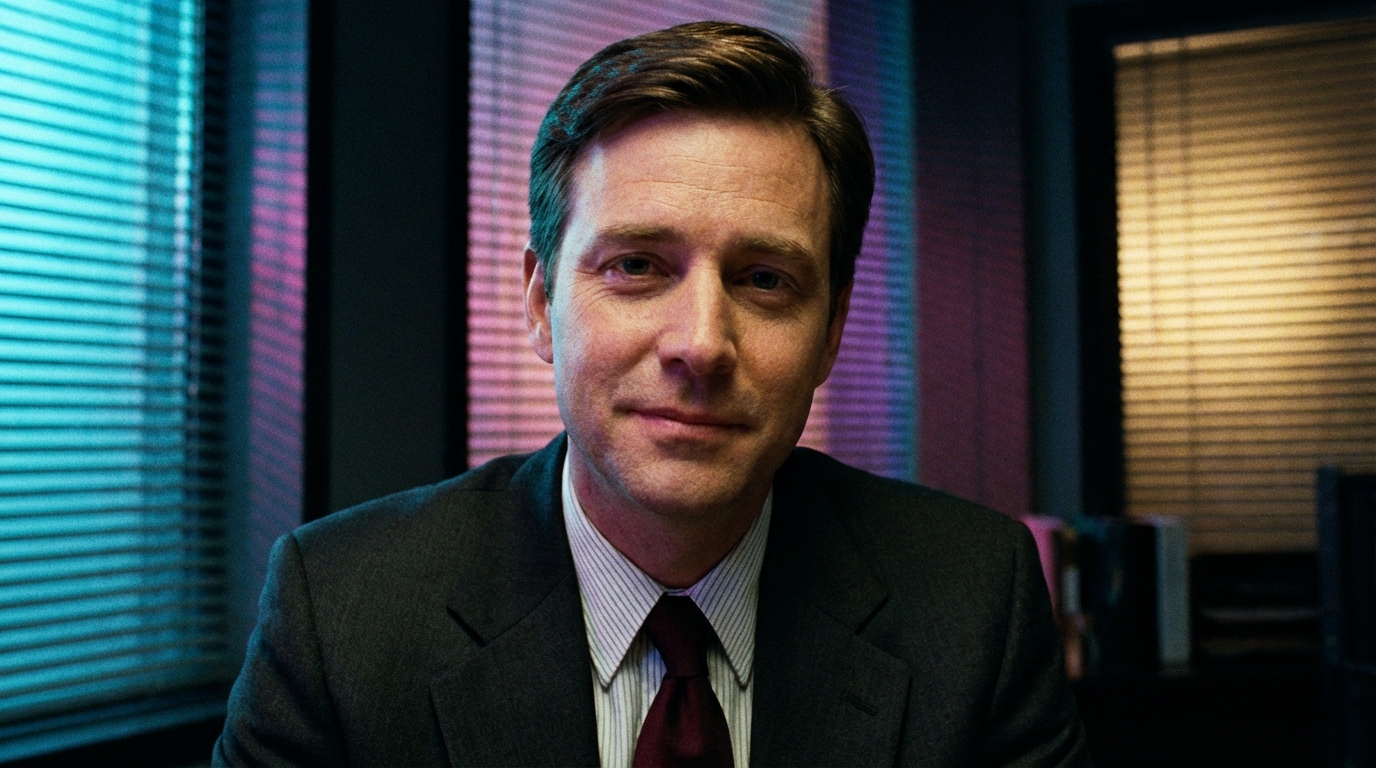
Gregory Thomas Lahey, born 12 June 1955 in New Norfolk, Tasmania, was a dedicated civil engineer whose life embodied commitment to sustainable infrastructure and community service. Fifth of eight children born to Thomas and Margaret Lahey, Greg built a life defined by family devotion and professional excellence. His marriage to distant cousin Pip Lahey created a partnership of shared values, raising Sarah and Oscar with love and purpose until tragedy claimed both parents in a 1998 Swiss helicopter crash.
Early Life in the Lahey Household
Gregory Thomas Lahey arrived on 12 June 1955 at New Norfolk District Hospital, entering the bustling household of Thomas and Margaret Lahey as their fifth child. His birth into an already established family meant joining siblings Peter (born 1949), Catherine (born 1951), Robert (born 1952), and Jennifer (born 1954), with younger siblings Michael (born 1957), Anne (born 1959), and Linda (born 1961) still to come. This position in the middle of eight children taught Greg early lessons in negotiation, cooperation, and finding his unique place within a complex family dynamic.
The Lahey family home on Boyer Road in New Norfolk had evolved organically with each new arrival—a sleepout added here, a bathroom there, the kitchen extended when it became clear that feeding eight children required industrial-scale operations. By the time Greg could walk, the house resembled a carefully orchestrated chaos where privacy was luxury and silence almost unknown. The boys—Peter, Robert, Greg, and later Michael—shared one large room with bunks that Thomas had built himself, whilst the girls occupied their own dormitories on the opposite side of the house.
Thomas Lahey's grocery store on New Norfolk's High Street served as both the family's livelihood and Greg's earliest classroom in community service. Lahey's General Store wasn't merely a commercial enterprise but a community institution where elderly customers received unofficial credit during pension week gaps, where Thomas knew which families needed quiet assistance, and where the concept of business merged seamlessly with social responsibility. Greg absorbed these lessons through observation rather than instruction, understanding that success meant more than profit margins.
Margaret Lahey managed the household with the efficiency of a military quartermaster and the warmth of a devoted mother. Her abandoned nursing career had equipped her with medical knowledge that proved invaluable in a house where someone was always scraped, bruised, or feverish. She could set a broken finger, diagnose mumps at a glance, and knew exactly when a complaint required a doctor versus when it needed a firm instruction to "stop carrying on and get outside."
The Middle Child's Perspective
Greg's position as the fifth of eight children shaped his worldview in subtle but profound ways. He was old enough to remember when the family was smaller, young enough to accept new arrivals as natural expansion rather than disruption. The older siblings—Peter, Catherine, and Robert—existed in a different sphere, already entering adolescence as Greg navigated primary school. The younger ones—Michael, Anne, and especially baby Linda—looked to Greg as a bridge between the "big kids" and themselves.
This positioning developed Greg's natural inclination towards building connections—literally and figuratively. He became the sibling who could translate Peter's teenage moods to confused younger children, who helped Catherine with shop inventory whilst keeping Michael entertained, who included Anne in adventures when others forgot she existed. His relationship with Linda, six years his junior, proved particularly significant. As her closest older brother in both age and temperament, Greg became Linda's protector, teacher, and first friend—a bond that would endure throughout their lives and extend to their own children.
School holidays meant all hands contributing to the shop's operation. Greg's particular responsibility involved delivery runs on the shop bicycle, navigating New Norfolk's hills with boxes of groceries balanced precariously. These solo expeditions provided rare solitude in a crowded household, time to observe the town's infrastructure—how roads connected, where drainage failed during storms, which bridges needed repair. Without realising it, he was developing an engineer's eye for how built environments functioned or failed.
Education and Emerging Interests
Greg's formal education began at New Norfolk Primary School in 1961, where teachers quickly identified his aptitude for mathematics and spatial reasoning. Unlike his older sister Catherine's linguistic gifts or Robert's artistic inclinations, Greg excelled at understanding how things fitted together—whether mathematical equations, geographical relationships, or mechanical systems. His Year 3 teacher, Mr Douglas Harrison, noted that Greg "approaches problems like a detective, gathering evidence before reaching conclusions."
The transition to New Norfolk High School in 1968 coincided with Tasmania's educational expansion. The state government's investment in technical education meant new workshops, science laboratories, and opportunities previously unavailable to rural students. Greg thrived in this environment, particularly in technical drawing, physics, and geography—subjects that would later underpin his engineering career.
Rugby became Greg's sporting passion during high school, though he played with more determination than natural ability. Standing five feet ten inches by graduation, solid but not imposing, Greg compensated for modest physical gifts through tactical awareness and reliability. His coach, Barry McKenzie, later recalled that "Greg wasn't our star player, but he was the one you wanted beside you when things got tough—absolutely dependable, never complained, always thinking two plays ahead."
Academic excellence came more naturally than athletic achievement. Greg's particular strength lay in synthesising different types of knowledge—understanding not just how mathematical principles worked but how they applied to real-world problems. His Year 12 physics project, examining stress points in Tasmania's historic bridges, demonstrated sophisticated understanding of both theoretical principles and practical applications. The project earned state-level recognition and helped secure his acceptance into the University of Tasmania's engineering programme.
University Years and Professional Formation
Greg commenced his Bachelor of Engineering at the University of Tasmania in February 1974, part of a small cohort of rural students entering professional fields previously dominated by urban middle-class graduates. The daily commute from New Norfolk—ninety minutes each way by bus—meant long days but allowed him to maintain family connections whilst pursuing higher education. This balance between advancement and rootedness would characterise his entire life.
University exposed Greg to ideas that challenged and expanded his worldview. Environmental engineering, still an emerging field, captured his imagination with its integration of technical expertise and ecological responsibility. Professors like Dr James Patterson, a pioneer in sustainable infrastructure design, mentored Greg towards understanding engineering as environmental stewardship rather than mere construction. These concepts, radical for 1970s Tasmania, would define Greg's professional approach.
Financial pressures meant Greg worked throughout university—weekend shifts at the family store, summer labour on construction sites, evening tutoring of struggling mathematics students. This constant juggle between study and work developed time management skills and reinforced his understanding that education was privilege requiring reciprocal responsibility. Unlike classmates who viewed university as extended adolescence, Greg approached it as professional preparation.
His honours thesis, completed in 1977, examined sustainable water management in rural Tasmanian communities, proposing innovative approaches to agricultural irrigation that minimised environmental impact whilst maintaining productivity. The work demonstrated technical competence but also revealed Greg's fundamental belief that engineering should serve community needs whilst protecting natural resources. Several recommendations from his thesis were later implemented in Derwent Valley irrigation schemes.
Meeting Pip and the Convergence of Values
The meeting between Greg Lahey and Philippa Rose Lahey at a New Norfolk community fundraiser in September 1976 represented more than romantic beginning—it united two branches of the extended Lahey family tree. Pip, as she preferred to be called, was a third cousin through the sprawling Lahey clan that had spread throughout the Derwent Valley since colonial settlement. Their shared surname occasioned initial jokes that quickly gave way to recognition of deeper compatibility.
Pip brought to the relationship a vibrancy that complemented Greg's quiet steadiness. Born on 22 April 1957, she was pursuing social work studies at Hobart Technical College, driven by passionate commitment to social justice that matched Greg's engineering ethics. Where Greg saw infrastructure as community service, Pip understood human services as society's essential infrastructure. Their conversations, often extending late into evenings at the New Norfolk milk bar, explored how their different disciplines might create holistic community support.
Their courtship unfolded across Tasmania's varied landscapes—bushwalks in Mount Field where Greg explained geological formations whilst Pip identified native orchids, coastal drives where they dreamed of adventures beyond Tasmania's shores, family gatherings where their relationship navigated complex dynamics of cousins-become-partners. The extended Lahey family, after initial surprise, accepted the match with characteristic pragmatism—at least they knew Pip's family background.
The three-year courtship allowed both to complete their education and establish career foundations before marriage. Greg secured a position with the Tasmania Department of Public Works in 1978, whilst Pip began working with Hobart Family Services. Their wedding on 24 November 1979 at St Matthew's Church in New Norfolk celebrated not just personal union but the convergence of two visions for community service.
Marriage and Professional Development
The early years of marriage saw Greg and Pip establishing themselves professionally whilst building their personal partnership. Their first home, a rented cottage in Glenorchy, positioned them between their respective workplaces whilst maintaining proximity to New Norfolk and family connections. The house, though modest, became a gathering place for siblings from both sides, Sunday dinners expanding to accommodate whoever needed feeding or company.
Greg's work with Public Works involved infrastructure projects throughout southern Tasmania—bridge repairs, road improvements, water system upgrades. He quickly developed a reputation for thorough preparation, innovative problem-solving, and ability to complete projects within budget whilst exceeding quality standards. His supervisors noted his particular talent for community consultation, understanding that successful infrastructure required social as well as technical engineering.
The birth of Oscar James on 15 May 1986, after several years of trying, transformed Greg from engineer to father with characteristic thoughtfulness. He approached parenthood as he did engineering projects—researching thoroughly, planning carefully, but remaining flexible when reality diverged from theory. Oscar's arrival also deepened Greg's commitment to sustainable development, understanding viscerally that his engineering choices would shape the world his son inherited.
Professional advancement came steadily rather than spectacularly. Greg's promotion to Senior Engineer in 1988 recognised his technical expertise and project management capabilities. He specialised in rural infrastructure, understanding that Tasmania's scattered communities required different approaches than urban centres. His work on the Ouse River bridge replacement, completed under budget whilst incorporating innovative environmental protections, earned state-level recognition and established his reputation for excellence.
Fatherhood and Family Life
Sarah Jane's arrival on 13 March 1989 completed the family Greg and Pip had envisioned. Born at Royal Hobart Hospital after a difficult labour that required emergency intervention, Sarah entered the world fighting—a characteristic that would define her entire life. Greg, who'd maintained composure through Oscar's birth, found himself overwhelmed by this second miracle, particularly given the medical complications that meant Sarah would likely be their last child.
Greg's approach to fatherhood balanced traditional masculine expectations with emotional availability unusual for men of his generation. He taught Oscar to throw a rugby ball but also to identify constellations, showed Sarah how to use tools whilst encouraging her intellectual curiosity. Weekend adventures became family traditions—camping at Fortescue Bay, exploring the Tahune Airwalk, fossicking for gems at Bicheno. These expeditions weren't mere entertainment but education, Greg using Tasmania's landscape as classroom for lessons about geology, ecology, and environmental responsibility.
The family's relocation to Hollow Tree in Tasmania's Central Highlands in 1991 represented Greg's desire to provide his children with rural childhood experiences similar to his own. The property, five acres with a renovated farmhouse, offered space for vegetable gardens, chickens, and the kind of unstructured exploration increasingly rare in suburban childhoods. The commute to Hobart lengthened Greg's working days, but he considered the sacrifice worthwhile for his children's development.
Pip's social work, increasingly focused on rural mental health services, complemented Greg's infrastructure development. They understood their work as parallel contributions to community resilience—Greg building physical structures, Pip supporting social structures, both essential for healthy communities. Their dinner conversations, carefully edited for young ears, explored connections between their professions, teaching Oscar and Sarah that service took many forms but always involved considering others' needs.
Professional Peak and Community Recognition
The 1990s marked Greg's professional peak, with major projects that demonstrated his evolved philosophy of engineering as environmental and social responsibility. The Lake Meadowbank spillway upgrade, necessitated by changing rainfall patterns, showcased his ability to integrate climate adaptation into infrastructure design—prescient thinking for the era. His insistence on fish ladders and minimum environmental disruption, initially resisted as costly overengineering, later became standard practice.
Community recognition extended beyond professional achievements. Greg served on the New Norfolk Council's planning committee, coached junior rugby, and quietly assisted struggling families through discrete donations and voluntary labour. His reputation as someone who could be relied upon—whether for engineering advice, physical assistance, or simple listening—made him a pillar of the community he'd grown up serving.
The relationship with his siblings evolved as they scattered across Tasmania and mainland Australia. Peter had taken over the family store after Thomas's retirement, Catherine pursued nursing in Hobart, Robert established a successful plumbing business, Jennifer taught in Launceston, Michael worked in mining, and Anne raised her family in Devonport. Linda, married to police detective Richard Longey, remained closest both geographically and emotionally. Their children—Sarah and Oscar, James, Thomas, and Emily—grew up more like siblings than cousins, Sunday gatherings at the Lahey parents' home maintaining family cohesion despite geographic dispersal.
Dreams, Adventures, and the Final Journey
Throughout their marriage, Greg and Pip shared dreams of international adventure—seeing the engineering marvels Greg had studied, experiencing the cultures Pip read about voraciously. Financial responsibilities and child-rearing had postponed these dreams, but by 1998, with Oscar twelve and Sarah nine, they felt able to plan the long-awaited overseas journey. The trip, scheduled for October, would combine Greg's engineering interests with Pip's social consciousness—touring European infrastructure whilst volunteering with refugee services.
The preparation revealed Greg's characteristic thoroughness. He researched every destination, planned alternative routes, purchased comprehensive insurance, and prepared detailed instructions for the children's care during their three-week absence. Sarah later recalled her father showing her his itinerary, explaining each location's significance, promising to bring back stories and photographs. It was the last conversation she would have with him.
On 21 October 1998, Greg and Pip boarded a helicopter in Zermatt for an alpine tour that had been Pip's particular dream—seeing the Matterhorn and surrounding peaks from above. The helicopter, carrying four other tourists and a pilot, crashed in deteriorating weather conditions near the Theodul Glacier. Swiss authorities reported catastrophic mechanical failure, though weather complicated rescue attempts. There were no survivors.
Legacy and Lasting Impact
The news reached Tasmania on 22 October, forever altering the lives of those left behind. Oscar and Sarah, staying with their maternal grandparents Patrick and Jane Lahey during their parents' absence, became orphans in an instant. Linda Longey collapsed upon receiving the notification, Greg's death representing not just loss of a brother but severing of the childhood bond that had anchored her life. The New Norfolk community, where Greg had touched countless lives through professional work and personal kindness, mourned collectively.
The memorial service at St Matthew's Church, where Greg and Pip had married nineteen years earlier, overflowed with mourners. Colleagues spoke of Greg's professional excellence and innovation, community members recalled his quiet assistance during difficulties, siblings shared memories of a brother who built bridges both literal and metaphorical. But perhaps most poignant was seven-year-old James Longey reading a poem about his Uncle Greg, who had taught him that building things meant building futures.
Greg's professional legacy persisted through infrastructure he designed, still serving Tasmanian communities decades later. Several of his sustainable engineering innovations became standard practice, his reports and designs studied by subsequent generations of engineers. The Greg Lahey Memorial Scholarship, established by colleagues and community members, supports rural Tasmanian students pursuing engineering studies—ensuring his vision of engineering as community service continues.
More personally, Greg's influence shaped his children's paths in profound ways. Sarah's career in law enforcement, her methodical approach to investigation, her commitment to truth despite personal cost—all echoed Greg's engineering principles applied to human complexity. Oscar's eventual career in finance, seeking structure and predictability after childhood chaos, reflected his father's systematic thinking translated to numbers rather than infrastructure.







