Grant Frederick Ironbach
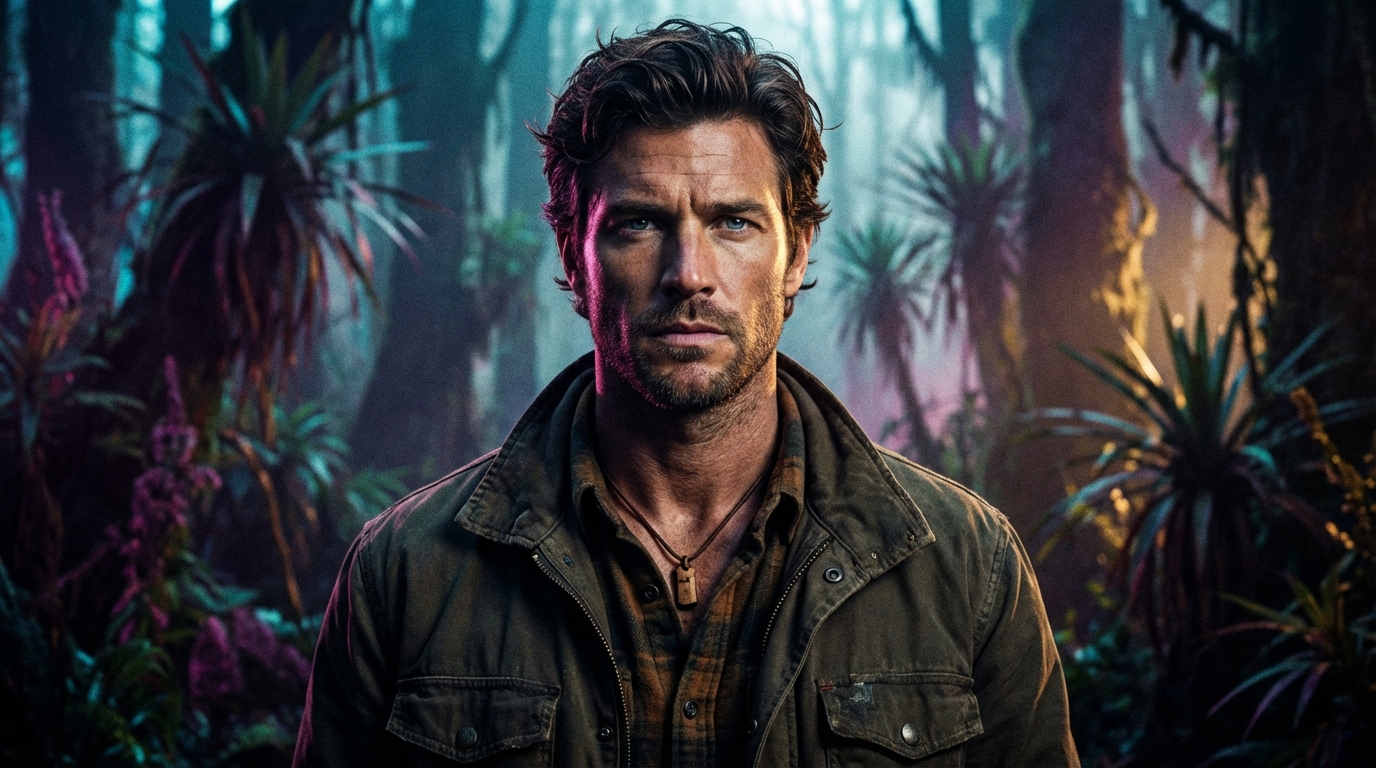
Grant Frederick Ironbach, born 15 March 1983 in Hobart, Tasmania, is a wildlife conservationist who served as Director of Bonorong Wildlife Sanctuary from 2015. His career spanned roles with Tasmania Parks and Wildlife Service, Australian Wildlife Conservancy, and Zoos Victoria. In July 2018, a case of mistaken identity led Grant and his sister Sarah through a Portal to Clivilius, where they established the Bixbus Wildlife Sanctuary.
Birth and Family Origins
Grant Frederick Ironbach was born on 15 March 1983 in Hobart, Tasmania, the first child of Thomas and Margaret Ironbach. His arrival came into a household already oriented toward the natural world, both parents sharing an enthusiasm for environmental matters that would profoundly shape their children's trajectories. The family home, situated within reach of the dense forests and rugged coastlines that characterise Tasmania's landscape, provided the setting for a childhood steeped in natural exploration.
Thomas Ironbach brought to his family a practical appreciation for Tasmania's wilderness, whilst Margaret contributed her own passion for environmental stewardship. Together they created a household where curiosity about the natural world was encouraged and outdoor exploration formed the foundation of family life. Their influence would prove decisive in determining the professional paths both their children would eventually pursue.
Two years after Grant's birth, his sister Sarah Francine Ironbach arrived on 22 June 1985. The siblings would develop a bond forged through countless shared hours observing the flora and fauna of their island home, a connection that would eventually mature into professional partnership. From their earliest years, Grant and Sarah displayed complementary temperaments—his directorial vision balanced by her operational attention to detail—that would later prove invaluable in their conservation work.
Childhood and Early Education
Growing up in Hobart during the late 1980s and early 1990s, Grant exhibited a profound curiosity for the natural world that distinguished him from his peers. Whilst other children pursued conventional interests, Grant spent his free hours exploring the environments surrounding his family home, developing an intimate knowledge of Tasmanian wildlife that would inform his entire career. His younger sister Sarah shared this passion, and together the siblings accumulated experiences that transformed childhood wonder into lasting vocation.
Grant's formal education began at St Michael's Primary School, where his favourite subjects were science and geography. His teachers noted an exceptional interest in environmental studies that exceeded typical childhood enthusiasm. The classroom provided theoretical framework, but Grant's real education occurred in the field—along riverbanks and forest trails where direct observation taught lessons that textbooks could not convey.
By the time Grant reached secondary school at Hobart High School, his future direction had become apparent to everyone who knew him. His academic performance in science subjects reflected genuine engagement rather than mere compliance, whilst his extracurricular interests consistently oriented toward environmental matters. Encouraged by parents who recognised and nurtured his inclinations, Grant approached his education with the understanding that it represented preparation for conservation work rather than abstract intellectual exercise.
University Education
In 2002, Grant enrolled at the University of Tasmania to pursue a Bachelor of Environmental Science. His undergraduate years combined rigorous academic study with extensive fieldwork that allowed him to apply theoretical knowledge to practical conservation challenges. The university's location in Tasmania provided unparalleled access to unique ecosystems and endemic species, opportunities that Grant exploited fully throughout his studies.
His undergraduate research included a notable project examining habitat preferences of the Tasmanian devil, work that demonstrated both his technical capability and his commitment to species facing genuine conservation challenges. The project required extended periods in the field, conditions that suited Grant's temperament and confirmed his suitability for careers demanding physical engagement with natural environments rather than office-bound analysis.
Grant graduated with honours in 2005, his academic performance reflecting the dedication he brought to studies aligned with his passions. Rather than entering the workforce immediately, he chose to further his education, recognising that advanced qualifications would enhance his capacity to contribute meaningfully to conservation efforts. He was accepted into the Master of Wildlife Conservation programme at Charles Sturt University in New South Wales, a decision that required temporary departure from his beloved Tasmania but promised professional development unavailable closer to home.
His postgraduate studies focused on the impact of habitat fragmentation on native species, research with direct relevance to conservation challenges across Australia. The thesis that culminated his master's programme received high praise from his professors, establishing Grant's credentials as a serious researcher capable of producing work that advanced understanding within his field. He completed the programme in 2008, returning to Tasmania equipped with qualifications that would open doors throughout his subsequent career.
Early Conservation Career
Following completion of his master's degree in 2008, Grant began his professional career as a Wildlife Conservation Officer with the Tasmania Parks and Wildlife Service. This role provided grounding in the practical realities of conservation work—research, law enforcement, and community engagement combining to protect Tasmania's native wildlife and their habitats. The position demanded versatility, requiring Grant to develop skills across multiple domains whilst maintaining focus on the overarching goal of species and habitat preservation.
His dedication and expertise quickly attracted recognition, earning promotion to Senior Ecologist with the Australian Wildlife Conservancy in 2010. This advancement brought expanded responsibilities and opportunities to lead rather than merely participate in conservation efforts. As Senior Ecologist, Grant supervised field teams, developed comprehensive conservation plans, and directed ecological research projects across diverse Australian environments.
The role took Grant beyond Tasmania's familiar landscapes to the arid outback and tropical rainforests of mainland Australia. This geographical breadth enriched his understanding of conservation challenges whilst demonstrating his capacity to work effectively across varied ecosystems. Among his most significant achievements during this period was involvement in the successful reintroduction of the endangered eastern quoll to mainland Australia, a project that exemplified the patient, methodical approach that characterised his conservation philosophy.
In 2012, Grant joined Zoos Victoria as a Conservation Programme Manager, a position that shifted his focus toward captive breeding and public education. Managing conservation initiatives for one of Australia's premier zoological organisations required coordination with international wildlife bodies and development of educational programmes that translated complex conservation science into accessible public engagement. His work on captive breeding programmes for the critically endangered orange-bellied parrot proved instrumental in boosting populations of this threatened species.
Throughout these years, Grant continued developing his professional capabilities through targeted training. In 2011, he obtained certification in Environmental Education from the University of Tasmania, gaining skills in developing and delivering educational content. Wildlife Rehabilitation Training through Wildlife Victoria in 2013 provided specialised expertise in caring for injured and orphaned animals. An Advanced Wildlife Management Course with the Australian Wildlife Conservancy in 2017 further enhanced his strategic capabilities.
Director of Bonorong Wildlife Sanctuary
In 2015, Grant's career reached a new pinnacle with his appointment as Director of Bonorong Wildlife Sanctuary in Tasmania. The sanctuary, established in 1981, had developed a strong reputation for protecting and rehabilitating native wildlife, but Grant's leadership would significantly expand its scope and impact. His return to Tasmania represented homecoming in multiple senses—geographical return to his birthplace and professional arrival at an institution aligned perfectly with his life's work.
As Director, Grant oversaw all sanctuary operations, including animal care, staff management, and visitor services. He implemented conservation strategies developed through years of experience across multiple organisations, coordinated with environmental bodies throughout Australia, and enhanced community outreach programmes that connected local populations with conservation efforts affecting their region. The rescue and rehabilitation operations that formed the sanctuary's core mission expanded substantially under his guidance.
The appointment also reunited Grant professionally with his sister Sarah, who joined Bonorong as Assistant Director. Their collaboration represented the natural evolution of a partnership formed through childhood exploration, now applied to institutional leadership. Sarah's operational expertise complemented Grant's strategic vision, their working relationship reflecting the deep bond that decades of shared purpose had cultivated. Together, the Ironbach siblings transformed Bonorong into a more effective conservation force whilst maintaining the welcoming atmosphere that made the sanctuary accessible to visitors seeking connection with Tasmania's unique wildlife.
The Portal and Passage to Clivilius
July 2018 brought disruption that would fundamentally redirect Grant's life and career. The sequence of events began ordinarily enough—a visitor named Luke arrived at Bonorong Wildlife Sanctuary, ostensibly for a guided tour but actually on a reconnaissance mission as a Guardian seeking to activate a new Portal location. The tour, led by wildlife officer James Fletcher, proceeded without incident until its conclusion brought Luke into contact with Grant and Sarah.
What followed involved a case of mistaken identity that would prove consequential beyond anything its participants initially understood. Grant, mistaking Luke for someone named Brad, found himself entangled in discussions about a new sanctuary project. The confusion escalated rapidly, culminating in the unexpected departure of both Grant and Sarah through a Portal to Clivilius—an alternate dimension accessible only through Guardian technology.
The Ironbachs arrived in Clivilius believing they had embarked on a two-week site assessment for a wildlife sanctuary project, after which they would return home to Tasmania. Luke, recognising the magnitude of his error, sought assistance from his brother Paul in managing the situation. The truth—that Portal travel to Clivilius was effectively one-way, that the Ironbachs could never return to Earth, that their entire previous lives had been severed in an instant—remained unspoken.
The deception persisted through their early days in Bixbus, the settlement that served as the region's primary human community. Grant and Sarah discussed timelines and assessment schedules, made plans for their return journey, and approached their situation with the professional enthusiasm of conservationists encountering an extraordinary opportunity. Those around them—who understood the truth—maintained silence, allowing the Ironbachs their illusions whilst grappling with the ethical weight of knowledge withheld.
Integration into Bixbus
The settlement Grant and Sarah entered in late July 2018 was still finding its feet. Bixbus had been founded only weeks earlier, its population small, its infrastructure minimal, its future uncertain. The arrival of two experienced wildlife sanctuary directors—regardless of the circumstances that brought them—represented significant addition to the community's capabilities. Paul Smith, who had emerged as Bixbus's de facto leader, recognised the Ironbachs' potential contribution even as he struggled with the responsibility of maintaining their false understanding.
Grant's introduction to Bixbus involved careful management by Paul and others who understood the situation's complexity. The settlement's needs were genuine—wildlife sanctuary development represented a legitimate priority for a community seeking to establish sustainable presence in an unfamiliar dimension. Grant's expertise made him immediately valuable, his professional assessment of Clivilius's ecological conditions providing insights that would inform the community's development trajectory.
Grant and Sarah eventually learned they could not return to Earth, that their two-week assessment had become permanent relocation, that everything they had known—careers, colleagues, the sanctuary they had built, the island they loved—existed now only in memory. The adjustment required processing loss whilst simultaneously engaging with opportunities that their new circumstances presented.
Rather than succumbing to despair, Grant channelled his response into productive engagement with Bixbus's development. The Bixbus Wildlife Sanctuary, conceived initially as cover story for the Ironbachs' presence, became genuine project under his direction. His expertise in sanctuary establishment, developed through years of work at Bonorong and other institutions, found application in circumstances that no earthly training could have anticipated. The groundbreaking ceremony for the sanctuary's construction marked Grant's commitment to building something meaningful in his new home.
The Bixbus Wildlife Sanctuary and Council Role
Construction of the Bixbus Wildlife Sanctuary proceeded through late 2018, with Grant directing efforts to establish facilities capable of housing and rehabilitating wildlife in Clivilius's unique environment. The Sanctuary Supply Depot, built between late August and mid-September 2018, provided infrastructure for storing equipment and materials essential to the broader project. Grant's experience managing similar developments at Bonorong proved invaluable, though Clivilius's conditions demanded adaptation of earthly methods to unfamiliar circumstances.
The sanctuary development connected to Project Terra Nova, a covert operation designed to leverage Earth-based expertise for Clivilius conservation whilst maintaining dimensional secrecy. Grant's involvement positioned him at the intersection of practical conservation work and the broader strategic considerations governing relations between Earth and Clivilius. His professional credentials—established through decades of legitimate conservation work—lent credibility to efforts that operated outside any earthly regulatory framework.
Grant's contributions to Bixbus extended beyond sanctuary development to community governance. He became a member of the Clivilius Lead Council, the administrative body established to manage the settlement's increasingly complex affairs. The Council, comprising department heads responsible for various aspects of Bixbus administration, provided structure for decision-making as the community grew beyond informal coordination. Grant participated in multiple Council meetings, his expertise informing discussions that ranged from immediate practical concerns to longer-term strategic planning.
His attendance at significant community events—including the funeral of Rose Smith, an early Bixbus resident whose death reminded the settlement of mortality's persistence even in a new dimension—demonstrated integration into community life that transcended professional function. Grant had become not merely a useful expert but a genuine member of Bixbus's developing society, his investment in the community's success reflecting acceptance of circumstances that initial deception had imposed.
Character and Personal Life
Those who know Grant Ironbach describe a man whose dedication to conservation reflects genuine passion rather than mere professional obligation. His commitment to wildlife protection, evident since childhood explorations with his sister, has remained constant across varied institutional contexts and now across dimensional boundaries. This consistency suggests values rooted deeper than career advancement—an authentic orientation toward environmental stewardship that circumstances can redirect but not extinguish.
Grant maintains an adventurous spirit that finds expression in outdoor pursuits extending beyond professional requirements. Hiking, camping, and wilderness exploration provide recreation that connects to his conservation work whilst offering respite from its demands. His appreciation for adventure sports—kayaking and bungee jumping among his preferred activities—reveals a personality comfortable with physical challenge and calculated risk. Photography, particularly of wildlife in natural habitats, combines artistic expression with conservation advocacy, his images serving to raise awareness about species and environments requiring protection.
Physical fitness remains a priority, with running and swimming providing regular exercise that supports the demanding fieldwork his career has always required. This commitment to physical capability reflects practical understanding that conservation work often occurs in challenging environments where stamina and strength prove essential rather than optional.
The bond with his sister Sarah has deepened through shared experience of displacement and adaptation. Working alongside her at Bixbus Wildlife Sanctuary, Grant continues a collaboration begun in childhood and formalised at Bonorong. Their complementary skills—his directorial vision and her operational expertise—create effective partnership that has proven resilient across circumstances neither could have anticipated. The siblings' relationship exemplifies how personal connection can enhance professional effectiveness, their mutual understanding enabling coordination that purely professional relationships rarely achieve.
Grant lives according to sustainable principles that extend beyond professional advocacy to personal practice. Eco-friendly household practices, support for renewable energy, and commitment to waste reduction reflect values consistently applied rather than selectively performed. His advocacy for environmental stewardship within whatever community he inhabits demonstrates understanding that individual actions, multiplied across populations, generate collective impact that institutional efforts alone cannot achieve.
The 2020s in Clivilius
By the mid-2020s, Grant had established himself as a central figure in Bixbus's ongoing development. The Wildlife Sanctuary he directed had grown from improvised beginnings into functional facility serving Clivilius's conservation needs. His Council participation continued, his voice contributing to decisions shaping a community that had matured considerably since his arrival in 2018. The adjustment from Earth-based conservationist to Clivilius institution-builder, initially imposed through deception, had become genuine identity embraced rather than merely accepted.
His relationship with Sarah remained the constant through all transitions. The siblings continued working together, their partnership adapting to Clivilius conditions whilst maintaining the essential character established through decades of shared purpose. Whatever grief attended their permanent separation from Earth—from parents Thomas and Margaret who would never know what became of their children, from colleagues and friends, from the island landscape that had formed them—found counterbalance in the continuation of their most important relationship and the meaningful work it enabled.
The irony of Grant's situation was not lost on those who knew his story. A man who had dedicated his career to protecting species in their native habitats now worked to establish wildlife populations in an entirely different dimension. The skills remained relevant; the context had transformed beyond recognition. Yet Grant's response to this irony—productive engagement rather than paralysing reflection—demonstrated the adaptability that had characterised his career from its earliest stages. Conservation, he had learned, meant protecting life wherever it existed, and Clivilius contained life worth protecting.







