Grace Eleanor Jennings (née Levis)
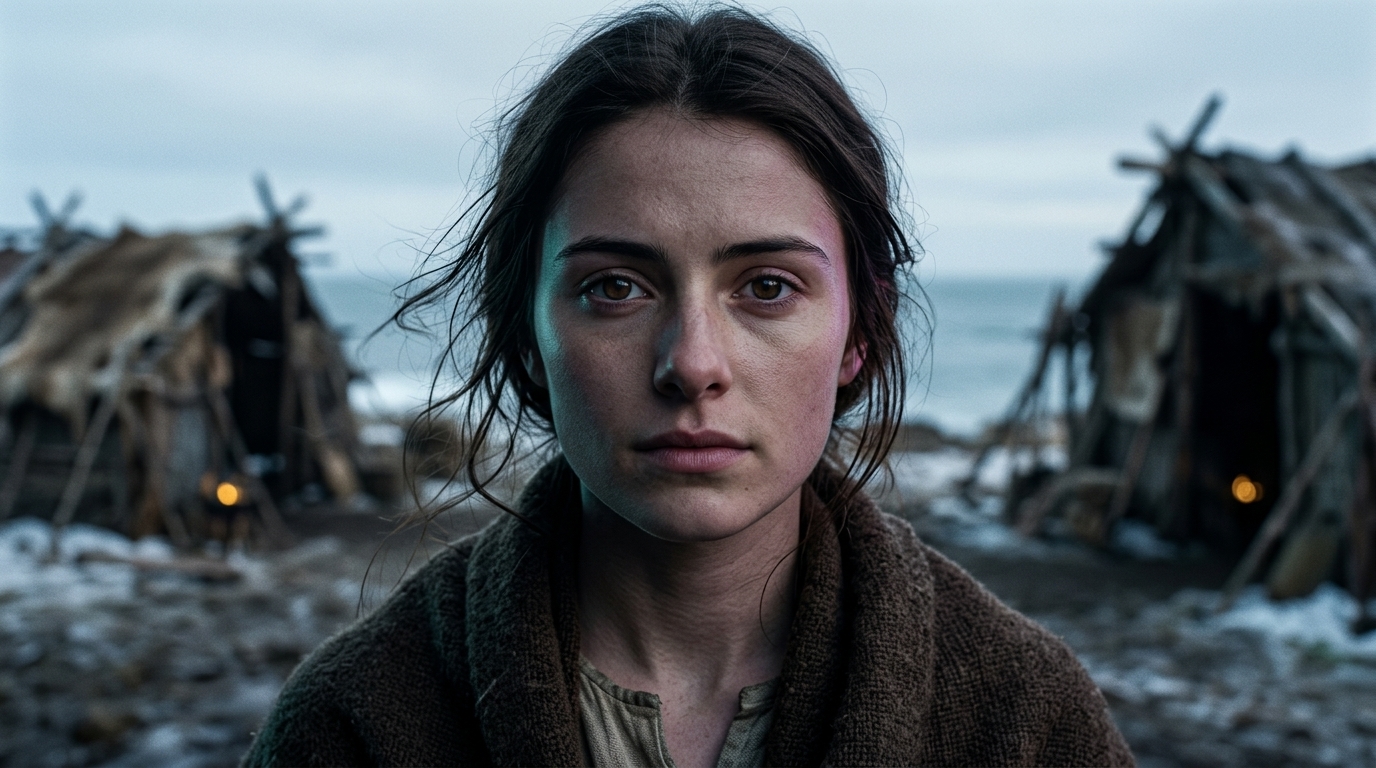
Grace Eleanor Jennings, née Levis (1970–1993), was a Welsh care worker brought to Belkeep in 1990 by the Guardian Sylvie Sprake, one of a handful of displaced people offered a way out through the Portal. Quiet and watchful rather than commanding, she became one of the raw settlement's steadying presences and married the Guardian Cody Jennings in 1991. She died the morning after giving birth to their twins, Freya and Fryar, in July 1993, having lived just long enough to give the settlement its next generation.
Early Life and Family Background
Grace Eleanor Levis was born on 27 February 1970 in Llangybi, a small village straddling the ancient pilgrimage routes of the Vale of Usk, Monmouthshire, Wales. She was the second of four children born to Reverend Ivor Thomas Levis (1935–2002), a soft-spoken Congregationalist minister with strong pacifist leanings, and Marion Gwyneth Levis, née Morgan (1937–2010), a local schoolteacher and self-taught folklorist. The Levis household was one of moral precision, intellectual curiosity, and a deep, lived connection to both the Welsh language and nonconformist tradition.
The family lived in a stone vicarage beside a disused chapel, with bookshelves bowing under the weight of theology, folklore, and Welsh-language histories. The children were taught to recite psalms in Welsh and English before they could write full sentences, and Sundays were quiet but regimented: walking the hill paths after chapel, herbal tea in the afternoon, scripture before bed.
Grace grew up amid this order yet often remained slightly apart from it. While her elder sister, Eleri Carys Levis (b. 1967), would go on to train as a nurse and thrive in structured caregiving roles, and her younger brother, Owen Rhys Levis (b. 1972), leaned heavily into contemplative faith and later entered a Cistercian monastery in the Ardèche, Grace seemed always to move just behind or beside expectation. She asked few questions aloud but listened to everything, and her silence was not withdrawn but deliberate.
The youngest sibling, Bethan Mari Levis (b. 1975), left home as soon as she could and later settled in New Zealand after a failed stint at university in Cardiff. Of the four children, Grace maintained the loosest ties to family in adulthood, though she remained quietly protective of her parents' dignity and never spoke ill of them in later years.
Her early emotional development was marked by a kind of quiet social stewardship. She was the one who eased tensions when Owen stopped speaking for weeks at a time, or when Bethan slammed doors and threatened to leave; her presence carried weight not because she asserted herself but because her restraint created space for others to speak. Even as a child she read moods more fluently than she read books, though she read plenty of those too. Her father once described her, not unkindly, as more stillness than speech.
Education and Formative Years
Grace was educated first at Ysgol Gynradd Llangybi, a modest village primary where she kept mostly to herself and was more often found watching others at play than joining in. She transferred at eleven to Pontypool Comprehensive School, commuting daily by bus across frostbitten back roads, and there she became quietly known—not for accolades or disruptive brilliance, but for a rare emotional steadiness. Teachers trusted her with peer support and classmates relied on her in moments of visible distress; she earned the nickname Miss Steady Hands, not for anything academic but for the way she calmly helped a girl who fainted during a science practical, or comforted another who panicked in an oral exam.
Though rarely outspoken, Grace showed a subtle excellence in literature, ethics, and social studies, with a particular sensitivity to case-based learning and oral histories. Her final-year coursework included an independent essay on Romani encampments in post-war Wales—submitted late but meticulously footnoted—which impressed her sociology teacher enough that he steered her toward anthropology.
She accepted a place at the University of Aberystwyth in 1988 to read Social Anthropology, drawn by the promise of working at the edges of known structures. Almost immediately, though, the framework felt constricting. Lectures on kinship systems and symbolic exchange struck her as a parody of the real thing, and she could not reconcile the academic language with the lived complexity of the communities she volunteered among at weekends. After only a year she formally withdrew, offering vague reasons that amounted to it being too many words for something she felt she already understood.
Instead, Grace took to low-wage, high-contact work, rotating between care homes, volunteer-run domestic violence refuges, and informal shelters in places like Hereford, Telford, Cardigan, and Kidderminster. She often took the postings others rejected: rural homes in winter, night-shift supervision, first-contact intake roles. She preferred places with a single kettle and no clipboard. It was during this period, between 1989 and early 1990, that she began to surface intermittently within the loosely connected aid networks of Powys, which brought her into the frayed outer orbit of Sylvie Sprake. Grace never formally aligned herself with any ideology, movement, or campaign; she simply arrived, worked, and moved on. On the rare occasions she was asked why she kept at it, she would say only that some people did not leave unless someone else stayed a little longer.
Descent and Drift (1989–1990)
By mid-1989 Grace had entered a period of marked withdrawal from formal systems. Her volunteer records tapered, she stopped replying to caseworker requests, and she began turning down placements that required background checks or uniformed hours. Though she never spoke openly about it, those around her noted a deepening disillusionment—not only with institutional care, but with the broader shape of how need was seen, handled, and abandoned.
She moved in and out of semi-stable communal setups: a hillside hostel in Llandrindod Wells, a women's co-op near Crickhowell, a caravan lot outside Knighton. In each she stayed just long enough to stabilise the worst of it—mould in the bedding, rats near the bin store, conflict over shared tools—then quietly left, seldom telling anyone where she was going next.
In early January 1990 she arrived at Cwm Bryn Glas, a crumbling farmhouse tucked into the folds above Llangadfan, near the Afon Twrch. No one had invited her; the door was unlatched and the occupants did not ask questions. She slept on a mattress missing one corner of its frame, curtained off her space with an old duvet, and set to work clearing ash from the hearth. The house, though precarious, was more stable than most she had passed through, and she repaired a leaking sink, patched window gaps with tarpaper, kept a rough log of dry food and medicines, and was once found sitting barefoot in the woodshed in heavy snow, murmuring recipe conversions to herself.
When the fire came on 2 February, Grace escaped uninjured, but something in her changed afterward. She spoke less, and declined every offer of transfer or counselling. When Sylvie Sprake—quiet, steady, older—appeared two days later through a relief-trust contact, Grace watched her without speaking for nearly a minute before asking whether she knew anywhere else they might go. Sylvie did not answer then. But four days later she returned with four names and one way out.
Crossing to Belkeep
On the morning of 14 February 1990, Grace Levis crossed into Clivilius through an activated Portal in the rear wall of a derelict sheep barn west of Llanfyllin, Powys. She was one of four to step through that day—alongside Huw Parry, Mills Rowntree, and Daniel Brohm—all of whom had survived the fire at Cwm Bryn Glas less than two weeks earlier. The Portal had been opened by Sylvie Sprake, a Guardian of Belkeep, who had spent days assessing the group's suitability for relocation after their displacement and quiet erasure from official systems.
The decision to bring them across was not made lightly. Sylvie had observed their restraint, their capacity for self-regulation, and the absences in their records that rendered them, administratively at least, disposable. There was no ceremony and no documentation, only a quiet offer and a door that would close behind them for good. Grace did not hesitate; she was the first to walk through.
They emerged into the Belkeep Portal cavern, a wide, frozen space carved from the base of a coastal ridge. The air inside was colder than any of them had expected, their breath fogged, and their coats were inadequate; but the Portal shimmered once behind them and vanished, and they were, without qualification, elsewhere.
Belkeep at that time was raw—a dozen permanent residents, two Guardians, scattered shelters pinned against the wind shear, food stores held under constant tension. The newcomers were met not with welcome but with wary silence, for resources were thin and trust thinner, and they were given bunks in the dry-storage annexe and told not to break anything.
Grace did not attempt to defend her presence. She simply began helping. That same evening she found the water log, corrected a drying schedule posted in the wrong column, and redistributed thermal blankets after noting where the drafts pooled overnight, and by the end of the first week most of the settlement knew who to ask when something had gone missing, frozen, or broken.
Over time she became a quiet stabiliser—not a leader, not even a coordinator, but a presence that made others feel steadier in their own roles. She listened without absorbing panic, observed without correcting, and remembered the small things that others forgot, until for many of the settlers her reliability had become a kind of infrastructure. Asked once how she had adjusted to Clivilius so quickly, she said that she had not—she had simply never adjusted to where she had been before.
Grace and Cody
In August 1990 Grace met Cody Brian Jennings, then a young man weighed down by a brooding sense of duty and by his still-new role as one of Belkeep's Guardians. Their first meeting, around a fire at the edge of the encampment, was brief but stayed with him. Cody was drawn to her grounded presence and to the way she commanded trust without ever raising her voice; and Grace, for her part, found in the restless farm boy from Gawler something she had seldom met in the people she spent her life steadying—someone who needed her without leaning his whole weight upon her.
What grew between them was less a courtship than a recognition. Cody carried a secret that set him apart from everyone he had known on Earth—the Portal, the Guardianship, the double life he could explain to no one—and in Grace he found the first person from whom none of it had to be hidden. She had crossed the same impossible threshold; she asked no question he could not answer; and her steadiness met his brooding without being unsettled by it. For a man used to holding the largest facts of his life entirely alone, that was no small thing, and he knew it.
By June 1991 Cody proposed during a walk along the shore of Lake Gunlah, and they married on 15 July 1991 in a modest ceremony in Belkeep, surrounded by the settlers who had become their whole world. Grace wore a simple flax-dyed gown sewn by her friend and fellow settler Alis Bramley, and the wedding was remembered for its unadorned sincerity. Theirs was a union of genuine companionship rather than grandeur, forged in hardship and shared purpose, and for a few years—by the hard measure of Belkeep—it was a happy one.
Motherhood and Final Days
On 4 November 1992 Grace learned she was pregnant with twins. For all the joy it brought, she and Cody were both acutely aware of the risk: Belkeep's medical provision was rudimentary and its supplies sporadic, and a difficult birth in such a place was a genuinely dangerous thing. Grace continued at light duties well into her final trimester, refusing to be idle even as her strength waned, and the settlement—which had buried more people than it had welcomed—allowed itself a rare and careful hope around the coming of its first children.
She gave birth on 15 July 1993, two years to the day after her wedding, to a daughter and a son, delivered after a protracted and difficult labour overseen by the midwife Senara Dawes, a herbalist and trauma nurse. She named them Freya Gwyneth and Fryar Ivor, giving each of them in a middle name one of the Welsh parents she had left behind and they would never meet. The birth, successful at first, left her gravely weakened, and by the following morning, 16 July 1993, she was dead—lost to internal complications, most likely an undiagnosed haemorrhage, the kind of death a hospital on Earth would in all likelihood have prevented.
Her death was met with solemnity across Belkeep. There were as yet no established cemeteries, and so Grace was buried on a hill overlooking the settlement, her grave marked only by a carved stone and, at the graveside, the old Welsh hymn Ar Hyd y Nos, sung by those who had known her. She was twenty-three. She had been in Belkeep a little over three years, and in that short time she had steadied a raw and frightened settlement, married its founding Guardian, and left it the two children who would help carry it through the long decline to its end—none of which she lived to see.







