Gordon James Richards
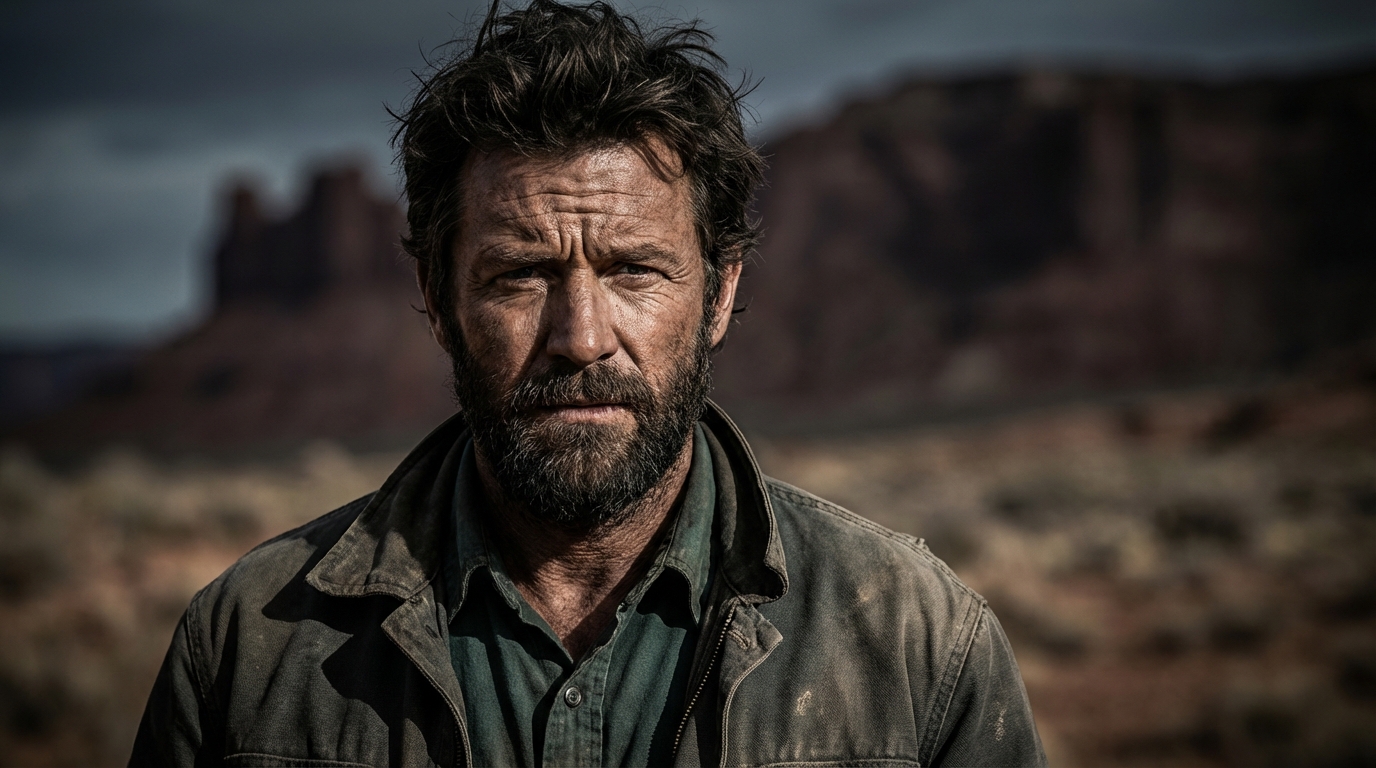
Gordon James Richards (b. 12 November 1968) is an enigmatic figure whose life has been defined by an unwavering pursuit of the unknown. The son of a geologist and a librarian, he grew up exploring Broken Hill's abandoned mines and ancient caves, developing a fascination with supernatural phenomena that would shape his unconventional path. When his sister Michelle's friend Violet Dallow vanished after an encounter at Penrose Park where Gordon had shared unsettling tales, the tragedy cast a permanent shadow over his explorations—transforming him from curious storyteller into a man forever questioning where mystery ends and culpability begins.
Early Life and Family Background
Gordon James Richards arrived on 12 November 1968 at Broken Hill District Hospital, the first child born to Edward and Linda Richards. His father, Edward Thomas Richards, was a twenty-five-year-old geologist whose career mapping mineral deposits across remote Australia was already demanding extended absences from home. His mother, Linda Richards (née Carter), was a twenty-one-year-old librarian whose quiet wisdom and love of literature would profoundly influence her son's intellectual development.
The Richards household occupied a modest weatherboard home on the outskirts of Broken Hill, where the red dust of the Outback crept onto verandahs and the vast silence of the landscape pressed against windows. Edward's geological specimens—rock samples, mineral fragments, survey maps—filled the study shelves, whilst Linda's carefully curated book collection occupied every other available surface. This unusual domestic environment, where empirical science sat alongside volumes on ancient civilisations and unexplained phenomena, created the perfect incubator for a mind drawn to both the tangible and the mysterious.
From his earliest years, Gordon displayed a voracious appetite for the unknown. Where other children his age sought straightforward answers, Gordon gravitated toward questions that had none. His parents, recognising something unusual in their son's curiosity, nurtured his interests with books on cryptic symbols, paranormal occurrences, and forgotten histories. Linda, in particular, seemed to understand that her son's mind operated on frequencies beyond conventional childhood interests. The books she quietly placed on his bedside table—carefully selected explorations of the mystical and unexplained—became the foundation of a worldview that would define his entire life.
Edward's frequent absences for geological fieldwork created a complex dynamic within the household. When home, he brought stories of remote landscapes and underground discoveries that fired Gordon's imagination; when away, which was increasingly often, the household settled into rhythms that gradually excluded him. The boy learned early that the people you loved could disappear for extended periods, a lesson that would take on darker resonance in later years. Yet Edward's influence persisted in unexpected ways—Gordon inherited his father's fascination with what lay hidden beneath surfaces, though he sought supernatural rather than mineral treasures.
The arrival of his sister Michelle on 12 February 1972 transformed Gordon from solitary explorer into protective elder brother. At four years old, he suddenly had a companion for his adventures, someone to whom he could transmit his growing fascination with mysteries and secrets. The age gap positioned Gordon as both teacher and guardian, roles he embraced with the intensity that characterised everything he did. Michelle's presence grounded him, creating an anchor to ordinary human connection amidst increasingly esoteric pursuits.
Adolescence and the Call of Mystery
Gordon entered Broken Hill High School in 1981, bringing with him a reputation for unusual interests and a quiet intensity that intrigued and unsettled his peers in equal measure. His short, tousled hair and penetrating blue eyes, combined with a demeanour that seemed to perceive layers invisible to others, gave him an enigmatic presence that set him apart from typical teenage social dynamics.
Despite his unconventional preoccupations, Gordon excelled academically, particularly in history and literature. His teachers frequently noted his ability to draw connections between disparate pieces of information, weaving together threads that others had not noticed into compelling narratives. This skill—the capacity to perceive patterns hidden in plain sight—would later define his investigations into the paranormal. The academic environment that frustrated many students became, for Gordon, a playground of ideas where ancient civilisations and contemporary mysteries could intersect.
The abandoned mines and cave systems surrounding Broken Hill became Gordon's true classroom during these years. Accompanied first by his younger sister Michelle, and later by his close friend Liam Abernathy, he spent countless hours exploring the labyrinthine passages that honeycombed the landscape. These expeditions combined elements of adventure and investigation, with Gordon documenting unusual markings, recording local legends, and searching for evidence of phenomena that science could not explain. The darkness of underground spaces held no fear for him; rather, it promised revelations unavailable in the sunlit world above.
His friendship with Liam Edward Abernathy, born just months earlier in February 1968, became one of the defining relationships of Gordon's adolescence. The two young men shared a fascination with the supernatural and an appetite for exploring Broken Hill's forgotten places. Together they decoded cryptic symbols, investigated paranormal occurrences whispered about in hushed tones, and developed a private mythology around the ancient mysteries they believed permeated their hometown. Their bond, forged in shared darkness and mutual curiosity, would prove tragically vulnerable to the events that lay ahead.
Cannabis became a significant aspect of Gordon's exploratory practices during his late teenage years. Unlike recreational users seeking escape, Gordon approached the substance as a tool for expanding perception—a key to deeper layers of consciousness and creativity. These experiences, often shared with Michelle beneath Broken Hill's endless sky, strengthened the sibling bond whilst facilitating what Gordon believed were genuine insights into reality's hidden dimensions. Whether these perceptions represented authentic spiritual experiences or pharmacological illusions remained a question he never fully resolved.
The Unconventional Path
Graduation from Broken Hill High School in 1986 presented Gordon with a choice that most of his peers never seriously considered. The conventional paths—university, trade apprenticeships, careers in mining or government—held no appeal for someone whose true education had occurred in underground passages and his mother's library. Rather than pursue formal credentials, Gordon dedicated himself entirely to his unconventional interests, becoming a self-directed researcher into the paranormal and mystical.
His parents' divorce, which occurred during his late teenage years, reinforced decisions already made. The dissolution of his family's structure, painful as it was, freed Gordon from expectations he had never intended to meet. Edward's departure—another absence, this time permanent—created emotional distances that Gordon processed through intensified exploration of mysteries external to his own psychology. The supernatural became a safer territory than the complicated terrain of family relationships.
The years following graduation saw Gordon undertake numerous expeditions to uncover hidden artefacts and forgotten knowledge. His adventures took him to remote locations across Australia—Aboriginal sacred sites in outback New South Wales, cave systems in central Australia containing cryptic engravings, and abandoned mining facilities where local legends suggested unusual occurrences. These investigations, though lacking formal academic structure, demonstrated the same rigour his father had brought to geological surveys. Gordon documented his findings meticulously, creating archives that would later intrigue serious researchers and paranormal enthusiasts alike.
His study of Aboriginal sacred sites, conducted with genuine respect for traditional boundaries and indigenous perspectives, deepened Gordon's appreciation for the spiritual dimensions of the Australian landscape. The Outback, he came to understand, held layers of meaning invisible to those who saw only red earth and sparse vegetation. The indigenous understanding of the land's hidden histories resonated with his own intuition that Broken Hill and its surroundings contained secrets worth a lifetime's investigation.
The Night at Penrose Park
The events of 30 September 1988 would cast a permanent shadow over Gordon's life, transforming his relationship with mystery from intellectual pursuit to personal torment. That evening, whilst his sister Michelle and her friends attended a Girl Guides camping trip at Silverton War Memorial Youth Camp, Gordon and Liam Abernathy had established their own camp at nearby Penrose Park.
The encounter began innocuously enough. The girls, having snuck out for forbidden cigarettes, noticed the distant fire and approached—exactly the response Gordon might have predicted from his adventurous sister. What followed was intended as entertainment: Liam's unsettling stories about a murdered backpacker, Gordon's theatrical prank emerging from shadows with a knife to frighten the girls. The reactions exceeded expectations—genuine screams, real terror, and Violet Dallow's visible distress that lingered after the others had recovered their composure.
Gordon's gift for dark storytelling, honed through years of paranormal investigation, proved cruelly effective that night. His tales, designed to create atmosphere rather than lasting fear, struck something vulnerable in Violet that he had not anticipated. The walk back to camp, with Violet unusually silent and shaken, should have registered as a warning. Instead, Gordon dismissed the evening as successful mischief, unaware that he had participated in something far more significant.
Violet's disappearance the following morning triggered immediate guilt that would never fully dissipate. The stories Gordon had shared, the terror he had deliberately evoked, the dark atmosphere he had created—all of it now seemed like preparation for tragedy rather than harmless entertainment. The discovery of Violet's body weeks later, posed with the Silverton Strangler's theatrical cruelty, transformed Gordon from curious storyteller into tortured witness. He had not caused her death, but he could not escape the possibility that his words had contributed to the psychological state in which she met her killer.
The Weight of Aftermath
The years following Violet's murder marked a profound transformation in Gordon's relationship with the unknown. The mysteries he had pursued with intellectual delight now carried emotional weight. His explorations became more intense, driven not merely by curiosity but by an urgent need to understand the boundaries between life and death, between the natural and supernatural. Whether this represented healthy processing of trauma or obsessive avoidance of more direct grief remained a question Gordon himself could not answer.
His friendship with Liam Abernathy fractured under the weight of shared guilt and diverging responses to tragedy. Where Gordon channelled his torment into continued investigation, Liam descended into isolation and substance abuse that extended far beyond their previous cannabis use. The two men who had explored Broken Hill's underground mysteries together now navigated separate darknesses, their bond unable to bear the burden of what their stories might have contributed to Violet's final hours. Liam's death in 1994, found in an abandoned mine shaft under circumstances never fully explained, severed one of Gordon's few deep connections outside family.
Michelle remained his anchor throughout these difficult years. Their sibling bond, forged in childhood explorations and strengthened through shared experiences beneath Broken Hill's endless sky, provided the stability Gordon's unconventional life otherwise lacked. The tragedy of Violet—Michelle's friend before Gordon's acquaintance—created complicated emotional terrain between them, yet also deepened their protective impulses toward each other. They processed their different relationships to the loss through continued conversations about mystery and meaning, finding in their shared vocabulary a way to address grief that neither could approach directly.
His father's death on 7 November 2004 added another layer of loss to Gordon's already complex emotional landscape. Edward Thomas Richards, the geologist whose absences had shaped Gordon's childhood and whose empirical approach to hidden truths had influenced his son's methods if not his subject matter, died from complications of the industrial lung disease that had developed through decades of fieldwork. The reconciliation that might have been possible between father and son—the conversation about different ways of pursuing what lay beneath surfaces—would never occur.
The Local Authority on Mystery
By the late 1990s, Gordon had established himself within Broken Hill as a peculiar but respected figure—the local authority on folklore, mysticism, and unexplained phenomena. Those seeking information about the region's legends, or explanations for experiences that defied conventional understanding, found their way to his modest home where geological specimens inherited from his father sat alongside paranormal research archives accumulated over decades.
This informal role suited Gordon's temperament and circumstances. He had never sought conventional recognition, and the community's regard for his knowledge—however eccentrically acquired—provided validation without demanding compromise of his methods or beliefs. Historians researching Broken Hill's cultural heritage occasionally consulted him; paranormal enthusiasts from across Australia made pilgrimages to discuss their experiences; and local residents, encountering phenomena they could not explain, knew that Gordon Richards would listen without judgment and offer perspectives unavailable elsewhere.
His continuing investigations during this period focused increasingly on the cave systems and abandoned mines that had fascinated him since childhood. A major survey of Broken Hill's underground passages in 2001 documented unusual markings and geological formations that Gordon believed connected to indigenous spiritual practices and possibly to phenomena beyond current scientific understanding. These findings, though never formally published, circulated within communities interested in such matters and established Gordon's reputation beyond his hometown.
The solitary nature of his pursuits deepened as years passed. Cannabis remained a significant aspect of his contemplative practices, facilitating what he experienced as connection to deeper truths whilst potentially contributing to his increasing isolation from conventional social structures. The line between spiritual insight and self-medication, always blurry in Gordon's approach, became harder to locate as the weight of accumulated losses—Violet, Liam, his father, his parents' marriage—pressed against consciousness that preferred to explore external mysteries rather than internal wounds.







