Gloria Ann Richards
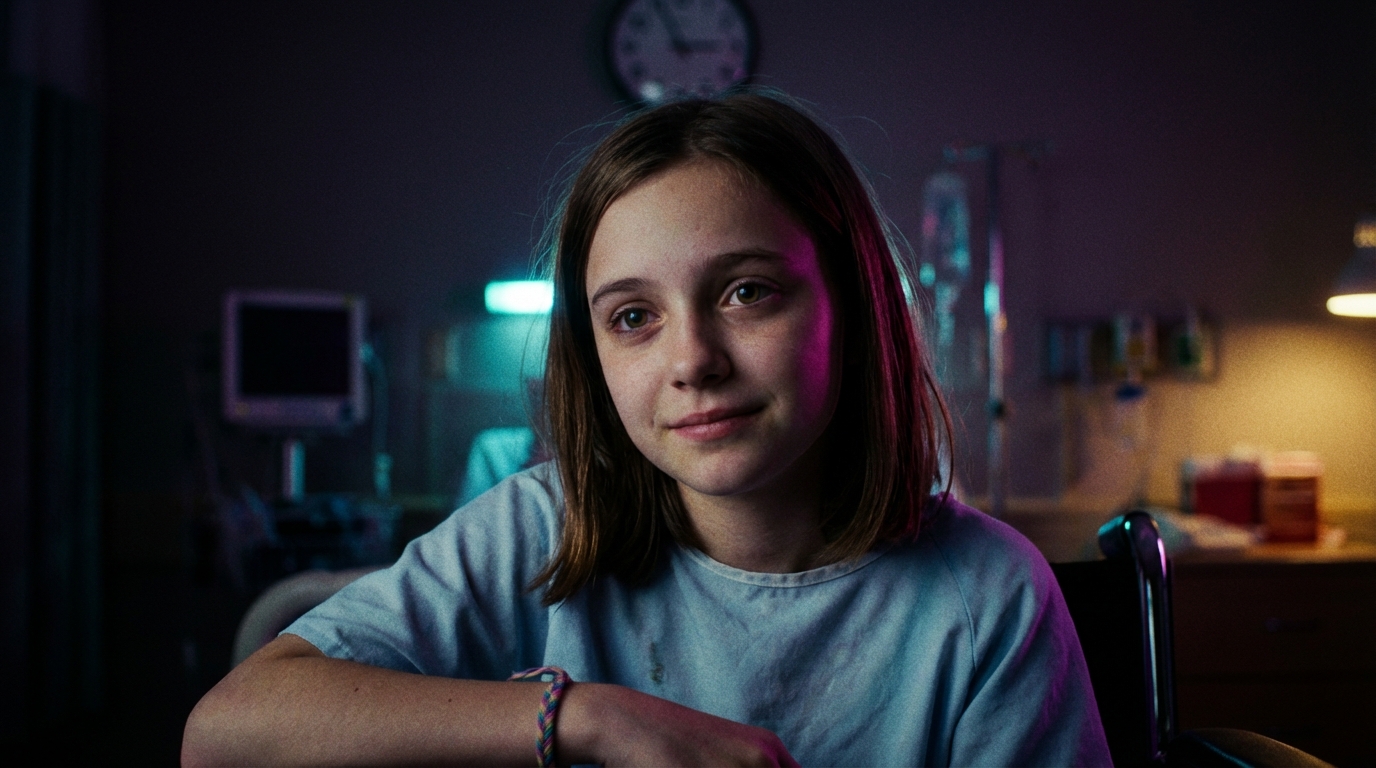
Gloria Ann Richards was a twelve-year-old patient at the Adelaide Women's and Children's Hospital whose brief life was marked by the particular grace that sometimes emerges from impossible circumstances. Diagnosed at seven with juvenile systemic lupus erythematosus, she spent more of her childhood in hospital than out of it, yet transformed the sterile corridors of the paediatric ward into spaces of connection, creativity, and unlikely joy. Her friendship with Luke Smith during her final months became the defining relationship of both their young lives—she offering him sanctuary from horrors she could not name, he giving her purpose in a body that was failing. She died peacefully on 12 October 1990, leaving behind grieving parents, a bereft ward community, and a six-year-old boy who would carry her memory through decades of his own struggles. Her name appears on no commemorative plaques, but those who knew her needed no memorial to remember what she had been.
Early Life and Family Background
Gloria Ann Richards was born on 6 August 1978 at Murray Bridge Soldiers' Memorial Hospital, in the regional city approximately seventy-five kilometres east of Adelaide along the Murray River. She was the only child of Simon Richards and Pauline Richards, née Koutsoumis, a couple whose journey to parenthood had been longer and more difficult than either had anticipated when they married in 1972.
Simon Richards came from a family with deep roots in South Australia's working-class heartland. His father, Colin Richards, had worked as a labourer at the Port Adelaide wharves; his mother, Betty, née Thompson, had raised four children in a weatherboard cottage in Semaphore while taking in washing and mending to supplement the family income. Simon was the third of those four children—an older brother, Wayne, had gone into the building trade; an older sister, Denise, had married young and moved to Whyalla; a younger brother, Terry, had struggled with alcohol and drifted through casual employment without ever establishing stability. Simon had completed his apprenticeship as a mechanical fitter in 1970 and found steady work with the Adelaide City Council, maintaining the machinery and vehicles that kept municipal services functioning.
Pauline Koutsoumis represented a different strand of South Australian society. Her parents, Dimitrios and Eleni Koutsoumis, had emigrated from the island of Kalymnos in the Dodecanese during the 1950s, part of the wave of Greek migration that transformed Australia's demographic landscape in the post-war decades. Dimitrios had worked in Adelaide's fruit and vegetable markets before establishing a small grocery shop in the inner suburb of Thebarton; Eleni had raised their three children while managing the shop's accounts and maintaining the household according to standards that blended Greek tradition with Australian practicality. Pauline was the eldest, followed by her brother Stavros and her sister Maria. She had trained as an early childhood educator and worked in kindergartens around Adelaide's western suburbs, where her warmth and patience with young children had earned her a reputation as someone with genuine vocation rather than mere employment.
Simon and Pauline met at a mutual friend's engagement party in 1971, an unlikely pairing that drew comment from both their families. The Koutsoumises had hoped Pauline would marry within the Greek community; the Richards family, while not explicitly prejudiced, found the cultural differences unfamiliar and occasionally uncomfortable. But Simon and Pauline recognised in each other qualities that transcended background—his steadiness and practical competence, her warmth and optimism, their shared desire for a family life built on affection rather than convention. They married in April 1972, in a ceremony that attempted to honour both traditions and satisfied neither family entirely.
The early years of their marriage were devoted to establishing stability and preparing for children. They rented a flat in Torrensville, both working full-time, saving toward a deposit on a house of their own. Pauline assumed pregnancy would follow naturally once they stopped preventing it, but months passed and then years without conception. Medical investigations in 1975 revealed that Pauline had endometriosis, a condition that complicated but did not preclude pregnancy. Two miscarriages followed—one in 1976, another in early 1977—each loss deepening the grief and determination that had come to characterise their attempts to become parents.
When Pauline finally carried a pregnancy to term in 1978, both she and Simon had been transformed by the years of waiting and loss. They had relocated to Murray Bridge earlier that year, seeking both affordable housing and distance from the well-meaning but exhausting concern of their Adelaide families. Simon had found work with the local council; Pauline had resigned from teaching to focus on the pregnancy that they both feared might be their last chance. Gloria's birth, healthy and uncomplicated after everything that had preceded it, felt like a miracle that neither of them had quite believed would arrive.
The cottage they rented on Sturt Reserve Road was modest—two bedrooms, a kitchen that doubled as living space, a backyard that backed onto the river flats where pelicans gathered and the Murray's slow brown water carried the scent of eucalyptus and distance. Simon commuted to work on the council's maintenance crew; Pauline devoted herself to motherhood with the intensity of someone who had waited too long and lost too much to take any moment for granted. They attended St Joseph's Catholic Church, though Pauline maintained connections to the Greek Orthodox community in Adelaide and ensured that Gloria grew up knowing both her heritages.
Gloria's early childhood was unremarkable in the best sense—a succession of ordinary days filled with play, exploration, and the gradual accumulation of skills and knowledge that characterises healthy development. She was a precocious child, speaking in full sentences before her second birthday and demonstrating the kind of imaginative capacity that delighted her mother's educator's sensibility. She built elaborate "shops" out of shoeboxes and organised puppet shows in the front yard for passing children and pensioners alike. Neighbours remembered her as energetic, sociable, and possessed of a particular gift for drawing adults into her make-believe worlds with an earnestness that was impossible to refuse.
The family remained small despite Simon and Pauline's hopes for more children. Pauline suffered another miscarriage in 1980 and a final one in 1982, after which her gynaecologist advised against further attempts. The news was devastating but not unexpected; they had known from the beginning that Gloria might be their only child, and they had structured their lives around that possibility even while hoping for alternatives. Gloria grew up without siblings, but the intensity of her parents' attention and the richness of her imaginative life seemed to compensate for the absence of brothers or sisters.
By the time Gloria reached school age, Simon had moved from council work to a position at the Thomas Foods abattoir on Murray Bridge's outskirts—better wages, though the work was harder and the hours less predictable. Pauline had considered returning to teaching but found that she preferred the flexibility of casual relief work, which allowed her to be available when Gloria needed her. They had purchased the cottage on Sturt Reserve Road in 1983, finally owning a home of their own after more than a decade of renting. Life seemed settled, stable, full of the ordinary challenges and satisfactions that constitute most human experience.
Then Gloria began getting sick.
Illness and Diagnosis
The symptoms emerged gradually during 1984, subtle enough initially that Pauline attributed them to the ordinary ailments of childhood. Gloria seemed tired more often than she should have been, needing naps after school when her classmates were playing outside. She caught colds that lingered longer than expected and developed mouth ulcers that recurred without obvious cause. Her joints ached sometimes, particularly in the mornings, though the discomfort usually faded as the day progressed. Pauline mentioned these concerns to their GP, who prescribed vitamins and suggested that Gloria might simply be going through a growth phase that was depleting her energy.
By early 1985, the symptoms had intensified beyond what vitamins could address. Gloria's fatigue was constant rather than intermittent; she bruised easily, purple marks appearing on her limbs without obvious trauma to explain them. She developed a rash across her cheeks and nose that the GP initially diagnosed as eczema, then as an allergic reaction, then admitted he could not explain. Her joints swelled visibly, particularly her knees and fingers, and she moved with the careful deliberation of someone much older and frailer than a six-year-old should be.
The crisis came in September 1985, during a winter sports day at her primary school. Gloria had insisted on participating despite Pauline's concerns, determined not to miss an event her classmates were anticipating with excitement. She collapsed during the relay race, her legs simply giving way beneath her, and could not be roused for several minutes. An ambulance transported her to Murray Bridge Soldiers' Memorial Hospital, where initial tests revealed abnormalities serious enough to warrant immediate transfer to Adelaide Children's Hospital.
The diagnosis, when it came after a week of increasingly alarming investigations, was juvenile systemic lupus erythematosus—a rare and aggressive autoimmune condition in which the immune system attacks healthy tissue throughout the body, including the skin, joints, kidneys, blood cells, and nervous system. Gloria's blood tests showed positive antinuclear antibodies, low complement levels, and significant proteinuria indicating kidney involvement. Her body, in essence, was at war with itself, and the conflict had already caused damage that could be managed but not reversed.
The diagnosis transformed everything. Pauline and Simon found themselves suddenly fluent in a vocabulary they had never sought—corticosteroids, immunosuppressants, proteinuria, nephritis, pericarditis—words that represented both their daughter's suffering and their desperate hope for her survival. Treatment began immediately: high-dose prednisone to suppress the immune response, azathioprine to reduce inflammation, and cyclical intravenous cyclophosphamide for the kidney involvement that threatened to become life-threatening if uncontrolled.
The medications brought their own burdens. Prednisone caused Gloria's face to swell into what she called her "moon face," her cheeks puffy and her features distorted in ways that made her uncomfortable with mirrors. It made her constantly hungry and prone to weight gain, then stripped calcium from her bones until they became fragile enough to fracture from minor impacts. It disrupted her sleep, leaving her wired and restless at night while exhausted during the day. The immunosuppressants that protected her organs from her own immune system also left her vulnerable to infections that healthy children would have fought off without difficulty.
Between 1986 and 1989, Gloria was admitted to Adelaide Children's Hospital more than forty times for complications ranging from anaemia to pericarditis to the repeated infections that her suppressed immune system could not combat. Each admission meant time away from school, from friends, from the ordinary childhood that had once seemed unremarkable and now seemed impossibly precious. Pauline essentially moved into the hospital during these stays, sleeping on fold-out beds beside her daughter, learning to navigate institutional rhythms and advocate for Gloria's needs within a system that was well-meaning but often overwhelmed.
Simon struggled differently. He continued working at the abattoir, maintaining the income that their mounting medical expenses required, but the emotional toll of watching his daughter suffer while being unable to fix what was wrong wore away at him in ways he could not articulate. He visited the hospital when his shifts permitted, bringing magazines and treats and the awkward affection of a man who had never learned to express tenderness in words. He and Pauline grew both closer and more distant during these years—united in their devotion to Gloria, separated by their different ways of processing grief and fear.
In June 1989, just before the merger of Adelaide Children's Hospital and Queen Victoria Hospital, Gloria experienced her first neurological flare—a complication of lupus known as cerebritis, in which the autoimmune attack extends to the brain itself. She became disoriented, confused, unable to remember things she had known moments earlier. The episode passed after several days of intensive treatment, but it marked a turning point in how her condition was understood. Her medical team began using phrases like "medically non-curable" and "palliative-integrated care," terminology that acknowledged what everyone had known but not spoken: Gloria was not going to recover.
Life in the Hospital
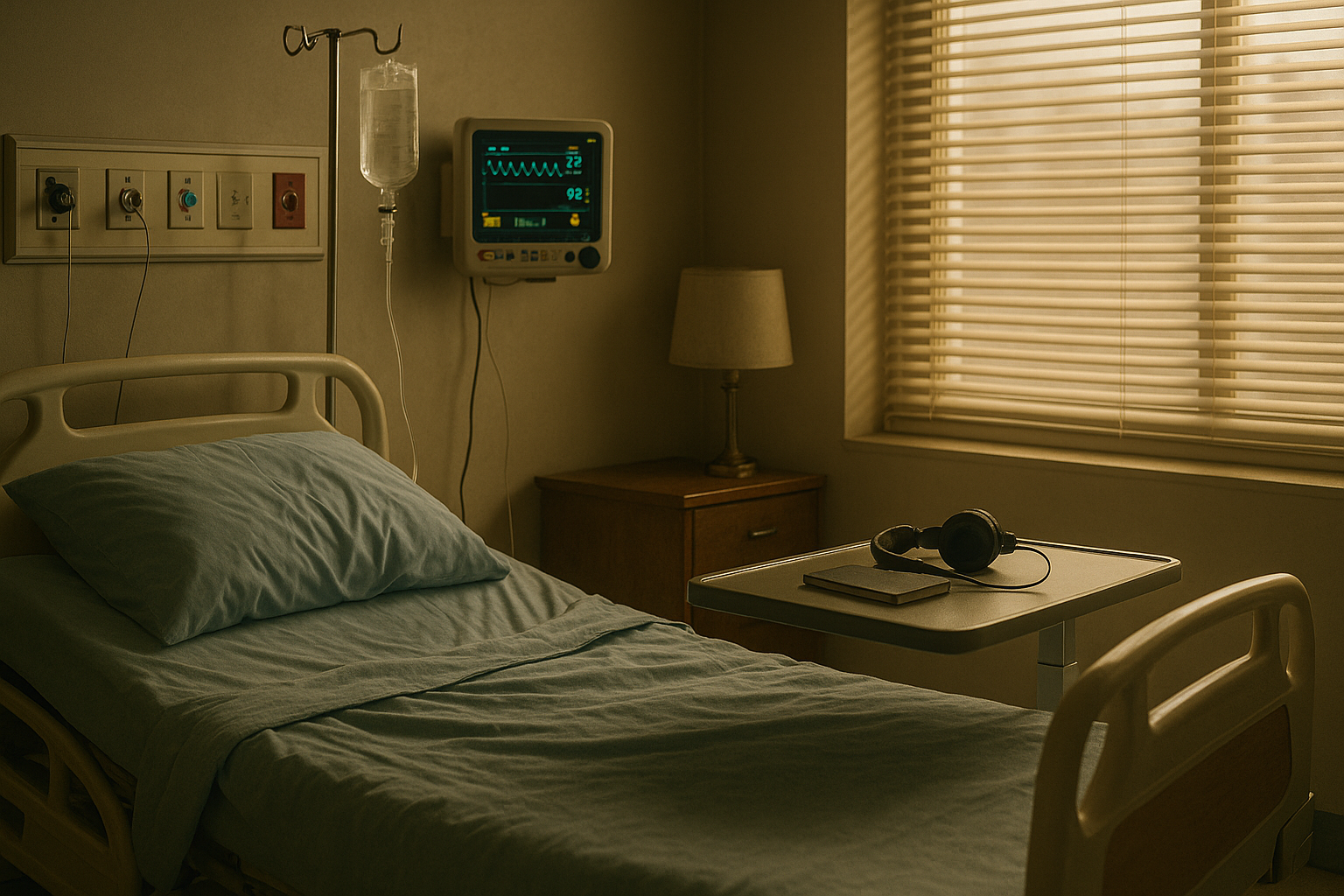
By the time Gloria transferred to the newly formed Adelaide Women's and Children's Hospital in July 1989, she had been sick for nearly four years and hospitalised for significant portions of that time. The ward had become, in many ways, her home—more familiar than the Murray Bridge cottage she rarely saw, more populated with people who understood her circumstances than the school she had long since stopped attending. She knew which nurses would sneak her extra biscuits and which doctors would answer her questions honestly; she understood the rhythms of shift changes and visiting hours, the sounds of monitors and the smell of disinfectant that other children found alarming but she had come to associate with safety.
Her room on Ward 3 East became a kind of headquarters, decorated with cards and drawings that accumulated over years of admissions. She had a collection of cassette tapes that she guarded jealously, dominated by Australian rock that she had discovered through the hospital's activity coordinator—Jimmy Barnes, Cold Chisel, Midnight Oil. Her favourite song was "Working Class Man," which she insisted was "about people like us, only louder." She owned a Walkman that she had received for her tenth birthday and treated with the reverence usually reserved for sacred objects, its batteries carefully rationed and its headphones shared only with those who had earned the privilege.
Despite the severity of her condition—the frequent fevers, the persistent mouth ulcers, the joint swelling that sometimes required two nurses to help her sit upright—Gloria remained socially dominant within the children's ward. She organised games of Uno and invented a contest she called "silent library," in which participants competed to make each other laugh while maintaining absolute silence. She directed impromptu plays using towel puppets and torchlight, casting whoever happened to be available in roles she devised on the spot. She once conspired with a sympathetic intern to decorate the corridor with hand-drawn signs advertising "Gloria's Grand Carnival"—an event that existed only in her imagination but which the ward staff allowed her to promote for the joy it brought her.
Her favourite activity, however, was wheelchair racing. The ward's wheelchairs were intended for transporting patients, not for recreation, but Gloria had discovered that the corridor outside the private rooms formed a straight stretch of adequate length, and that the night shift nurses were more tolerant of rule-breaking than their daytime counterparts. She would recruit other mobile patients as either racers or passengers, pushing wheelchairs at speeds that seemed reckless for a child whose bones were fragile and whose energy was perpetually depleted. The senior nurses tutted disapprovingly when they caught her, but no one ever stopped her permanently. The ward needed her vitality as much as she needed its structure.
Her relationships with the hospital staff reflected her understanding of adult dynamics that most children her age had not yet developed. She was deeply attached to Nurse Lola Jenner, whose steady presence and intuitive care made her feel seen rather than merely treated. She had what she described as "quiet respect" for Dr Douglas Schofield, whom she once told another child was "not funny, but kind in the ways people don't see." She understood that the adults around her were carrying burdens of their own, that their cheerfulness was sometimes performed for her benefit, and that the silences between their words often contained more truth than the words themselves.
Her resilience became legendary among the ward staff, the subject of whispered admiration in break rooms and handover meetings. Few could recall a time when Gloria complained about her condition or demanded attention for her suffering. When a locum physician asked her directly in September 1990 whether she understood her prognosis, she reportedly replied: "I know enough to spend my time well." The phrase became a kind of touchstone for staff members struggling with the emotional demands of paediatric care—a reminder that children understood more than adults often credited, and that dignity could be maintained even in circumstances that seemed to preclude it.
Friendship with Luke Smith
The most significant relationship of Gloria's final months began years before the autumn of 1990, during a crisis on the ward when a younger boy named Luke Smith panicked and pulled out his nasogastric tube. Gloria, drawn to the commotion despite her own exhaustion, appeared in his doorway and simply stood witness—a still point in the chaos whose steady gaze seemed to reach something in the terrified child that professional intervention could not. She held his hand until he fell asleep, and from that night forward they were connected by something neither could fully articulate.
The hospital bureaucracy seemed to recognise their bond. Whenever Luke was admitted, Gloria would eventually be moved to share his room, the night staff shuffling children according to rules none of them understood but which consistently resulted in the two of them occupying adjacent beds. By mid-1990, their friendship had deepened into something essential—Gloria assuming the role of protector, interpreter, and entertainer with seamless precision, as though she had been preparing for exactly this purpose her entire life.
She shared her most prized possessions with him: the Walkman her parents had given her, the chocolate biscuits smuggled in by visitors, the music of Jimmy Barnes that she insisted was "about people like us, only louder." She transformed his shame into laughter, his fear into something manageable, his isolation into connection. When the hospital walls pressed in too close, he would curl against her side beneath her blanket, her heartbeat steady against his ear, her fingers tracing patterns on his arm until he fell asleep.
Gloria was honest with Luke in ways that adults rarely were, acknowledging that she was getting worse while insisting that he would be okay—that he was stronger than he thought, that he would figure out whatever the grown-ups weren't telling him. She made him promise to keep asking questions, even when it was scary, even when it would be easier not to know.
The staff who observed their friendship found it quietly extraordinary. Nurse Lola Jenner later wrote that Gloria had "achieved more in twelve years than I've seen done in twenty. She made a frightened boy believe he wasn't alone. That's medicine by any name." Dr Douglas Schofield noted that Luke's symptoms had stabilised in ways they hadn't anticipated, as though Gloria had become his anchor—part sibling, part counsellor, part myth.
Death and Final Hours
The afternoon of 12 October 1990 unfolded like countless afternoons before it. Gloria and Luke occupied their usual position in her bed, the covers shared between them, her arm draped over his small frame in the protective gesture that had become habitual. They had been listening to a cassette of mixed songs, passing the headphones back and forth and giggling at private jokes that the passing staff could not decipher. Nurse Ailsa Greenwood noted in her shift log that both children were "giggling uncontrollably around 14:00, suspected to be due to private jokes, not mischief—left them be."
By late afternoon, the ward had entered its usual lull between activities and dinner. Gloria and Luke had fallen asleep, their breathing synchronised, their bodies curved toward each other in the unconscious intimacy of exhausted children. A nurse passed their room at 17:10 and saw them sleeping peacefully, Luke turned in toward Gloria with his face against her shoulder, her hand resting on him with the same protective instinct she had shown since their first meeting. The nurse pulled the curtain half-closed to give them privacy and continued her rounds.
At 18:03, Dr Douglas Schofield entered the room during his evening rounds. His chart noted "brief visual check—Gloria stable earlier," and he had not expected to linger. But something felt wrong almost immediately. The room was unnaturally still, the quality of silence different from ordinary sleep. Gloria's face, usually flushed from corticosteroids, looked pale in a way that seemed peaceful rather than healthy—tranquil in a manner that Schofield's decades of experience recognised immediately.
He moved closer, gently lifted her wrist, and found no pulse. There was no sign of struggle, no evidence of distress. Her body was still warm; she had died within the previous hour and a half, likely shortly after falling asleep. The monitors that tracked her vitals had been set to overnight thresholds, their alarms not triggered by the gradual cessation of functions that had been declining for years. She had simply stopped—her body finally surrendering to a battle it had fought longer than anyone had expected.
Luke, impossibly, had not stirred. He remained curled against her, his breathing steady, unaware that the girl who had become his entire world was no longer breathing beside him. Schofield understood instinctively that this moment would need to be handled with extraordinary care—not just clinically, but emotionally, and for Luke in particular.
He summoned Nurse Jenner with a voice lower than usual. Together, they made a decision that bent protocols but honoured something more important: rather than wake Luke immediately, they would move Gloria's body under the pretext of routine procedures, allowing the boy to wake naturally to her absence rather than her death. It was not a perfect solution—there was no perfect solution—but it seemed the least harmful approach to an impossible situation.
Gloria's body was lifted carefully, her place in the bed quietly remade to preserve the fiction of her having been moved for tests. Luke slept through the process, exhausted by whatever private communications had passed between them in their final hours together.
The ward fractured quietly in the hours and days that followed. There were no announcements, no formal mourning rituals that might disturb other patients and families. But the nurses spoke more softly than usual, and Schofield's office light burned later into the evening, and the corridor outside Gloria's room seemed emptier than its dimensions could explain. Luke stopped asking for the Walkman and began a withdrawal into silence that would concern staff for weeks to come.
Parents and Aftermath
Pauline and Simon Richards received the news of their daughter's death in the hospital's family consultation room, a space designed for exactly these conversations but which could never be adequate to the magnitude of what it contained. They had known this moment was coming—had been told repeatedly over the years that Gloria's condition was terminal, that her survival beyond childhood was unlikely, that each additional month was borrowed time. But knowing had not prepared them for the reality of their daughter's absence, the sudden void where the centre of their lives had been.
The funeral was held at St Joseph's Catholic Church in Murray Bridge, the same church where Gloria had been baptised twelve years earlier. The service was modest, attended by family members who struggled to find words adequate to the occasion, hospital staff who had become something like extended family during Gloria's years of treatment, and a handful of school friends who remembered the energetic girl she had been before illness claimed her. Pauline had requested that Jimmy Barnes songs be played alongside the traditional hymns, a choice that raised eyebrows among some attendees but which honoured something essential about who Gloria had been.
The years following Gloria's death were difficult for both parents, though they experienced that difficulty in different ways. Pauline struggled with depression that deepened through the early 1990s, her sense of purpose hollowed by the loss of the child whose care had structured her entire adult life. She sought counselling, joined a grief support group for parents who had lost children to illness, and gradually rebuilt a life that accommodated rather than denied her loss. She eventually returned to early childhood education, finding in the care of other people's children some echo of the purpose she had lost.
Simon's grief expressed itself differently—through withdrawal, through overwork, through the emotional silence that had always characterised his approach to difficulty. He and Pauline separated briefly in 1993, reconciled, then separated again more permanently in 1995. The marriage that had survived years of infertility, miscarriages, and their daughter's chronic illness could not survive her death. They remained on speaking terms, connected by the shared experience of having raised and lost Gloria, but they built their subsequent lives apart.
Pauline remarried in 2002, to a widower named George Papadimitriou whom she met through the Greek Orthodox community she had reconnected with after her divorce. She moved back to Adelaide and lived in the inner suburb of Mile End, working part-time at a kindergarten and helping to raise George's grandchildren. She kept a photograph of Gloria in her bedroom, next to the icon of the Virgin Mary that her mother had given her on her wedding day.
Simon never remarried. He continued working at the abattoir until his retirement in 2008, then moved to a small property near Mannum where he could fish and garden and avoid the social obligations that had always exhausted him. He visited Gloria's grave on her birthday each year, bringing flowers that he chose with care despite his general indifference to such gestures. He rarely spoke of her to others, but those who knew him understood that her loss remained the defining fact of his existence.







