George Randolph Killerton
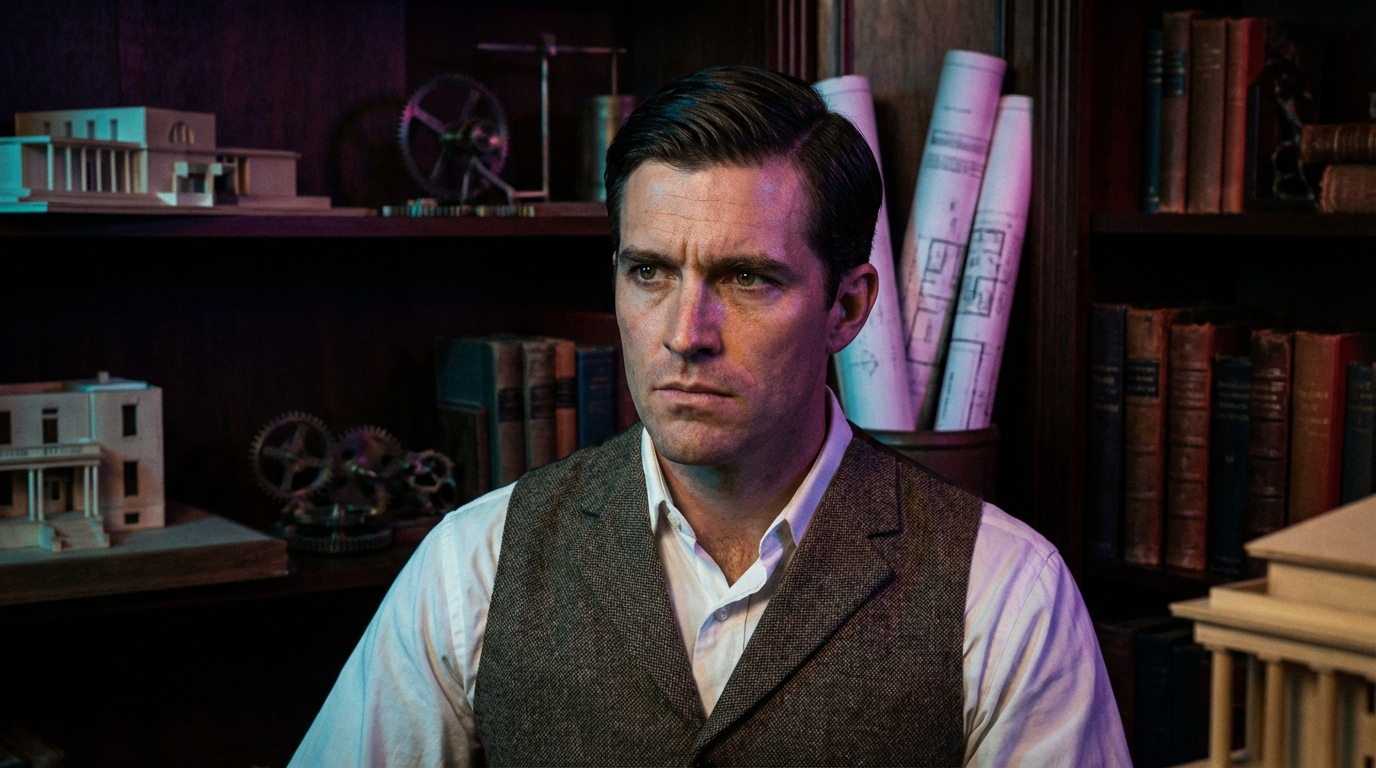
George Randolph Killerton (8 July 1878 – 19 December 1950) was the first member of his family born in San Francisco, and the man who carried Killerton Enterprises from his father's founding generation into the mid-twentieth century. Educated at Boston Latin School, Harvard University, and Stanford, he specialised in structural and earthquake-resistant engineering, joined the family firm in 1906 during the city's post-earthquake rebuilding, and rose through successive positions to serve as President from 1935 to 1950, guiding the company through the Depression and the Second World War before his death at the age of seventy-two.
Pacific Heights: The First San Francisco Killerton
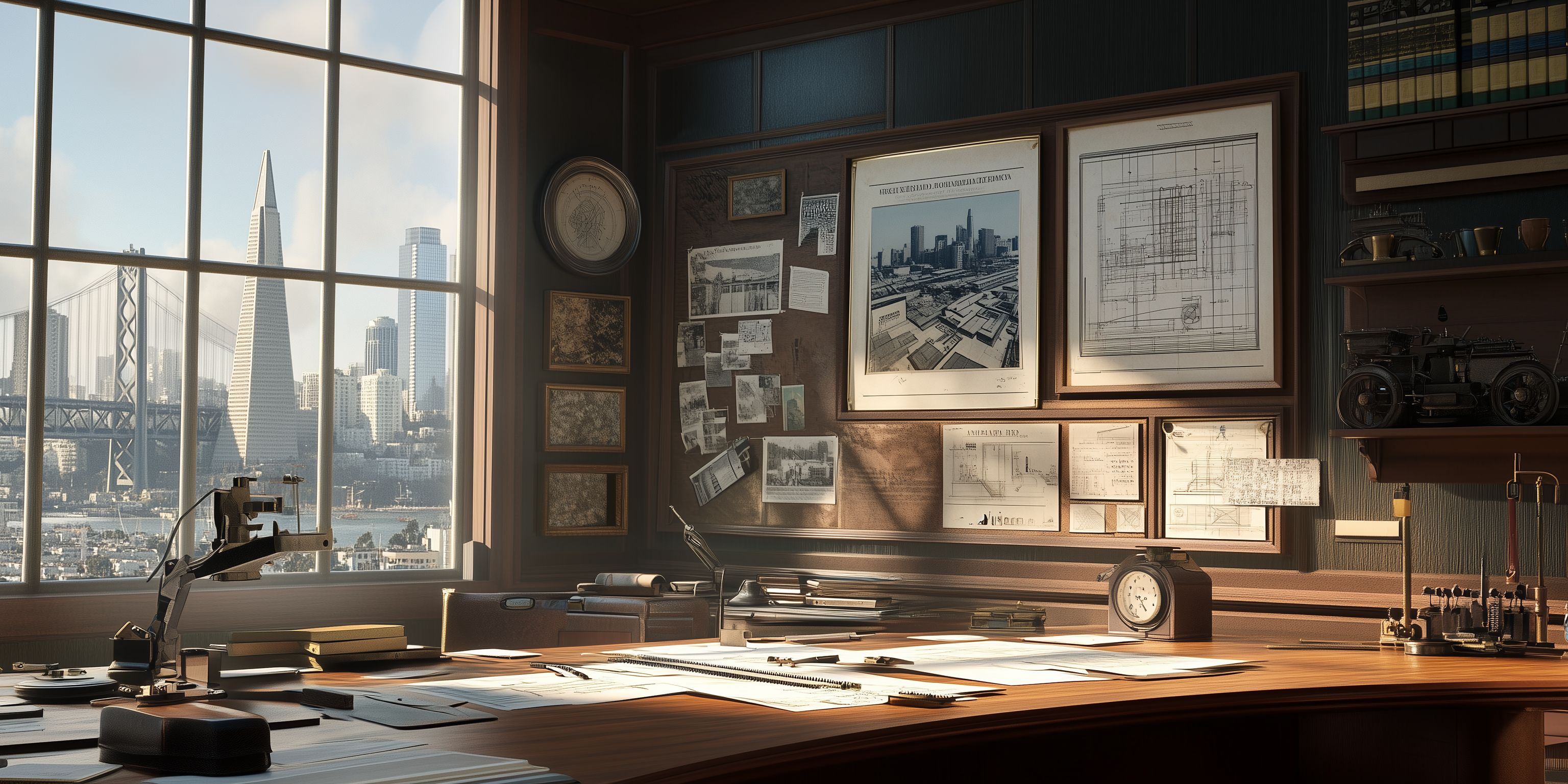
George Randolph Killerton was born on 8 July 1878 in the family home on Pacific Heights, San Francisco — Killerton House, the Victorian residence that his father Francis had commissioned from the architect Samuel Thornton two years earlier and that his mother Eleanor had furnished with the botanical garden and the particular quality of intellectual atmosphere that defined the household's character. He was the first Killerton born in California, and in that distinction lay something significant: all the other Killertons whose lives intersected with his had come to San Francisco from elsewhere, carrying with them the formation of other places — his father from Boston by way of Cambridge, Massachusetts, and MIT; his mother from Concord and Northampton; his grandparents from the older New England world that had sent its children westward with principles and expectations intact. George arrived already there, a native of the city that the family had chosen and that had, in the choosing, become the defining context of Killerton life.
The San Francisco of 1878 was a city in the complicated middle of its own ambitions. The Gold Rush prosperity of the previous generation had settled into the more measured rhythms of commercial and civic development; the grandeur of Nob Hill and the Pacific Heights houses expressed a wealth that was now looking to institutionalise itself in the form of cultural organisations, educational establishments, and the architecture of permanence. Francis Killerton's firm was already a significant presence in this process, building the structures through which the city's aspirations were being realised in stone and timber and iron. George grew up understanding, from the earliest age at which children understand anything about the adult world, that the built environment was something that was made — that the buildings and bridges and civic structures around him were the product of decisions and calculations and the physical labour of people his father employed and directed — and that Killerton Enterprises was the institutional medium through which this making happened.
His mother's contribution to his formation was different in texture but equally substantial. Eleanor's Pacific Heights garden — the product of the botanical training she had absorbed from her own mother in Concord and transplanted into the California climate with characteristic thoroughness — was among the first things George could identify as genuinely beautiful, and the habit of careful observation that his mother practised in it, the patient attention to growth and form and the relationship between living things and the conditions that shaped them, was a habit he absorbed before he understood it as a method. The two inheritances — his father's constructive intelligence and his mother's observational one — were not, in the Killerton household, experienced as competing orientations but as complementary ways of engaging with the physical world. George grew up with both, and the particular synthesis he eventually made of them was the defining quality of his engineering practice.
Edward Samuel, his brother, was born on 22 April 1882, when George was three years and nine months old. The four-year gap between them was wide enough that the brothers' early childhoods were not fully overlapping experiences, and close enough that they shared the essential character of the Pacific Heights household during its most formative years. George had the advantages and occasional difficulties of the elder child's position: the first to encounter each stage of the household's expectations, the one for whom the patterns were being set, the one who understood most clearly what both parents had built and what they were building toward. Edward, watching from the position of the younger, developed his own version of the family's technical intelligence — more formally oriented toward the intersection of traditional construction and emerging materials technology than George's structural specialism — and the two brothers spent most of their adult lives in the same firm without their professional territories significantly overlapping, which was probably good for both.
Early Education in San Francisco: The Private Schools Years
George's schooling through the 1880s and early 1890s was conducted at local private schools in San Francisco that provided the kind of education available to the sons of the city's established professional families — rigorous in mathematics and the natural sciences, drawing on a curriculum that reflected the particular combination of classical and practical formation that the late Victorian period considered appropriate for boys whose futures were assumed to be professional rather than purely commercial. He was, by the accounts that can be reconstructed, a student of genuine rather than merely dutiful ability — the mathematics came easily, the physical sciences with a quality of interest that went beyond the requirements of the examination, and the manual drawing exercises that the architectural component of his mother's influence had made natural to him were done with a precision and a care that his teachers noted.
The city itself was his most continuous education. San Francisco in the 1880s and 1890s was a city that wore its construction visibly — where the ongoing processes of building and expansion were present in the streets and on the hillsides, where the relationship between topography and structure was in constant negotiation, where the character of different districts reflected different stages of the city's development in ways that a boy with George's formation would have found legible and interesting. He walked the streets of a city that his father was partly responsible for building, and he did so with the particular attention of someone who had been taught, from inside the household where the decisions were made, to notice the technical and aesthetic dimensions of what he was looking at.
His grandmother Abigail Stanton died on 19 November 1891, when George was thirteen years old. He had known her through the correspondence she maintained with his mother and through the visits she made to San Francisco — a figure of considerable intelligence and warmth, whose educational convictions had shaped Eleanor in ways that Eleanor had in turn transmitted to her children. The death was absorbed with the equanimity of a child who understood loss as a fact of the world rather than a disruption of it, though the specific texture of what his grandmother had been — the writer, the reformer, the woman who had spent her life arguing that knowledge was the foundation of a just society — was not something he would have been able to fully articulate at thirteen, and not something he would have needed to.
Boston Latin School: 1896–1900
In the autumn of 1896, at the age of eighteen, George was sent east to Boston to attend Boston Latin School — the same institution his father Francis had attended in the 1860s, and the institutional expression of the family's continued connection to the New England educational tradition from which the Killertons had come. The journey from San Francisco to Boston was itself a displacement of some significance for a young man who had never lived anywhere but Pacific Heights, and the adjustment from the California city to the particular world of Boston — colder, older, more formally stratified in its social geography, accustomed to its own history in ways that San Francisco, still in the process of constructing its self-understanding, was not — was one that George managed with the practical directness that was his characteristic response to difficulty.
Boston Latin School in the late 1890s was the most academically demanding secondary school in New England, and its curriculum — Greek, Latin, mathematics, classical history, natural philosophy — was designed to prepare its students for the entrance examinations of Harvard and MIT with the rigour of an institution that had been doing precisely this since 1635. George applied himself to it with the seriousness of purpose that his household had instilled and graduated in 1900 with honours, distinguishing himself particularly in mathematics and the physical sciences. He also encountered, during these Boston years, the living social world of the city from which his family had come — the professional and intellectual community of Cambridge and Boston that his great-uncle Henry Killerton inhabited, the architectural and engineering circles in which his father's name was known and respected, and the particular quality of the East Coast establishment that regarded California as provincial and promising in roughly equal measure.
The encounter with Boston — with its assumption of its own centrality, its sense of itself as the place where serious intellectual formation happened — was useful to George in a way that he probably could not have anticipated from Pacific Heights. It gave him a comparative perspective on his home city that he would not otherwise have had: a sense of what San Francisco was and was not, what it had achieved and what it was still in the process of building, and why the particular combination of engineering ambition and natural beauty and seismic instability that characterised the Bay Area represented a set of problems that the Boston tradition of structural thinking had not yet fully confronted.
Harvard and Stanford: 1900–1906
George enrolled at Harvard University in the autumn of 1900, reading civil engineering in an academic environment that was, by the early twentieth century, one of the most technically rigorous in North America. His four years at Harvard — graduating with a Bachelor of Science in Civil Engineering in 1904, with high honours and recognition for several projects that his instructors found particularly inventive — were defined by the same quality of engaged application that had characterised his Boston Latin years, but now extended into the specifically structural and material dimensions of engineering that had been latent interests throughout his schooling.
The questions that most occupied him at Harvard were those of structural behaviour under dynamic and unpredictable loads — what happened to buildings and bridges and infrastructure when the ground beneath them moved, when wind forces operated asymmetrically, when the static assumptions of classical structural analysis were violated by the conditions that actual buildings in actual places encountered. These were not abstract interests for a young man from San Francisco, a city built on a geology that made structural instability not a theoretical possibility but a practical certainty. The 1868 Hayward earthquake had damaged the Bay Area significantly a decade before George's birth, and the memory of it — the awareness that the ground beneath San Francisco was not the reliable foundation that the grandeur of its buildings implied — was present in the city's engineering consciousness in ways that shaped what serious structural engineers thought about when they considered what they were building.
He pursued these questions further at Stanford University in Palo Alto, completing a Master of Science in Structural Engineering between 1904 and 1906. His thesis — on the design principles for earthquake-resistant buildings, drawing on the emerging science of seismology and the specific geological character of the San Andreas fault system — was submitted for examination in the spring of 1906. On 18 April 1906, before the examiners had returned their assessment, the earthquake struck San Francisco.
The earthquake was, by any measure, among the most catastrophic natural disasters in American history. The initial tremor lasted between forty-five and sixty seconds and registered an estimated magnitude of 7.9. The fires that followed, burning for three days, destroyed approximately twenty-five thousand buildings and left over half of San Francisco's population homeless. George, completing his Stanford degree in Palo Alto, was close enough to the Bay Area to understand immediately the scale of what had happened and to recognise, with a directness that would have carried a particular weight for a man who had spent two years working out the principles of earthquake-resistant construction, that his thesis had just been made urgently practical.
He returned to San Francisco within days.
1906 and the Rebuilding Years: Killerton Enterprises, 1906–1910
George joined Killerton Enterprises as an assistant engineer in the summer of 1906, in the midst of the most intensive construction activity the city had ever seen and was likely to see again. The rebuilding of San Francisco — the replacement of twenty-five thousand destroyed buildings, the reconstruction of the civic and commercial infrastructure, the practical question of how a city rebuilt itself in a way that did not simply recreate the vulnerabilities that the earthquake had exposed — was a project on a scale that made every other engineering challenge in the city's history appear modest, and Killerton Enterprises, as one of the established firms with both the capacity and the reputation to take on major work, was at the centre of it.
George's contribution to the rebuilding was shaped directly by the Stanford thesis he had just completed. The question of how to build structures that could better withstand seismic loading — through improved foundation design, through flexible rather than rigid structural connections, through the calculation of lateral forces that conventional structural analysis had largely ignored — was precisely what the rebuilding demanded, and the fact that George had spent two years developing a systematic answer to this question gave him an immediate technical authority within the firm that his twenty-seven years and assistant engineer title did not fully convey. Francis, who had been working structural problems since before George was born, was not a man easily persuaded by credentials alone, but he recognised good engineering when he encountered it, and the conversations between father and son during the rebuilding years were among the most substantive of the family record — Francis's accumulated practical knowledge in dialogue with George's more formally theoretical framework, each useful to the other.
Eleanor, meanwhile, was fifty-one in 1906 and actively engaged in the community conversations about what the rebuilt city should be — the aesthetic and civic questions that ran alongside the engineering ones, the debates about the character and scale and relationship to landscape that a rebuilt San Francisco should embody. George observed his mother's involvement with the same quality of attention he had given her garden as a child, and the influence of her architectural and environmental sensibility on his own emerging professional character — which was already distinguishable from his father's more purely constructive orientation by its greater concern with the relationship between built structure and natural environment — deepened through the rebuilding years in ways that were not always explicit but were present in the decisions he made and the projects he was most drawn to.
Marriage to Elizabeth Hathaway, and the Children
George married Elizabeth Beatrice Hathaway in 1910, the year of his promotion to Senior Project Engineer. Elizabeth had been born in Boston on 3 April 1884 — six years younger than George — and had come to San Francisco through a combination of family connections and professional interest in the environmental science work that the West Coast's natural landscape made possible and that the Bay Area's particular combination of geological diversity and ecological richness made especially rich. She was, in the summary that her own entry in the Killerton record provides, a woman of quiet strength and unyielding commitment to conservation — a characterisation that conveys both the substance of her values and the manner in which she held them, which was less publicly confrontational than her mother-in-law Eleanor's advocacy had been and no less effective for that.
Their three children embodied, in the particular way that families sometimes do, three quite distinct versions of what a Killerton upbringing might produce. Robert Elias, born on 15 May 1912, was the most direct inheritor of the family's engineering tradition — Harvard and Stanford educated, like his father, eventually rising to the presidency of Killerton Enterprises and then the Chairmanship, following the same institutional trajectory that George himself had traced. He was the son who understood most readily what the family had built and what it would take to continue building it, and the relationship between George and Robert had the particular quality of two people who share a common framework for understanding the world and can therefore operate in genuine rather than merely formal collaboration.
Catherine Eleanor, born on 11 March 1915, was different. Named in part for the grandmother she had not known — Eleanor Killerton, who died in 1922 when Catherine was six years old — she developed through adolescence and young adulthood into a person whose relationship to the Killerton inheritance was more questioning than her brother's and whose own sense of what mattered — the arts, women's rights, the more transgressive cultural currents of the 1930s and 1940s — sat at an angle to the firm's preoccupations that made her presence in the family conversation both valuable and occasionally uncomfortable. Her relationship with George was not estranged but was not simple — a daughter who admired and challenged her father in roughly equal measure, and a father who found the challenge more difficult to respond to than the admiration.
Thomas Edmund, born on 17 July 1918, was the youngest by three years and the most entirely his own person. He had the Killerton intelligence in a form that directed itself not toward engineering or architecture or the management of a large firm but toward the quieter, more personally demanding work of understanding human suffering and doing something about it — social work, mental health advocacy, veterans' services in the years after the Second World War. His relationship with the family was complex in the way that the gentlest member of a family of strong characters sometimes finds it complex: valued, slightly apart, not always fully understood by those whose own strengths expressed themselves through more legible forms of achievement.
The Guardian Chamber: October 1918
On 1 October 1918, a special chamber was constructed within the Killerton Enterprises headquarters building — a vault designed to store the Portal Keys and other critical artefacts connected to the Guardian Order. The construction was George's project. It drew on the same principles of structural integrity and environmental control that his earthquake-resistant work had developed, applying them to a purpose that had nothing to do with public construction and everything to do with the particular relationship between Killerton Enterprises and the Guardian Order that had been developing through the years since his father's involvement in the post-earthquake rebuilding.
The details of George's knowledge of the Guardian Order — when it began, how it was communicated to him, what he understood of its purposes — are not fully recoverable from the family record. What is clear is that by 1918 he had sufficient knowledge and sufficient trust to undertake a significant engineering project on the Order's behalf, and sufficient professional authority within the firm to do so without the construction becoming a matter of general knowledge. The chamber was built with the same thoroughness and technical intelligence that George brought to every other engineering problem he encountered, and it served its intended purpose through the decades that followed.
That this was a departure from the publicly known character of George's career is evident; that it was experienced by him as a departure is less clear. The connections between the Killerton family and the Guardian Order had roots that predated George by two generations, running through the Uruk expedition of 1873 and the artefacts that Henry Killerton and Victor Armitage had recovered — connections that George may have known more about than the family record makes explicit. What the Guardian Chamber represents, in the context of his career, is a dimension of seriousness that ran alongside and beneath the civic and professional achievement, grounded in obligations that were not reducible to engineering or to business.
Director of Operations and Vice President: 1915–1935
George's promotion to Director of Operations in 1915 marked the beginning of a twenty-year period in which his influence over Killerton Enterprises expanded from the technical to the strategic — from the engineering decisions of specific projects to the operational character of the firm as a whole. The West Coast expansion that he managed through the later 1910s and 1920s took the company beyond San Francisco into the developing construction markets of Los Angeles, Portland, and Seattle, extending the firm's reach along a Pacific Coast that was urbanising rapidly and building the infrastructure that urbanisation required.
The death of his mother Eleanor on 2 February 1922 was, at forty-three, a loss he had been observing approach for some months — she had been declining since the previous spring — and that he managed with the practical composure that was his habitual response to grief, which did not mean indifference but meant that the work continued, the decisions were made, the people who depended on him continued to receive what they needed. Eleanor had been his most continuous model of what it looked like to take the world seriously without being overwhelmed by it, and the manner in which he absorbed her death was itself a form of tribute to that model.
Francis died on 27 January 1925, three years after Eleanor, at the age of seventy-four. He had been withdrawing from active management of Killerton Enterprises through his later years, his health declining from the late 1910s onward, and George had been effectively running significant portions of the firm's operations well before the formal promotion to Vice President that came in 1925. The death nonetheless had the weight that a founder's death always carries: the sense that a particular form of authority and knowledge has left the institution, that the people who understood things from the beginning are no longer there to be consulted, and that the generation that follows must carry the weight of the legacy without the person who created it.
George was forty-six when his father died. He had thirty-five working years ahead of him.
The Great Depression, which arrived with the October 1929 Wall Street collapse and deepened through the early 1930s into the most severe economic contraction in American history, was the central challenge of George's Vice Presidential years. Killerton Enterprises survived — through a combination of the fiscal conservatism that Francis had maintained through the firm's prosperous years and the operational flexibility that George's management had introduced — but the survival was not effortless, and the decisions that George made through 1930, 1931, and 1932 about which projects to pursue, which commitments to honour at cost, and which expansions to defer were decisions that required the kind of sustained judgement under pressure that is only available to someone with both a thorough understanding of the firm's strengths and a clear view of what it was prepared to sacrifice and what it was not.
President: 1935–1950
George was appointed President of Killerton Enterprises on 1 October 1935, at the age of fifty-seven, at a moment when the worst of the Depression had passed but the recovery was not yet certain. The appointment formalised a leadership that had been substantively his for several years, and the decade and a half that followed — through the Second World War, through the post-war reconstruction boom, through the technological transformation of the construction industry that new materials and new methods were producing — was the most publicly visible period of his career.
Under his presidency, Killerton Enterprises built some of its most significant projects: the advanced infrastructure and landmark buildings that the growing post-war California demanded, designed with the environmental consciousness that his mother had planted in the firm's sensibility from the beginning and that Elizabeth's conservation work reinforced from inside the family. His commitment to what would in a later era be called sustainable practice — the choice of materials, the relationship between built structures and the landscapes they occupied, the long-term thinking about what a building should do and be over the course of its life — was not articulated in those terms in the 1930s and 1940s, because the vocabulary had not yet settled into that form, but it was present in the decisions, visible in the work.
He served on the boards of Stanford and Harvard, the two institutions that had formed him professionally, and contributed to both through the philanthropy that Elizabeth's conservation advocacy had focused on environmental and educational causes. His involvement with San Francisco's civic institutions — the museums, the libraries, the educational organisations that Eleanor's salon world had connected the family to — continued the pattern of engagement with the city's cultural life that had been established in the Pacific Heights household of his childhood.
The Chairmanship and Death
George stepped down from the presidency of Killerton Enterprises on 9 March 1950, at the age of seventy-one, becoming Chairman of the Board. His son Robert — Harvard and Stanford educated, thirty-seven years old, thoroughly prepared for the role — was positioned to take the company forward. The transition was managed with the same orderliness that had characterised George's management of every other significant transition in the firm's history.
He had nine months as Chairman.
George Randolph Killerton died on 19 December 1950, at the Nob Hill residence he had occupied in the later decades of his life, at the age of seventy-two. Elizabeth, who had been his partner in every dimension of a long and substantive life, had six more years — she died on 14 October 1956. Robert continued as President of Killerton Enterprises until 1980. Catherine and Thomas outlived them all, carrying into their respective worlds — Catherine's art and advocacy, Thomas's social work — the Killerton formation in the particular shapes that their own characters had made of it.
He had been born in San Francisco when it was a city of confident Victorian ambitions and died in it when it was a city entering the technological and cultural transformations of the second half of the twentieth century. Between those two moments he had helped build it, helped rebuild it after the earthquake had demonstrated its vulnerability, and helped ensure that what was built thereafter was built with a greater understanding of the ground it stood on.







