Fryar Ivor Jennings
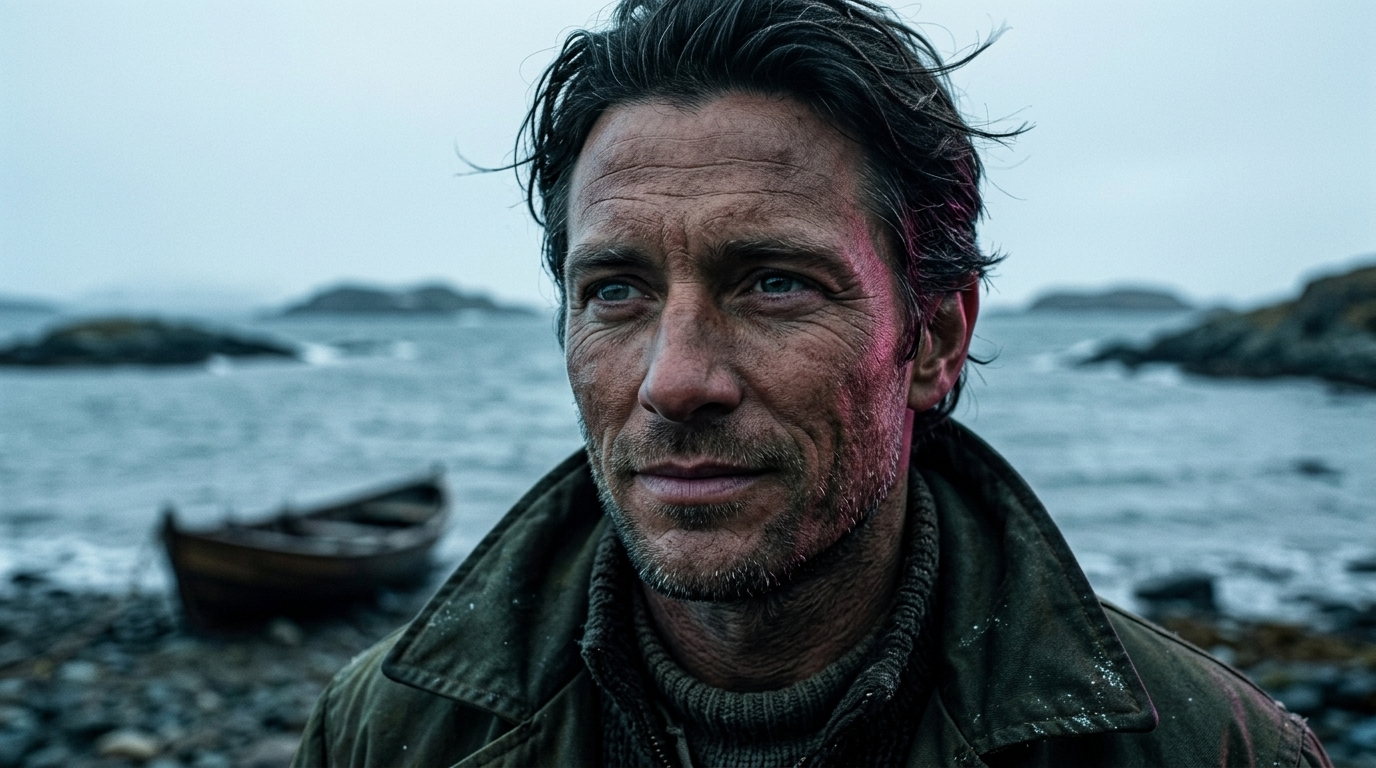
Fryar Jennings (born 15 July 1993) was the sea-drawn, believing twin of Freya—son of Belkeep's founding Guardian Cody Jennings and Grace née Levis, who died in the birth. Where Freya doubted, Fryar kept their father's faith in the Luke Smith Prophecy and gave himself to the deadly sea no one else dared. His recklessness cost Belkeep dearly, but he proved the righter twin: the isolation broke in 2027 through Luke Smith's Bixbus—the Prophecy's man—and Fryar left for the coastal city of Colchester to live the sea.
Born in Belkeep
Fryar Ivor Jennings was born in Belkeep on 15 July 1993, one of the twins his mother died delivering. Grace Eleanor Jennings, née Levis, survived the birth of her son and daughter only briefly, and Fryar, like his sister Freya, grew up knowing his mother solely as an absence and a story. She had lived just long enough to name them, giving Fryar the middle name Ivor after her own father, a Welsh grandfather he would never meet.
The two were raised alone by their father, Cody Brian Jennings, the farmer from Gawler who had opened the Portal that founded Belkeep and served as its first Guardian. Fryar shared his sister's dark colouring, their mother's near-black hair, but not much else. From early on the twins were understood in Belkeep as a matched pair of opposites, and of the two it was Fryar who drew the eye—the more open and the more immediately likeable, quick to grin and forever looking past whatever was in front of him toward something further off.
That habit of looking outward set the whole course of his life. Where Freya turned inward, toward books and the study of a world she would never reach, Fryar turned to the one direction Belkeep offered that was neither ice nor rock: the sea. It was the great fact of his character from boyhood, and everything else about him—his faith, his recklessness, his long quarrel with his sister and his settlement—followed from it.
Their father's stories worked on the two children in opposite directions. Cody filled the twins with Earth—the farm at Gawler, the warmth of the sun, a whole world he had walked away from at nineteen—and where those stories sent Freya inward, to imagine a place she could study but never visit, they sent Fryar the other way, into a restless certainty that if such a world existed it could be reached, and that the reaching was only a matter of going far enough to find the door. He was never much interested in Earth for its own sake, as his sister was. He was interested in the getting there.
The Sea
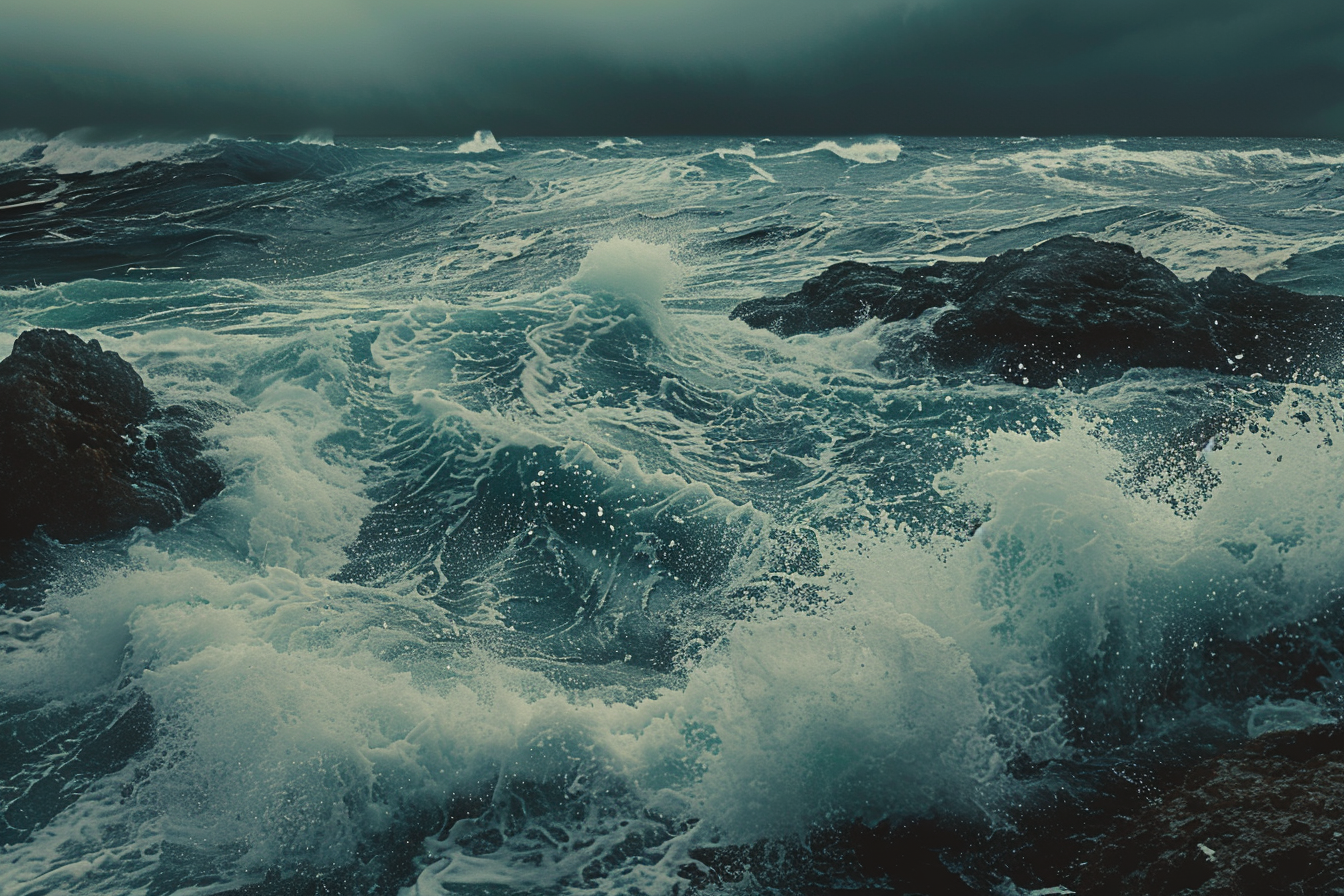
Belkeep sat in a frozen coastal valley, and beyond it lay a cold and violent sea scattered with islands, water that had drowned a great many of the settlement's people over the years and was regarded by nearly everyone as a thing to be feared and left alone. Fryar loved it. He had loved it since he was a boy, with a stubborn and slightly irrational devotion that none of the drownings ever cured him of, and as he grew he learned the coast and its coves and its treacherous currents the way his sister learned the geography of Earth—thoroughly, privately, and against all practical sense.
He built what craft he could from what the settlement could spare and mended them himself, and he taught himself to read the water as Belkeep's hunters read the ice—the set of the currents, the moods of the weather, the narrow windows in which a small boat might live out among the islands and the wider ones in which it certainly would not. Much of what he did out there served no purpose anyone else could see. He charted coves that led nowhere, landed on islands no one had reason to visit, and came back with little to show for the danger but the fact of having gone. To Fryar the going was the point.
To Fryar the sea was not the settlement's enemy but its one open door. Everyone else in Belkeep looked at the water and saw the edge of the world, the place past which there was only cold and death and giving up. Fryar looked at it and saw a way out—the only direction that led anywhere but back into the valley—and he could not be persuaded to see it otherwise. The conviction cost him. He was weathered early by wind and salt, his hands hardened and scarred from boats and rope and cold, and more than once the water very nearly took him. It never changed his mind. The sea was where he felt least trapped, and a man raised in Belkeep did not give up easily the one place that made him feel that way.
The Believer
Fryar was also, unlike his sister, a believer. Their father had raised them both on the Luke Smith Prophecy—the old Clivilian promise that a man would one day come to unite Earth and Clivilius and end the isolation that was slowly killing settlements like theirs—and where Freya heard in it only her father's wishful thinking, Fryar took it to heart and held it there for the rest of his life. He believed a deliverance was coming. He believed the isolation would end. And he came, in his own mind, to link that belief to the sea, reasoning that if rescue or reunion were ever to reach Belkeep, it would come across the water, from somewhere out past the islands, and that a man willing to go and look might be the one to meet it.
It was, at bottom, a faith he needed rather than one he could prove, and in that sense he and Freya were more alike than either would have admitted: both were responding to the same trapped and dying condition, she by refusing every false hope and he by refusing to live without hope at all. Freya thought his belief a comfortable story he told himself to make the voyages feel like a purpose instead of a risk. Fryar thought her doubt a smaller, colder way to live. Neither was entirely wrong about the other, and neither ever gave an inch.
He came, over the years, to think of himself as the settlement's hope—the one who kept faith when the rest of Belkeep had let it lapse, who would go out and meet the deliverance the others had stopped expecting. There was something in the self-image that verged on grandiosity, and Freya told him so more than once. But there was something in it, too, that Belkeep quietly needed. In a settlement worn down to grim endurance, Fryar's insistence that the story was not yet over, however little it rested on evidence, was one of the few sources of anything resembling hope, and even those who thought him a fool were not always sorry to have him about.
The Reckless One
For all that Belkeep found Fryar the more likeable twin, it was Freya it relied upon, and the distinction was fair. Fryar's voyages were, by any sober measure, reckless. He took boats out onto seas that killed experienced people, alone and in secret, against the plain wishes of a settlement that could not afford to lose anyone and could still less afford to spend its scarce effort and grief on a young man who kept courting the water on purpose. When he failed to come back on time, others carried the cost of it—his sister most of all, who spent much of her adult life braced against the day he would not come back at all.
He knew the fear he caused and went anyway, which was either the measure of his conviction or the measure of his selfishness, depending on who did the reckoning. Freya did most of it, and did not spare him. She had watched the sea take other people's brothers and sons, and she could not forgive Fryar for volunteering himself to it again and again as though the settlement's grief were a resource he was entitled to spend. He heard her out, and loved her, and went back to the water regardless. It was the one matter on which his easy good nature failed him entirely.
Chief Lewyyd Drikarsus regarded the whole business as a waste, and refused on at least one occasion to send anyone out after him, on the grounds that Belkeep had lost too many to those seas already to lose more chasing one man who had gone out knowing the risk. It was a hard judgement, and not an unreasonable one. Fryar's romance with the sea had a genuinely selfish edge: it gratified something in him—a need to be moving, to be looking, to be the one who might find the way out—at a cost that other people were repeatedly left to pay. He was brave, and he was charming, and he was not, in the way his sister was, reliable, and everyone in Belkeep understood the difference even when they preferred his company to hers.
The Twins
Whatever the settlement made of them, Fryar and Freya were rarely truly apart, and the bond between them held under every disagreement. They had shared a birth, a dead mother, and every hard year of Belkeep since, and beneath the standing quarrel of sea against books and faith against doubt lay a closeness that neither the quarrel nor anything else ever loosened. Freya could generally sense her brother's state without being told, and worried over him accordingly; Fryar, for his part, took his sister's steadiness for granted in the way that reckless people often take the steady ones for granted, and relied on it more than he ever quite acknowledged.
He was fond, too, of the child Krid Louwa, the orphaned girl who had attached herself to Freya and become something like family to them both. Krid had an uncanny way of knowing things—she would insist she could feel Fryar out on the water, alive, when others had begun to give him up—and Fryar, who wanted to believe in unseen things, was more comfortable with the child's strange certainties than his sceptical sister was. Between the three of them, in a settlement steadily emptying of people, they kept something like a family alive.
His Father's Death
In the middle of 2018 the ground shifted under both twins. On 31 July their father died on Earth, killed in a fall in the course of the tangled business that had occupied his final weeks, and his body was brought home to Belkeep by Gladys Cramer, a woman none of them had met, who had lately taken up a Portal Key of her own to become one of the settlement's newest Guardians. Cody Jennings had been the source of Fryar's faith as much as his father, the man who had first taught him the Prophecy and told him that a deliverance was coming, and now he was dead—killed on a mundane Earth errand, with the promised saviour nowhere in evidence and the isolation as complete as ever.
It was the kind of loss that might have broken a believer's faith, and for a lesser conviction it would have. Fryar's did the opposite. Faced with the death of the man who had given him the Prophecy, he held to it harder than before, because to let it go now would have been to lose the last of his father along with the man himself. If anything the loss sharpened his certainty and his restlessness both: with Cody gone, Fryar seemed to feel more keenly than ever that someone had to keep looking for the way out, and that the someone might as well be him.
He and Freya buried their father in the frozen valley he had founded, and grieved him in their different ways—she with the weary, clear-eyed sorrow of a daughter who had long seen her father plainly, he with a grief that folded almost at once back into faith. Whatever private doubt Cody's death might have opened in him, Fryar did not let it show or, as far as anyone could tell, let it stand. He had lost his mother to his own birth and now his father to Earth, and the Prophecy was, in a way, the last thing of Cody's that death could not take from him. He kept it for that reason as much as any other.
The Long Decline
In the years that followed their father's death, Fryar and Freya held together what was left of the family their parents had made, and did it in their two opposite ways—she keeping the household and the settlement's last children, he keeping to the sea and the faith. Belkeep contracted around them. Its births had all but ceased, its people aged and thinned, and Chief Lewyyd Drikarsus died in 2021 without a successor, after which the Council of Stewards carried the settlement collectively through its final years.
Fryar met the decline as he met everything, by refusing to accept that it was the end. Where Freya watched the settlement fail with a clear and unsurprised eye, Fryar went on insisting—to her exasperation and occasionally to the settlement's—that a way out still existed and only wanted finding. It was, depending on the day and the observer, either the one unbroken source of hope in a dying place or a stubborn refusal to face facts that the facts did not reward. He kept his boats. He kept the water. He kept believing that Belkeep's isolation was a thing that could still be ended, long after almost everyone else had quietly stopped expecting it to be.
What he did not do, in all those declining years, was leave his sister or the child to face the ending alone. For all the grief his voyages cost Freya, he always came back to the household the two of them kept, and for all their quarrelling they remained, with Krid between them, the last of a family that had once been whole. Fryar's faith kept his eyes on the horizon, but it never took him for good from the people that horizon was supposed to save.
The World Beyond the Water
He turned out, in the end, to be right, and more completely right than even he had dared to claim. In 2027 the settlement of Bixbus located Belkeep, reaching across the geography that had kept the valley hidden and alone since Cody first opened its Portal, and the isolation that had defined Fryar's whole life was broken. It did not come across his beloved sea, and it did not come in the shape he had pictured; it came overland, through cartographers and a relay line, the patient work of a great settlement extending its reach across the regions to the scattered, forgotten places that had never known it was there. But the settlement that found them was Bixbus, and Bixbus had been founded, and was guarded still, by a man named Luke Smith.
It was a name Fryar had known his whole life. The Prophecy his father had raised him on—the Luke Smith Prophecy, the promise of a man who would come to end the isolation and draw the separated worlds together—had named this man, and here at the end of everything was his work, arrived in fact: a settlement built up out of nothing into the capital of Clivilius, reaching its roads and railways and its rescue out to places like Belkeep that had long since stopped expecting anyone. The deliverance Fryar had staked his life on believing in had been real after all, and it had come, near enough as promised, through the very man the Prophecy had named. To a sister who had spent decades calling him a dreamer, and to a settlement that had privately thought him a fool, Fryar turned out—against all reasonable expectation—to have been right.
The relocation that followed, carried out between 2028 and 2030, emptied Belkeep and moved its surviving people out to Bixbus: no longer a rumour or a promise but a real city in a desert, the beating centre of a whole connected world. For a man who had spent his life staring at one frozen sea and insisting there was more beyond it, simply to stand in Bixbus—among its millions and the coming and going of a dozen linked settlements—was a vindication he was a long time getting used to.
But Bixbus was a desert city, and Fryar was a man of the water, and it did not hold him for long. In the connected world he had finally reached, he soon learned how far the great settlement's influence extended—out along the lines of the Clivilius Global Rail Network to farming towns and inland hubs and, at the end of one of them, to the coast. That was the direction he went.
Following the rails down through Dunwich and on along the Dunwich–Colchester Line, he came at last to Colchester, the great coastal city that lived by fishing and shipbuilding and the sea trade—where the ocean was not the lone killer it had been in Belkeep but a livelihood, a culture, the making of an entire town. For the first time in his life Fryar stood in a place where the sea was loved as he had always loved it, among people who had built their world upon the water rather than huddling with their backs to it. He had spent thirty years insisting the sea led somewhere. In Colchester he arrived at the place it led.







