Frances Maureen Jenner (née Nelligan)
Frances Maureen Jenner, née Nelligan, was a woman whose life traced the arc common to many Australian women of her generation—from brief professional independence to the consuming demands of motherhood and domestic management. Her auxiliary nursing training at the Crystal Brook Bush Nursing Post gave her skills and confidence that she would exercise primarily within her own household, tending five children through the ordinary illnesses and injuries of childhood and, in her youngest daughter Carol's case, through chronic illness that tested the limits of maternal endurance. Her marriage to Albert Jenner anchored her in Port Pirie for fifty years, and though she subordinated her own ambitions to the requirements of family, she transmitted to her daughter Lola both the practical capabilities and the philosophy of care that would flower into a distinguished nursing career. She died in 1993, having outlived her husband by twelve years and having witnessed her children establish lives that carried forward the values she had quietly instilled.
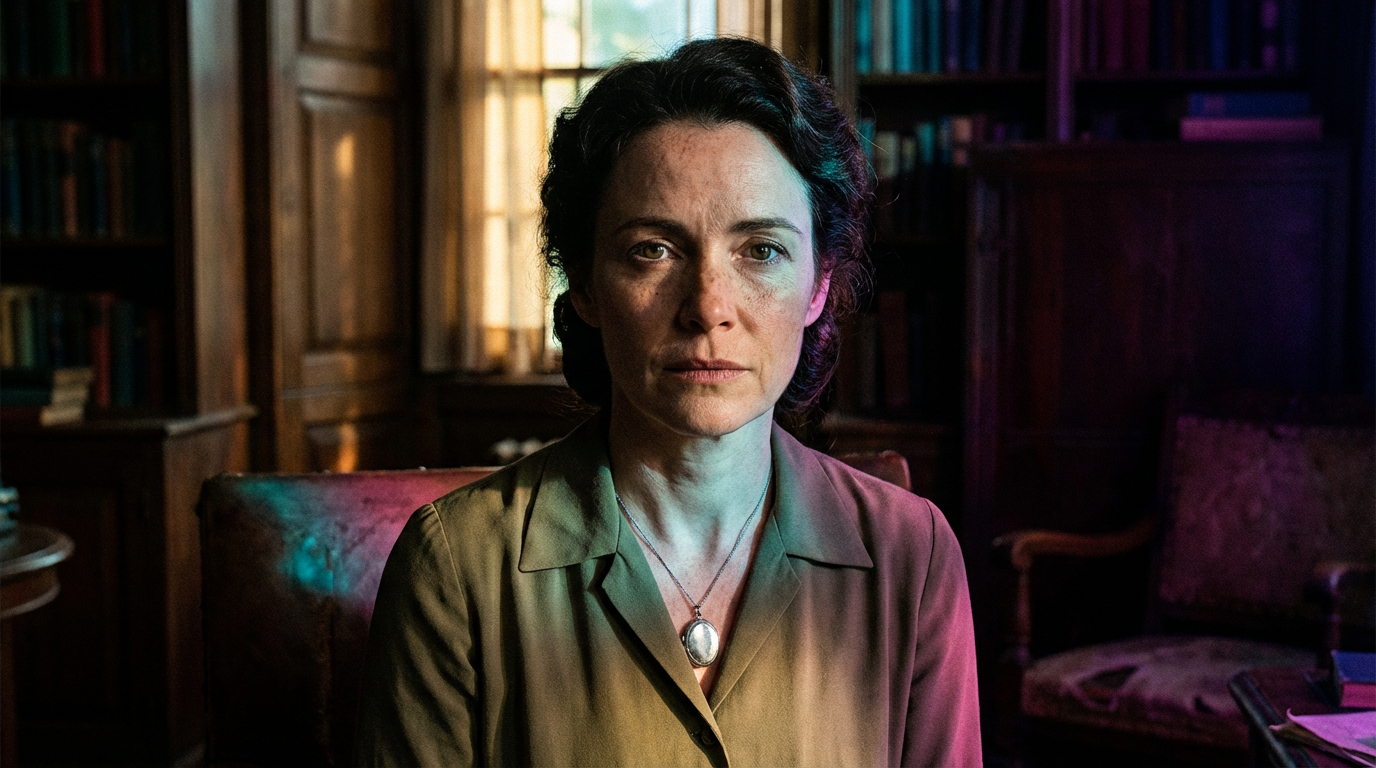
Early Life and Family Background
Frances Maureen Nelligan was born on 3 November 1919 in Yacka, a tiny agricultural settlement in the mid-north of South Australia, approximately thirty kilometres east of Crystal Brook. She was the fourth of seven children born to Patrick Joseph Nelligan, a wheat farmer who worked a modest selection on the district's marginal lands, and Bridget Mary Nelligan, née O'Sullivan, whose parents had emigrated from County Cork during the 1870s and established themselves among the Irish Catholic farming families scattered across South Australia's rural interior.
The Nelligan family occupied a stone farmhouse that Patrick's father had built in the 1880s, its thick walls providing some defence against the extremes of the mid-north climate—scorching summers when temperatures exceeded forty degrees for days at a stretch, and winters when frost settled in the paddocks and the wind cut through inadequate clothing. The farm grew wheat when the rains came and struggled when they did not, its fortunes tied to weather patterns that no farmer could predict or control. Patrick supplemented the farm's uncertain income through seasonal shearing work, travelling to larger properties during the spring months and leaving Bridget to manage the household and younger children in his absence.
Frances's siblings formed the context of her childhood. Her eldest brother Thomas, born in 1912, was expected to inherit the farm and did so, though the inheritance proved more burden than blessing. Her sister Kathleen arrived in 1914, followed by brother Bernard in 1916. After Frances came another sister, Mary, in 1922, then twin boys Joseph and Daniel in 1925—the last of Bridget's pregnancies, which had left her depleted in ways that accumulated over the following decades. The family was large by any standard, though not unusually so for Irish Catholic households of the era, where contraception was forbidden and children represented both blessing and economic necessity.
The Nelligan household was shaped by the rhythms of agricultural labour and Catholic observance. Mass on Sundays required a journey to Crystal Brook, the nearest town with a Catholic church, the family crowded into a horse-drawn cart for the hour-long trip each way. The local priest visited periodically for baptisms, confessions, and the blessing of homes; his authority in matters of faith and morals was absolute, and the religious instruction Frances received—first from her mother, later from the nuns who taught catechism during school terms—formed the moral framework she would carry throughout her life.
Education was available but limited. Frances attended the small state school in Yacka, a single-room building where one teacher managed children of all ages and abilities. She proved a capable student, quick with reading and arithmetic, neat in her work, and possessed of the practical intelligence that rural life required. But formal education ended at fourteen for most farming children, and Frances was no exception. In 1934, she left school to assist her mother with the household and the younger children, her own ambitions subordinated to the family's immediate needs.
The years between fourteen and eighteen were spent in the domestic labour that would characterise much of her adult life: cooking, cleaning, mending, gardening, caring for siblings and aging grandparents, assisting with farm work during busy seasons. Frances learned the skills of household management through constant practice, developing the competence that would later enable her to stretch a railway worker's wages across five growing children. She also learned patience, endurance, and the capacity to find satisfaction in work that received little recognition—lessons that would prove essential in the decades ahead.
Yet Frances harboured ambitions that extended beyond the farmhouse. She had watched her mother's health decline through repeated pregnancies and endless labour; she had seen neighbouring women worn down by the same pattern of childbearing and domestic exhaustion. Nursing offered an alternative—a respectable profession for women, a path to independence, a way to use her practical capabilities in service of something larger than her immediate family. When she learned that the Crystal Brook Bush Nursing Post was seeking auxiliary trainees in 1938, she applied with her parents' reluctant blessing.
Nursing Training and Early Career
Frances commenced her auxiliary nursing training at the Crystal Brook Bush Nursing Post in March 1938, aged eighteen. The position was modest—auxiliary nurses received less comprehensive training than registered nurses and were limited in the procedures they could perform—but it represented Frances's first step toward professional independence. She lodged with a family in Crystal Brook during the week and returned to Yacka on Sundays when she could manage the journey.
The Crystal Brook Bush Nursing Post served a scattered population of farming families, itinerant workers, and townspeople across a wide catchment of the mid-north. Bush nursing in rural Australia during the 1930s required versatility and self-reliance; the nearest hospital was in Port Pirie, nearly an hour's drive on unsealed roads, and the nursing post handled everything from childbirth to farm accidents to the endemic illnesses that afflicted isolated communities. Frances learned to dress wounds, assist with deliveries, administer basic medications, and provide the kind of practical health advice that prevented minor problems from becoming serious ones.
Her training lasted eighteen months, combining formal instruction with supervised practical experience. The senior nurse at the post, Sister Margaret Byrne, became an important mentor—a woman who had chosen nursing over marriage and had built a respected career serving communities that other practitioners overlooked. Sister Byrne recognised Frances's aptitude and encouraged her to consider further training, perhaps even registration as a full nurse. Frances entertained these ambitions quietly, uncertain whether her family's circumstances would permit the additional years of study and the distance from home that registration would require.
She completed her auxiliary certification in late 1939 and remained at the Crystal Brook post as a junior auxiliary, assisting Sister Byrne with the steady stream of patients who arrived seeking treatment for everything from infected cuts to complicated pregnancies. The work was demanding but satisfying, offering the combination of practical service and human connection that Frances found meaningful. She developed confidence in her abilities, learned to trust her judgement in situations where guidance was not immediately available, and began to imagine a future in which nursing might become not just a temporary occupation but a lifelong vocation.
The outbreak of war in September 1939 altered the landscape of possibilities. Many registered nurses enlisted for military service, creating shortages in civilian facilities that auxiliary nurses were pressed to fill. Frances found herself taking on responsibilities beyond her training, supervised loosely by Sister Byrne but increasingly relied upon to manage situations that would previously have been referred to more qualified staff. The experience expanded her capabilities even as it highlighted the limitations of her credentials.
By 1941, Frances had begun to consider her options with new seriousness. She was twenty-two, still unmarried, and aware that the window for both professional advancement and matrimonial prospects would not remain open indefinitely. Sister Byrne encouraged her to pursue full registration, but the necessary training would require relocation to Adelaide and several years of study—a commitment that Frances's modest savings and family obligations made difficult to contemplate. When a position as auxiliary nurse at the Port Pirie Hospital was advertised in early 1941, she applied as a compromise: urban experience that might lead to further opportunities, without the extended commitment of formal registration training.
She was accepted and relocated to Port Pirie in April 1941, lodging with a Catholic family who had been recommended by her parish priest. The move represented both advancement and uncertainty—a step toward the independence she sought, but also a departure from the familiar world of Crystal Brook and Yacka, the farming communities where she had spent her entire life.
Courtship and Marriage
Port Pirie in 1941 was a town transformed by war. The lead smelter operated at full capacity, producing materials essential for military equipment, while the railway yards hummed with the movement of ore and supplies. The population had swelled with workers drawn by wartime employment, and the social fabric had loosened in ways that both excited and unsettled a young woman from a conservative rural background.
Frances met Albert Thomas Jenner at a dance organised by the Port Pirie Catholic parish in the spring of 1941. Parish dances served a practical function in Catholic communities—providing supervised social occasions where young people could meet potential marriage partners within the bounds of religious acceptability. Frances attended with her lodging family's daughter, expecting nothing more than a pleasant evening of music and conversation. Albert, twenty-seven and established in his railway career, had been encouraged to attend by workmates who suggested it was time he found a wife.
Their first conversation was unremarkable—the usual exchange of information about family, occupation, and parish affiliation that characterised such encounters. But Frances noticed something in Albert's manner that distinguished him from the other young men she had met: a steadiness that suggested reliability, a reserve that implied depth rather than emptiness, a seriousness about life that matched her own. He was not handsome in any conventional sense, and his conversation was not sparkling, but he seemed solid in ways that mattered more than superficial charm.
They began courting according to the conventions of the era. Albert called at her lodging house on Sunday afternoons; they attended Mass together and walked along the foreshore afterward, their conversation gradually deepening as familiarity grew. Frances learned about his difficult childhood, his years of unemployment during the Depression, his determination to build a stable life that would protect any family he might establish. Albert learned about her farming background, her nursing ambitions, her practical capabilities and quiet faith. By the time he proposed, in November 1942, neither of them harboured illusions about what marriage would require. It would be a partnership of complementary strengths, built on shared values rather than romantic passion.
They married on 17 April 1943 at St Mark's Catholic Church in Port Pirie. Frances wore a dress borrowed from her sister Kathleen, who had married two years earlier and whose gown was the nicest garment available within the family. Albert wore the suit he had purchased for the occasion and would continue wearing to weddings, funerals, and church services for the next three decades. The reception was modest—afternoon tea at the parish hall, attended by family members who could manage the travel and workmates who could spare the time from wartime employment.
Frances resigned from her nursing position upon marriage, as was expected of women in that era. Married women were not permitted to continue in most professional roles; the assumption was that a wife's place was in the home, and that employment was inappropriate once a husband's income became available. Frances accepted this transition without visible protest, though she would later admit to Lola that the loss of her professional identity had been more difficult than she had anticipated. The skills she had developed, the confidence she had earned, the sense of purpose she had found in nursing—all of this was redirected into domestic channels, valuable still but no longer formally recognised.
Motherhood and Domestic Life
The first years of marriage were spent establishing the routines that would characterise the Jenner household for the next four decades. Frances and Albert moved into the weatherboard cottage on Bentinck Street—a rental property that they would eventually purchase in 1956, once post-war prosperity and careful saving made ownership possible. The cottage was modest but adequate: three bedrooms, a kitchen that served as the household's centre, a sitting room reserved for Sundays and visitors, and the outdoor amenities that characterised Australian working-class homes of the era.
Frances transformed the cottage into a functional household through a combination of labour, ingenuity, and the practical skills she had learned on the farm. She established a vegetable garden that supplemented the family's diet and reduced their grocery expenses. She learned to cook meals that stretched Albert's wages across growing appetites. She maintained the house to standards of cleanliness that satisfied both her own expectations and the scrutiny of neighbours whose judgement could affect a family's social standing.
Leonard arrived in January 1945, the first of five children born over the following eleven years. Frances's auxiliary nursing training proved useful during pregnancy and infancy, though the experience of motherhood exceeded anything her formal education had prepared her for. The exhaustion of early parenthood, the anxiety of responsibility for a vulnerable life, the isolation of days spent with an infant while Albert worked long hours at the railway yards—these were challenges that Frances met with the same quiet endurance she had brought to every previous difficulty.
Lola followed in March 1948, then Glenys in September 1950, Michael in April 1953, and finally Carol in August 1956. Five children in eleven years represented both the expectations of Catholic teaching on family planning and the practical consequences of limited contraceptive options. Each pregnancy depleted Frances's physical resources; each child added to the demands on her time and energy. She managed because she had no alternative to management, because working-class mothers of her generation were expected to cope regardless of circumstances, because complaining would have served no purpose and might have undermined the facade of competence that respectability required.
Her relationship with Albert settled into patterns that suited both their temperaments. He provided financially and maintained the physical infrastructure of their home; she managed the household and raised the children. He retreated into silence after long shifts at the railway yards; she filled the silences with activity and ensured that the children did not disturb his rest. They rarely expressed affection openly—such displays were not characteristic of their generation or their class—but they maintained a partnership that functioned effectively across nearly four decades.
The arrival of Carol in 1956 introduced complications that the earlier pregnancies had not. Carol was born healthy but developed chronic respiratory problems during her first winter, her breathing laboured and her energy perpetually diminished. The local doctors offered diagnoses that were vague and treatments that were largely ineffective. Frances nursed Carol through illness after illness, her auxiliary training providing some framework for managing symptoms but no solution to underlying conditions that medical science of the era could not adequately address.
Carol's illness reshaped the family dynamics. Frances spent increasing amounts of time and energy on her youngest daughter's care, relying on Lola to assist with the domestic responsibilities that she could no longer manage alone. The relationship between mother and second daughter deepened through this shared labour, Lola learning nursing skills through practical necessity while Frances transmitted the philosophy of care that she had developed through her own training and experience. When Lola later expressed interest in pursuing nursing professionally, Frances encouraged her with an enthusiasm that reflected her own unfulfilled ambitions as much as her recognition of her daughter's aptitude.
Community and Parish Life
Outside the immediate demands of household management, Frances built connections within Port Pirie's Catholic community that provided social support and personal meaning. She attended Mass weekly at St Mark's Church, participated in parish women's groups, and contributed to the charitable activities that the Church organised for families less fortunate than her own. These connections offered the kind of female companionship that her domestic isolation otherwise denied her—opportunities to share concerns, exchange advice, and find solidarity in the common experiences of working-class motherhood.
She became known within the parish as a reliable volunteer, willing to help with fundraising events, provide meals for families in crisis, or visit elderly parishioners who had become housebound. This service extended the nursing instincts that her formal career had been too brief to fully express. Frances brought food to the sick, sat with the dying, offered practical assistance to young mothers struggling with the demands she knew intimately. Her reputation for discretion and competence made her someone neighbours trusted with confidences they might not have shared with others.
The parish also provided educational opportunities for her children that the state system could not match. Frances enrolled all five children in Catholic schools, making financial sacrifices to pay the modest fees that the diocese required. She believed that Catholic education would transmit values she considered essential—faith, discipline, moral seriousness—and she was willing to stretch the family budget to ensure her children received it. The decision reflected both her religious convictions and her practical assessment that Catholic schooling offered advantages, particularly for girls, that secular education did not.
Her involvement in community life was constrained by the demands of her household, particularly during the years when Carol's health required constant attention. Frances rarely had time for her own interests or recreation; the amateur nursing skills she practised within her home left little energy for nursing others. But she maintained connections that mattered—with her siblings, who remained scattered across rural South Australia; with her mother, whose own health declined through the 1950s and 1960s; with the women of the parish who shared her circumstances and understood her constraints.
Later Years and Widowhood
The 1970s brought changes that Frances had not anticipated and struggled to navigate. Her children grew up and dispersed—Leonard to Adelaide for railway work, Lola to nursing training, Glenys to teaching in Kadina, Michael to apprenticeship as a diesel mechanic. Carol's death in her early twenties, from complications of the respiratory condition that had shadowed her entire life, struck Frances with grief that she carried quietly, as she carried most difficult emotions. The house on Bentinck Street grew emptier, the routines that had structured her days for decades suddenly obsolete.
Albert's retirement in 1978 introduced its own complications. After forty-four years of railway work, he struggled to fill the hours that employment had once claimed. Frances encouraged him to find hobbies, to join community organisations, to develop interests beyond the domestic sphere she had managed alone for so long. Their relationship shifted as he became a constant presence in a home where she had grown accustomed to autonomy during working hours. They navigated this transition with the same practical accommodation they had brought to earlier challenges, though Frances privately found his retirement more difficult than she had expected.
His declining health during 1980 and 1981 restored a familiar role. Frances nursed Albert through emphysema's gradual progression with the skills she had first learned at the Crystal Brook Bush Nursing Post more than four decades earlier. She managed medications, monitored symptoms, coordinated with doctors, and provided the daily care that kept him comfortable as his condition worsened. The work was exhausting for a woman in her sixties, but it also provided purpose and the satisfaction of competence exercised in service of someone she loved.
Albert died on 23 September 1981, leaving Frances a widow at sixty-one. The grief was real but not incapacitating; she had been prepared by months of decline, and her faith provided frameworks for understanding death that made acceptance possible. She remained in the Bentinck Street cottage, maintaining the routines of a life that had shrunk but not ended. The vegetable garden still required tending, the house still needed cleaning, and the connections she had built within the parish still offered companionship and purpose.
The twelve years of widowhood that followed were marked by gradual adjustment rather than dramatic change. Frances continued her involvement in parish activities, visited her surviving children when health and circumstances permitted, and maintained the independence that she had valued since her first departure from Yacka more than fifty years earlier. She watched her grandchildren arrive and grow, offering the kind of practical assistance and quiet wisdom that grandmothers provide while respecting the boundaries that her children's adult lives required.
Her own health began declining in the early 1990s. The accumulated wear of decades of physical labour, the lingering effects of multiple pregnancies, and the ordinary deteriorations of age combined to limit her mobility and energy. When managing the Bentinck Street cottage became too difficult, she moved to Adelaide to be closer to Leonard and Lola, accepting the loss of independence with the same resignation she had brought to earlier sacrifices.
Frances Maureen Jenner died on 14 August 1993 at the age of seventy-three. The cause of death was heart failure, the final consequence of a cardiovascular system that had worked hard for seven decades without adequate rest. She was buried beside Albert in the Port Pirie Cemetery, the headstone marking both their names and the dates that bracketed lives spent in partnership.







