4338.206 · July 25, 2018 AD
Foundation Hole
Paul stares at a picture of a garden shed with impossibly green grass, searching for instructions that aren't there, when Jamie returns carrying an unfamiliar serenity. As they confront supplies neither knows how to use, Paul suggests digging a foundation hole with the pickaxe and Jamie laughs. They start building anyway, hauling cement toward a future only one of them believes in.
"Fifteen years building a business taught me nothing about pouring concrete—turns out spreadsheets don't translate to shed foundations."
Moseying casually around the Drop Zone, I found myself adrift in a sea of uncertainty, surrounded by crates and bags and boxes whose purposes I could only partially guess at. The supplies Luke had delivered formed an archipelago of promise across the dusty ground — cement bags stacked in precarious towers, tools scattered like fallen soldiers, flat-packed structures leaning against each other in configurations that defied any logic I could discern. Each item represented a piece of the future I'd envisioned, and yet together they formed a puzzle I had no idea how to solve.
I chose a spot on the soft, fine dust that blanketed the ground like a thin layer of forgotten snow that refused to melt — brown snow, the colour of everything in this place. Sitting there, I let my gaze fall onto a picture plastered on the side of one of the larger boxes.
A large, green garden shed stared back at me, so vivid and out of place in this barren landscape that it seemed to mock my ambitions with every pixel of its glossy photograph. The grass in the picture was impossibly green — the kind of green that existed in memories of Australian backyards, of weekend barbecues and children running through sprinklers. The sky behind the shed was impossibly blue, dotted with the kind of puffy white clouds that belonged in children's drawings. The whole scene was impossibly normal, a snapshot from a world that felt increasingly like a dream I was forgetting upon waking.
Everything Clivilius was not.
I stared at that picture until my eyes began to blur, willing it to reveal its secrets, to somehow transmit the knowledge of its assembly directly into my brain through sheer force of concentration. It didn't work. The shed remained stubbornly two-dimensional, offering nothing but the promise of shelter without any hint of how to achieve it.
"Hey! You actually going to do anything with that besides stare at it all day?"
The sound of his voice, so familiar yet unexpected in this moment of private defeat, released me from my trance. I turned my head towards him, the words stumbling out before I could catch them or dress them in something more confident.
"Umm. I'm not really sure."
The honesty in my voice surprised even myself. Here I was, the man who had pitched grand visions of civilisation to this very person not hours ago, the man who had spoken with such conviction about building something lasting and meaningful — and I couldn't figure out step one. The gap between rhetoric and reality had never felt wider.
Jamie moved in closer, his presence sending small puffs of dust into the air as his feet dragged across the ground with a deliberate slowness that seemed at odds with his usual restless energy.
"It's a lot of stuff."
He said it calmly, an observation rather than an accusation, and something in his tone made me look at him more carefully.
I turned my full attention to Jamie, my eyes narrowing as I studied his face with the analytical intensity I usually reserved for business negotiations and family dynamics. There was something undeniably different about him. His usual brooding demeanour — that prickly, defensive energy that had characterised every interaction since my arrival — had been replaced by something else, something I couldn't immediately name.
Calmer. Almost serene.
Jamie carried an air of peacefulness with him now, a tranquility that felt both unusual and unsettling against the backdrop of our chaotic circumstances. It was as if he had stepped through some invisible threshold while I wasn't looking and emerged on the other side transformed. The tension that usually coiled in his shoulders was absent. The sharp edge that typically sharpened his words had been smoothed somehow, worn down or washed away by something I could only guess at.
"What?"
Jamie asked, his eyebrows arching in curiosity as he noticed my fixed gaze on him. The question held none of its usual defensiveness — just genuine puzzlement at being studied so intently.
I blinked quickly, breaking the intense eye contact between us. A thought began to form, unbidden, in the back of my mind. I wonder... The thought lingered, unfinished, tantalising, as I grappled with this new perception of Jamie and what might have caused such a shift.
"How was your walk?"
I asked, feigning a casual interest that belied the eager anticipation swirling within me. My voice, I hoped, carried a tone of nonchalance, but internally I was fighting the urge to let a wide, knowing grin spread across my face. I was almost certain I knew exactly where Jamie had been, and the thought of it filled me with a curiosity I could barely contain.
The lagoon. That mysterious body of crystal-clear water I had discovered, with its strange calming effect that seemed to seep into your bones and quiet every anxious thought. If Jamie had found it too, if he had experienced what I had experienced there...
Jamie shrugged, his response as noncommittal as his gesture.
"Fine."
His voice was flat, giving nothing away. Yet there was something in his demeanour that suggested otherwise — the relaxed set of his shoulders, the unclenched jaw, the way he stood with his weight evenly distributed rather than poised for flight or fight. His body was speaking a different language than his words, and I had spent enough years in business meetings to read the discrepancy.
"Find anything interesting?"
I prompted further, my curiosity barely contained beneath the surface of casual conversation.
"Hmm. Not really."
Jamie replied, his voice laced with a disinterest that didn't quite reach his eyes. There was something there — a softness, perhaps, or the lingering echo of an experience he wasn't ready to share. It was the look of someone who had touched something profound and was still processing what it meant.
I recognised that look. I had worn it myself after my first visit to the lagoon.
There was a moment of silence between us, thick with unspoken thoughts and questions. The lagoon, that serene and mysterious place with its impossibly clear water and its strange effect on those who found it, was teetering on the edge of my tongue, begging to be acknowledged. I bit down on my lower lip, holding the word back, fearing that mentioning it outright might shatter the delicate understanding that seemed to be forming between us.
Some things were better discovered than told. Some experiences needed to remain personal until the person who'd had them was ready to share.
"The lagoon is nice."
Jamie finally said, breaking the silence with a casualness that felt rehearsed, as if he'd been waiting for the right moment to drop the admission.
Aha! I told myself, a surge of triumph coursing through me. I knew it!
The knowledge that Jamie had experienced the lagoon's tranquil beauty, just as I had, filled me with an unexpected sense of camaraderie. We had both touched something inexplicable in this alien world, both felt whatever strange peace that place offered. It was a thread of connection between us, thin but real — the first genuine common ground we'd found beyond our shared predicament.
"It is."
I agreed, my voice soft, accompanied by a gentle nod. A shared secret now, though neither of us would say more about what we'd found there, what we'd felt, what private moments of surrender we'd experienced in those crystal waters. Some things didn't need words.
Then we fell silent again, but the quality of the silence had changed. It was companionable now rather than awkward, two men who had glimpsed something together even if they'd glimpsed it separately.
"So..."
I started, my voice laced with tentative eagerness as I sought to engage Jamie further, buoyed by his uncharacteristically mellow mood. If there was ever a time to talk practicalities without triggering his defensive instincts, it was now.
"This is pretty much everything from the first list that I gave Luke."
My eyes briefly scanned the collection of materials and tools scattered around us — the cement bags with their optimistic instructions, the flat-packed sheds with their incomprehensible diagrams, the tools whose names I only half-knew and whose purposes I could only guess at. A hardware store's worth of potential, waiting for hands that knew what to do with it.
Jamie's eyebrows arched in genuine surprise, the expression lifting years from his face.
"Really? You've both actually done a really good job."
I couldn't help but chuckle at his astonishment, the sound echoing slightly in the open space between us. After all the tension, all the accusations, all the doubt Jamie had expressed about Luke's decisions and my sudden presence — here was a moment of unexpected approval.
"You sound surprised," I remarked, finding a sliver of humour in our dire situation.
"Well," Jamie continued, his gaze drifting from the pile of supplies to me, a playful yet sceptical glint appearing in his eyes. "You've managed to get us all this stuff, but do you actually know what to do with any of it? Guessing from the way you've been staring at that box for so long, I'd guess you've got no clue."
The playfulness softened what might otherwise have been a cutting observation. He wasn't attacking me — he was stating an obvious truth with something approaching affection. Or at least tolerance.
"Umm... well…" I stammered, the words tumbling out in a hesitant admission of my inadequacy. The confession stuck in my throat like dry bread, resisting the swallow of my pride.
My expertise, if it could be called that, was confined to the sterile predictability of office life — hours spent in front of a computer screen analysing spreadsheets and documents, punctuated by the occasional mind-numbing meeting where nothing was ever actually decided despite everyone talking for hours. Fifteen years of building a business from the ground up, of negotiating contracts and managing employees and navigating the complex politics of small-town commerce, and not one single skill from that entire career translated to the task at hand.
I could tell you the optimal markup on retail goods. I could negotiate a lease that would make a landlord weep. I could manage a team of people through the worst of inventory crises. But ask me to pour concrete? To build a structure that wouldn't collapse in the first strong wind? My years of professional experience might as well have been written in a language I didn't speak.
"No, not really," I confessed, feeling a wave of defeat wash over me.
"But really, how hard can it be to put a few sheds together?" I added, trying to infuse a bit of bravado into my voice despite the sinking feeling in my stomach. Even as the words left my mouth, I knew how hollow they sounded. Famous last words, the kind that preceded spectacular failures in cautionary tales told to children.
Jamie positioned himself behind me, his gaze joining mine as we both stared at the picture of the shed, as if willing it to offer up its secrets through sheer collective concentration. Two grown men, both allegedly functional adults, staring at a photograph of something neither of them had the faintest idea how to build.
The silence stretched between us, heavy with the unspoken acknowledgment of our mutual cluelessness.
"I think we're a bit fucked," Jamie finally said, his voice low and devoid of his earlier amusement. The words hung in the air like a verdict — a stark, unvarnished truth that neither of us could deny no matter how much optimism I tried to summon.
I groaned loudly, the sound a visceral response to the grim reality of our situation.
Deep down, I had harboured a faint hope that Jamie possessed some untapped reservoir of practical skills, some hidden competence that would complement my own deficiencies. He was a nurse, after all — nursing involved hands-on work, didn't it? Bodies were essentially biological machines. Surely some of that mechanical understanding, that practical knowledge of how things worked and fit together, translated to construction? Surely years of caring for physical needs had instilled some transferable wisdom about building and maintaining structures?
That hope now seemed as flimsy as the paper instructions we lacked.
How were we supposed to build a future here, when the simplest of tasks felt insurmountable?
The question echoed through my mind, bouncing off the walls of my optimism and finding no satisfying answer.
"But..."
Jamie's voice trailed off slowly, a hint of contemplation in his tone that immediately caught my attention. My focus sharpened instantly, honing in on that single word with desperate intensity. A spark of hope began to flicker within me, faint yet persistent, as I clung to the possibility that Jamie might have a solution, or at least the beginnings of one.
"But I do know that before we can start working on the shed, we need to pour the concrete foundations."
His words carried the weight of practical knowledge, a reminder of the essential first steps we had overlooked in our eagerness — my eagerness, really — to make progress. Foundations. The fundamental prerequisite for any stable structure.
"Of course," I replied, nodding with feigned assurance, as if the idea had been hovering at the tip of my tongue all along, merely waiting for Jamie to voice it first.
Internally, I kicked myself for not considering such an obvious basic. The fact that Jamie had to point it out was a small but sharp blow to my pride — here I was, the man with the grand plans, missing something that children probably learned in their first encounter with building blocks.
Foundations first. Then walls. Then roof. It was so obvious now that he'd said it, so fundamental that my failure to consider it independently felt like a failing of basic logic rather than specialised knowledge.
I rose to my feet, infused with a sudden surge of energy at the prospect of taking tangible action. Standing felt better than sitting in defeat. Moving felt better than staring at pictures that refused to explain themselves.
"Let's get it started then," I declared to Jamie, my excitement momentarily overshadowing the daunting complexity of the task ahead.
"Hang on a sec," Jamie interjected, his hand grasping my arm just as I reached out to grab the first bag of cement mix. His grip was firm but not aggressive — a restraint rather than a challenge.
"What?" I asked, a trace of irritation threading through my voice.
What does he want now? Can't we just get on with it? My impatience to move forward was palpable, every fibre of my being straining toward action, toward doing something rather than standing around contemplating our inadequacies.
"Have you actually ever laid concrete before?" Jamie inquired, his question hanging in the air like a pin hovering above a balloon.
I shook my head, the admission of my inexperience leaving me deflated all over again.
"No."
The word tasted like defeat on my tongue. Bitter. Familiar. The flavour of pride swallowing itself.
Jamie gently pushed me aside and took the initiative, grabbing the first bag of cement mix and turning it over to reveal the instructions printed on the back. I watched him intently, a mixture of anticipation and frustration building within me like pressure in a sealed container.
"What's it say?" I asked, unable to mask my impatience. Each second that ticked by felt like a missed opportunity, a delay in the progress I was desperate to achieve.
"Not much," Jamie replied after a moment, his voice tinged with a hint of disappointment that mirrored my own.
"It only explains how to mix the concrete. But I am pretty sure we need to prep the ground first."
His conclusion seemed to stem from a place of logical deduction rather than concrete knowledge — if the instructions only covered mixing, then surely the steps before mixing were assumed to be already complete. It wasn't expertise, but it was reasoning, and reasoning was better than staring blankly at pictures of impossibly green grass.
"Oh," I said, my gaze drifting over the array of tools and materials scattered around us.
An idea sparked in my mind, born out of desperation rather than expertise, a shot in the dark that might at least get us moving in some direction.
"We can use the pickaxe to dig the foundation hole."
Jamie laughed at my suggestion, the sound light and teasing against the weight of our situation.
"Now you just sound like you're throwing words together."
His amusement, though gentle, underscored the absurdity of my attempt to grasp at solutions with vocabulary I barely understood. Foundation hole. Was that even the right term? Did foundations go in holes? Or did they sit on top of prepared ground? The more I thought about it, the less certain I became of anything.
"Yeah, I kinda am," I conceded with a broad smile, the absurdity of our situation not lost on me. Here we were, two adults from a technological civilisation, struggling with tasks that humanity had mastered millennia ago. Our ancestors had built pyramids and cathedrals. We couldn't figure out how to start on a garden shed.
Despite the daunting reality, I walked over to collect the pickaxe, the weight of it reassuring in my hands. Heavy. Solid. A tool designed for breaking ground, even if I had no idea of the proper technique for wielding it.
"We may as well give it a try," I suggested, turning back to Jamie with the pickaxe in hand.
I hoped the gesture would encourage him, would demonstrate my readiness to tackle the challenge no matter how ill-equipped we seemed. Action was better than paralysis. Movement was better than staring at pictures.
Jamie took the pickaxe from me with a nod, a silent agreement to my unspoken plea for forward momentum.
"You'd better let me do the digging," he said, a playful smirk crossing his face as he glanced down at my injury. "You're already crippled."
He pointed at my red foot, which remained a vivid reminder of my less-than-stellar physical condition. The burn from the coals still throbbed with every step, the skin tight and angry, a constant companion to every movement I made.
I offered no objection to his teasing. Truth be told, I wasn't afraid of hard work — I'd built a business from nothing, after all, and that had required plenty of late nights and early mornings and efforts that left me exhausted in ways that went beyond the physical. But if Jamie was willing to take the lead on the heavy labour, I had no qualms in stepping back. Teamwork was about playing to each other's strengths and compensating for weaknesses, and right now my weakness was literally physical.
Jamie walked to the edge of the Drop Zone, the pickaxe slung over his shoulder with a casual ease that spoke of more physical confidence than I possessed. The tool looked natural in his hands, even if he had no more idea how to use it than I did.
"Where do you want it?" He called out, his voice carrying back to me over the short distance.
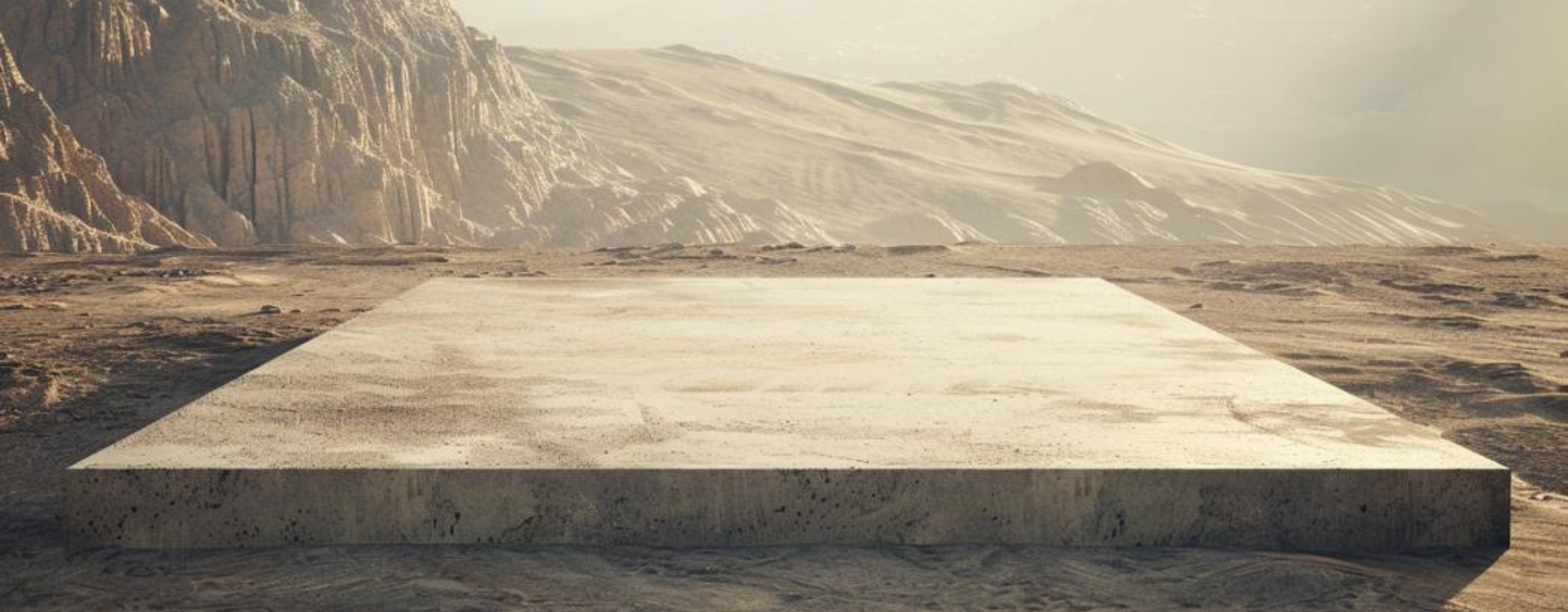
I joined Jamie at the edge, peering out over the vast, open expanse that stretched before us in every direction. The empty landscape was a blank canvas, waiting for us to impose some semblance of order and purpose upon it. Endless brown stretching to horizons that offered no guidance, no suggestion of where human structures might best be placed. The freedom was overwhelming — the complete absence of constraints that would have defined any building project on Earth.
No council regulations. No property lines. No neighbours to consider. Just dust and sky and the weight of infinite possibility.
"We could put the sheds anywhere really," I mused aloud, my voice tinged with the weight of decision.
The vastness of Clivilius offered endless possibilities, yet that very expanse made the task of choosing a spot seem all the more daunting. How did you pick one location when every location was equally available?
"Think, Paul. It has to be practical," Jamie interjected, his tone firm yet not unkind.
His words snapped me back to the reality of our situation, cutting through my paralysis of infinite choice. It wasn't just about placing a shed — it was about planning, about foreseeing the needs of a future we were still trying to piece together. Every decision now would shape what came after.
"Well..." I began, my voice trailing off as I mulled over our options with a newfound seriousness.
"If they were near the Drop Zone, we wouldn't need to carry items too far," I reasoned out loud, trying to visualise the logistics in my head. The idea seemed practical at first glance — minimise the immediate effort required to move supplies from Portal to storage. Simple. Efficient.
"Oh… Yes… But then we'd still need to carry stuff to the campsite, which is where it'd most likely be required."
The realisation dawned on me like a slow wave — convenience now would mean inconvenience later, multiplied by every trip someone would need to make.
"If we built the sheds near the campsite, someone would need to move things there initially, but it would be closer and easier access for everyone else."
My voice grew more confident as I spoke, the plan solidifying in my mind with each word. It was about more than just Jamie and me. It was about building a foundation for something larger — a community, a settlement, a future that extended beyond two stranded men and their immediate needs.
"Everyone else?" Jamie interjected, his question cutting through my thoughts. His tone held incredulity, perhaps even accusation.
I bit my tongue, a momentary frustration flaring within me like a match struck in darkness. Surely Jamie doesn't think it's going to just be the two of us forever? The thought was a silent rebuke to his implied doubt. Claire and the kids would come — they had to come. And others too, perhaps. People drawn by the promise of something new, something untouched by the complications of the world they'd left behind.
We weren't just building for ourselves. We were building for whoever came next.
"We're building the sheds near the campsite," I declared, more boldly than I felt. It was a decision made not just for our immediate convenience but for the future I was determined to create — the settlement that existed so far only in my imagination but that I could see as clearly as the dust beneath my feet.
"Okay then," Jamie conceded with a simplicity that belied the complexity of everything underneath. He didn't argue, didn't push back, didn't challenge my vision with his doubts. Just acceptance, quiet and complete.
He collected the shovel and pickaxe, the tools clanking together with the sound of work about to begin, and started walking towards the camp. The implements dragged behind him, drawing lines in the dust that marked our path forward — the first deliberate marks of construction in this place, the first traces of intention scratched into Clivilius's endless brown canvas.
I sighed, the reality of our decision settling in with the weight of the cement I was about to haul.
"I'll grab the cement," I called out, my voice carrying a mixture of determination and resignation. I heaved the bag into the wheelbarrow, its weight settling with a solid thump that spoke of the labour ahead. Heavy. Dense. A bag full of potential, waiting to be transformed into something permanent.
Along with a few other smaller items that would fit — a trowel, some stakes, a level I had no idea how to use — I prepared to follow Jamie toward whatever came next.
The journey was immediately punishing. The wheel snagged in the soft dust every few metres, catching on hidden irregularities in the ground, lurching the whole contraption sideways and threatening to topple my carefully stacked supplies with each unexpected jolt. My arms burned with the effort of keeping the wheelbarrow upright and moving. My injured foot protested every step, the burn throbbing in counterpoint to my heartbeat.
Each stop to adjust the unstable pile of contents added minutes to what should have been a simple trek. Each grimace I made reflected not just the physical strain but the mental and emotional toll of our task — the knowledge that this was only the beginning, that countless more trips and struggles and failures awaited us before anything resembling shelter stood in this place.
But I kept moving.
We were laying the groundwork for something far greater than just a few sheds. With every snag in the dust, every moment of frustration and doubt, every adjustment and correction and stubborn forward push, we were building the foundation of our future.
One wheel-stuck-in-dust moment at a time.







