Fiona Margaret Harris (née Lahey)
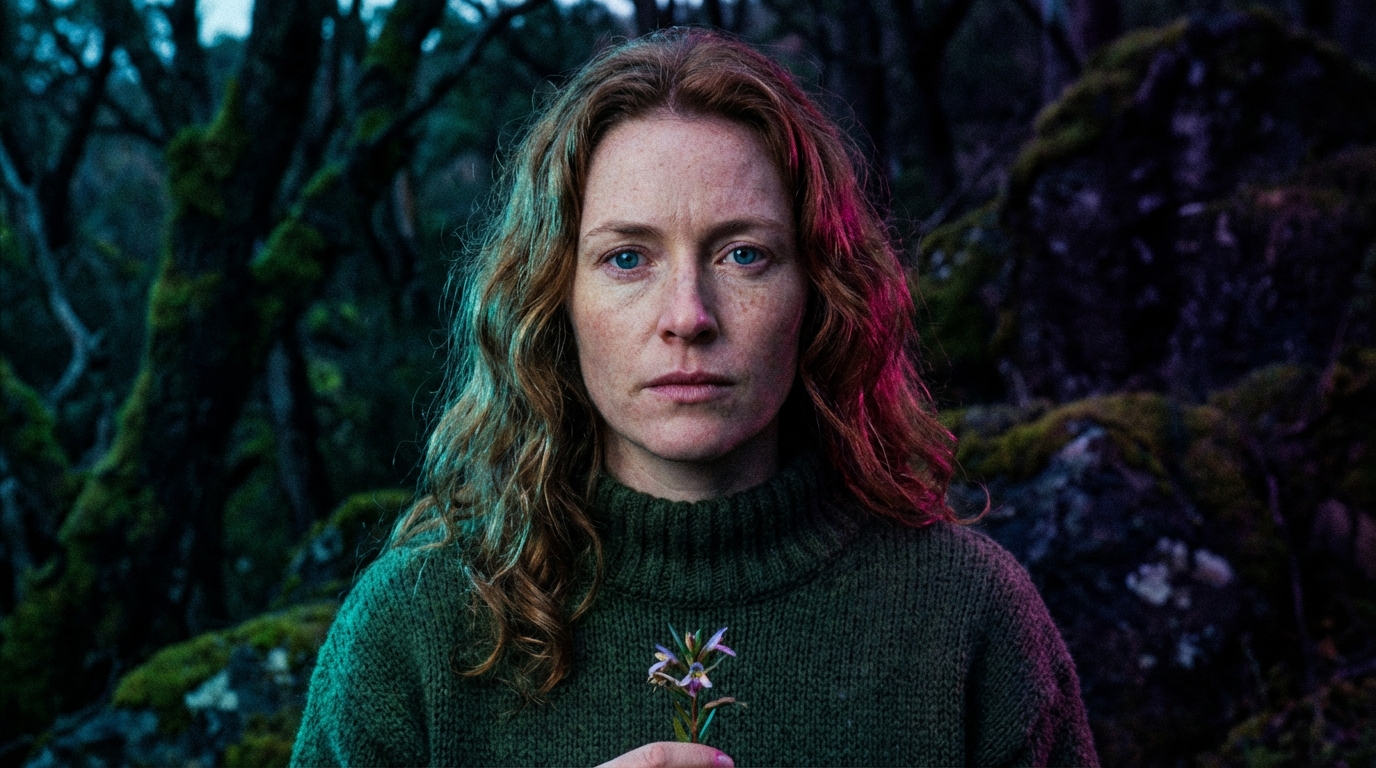
Fiona Margaret Harris emerged from the Tasmanian wilderness like one of the native orchids she would later fight to protect—beautiful, resilient, and fundamentally wild at heart despite the attempts of civilisation to contain her. Born in 1949, she transformed her childhood communion with nature into a lifetime of fierce environmental advocacy, though the passion that drove her conservation work also complicated every human relationship she attempted to cultivate. Her story reveals how those who love the earth most deeply sometimes struggle most profoundly with the creatures who walk upon it.
Early Years in Post-War Tasmania (1949-1963)
Fiona arrived on the 8th of July 1949 at the Royal Hobart Hospital, the second child in what would become a quartet, entering a family still adjusting to the rhythms of parenthood. Nicholas, not quite two, regarded his sister with the protective intensity that would characterise their relationship, whilst Jane recovered from a difficult birth that had required emergency intervention. Patrick, still establishing himself at the docks, built an elaborate cradle in the hospital waiting room, needing to create something whilst his wife and daughter hovered between worlds.
The Sandy Bay cottage at 4 Bective Street received its second child more gracefully than the first, the house now properly finished, the routines of family life established. Yet Fiona proved a different creature entirely from her methodical brother. Where Nicholas had been a contained infant, Fiona arrived loud—crying with a persistence that suggested not distress but declaration. Jane's diary describes those early months as "negotiating with a small, unreasonable force of nature," a description that would prove prophetic.
From the earliest age, Fiona displayed an affinity for the natural world that went beyond typical childhood interest. At eighteen months, she would stand transfixed by the movement of leaves in the small Sandy Bay garden, tracking patterns in the wind with an attention that worried her parents. She collected stones, shells, and feathers with the dedication of a curator, arranging them in complex patterns whose logic only she understood. The back garden at 4 Bective Street, modest though it was, became her kingdom, and she would rage when required to come inside, as if walls themselves were an affront to her nature.
The arrival of Solomon in 1953 shifted the family dynamics in unexpected ways. Four-year-old Fiona, accustomed to being the youngest, initially resented the interloper before discovering in him a malleable companion for her increasingly elaborate outdoor expeditions. She would lead the toddling Solomon on forced marches through the Sandy Bay garden, pointing out insects and birds with the authority of a seasoned naturalist, never noticing his complete disinterest in her passionate lectures about ant behaviour. The small cottage became increasingly crowded with three children—Nicholas and Fiona initially sharing a bedroom before later arrangements gave Fiona her own small room whilst the boys shared.
School at Sandy Bay Primary proved challenging for different reasons than it had for Nicholas. Fiona possessed intelligence equal to her brother's but coupled with a restlessness that made traditional education feel like imprisonment. At Sandy Bay Primary, teachers described her as "brilliant but uncontainable"—she would provide sophisticated answers to science questions whilst simultaneously planning her escape through the classroom window. The compromise reached by Grade 3 was unprecedented: Fiona would attend morning classes, then spend afternoons with the groundskeeper, Mr. Jamison, learning practical botany in exchange for maintaining the school's gardens.
The relationship with her mother during these Sandy Bay years was complex and formative. Jane recognised in Fiona something wild that reminded her of her own youth—those summers exploring the Tasmanian rainforest with Thelma and Bob, the freedom she'd surrendered for family life. Rather than suppressing this wildness, Jane carefully channelled it, taking Fiona on weekend expeditions to Mount Wellington (easily accessed from their Sandy Bay location), teaching her the names of plants in both English and Latin, showing her how to read the landscape's stories.
Patrick struggled more with his daughter's unconventional nature during these early years. His engineering mind couldn't comprehend her emotional responses to environmental destruction—the genuine grief she displayed when trees were felled for development near Sandy Bay, the rage when she discovered poisoned possums in a neighbour's yard. His solution was practical: he built her increasingly elaborate structures in the small Sandy Bay garden—a miniature greenhouse, a pond ecosystem in a washtub, observation platforms fashioned from scrap timber—physical expressions of love for a daughter whose emotional landscape remained foreign territory.
The birth of Pip in December 1957, when Fiona was eight, provided her with a living experiment in human development that fascinated her scientific mind. She documented Pip's growth with the same precision she applied to plant observation, creating detailed charts of developmental milestones that would later be discovered in her teenage journals. Yet beneath this clinical observation lay genuine tenderness—Fiona became Pip's fierce protector even in the cramped quarters of 4 Bective Street, intervening in sibling disputes with a fury that suggested primal rather than sisterly devotion.
The family's six-month separation in 1961-1962, when Patrick and Jane departed for Hamburg and the children stayed with Thelma at Jeffries Manor, affected eleven-year-old Fiona profoundly. The manor's extensive grounds provided unprecedented freedom for her botanical explorations, Thelma's indulgent supervision allowing Fiona to spend entire days cataloguing the estate's native species. Yet she also sensed something wrong about the arrangement, some adult complication underlying the separation that Nicholas tried to manage through increased responsibility. When Patrick and Jane returned in mid-1962, Fiona noticed immediate changes—her mother more fragile, her father more distant, the atmosphere at 4 Bective Street strained in ways the small cottage couldn't accommodate.
The New Norfolk Transition (1963-1967)
The family's relocation to New Norfolk in February 1963 represented liberation for thirteen-year-old Fiona. The house at 19 Hobart Road, with its substantially larger garden and proximity to genuine wilderness, provided the space she'd been craving throughout her Sandy Bay years. The small cottage at 4 Bective Street had been adequate for urban childhood, but Fiona had outgrown its constraints long before the family's departure. New Norfolk offered something Sandy Bay never could—immediate access to native bush, the Derwent River nearby, acres of Boyer Mill land available for exploration.
The transition from Sandy Bay Primary to New Norfolk District High School coincided with Fiona's physical transformation from wild child to striking young woman. She inherited Jane's dark hair and elegant features but carried them with Patrick's sturdy frame, creating an unusual beauty that discomfited more than attracted. The move meant leaving behind the few teachers at Sandy Bay Primary who'd understood her peculiarities, but New Norfolk High School's more relaxed atmosphere suited Fiona better than Hobart's stricter institutions would have.
At New Norfolk High School, Fiona found unexpected academic success when teachers stopped trying to contain her and instead channelled her energy. The biology teacher, Mrs. Patricia Morrison, recognised Fiona's extraordinary natural history knowledge and arranged independent study projects that allowed her to spend class time conducting field research in New Norfolk's surrounding forests. Her Year 9 project—a comprehensive survey of native orchids within five kilometres of the school—demonstrated university-level botanical knowledge and earned state science fair recognition.
Boys at New Norfolk High found Fiona's intensity overwhelming, whilst girls interpreted her disinterest in social hierarchies as arrogance. Her lunch hours were spent in the biology laboratory, assisting with experiments or in the library researching environmental science papers that wouldn't be part of the curriculum for another decade. She made few friends but needed few, finding in the natural world surrounding New Norfolk all the companionship her temperament required.
The house at 19 Hobart Road became base camp for Fiona's increasingly ambitious explorations. The larger backyard allowed her to establish extensive plant nurseries, propagating native species she collected from surrounding bush. Patrick's workshop provided tools for building proper botanical storage systems, whilst the spare bedroom (after Nicholas departed for university accommodation in 1971) became her laboratory, filled with specimens, pressed flowers, and elaborate taxonomic records.
The relationship with Nicholas during these New Norfolk years evolved into something more equal. At fifteen and seventeen respectively, they found unexpected solidarity in their mutual outsider status. Nicholas commuting to Hobart High School and later university whilst Fiona navigated New Norfolk High, they developed a private language of glances and subtle gestures, communicating across dinner tables at 19 Hobart Road with a sophistication that excluded others, even their parents. This bond would prove crucial when family secrets began surfacing decades later.
At fourteen, Fiona experienced what she would later describe as her "ecological awakening" during a school trip organised by Mrs. Morrison. The excursion to the Gordon River, intended as geography education, instead became a spiritual experience. Standing in the ancient rainforest (accessed via New Norfolk school trip rather than from Sandy Bay), surrounded by trees that predated European civilisation, she felt what she could only describe as the forest's consciousness—not mystical but scientific, an understanding of the interconnected systems that sustained life. She returned from that trip fundamentally changed, with a clarity of purpose that would drive the rest of her life.
This awakening coincided with the beginning of Tasmania's environmental movement, though Fiona wouldn't discover organised activism until university. Instead, she conducted her own campaigns from 19 Hobart Road—infiltrating local New Norfolk council meetings to argue against development proposals, writing letters to newspapers under pseudonyms, conducting unauthorised surveys of threatened habitats accessible from New Norfolk. Her parents discovered these activities only when the police delivered fifteen-year-old Fiona home after catching her documenting illegal clearing on private property near New Norfolk at 2 AM.
Adolescent Awakening and Environmental Passion (1965-1967)
The tension between her environmental passion and family expectations created the first real conflict with her parents during the New Norfolk years. Jane, whilst sympathetic to Fiona's concerns, worried about her daughter's increasingly radical views and the risks she took trespassing on private property for documentation purposes. Patrick simply couldn't understand why she would risk her education and reputation for "trees and birds." The arguments at 19 Hobart Road were fierce but brief, Fiona learning to present a facade of compliance whilst secretly continuing her activities. This early experience of living a double life would establish patterns that persisted throughout her adulthood.
Her final years at New Norfolk High School, from 1965 to 1967, saw Fiona's reputation solidify as the school's brilliant eccentric. Teachers either loved her passion or found her single-mindedness exhausting. Her Year 12 biology project—a comprehensive analysis of environmental impact from Boyer Mill's operations on local water systems—was technically impeccable but politically awkward, given that most students' families depended on the mill for employment. The school's principal suggested she modify her conclusions; Fiona refused and received lower marks than her work deserved, learning an early lesson about how power suppresses inconvenient truth.
The daily life at 19 Hobart Road during these adolescent years saw Fiona increasingly separate from family rhythms. She'd return from school and immediately disappear into the surrounding bush, often not returning until dark. Jane would find her at the kitchen table past midnight, making detailed botanical illustrations by lamplight, too absorbed to notice her mother's presence. Patrick would discover her in his workshop at dawn, using his tools to build elaborate plant presses and specimen boxes, her focus so complete she hadn't noticed him arrive.
Solomon, seven years younger, became an unexpected companion during these years. He'd follow Fiona on her expeditions, not sharing her passion for plants but appreciating her systematic approach to documentation. She taught him how to create accurate field sketches, how to measure and record observations, skills he'd later apply to architecture. Their relationship during the New Norfolk years was perhaps Fiona's closest human connection—both comfortable with silence, both preferring observation to interaction, both finding in the natural and built environments more sense than in social dynamics.
University and Political Awakening (1968-1972)
The University of Tasmania in 1968 presented Fiona with her tribe—environmental science was still emerging as a discipline, attracting idealists and radicals who shared her passion for preservation. She enrolled in a combined Science/Arts degree, focusing on botany and ecology whilst studying environmental philosophy, finding in academia the vocabulary to articulate what she'd always intuitively understood about humanity's relationship with nature. Living at 19 Hobart Road during her university years meant continuing the daily commute pattern that Nicholas had established, though Fiona spent increasing time in Hobart, often sleeping at friends' houses rather than making the late journey back to New Norfolk.
The student movements of the late 1960s provided an outlet for Fiona's rage at environmental destruction. She became a prominent figure in the nascent green movement, organising sit-ins at logging sites, leading protests against industrial pollution (including, awkwardly, some targeting Boyer Mill's practices), and establishing the university's first environmental action group. Her arrest record from this period—seven arrests for civil disobedience between 1968 and 1970—was a source of pride for her and mortification for Patrick, who couldn't understand how his daughter had become "a criminal." The police would sometimes deliver her back to 19 Hobart Road in the early morning hours after protests, Patrick answering the door in his dressing gown, Jane standing behind him with expression mixing concern and quiet pride.
It was during a protest at the proposed site of a pulp mill that Fiona met Michael Harris, a mature-age student studying environmental law. Michael, ten years her senior, had worked in the logging industry before experiencing his own ecological conversion. His insider knowledge of the industry they opposed, combined with a strategic mind that complemented Fiona's passion, created an immediate attraction. Their relationship began as planning sessions that extended into dawn, fuelled by instant coffee and shared outrage, often conducted in Michael's flat rather than at 19 Hobart Road where such late-night political discussions would have disturbed the household.
The relationship with Michael transformed Fiona's activism from emotional response to strategic campaign. He taught her about legal frameworks, showing how environmental protection required working within systems as well as against them. Under his influence, she began focusing her studies on practical conservation science, learning to conduct the type of research that could stand up in court, that could stop bulldozers with data rather than bodies. Her Honours thesis—a comprehensive survey of threatened plant species in Tasmania's northwest—became foundational document for future conservation battles.
By her third year, Fiona was spending most nights in Hobart rather than returning to New Norfolk, effectively having moved out whilst technically maintaining residency at 19 Hobart Road. Her room there became storage for botanical specimens and camping equipment, visited mainly when she needed to collect supplies for field expeditions. Jane accepted this gradual departure without resistance, understanding that Fiona's trajectory had always been away from conventional family life. Patrick struggled more, feeling his daughter slipping away into a world of activism and radicalism he couldn't comprehend or support.
The Franklin Campaign Years (1973-1983)
After graduating with First Class Honours in 1972, Fiona joined the Tasmania Parks and Wildlife Service as a junior botanist, a position that provided modest income and, more importantly, legitimate access to threatened areas. Her official surveys often extended far beyond their parameters, documenting not just flora but entire ecosystems, building the database that would later prove crucial in conservation battles.
The marriage to Michael in 1974 was a small ceremony in the Hartz Mountains, officiated by a friend with dubious credentials, witnessed by a handful of fellow activists. Jane attended, understanding her daughter's need for unconventional expressions, whilst Patrick remained in Hobart, his absence speaking louder than any objection. Nicholas served as witness, his academic demeanour contrasting absurdly with the barefoot ceremony, whilst seven-year-old Pip scattered native flowers with enthusiasm that delighted everyone.
The early years of marriage coincided with the escalation of Tasmania's environmental conflicts. The proposed flooding of Lake Pedder galvanised the conservation movement, and Fiona found herself at the centre of the campaign. Her scientific credentials provided authority that pure activism lacked, her reports on endemic species threatened by the development becoming key documents in legal challenges. Yet this period also revealed the cost of such commitment—the miscarriage she suffered in 1976, alone in the field whilst conducting surveys, which she never reported to anyone, including Michael.
The strain on the marriage became increasingly evident. Michael had evolved from radical activist to pragmatic environmental lawyer, working within the system he'd once opposed. He wanted children, stability, a home that was more than a base camp between expeditions. Fiona couldn't articulate why these normal desires felt like betrayal, why domesticity seemed like another form of environmental destruction. Their arguments, when they occurred, were terrible—Michael's legal precision meeting Fiona's emotional intensity in destructive combination.
The Franklin Dam campaign of the early 1980s became both Fiona's greatest triumph and her marriage's final catastrophe. She spent months in the field, documenting the river system's biodiversity, her research proving crucial in establishing the area's World Heritage value. The famous photograph of her being arrested at the Gordon River blockade—hair wild, eyes fierce, being carried by four policemen—became an iconic image of the conservation movement. Michael, watching from his law office, realised he'd lost her not to another person but to something larger than any human relationship.
Solitary Years (1984-1998)
The divorce, finalised in 1984, was remarkably civilised. Michael drafted the papers with characteristic precision, ensuring Fiona retained the small cottage in Mount Nelson they'd purchased together. They maintained a friendship that puzzled others—former spouses who could work together on environmental cases, who exchanged Christmas cards with genuine warmth, who had loved each other deeply but not sufficiently. Michael remarried in 1987, a fellow lawyer who wanted the stability Fiona couldn't provide. Fiona attended the wedding, her gift a rare orchid cutting that bloomed annually, a living reminder of what they'd shared.
The decade following the divorce saw Fiona at her professional peak. Her work on Tasmania's endemic species gained international recognition, her papers published in prestigious journals, her expertise sought by conservation organisations globally. She travelled to conferences, advised on preservation strategies, became the face of Tasmanian conservation. Yet those who knew her recognised a growing isolation, a retreat into the wild that went beyond professional dedication.
The cottage in Mount Nelson became increasingly feral, the garden deliberately unwilded, native species reclaiming cultivated space. Inside, specimens covered every surface—pressed flowers, seed collections, soil samples—the domestic space transformed into an extension of the field. Visitors were rare and rarely welcomed. Even family found themselves held at distance, their visits scheduled around Fiona's fieldwork, conversations limited to safe topics that avoided personal revelation.
The relationship with her siblings during this period reflected their different trajectories. With Nicholas, now an established academic, she maintained intellectual engagement whilst avoiding emotional connection. They could discuss environmental philosophy for hours without ever addressing their mother's increasing secrecy or their father's declining health. Solomon's distance—both geographical and emotional—suited Fiona perfectly, their correspondence limited to birthday cards with predictable messages.
With Pip, however, Fiona maintained a different connection. Her youngest sister's vivacious nature, her ability to find joy despite life's complications, provided something Fiona couldn't generate herself. When Pip married Greg in 1979, Fiona served as maid of honour, submitting to dress fittings and hen's night activities with uncharacteristic grace. When Sarah was born in 1989, followed by Oscar in 1992, Fiona discovered an unexpected capacity for aunt-hood, teaching the children to identify birds, building elaborate fairy gardens, sharing the wonder she usually reserved for pristine ecosystems.
Loss and Recalibration (1998-2013)
The phone call about Pip and Greg's death came whilst Fiona was preparing specimens in her home laboratory. The Swiss authorities' clinical delivery couldn't soften the devastation—her baby sister, the family's joy, gone at forty-one. Fiona's response was characteristically solitary: she disappeared into the Southwest wilderness for a week, returning gaunt and silent, having processed grief in the only way she knew—through solitude and landscape.
At the funeral, Fiona spoke briefly but powerfully about Pip's gift for happiness, her ability to find beauty in ordinary moments—qualities Fiona recognised she'd never possessed. Watching her parents transform into guardians for Sarah and Oscar, seeing their seventy-something bodies adapt to playground supervision and homework help, Fiona felt a mixture of admiration and inadequacy. She established education funds for the children but struggled with direct engagement, their grief too raw, too reminiscent of her own unprocessed losses.
The early 2000s brought unexpected professional challenges. Climate change, once a theoretical concern, became observable reality in the ecosystems she'd studied for decades. Species she'd documented were disappearing, migration patterns shifting, phenological cycles disrupting. Her research became increasingly urgent, tinged with desperation as she documented what felt like an extended obituary for the natural world she'd devoted her life to protecting.
The relationship with Michael during this period evolved into something unprecedented—former spouses who became true friends. His second marriage had ended (his wife unable to compete with the ghost of Fiona's intensity), and they found themselves having dinner monthly, two ageing environmentalists comparing battle scars. These dinners, always at the same waterfront restaurant, became confessionals where they admitted defeats they couldn't acknowledge elsewhere. Michael's observation that "we loved the earth more than each other, and maybe that was the most honest love we could manage" captured something essential about both their connection and limitation.
Patrick's death on Valentine's Day 2013 affected Fiona more than she'd anticipated. Their relationship had always been complicated—the practical father and the passionate daughter speaking different languages, loving each other across an comprehension gap neither could bridge. Sorting through his workshop, she discovered he'd kept every article about her environmental work, filed chronologically in folders labelled simply "Fiona." The revelation that he'd followed her career with such dedication, despite never expressing pride directly, broke something in Fiona that had been rigid since adolescence.
Final Phase (2013-2018)
After Patrick's death, Fiona experienced what she privately termed "emotional climate change"—long-frozen feelings suddenly thawing, creating unexpected floods of sensation she couldn't navigate. She began therapy with Dr. Margaret Chen, initially approaching it as she would a field study, taking notes and creating classification systems for emotions. Gradually, she learned to experience rather than analyse feelings, though the process remained uncomfortable, like wearing clothes that never quite fit.
The research during these years shifted from pure science to what she called "love letters to disappearing worlds." Her papers, whilst maintaining scientific rigour, began including personal observations, historical context, even poetic descriptions that would have horrified her younger self. The academic community was divided—some dismissing this evolution as unscientific sentimentality, others recognising the profound truth in acknowledging that objective observation couldn't capture the full reality of ecological collapse.
When Jane entered Vaucluse Nursing Home in June 2017, Fiona became a regular visitor, though these visits were tortuous. Watching her mother's decline, seeing the powerful woman who'd introduced her to nature's wonders reduced to medical management, triggered existential despair that no amount of wilderness could soothe. Their conversations during Jane's lucid periods revealed family secrets Fiona had suspected but never confirmed—the mysterious European child, the Jeffries family's dangerous games, the prices paid for apparent domestic harmony.
Jane's death on the 4th of August 2018 left Fiona feeling unmoored in ways she couldn't articulate. At the funeral, she spoke about inheritance—not of property but of perception, how Jane had taught her to see the extraordinary in the ordinary, to understand that protection sometimes required secrecy, that love expressed itself in forms beyond words. The discovery of Jane's diary, with its entries about infant Fiona's fierce nature, provided unexpected validation for a life lived outside conventional boundaries.
Sarah's death four days later, investigating the very secrets Jane had protected, struck the final blow to family stability. Fiona's brilliant niece, who'd inherited the family's intelligence but coupled it with her mother's joy, gone at twenty-nine whilst pursuing truth. The randomness, the waste, the cruel synchronicity of losing three family members within days broke something fundamental in Fiona's carefully maintained defences.
Continuing Evolution
At seventy-five, Fiona Harris continues her work, though the nature of that work has evolved beyond pure conservation. She's writing a book—part memoir, part field guide, part love letter to Tasmania's vanishing wilderness—that violates every academic convention she once held sacred. The publisher, initially concerned about the unmarketable hybrid, now recognises they have something unprecedented: a scientific document that acknowledges the heart's role in observation.
She still lives in the Mount Nelson cottage, though it's now openly wild rather than deliberately feral. The garden has become a sanctuary for endemic species, a tiny ark preserving genetic material for an uncertain future. Graduate students occasionally visit, finding in Fiona not the fierce activist of legend but a woman who's learned that protection sometimes requires surrender, that loving something doesn't guarantee its survival.
The secret Fiona carries but rarely acknowledges: the journals she's kept since adolescence, documenting not just environmental observations but the parallel destruction of her internal landscape—the miscarriages never reported, the breakdown in 2003 that required hospitalisation, the nights spent in the forest not conducting research but simply trying to feel something beyond anger. These journals, willed to the State Archives with a fifty-year embargo, will eventually reveal the cost of devotion, the price of choosing the earth over easier loves.
Her relationship with the surviving family remains complex. With Nicholas, now the only sibling left, she maintains careful contact, their dinners discussing philosophy and ecology whilst avoiding the grief that would drown them both. With Oscar, Sarah's brother, she's developed an unexpected connection, teaching him the botanical knowledge she once shared with his mother, finding in his quiet attention an echo of Solomon's childhood acceptance.
Michael visits monthly, their relationship having evolved into something beyond categories—not lovers, more than friends, two people who've witnessed each other's evolution and devolution, who share a history that requires no explanation. Their conversations now include silence, comfortable with the gaps where words would diminish meaning. He brings wine, she provides cheese from the farmers' market, and they sit watching the sunset over the Derwent, understanding that some loves transcend their original form.
The environmental movement has largely moved beyond Fiona, new generations bringing different strategies, digital campaigns replacing physical blockades. She watches with mixture of pride and bewilderment as young activists achieve through social media what took her decades of arrests to accomplish. Yet they still seek her out, recognising in her something beyond strategy—a form of commitment that consumed everything, that accepted no compromise, that loved with ferocity even when that love guaranteed loss.







