Farhad Jafar Rezaei
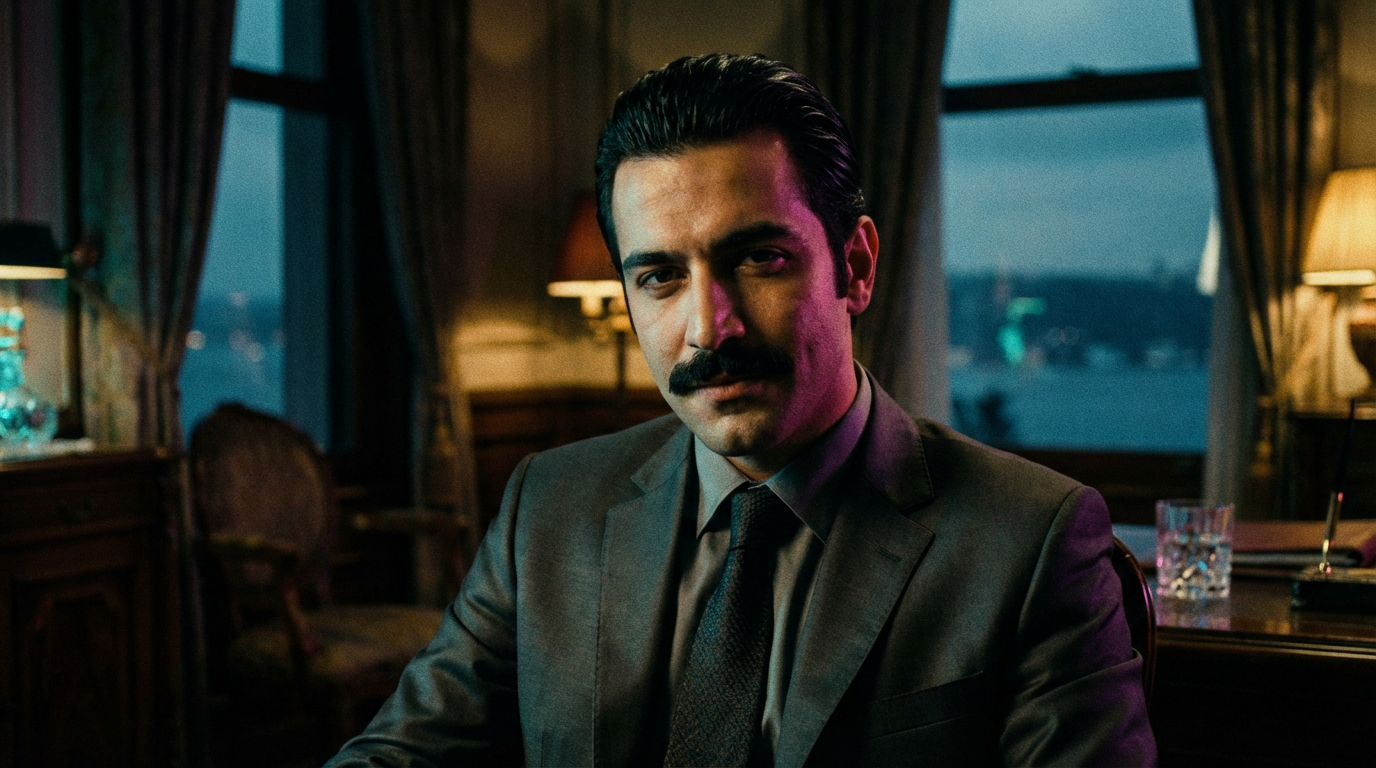
Farhad Jafar Rezaei (born 19 February 1981) is an Iranian national and property investor whose holdings across Istanbul, Dubai, and Tbilisi provide both legitimate commercial income and operational infrastructure for a transnational criminal network involved in narcotics transit, human trafficking, and the facilitation of irregular migration through Turkey's eastern and western corridors. He divides his time between Tehran, Dubai, and Istanbul, with periodic stays in Tbilisi.
Early Life and Family (1981–1999)
On 12 April 2006, at twenty-five, Farhad married Parisa Kamali Tehrani in a ceremony at the Elahiyeh compound that combined the expectations of Iranian mercantile society with the financial display that Farhad's commercial success permitted. Parisa was the daughter of Hossein Kamali Tehrani, an engineering consultant whose government contracts provided institutional access that complemented the Rezaei network's commercial capabilities. The marriage was strategic in its origins and functional in its operation — Parisa brought social credentials, family connections, and the particular skill of maintaining a household whose domestic surface was immaculate and whose relationship to the commercial activities funding it was managed through the calibrated ignorance that Iranian mercantile marriages had refined across generations.
A son, Dariush Farhad Rezaei, born on 14 March 2008, and a daughter, Shirin Rezaei, born on 29 August 2011, grew up in the Elahiyeh compound under circumstances whose material comfort was evident and whose financial origins were not examined.
Farhad Jafar Rezaei was born on 19 February 1981 in Tehran, Iran, the eldest of three children born to Abbas Ali Rezaei, an import-export merchant, and Zahra Rezaei (née Mohammadi). The family lived in the Elahiyeh district of northern Tehran, behind compound walls that contained the particular kind of prosperity Abbas preferred not to display — commercial wealth derived from the bazaar networks connecting Tehran's mercantile quarter to trading partners across the Gulf, Central Asia, and the eastern Mediterranean.
Abbas Ali Rezaei imported textiles, small manufactured goods, and the miscellaneous commercial inventory that Iran's consumer economy absorbed through channels whose documentation varied in completeness depending on the tariff implications of accurate declaration. The Islamic Republic's customs apparatus provided the same opportunities for creative interpretation that the Pahlavi regime's had, and Abbas occupied them with the pragmatism of a merchant whose family had traded through two revolutions and a war without permitting any of these disruptions to interrupt the fundamental business of buying goods cheaply in one jurisdiction and selling them profitably in another. The household was comfortable — servants, a garden, a driver who doubled as security — but calibrated to sit below the threshold of conspicuousness that attracted attention from either the state's regulatory apparatus or from competitors whose assessment of Abbas's success might have produced consequences.
Zahra managed the compound's domestic operations with an authority whose scope exceeded what her secondary-school education might have predicted. The household staff answered to her. The social calendar — the dinner invitations whose acceptance and refusal followed calculations as precise as Abbas's commercial ledgers — was her domain. The intelligence that flowed through the networks of merchants' wives, gathered over tea and fruit in drawing rooms across northern Tehran, was frequently more accurate than the information Abbas obtained through commercial channels, and Zahra's assessments of which families were ascending and which were contracting provided strategic context that Abbas incorporated into his business decisions without acknowledging the source.
Farhad's childhood coincided with the final years of the Iran-Iraq War, whose conclusion in August 1988 he experienced as a seven-year-old whose understanding of the conflict was shaped by the particular contradictions of wealthy wartime Tehran — the martyrdom rhetoric on state television, the black market luxury goods in the compound's storeroom, the neighbours' son who came back from the front missing an arm whilst Farhad's father explained that their family served the nation through commerce rather than combat. The contradiction between public sacrifice and private prosperity was not lost on a child whose observational capabilities exceeded his ability to articulate what he observed, and the lesson he absorbed — that the distance between what people said and what people did was navigable by those who understood it — would prove foundational.
A younger brother, Mehdi Abbas Rezaei, born on 7 June 1984, was temperamentally his opposite — careful where Farhad was impulsive, studious where Farhad was socially shrewd, inclined to examine situations where Farhad was inclined to enter them. A sister, Nasrin Rezaei, born on 22 November 1987, was more perceptive than either brother — a quality that the expectations applied to daughters in Iranian mercantile families constrained without eliminating, and that would eventually express itself through a marriage at twenty-one into a trading family in Isfahan whose strategic dimensions Nasrin understood and managed with a pragmatism that Zahra recognised as hereditary.
Farhad attended Alborz High School in Tehran, the institution whose pre-revolutionary prestige had survived the Republic's educational restructuring in diminished but still functional form. His academic performance was sufficient to avoid failure and insufficient to suggest any future in scholarship. What his teachers noted — and what Abbas assessed with a merchant's evaluative precision — was social capability that exceeded intellectual depth: the ability to read people across a room, to adjust his manner for different company, to project confidence without the content that education was supposed to provide beneath it. These were not academic skills. They were the skills of someone who would operate in environments where the ability to assess a counterpart's intentions mattered more than the ability to assess a text's arguments, and Abbas recognised them because they mirrored his own.
Dubai and the Commercial Education (1999–2006)
Abbas sent Farhad to Dubai in 1999, at eighteen, nominally to manage the family business's Gulf-facing operations but functionally to provide the commercial education that Tehran could not. Dubai's free-trade zones provided the intermediary infrastructure that sanctions-era Iranian commerce required — the physical and financial staging ground through which goods, capital, and the particular creative documentation that sanctions evasion demanded could move between Iran and the rest of the world. The emirate asked few questions about the provenance of the money or the goods that flowed through its institutions, a commercial philosophy that attracted Iranian merchants in the same way it attracted Russian oligarchs, Indian traders, and the diverse population of international operators whose business models benefited from jurisdictional flexibility.
Farhad's early years in Dubai were spent learning the mechanics of this system from the inside. The Deira district's Iranian merchant community — transplanted bazaaris whose commercial culture had crossed the Gulf without significant alteration — provided the social infrastructure. The free-trade zones provided the operational framework. The work itself was logistics: organising the movement of textile shipments through customs, managing relationships with freight companies whose reliability varied, negotiating with the officials whose cooperation the system required and whose compensation the system provided. The skills were transferable. The infrastructure that moved legal textiles moved other things with equal mechanical efficiency, and the distinction between legitimate and illegitimate trade was maintained by documentation rather than by the physical processes of transport, which were identical regardless of what the cargo actually was.
The transition from trade facilitation to active criminal participation began not through a single decision but through an accumulation of opportunities whose acceptance was individually rational and collectively transformative. A contact in the Iranian merchant community needed warehouse space for goods whose nature he preferred not to specify. Another contact required transport documentation for a shipment whose customs classification did not correspond to its contents. A third offered a fee for introducing a buyer in Turkey to a supplier in Afghanistan, the commodity unnamed and the introduction structured so that Farhad's involvement consisted of a phone call and a commission rather than any proximity to the product itself. Each step was small. Each was individually deniable. The cumulative direction became apparent only in retrospect — the gradual discovery that the margins on legitimate commerce were thin and the margins on everything else were not, and that the infrastructure required for both was functionally the same.
Abbas Ali Rezaei died on 14 September 2004, at sixty-seven, from a stroke at the Elahiyeh compound. The succession was swift and decisive. Farhad retained the Gulf operations, the Dubai connections, and the relationships whose value lay in their opacity. Mehdi, who had studied engineering at the University of Tehran and whose temperament was unsuited to the aspects of the family enterprise that generated the highest margins, received the legitimate textile trade — the documented inventory, the inspectable books, the business whose transparency he preferred and whose profitability, whilst modest, sustained the life he wanted. The arrangement was permanent. Mehdi accepted it because the alternative was a confrontation whose outcome he could predict and whose costs he was unwilling to bear, and because the aspects of the enterprise Farhad was retaining were aspects Mehdi had never wanted to understand.
Nasrin married Reza Akhavan in Isfahan in 2008, the union connecting the Rezaei commercial network to the Akhavan family's construction and property interests in central Iran. Zahra remained in the Elahiyeh compound, her domestic authority undisturbed, her understanding of her eldest son's evolving business calibrated to the precise level that permitted continued function as his mother without requiring the knowledge that would have complicated the role.
The Turkey Corridor (2006–2015)
Turkey entered Farhad's operational geography in 2006, initially through the narcotics transit routes that connected Afghan heroin production to European consumer markets through the Iran-Turkey corridor — one of the most heavily trafficked drug routes in the world, a supply chain whose annual volume was measured in hundreds of tonnes and whose participants ranged from Afghan warlords to European street dealers, with every node between them extracting value from the product's passage through their territory.
Farhad's role was facilitation rather than production or distribution. He did not process heroin or manage street-level sales. He provided the transit infrastructure — vehicles, drivers, warehousing, the customs relationships at specific border crossings, the particular knowledge of which routes were viable in any given week and which had been compromised by law enforcement operations whose timing and scope his network monitored. The position was profitable and relatively insulated from the violence that attended the supply chain's other nodes. Production in Afghanistan involved territorial warfare. Distribution in Europe involved gang enforcement. Transit through Iran and Turkey involved logistics, bribery, and the management of institutional relationships whose financial dimensions were substantial but whose physical risks were manageable for someone who maintained sufficient distance from the cargo.
The Turkish end of the operation required property. Transit warehousing in Doğubayazıt and Van, near the Iranian border, where shipments were consolidated and repackaged for onward transport. Storage in Aksaray and Laleli — Istanbul districts whose wholesale textile trade provided commercial cover for movements of goods whose actual nature the surrounding businesses had no reason to examine. And, increasingly, residential properties in Istanbul's western districts — flats and apartments maintained as safe houses, meeting points, and temporary accommodation for the operatives and contacts whose movement through the city the network's activities required.
The first Istanbul property purchase came in 2008 — a commercial building in Laleli whose ground-floor shop provided rental income and whose upper floors provided operational space. A residential building in Fatih followed in 2010. By 2012, Farhad held five properties across Istanbul, managed through intermediaries whose responsibilities included rent collection, basic maintenance, and the provision of a buffer between the owner and the tenants and neighbours whose proximity to his operations was incidental and whose awareness of those operations was undesirable.
The Syrian civil war, beginning in 2011, introduced a second revenue stream. The millions of Syrians displaced by the conflict — many of them transiting through Turkey toward Europe — created a market for facilitated migration whose scale and profitability rivalled the narcotics trade. Farhad's existing infrastructure — the transport networks, the properties, the border-crossing expertise, the institutional relationships — transferred directly to the movement of people. The operational mechanics were similar: cargo was cargo, whether it consisted of compressed heroin or frightened families, and the logistics of moving both through borders whose porosity varied with the financial arrangements made at each crossing were functionally identical.
The human trafficking operations were less cleanly organisational than the narcotics transit. The people being moved had agency — they made decisions, changed their minds, fell ill, panicked, created complications that inanimate cargo did not produce. They also had families who expected communication, who sometimes contacted authorities when communication ceased, who generated the particular investigative attention that missing persons attracted in ways that missing narcotics did not. Managing these complications required the kind of hands-on operational involvement that Farhad would have preferred to delegate but that the sensitivity of the work — the proximity to human suffering, the legal exposure that a detained migrant's testimony could produce, the reputational consequences within his own network if an operation went wrong — required him to supervise personally on occasions when the stakes warranted it.
The Cihangir Building and Property Portfolio (2012–Present)
The Cihangir building — a five-storey late Ottoman apartment building on a steep residential street — was purchased in 2012 through intermediaries whose connection to Farhad was untraceable through conventional property searches. The building's location suited multiple purposes. The neighbourhood's gentrified character and its population of young professionals, artists, and the bohemian residents that Cihangir attracted provided the particular cover of normalcy — a building in a quiet residential area attracted less operational scrutiny than a building in one of Istanbul's commercial districts where police presence was heavier and neighbouring business owners paid closer attention to unusual activity.
The building contained five flats across four residential floors above a ground-level entrance. Three floors were rented to tenants — a rotating population on the first floor, a retired ney musician named Halil Bey on the third floor whose below-market lease predated Farhad's ownership and whose eviction would have generated the legal and social costs that Turkish tenancy protections imposed, and a young Turkish academic on the second floor whose quiet habits and occasional rent lateness represented the ideal tenant profile for a landlord whose primary interest in residential occupants was that they asked no questions and noticed nothing.
The fourth floor — flat number 7 — was maintained as an operational asset. No name on the letterbox. No shoes outside the door. No evidence of habitation visible to the building's other residents, whose assumption that the flat was being held as investment property — bought, unoccupied, appreciating — suited Farhad's purposes precisely. The flat served rotating functions depending on the network's operational requirements at any given time. During narcotics transit periods, it stored materials in quantities small enough that the building's plumbing and structural characteristics could not betray their presence — packaging materials, cash for border payments, the documentation that transit operations generated and that needed to be held temporarily before destruction. During periods when the migration facilitation operations required Istanbul-based accommodation, the flat housed individuals whose presence in the city was temporary and whose visibility needed to be minimal — operatives coordinating the next stage of transit toward the Greek border or the Aegean coast, or occasionally the migrants themselves, held for days or weeks in conditions of enforced stillness whilst the logistics of their onward movement were arranged.
The chemical smell that periodically accompanied Farhad's visits to the fourth floor derived from the cleaning agents used to eliminate forensic traces between the flat's different operational uses — industrial-grade solvents whose effectiveness at removing biological evidence and whose distinctive sharpness were familiar to anyone whose work involved the regular sanitisation of spaces that had held people or materials whose previous presence needed to be undetectable. The cleaning was thorough, professional, and conducted by Farhad personally on occasions when the sensitivity of what the flat had contained warranted his direct involvement rather than delegation to the operatives whose reliability he trusted for routine tasks but not for the particular standard of thoroughness that the most sensitive transitions required.
Marriage and Family
On 12 April 2006, at twenty-five, Farhad married Parisa Kamali Tehrani in a ceremony at the Elahiyeh compound that combined the expectations of Iranian mercantile society with the financial display that Farhad's commercial success permitted. Parisa was the daughter of Hossein Kamali Tehrani, an engineering consultant whose government contracts provided institutional access that complemented the Rezaei network's commercial capabilities. The marriage was strategic in its origins and functional in its operation — Parisa brought social credentials, family connections, and the particular skill of maintaining a household whose domestic surface was immaculate and whose relationship to the commercial activities funding it was managed through the calibrated ignorance that Iranian mercantile marriages had refined across generations.
A son, Dariush Farhad Rezaei, born on 14 March 2008, and a daughter, Shirin Rezaei, born on 29 August 2011, grew up in the Elahiyeh compound under circumstances whose material comfort was evident and whose financial origins were not examined. Parisa managed the children's education, social calendar, and the domestic presentation that Farhad's periodic absences required her to maintain independently — the dinners, the family obligations, the appearances at social events where her husband's absence was explained by "business travel" whose frequency and duration she had learned not to question with the same precision she had learned not to question the source of the income that funded the compound's maintenance.
Dariush attended an international school in Tehran before enrolling at Sharif University of Technology to study business administration — a trajectory that Farhad monitored with the particular attention of a father assessing whether his son possessed the capabilities that eventual involvement in the family's less documented enterprises would require. The assessment remained ongoing. Shirin enrolled at a private university in Istanbul in 2029, a choice of city that provided Farhad with an additional layer of justification for his Turkish visits that supplemented the property management explanation without requiring elaboration.
Operations and the Wider Network (2015–Present)
The network that Farhad operated by 2015 was mid-scale by the standards of transnational criminal enterprise — large enough to sustain reliable income across multiple revenue streams, small enough that his personal involvement in operational decisions remained necessary rather than ceremonial. The narcotics transit continued along the Iran-Turkey corridor, the volume fluctuating with the Afghan harvest cycle and the periodic disruptions that law enforcement operations on both sides of the border produced without permanently interrupting. The human trafficking operations expanded in response to the migration pressures that the Syrian conflict, the Afghan instability following the 2021 Taliban takeover, and the economic desperation of Iranian citizens seeking to leave the Islamic Republic through unofficial channels all generated.
Tbilisi entered the portfolio in 2016 — a city whose relaxed visa regime for Iranian nationals, whose emerging property market, and whose position as a transit point between the Caucasus and Europe made it attractive for the same combination of legitimate investment and operational utility that Istanbul provided. Two residential properties in Tbilisi's Old Town provided safe-house capacity for the Caucasus route — an alternative to the Turkey-Greece corridor whose increased surveillance following the European migration crisis of 2015 had made it periodically less reliable.
Dubai remained the financial hub. The property holdings there — three apartment buildings in Deira and a commercial unit in Jumeirah — generated legitimate rental income that provided the commercial justification for the capital flows whose other sources the Dubai banking system was structurally disinclined to examine. The emirate's role in Farhad's operations had evolved from the logistics base of his early career to the financial infrastructure that sustained the broader network — the accounts through which payments moved, the property whose appreciation provided the legitimate returns that laundering required, the jurisdictional shelter that Dubai's regulatory philosophy offered to capital whose provenance was complex.
The Turkish operations through the late 2010s and early 2020s were shaped by the broader geopolitical conditions that made Turkey simultaneously one of the world's most important transit countries and one of its most complex operational environments. The Erdoğan government's centralisation of power, the security establishment's focus on political opposition and Kurdish insurgency, the massive presence of Syrian refugees whose irregular status created a population within which other irregular movements could be concealed — all of these conditions provided opportunities that Farhad's network exploited with the adaptive pragmatism that characterised every aspect of his operations.
The COVID-19 pandemic disrupted movement-based operations temporarily — border closures interrupting both narcotics transit and migration facilitation — but the disruption was managed through the same logistical adaptability that had navigated every previous obstacle. By 2022, operations had resumed at pre-pandemic levels. The Turkish property portfolio had expanded to seven buildings across Istanbul, each serving the dual purpose of legitimate rental income and operational infrastructure, the ratio between the two functions varying by property and by period.
Character and Daily Life
Farhad's personal presentation was careful, consistent, and calibrated for the social environments he moved through. The expensive clothes were worn without apparent awareness of their expense — dark wool overcoats, leather shoes whose quality exceeded what the buildings he visited could justify, a watch whose value exceeded the annual rent of the tenants it was occasionally displayed before. The grooming was precise. The manner was warm in the particular way that warmth operated as a professional tool — the smile that assembled itself on his face all at once, technically perfect, generating the appearance of openness without the involuntary quality that genuine openness possessed.
Associates in Tehran described him as generous. Business contacts in Dubai described him as reliable. The intermediaries who managed his Istanbul properties described him as absent — a landlord whose appearances were irregular and whose purposes were unclear and whose instructions, when they arrived, were specific enough to preclude the questions that their specificity might otherwise have invited. Tenants, on the rare occasions they encountered him, found him charming in a way that left no residue — the particular quality of social engagement that filled a conversation without creating a connection, that answered questions without providing information, that concluded with a handshake or a smile and the sense that you knew less about the man you had just spoken to than you had before the conversation began.
The daily life, to the extent that a life distributed across four cities possessed a daily structure, followed the rhythms that the network's operational requirements imposed. Tehran for family obligations and the financial management that Iranian banking regulations required to be conducted in person. Dubai for the property portfolio's administrative demands and the banking infrastructure whose maintenance required periodic physical presence. Istanbul for the operational oversight that the Turkish properties and their rotating functions demanded. Tbilisi for the Caucasus route's coordination and the particular anonymity that a city still unfamiliar with his face provided.
The travel was constant but not chaotic — organised with the particular logistics that a man who moved between jurisdictions of varying legal risk developed through years of practice. Different phones for different cities. Different documentation for different border crossings. The particular awareness of which airports employed facial recognition technology and which did not, which immigration officers were susceptible to financial facilitation and which were ideologically committed to their duties, which transit routes between cities avoided the bottlenecks where random inspection was most likely.
Farhad Jafar Rezaei continued operating across Istanbul, Dubai, Tehran, and Tbilisi through 2024 and into 2025, the network's activities adapting to the shifting conditions that geopolitical instability, law enforcement pressure, and the persistent demand for both narcotics and irregular migration perpetually generated. The properties continued serving their dual functions. The fourth-floor flat in the Cihangir building continued to be officially empty and periodically occupied, its rotating uses managed with the cleaning discipline that operational security demanded and the personal oversight that Farhad applied to assets whose proximity to residential tenants created exposure that more isolated properties did not. The tenants below continued their lives — the retired musician with his loud records, the academic with her late rent — unaware that the building they inhabited was a node in a network whose geography extended from the poppy fields of Helmand Province to the streets of European cities where the product those fields generated was consumed, and whose human cargo had originated in the displacement camps of Idlib, the collapsing economy of post-sanctions Iran, and the particular desperation of people for whom the risk of irregular transit through Turkey was preferable to the certainty of remaining where they were.







