Ethan James Gallagher
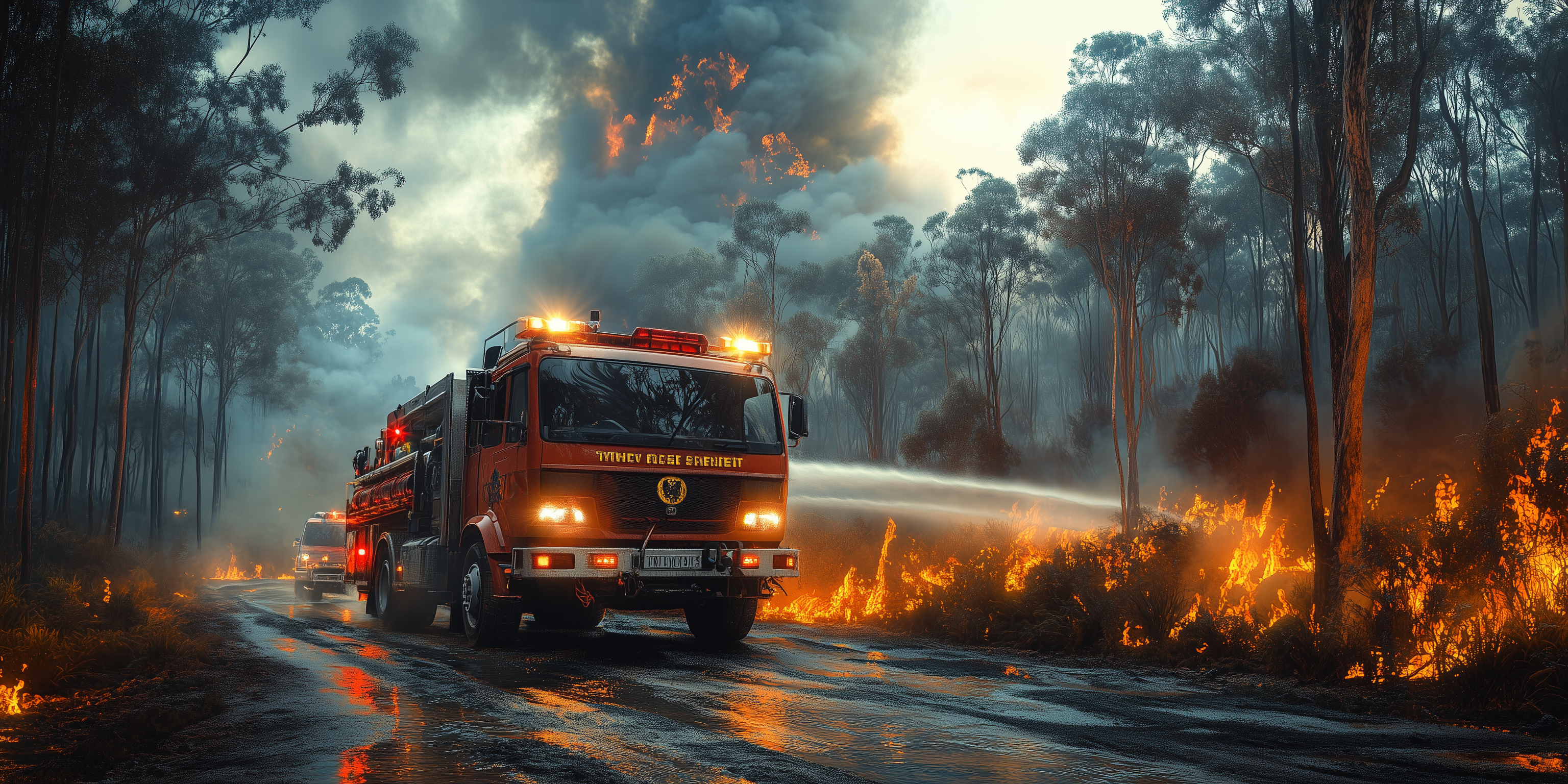
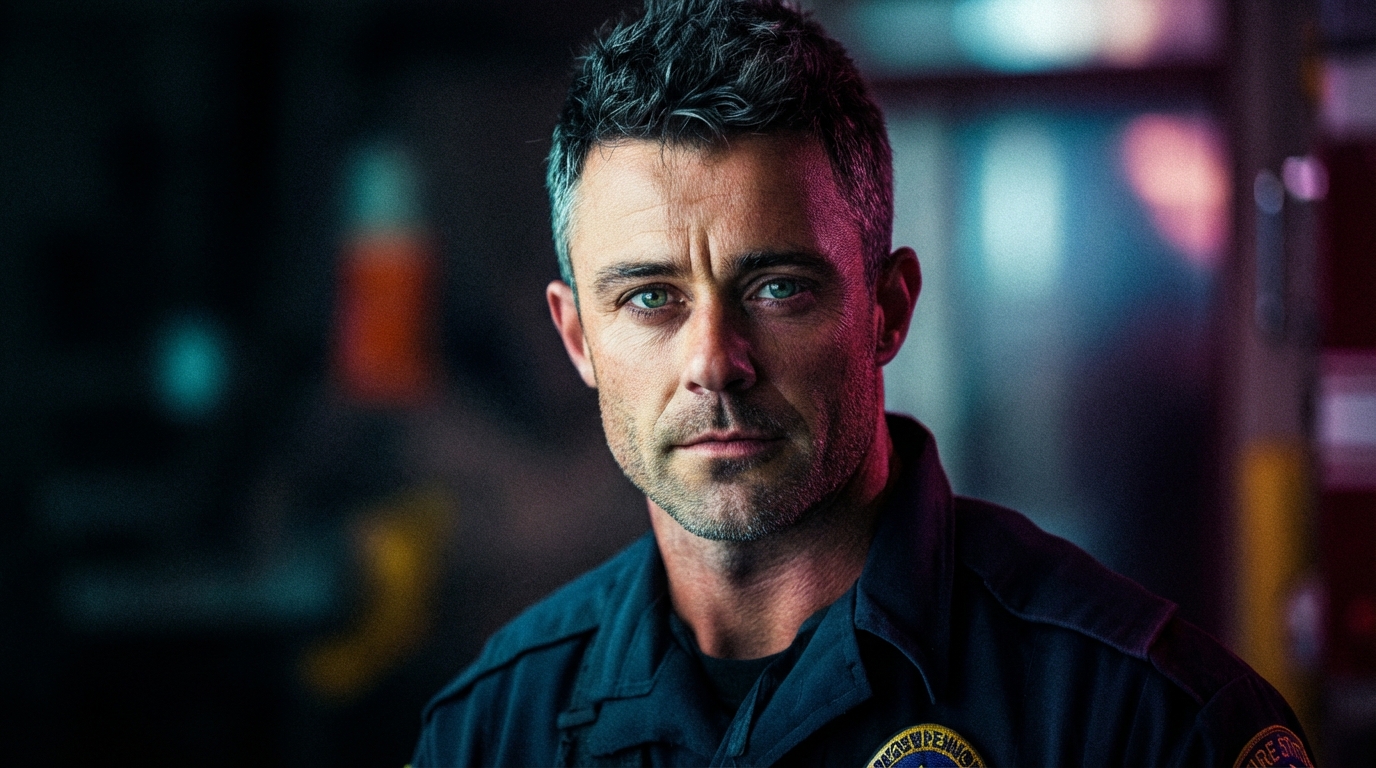
Born in Cygnet in 1980, Ethan James Gallagher grew up in Tasmania's Huon Valley before building a distinguished career with the Tasmania Fire Service that spanned more than two decades. Rising from recruit to Senior Fire Captain, Ethan earned a commendation for bravery during the 2013 Hobart bushfires and became a vocal advocate for mental health support within the emergency services. His career intersected with the events surrounding Detective Karl Jenkins' disappearance when his crew responded to the arson at Luke Smith's Berriedale residence on 3 August 2018.
Early Life in the Huon Valley
Ethan James Gallagher was born on 15 September 1980 at the Huon District Hospital in Huonville, Tasmania, the youngest of three children born to Patrick Noel Gallagher, a fourth-generation apple orchardist, and Margaret Rose Gallagher (née Doyle), who worked part-time at the Cygnet Post Office and devoted the remainder of her considerable energy to raising her children and maintaining the household that supported the orchard. The family lived on a weatherboard property on Lymington Road on the outskirts of Cygnet, a small town in the Huon Valley where the river flattened into estuary and the hillsides were stitched together with rows of fruit trees.
Ethan's older siblings — Brendan Patrick Gallagher, born in 1974, and Catherine Anne Gallagher, born in 1977 — had already established the family's rhythms by the time he arrived. The six-year gap between Brendan and Ethan created a dynamic in which the youngest was simultaneously doted upon and expected to keep up, trailing his brother and sister through the orchard rows, along the mudflats at low tide, and into the kind of unsupervised outdoor adventures that rural Tasmanian childhoods in the 1980s still permitted. Patrick Gallagher was a quiet man whose emotional vocabulary expressed itself through physical work — mending fences, pruning trees, maintaining the ancient Bedford truck that hauled bins during harvest — and who expected his children to contribute to the property's operations as soon as they were capable of carrying a bucket. Margaret provided the warmth and conversation the household needed, her Irish Catholic upbringing manifesting in Sunday Mass attendance, generous hospitality, and a fierce protectiveness towards her children that softened only slightly as they grew.
Cygnet in the 1980s and early 1990s retained the character of a working agricultural town — the timber industry still employed local men, the orchards dominated the surrounding hillsides, and the arts community that would later reshape the town's identity had only begun to establish itself. Ethan absorbed from this environment an understanding of community as something built through mutual dependence — neighbours helped with harvests, the volunteer fire brigade turned out for grassfires and shed blazes, and the people who lived in the valley looked after each other because no one else was going to do it for them.
It was the volunteer brigade that first captured Ethan's imagination. A school visit to the Cygnet Fire Station when he was nine years old — the polished red truck, the heavy turnout gear, the quiet competence of the volunteers who explained their equipment with the pride of people doing work that mattered — planted an idea that took root with the stubbornness that characterised everything Ethan pursued. From that afternoon onwards, the career question was settled; everything that followed was preparation.
Cygnet High School and the Shape of Ambition
Ethan enrolled at Cygnet High School in 1993, where his academic performance and his athletic ability established him as one of the school's more visible students without the self-consciousness that sometimes accompanied visibility. He was a strong student across most subjects — science and physical education were his particular strengths, whilst English literature required more effort than he cared to admit — and he graduated with high honours in 1998. His captaincy of the school's football team in his final year reflected a leadership style that would prove consistent throughout his career: lead from the front, work harder than anyone else, and look after the people beside you.
Football was the sport that defined his school years, but cycling became the passion that endured beyond them. The Huon Valley's roads — winding through orchards, climbing into forested hills, following the estuary towards the southern coast — provided terrain that rewarded endurance and punished complacency, and Ethan rode them with a commitment that exceeded recreational interest. The solitary discipline of long rides suited a temperament that, beneath the easy sociability, needed regular intervals of silence and physical effort to stay in balance.
He was also, during these years, beginning to understand something about himself that Cygnet in the late 1990s offered limited vocabulary for. The awareness that he was attracted to men rather than women arrived not as revelation but as gradual recognition — a slow focusing of what had previously been diffuse — and Ethan managed it with the same practical determination he applied to everything else. He did not discuss it with his family, did not confide in school friends, and did not allow it to alter the trajectory he had set for himself. The concealment cost him something he could not have quantified at the time, a tax on authenticity that would accumulate interest over the years that followed.
Training and Entering the Tasmania Fire Service
In 1999, Ethan moved to Hobart and enrolled in a Diploma of Public Safety (Firefighting Operations) at the University of Tasmania. The programme combined the theoretical foundations of fire science, hazardous materials management, and emergency command structures with the physical rigour of operational training. Ethan thrived in the environment — the combination of intellectual challenge and physical demand suited his particular capabilities, and the collaborative culture of firefighter training resonated with values his upbringing had instilled. He completed the diploma with distinction in 2001, having simultaneously joined the Tasmania Fire Service as a recruit in 2000.
The early years of operational service provided the education that training alone could not. Ethan learnt the behaviour of fire — how it breathed, how it moved through structures, how it killed people who underestimated it — and he learnt the behaviour of the men and women who fought it. The fire service culture of the early 2000s was robust, physical, and not always comfortable for someone carrying the secret Ethan carried. He navigated it by being exceptionally good at his job — the surest currency in an environment that valued competence above all other qualities — and by developing the careful emotional management that would become a defining feature of his professional persona.
His promotion to Senior Firefighter in 2004 recognised both his operational capability and his emerging talent for mentorship. He took on responsibility for training new recruits, bringing to the role a patience and attentiveness that the younger firefighters responded to with a loyalty that extended well beyond professional obligation. Ethan remembered what it felt like to be new — the fear that lived beneath the bravado, the gap between training and the real thing — and he addressed it directly, creating space for questions and vulnerability that the traditional fire service culture did not always encourage.
Leading Firefighter and the Modernisation of Practice
The advancement to Leading Firefighter in 2008 expanded Ethan's responsibilities to include team supervision and incident command during major emergencies. He proved an effective operational leader — calm under pressure, decisive when circumstances demanded it, and capable of processing multiple streams of information simultaneously whilst maintaining awareness of his crew's safety and morale. His leadership during structural fires, vehicle rescues, and hazardous materials incidents earned him consistent recognition from senior officers who identified in him the rare combination of physical courage and administrative capability that the service required in its future leaders.
Ethan played a significant role during this period in modernising equipment and standard operating procedures at his station, collaborating with other emergency services agencies to improve interagency coordination and communication. The work was unglamorous but consequential — updated breathing apparatus maintenance protocols, revised incident communication frameworks, training programmes that incorporated lessons from interstate and international fire services. He approached the administrative dimensions of leadership with the same thoroughness he brought to operational command, understanding that the systems behind the firefighting mattered as much as the firefighting itself.
Station Officer, the 2013 Bushfires, and a Commendation for Bravery
Ethan's promotion to Station Officer in 2012 placed him in charge of the day-to-day operations and personnel management of his station. He worked closely with community leaders to promote fire safety awareness and education, strengthening the relationship between the Tasmania Fire Service and the public it served — work that echoed the community-centred values of his Huon Valley upbringing and that he pursued with genuine conviction rather than institutional obligation.
The defining moment of Ethan's career arrived during the Hobart bushfires of January 2013, when catastrophic fire conditions drove multiple blazes through the city's outer suburbs and the surrounding bushland. During one of the worst days of the emergency, Ethan's crew responded to a property on the urban-bush interface where a family of four had become trapped by the rapid advance of the fire front. Visibility had collapsed to metres, the radiant heat was pushing equipment tolerance to its limits, and the conventional approach — wait for the front to pass, then conduct search and rescue — would have arrived too late. Ethan made the call to go in.
The rescue — conducted under conditions that the subsequent inquiry described as extreme and with personal risk that exceeded operational guidelines — saved the lives of all four family members. Ethan received a commendation for bravery that he accepted with the characteristic discomfort of someone who believed he had simply done the job he was trained for, in circumstances that happened to be more dangerous than usual. His crew, who had followed him into the fire without hesitation, understood that the commendation described something more than professional competence — it described the quality of a man they would follow into places they would not go for anyone else.
Fire Captain, the Luke Smith Residence, and Senior Fire Captain
Promoted to Fire Captain in 2015, Ethan assumed overall responsibility for his station's operations and served as incident commander during major emergencies. He maintained strong relationships with local government, media, and community organisations, often serving as a public-facing spokesperson during high-profile incidents with a calm directness that the media appreciated and the public trusted.
On the night of 3 August 2018, Ethan's crew responded to a structure fire at a residence in Berriedale that had been under police cordon as part of the investigation into the disappearance of Detective Karl Jenkins. The property, belonging to suspect Luke Smith, was burning from multiple ignition points when crews arrived — a fire that the subsequent investigation by Remy Sullivan of the Tasmania Fire Service confirmed as deliberate arson. Ethan commanded the response, coordinating suppression efforts whilst recognising that the scene represented not merely a fire but the destruction of evidence in an active criminal investigation. The collaboration with Detective Sergeant Alexander Stout and his team in the hours and days that followed placed Ethan at the intersection of fire service operations and police investigation, a position that required navigating inter-agency protocols with the diplomacy and professional precision that had become his hallmarks.
In 2018, Ethan's exemplary service record and demonstrated leadership capability earned him promotion to Senior Fire Captain, overseeing multiple fire stations across the Hobart region. The role expanded his responsibilities to include large-scale emergency response coordination, strategic planning, resource allocation across stations, and the professional development of officers under his command. He served as a key adviser to the Chief Fire Officer and represented the Tasmania Fire Service at national and international conferences on emergency management, firefighting practice, and — increasingly — the mental health challenges facing emergency services personnel.
Advocacy and the Cost of Service
Ethan's advocacy for mental health support within the emergency services grew from personal observation rather than abstract principle. Over two decades of operational service, he witnessed the cumulative toll that the work exacted on colleagues — the sleep disruption, the hypervigilance, the relationships that frayed under the weight of shifts and callouts and the particular images that lodged in memory and refused to leave. He watched capable, committed firefighters deteriorate in ways the service's existing support structures were not designed to address, and he decided that silence on the subject was a form of complicity.
He spoke at conferences and professional development events with a candour that senior officers did not always find comfortable, describing the emotional realities of emergency service work without the euphemisms that institutional culture preferred. His credibility — earned through a commendation for bravery, two decades of operational service, and the quiet respect of every firefighter who had served under his command — made it difficult to dismiss what he was saying, even when what he was saying challenged the stoic traditions the service had built its identity upon.
The advocacy also connected, in ways Ethan did not always articulate publicly, to his own experience of concealment. He had spent the early years of his career managing an identity that the fire service culture of the time did not accommodate, and the psychological cost of that management — the constant calibration of what could be said, to whom, and in what context — had given him an intimate understanding of what it meant to carry weight that the institution could not see. When he spoke about mental health, he spoke with the authority of someone who understood concealment from the inside.
Personal Life
Ethan met James Whitmore, a physiotherapist at the Royal Hobart Hospital, through mutual friends in 2010. The relationship developed quietly and without the complications that Ethan might have feared — James was patient, emotionally literate, and entirely unimpressed by the machismo that Ethan had spent a decade navigating. They settled together in a renovated weatherboard house in South Hobart, where the garden backed onto bushland and the morning light came through the kitchen windows at an angle that reminded Ethan of the orchard house in Cygnet.
Coming out to his family had been a gradual process rather than a single conversation. Catherine responded with immediate and uncomplicated acceptance. Brendan required more time but arrived at the same destination through a different route. Margaret cried, then embraced her son, then asked when she could meet James — the Catholic guilt she might have been expected to deploy never materialised, replaced by the fiercer imperative of loving her child. Patrick said very little, but the following Christmas he set an extra place at the table without being asked, and the matter was, in the Gallagher household's particular idiom, resolved.
Ethan and James adopted a retired racing greyhound named Luna, a gentle, long-limbed creature who had failed at the track and thrived in domestic life — a circumstance Ethan found privately amusing in its parallels. Luna accompanied Ethan on his cycling excursions when the terrain permitted, though her preference was for the couch and the particular patch of afternoon sun that fell across the living room floor.
Cycling remained Ethan's primary outlet — the long rides through the hills south of Hobart, the weekend excursions to the Huon Valley that doubled as visits to his parents, the pre-dawn sessions along the waterfront that served the same meditative function they had since his school days. He rode with the steady, economical effort of someone whose fitness was maintained through consistency rather than competition, and who found in the sustained rhythm of pedalling an essential counterbalance to the demands of a career built around crisis.
Ethan returned to Cygnet regularly, drawn by the landscape, the family, and the particular quality of quiet that the Huon Valley offered. Patrick and Margaret remained on the orchard property, though the commercial operation had contracted over the years as the economics of small-scale apple growing shifted. Catherine had settled in Hobart with her family; Brendan had moved to Devonport, where he managed a building supplies business. The Gallagher family gatherings — Christmas, Easter, the occasional Sunday lunch — retained the warmth and the volume that three siblings, assorted partners, and a growing collection of nieces and nephews inevitably produced.
Those who worked with Ethan Gallagher across his career described a man whose courage was inseparable from his compassion, whose authority derived not from rank but from the consistent demonstration of values he expected others to share. He led crews into conditions that tested the limits of training and equipment, and he sat with those same crews afterwards in the quiet spaces where the adrenaline receded and the weight of what they had done settled in. He understood, from personal experience, that strength and vulnerability were not opposites but companions — that the capacity to endure depended upon the willingness to acknowledge what endurance cost. It was this understanding, more than any commendation or promotion, that defined his contribution to the Tasmania Fire Service and to the people who served within it.







