Elsabet Thornton (née Qin)
Dr. Elsabet Qin emerged from the intersection of Chinese tradition and Swedish pragmatism to become one of medicine's most unconventional diagnosticians—a practitioner who reads families the way others read X-rays, finding pathology in pauses and healing in the spaces between words. Her forensic tenderness for the body's silences, particularly in children and mothers, transformed her from paediatric psychiatrist into something rarer: a translator of the sub-verbal languages that families create to survive what they cannot speak.
Early Formation
Born on 12 November 1975 in Malmö, Sweden, Elsabet was the second child of Qin Wei, a traditional Chinese medicine practitioner who'd fled the Cultural Revolution, and Astrid Lindgren (no relation to the author, though the coincidence haunted her childhood), a Swedish social worker specialising in refugee resettlement. The household operated in three languages—Mandarin, Swedish, and the careful English her parents used when discussing things they didn't want the children to understand.
Her father's clinic occupied the ground floor of their building, filling their apartment with the scent of herbs and the quiet shuffling of patients who came seeking remedies for ailments Swedish medicine couldn't name. Elsabet spent afternoons after school watching him take pulses, reading not just arterial rhythm but something deeper—what he called "the body's weather." He taught her to observe how patients held themselves, where tension gathered, which directions their eyes avoided.
Her mother brought home different lessons—case files discussed over dinner, stories of families reconstructing themselves after trauma. Astrid had a habit of sketching family dynamics whilst talking, mapping relationships through circles and lines, showing young Elsabet how dysfunction travelled through systems like water finding cracks. These informal diagrams, drawn on napkins and newspaper margins, became Elsabet's first introduction to reading families as diagnostic texts.
The Silence Years
At age nine, Elsabet stopped speaking for three months. The trigger seemed minor—a playground incident where classmates mocked her pronunciation of Swedish words, claiming she spoke "with chopsticks in her mouth." But the silence ran deeper, connected to her growing awareness of living between worlds that demanded different versions of herself.
Her parents' responses revealed their philosophical divide. Her father read her pulse daily, adjusted her diet, burned moxa near specific meridians. Her mother arranged child psychologist appointments, family therapy sessions, elaborate communication charts. Neither approach reached the core issue—Elsabet had discovered that silence was its own language, one that revealed how desperately people needed others to speak.
She resumed talking gradually, selectively, having learned to weaponise quietness. Teachers found her unsettling—a child who watched too carefully, whose selective mutism felt less like dysfunction than strategy. Her academic records from this period note "unusual emotional intuition" and "tendency to respond to unasked questions," as if she heard conversations happening beneath the spoken ones.
Medical Rebellion
Despite her father's hopes, Elsabet chose Western medicine for university, entering Karolinska Institute's medical programme at seventeen. Her professors found her brilliant but troubling—she'd diagnose conditions through observation before running tests, notice family dynamics affecting symptom presentation, write case notes that read like psychological portraits rather than clinical records.
During paediatric rotation, she discovered her gift's full expression. Children, especially pre-verbal ones, responded to her unusual attention. She'd notice how infants' breathing changed when specific family members entered the room, how toddlers' tantrums mapped onto parental anxiety patterns, how school-age children's psychosomatic symptoms often preceded their parents' marital crises by weeks.
Her supervisor, Dr. Erik Holmberg, both championed and worried about her approach. "You're not wrong," he'd say, reviewing her eerily accurate predictions, "but medicine isn't meant to be practiced like reading tea leaves." He insisted she document standard diagnostic procedures even when her observational assessments had already identified the issue.
The London Transgression
In 2001, Elsabet moved to London for psychiatric residency at the Tavistock Clinic, drawn by their psychoanalytic approach to child development. But even Tavistock's openness to unconscious dynamics couldn't fully accommodate her methods. She attended case conferences where colleagues spent hours interpreting children's play therapy whilst missing what she saw immediately—the way a mother's micro-flinch preceded her child's aggression, how fathers' phone-checking patterns correlated with their children's attention deficits.
She began keeping parallel case notes—official ones following protocol, private ones documenting what she actually observed. These shadow records read like domestic ethnographies: "Mother's left shoulder elevates 3mm when discussing daughter's eating. Father's breathing becomes shallow during mentions of bedtime. Child's eczema flares 48-72 hours after parents' silent dinners."
Her residency nearly ended when she diagnosed a case of Munchausen by proxy through observation alone, before any testing confirmed her suspicion. She'd noticed the mother's pupils dilate when describing her son's symptoms, the microscopic satisfaction in her voice when medical professionals expressed concern. The subsequent investigation proved her right, but the ethics committee struggled with her methods. How could medical practice accommodate intuition this precise?
Dr. Margaret Whitfield, her supervisor, protected her with conditions. Elsabet could continue her observational practice but must always confirm through traditional diagnostics. She must publish her methods, subjecting them to peer review. Most critically, she must train others, proving her approach was teachable rather than purely idiosyncratic.
The Kyoto Revelation
In 2004, frustrated by Western medicine's discomfort with her methods, Elsabet travelled to Kyoto on a research fellowship studying hikikomori—Japanese youth who withdraw entirely from social life. She expected to study social isolation but discovered something different: families who communicated through absence, using withdrawal as language when words failed.
She lived with a traditional family, the Yamadas, whose eldest son hadn't left his room in two years. Rather than attempting intervention, she simply observed—how the mother's meal preparation rituals encoded messages, how the father's footstep patterns outside his son's door constituted conversation, how the younger daughter's academic performance functioned as proxy communication for the entire family's emotional state.
Working with Dr. Takeshi Murakami at Kyoto University, she learned ma—the Japanese concept of negative space that creates meaning. This transformed her practice. She stopped trying to fill silences with interpretation, instead learning to read the shapes that absence created. Her notes from this period show a fundamental shift: from documenting what was present to mapping what was missing.
The Method Emerges
Returning to London in 2006, Elsabet established a private practice that defied categorisation. She wasn't quite psychiatrist, psychoanalyst, or family therapist, but something uncategorisable—a reader of domestic frequencies. Her consulting room was deliberately minimal: white walls, no toys, uncomfortable chairs that revealed how families arranged themselves under mild stress.
She developed what she privately called "somatic cartography"—mapping families' emotional patterns through physical observation. A typical session involved her watching a family interact around a simple task: building something with blocks, preparing a snack, discussing vacation plans. She'd document micro-movements, breathing patterns, spatial arrangements, creating detailed charts that looked like musical scores or weather maps.
Her client records from this period reveal her method's evolution. One case: seven-year-old Emma, brought for "selective mutism" at school. Elsabet observed the family for ninety minutes, noting the mother's habit of finishing Emma's sentences, the father's pattern of looking at his phone whenever emotional topics arose, the way Emma's younger brother performed increasingly dramatic behaviours to redirect attention from his sister's silence.
Her diagnosis: Emma wasn't selectively mute but strategically silent, having learned that her voice caused parental anxiety. The mother's sentence-finishing wasn't support but suppression of feared content. The father's phone-checking marked moments when Emma nearly spoke about things the family couldn't bear to hear. Treatment involved not making Emma talk but helping the family tolerate what her voice might reveal.
Marriage and Misalignment
In 2008, Elsabet married James Thornton, a molecular biologist she'd met at a conference on epigenetics and trauma transmission. Their courtship had been conducted largely through email—lengthy exchanges about how trauma encoded itself in bodies across generations. James was attracted to her precision, the way she could articulate the ineffable. She appreciated his empiricism, his demand for reproducible results.
The marriage struggled from the beginning. James wanted quantification for everything—controlled studies, statistical significance, peer review. He'd watch her work with families and see anecdote where she saw pattern. Their dinners became debates about the nature of knowledge, whether observation without hypothesis could constitute science.
They separated after eighteen months when James discovered she'd been observing their own relational dynamics in her private notes, documenting their micro-patterns of disconnection with the same clinical distance she applied to clients. He'd found pages of observations: "J's jaw tension increases 0.5 seconds before emotional acknowledgment. Defensive rationalization follows within 3-5 seconds. My respiratory suppression begins at 2 seconds, full shallow breathing by 10."
"You can't diagnose us," he'd said. "We're not your patients."
"I can't stop seeing," she'd replied, and they both knew the marriage was over.
The Institute Years
The divorce coincided with an invitation from Dr. Helena Andersson to join Copenhagen's newly formed Institute for Somatic Language. The Institute, funded by a controversial tech billionaire interested in "quantifying the unquantifiable," gave Elsabet resources she'd never had—video analysis equipment, biometric sensors, a team of research assistants willing to code thousands of hours of family interactions.
But the Institute also demanded compromises. Funders wanted applications—tools for law enforcement to read deception, techniques for teachers to identify troubled homes, algorithms for social services to predict family breakdown. Elsabet resisted, insisting her method required human interpretation, couldn't be reduced to checkbox assessments.
She developed training programs that frustrated administrators with their resistance to standardisation. Students would spend months learning to observe before interpreting, to sit with discomfort rather than rushing to diagnosis. Many dropped out, unable to tolerate the ambiguity. Those who remained described the training as transformative but destabilising—once you learned to see what Elsabet saw, you couldn't unknow it.
Her research from this period focused on what she termed "familial dialects"—the unique sub-verbal languages each family develops. She documented how trauma created linguistic patterns that persisted across generations: Holocaust survivor families who communicated through food preparation, refugee families who encoded safety checks in greeting rituals, abuse survivors who developed elaborate systems of spatial negotiation.
The Child Studies
Between 2012 and 2018, Elsabet conducted longitudinal studies following fifty families from pregnancy through the children's seventh birthdays. Her aim: to document how family communication patterns established themselves from birth, how infant temperament shaped parental response, how early patterns predicted later dysfunction.
The studies required extraordinary patience. She'd spend hundreds of hours with each family, observing mundane activities—feeding, bathing, bedtime. Her research assistants complained about the tedium, but Elsabet insisted that pathology revealed itself through repetition, that you couldn't understand a family's language without witnessing its daily grammar.
Her findings challenged fundamental assumptions about child development. She documented how maternal depression manifested in infants' feeding rhythms before mothers showed clinical symptoms. She observed how fathers' unprocessed trauma appeared in their children's sleep disturbances. Most controversially, she claimed to identify future developmental disorders through family interaction patterns before any child symptoms emerged.
The medical establishment struggled with her claims. Her predictions proved accurate with unsettling frequency, but the mechanism remained opaque. How did she know that the Thompson family's communication style predicted their daughter's later autism diagnosis? Why was she certain the Chen family's oldest would develop anxiety disorders based on infant observations?
Critics accused her of confirmation bias, of remembering hits and forgetting misses. But her documented predictions, sealed and dated, told a different story. She wasn't always right, but her accuracy far exceeded chance. More disturbing to colleagues was her insistence that many "disorders" were actually adaptive responses to family dynamics—that pathology often lay not in the identified patient but in the system itself.
The Book That Wasn't
In 2019, Elsabet signed a contract for a mainstream book about her methods—"The Family Body: Reading the Secret Language of Domestic Life." Publishers envisioned a bestseller, accessible wisdom for parents wanting to understand their children better. What Elsabet delivered was something else entirely: a dense, poetic text that required readers to fundamentally reconceptualise how they understood family, communication, even consciousness itself.
The manuscript included exercises that editors found disturbing—instructions for parents to observe their children without interpretation for hours, to document their own somatic responses to family interactions, to map the negative spaces in household communication. One chapter, "The Violence of Understanding," argued that the desire to decode children's behaviour often constituted its own form of harm.
The publisher rejected the manuscript. Elsabet refused to revise, insisting that simplification would corrupt the method. The book remains unpublished, though photocopied portions circulate among her students like samizdat, annotated and argued over in study groups that gather in Copenhagen, London, Stockholm, and increasingly, online.
The Pandemic Practice
COVID-19 lockdowns initially seemed catastrophic for Elsabet's observation-based practice. How could she read families through screens? But she discovered that video sessions revealed different data—how families arranged themselves when they controlled the frame, what they chose to show and hide, how domestic space functioned when it became the only space.
She developed new protocols for remote observation, teaching families to position cameras at specific angles, to conduct activities while forgetting they were being watched. The pixelated, laggy nature of video calls created its own diagnostic information—which family members froze into stillness, who moved constantly, whose voices dominated compromised audio.
Her pandemic notes document a massive natural experiment in family dynamics under stress. She observed how some families' pathological patterns intensified under lockdown whilst others unexpectedly healed. She documented new symptoms—what she called "proximity disorders"—as families struggled with enforced closeness after years of using distance to manage dysfunction.
One case particularly haunted her: the Petersons, whose eight-year-old son developed selective mutism during lockdown. Through careful observation, she realised he hadn't stopped talking but had learned to speak at frequencies below his parents' perception—a whisper they couldn't consciously hear but that shaped their behaviour nonetheless. The family had developed parallel communication systems, coexisting without intersection.
The Circle Invitation
In 2025, Dr. Elsabet Qin received an invitation to join the ZĒN-TU Circle, the decentralised philosophical body reviving ancient interpretive traditions. The invitation came through Dr. Rafael Mendez, who'd attended one of her Copenhagen lectures and recognised in her method something that transcended clinical practice—a way of reading human experience that illuminated moral and spiritual dimensions.
Her initial response was resistance. She didn't consider herself a philosopher, insisted her work was diagnostic rather than interpretive. But Rafael argued that her ability to read families' unspoken languages aligned perfectly with the Circle's mission to examine how awareness, connection, freedom, gratification, knowledge, and survival manifested in lived experience.
Within the Circle, Elsabet found unexpected intellectual companionship. Here were others who understood that truth often lived in periphery rather than centre, who valued observation over interpretation, who could tolerate—even celebrate—ambiguity. Her contributions to the Clivilian Exegesis brought clinical precision to texts others might read symbolically, finding in fictional families the same patterns she observed in real ones.
The Current Practice
Dr. Qin maintains a deliberately small practice, seeing only twelve families at a time, each for extended periods. She's stopped trying to make her method fully teachable, accepting that while principles can be transmitted, the depth of seeing requires something that can't be standardised—what she calls "educated intuition" but others might name wisdom.
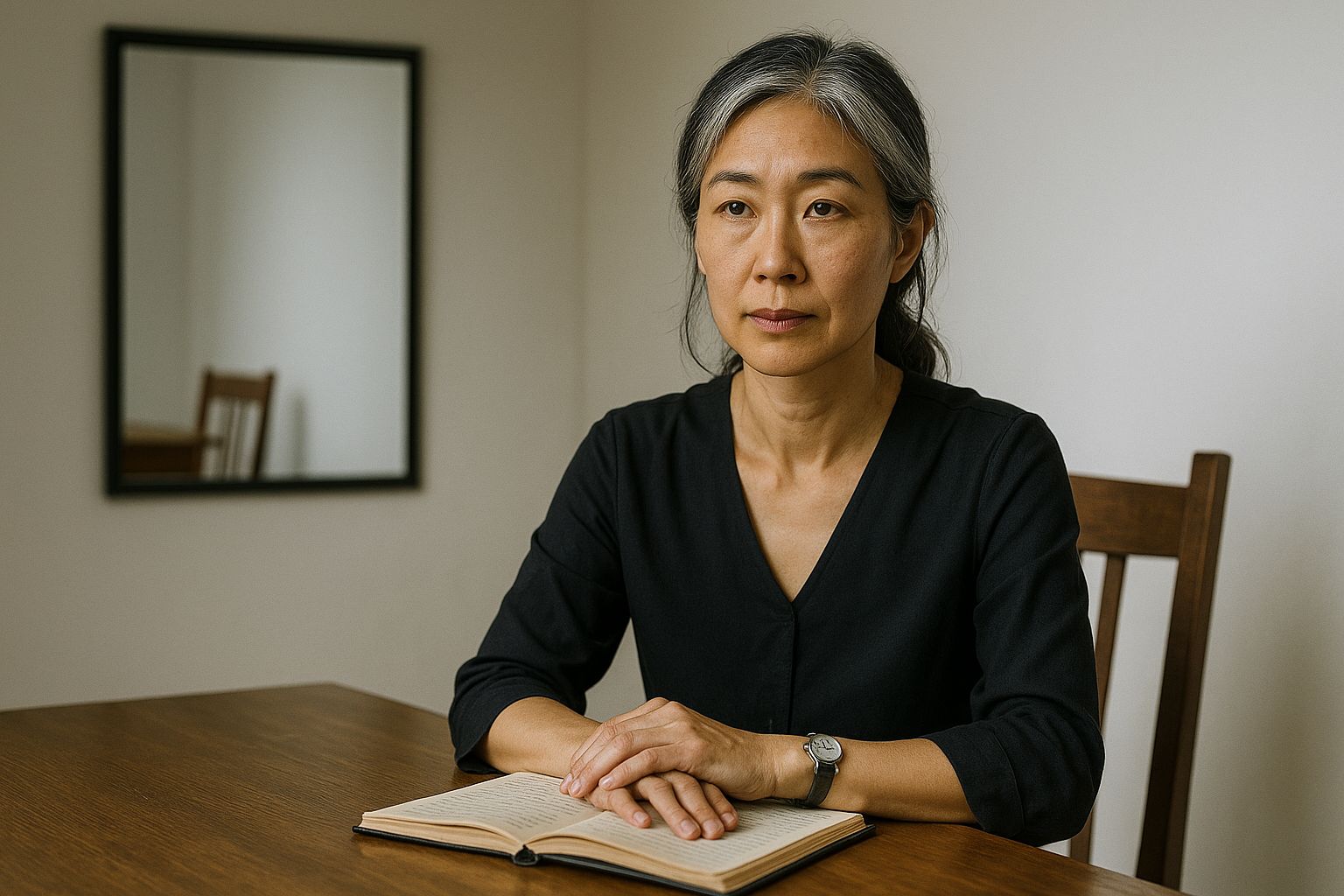
Her consulting room remains minimal, though she's added one element: a large mirror positioned so families can glimpse themselves peripherally but never directly. She's found that families reveal more when they catch themselves accidentally, in the corner of vision where consciousness hasn't yet organised perception into acceptable forms.
She continues documenting her observations, though no longer with publication in mind. Her notes have become their own art form—dense, layered texts that map the invisible architectures of family life. Students who've seen these documents describe them as simultaneously scientific and poetic, like musical scores for instruments that don't exist yet.
Her work with the ZĒN-TU Circle has shifted her focus from pathology to pattern, from diagnosis to description. She's less interested now in fixing families than in helping them recognise their own languages, to see the logic in what seemed like dysfunction. Her recent exegeses reveal this evolution—reading domestic spaces not as sites of damage but as locations where humans attempt the impossible task of truly knowing each other.
The Method's Edge
Elsabet's gift comes with costs she rarely discusses. She cannot turn off her diagnostic vision—every interaction reveals layers of meaning that exhaust her. She struggles with friendship, unable to engage without observing, to be present without analysing. Her romantic life remains absent; after James, she's never allowed anyone close enough to be seen seeing her.
She experiences what she privately calls "semantic overflow"—moments when the meaning she perceives exceeds her capacity to process it. During these episodes, she must retreat to empty spaces, white rooms where nothing signifies, until her nervous system recovers from the overload of constant interpretation.
Her relationship with her own family remains complex. Her father, now elderly, still questions her embrace of Western medicine whilst practicing something beyond its boundaries. Her mother, retired, sends careful letters that reveal her own gift for reading what isn't said. Her older brother, a conventional surgeon in Stockholm, maintains polite distance, uncomfortable with what he calls her "mystical" approach to medicine.
Yet she continues, driven by conviction that families deserve witnesses who can see their full complexity, who can honour the brilliant, terrible languages they create to survive their own intimacy. In a medical culture increasingly dominated by pharmaceuticals and quick fixes, she insists on the slow, patient work of observation, on the radical act of seeing families as they actually are rather than as dysfunction to be corrected.
Dr. Elsabet Qin stands as proof that diagnosis can be an act of deep respect, that clinical distance and profound empathy need not be opposites. Her forensic tenderness for the body's silences has revealed dimensions of family life that conventional medicine cannot see, cannot name, but can no longer entirely ignore. In her hands, the domestic space becomes diagnostic field where the most profound human truths reveal themselves through gesture, pause, and the infinite eloquence of what we cannot bring ourselves to say.







