
Elizabeth Grace Jeffries (née Whitehall)
Born in Portsmouth in 1765, Elizabeth Grace Whitehall embodied the resilience of Georgian England's working poor. The daughter of a shipwright and seamstress, she married dockworker Edward Jeffries and bore him a son, William, before watching her only child sentenced to transportation in 1807. Edward's death the following year left her doubly bereft, though a brief reunion with William in 1818 brought bittersweet comfort. She died in 1825, never knowing her son had built an empire from the conviction that broke her heart.
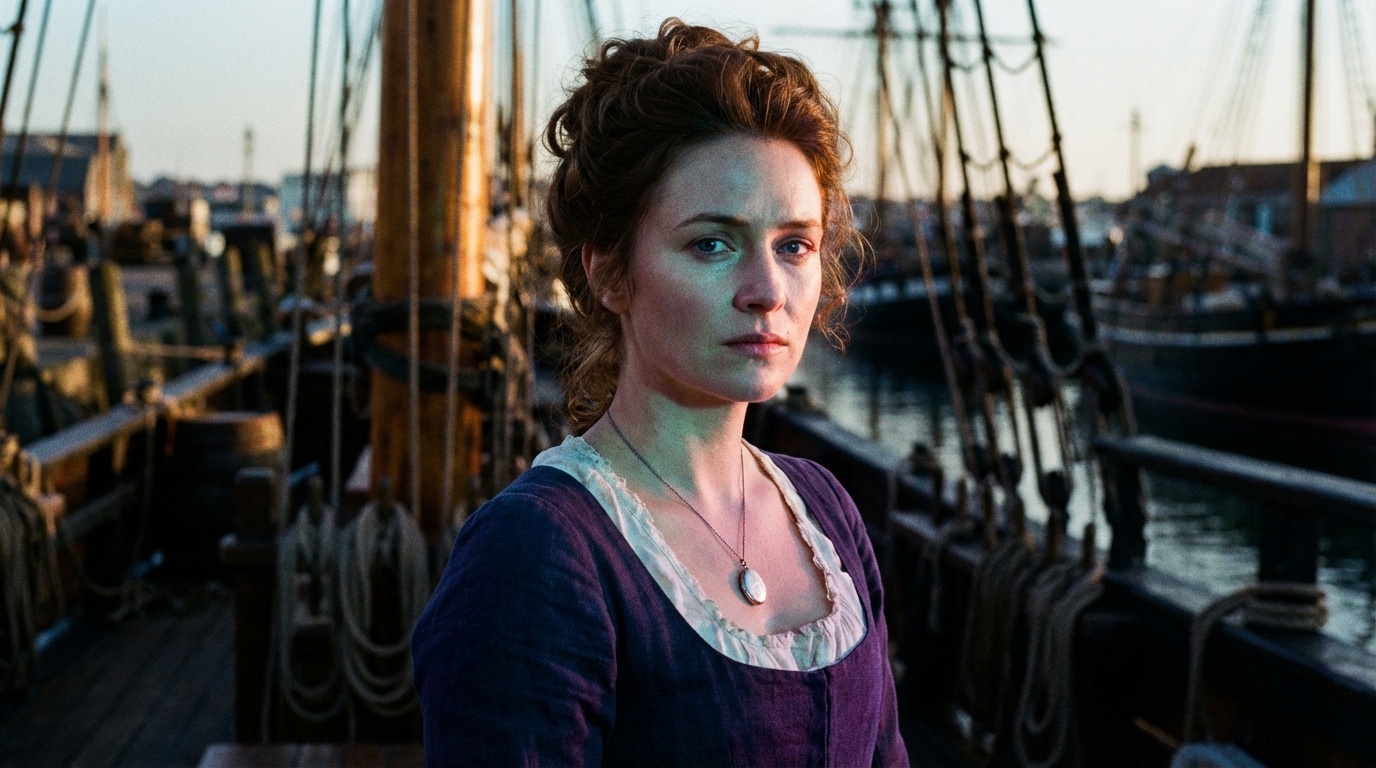
Portsmouth Roots and the Whitehall Heritage
Elizabeth Grace Whitehall entered the world on 5 October 1765 in Portsmouth, England, the second of four children born to George Whitehall and Mary Whitehall (née Turner). The bustling port city that surrounded her earliest years hummed with the ceaseless rhythm of maritime industry, its dockyards serving as the beating heart of Britain's naval ambitions. The clatter of shipbuilding, the calls of dockworkers, and the salt-laden winds that swept inland from the harbour formed the sensory landscape of her childhood.
George Whitehall worked as a shipwright in the naval dockyards, his skilled hands shaping the timbers that would carry British interests across the globe. The craft demanded both physical strength and technical expertise, and George had built a modest reputation amongst his fellows for reliable workmanship. His wages provided enough to keep his growing family housed and fed, though luxury remained forever beyond their reach. The Whitehalls occupied that precarious middle ground common to skilled tradesmen of the era, one illness or accident away from destitution yet sufficiently established to consider themselves respectable.
Mary Whitehall brought her own contributions to the household economy. Her talents with needle and thread had been refined since girlhood, and she had established herself as a seamstress whose services were sought by merchants' wives throughout Portsmouth. The garments she mended and altered, the mourning clothes she fashioned with suitable gravity, the wedding dresses she embellished with careful stitching, all represented income that supplemented George's wages and provided a buffer against misfortune. More significantly, Mary's skills would prove Elizabeth's salvation in years to come.
Elizabeth's elder brother, Thomas, had arrived two years before her in 1763, his birth establishing the pattern of industrious respectability that would characterise the Whitehall household. Thomas followed his father into the shipyards, apprenticing to the shipwright's trade as soon as his age permitted. Her younger siblings, Margaret born in 1768 and Samuel in 1771, completed the family. The four Whitehall children grew up sharing cramped quarters and limited resources, learning early the lessons of compromise and cooperation that large families demanded.
Growing up as the eldest daughter in this industrious household, Elizabeth absorbed lessons that would shape her entire life. She watched her mother's nimble fingers transform plain fabric into wearable garments, learning through observation and instruction the techniques that would later become her livelihood. She witnessed her father depart each morning for the dockyards, returning each evening with the particular exhaustion of honest labour. The values they modelled, hard work, thrift, and dignity in modest circumstances, became the foundation upon which Elizabeth would build her own character.
Portsmouth itself served as her broader classroom. The harbour teemed with vessels of every description, from the towering warships that projected British power to the merchant traders that connected the port to distant markets. Sailors from across the empire passed through its streets, their exotic languages and unfamiliar dress offering glimpses of worlds beyond Hampshire's shores. Young Elizabeth would have watched the comings and goings with the particular fascination of childhood, absorbing the maritime culture that permeated every aspect of Portsmouth life.
Marriage and Early Happiness
The year 1784 brought Elizabeth, then nineteen years old, to what she imagined would be her permanent station in life. Edward Jeffries had caught her attention through the interconnected networks of working-class Portsmouth, where families living in close proximity knew each other's circumstances intimately. Edward worked the docks as his father had before him, hauling cargo from the merchant vessels that crowded the harbour. His hands bore the calluses of hard labour, his back the developing curve of men who spent their days lifting and carrying.
Yet Edward possessed qualities that transcended his humble occupation. Elizabeth saw in him a gentleness that his rough work could not erode, a quiet devotion that promised security in an uncertain world. Their courtship followed patterns familiar to Portsmouth's working families, a series of supervised encounters, whispered conversations at church gatherings, and the eventual approach to Elizabeth's father seeking permission to marry. George Whitehall, assessing the young dockworker with the practical eye of a craftsman evaluating raw material, gave his consent.
The wedding itself was a modest affair befitting their circumstances. No grand ceremony in Portsmouth's finest church, no elaborate reception displaying wealth neither family possessed. Instead, they exchanged their vows with the simple sincerity of young people beginning their shared journey, surrounded by family and neighbours whose own lives mirrored their modest expectations. Elizabeth's siblings stood witness, Thomas already showing the muscular build of dockyard labour, Margaret and Samuel still young enough to fidget through the ceremony. Elizabeth became Mrs Edward Jeffries with a full heart, unaware that fate had already begun spinning threads that would unravel everything she built.
The early months of marriage brought Elizabeth the particular contentment of establishing her own household. Their dwelling was small, certainly, a few rooms that served multiple purposes as circumstances required. But it was theirs, a space where Edward returned each evening and Elizabeth created the domestic order that represented her contribution to their partnership. She took in sewing work as her mother had taught her, her needle and thread supplementing Edward's wages and building their modest savings.
Motherhood and the Birth of William
On 22 April 1785, Elizabeth's world transformed with the arrival of her firstborn son. The labour had been prolonged and difficult, stretching through hours that tested her endurance and left her exhausted but triumphant. At precisely 11:23 in the morning, William Thomas Jeffries drew his first breath, his strong cries echoing through their modest Portsmouth home. Elizabeth cradled the infant against her breast, feeling the fierce protective love that would anchor her through decades of hardship to come.
The joy of new parents radiated outward to embrace their small community. Neighbours Abigail and Thomas Pritchard arrived bearing a celebratory meat pie, their gift representing both congratulation and the practical understanding that Elizabeth would have little energy for cooking in the days ahead. Constance Hawkins, the local midwife whose capable hands had guided countless Portsmouth babies into the world, offered her expertise and reassurance. Father Nathaniel Blackwood visited to bless the newborn, his prayers emphasising the importance of faith in the boy's upbringing.
Edward's pride in his son manifested in the particular tenderness of a father encountering his firstborn. The rough hands that hauled cargo held the infant with exquisite care, as though William were the most precious freight ever to pass through Portsmouth harbour. Elizabeth watched her husband with the sleeping child and felt their future crystallise before her, generations of Jeffries children filling their home with noise and life.
Despite the joy of William's arrival, the family's finances remained perpetually strained. Edward's wages, sufficient for two, stretched thin across three. The extra sewing work Elizabeth had undertaken before William's birth became impossible to continue at the same pace whilst nursing and caring for an infant. Small economies became necessary, decisions about which expenses could be reduced and which represented irreducible necessities. The comfortable margin they had built began to erode, almost imperceptibly at first, then with gathering momentum.
No further children followed William's birth, though whether by circumstance or design remains unclear. Elizabeth channelled all her maternal devotion into her only son, her hopes for the future concentrating upon this single point of light in their modest existence.
Years of Struggle
The years of William's childhood tested the Jeffries family's resilience in ways that shaped all their characters. Edward's dock labour provided steady but meagre income, each day's wages representing another small victory against the poverty that perpetually threatened. Elizabeth's seamstress work supplemented their earnings, her needle and thread contributing essential shillings that meant the difference between adequacy and want. Together, they maintained their small household through the accumulation of countless small efforts.
William grew from infant to boy against this backdrop of industrious poverty. He watched his father depart each morning for the docks, returning each evening bone-weary but determined. He observed his mother's fingers flying through fabric hour after hour, transforming other people's garments whilst their own clothes grew threadbare. The lessons these observations taught him, about the relationship between labour and survival, about the inadequacy of honest work to guarantee prosperity, planted seeds that would germinate in ways his parents could not anticipate.
Elizabeth's siblings provided what support they could across the years. Thomas, established in the shipyards, occasionally found small jobs for Edward when dock work grew scarce. Margaret, who had married a chandler's assistant, shared what provisions she could spare. Samuel, the youngest, had gone to sea as a merchant sailor, his infrequent letters and rarer visits bringing exotic tales that fascinated young William. The Whitehall family bonds, forged in their shared childhood poverty, stretched but did not break as its members scattered into their separate adult lives.
The Trial and Transportation
In 1807, William, then twenty-two years old, had been apprehended for stealing a valuable pocket watch from merchant Josiah Blackwell. The Portsmouth courthouse proceedings that followed demonstrated the harsh mathematics of Georgian justice with merciless efficiency. Prosecutor Bartholomew Ashford presented overwhelming evidence against the accused, whilst defence attorney Nehemiah Blaylock's arguments for leniency fell upon unreceptive ears.
Elizabeth and Edward sat in that courtroom watching their son's fate sealed by testimony and procedure they could not influence. The boy they had raised in poverty, the child Elizabeth had protected from bread-theft charges a decade earlier, the young man they had released to the sea with such reluctant hope, stood before Magistrate Cornelius Blackwood awaiting judgement for a crime that would destroy everything. The evidence seemed clear, the outcome predetermined by the rigid structures of English law that showed little mercy to those without wealth or influence.
When Blackwood pronounced the sentence, seven years' transportation to New South Wales, Elizabeth's anguished pleas for mercy echoed through the Georgian halls to no effect. Edward sat rigid beside her, his face grey with shock, his hands clenched into fists that trembled with suppressed emotion. They watched their son led away in shackles, his face turning toward them one final time before disappearing through doors that might as well have been the gates of another world. The distance to New South Wales was unimaginable, the journey dangerous, the colony itself a place of punishment from which few returned. Elizabeth had lost her son as completely as if death had claimed him.
Edward's Decline and Death
The months following William's transportation marked the beginning of Edward's final decline. The man who had laboured steadily through decades of dock work, whose body had withstood the constant strain of lifting and hauling, seemed to collapse inward upon himself. The verdict that had taken his son had broken something essential in Edward's spirit, some sustaining force that had kept him working through exhaustion and pain.
Elizabeth watched her husband's deterioration with helpless anguish. Edward still rose each morning for the docks, still performed the labour that kept them housed and fed, but he moved now like a man already dead. The quiet strength that had characterised him throughout their marriage had drained away, leaving behind a hollow shell that went through motions without purpose. Conversations that once flowed easily between them became stilted exchanges, Edward retreating into silences that Elizabeth could not penetrate.
His body failed in stages through the winter of 1807 and into 1808. The cough that had troubled him for years worsened dramatically, racking his frame with spasms that left him gasping. The back that had carried countless loads finally surrendered to the accumulated damage of decades, pain becoming his constant companion. Elizabeth tended him as best she could whilst maintaining her sewing work, their income dropping precipitously as Edward's contributions ceased.
Edward Jeffries died in the spring of 1808, less than a year after watching his only son sentenced to transportation. Elizabeth held his hand as he slipped away, hearing him whisper William's name in his final breaths. The grief she felt carried layers of complexity, sorrow for the husband she had lost mingled with relief that his suffering had ended, anger at circumstances that had broken him, guilt for feeling anything beyond pure mourning.
The burial was a modest affair, befitting their depleted circumstances. Elizabeth's siblings gathered to support her, Thomas and Margaret standing beside her at the graveside whilst Samuel's absence was explained by his ship's posting to distant waters. The widow Elizabeth Jeffries, aged forty-two, faced a future defined by solitary labour and memories of everything she had lost.
The Long Separation
The years that followed Edward's death marked Elizabeth's transformation from grieving wife and mother to woman sustained primarily by memory and stubborn determination. The son who had been the centre of her world remained somewhere beyond the seas, his survival or death, his prosperity or continued punishment unknown to her. Letters, if any were exchanged across such vast distances, took months to traverse the oceans separating Portsmouth from the Australian colonies. News of William's circumstances filtered back to Elizabeth in fragments that satisfied nothing.
She continued her seamstress work because stopping meant starving, her needle moving through fabric with mechanical persistence whilst her mind wandered across oceans. The skills her mother had taught her sustained her body; the memories of her son and husband sustained her spirit. Neighbours who had watched William grow, who remembered the bread-theft incident and the transportation trial, offered what comfort they could to the woman who had lost both husband and child within a single year.
The stigma of William's conviction weighed upon Elizabeth in ways that transcended private grief. In Portsmouth's working-class communities, where reputation meant everything and disgrace attached to families as readily as to individuals, having a transported son marked her as somehow complicit in his downfall. Some attributed William's criminality to inadequate parental supervision, others to the poverty that had driven him first to steal bread and ultimately to steal a pocket watch, all finding in Elizabeth's circumstances convenient explanations for her son's fate.
Yet Elizabeth bore these additional burdens with the same resilience that had carried her through decades of marriage to Edward. She had no control over what others thought, no power to rehabilitate her son's reputation from such vast distance. What she could control was her own conduct, her continued industry, her quiet dignity in the face of whispered judgements. The woman who had pleaded for mercy in the courthouse refused to be broken by its denial.
Her siblings provided what support family bonds allowed. Thomas, now a master shipwright with apprentices of his own, ensured Elizabeth never wanted for essential assistance. Margaret's visits brought companionship and the comfort of shared childhood memories. Samuel's letters, arriving sporadically from ports around the world, reminded her that distances could be traversed, that separation need not mean permanent loss.
The Unexpected Return
In the spring of 1818, word reached Elizabeth that shook the foundations of the resigned existence she had constructed. Her son William was returning to England. The transported convict whose fate she had mourned for eleven years had somehow transformed himself into a prosperous colonial gentleman, his sentence completed, his fortunes reversed in ways that seemed almost miraculous.
The news arrived through Portsmouth's maritime networks, sailors' gossip eventually finding its way to the elderly seamstress who still plied her needle in the rooms where she had raised her son. William had booked passage from Van Diemen's Land on business he described vaguely as involving trade connections. He would stop in Portsmouth to see his mother, the first meeting between them since that terrible day in the courthouse when he had been led away in chains.
Elizabeth's emotions as she prepared for this reunion defied simple description. Joy at the prospect of seeing William alive and apparently thriving competed with anxiety about what eleven years of colonial life might have made of him. The boy she remembered had become a man she did not know, shaped by experiences she could not imagine. Would he still be her William, or would transportation have created someone unrecognisable?
Their meeting, when it finally occurred, brought tears that Elizabeth had thought exhausted years earlier. William stood before her transformed, his bearing confident, his dress prosperous, his manner carrying the authority of a man accustomed to command. Yet when he embraced her, she felt the boy she remembered within the man he had become, some essential core of identity that colonial hardship had not erased.
They spoke for hours, William describing his journey from transported convict to successful entrepreneur whilst carefully omitting the darker aspects of his rise. Elizabeth listened with maternal pride tempered by the particular wisdom of mothers, sensing undercurrents in his narrative that he chose not to explain. The wealth he displayed, the confidence he projected, the plans he outlined for his colonial future, all suggested a transformation more profound than honest labour alone could produce.
William spoke of his father with genuine grief, learning properly for the first time the circumstances of Edward's final decline. Elizabeth described those terrible months, watching her husband fade after the verdict that had taken their son, seeing him whisper William's name as he died. The guilt this knowledge awakened in William's eyes told Elizabeth that some part of her boy remained, whatever else colonial life had forged him into.
Madelyn and Farewell
The visit brought additional news that stirred complex emotions in Elizabeth's heart. William had met a young woman during his time in Portsmouth, Madelyn Elizabeth Bally, the daughter of a merchant named Thomas Henry Bally. He intended to marry her and take her back to Van Diemen's Land as mistress of the grand estate he was building. Elizabeth would have a daughter-in-law she might never meet, grandchildren she would never hold.
Elizabeth met Madelyn briefly before the wedding, assessing the young woman who would share her son's colonial life. She saw beauty and intelligence, proper upbringing and genuine affection for William, all the qualities a mother might hope for in her son's wife. Yet she also saw innocence, a young woman who had no conception of what colonial life would demand, who knew nothing of William's transportation or the crimes that had led to it. Elizabeth wondered what secrets her son was keeping from his bride, what shadows lurked behind the prosperous gentleman's façade.
The wedding on 28 June 1818 was a lavish affair that Elizabeth attended with pride tempered by sorrow. Her son had risen from transported convict to respectable colonial gentleman, had secured a merchant's daughter as his wife, had built a future that exceeded anything his Portsmouth childhood might have predicted. Yet the celebration also marked his permanent departure from her life, his removal to a world so distant that letters would take months to arrive, if they arrived at all.
Their final parting carried the weight of knowledge that this separation would be permanent. Elizabeth embraced her son one last time, memorising the feel of him against her, the sound of his voice, the familiar features that had matured but not entirely changed. She gave Madelyn her blessing with genuine warmth, hoping the young woman would prove equal to whatever challenges awaited in Van Diemen's Land. On 13 July 1818, she watched the Persephone sail from Portsmouth harbour, carrying her son and his new bride toward a future she would never witness.
Final Years and Legacy
The seven years that remained to Elizabeth passed in quiet continuation of patterns established through decades of struggle. Her seamstress work occupied her days, the rhythm of needle through fabric providing structure that kept grief at bay. Occasional letters from Van Diemen's Land brought fragments of news, William's continued prosperity, the birth of a grandson named William Edward in November 1819, the expansion of the Jeffries estate and enterprises. Each letter was treasured, read and reread until the paper grew soft from handling.
She never learned of William's disappearance in August 1821, the news either never reaching Portsmouth or arriving after her own death. The mysterious circumstances that transformed her daughter-in-law into a widow and her grandson into a fatherless child remained unknown to Elizabeth, sparing her the anguish of wondering what had befallen the son she had watched sail away.
Elizabeth Grace Jeffries died on 12 August 1825 at the age of fifty-nine. Her passing occasioned notice only within the immediate community that had witnessed her decades of struggle, the neighbours and remaining family who remembered the young wife, the devoted mother, the woman who had endured more than her share of sorrow. Her brother Thomas arranged the burial, ensuring his sister received whatever dignity modest resources could provide.
She was buried in Portsmouth near the husband who had preceded her by seventeen years, her grave marked by a simple stone that would weather and fade with passing generations. The seamstress who had raised William Jeffries, who had pleaded for his life in the courthouse, who had released him to the sea and lost him to transportation, who had welcomed him home one final time before losing him forever to colonial distance, rested at last from her labours.







