Elizabeth Brooks (née Woolley)
Elizabeth Brooks, née Woolley, was born in Wootton, Oxfordshire, on 3rd January 1801, the eldest of eight children of Thomas and Agnes Woolley. She emigrated with her family to Van Diemen's Land aboard the Morley in 1820 and married Samuel Brooks in Hobart in April 1822. As the family's self-appointed matriarch, she held the expanding Woolley clan together across decades of colonial life through correspondence, counsel, and sheer tenacity. She died in Hobart on 19th December 1876, aged seventy-five.
Birth and Burdened Childhood (1801–1815)
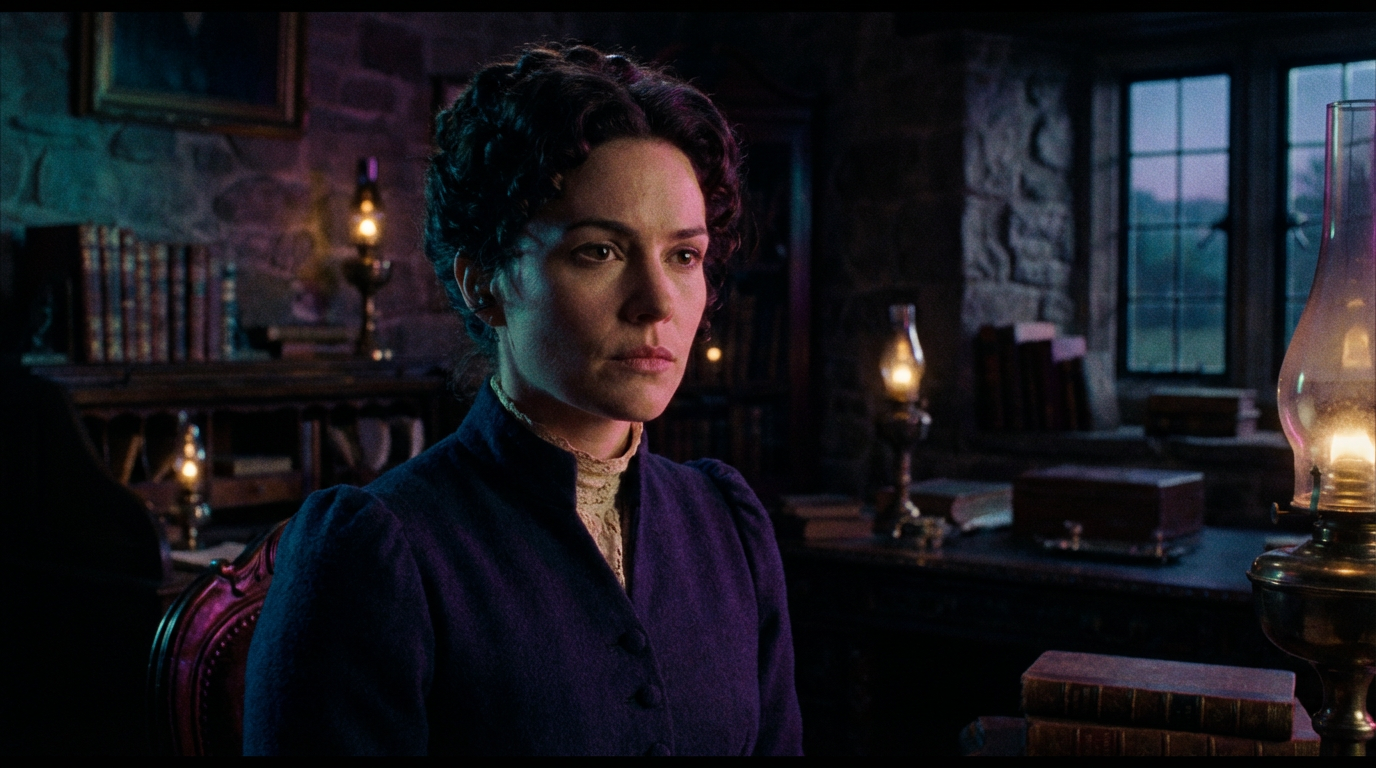
Elizabeth Woolley entered the world on 3rd January 1801 in the cottage on Pound Lane, Wootton, Oxfordshire, arriving as the new century's third day dawned—a detail her mother Agnes would later declare prophetic of her daughter's role in the family's eventual transformation. She was the first child of Thomas Woolley Sr., then twenty-five and recently married, and his wife Agnes, née Evans, who at twenty-one was already developing the midwifery practice that would define her professional life across two hemispheres. As a firstborn, Elizabeth received the concentrated attention that her parents' circumstances and inexperience permitted—for precisely two years and four months, until the arrival of Henry in April 1803 relegated her permanently from centre to margin.
The cottage on Pound Lane was cramped and perpetually saturated with the smells of leather and lye from the cobbling workshop that Thomas's father William Woolley still operated in the front room. Thomas himself had been apprenticed to the trade from boyhood, and the household's fragile respectability depended upon maintaining the appearance of a functioning business even as grandfather William's drinking and erratic workmanship steadily eroded its reputation. Elizabeth absorbed the rhythms of this uneasy domesticity from infancy—the sound of hammer on leather, the acrid bite of tanning solutions, the particular quality of silence that settled over the cottage when her father retreated into one of the dark moods that would shadow the family for the rest of his life.
By the time Frederick arrived in 1805 and Sarah in 1807, Elizabeth's role had crystallised into something between older sister and deputy mother. At four, she was minding baby Henry whilst Agnes attended confinements in the village. At six, she could change nappies, soothe a crying infant, and stretch a pot of porridge to accommodate more mouths than portions. Her childhood, such as it was, existed in the fragments between domestic obligations—learning her letters whilst bouncing a baby on her knee, practising her numbers whilst calculating how many days the flour might last, reading the family Bible during the rare intervals when all her siblings were simultaneously asleep.
John's arrival in 1809 coincided with Elizabeth's eighth birthday, a milestone that passed entirely unnoticed in the general chaos of another mouth to feed. By then she understood her position with a clarity that no child should possess—she was not quite parent, not quite child, but something suspended between the two, granted authority to discipline younger siblings but denied any power to make decisions, expected to contribute labour without ever receiving acknowledgement for it. Thomas Jr. followed in 1812, George in 1814, and finally Mary in 1817. Each new birth pushed Elizabeth further into premature adulthood. At sixteen, when other village girls were beginning the rituals of courtship, she was managing a household of ten whilst her mother recovered from Mary's difficult delivery, her father sat locked in impenetrable silence, and the cottage seemed to shrink by another impossible degree.
The post-Napoleonic agricultural depression that devastated rural Oxfordshire destroyed whatever remained of Elizabeth's already constrained prospects. No young man with any sense pursued a bride who came burdened with seven siblings' worth of obligation and no dowry beyond the domestic competence that every woman of her class was expected to possess. She watched friends from the parish school marry and establish their own households whilst she remained trapped, her youth dissolving into responsibility that aged her well beyond her years. The resentment she felt—sharp, specific, and entirely justified—she kept buried beneath the cheerful efficiency that had become her primary mode of survival.
The Voyage and a New Beginning (1820–1822)
The decision to emigrate to Van Diemen's Land in 1819 split Elizabeth more profoundly than it did any of her siblings. At nineteen, she had carved out small freedoms within Wootton's constraints—a friendship with the vicar's daughter who lent her books, knowledge of which farmers' wives would trade eggs for mending, an understanding of village rhythms that made poverty navigable if not comfortable. Leaving meant abandoning not merely a place but the only identity she had ever known, becoming a stranger in a land where the Woolley name carried no weight and her years of sacrifice counted for nothing.
Her resistance to emigration expressed itself through silence rather than argument—the family's characteristic response to situations that could not be changed. She packed the household's few treasured possessions with grim care: her grandmother's christening gown, the family Bible, her mother's recipe book, understanding without being told that she had been appointed keeper of memories that no one else would trouble to preserve.
The four-month voyage aboard the Morley, which departed Deptford on 15th February 1820, thrust Elizabeth into proximity with Samuel Brooks, a young man from a neighbouring Oxfordshire village whom she had never previously encountered despite their geographical closeness. Samuel, three years her senior, was travelling alone—his family either unwilling or unable to emigrate with him. His loneliness recognised something in hers, and their conversations during the long weeks at sea established a connection built on shared loss rather than shared aspiration. They spoke of what they had left behind—villages, routines, the texture of English seasons—rather than what lay ahead, two displaced people finding solace in the familiar cadence of Oxfordshire voices amidst the strangeness of the southern ocean.
The storm off the Cape of Good Hope revealed Samuel's character in ways that conventional courtship could never have managed. Whilst Thomas Sr. froze into one of his paralysing withdrawals and Agnes was consumed by attending seasick children and delivering a baby in the pitching darkness below decks, Samuel quietly helped Elizabeth secure the family's possessions, distribute rations, and maintain calm amongst terrified siblings. His competent steadiness—so different from her father's collapse under pressure—suggested possibilities that Elizabeth, until that moment, had not allowed herself to imagine.
The Morley reached Hobart Town on 18th June 1820, disgorging its cargo of exhausted emigrants into a colonial winter. Elizabeth's first impression of the settlement was of its rawness—the muddy streets, the convict gangs, the absence of every English certainty she had ever relied upon. Yet alongside the shock came something unexpected: a loosening of the rigid constraints that had defined her existence. Here, there were no centuries of precedent dictating who a Woolley girl could or could not become. The colony, for all its brutality and uncertainty, offered scope.
The family settled in a cottage on Goulburn Street, and Elizabeth's managerial instincts immediately found application in the new environment. At nineteen, she ran a household of ten with the efficiency born of a lifetime's practice. But the colony offered something Wootton never had—the possibility of converting domestic competence into independent income. Other emigrant families, overwhelmed by colonial conditions, paid her to teach their daughters household management. For the first time in her life, Elizabeth earned money of her own.
Samuel Brooks's courtship, which had begun as shipboard companionship, progressed after arrival with a predictability that both found comfortable. He needed a wife to establish colonial respectability; she needed liberation from perpetual siblinghood. Their conversations, conducted at church services and market days, confirmed compatible temperaments—both practical, both stoic, both understanding that marriage in their circumstances was an economic alliance first and an emotional one only if fortune permitted. When Samuel proposed in December 1821, Elizabeth accepted without hesitation, surprising no one except perhaps herself with the depth of her relief.
The wedding took place on 14th April 1822 at St David's Church—the first Woolley marriage on Tasmanian soil, establishing precedents that her siblings would follow over the coming years. The ceremony was modest but carefully respectable. Elizabeth wore a dress made from fabric she had saved for over two years, her mother's lace collar its only ornament. Samuel had set aside enough for a wedding breakfast that, whilst simple, declared their shared intention to maintain English customs regardless of colonial circumstances. Agnes attended with composed pride. Thomas Sr. sat in his usual silence, contributing his physical presence and nothing else.
Marriage and Motherhood (1822–1850)
The early years of marriage established patterns that would endure for nearly four decades. Samuel worked as a carpenter—a trade in constant demand in the expanding colony—whilst Elizabeth managed their rented cottage near Hobart's docks. The location was practical for Samuel's work rather than fashionable, and the proximity to convict gangs, drunk sailors, and the unpredictable energies of a port settlement meant that maintaining respectability required constant vigilance of the kind Elizabeth had been practising since childhood.
Margaret arrived on 8th March 1823, barely eleven months after the wedding, ending whatever brief interval of newlywed adjustment might otherwise have existed. Agnes attended the birth despite the difficult journey from Goulburn Street, and the labour was prolonged but uncomplicated. Samuel Jr. followed on 15th November 1824, then Thomas on 22nd February 1827. The household expanded with each child, and Elizabeth managed the increasing complexity with a competence so automatic it appeared effortless—though it was, of course, the product of two decades' apprenticeship in managing more people than resources could reasonably support.
The death of little Thomas in 1830, at the age of three, from scarlet fever that swept through Hobart, delivered Elizabeth's first experience of personal rather than observed grief. She had witnessed loss before—had seen it in the faces of women her mother attended, had understood it as an abstraction that visited other families. But Thomas had been a particularly sweet-natured child, lacking the demanding temperament of his older siblings, and his death created a hole in the family's structure that no subsequent arrival could fill. The silence at the dinner table where he had sat persisted long after his small chair had been removed, a gap that Elizabeth acknowledged by never placing anyone else in his spot.
Agnes arrived on 9th August 1829, William on 4th December 1831, and Catherine on 18th June 1834, completing the family at six children—four surviving. Each birth deepened the household's financial pressures, but Elizabeth managed with a combination of Samuel's steady carpentry income and her own enterprises. She took in sewing, sold eggs from chickens kept in their small yard, and occasionally housed newly arrived emigrants who paid for clean lodgings and reliable guidance on colonial life. Every penny was carefully directed—school fees for the boys, modest dowries accumulating for the girls, and a small emergency reserve maintained against the catastrophes that colonial existence made inevitable.
Samuel's presence in the household provided a kind of ballast that Elizabeth had never experienced before. He rarely complained about housing her relatives during their various crises, funding loans to siblings that both understood would never be repaid, or Elizabeth's absorption in the wider Woolley clan's dramas. His carpentry business prospered through reliable workmanship rather than spectacular contracts, generating the steady income that permitted Elizabeth to manage family complexities without the additional burden of financial desperation. If their marriage lacked the passionate intensity that romantics celebrated, it possessed something Elizabeth valued far more: predictability.
The Family's Centre of Gravity (1835–1860)
As her siblings married and dispersed across Tasmania, Elizabeth's Hobart home became the unofficial headquarters of the expanding Woolley network. Her position as eldest and first married conferred an authority that transcended simple birth order. When Henry needed counsel about his grain business in Launceston, he wrote to Elizabeth. When Sarah's marriage to Joseph Barnes encountered difficulty, she turned to her eldest sister. When Frederick's connection to the Jeffries disappearance—through his delivery of a mysterious letter to Jeffries Manor on 9th August 1821, the day William Jeffries Sr. vanished—threatened to attract unwelcome scrutiny, Elizabeth provided the steady counsel that kept the family's reputation intact.
Her correspondence during these decades, had it survived, would have revealed a woman administering a sprawling empire of relationships through carefully composed letters. She maintained connections with all seven siblings, their spouses, and their growing broods of children, blending family news with practical advice, gossip with genuine concern, sharp observation with tactful omission. These letters—dispatched to Launceston, New Norfolk, and the various Hobart addresses her siblings occupied—kept the Woolleys functioning as a coherent family despite the centrifugal forces of colonial dispersion.
The management of her siblings' assorted difficulties required diplomatic skills that would have served in any parliament. She mediated between Henry and Frederick, whose rivalry simmered beneath a surface of fraternal courtesy. She absorbed Sarah's complaints about Joseph Barnes's financial recklessness without ever taking sides openly enough to cause lasting offence. She provided what support she could to Mary, whose marriage to Edward Clarke in 1836 had produced a household of mounting disorder that Elizabeth could observe but not remedy—though George's gesture of slipping Mary his entire savings at her wedding, which Elizabeth witnessed, confirmed her long-held assessment that the youngest sister would need watching.
John's quiet struggles—the secrets he carried, the isolation that shadowed even his most sociable moments—troubled Elizabeth in ways she found difficult to articulate. She sensed that her brother bore knowledge that weighed on him, though she could never determine its nature with certainty. His death on 19th March 1864, from injuries sustained in a farming accident, removed a presence she had not fully appreciated until it was gone. She had lent him money for his land purchase without expectation of repayment, understanding that family meant absorbing others' failures as readily as celebrating their successes. His widow and children became her particular responsibility, though she managed the assistance with sufficient subtlety to preserve their dignity.
Thomas Jr., settled in New Norfolk at a deliberate distance from the family's Hobart centre, remained the sibling Elizabeth understood least. His choice to live apart suggested a need for independence that she respected without comprehending, accustomed as she was to finding purpose in proximity and connection. George, whose commercial activities she suspected operated closer to respectability's edges than he acknowledged, received her measured tolerance—she valued his competence and his loyalty to Mary whilst maintaining careful ignorance about the precise nature of his business ventures.
Loss and Adaptation (1853–1861)
The 1850s brought a succession of losses that tested the composure Elizabeth had spent a lifetime constructing. Her father Thomas Sr. died on 22nd May 1853, ending a relationship defined more by duty than affection. At his funeral, she stood amongst her grieving siblings—the only one dry-eyed, not from coldness but because she had mourned his emotional absence for decades before his physical departure rendered it permanent. Whatever love she had felt for Thomas Sr. had been diluted by years of managing around his dark moods, compensating for his withdrawals, and maintaining the fiction that the household functioned normally when it was held together solely by Agnes's competence and Elizabeth's organisational will.
Her mother's death on 9th August 1855 struck with a force that Elizabeth had not anticipated. Their relationship had always been complicated—two strong women competing for authority within the same family structure, each capable in ways the other sometimes found threatening. Agnes's midwifery had given her a public standing that Elizabeth, confined to domestic management, could never match, and the resentment this generated had flavoured their interactions with an astringency that neither acknowledged. Yet beneath the competition lay a bond forged in shared labour—they had kept the Woolley family alive through poverty, emigration, and the relentless demands of colonial settlement, and Agnes's death left Elizabeth as the clan's sole remaining authority. The responsibility was familiar; the loneliness was not.
Catherine's death from consumption in 1859, at the age of twenty-five and unmarried, devastated Elizabeth in ways that her parents' deaths had not. Catherine had been the daughter most like her—competent, reliable, willing to sacrifice personal prospects for the household's functioning. Watching her waste away over months of worsening illness, Elizabeth confronted the arbitrary cruelty of a universe in which careful planning and devoted service provided no protection whatsoever. Catherine had delayed marriage to help manage the household. She had done everything right, and it had counted for nothing.
The marriage of daughters Margaret and Agnes in the mid-1850s should have brought straightforward joy, but instead created an emptiness Elizabeth had not expected. She had raised them to be capable wives—teaching them every domestic skill in her considerable repertoire—yet their departures forced the uncomfortable question of what she had actually accomplished beyond replicating patterns. Her sons' trajectories—Samuel Jr. establishing himself in commerce, William contemplating a move to New Zealand—suggested success but also the kind of dispersal that would eventually scatter her carefully maintained network beyond recovery.
Widowhood and Matriarchy (1861–1876)
Samuel Brooks's death on 5th May 1861, from a stroke that killed him before he reached the floor, transformed Elizabeth at sixty from wife to widow in the space of a heartbeat. The funeral drew Hobart's established families—after nearly forty years, the Brooks name was woven into the settlement's fabric in ways that would have seemed unimaginable to the two uncertain young people who had married in 1822. Elizabeth received condolences with composed efficiency, betraying nothing of the discovery that a marriage founded on practical alliance had, somewhere in its quiet decades, produced a genuine affection whose loss now left her more bereft than she would ever have predicted.
The widow's pension and Samuel's modest savings permitted Elizabeth to maintain the Hobart house, which became more central to Woolley operations than ever. She hosted grandchildren during school terms, provided refuge for the occasional great-grandchild whose parents were temporarily overwhelmed, and maintained the growing archive of family documents—birth certificates, marriage licences, death notices, and whatever correspondence she had preserved—that traced the Woolley transformation from Oxfordshire poverty to colonial establishment.
Frederick's death on 5th January 1870, at sixty-four, removed the sibling whose public career had been the family's most conspicuous achievement. His decades as Hobart's postmaster had lent the Woolley name a respectability that extended beyond anything the family's origins would have predicted. But Frederick's connection to the Jeffries mystery—the letter he had delivered to Jeffries Manor on the day of William Jeffries Sr.'s disappearance—had always carried a faint shadow, and Elizabeth knew more about its implications than she ever revealed. She maintained discretion about certain family matters with the same iron discipline she applied to everything else, understanding that some secrets served the living better than the truth.
Mary's death on 4th May 1875 grieved Elizabeth differently from the losses that had preceded it. She had watched her youngest sister's life contract over decades—the failed pregnancies, the struggling marriage to Edward Clarke, the household disorder that deepened year by year, the laudanum dependency that everyone recognised and no one addressed. Elizabeth had provided what assistance circumstance and Mary's pride permitted, eventually taking in Mary's daughter Margaret Elizabeth as domestic help after Edward Clarke's death in 1872. But she could not rescue Mary from the accumulated weight of a life that had overwhelmed her from the beginning, and the guilt of having failed to do so—of being competent in the face of a sibling's incompetence—accompanied Elizabeth through her own remaining months.
George, the brother she had never entirely trusted but whose loyalty to Mary she had always respected, continued in Launceston, his commercial activities flourishing in ways Elizabeth chose not to examine too closely. Sarah persisted in her difficult marriage to Joseph Barnes. Thomas Jr. maintained his quiet independence in New Norfolk. Henry prospered in Launceston's grain trade. The surviving Woolleys carried on, but the generation that had crossed the ocean aboard the Morley was thinning steadily, and Elizabeth could feel the approaching end of an era she had spent her life holding together.
Final Years and Death (1875–1876)
Elizabeth's own health declined through 1876 with the gradual inevitability of a tide going out. Each winter brought bronchitis that lasted longer and left her weaker. She refused to burden her children with her care, hiring a series of companions whom she trained with exacting precision in her specific requirements—tea at particular temperatures, correspondence read in particular order, visitors managed according to hierarchies that only she fully understood.
The last family gathering she hosted, at Christmas 1875, brought thirty-seven descendants to the Hobart house. She presided from her chair by the fire, too weak to stand for long but still commanding through the force of a personality that had been directing Woolley affairs for over half a century. The dinner followed traditions she had maintained since the family's earliest colonial years—English pudding adapted with Australian fruits, toasts honouring the absent and dead in equal measure, stories that wove Oxfordshire memories into Tasmanian realities. It was her final performance, and she gave it everything she had left.
Her last illness began in November 1876 with a cold that settled into pneumonia. She faced its progression with the same practical directness she had brought to every crisis in seventy-five years of managing other people's lives and her own. She distributed possessions according to a list prepared years in advance. She provided explicit instructions for her funeral. She ensured that arrangements were in place to prevent the inheritance disputes that colonial families were prone to when matriarchs departed without clear directives.
Elizabeth Brooks died at a quarter past two in the afternoon on 19th December 1876, six days before the Christmas she had always made special despite whatever limitations circumstance imposed. Her last words, reported by her daughter Agnes, were "I kept them all together"—though whether she meant her children, the wider Woolley clan, or the fraying threads of a family that had crossed the world together and spent half a century trying not to come apart remained a question that every person who heard it answered according to their own understanding.
Funeral and Burial
The funeral on 22nd December 1876 drew hundreds to St David's Cathedral despite the proximity to Christmas. Five generations of Woolley descendants filled the pews alongside Brooks family connections and Hobart residents who remembered the young bride of 1822 or the formidable matriarch she had become. The eulogy, delivered by Reverend William Morrison, praised Elizabeth as "the cornerstone of colonial respectability"—a phrase she would likely have found excessive, preferring to be remembered simply as someone who had done what was necessary.
She was buried beside Samuel in Hobart Cemetery, their shared headstone recording only names and dates. There was no mention of the eight pregnancies, the six children, the forty years of marriage, or the countless interventions—financial, emotional, logistical—through which she had held a sprawling colonial family together by force of will disguised as quiet duty. The simplicity suited her. Elizabeth had understood from childhood that women's work, however indispensable, was designed by the world to be invisible. She had spent seventy-five years proving this assessment correct whilst making herself, by sheer persistence, impossible to overlook.







